Audio Accessories
Isolation Devices Compared 2026: Toughnut, IsoAcoustics, Stack Audio and Ungoy
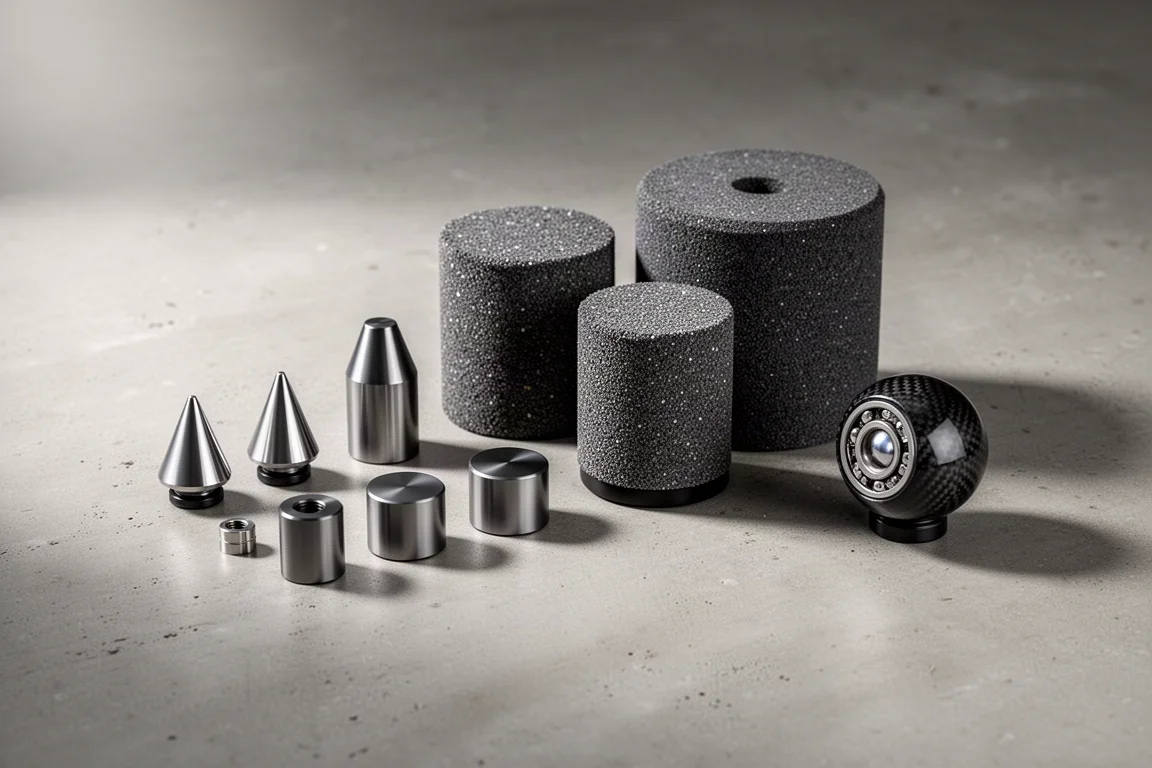
A measurement-led comparison of six audio isolation devices, covering Toughnut Audio cones, IsoAcoustics pucks and RIA footers, Stack Audio 100 and EQ, and a ball-bearing design.
Introduction
Isolation footers have become a normal part of a serious audio setup. They sit under speakers, turntables, amplifiers and racks, and they are meant to keep structural vibration from smearing detail. Spikes, which still ship with a great many speakers, are the traditional answer to the same problem.
The difficulty has always been proving which approach actually works. Vibration is easy to feel and hard to quantify, and there is no shared standard for measuring it in audio. A recent set of comparative measurements puts six popular devices on the same rig, alongside a butcher block platform and a set of spikes, so the differences can be seen rather than guessed at.
How These Isolation Devices Were Measured
The rig is a purpose-built vibration platform. Drivers are mounted underneath it and driven through DSP so the platform reproduces a speaker-like vibration signature rather than a single tone. Whatever is being tested sits on top of the platform.
Vibration is captured with a contact microphone, which only registers energy from whatever it is physically touching. Airborne sound, including speech in the room or the output of the speakers themselves, does not show up in the data. That makes it a useful tool for looking at structure-borne vibration, which is exactly what footers and platforms are meant to address.
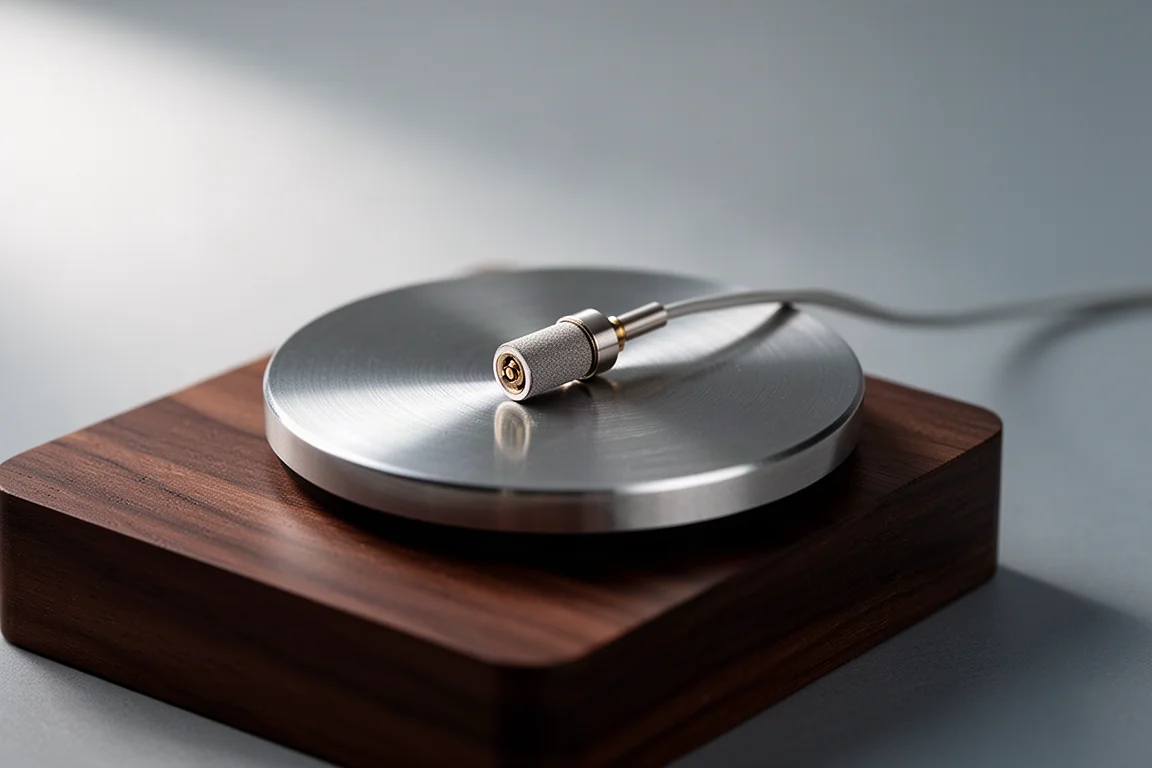
There is one important caveat. The contact microphone is not calibrated the way a measurement microphone is, so the results are relative rather than absolute. Everything is compared against a baseline graph of the platform running on its own. A device that measures below that baseline is reducing vibration, and the size of the gap shows how much reduction happens and at which frequencies. The data is split into a low bass section and a mid and high frequency section, because differences between devices reach 10 to 40 dB in places. For scale, 10 dB is roughly twice as loud to the ear, 20 dB is about four times, and 40 dB is about sixteen times.
Toughnut Audio Cones
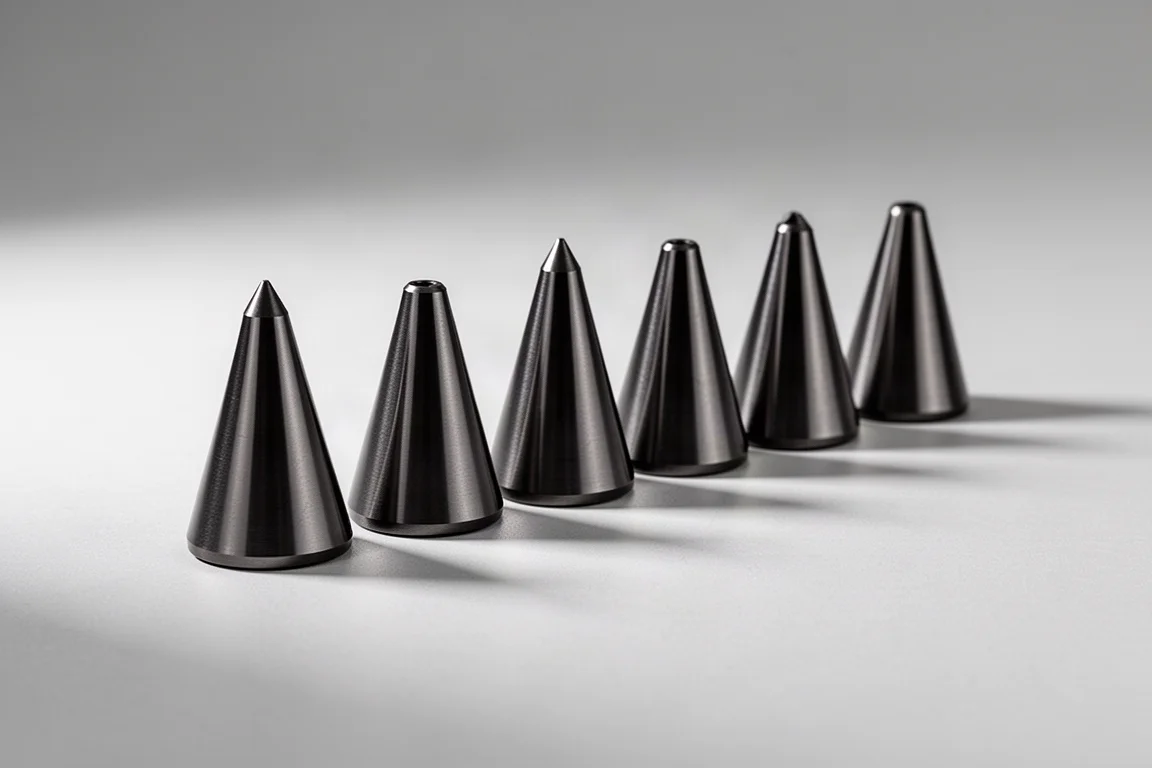
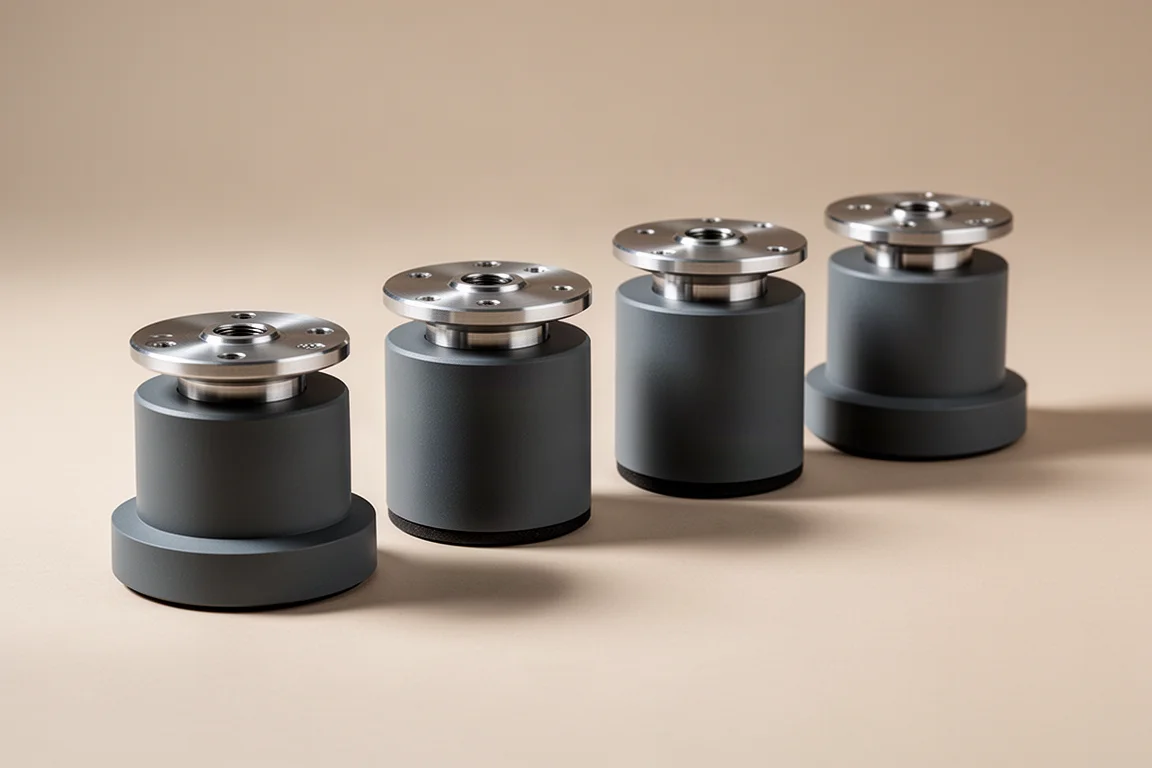
The Toughnut Audio cones produced the largest vibration reduction of the group across most of the measured range. Against the bare platform, the cones measured more than 20 dB lower, and more than 40 dB lower in some regions. In the mid and high frequency range, attenuation reached 30 to 40 dB.
They also outperformed a butcher block platform by roughly 10 to 30 dB depending on frequency, which matters because a butcher block is a cheap and genuinely useful upgrade on its own. Compared with the IsoAcoustics pucks, the cones held an advantage of about 3 dB in the closest regions and up to 20 dB in others. Against the IsoAcoustics RIA, the RIA was slightly better in the very lowest bass, but the cones led across the rest of the range by 10 to nearly 20 dB.
The cones are not the most expensive devices in this group, which is part of their appeal. Above roughly 4 kHz they measured no differently from the other devices, which suggests the high treble is not where vibration problems live.
IsoAcoustics Pucks
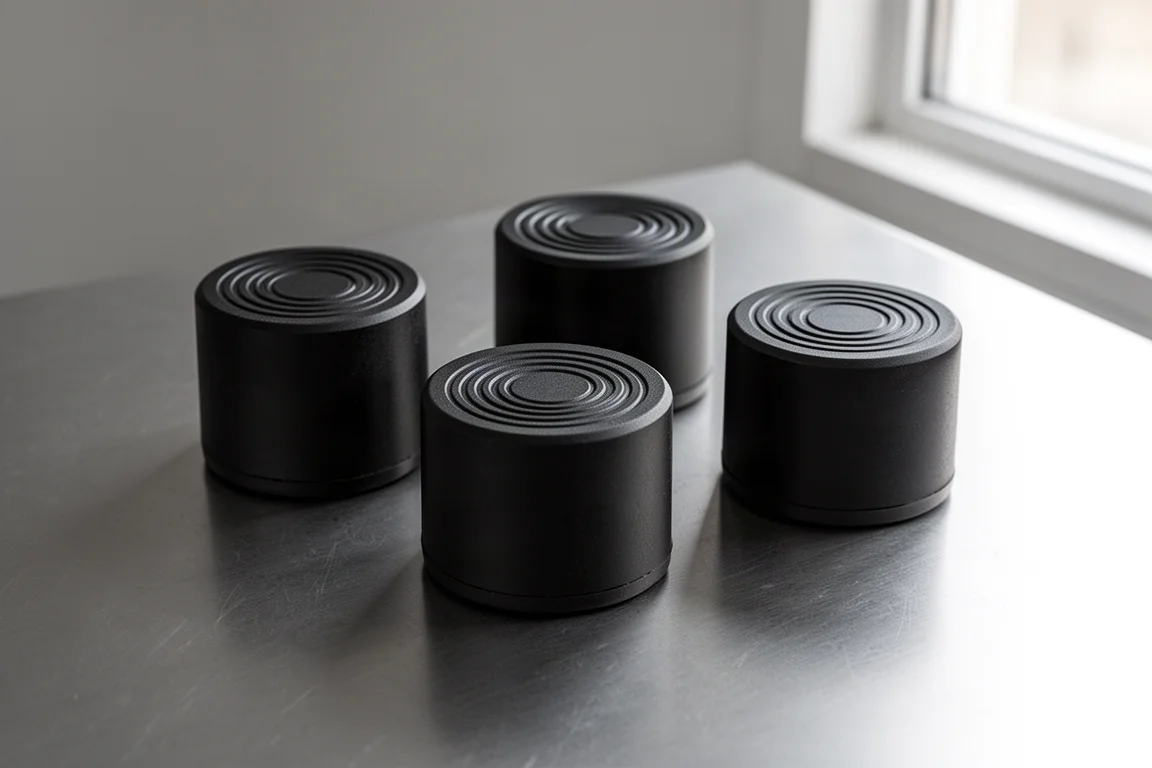
The IsoAcoustics pucks are a familiar choice for placing under electronics rather than speakers. In the low bass comparison they sat well below the bare platform and clearly ahead of spikes, with the gap to the Toughnut cones ranging from about 3 dB to 20 dB depending on frequency.
In the mid and high frequency range the pucks stayed close to the cones, with roughly a 15 dB difference in the areas where the cones pulled ahead. That is a respectable result for a smaller, more versatile footer, and it lines up with the general experience of running them under source components and amplifiers.
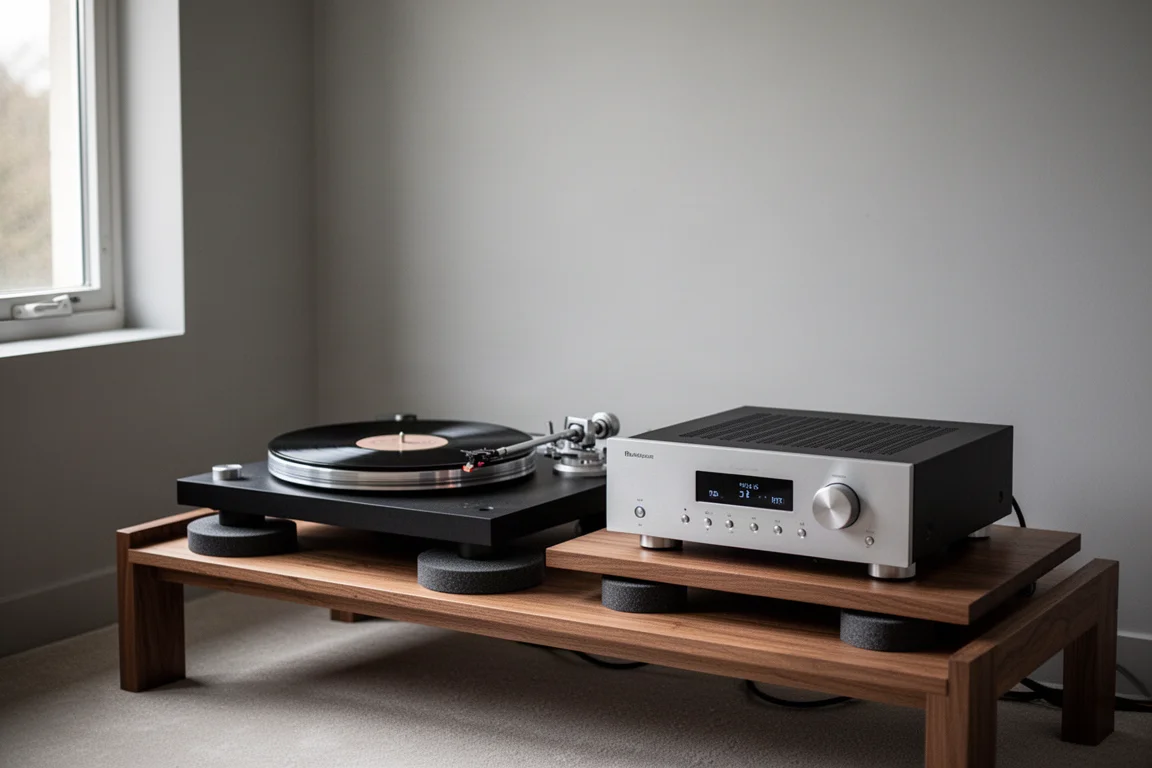
For anyone who needs a low-profile footer that fits under a wide range of gear, the pucks remain a sensible pick. They do not reach the same isolation figures as the cones in most of the measured bands, but they are consistent and easy to live with.
IsoAcoustics RIA
The RIA footers are designed for speakers, and they came out ahead of the cones in the lowest bass. The advantage was as small as 1 dB and as large as 10 dB in the deep bass region, which is exactly where large floorstanding speakers and subwoofers generate the most energy.
Above that, the cones took over. Across the rest of the low bass and through the upper bass, the cones led by 10 to nearly 20 dB in places. In the mid and high range the RIA was slightly better in some parts of the graph, but the cones held a 10 to nearly 20 dB advantage in others.
The practical reading is that the RIA makes most sense under subwoofers and large speakers where deep bass control is the priority. For general use, the cones delivered more isolation for the money.
Stack Audio 100
The Stack Audio 100 is the largest footer in this group, a chunky cylinder with a loose damping material inside that shifts audibly when the unit is shaken. It took the win below 38 Hz, which is the region that matters most under a subwoofer.
Above 60 Hz the picture reversed. The Toughnut cones led by more than 20 dB in that range, and the Stack Audio 100 also gave up around 10 dB to the cones in two narrower regions. Above 5 kHz there was no measurable difference between the two. The Stack Audio 100 is also noticeably larger and considerably more expensive than the cones.
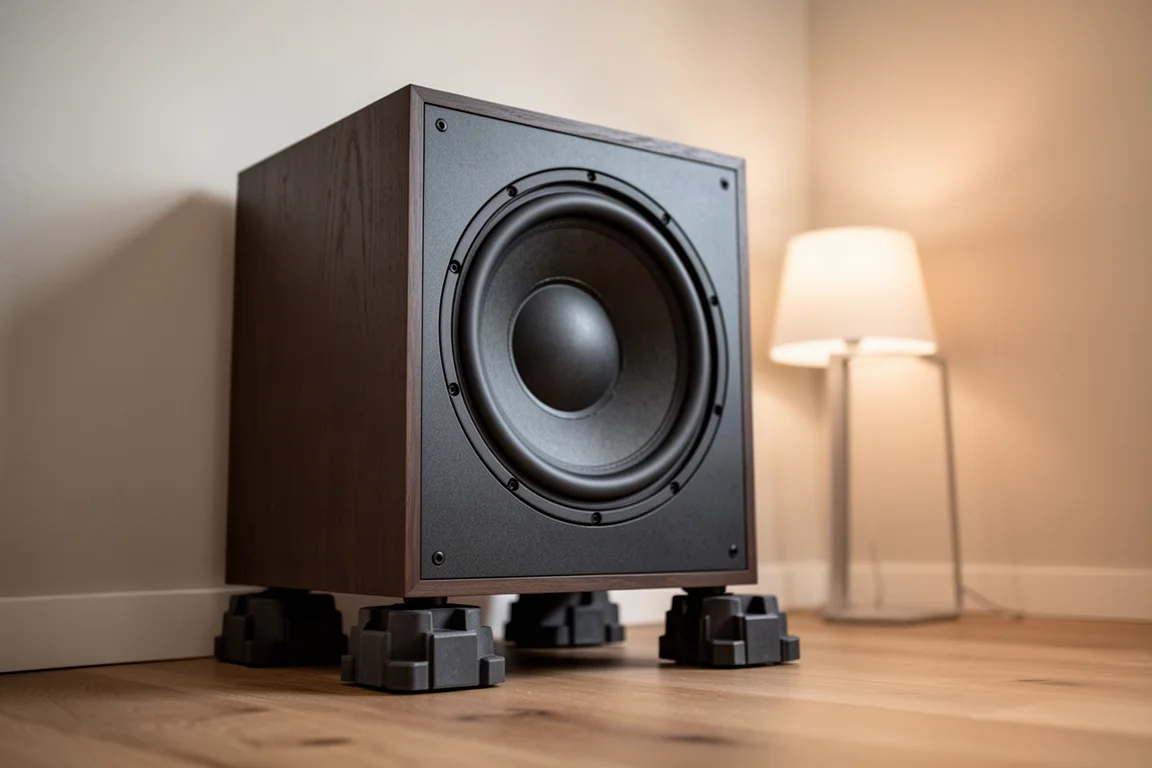
That combination explains why it works well under subwoofers and low-frequency sources while the cones remain the better all-round choice for speakers. If deep bass isolation is the specific goal, the size and the price of the Stack Audio 100 buy real performance at the bottom end.
Stack Audio EQ
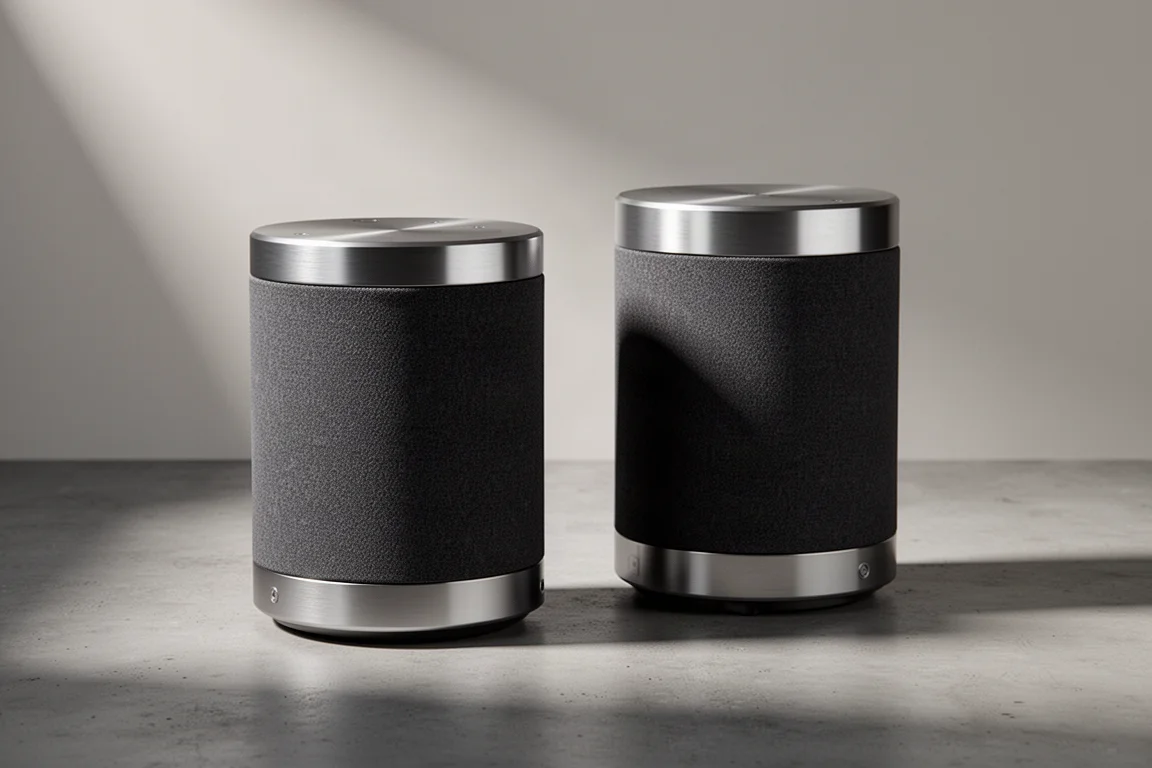
The Stack Audio EQ is the smaller, less expensive version of the same sand-filled design. In the low bass it performed similarly to the cones below 38 Hz rather than matching the larger Stack Audio 100.
Through the middle of the range the cones were clearly ahead, with roughly a 10 dB advantage between 55 Hz and 133 Hz. Above 133 Hz the EQ edged ahead of the cones marginally, with a notable advantage around 145 Hz. Like the larger model, it showed no meaningful difference in the highest frequencies.
For its size, the EQ is an impressive isolator and a reasonable compromise for smaller rooms or lighter components.
Ungoy Isolation Device
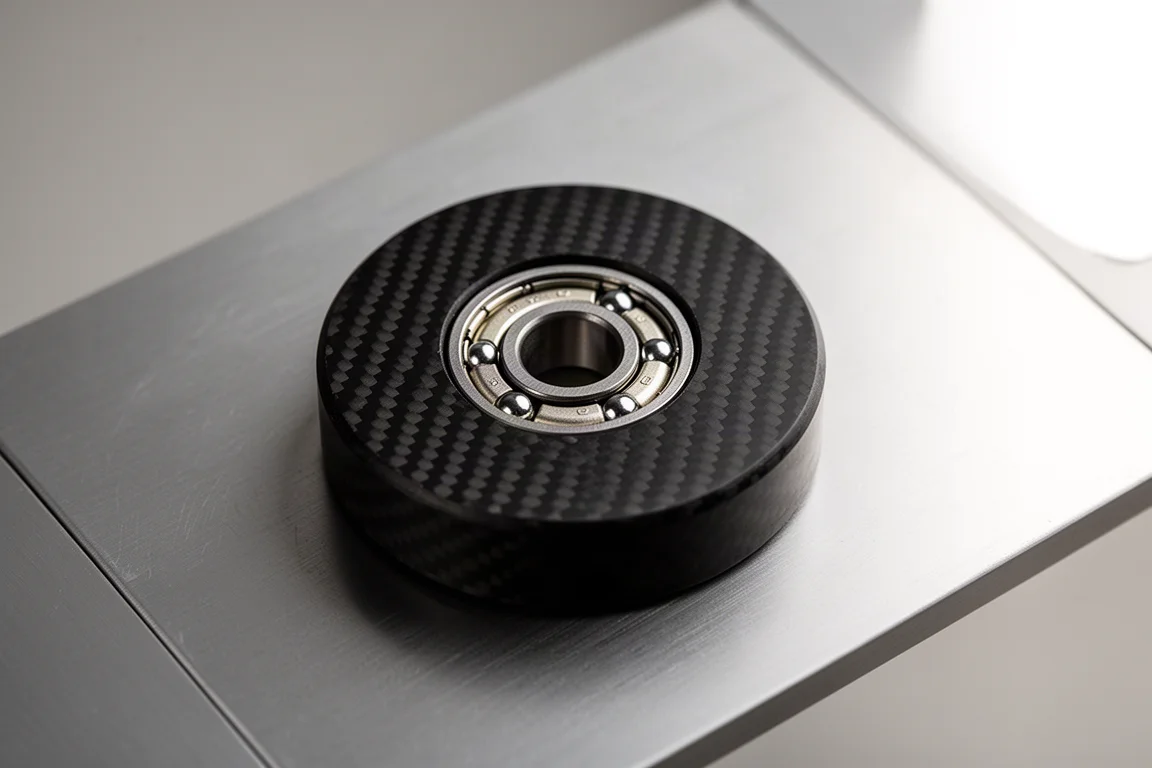
The Ungoy uses ball bearings inside a carbon fibre body, and the manufacturer also claims EMI and RFI rejection from that housing. Only the isolation performance was measured here.
Outside a narrow region around 30 Hz, the Ungoy measured about as poorly as a set of spikes, and in one comparison it was worse. It also needs to be perfectly level to work, because the ball bearings rattle as soon as the load is uneven. That makes it a poor candidate for subwoofers, where the rattling would be audible long before any isolation benefit at 30 Hz.
Cost is the other issue. The device is expensive relative to the rest of this group, and the manufacturer describes its development as based on subjective listening rather than published measurements. For a component whose entire job is vibration control, that is a meaningful gap.
What the Measurements Mean in a Real Room
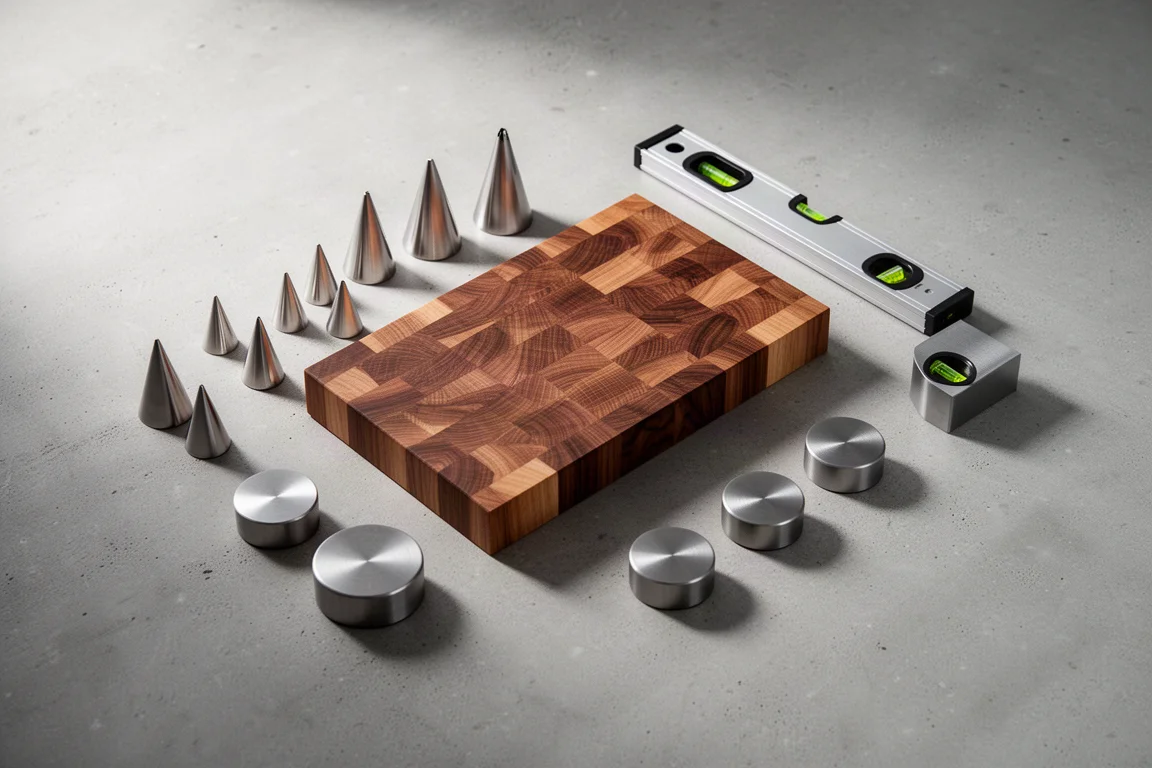
Two reference points frame all of these results. The first is a butcher block platform, which is inexpensive and consistently better than placing gear directly on the floor. The second is a set of spikes, which ship with many speakers and which measured poorly: worse than the butcher block in several regions, and in some areas worse than doing nothing at all.
The size of the effect in a real room depends on several variables. Playback volume, how much bass the system produces, and how close the rack, platform or component sits to the speakers and subwoofers all change how much vibration reaches the gear in the first place. A footer that reduces vibration by 20 dB in a rig may matter far less in a quiet nearfield setup and far more in a room with a large subwoofer.
There is also practical evidence that this is not purely theoretical. Users who placed the cones under a turntable reported that records stopped skipping at volumes that previously caused problems, and a user who placed them under a CD player sitting close to the speakers reported the same result on bass-heavy tracks.
Buying Advice
Match the footer to the problem. If the goal is controlling a subwoofer or the deepest bass from large floorstanders, the Stack Audio 100 and the IsoAcoustics RIA are the two designs that measured best in that region. For speakers and general equipment, the Toughnut Audio Cones delivered the most consistent isolation across the widest range, at a price below several of the alternatives.
The IsoAcoustics pucks remain a good low-profile option for electronics, and the smaller Stack Audio EQ is a reasonable choice where space or budget is limited. Ball-bearing designs such as the Ungoy need perfect leveling and are best avoided under subwoofers. If budget is the main constraint, a butcher block platform under the existing setup is a cheap improvement over spikes, even if dedicated footers go further.
Conclusion
The measurements confirm what many listeners already suspected: isolation devices are not interchangeable, and price does not reliably predict performance. Cones from a comparatively affordable brand measured better than several more expensive footers across most of the range, while the two Stack Audio models and the IsoAcoustics RIA took the low bass. Spikes and ball-bearing designs brought to market without published data lagged behind. Choose by frequency range and by what the gear actually needs.
Further reading
Related Reviews
Audio Accessories
Audio Cables and Power Conditioners: A Three-Tier Buying Guide
A practical, tiered look at audio cables and power conditioners, from budget basics to the point where spending more stops making sense.
Audio Accessories
Cheap Speaker Stands Worth Buying: Four Affordable Options for Better Sound
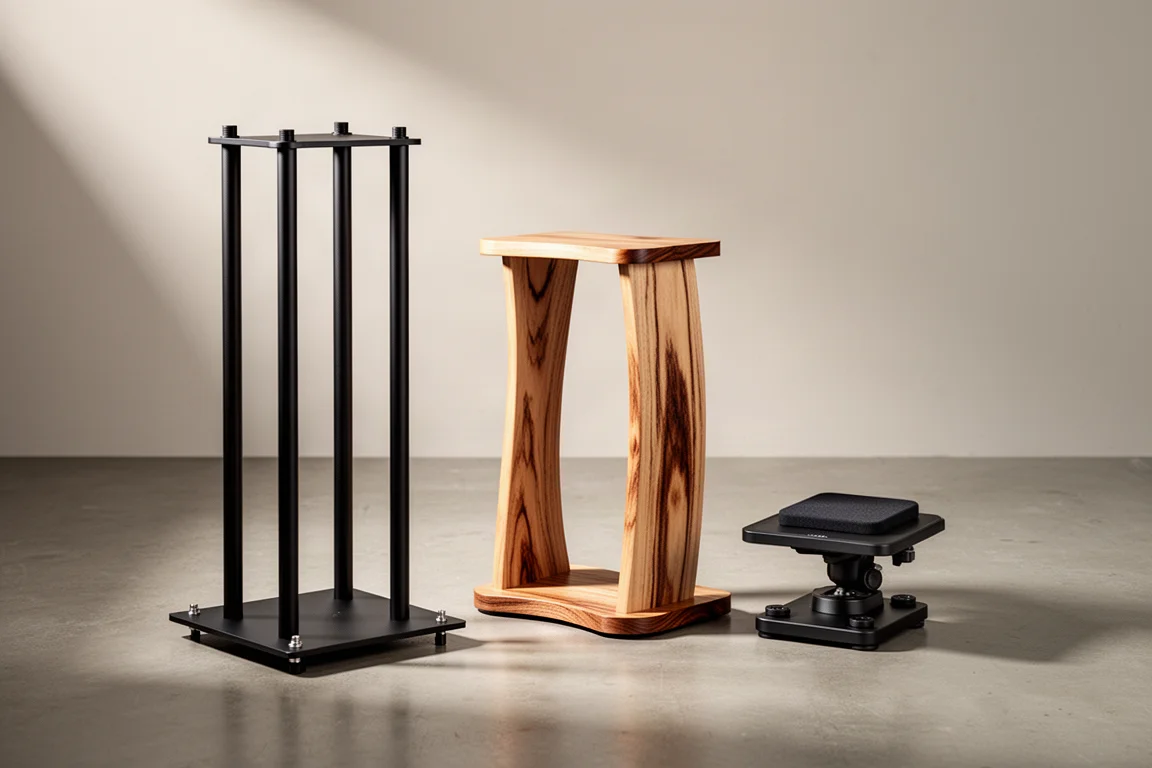
Four affordable speaker stands, from heavy fillable steel columns to wooden designs and desktop isolation platforms, with the trade-offs that matter before you buy.
Audio Accessories
Fosi Audio LC30 vs Duke Audio V3 Pro: Two Speaker and Amplifier Switchers Compared
Two affordable switchers that let you compare amplifiers and speakers in real time, with VU meters, remotes, and clear differences in features.