Portable Power Stations
Internova Eta Ultra 2000 Review: A Budget Power Station That Punches Above Its Price
A 2,160Wh LiFePO4 power station with 2,500W output, luggage-style wheels, and simple controls. Strong value for the price, with a few compromises to know about.
Introduction
The Internova Eta Ultra 2000 is the largest unit in the company’s power station line, and it manages to be genuinely impressive for its price bracket. With 2,160 watt-hours of storage, 2,500 watts of pure sine output, and a claimed 5,000-watt surge, it covers the essentials without the premium pricing of the biggest names in the category.
The headline strength is how much load it can actually hold. In testing, it ran an air compressor, a sander, and multiple power tools simultaneously, climbing to roughly 2,000 watts of continuous draw and riding out spikes near 2,400 watts without shutting down. It stayed impressively quiet the entire time. That kind of sustained output is not something you would expect from a box at this price point, and it exceeded expectations at every stage.
Who This Product Is For
This is a box for people who want serious capacity without paying flagship prices. The 2,160 watt-hour capacity suits anyone running laptops, phones, tablets, or small appliances for an afternoon at a park or campsite, and it has enough muscle for workshop tools in a pinch.
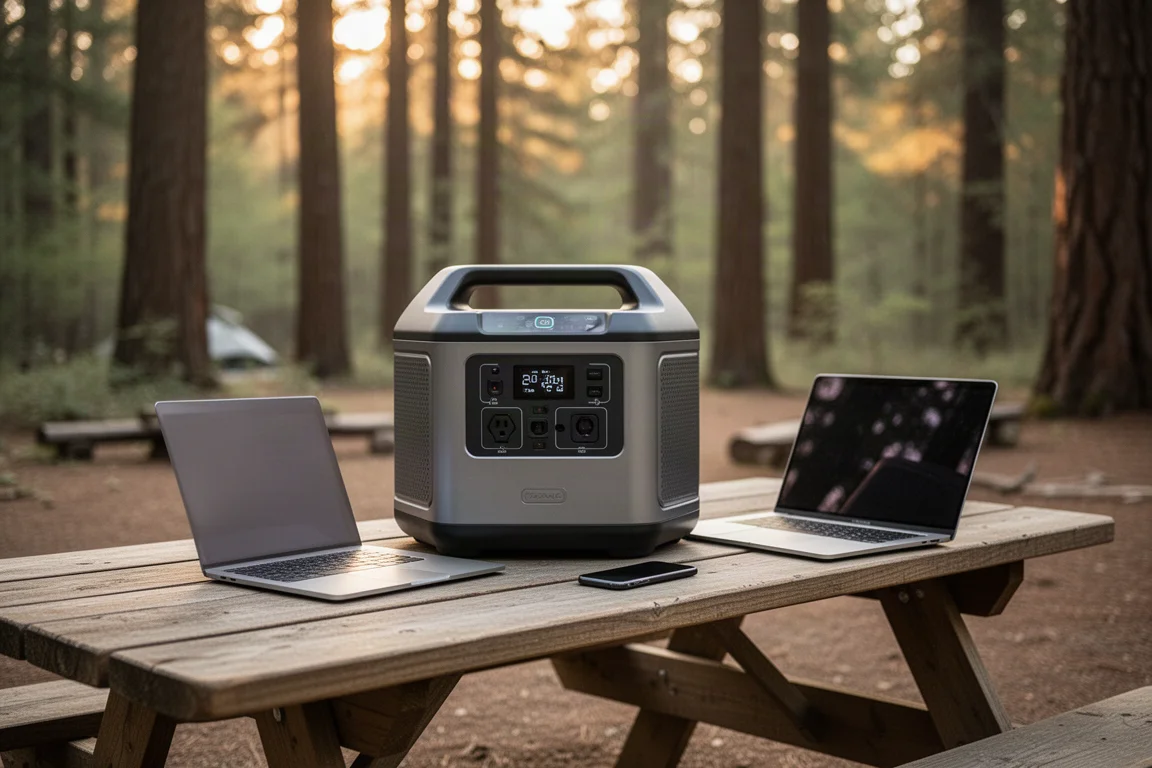
It also works as an uninterruptible power supply (UPS), which makes it a reasonable backup option for sensitive electronics during short outages. If your needs are limited to charging a laptop and a phone, Internova makes smaller and cheaper units that may suit you better; the Eta Ultra 2000 is the one worth your attention if you want real output capability.
Main Strengths
The battery chemistry is LiFePO4, which is effectively a requirement for a purchase like this thanks to its long cycle life and stable thermal behavior. Recharging from a wall outlet takes under two hours for the full battery, which is fast for this capacity class.
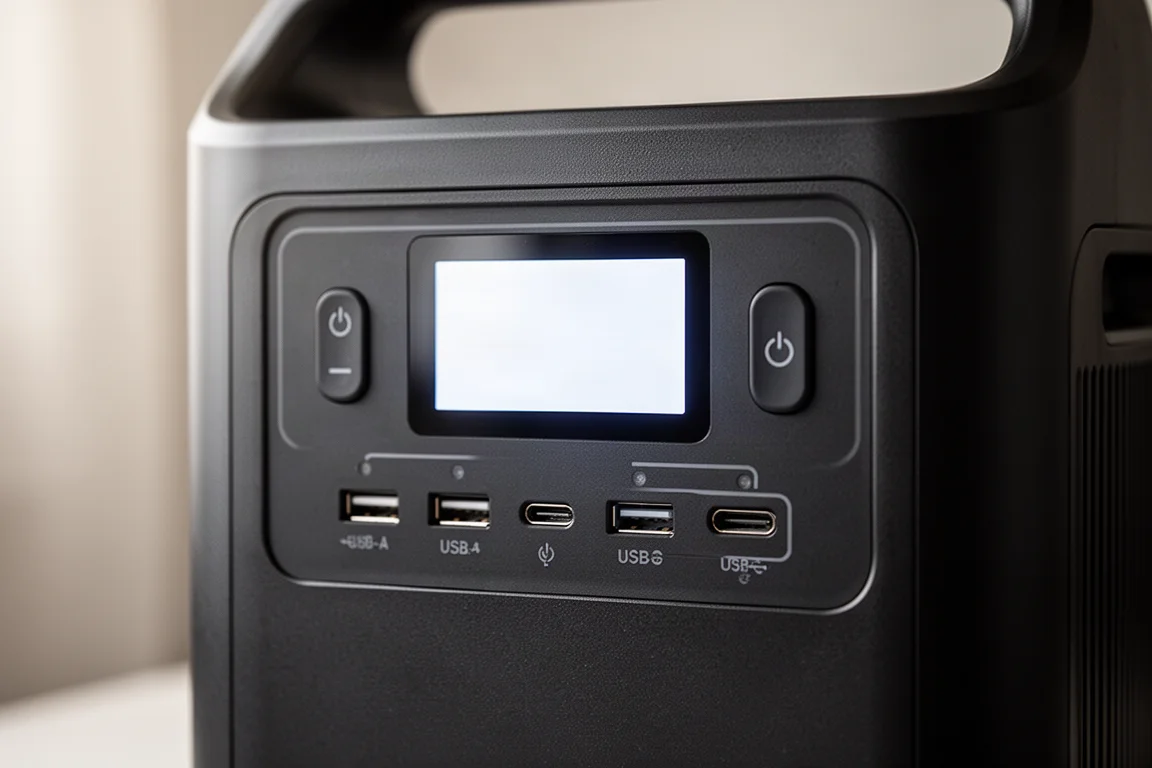
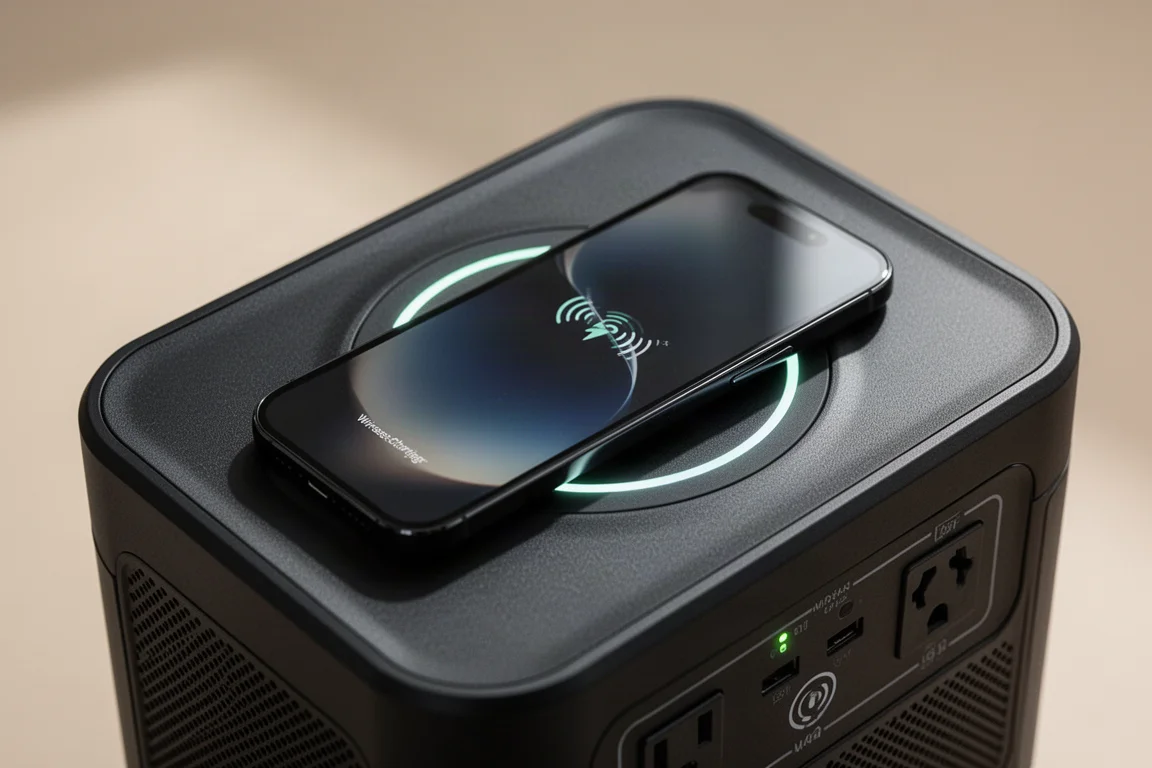
Port selection is generous: six USB-A ports (two of them quick-charge) and three USB-C ports including one rated at 100 watts and two at 45 watts, plus standard AC and DC car outputs. The top surface has a built-in wireless charging pad, so you can simply set a compatible phone down and let it charge.
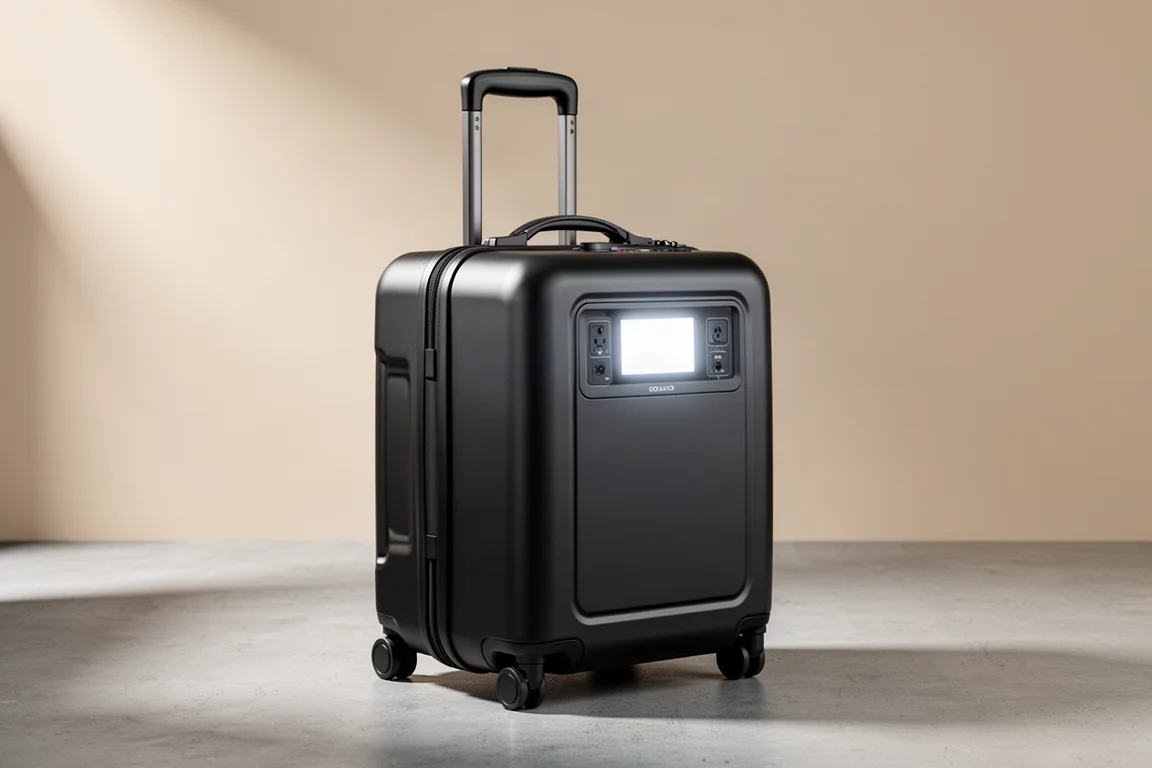
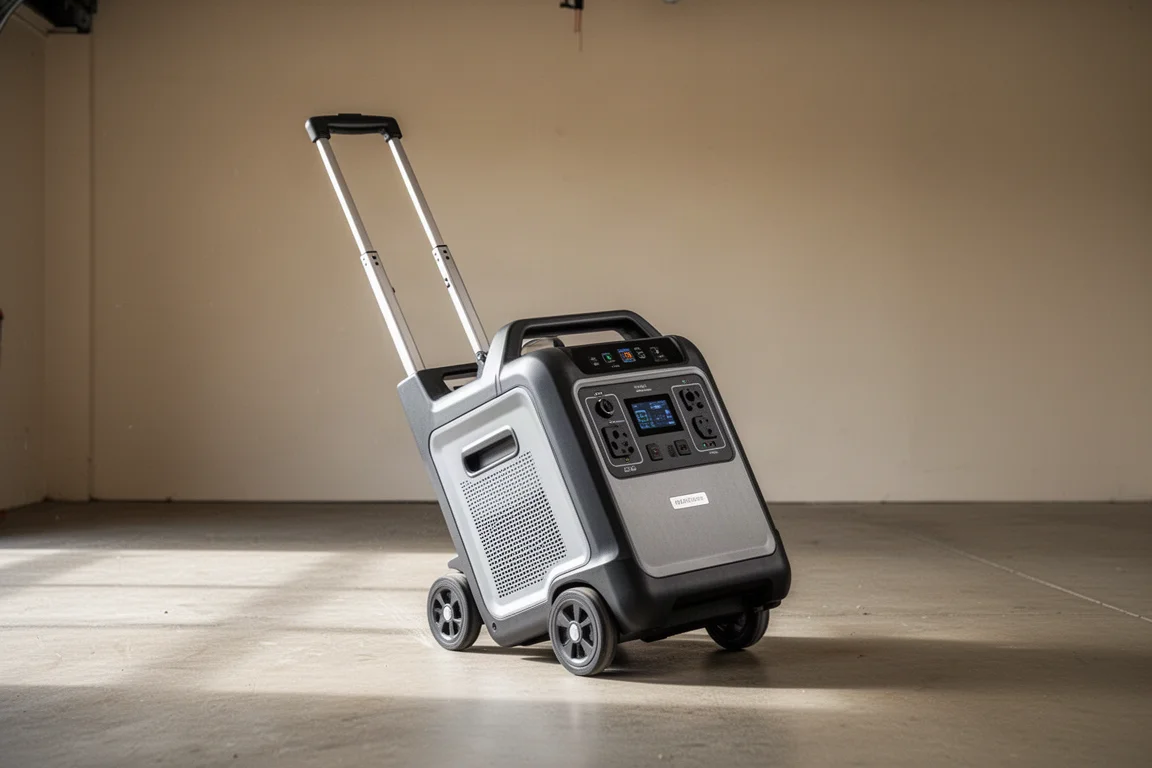
Practical touches add up too. It has wheels and a telescoping handle that pop out like a suitcase, so you can roll this thing around instead of lugging roughly 2,000 watt-hours of battery by hand. The display is clear and easy to read, and the controls are refreshingly simple: press and hold to power on, one button each for DC and AC, and a button for wireless charging. No cryptic functions anywhere.
Things to Consider Before Buying
The most significant limitation is the 400-watt maximum solar input. That is not bad in absolute terms, but compared with what competitors offer at this capacity it is merely okay, and in a competitive market “merely okay” counts as a downside.
The unit also skips the smarter conveniences appearing on bigger-name boxes, such as Bluetooth connectivity and an app for remote monitoring and control. And while the 5,000-watt surge rating is genuinely useful, how long it can hold that surge is not specified. Finally, at $1,900 list (currently on sale for just under $1,500, with a coupon code that brought the price down to about $1,157), the price sits at the higher end of the budget bracket, so it is worth catching a discount if you can.
Buying Advice
On pure power output for the size and price, this box rates highly. As an overall package it loses some points for missing the bells and whistles of larger competitors, which is why a balanced score lands around 6.9 out of 10, with the output-for-price aspect closer to an 8.
If you can live without app control and want maximum solar flexibility, this is an easy recommendation at a sale price. If app connectivity and faster solar input matter to you, consider stepping up to a premium brand instead. Internova also sells matching solar panels (100W, 160W, and 200W options), and you can run two of the 200-watt panels in parallel to hit the 400-watt input limit. The 5-year warranty is a welcome bonus for a smaller, up-and-coming brand.
Conclusion
The Internova Eta Ultra 2000 turned out far better than its budget positioning suggests: solid LiFePO4 chemistry, fast wall recharging, real 2,000-watt-class output, luggage-style portability, and a UPS function. It is not perfect, and it is not trying to compete with the premium flagships on features, but for a budget-minded buyer who wants dependable power it is an honest, capable machine.
Product link
View more details for Internova Eta Ultra 2000
This product is mentioned in the review. Check the specifications, options, and compatibility before buying.
View more details for Internova Eta Ultra 2000Further reading
Related Reviews

Portable Power Stations
Anker SOLIX F3000 Review: A Powerful Portable Power Station With a Few Design Quirks
The Anker SOLIX F3000 delivers strong performance, fast charging, and a competitive price, but a few design choices may give you pause.

Portable Power Stations
EcoFlow Delta 3 Series: Five New Power Stations Previewed
EcoFlow expands the Delta 3 lineup with five models, from the compact Classic to the flagship Ultra Plus. Here is what each one offers.
Portable Power Stations
Oscal Power Max 6000 Review: A Large Solar Generator With Real Trade-Offs
A week of off-grid use shows what the Oscal Power Max 6000 handles well, where it falls short, and when a fuel generator still makes more sense.