Action Cameras
Insta360 ONE RS vs GoPro Hero 10: Which Action Camera Suits Trail Riding?
A practical head-to-head on modularity, stabilization, image quality, frame rates, and hardware to help you choose between the Insta360 ONE RS and the GoPro Hero 10.
Introduction
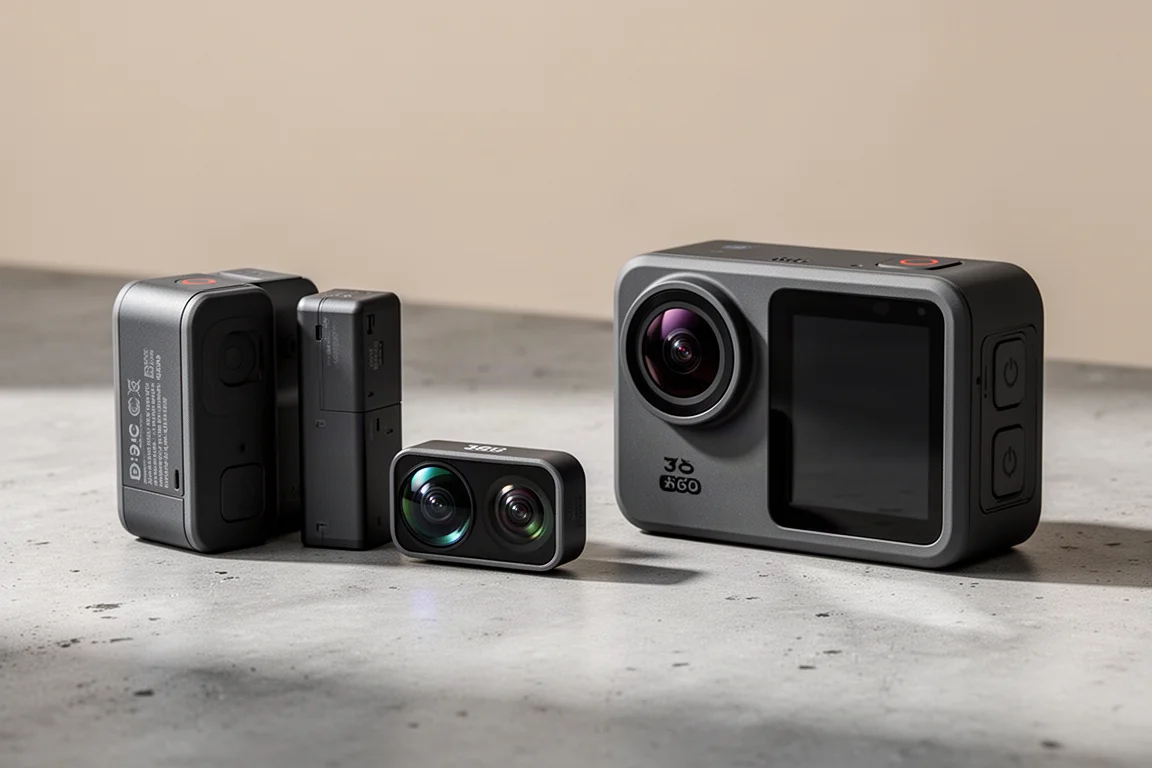
Action cameras live or die by how they behave on a real ride. GoPro has held the top spot in this category for years, but the Insta360 ONE RS arrives with a different idea: a modular body that swaps lenses, batteries, and cores rather than sealing everything into one fixed shape.
Both cameras were run back to back on the same trails and the same bike, looking at robustness, day-to-day usability, stabilization, and image quality. The goal is straightforward: work out which one suits trail riding better, and where each camera asks you to compromise.
What Matters Most in an Action Camera
Price and what ships in the box come first, because the two kits are not packaged the same way. Then usability: how quickly you can change a battery, check a clip, or mount the camera in a hurry. Stabilization and image quality matter most once you are actually moving, and hardware details such as waterproofing, mount design, and port access decide how the camera behaves after the ride.
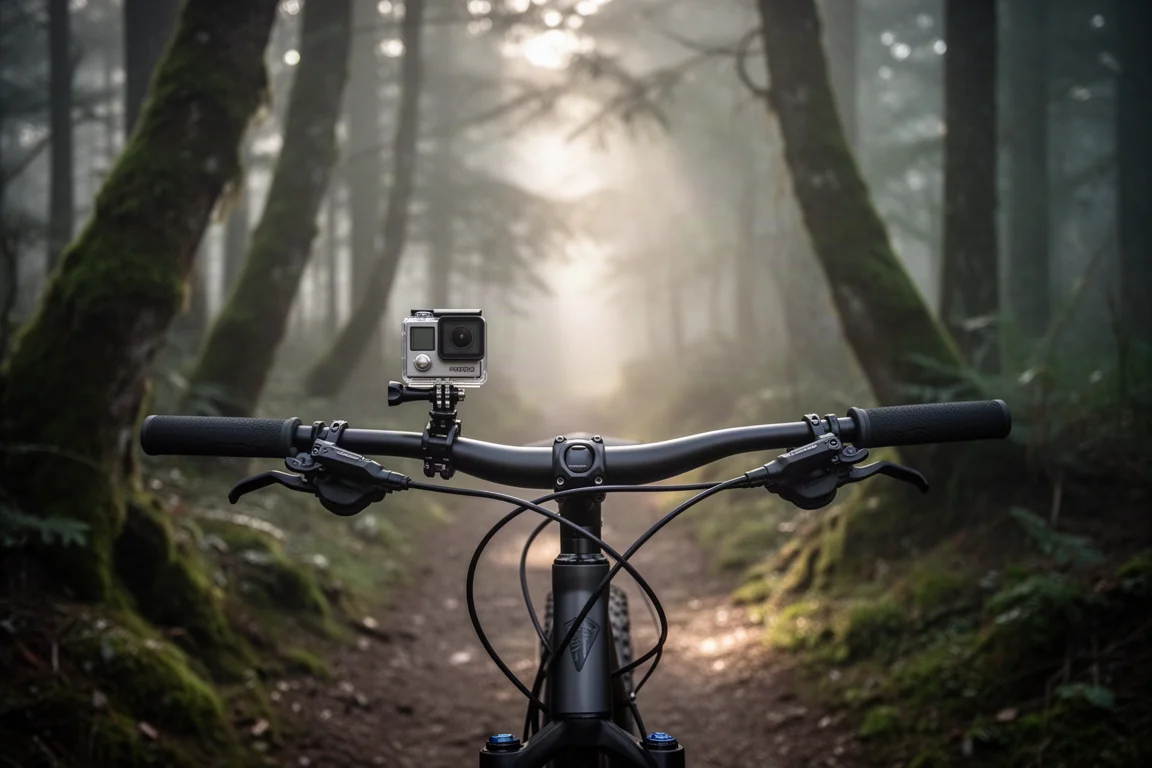
A trail camera also has to survive being packed into a frame bag or a jersey pocket. Modular or not, it needs to be quick to deploy and hard to damage, and those practical details shaped much of the comparison below.
Insta360 ONE RS: Modular Design and 360 Flexibility
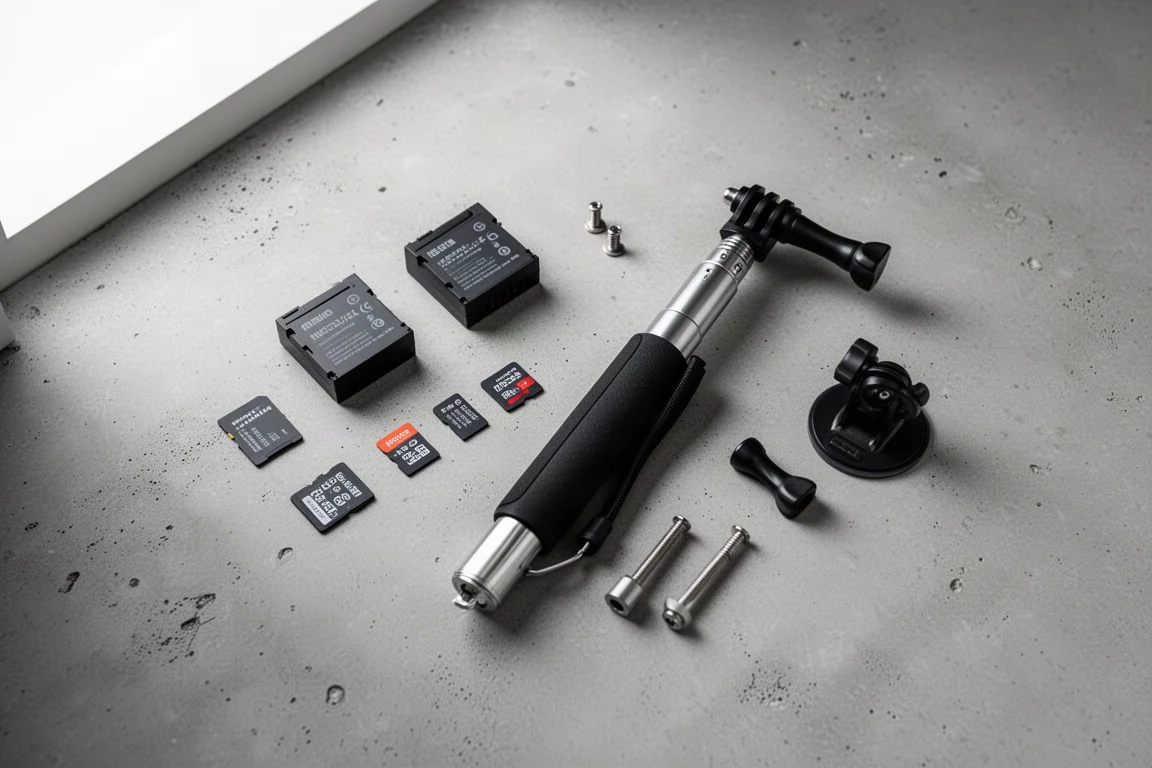
The ONE RS splits into three pieces: a battery, a core camera body that handles the processing, and a lens module. The Twin Edition kit bundles one core body, one battery, two lenses, a 4K Boost lens and a 360 lens, a 64GB micro SD card, and a substantial selfie stick. The Twin Edition is available as a standalone kit at around £499.99 without the selfie stick or the card, while the camera with only the 4K Boost lens costs around £299.99. There is also a 1-inch edition at around £499.99 with the widest non-360 lens Insta360 offers, developed with Leica, and that lens on its own is around £279.99.
Modularity is the real story. The parts break down small enough to fit into tightly packed kit bags, frame bags, or jersey pockets, and the components are interchangeable with the older R model as well. The camera feels robust and genuinely fun to handle.
The trade-offs are just as clear. The main screen is roughly a quarter the size of the GoPro’s, which makes in-camera playback awkward, so reviewing clips in the app is the better route. The charging port and micro SD slot on the core body are very small, and pulling a card can feel fiddly, particularly with the outer cage attached. There is no forward-facing screen either, so lining up self-shot framing relies on that single rear display.
On the plus side, the 360 lens records at a higher resolution than GoPro’s own 360 options, and when the camera is mounted on the included selfie stick the pole is cropped out of the shot with an almost seamless stitch. That makes it possible to shoot first and decide the framing later.
GoPro Hero 10: Simplicity and Frame Rate Range
The standard Hero 10 package includes the camera and its battery, a 32GB micro SD card, a charging cable, several sticky mounts, and spare thumb screws, at around £529.98. With a one-year subscription the price falls to roughly £329.98, though the subscription auto-renews at about £49.99 for the following year. An accessory bundle adds a spare battery, a tripod selfie stick, a magnetic clip mount, and a camera case.
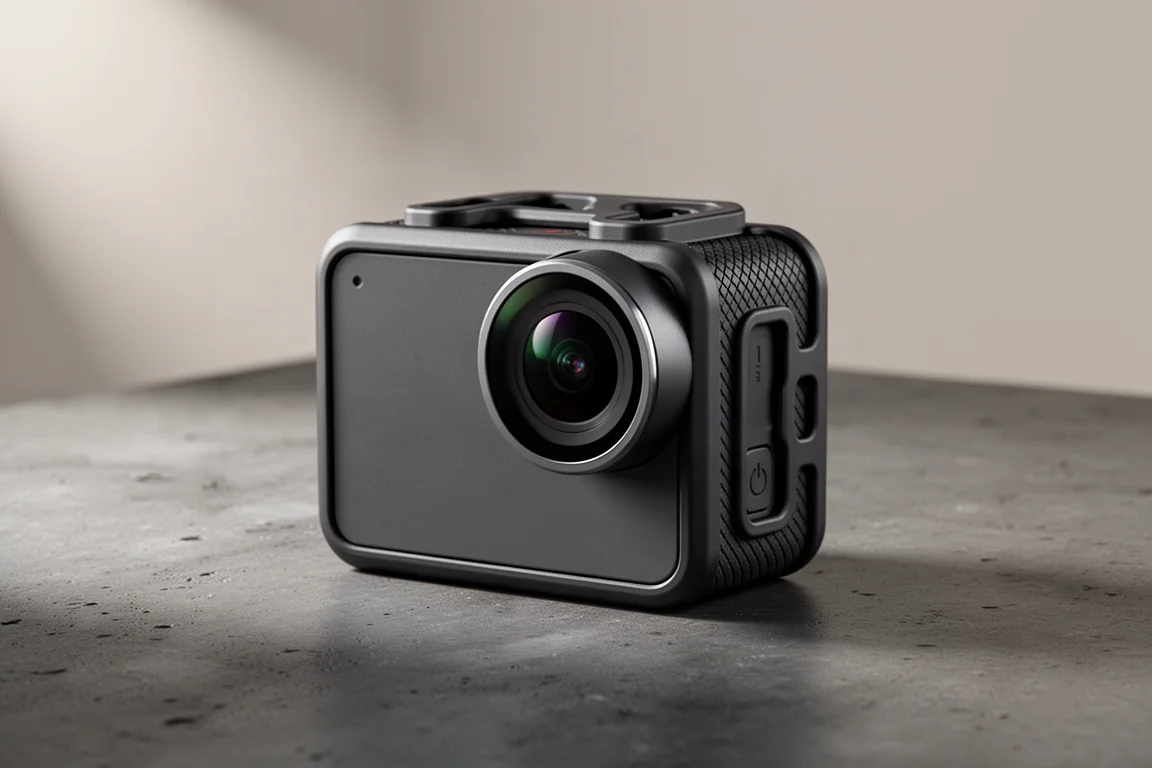
Where the GoPro wins is straightforward usability. The larger rear screen makes it quick and easy to review footage on the camera itself, and a forward-facing screen helps with framing self-shot clips. The mount is built into the body and folds away, so there is one less piece to pack and one less to lose. It is also waterproof without a housing to a claimed 33 feet, compared with 16 feet for the ONE RS.
The Hero 10 relies on HyperSmooth 4.0 for stabilization, and it can accept add-on lenses such as the Max Mod, which widens the field of view by 155 degrees and extends horizon leveling to a full 360 degrees in SuperView mode for around £89.99 extra. Full 360-degree capture, however, means buying a separate camera, since the Hero 10 cannot shoot it natively.
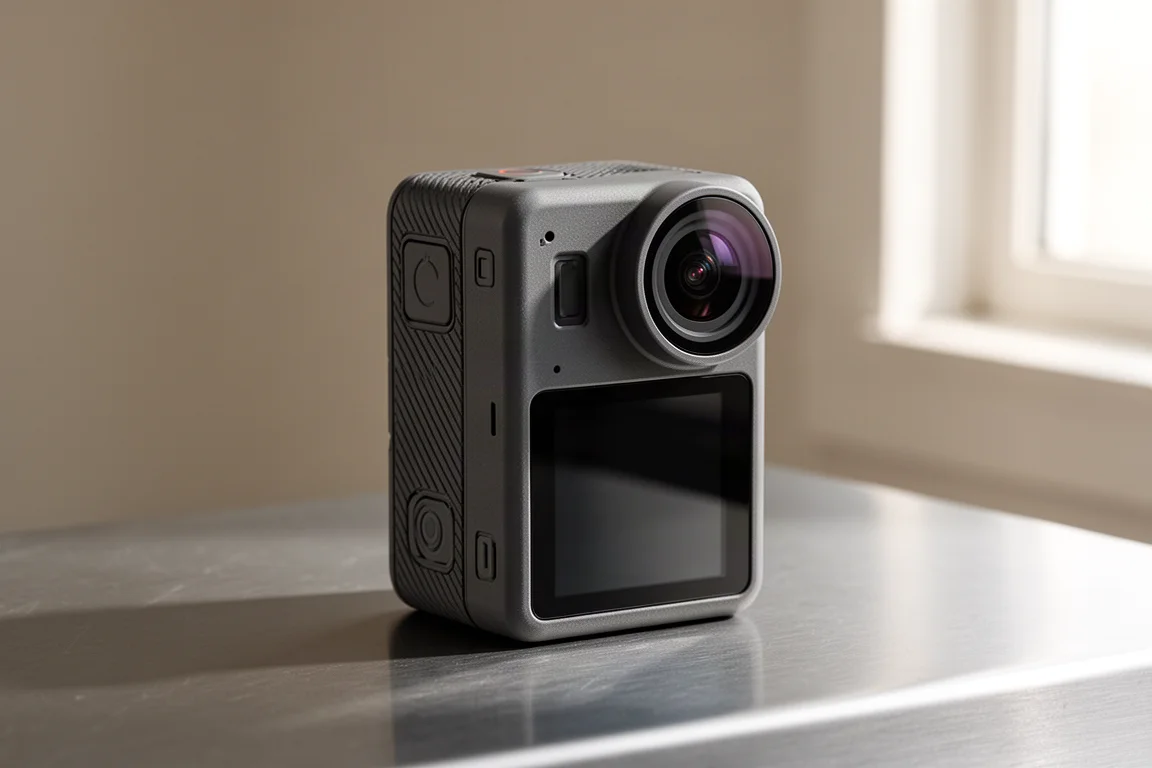
Image Quality and Stabilization Compared
Stabilization was compared on the same trail on the same bike. With the ONE RS set to its standard stabilization level, HyperSmooth looked noticeably smoother, but once the ONE RS was switched to its high setting the two were closely matched, with HyperSmooth still very slightly ahead. On the 360 lens, the ONE RS’s stabilization is close to unbeatable.
Horizon handling is a bigger gap. In the Insta360 app, horizon lock can be toggled on or off for any previously captured clip from any lens, holding the shot level through a full 360-degree turn. The Hero 10’s in-camera horizon leveling covers 45 degrees. The ONE RS does ask for work in the app: you choose whether to keep the shot center locked or reframe frame by frame using keyframes.
On outright image quality, the 4K Boost lens surprised. Its sensor is 1/2 inch and 48 megapixels against the Hero 10’s larger 1/2.3-inch, 23.6-megapixel sensor, and a larger sensor with fewer megapixels would normally be expected to do better in low light. In practice the ONE RS produced the sharpest, cleanest image in both good light and low light. GoPro footage looked a little more natural, which is a matter of taste rather than a measurable difference.
Durability, Waterproofing, and Hardware Trade-Offs
The Hero 10’s built-in folding mount and 33-foot waterproof rating without a housing make it the simpler camera to live with on wet, muddy rides. The ONE RS uses a removable outer shell with the same style of mount on the bottom and is rated to a claimed 16 feet, so it asks for more care around deep water and rough handling.
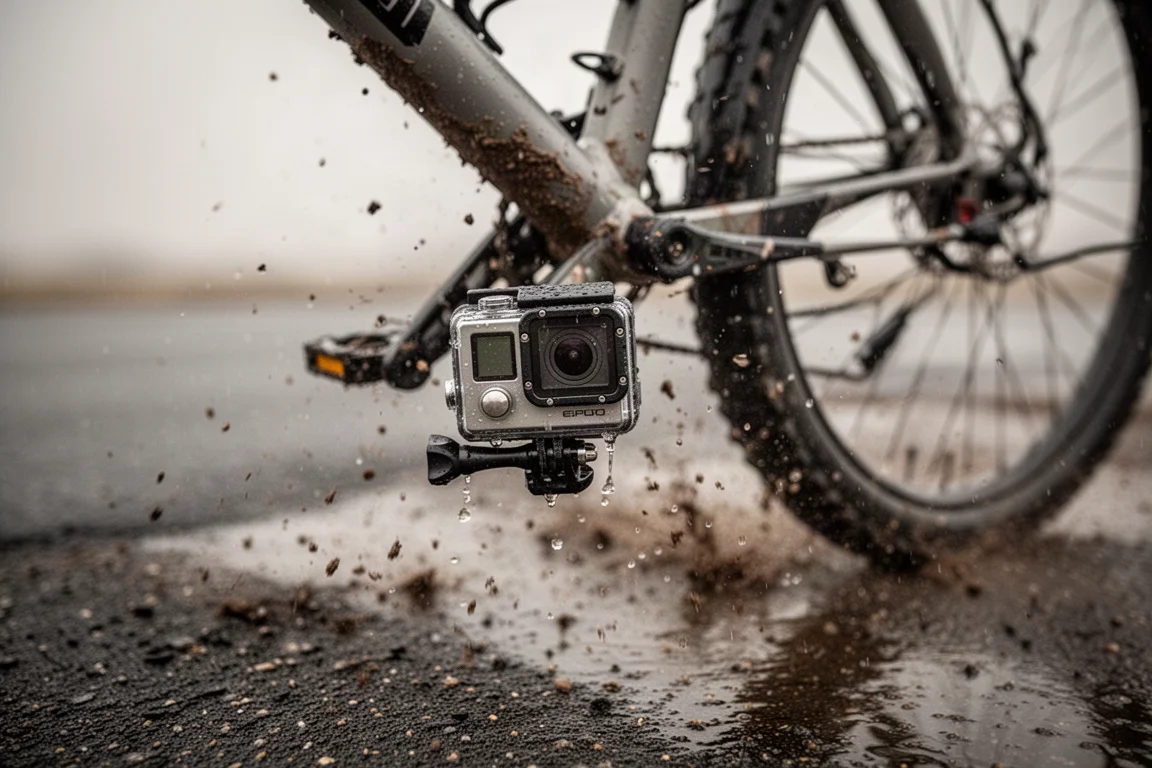
Port access is the other practical difference. The ONE RS core body has the smallest charging port and micro SD slot of the two, and card removal can be genuinely awkward with short fingernails or larger fingers. Care is needed, especially with the cage fitted, since it makes the opening deeper.
Both cameras took the trail itself without complaint, but the hardware differences show up in the small moments: swapping a battery on a cold morning, fishing out a card to offload footage, or packing the camera away when the weather turns.
Frame Rates and Resolution Options
On the ONE RS with the 4K Boost lens, 6K footage is available at 24 and 25 frames per second in widescreen mode, though FlowState stabilization is not offered in that profile. 4K runs at 24, 25, 30, 50, and 60 frames per second, 2.7K unlocks up to 100 frames per second, and 1080p reaches 200 frames per second. The same 4K settings can be shot in a 4:3 aspect ratio for more room at the top and bottom of the frame.
The Hero 10 tops out at 5.3K in 24, 25, and 50 frames per second, without SuperView. In 4K it manages 24, 25, and 50 frames per second in SuperView, and 100 frames per second in wide angle mode. At 2.7K it reaches 200 frames per second, again without SuperView, and 1080p keeps the higher frame rates available. The Hero 10 takes this round on the strength of more frame-rate options at higher quality resolutions, even though it cannot match the 6K ceiling of the ONE RS.
Editing Workflow and 360 Reframing
The Insta360 workflow is the more flexible of the two. Clips shot on the 360 lens can be reframed after the fact, and the app offers center lock or keyframe-based reframing, with horizon lock available on any previously captured shot. For anyone who enjoys shaping footage in post, that flexibility is the main reason to choose the ONE RS.
Editing is supported beyond the phone as well, with a desktop app and a plugin that opens the workflow inside Adobe Premiere. Both cameras allow footage review through their apps, but the ONE RS leans more heavily on software to make up for its smaller on-camera screen.
Practical Trade-Offs in Daily Use
The ONE RS is the more playful camera. Its modular parts pack down small, the 360 lens is genuinely enjoyable to use, and the selfie stick stitching removes the pole from the frame with almost no visible seam. The cost is a small screen, fussy ports, and a lower waterproof rating.
The Hero 10 is the more predictable one. It mounts, boots, and records with very little thought, the screen is easy to read, and the mount is always attached. It gives up 360 capture, 6K, and the wide horizon lock that the ONE RS offers.
Which Action Camera Should You Buy?
Choose the Insta360 ONE RS if 360 capture, modular parts, and post-shoot reframing appeal to you more than convenience. The 4K Boost lens delivers the sharpest, cleanest image of the two, and the app’s horizon lock works across a full 360-degree turn.
Choose the GoPro Hero 10 if you want a dependable camera that behaves the same way every time you pick it up. It offers more frame-rate options at higher resolutions, a larger rear screen, a forward-facing screen for framing, a built-in folding mount, and a 33-foot waterproof rating without a housing. The one-year subscription price brings the cost down considerably if you are comfortable managing the auto-renewal.
Conclusion
Both cameras are capable on the trail, and the decision comes down to what you value. The ONE RS rewards riders who want flexibility and enjoy working with footage afterwards. The Hero 10 rewards riders who want simplicity, a better screen, and a wider range of frame rates at high resolutions.
Further reading
Related Reviews
Action Cameras
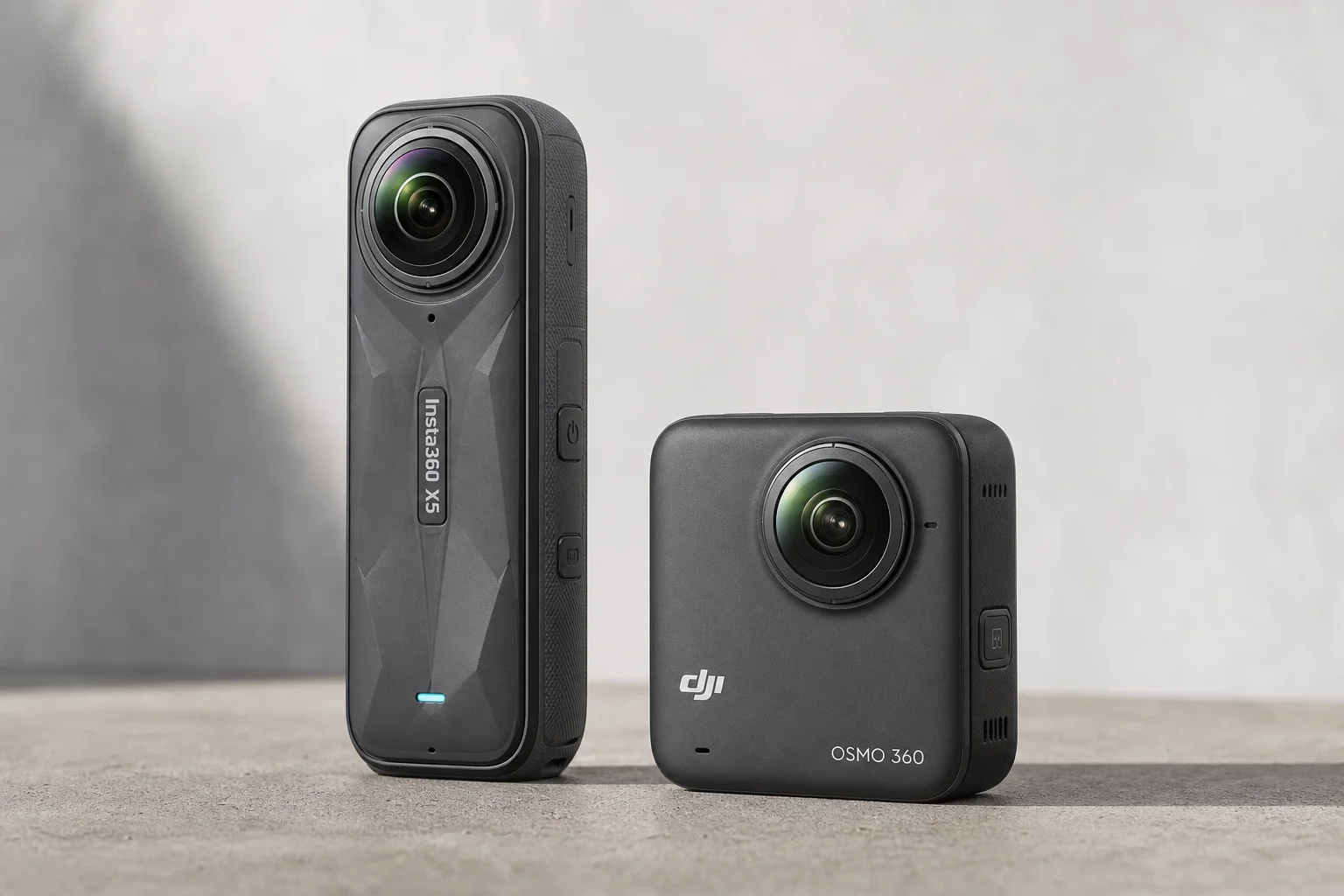
360 Cameras for Adventure Motorcycling: Insta360 X5 vs DJI Osmo 360
Two 360-degree action cameras designed for off-road and adventure riding. A detailed comparison of features, stabilization, and real-world performance for motorcycle touring.
Action Cameras
Akaso EK7000 vs GoPro Hero 8 Black: Budget Action Camera Tested
A $50 budget action camera faces off against the GoPro Hero 8 Black. Here's how the Akaso EK7000 really performs in video, audio, and photo quality.
Action Cameras
Best Action Cameras 2026: Five Top Picks Ranked
A comprehensive ranking of five action cameras from budget-friendly to premium, covering durability, video quality, stabilization, and low-light performance.