Action Cameras
360 Cameras for Adventure Motorcycling: Insta360 X5 vs DJI Osmo 360
Two 360-degree action cameras designed for off-road and adventure riding. A detailed comparison of features, stabilization, and real-world performance for motorcycle touring.
Introduction
For adventure motorcyclists, capturing footage of trails, remote roads, and challenging terrain requires a camera that can handle vibration, dust, and unpredictable angles. Standard action cameras force you to choose a single perspective and reposition the camera for different shots. 360-degree cameras solve this problem by capturing in all directions simultaneously, then letting you choose your framing during editing.
The Insta360 X5 and DJI Osmo 360 represent the current generation of 360 cameras built for serious outdoor use. Both offer excellent image stabilization, rugged construction, and the flexibility that makes adventure filming easier and more creative.
Why 360 Cameras Matter for Adventure Riders
Action cameras without image stabilization produce shaky, unusable footage on rough terrain. Modern 360 cameras solve this with advanced stabilization that works across all directions. Because they capture everything at once, you don’t need to anticipate which angle will matter most. A crash, a technical section, or an unexpected wildlife encounter is already recorded from every angle.
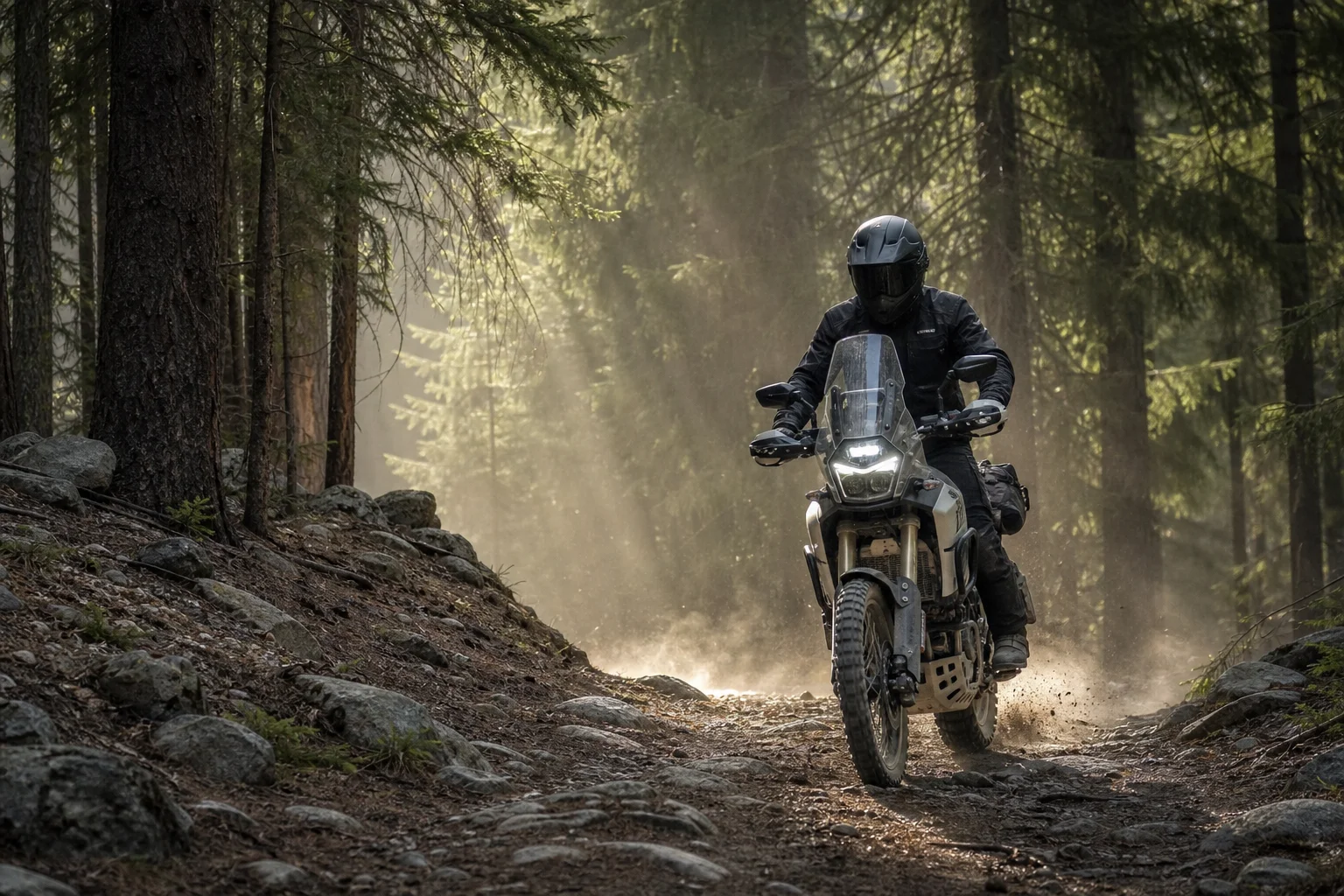
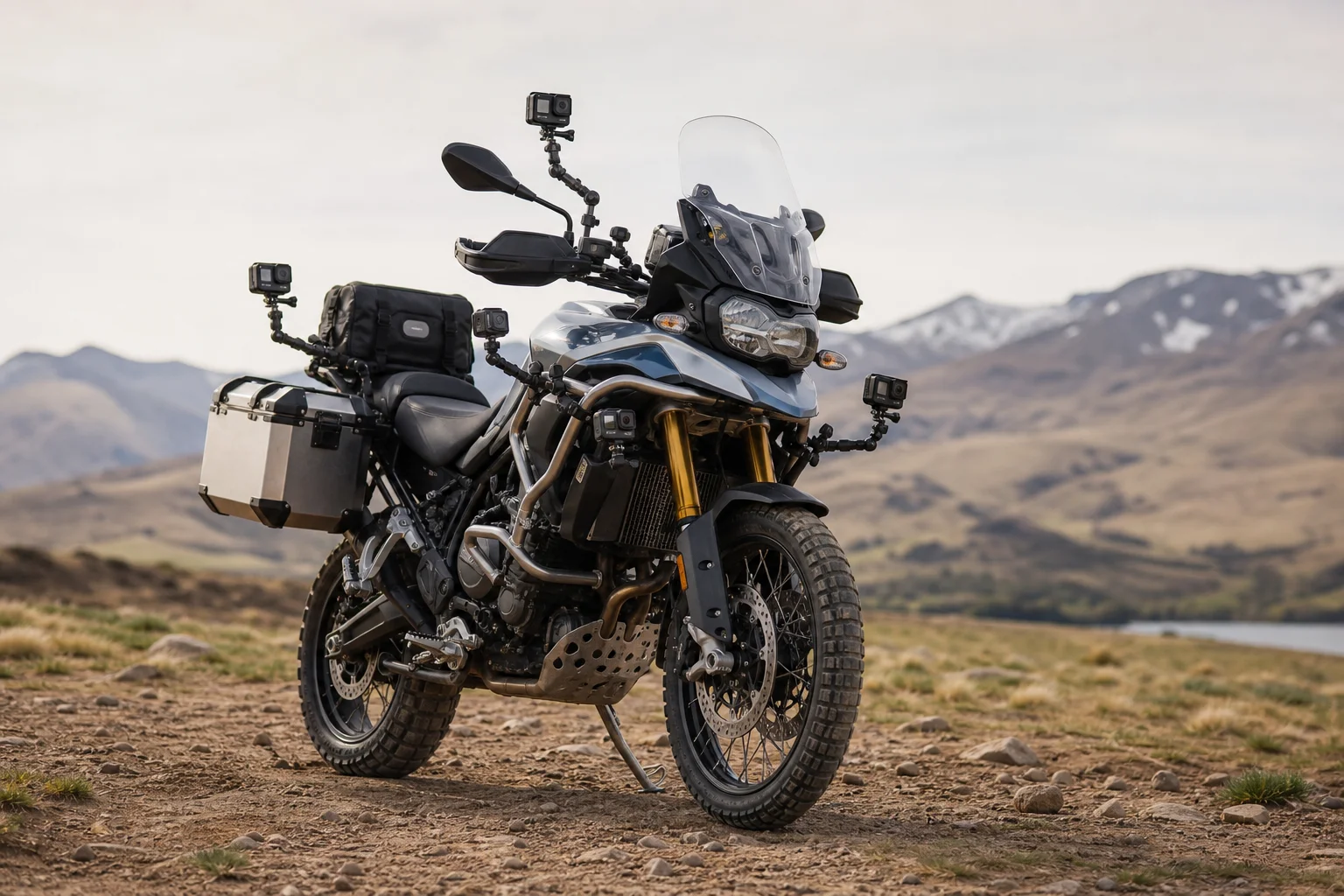
Unlike standard action cameras, 360 cameras can be mounted almost anywhere on a motorcycle: helmets, handlebars, crash bars, or luggage racks. The dual-lens design captures the full environment, so repositioning the camera doesn’t mean missing important moments. This flexibility is especially valuable on adventure rides where the best shot might come from an unexpected direction.
Form Factor and Durability
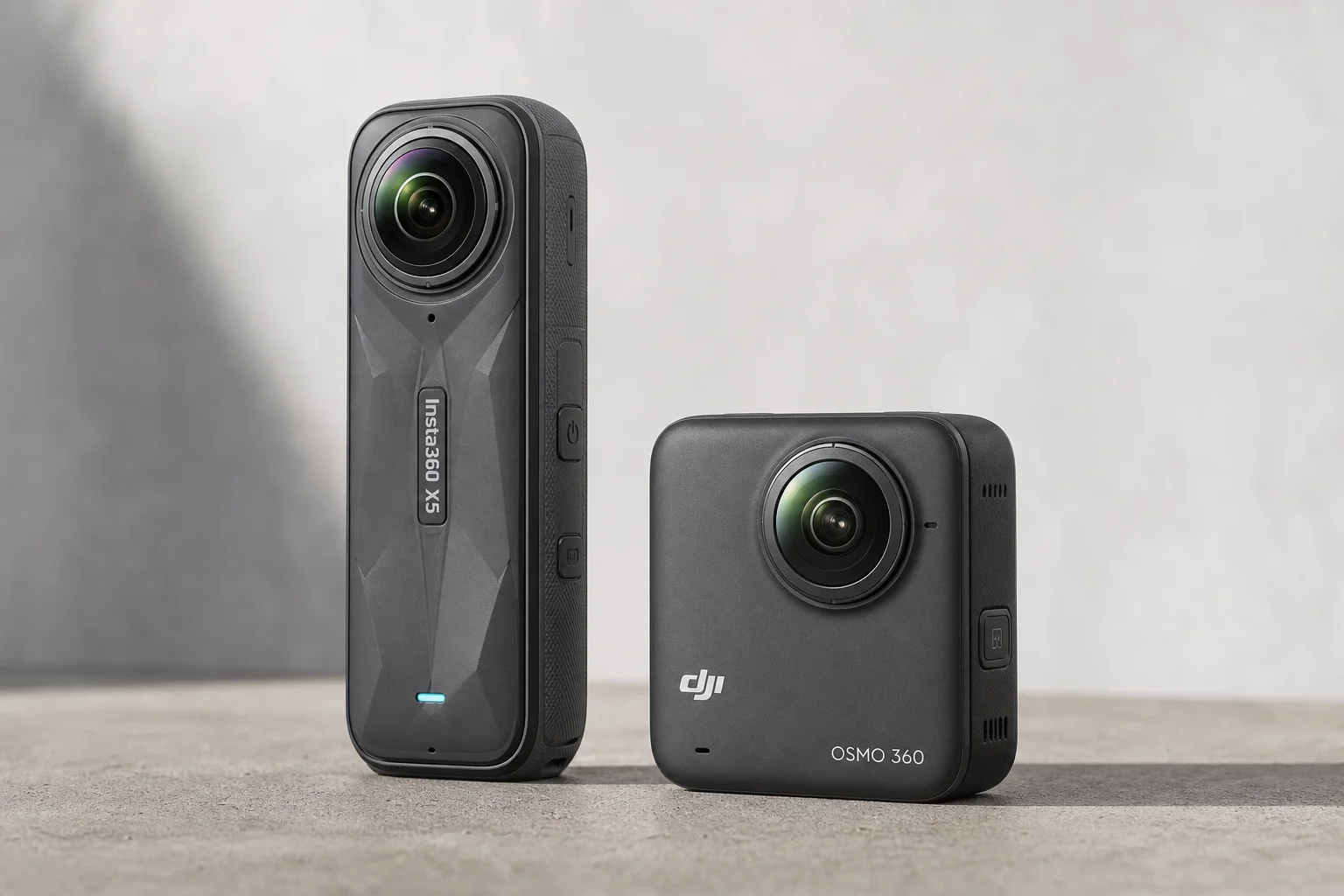
The Insta360 X5 has a long, narrow profile, while the DJI Osmo 360 is more compact and squat. For tight spaces or minimalist mounting, the DJI’s smaller footprint may be preferable. The DJI is also slightly lighter, which matters when weight distribution on a motorcycle is a consideration.
Both cameras feature large, bulbous lenses that protrude from each side. These lenses are durable and can withstand being set down without scratching. However, there is a key difference in repairability: the Insta360 X5 allows you to replace the lenses yourself if they do get damaged. The DJI Osmo 360 requires sending the camera back to the manufacturer for lens replacement.
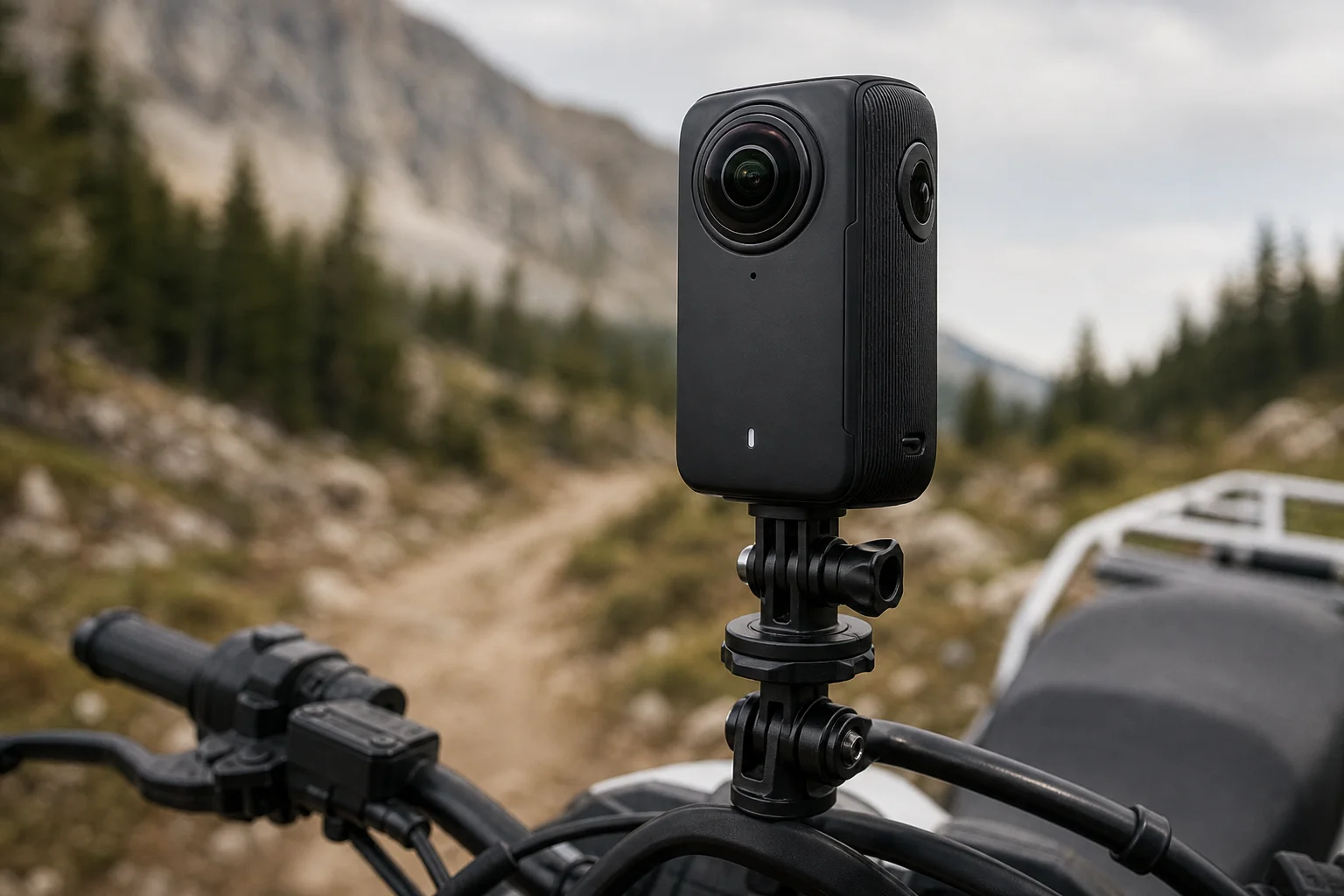
Both cameras carry an IP67 waterproofing rating. The Insta360 X5 is rated to 15 meters depth, while the DJI Osmo 360 is rated to 10 meters. In practical terms, both will survive a motorcycle drop in a river or stream without damage.
Battery and Charging
The Insta360 X5 uses a 2400 mAh battery, while the DJI Osmo 360 uses a 1950 mAh battery. Despite the difference in capacity, both cameras deliver similar runtime in the field. The DJI Osmo 360 uses the same battery as the DJI Action 5 Pro, which is useful if you already own that camera and want to share batteries.
Both cameras feature a high-speed USB-C port for charging and data transfer. A practical tip for DJI Osmo users: when inserting the battery, push the pull tab toward the hinge of the access door so the battery sits flush and is easy to remove.
DJI also offers a multi-function battery case that holds three batteries and displays their charge status via LED indicators. This case can also charge batteries and function as a power bank for phones and tablets, making it a useful accessory for extended trips.
Display and Controls
Both cameras have bright, easy-to-read displays that remain visible in daylight. The menu structures are intuitive and quick to learn, which matters when you’re setting up shots in the field. Both offer quick-release mounts as well as standard 1/4-20 screw mounts. For off-road riding, the screw mount provides a more secure connection, though the quick-release has proven reliable in practice.
A practical tip: wipe the lenses frequently during rides. Dust and moisture accumulate quickly on the large lens surfaces, and regular cleaning keeps footage clear.
Video Specifications and Performance
The DJI Osmo 360 can shoot 8K video at 50 frames per second, while the Insta360 X5 maxes out at 8K and 30 frames per second. This difference is noticeable when editing fast-action footage or when you want smoother slow-motion playback.
Color depth also differs: the Insta360 X5 shoots in 8-bit color, while the DJI Osmo 360 shoots in 10-bit color. The 10-bit color space gives you significantly more control over color grading and exposure adjustments during post-production. The DJI Osmo 360 uses a square sensor designed to maximize efficiency and resolution, and it comes with over 100 GB of built-in storage.
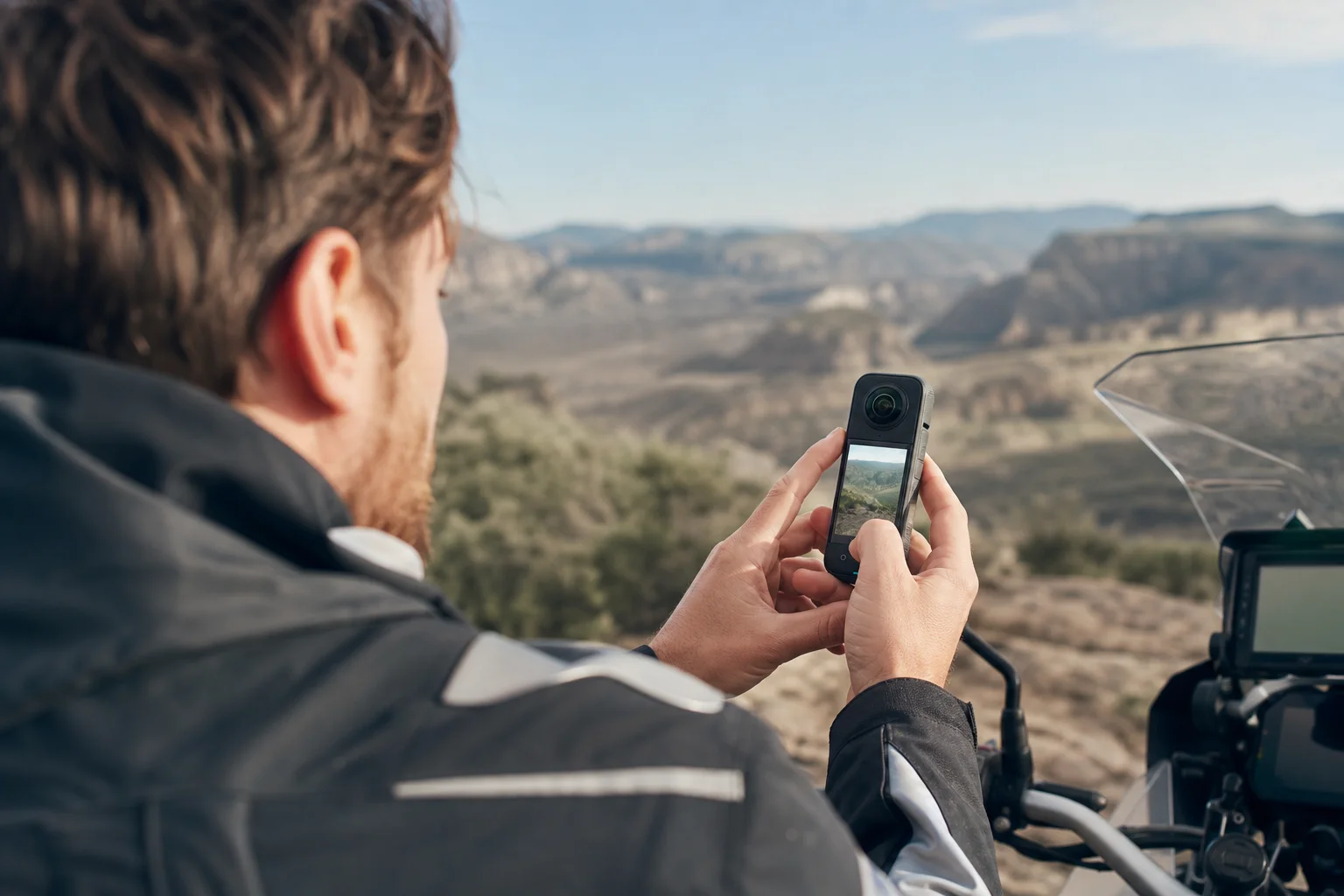
Both cameras can capture still photos, but the DJI Osmo 360 offers much higher photo resolution than the Insta360 X5. If photography is part of your adventure documentation, this is a meaningful advantage.
Audio and Accessories
Both manufacturers offer wireless Bluetooth microphones that pair easily and include adjustable noise reduction. These microphones can be mounted in various locations, worn on clothing, or placed inside a helmet. At speeds below highway velocity, both deliver clear voice audio suitable for narration or commentary.
The DJI Osmo 360 benefits from accessory compatibility with the Action 5 Pro, including shared batteries. The multi-function battery case mentioned earlier is a particularly useful addition for long trips where charging opportunities are limited.
Conclusion
Both the Insta360 X5 and DJI Osmo 360 are capable 360-degree cameras well-suited to adventure motorcycling. The Insta360 X5 is a proven platform with user-replaceable lenses and solid performance. The DJI Osmo 360 edges ahead in color space, sensor design, frame rate, and photo resolution, making it the stronger choice if those specifications matter to your workflow.
If you can afford only one action camera for motorcycle adventures, a 360 camera is the better investment than a standard action camera. The ability to capture in all directions, combined with excellent stabilization, makes it easier to get usable footage on rough terrain and unpredictable rides.
Product link
View more details for Insta360 X5
This product is mentioned in the review. Check the specifications, options, and compatibility before buying.
View more details for Insta360 X5Further reading
Related Reviews
Action Cameras
Akaso EK7000 vs GoPro Hero 8 Black: Budget Action Camera Tested
A $50 budget action camera faces off against the GoPro Hero 8 Black. Here's how the Akaso EK7000 really performs in video, audio, and photo quality.
Action Cameras
Best Action Cameras 2026: Five Top Picks Ranked
A comprehensive ranking of five action cameras from budget-friendly to premium, covering durability, video quality, stabilization, and low-light performance.
Action Cameras
Best Action Cameras for Scuba Diving: Four Underwater Performers Tested
We tested the GoPro Hero 13, Insta360 X4, Insta360 Ace Pro 2, and DJI Osmo Action 5 on multiple dives in tropical and cold water. Here's how they compare for underwater filming.