Action Cameras
Insta360 Action Camera Review: Mounts That Make Ski Footage Stand Out
A practical look at how the Insta360 action camera and its mounts turn a ski day into creative, immersive footage, plus the trade-offs worth knowing before buying.
Introduction
A great ski video comes down to three things: actually being on the mountain, carrying a camera that can keep up, and mounting that camera properly. The Insta360 action camera handles the second part with ease, but the mounts are what turn ordinary clips into footage worth rewatching. Its 360-degree capture and the breadth of available mounts make angles possible that a traditional action camera simply cannot reach.
What makes this camera so useful on snow is how many perspectives one small device can produce. A selfie angle that hides the pole completely, an over-the-shoulder view filmed from a backpack, a mouth-level POV that sits close to eye height, or a long extension that reaches out in front of you and looks almost like a drone shot.
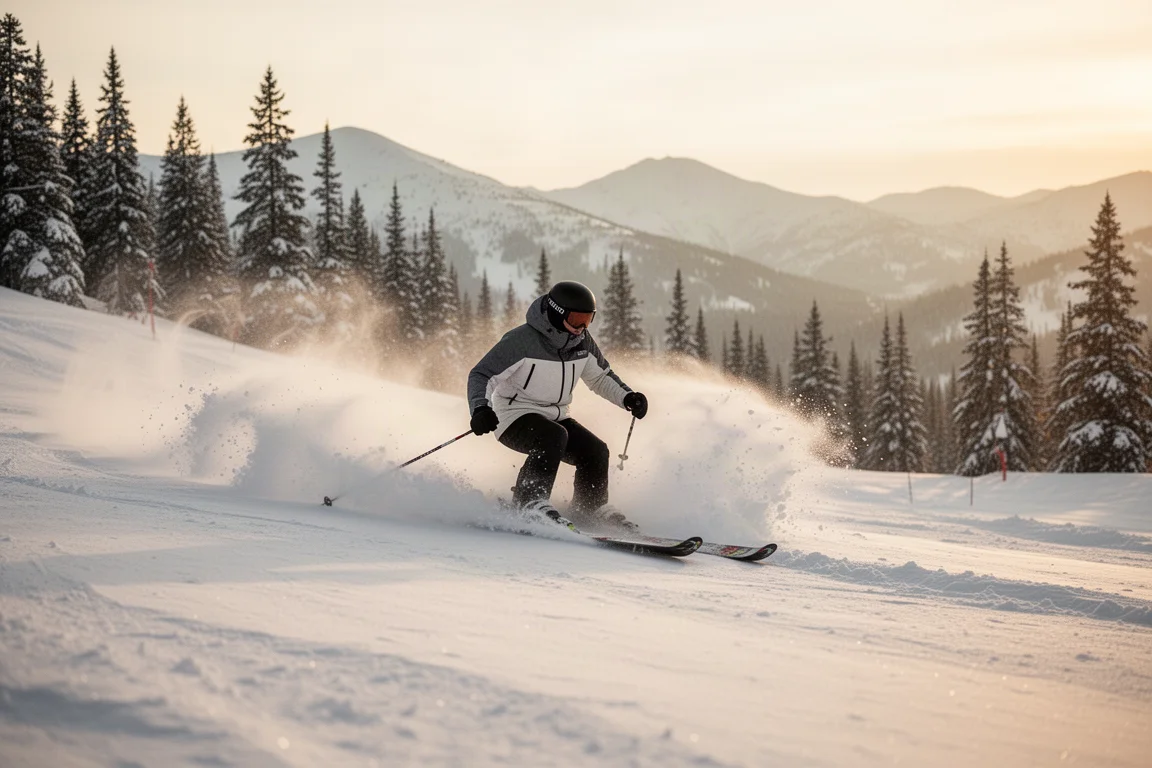
This guide walks through the mounts that work best on a ski day, which ones reward the extra setup effort, and the small habits that keep the lens clean and the footage usable from first lift to last run.
Who this product is for
The Insta360 action camera suits skiers and snowboarders who want footage that feels immersive rather than flat. If you have ever watched a chest-mounted clip and felt the terrain looked gentler than it actually was, this is the kind of camera that solves that problem by capturing a full field of view that can be reframed later.
It also fits riders who are happy to spend a minute setting up a mount before dropping in. The most interesting angles come from deliberate choices about where the camera sits, so a little patience pays off.
Finally, it appeals to anyone who wants a single small camera to cover selfie shots, POV shots, and follow-cam style footage without carrying multiple devices. Riders who want to clip something on and never think about it again will still get usable results, but they will leave much of the camera’s creative potential unused.
Main strengths
The headline strength is flexibility. Because the camera records a full 360-degree view, you can decide later whether a clip should be a wide scene, a forward-facing POV, or a tight selfie framing, all from the same recording.
The invisible selfie stick is the single most rewarding accessory. With the pole held out to the side or behind, it disappears from the shot, which produces clean follow-cam looks of ski bases carving from the side, or a rider descending with nothing but snow and mountain behind them.
The mount ecosystem covers almost every shooting style: head mounts, chest mounts, mouth mounts, backpack mounts, tripod-based options, and spinning bullet-time rigs. That range is unusual, and it is the main reason the camera stays interesting season after season.
Among the POV options, the head mount stands out for realism. Angled forward, it captures how steep a line actually is far better than a chest mount, which tends to flatten the terrain. Riders who care about conveying pitch and speed usually end up favouring it.
Creative mounts for standout shots
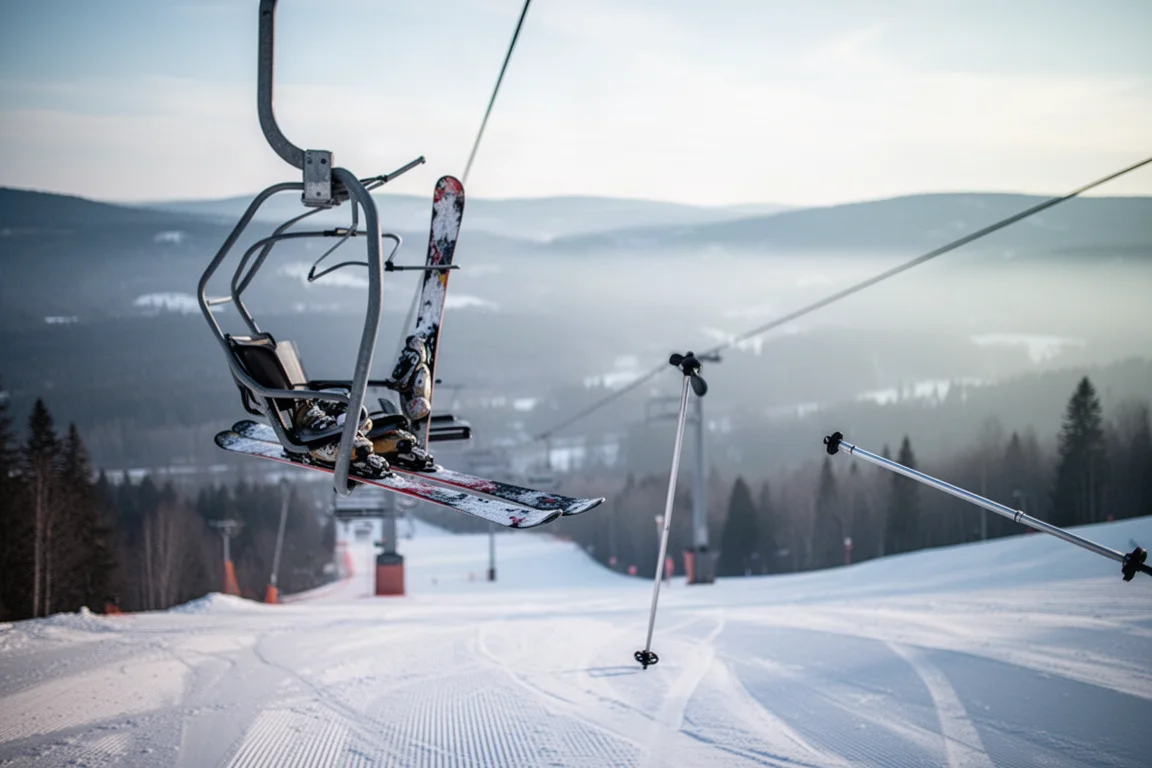
The extended invisible selfie stick stretches out to roughly 3 m, which looks faintly ridiculous on the chairlift and produces genuinely distinctive footage. Held out in front, it frames you against the run ahead. Angled down, it captures the skis and the snow passing beneath them. Stretched out of a truck window on a backcountry road, or out of a gondola window above a valley, it reads almost like a drone shot.
The backpack mount puts the camera behind your shoulder and films whatever is in front of you while you ski completely freely. It is fully hands-free, and a second stick can be added at the back to change the angle. The trade-off is stability: footage from this setup tends to look shakier than the alternatives.
Two more options push things further. The bullet time accessory is a weighted line you swing around your head to orbit the camera, and the tripod bullet mount lets you film yourself hands-free, including in 4K single lens mode, before spinning in a circle for an orbiting shot. Both are fun to experiment with and both take more fiddling than the everyday setups.
Everyday mounts that keep skiing natural
For most ski days, four mounts do the heavy lifting. The standard invisible selfie stick covers selfie and follow-cam angles. The head mount, angled forward, delivers the most realistic sense of steepness. The chest mount is simple to fit and gives a stable, easy POV. The mouth mount, which sits between your teeth with a cord around your neck so it cannot drop, produces an immersive view close to what your eyes actually see, showing your legs and body in frame.
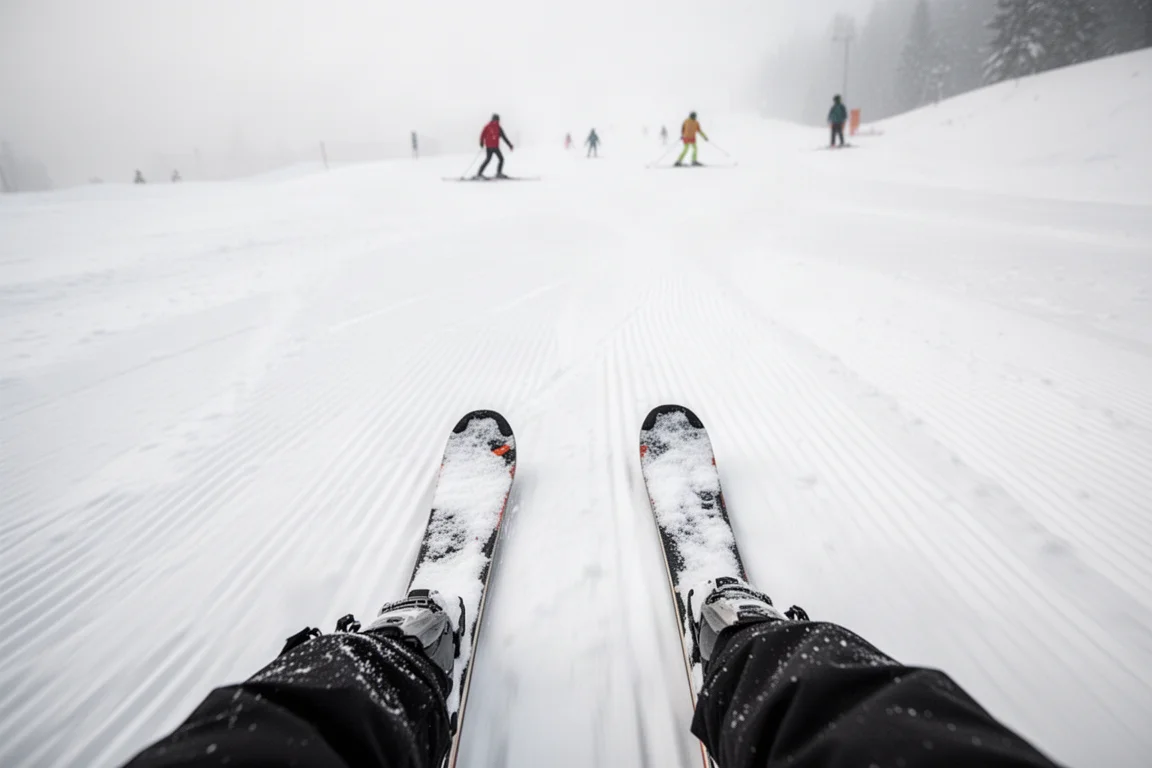
These are the setups that do not interfere with your skiing. They go on quickly, they stay put, and they let you keep riding at your normal pace instead of stopping to adjust gear.
That practicality is exactly why they tend to become daily drivers. The more elaborate mounts are worth owning for specific shots, but the simple ones are what you will actually use run after run.
Things to consider before buying
The creative mounts are less practical on a normal ski day. The extended selfie stick, the backpack mount, and the bullet-time rig all require more finicking to get a clean shot, which is fine for a dedicated filming session but less enjoyable if your main goal is simply to shred.
The backpack mount is the least stable of the group. It is hands-free and fun, but the resulting footage is noticeably shakier than head or chest-mounted clips.
Head mounting involves a compromise too. Mounting on the forehead puts pressure on your goggles, so positioning the camera on top of the head and angling it forward is often more comfortable, even if it looks a little unusual on the lift.
Chest-mounted footage looks flatter than head-mounted footage, which matters if your priority is conveying how steep a line really is.
Lens care and small habits that protect your footage
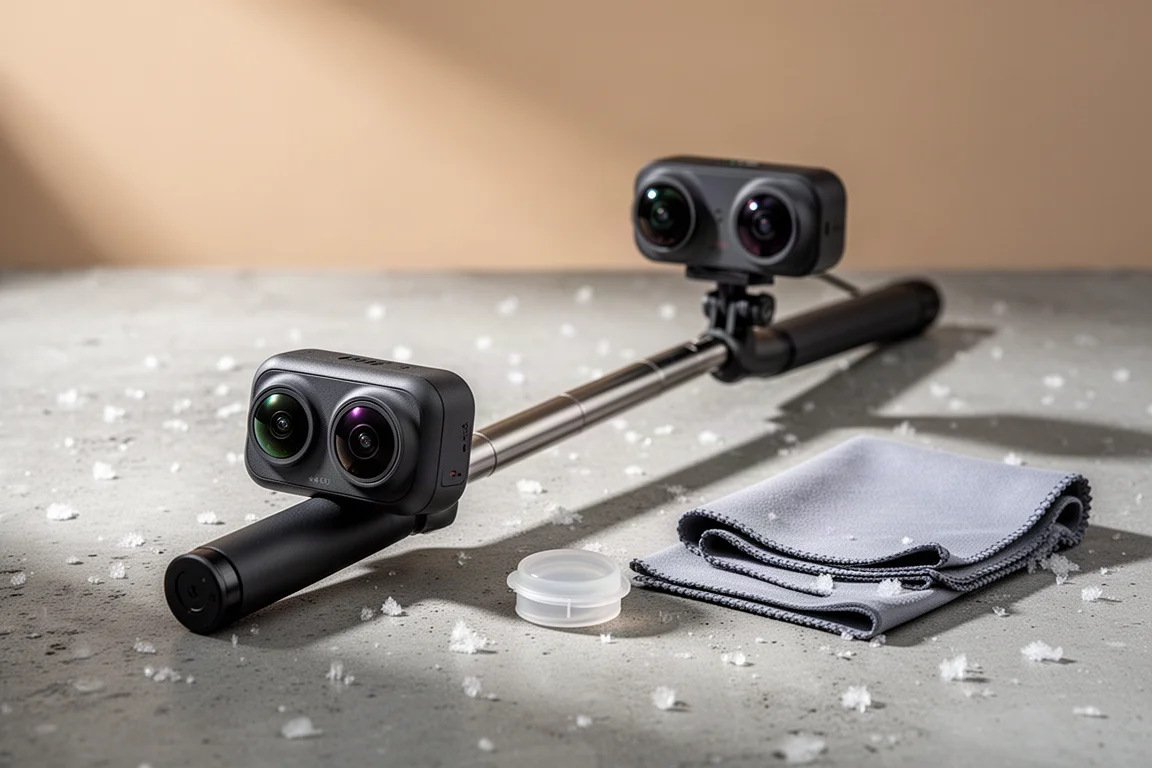
The small plastic lens cap is the most underrated piece of the whole kit. It protects the delicate lens whenever the camera is not filming, so it is worth keeping it on between runs and keeping it in a pocket so it never goes missing.
The other essential habit is carrying the camera wipe that comes with the camera. Snow, water, and general moisture on the lens will disturb your footage, and a quick wipe before every run keeps the image clean. It takes a second and prevents the disappointment of reviewing a great line only to find it smeared.
Neither habit is complicated, but together they protect both the hardware and the footage, which is the whole point of bringing the camera along.
Buying advice
Start with the mounts that match how you actually ride. For most skiers, that means the standard invisible selfie stick, a head mount, and a chest mount, with a mouth mount added if you like an eye-level POV. Those cover selfies, follow shots, and realistic POV footage without slowing you down.
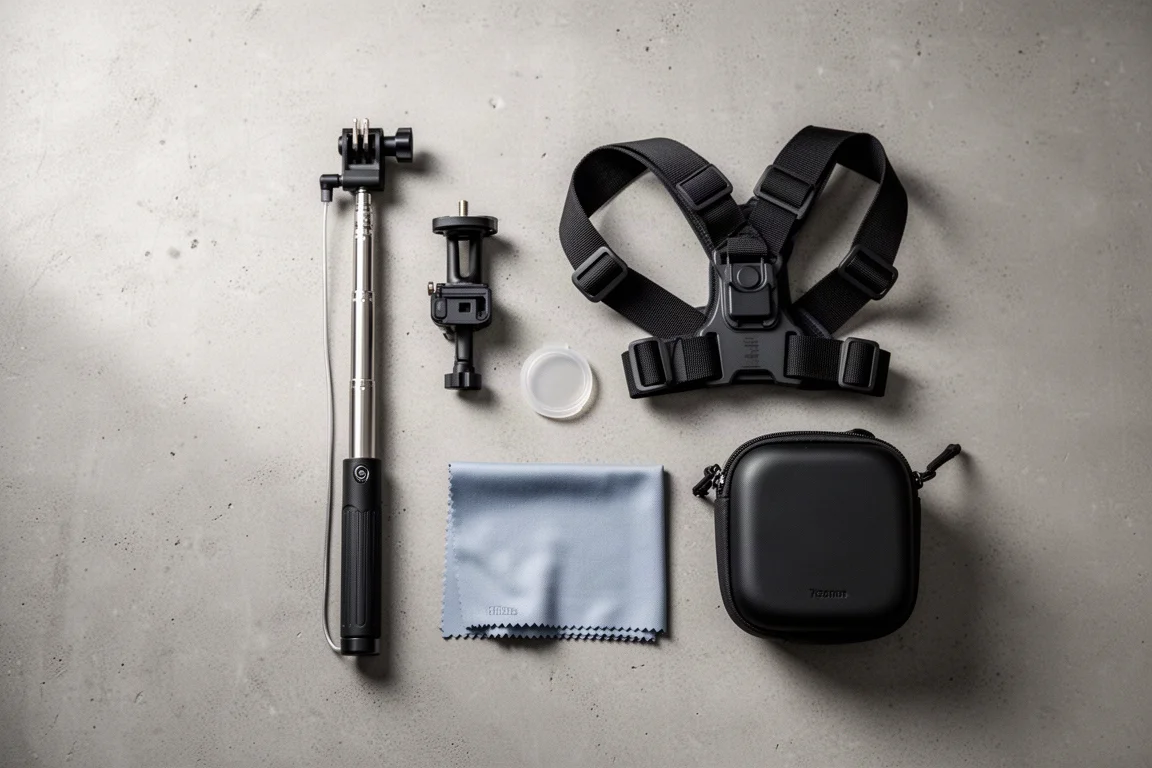
Once those are dialled in, the extended selfie stick, backpack mount, and bullet-time accessories become worthwhile additions for specific creative shots rather than everyday tools. Bundles have also been part of promotions around this camera, including a discount code and a free snow bundle, so it is worth checking what is included at the time you buy.
The safest approach is to think of the camera and its mounts as one system. The camera is what makes the creative angles possible, and the mounts are what make them practical on a real ski day.
Conclusion
The Insta360 action camera earns its place in a ski bag because it produces perspectives a conventional action camera cannot. The invisible selfie stick, head mount, chest mount, and occasional mouth mount cover the vast majority of situations with almost no impact on your skiing, while the extended stick, backpack mount, and bullet-time rigs are there for the days when you want to chase something more ambitious.
Buy the mounts that suit your riding, protect the lens with the cap, keep the wipe handy, and the camera will reward you with footage that actually conveys what the mountain felt like.
Product link
View more details for Insta360 Action Camera
This product is mentioned in the review. Check the specifications, options, and compatibility before buying.
View more details for Insta360 Action CameraFurther reading
Related Reviews
Action Cameras
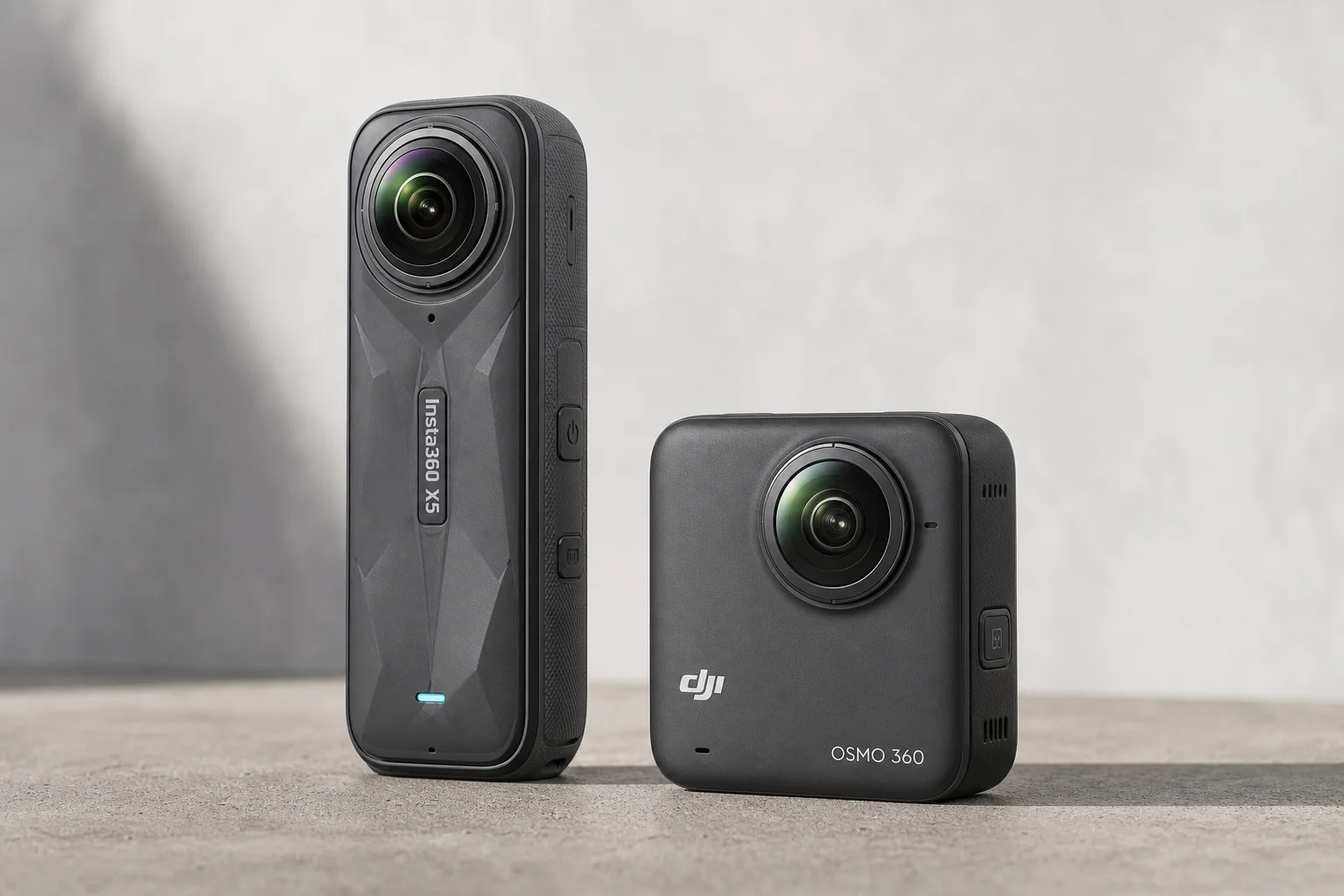
360 Cameras for Adventure Motorcycling: Insta360 X5 vs DJI Osmo 360
Two 360-degree action cameras designed for off-road and adventure riding. A detailed comparison of features, stabilization, and real-world performance for motorcycle touring.
Action Cameras
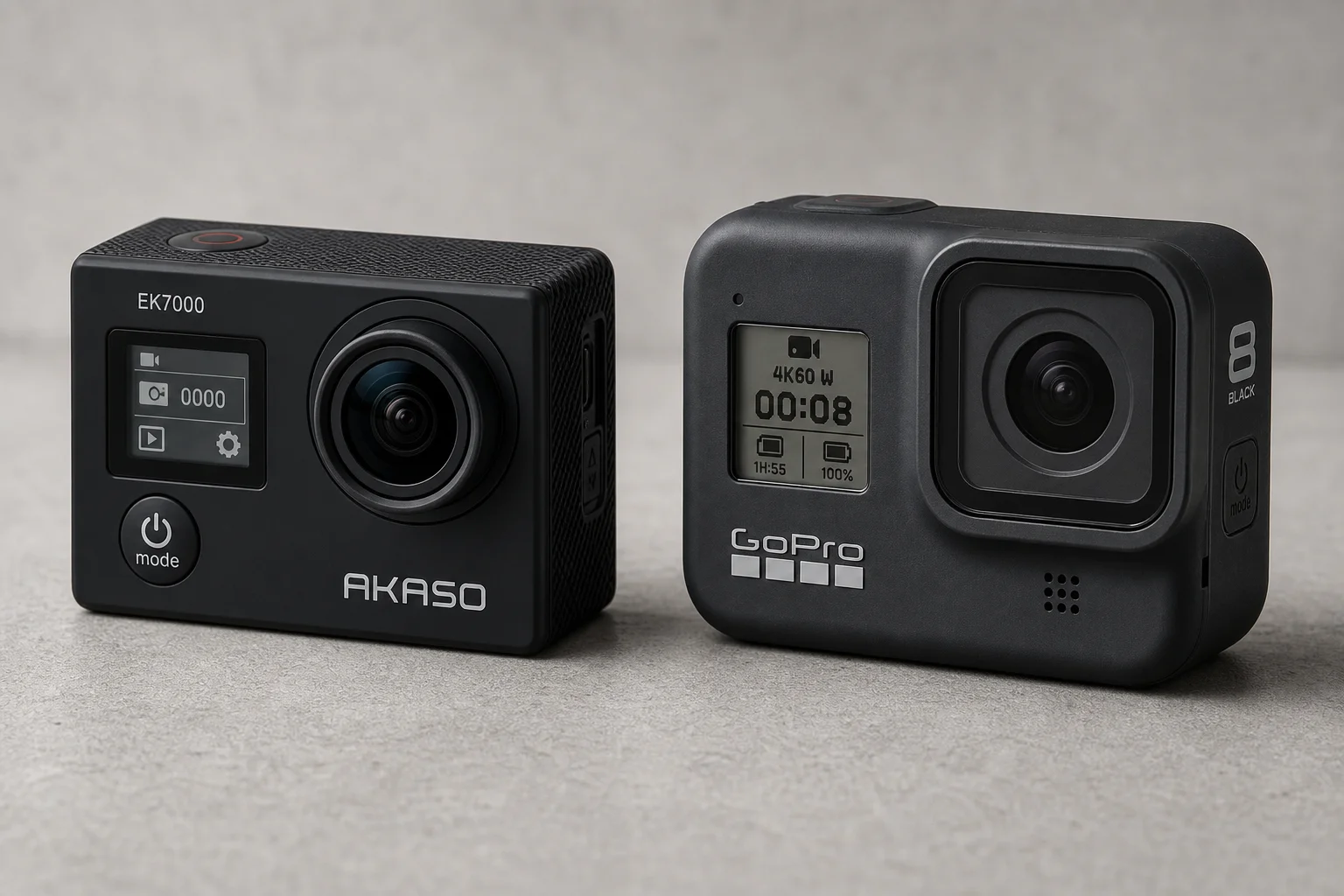
Akaso EK7000 vs GoPro Hero 8 Black: Budget Action Camera Tested
A $50 budget action camera faces off against the GoPro Hero 8 Black. Here's how the Akaso EK7000 really performs in video, audio, and photo quality.
Action Cameras
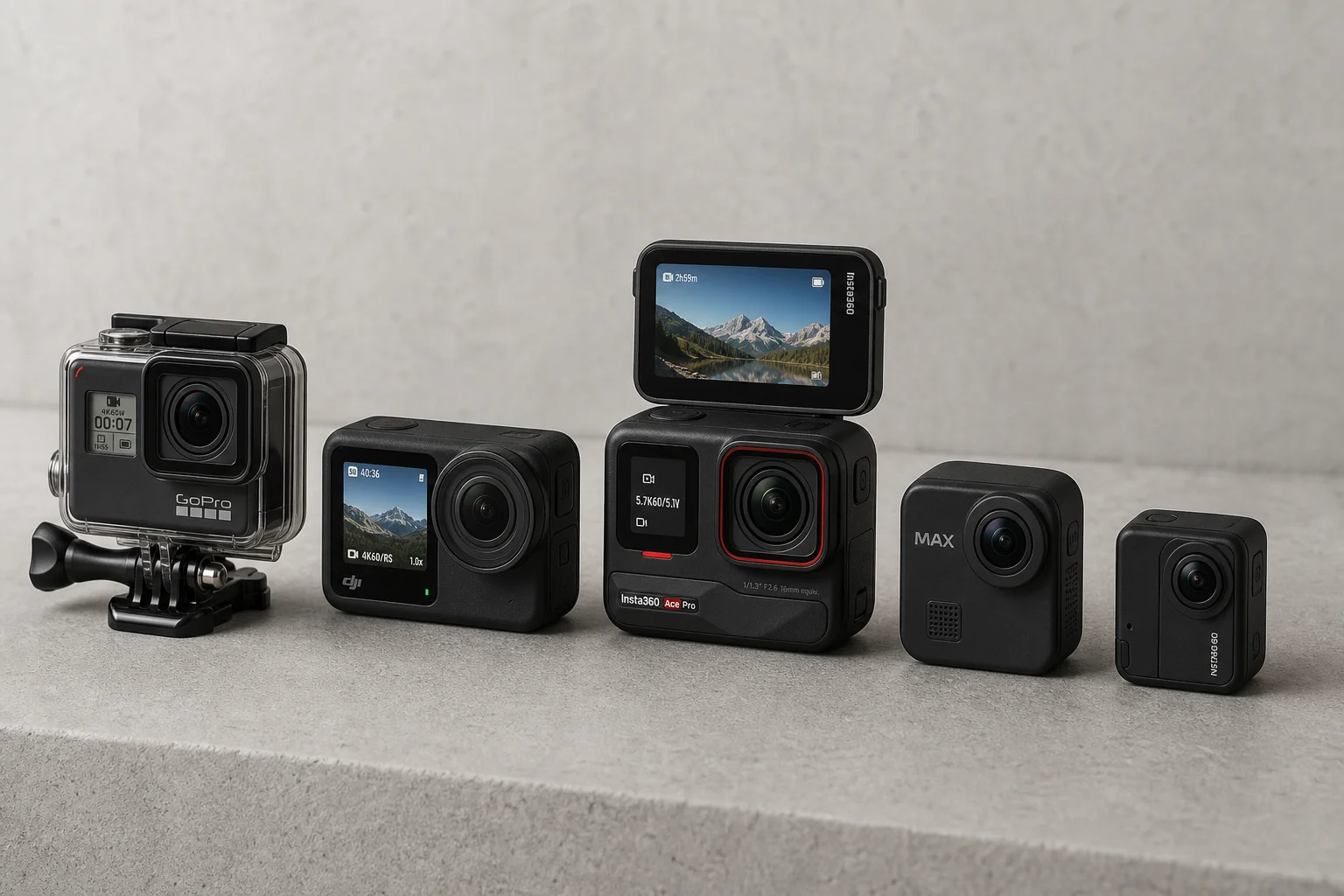
Best Action Cameras 2026: Five Top Picks Ranked
A comprehensive ranking of five action cameras from budget-friendly to premium, covering durability, video quality, stabilization, and low-light performance.