Action Cameras
Insta360 Ace Pro 2 vs Insta360 X4: Which Action Camera Fits Your Filming?
A practical look at the Insta360 Ace Pro 2 as a vlogging action camera and the Insta360 X4 as an action-shot tool, plus the trade-offs that decide between them.
Introduction
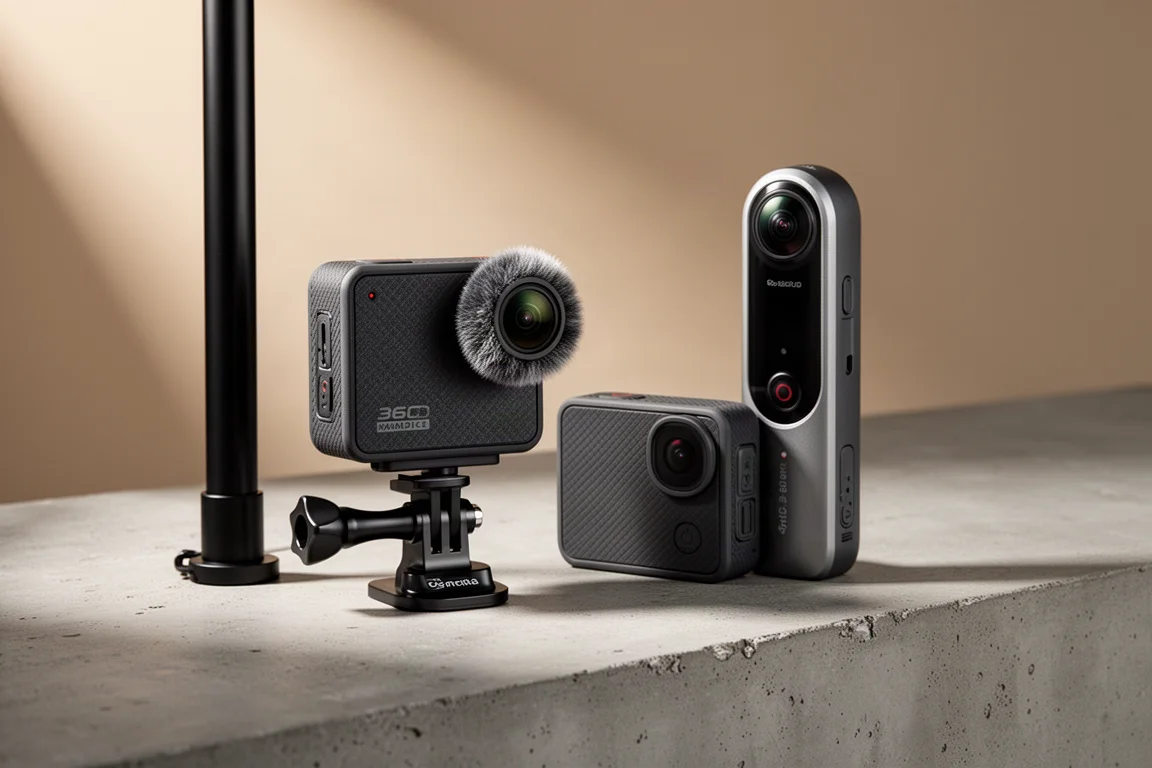
Action cameras are usually judged on one question: does the camera come home with usable footage when the conditions are working against you? The Insta360 Ace Pro 2 answers that question well. Across a full ski season of pow days, wind, fog and long drives to the mountain, it has settled into the role of the everyday vlogging camera, and it has done so without needing much babysitting.
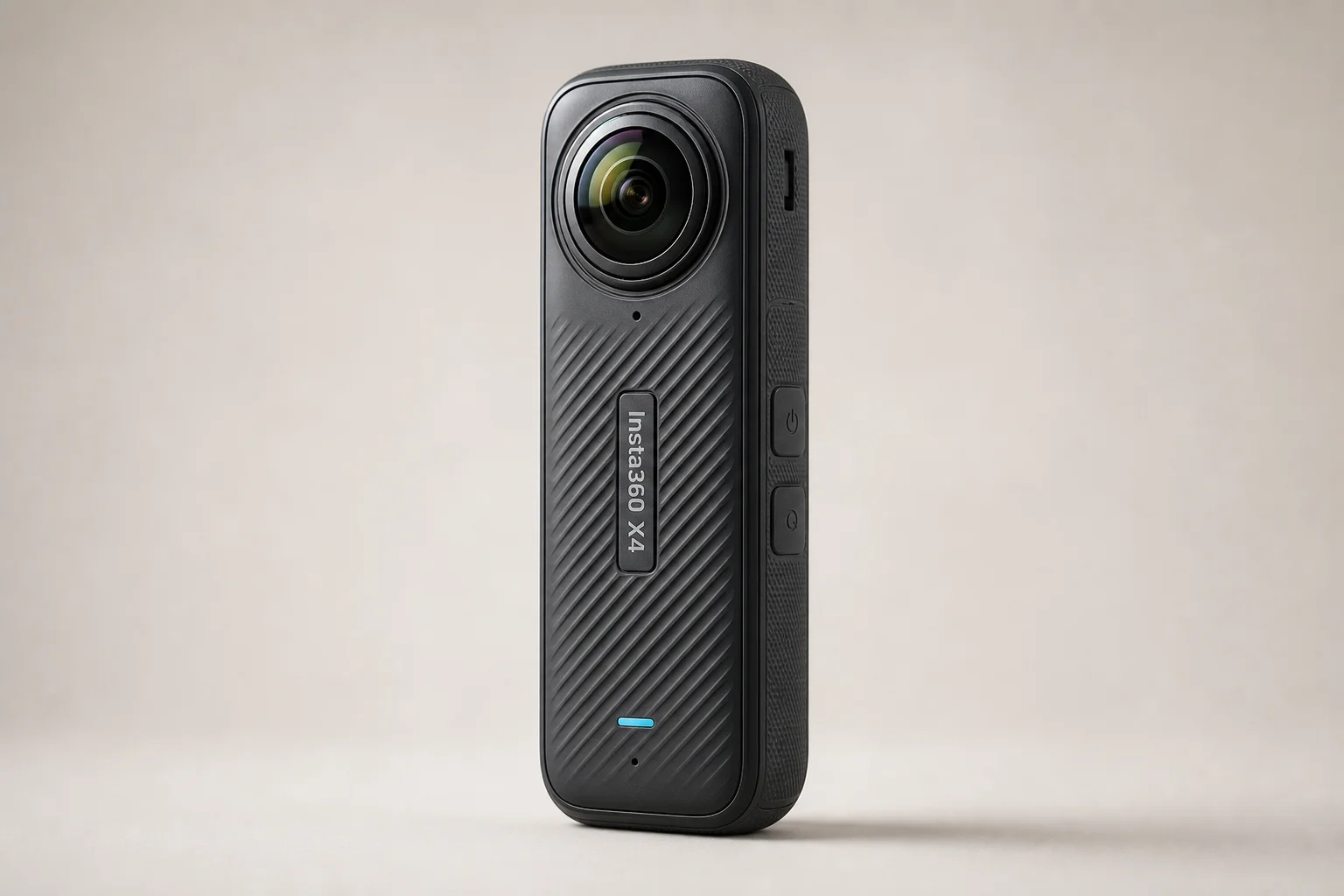
The Insta360 X4 sits in a different spot in the same ecosystem. It remains the more capable tool when the goal is capturing the action itself, because it records everything around it and lets you choose the framing later. Both cameras mount to a pole, a chest harness or a helmet, and both handle weather that would sideline lesser hardware. The decision between them is really about what kind of footage you plan to bring home.
Why the Ace Pro 2 Became the Daily Vlog Camera
The Ace Pro 2 keeps the familiar square body of a conventional action camera, but the internals have moved on considerably. It combines a 1/1.3-inch 8K sensor with a Leica lens, and it is the first action camera to pair a dedicated Pro Imaging chip with a 5nm AI chip. Insta360 states that the overall computing power is roughly double that of the original Ace Pro, and the practical result shows up in the footage rather than on a spec sheet.
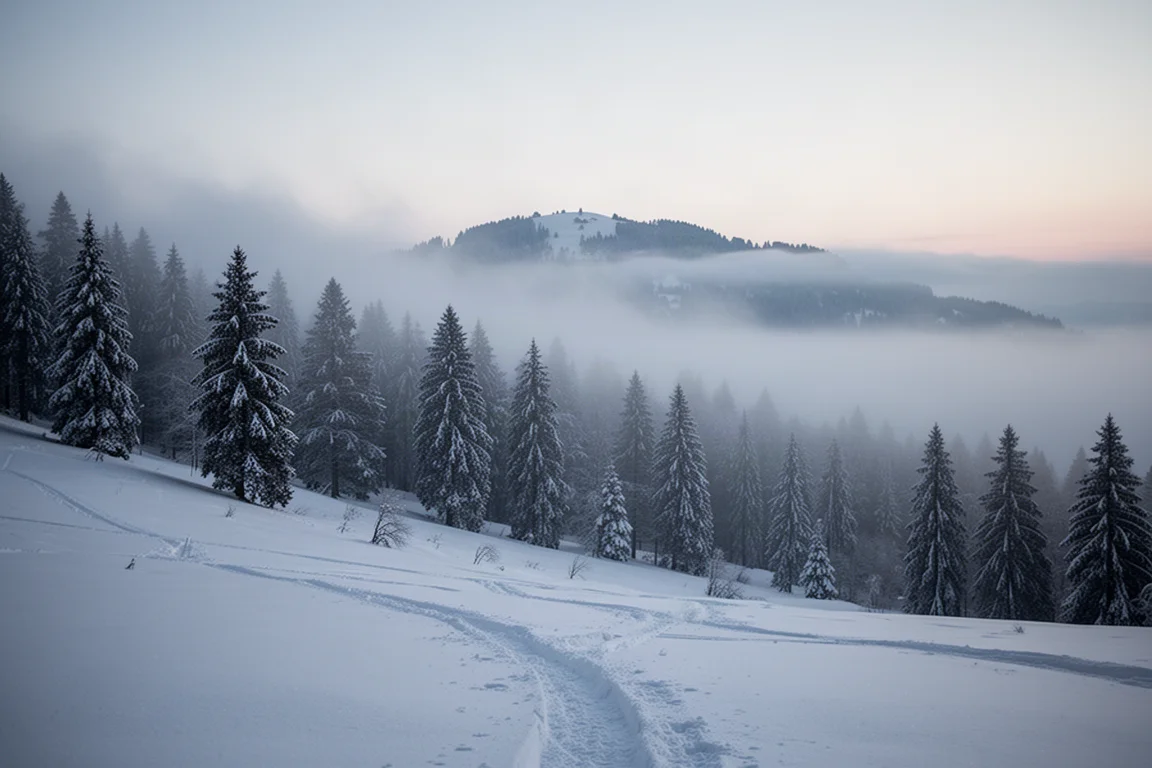
Low light is where the gap is most obvious. Fog, flat afternoon light, and the pre-dawn drive to the resort are all situations where older action cameras tend to turn grey and mushy. The Ace Pro 2 holds onto colour and detail in those conditions, and genuinely dark street scenes with mixed light sources come out cleaner than the small sensor would suggest.
For most shooting, 4K at 60 frames per second is the sweet spot: smooth motion, reasonable file sizes, and enough headroom to slow the footage down afterwards. 4K at 120 frames per second is available for serious slow motion, and 8K at 30 frames per second is there for anyone who wants maximum detail to zoom into a landscape or pick out a friend further down the slope. The trade-off with 8K is real, since it consumes more battery and more storage, which makes it a setting to reach for deliberately rather than leave on all day.
Microphone Performance Without a Lav Mic
The wind muff built into the front microphone is one of the Ace Pro 2’s smartest design decisions, because it changes what is possible with no extra gear at all. Audio captured on an open chairlift in crosswinds still comes through crisp, and the built-in microphone can stand in for a lav mic in most vlogging situations.
Three modes cover most needs. Wind reduction is the setting for talking while skiing or riding, since it suppresses movement and weather noise while keeping speech intelligible. Voice enhancement adds presence and clarity when you are speaking toward the camera. Stereo mode is the untreated option, with no wind reduction or voice enhancement applied, and it holds up well on its own.
The difference between the built-in microphone and a dedicated lav mic is smaller than expected. That matters for anyone who wants to travel light and skip the extra cable, battery and mounting point.
Design, Mounting, and Everyday Durability
The control layout is conventional and easy to learn: record button on top, power button, USB-C charging and the SD card slot on one side, battery on the other. Keeping the battery compartment separate from the card slot is a small detail with real value in wet conditions, since the card holding your footage never needs to be exposed.
The lens is removable and twists on and off, so a scratched front element can be replaced instead of ending the camera’s working life. ND filters can be fitted to the same mount for more controlled cinematic shots. The magnetic mounting system removes the screw-and-clip routine entirely, clicking into place quickly and staying secure through a full season of use.
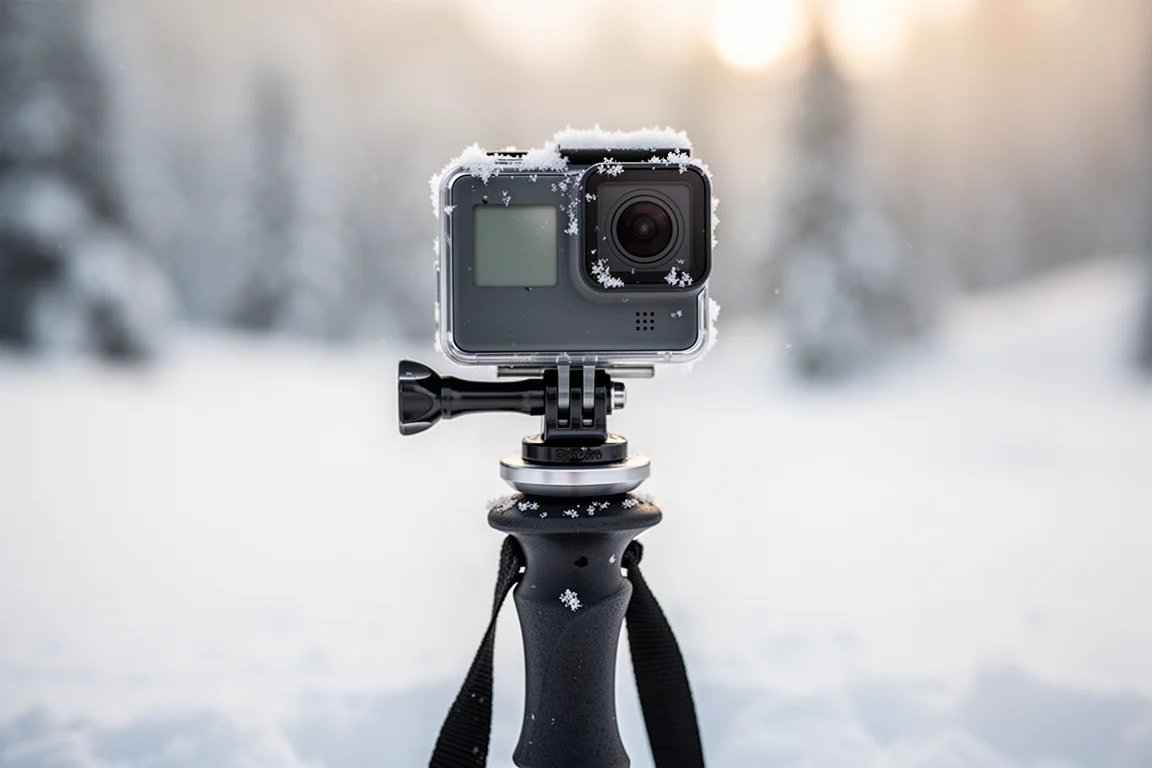
Durability has been tested by accident more than by design. The camera has been dropped on pavement and on rocks, and it keeps working, picking up cosmetic scratches on the corners rather than functional damage. A small vertical mounting accessory also lets the camera switch between horizontal and vertical framing on the fly, and the tall vertical crop captures skis and horizon better than expected, which makes it a genuinely useful option for social-first shooting.
Frame Rates, Clarity Zoom, and Field of View
Field of view runs from a linear setting with no visible distortion, which suits vlogging and face-to-camera work, all the way up to a 157-degree action view for wide scenes. That range is genuinely flexible, though a very wide lens on a helmet or chest mount is less forgiving: if the camera shifts slightly, the framing shifts with it.
Clarity Zoom is a practical addition rather than a gimmick. Double tapping the rear screen zooms in while holding detail, so a skier further down the slope can be framed tightly without the image falling apart.
View more details for Insta360 Ace Pro 2
Stabilization and Battery Life
Stabilization is very good, and it does not force a locked horizon on you. The camera does not naturally hold the horizon the way a 360 camera does unless horizon lock is enabled, which leaves a little more movement in the frame and produces the more organic point-of-view look that a lot of riders and skiers prefer. Enabling horizon lock is a single setting away when you want the flatter result.
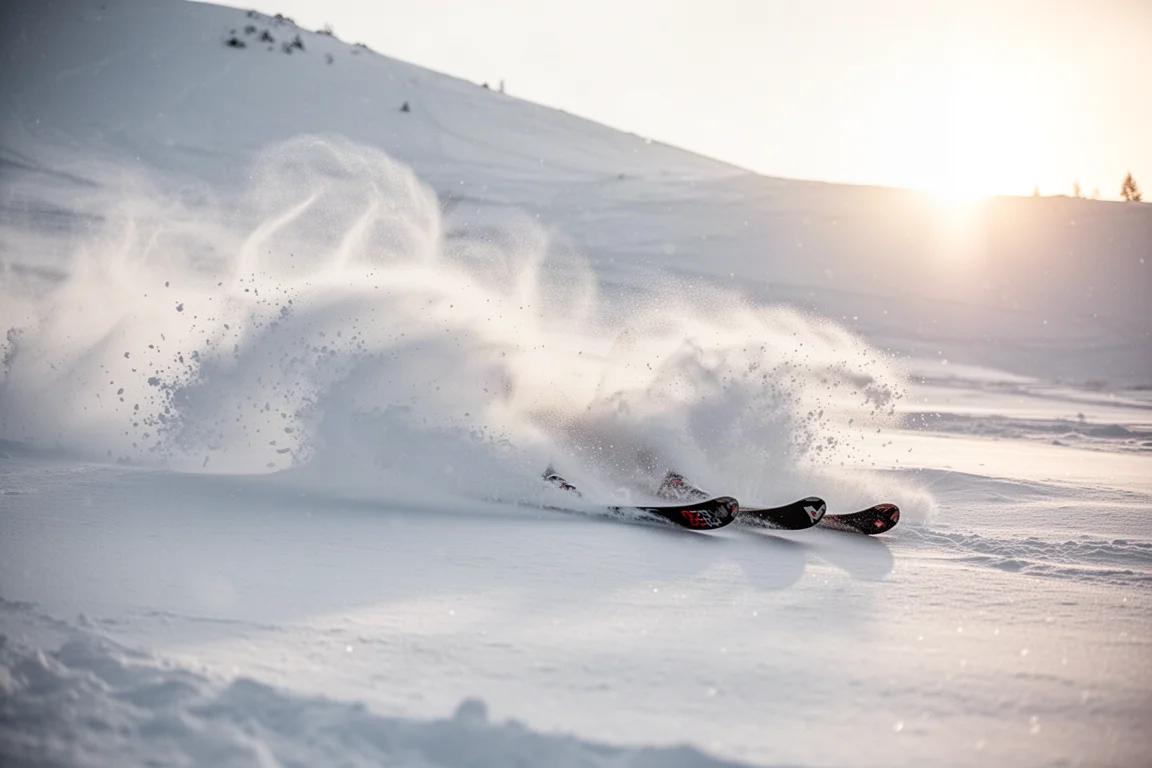
Battery life is rated by Insta360 at up to 180 minutes of 4K recording in ideal conditions. In practice, a full day of vlog segments can be covered on a single battery, while combining vlogging with action filming may take two or three. Cold weather affects these batteries noticeably less than comparable GoPro batteries, which means fewer spares in the pack and less juggling on a lift.
Where the Insta360 X4 Still Wins
The X4 films in 360 degrees, which means the shot is chosen after the fact rather than at the moment of capture. On a steep line, that removes the risk of the camera angle drifting and missing the moment entirely. Stabilization is exceptionally smooth, and the trade-off is the reframing step in editing: extra work in exchange for near-total certainty that the shot exists.
For action footage specifically, the X4 remains the stronger camera. The Ace Pro 2’s wide field of view is generous, but it still asks for the angle to be right at the moment of recording, and on a helmet or chest mount that is not always guaranteed. The X4 is also lighter and less bulky on a pole, which makes it easier to hold out for a follow cam or a selfie shot.
Which Camera Should You Buy?
If vlogging is the priority, the Ace Pro 2 is the one to buy. It is the camera that makes talking to a lens in bad weather sound and look good, and the flip-up touchscreen, the audio quality and the low-light performance all serve that purpose directly. The combination of a strong built-in microphone and clean image quality in flat or dim light is what makes it the better solo choice for a vlog-first workflow.
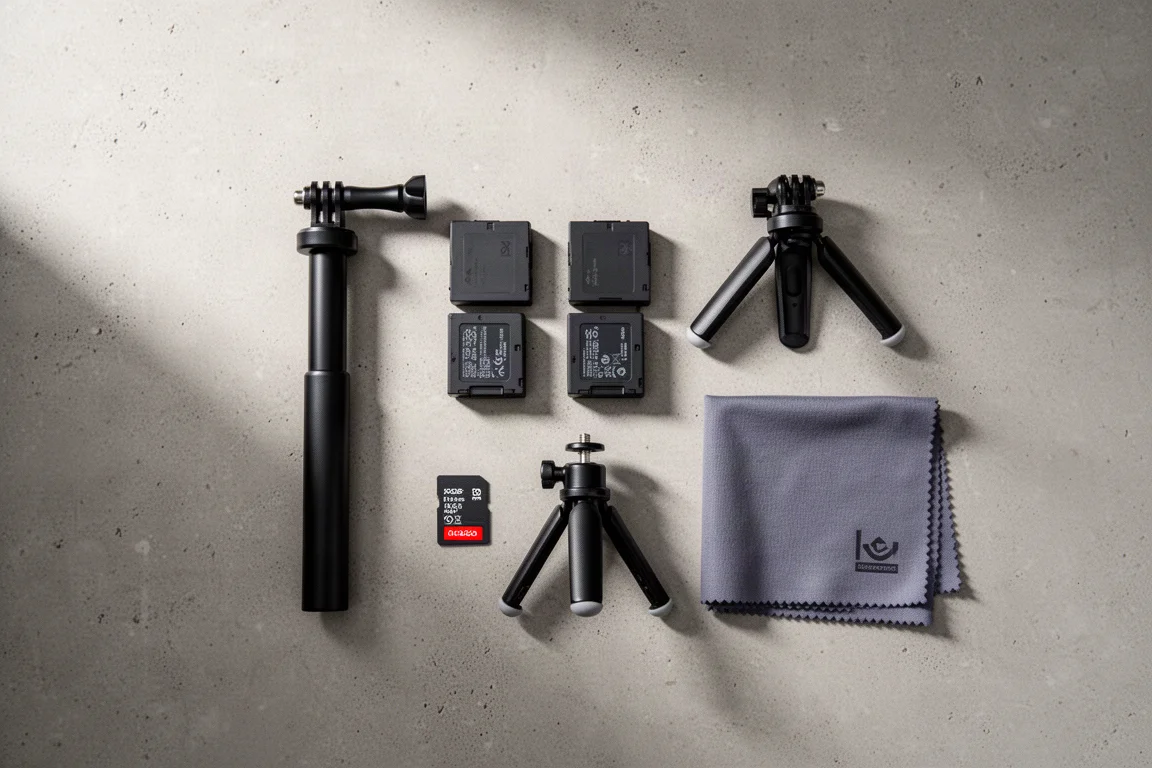
If action shots are the priority, the X4 is the one to buy. It is the camera to trust when the line is committing and the light is changing, because the 360-degree capture means the shot survives a bad angle.
There is also a strong case for owning both rather than choosing. An Ace Pro 2 on a pole for vlog and landscape segments, with an X4 handling the action, covers almost everything a day on the mountain can throw at you. One further practical advantage of the Ace Pro 2 is the export workflow: because it does not shoot in 360 degrees, there is no reframing step, so clips arrive in the editor ready to cut.
Conclusion
The Ace Pro 2 and the X4 are not rivals so much as two answers to different questions. The Ace Pro 2 is the better vlogging action camera: the microphone alone justifies it, and the low-light image quality, the removable lens, the magnetic mount and the flip-up screen all reinforce the same conclusion. The X4 remains the better pure action camera, because 360-degree capture means you never come home without the shot.
Buy the Ace Pro 2 if you want to talk to camera in difficult conditions and have it sound professional. Buy the X4 if you want to point the camera at a fast-moving line and decide the framing later. Buy both if your days on the mountain are split between the two, because that combination covers far more than either camera manages alone.
Further reading
Related Reviews
Action Cameras
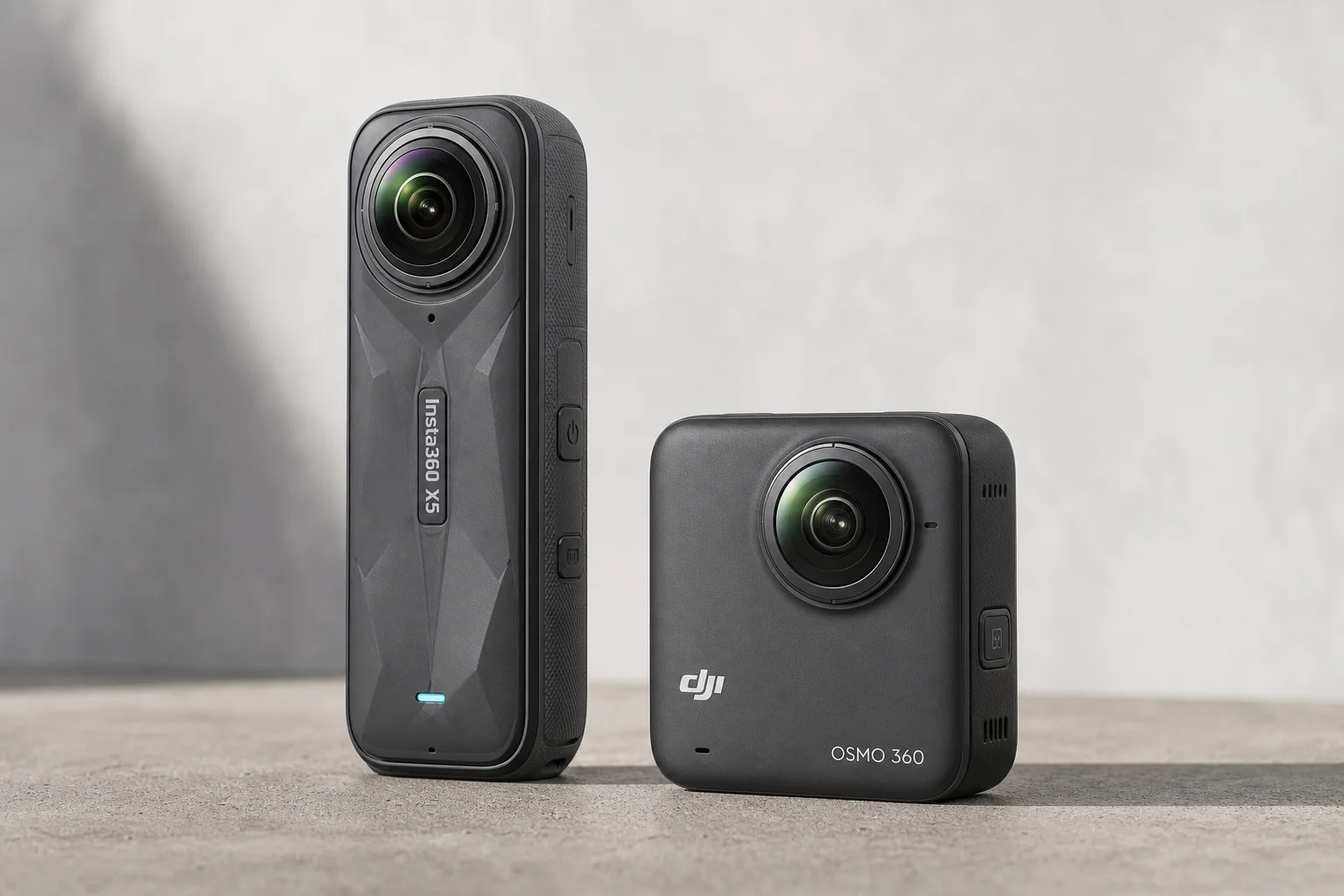
360 Cameras for Adventure Motorcycling: Insta360 X5 vs DJI Osmo 360
Two 360-degree action cameras designed for off-road and adventure riding. A detailed comparison of features, stabilization, and real-world performance for motorcycle touring.
Action Cameras
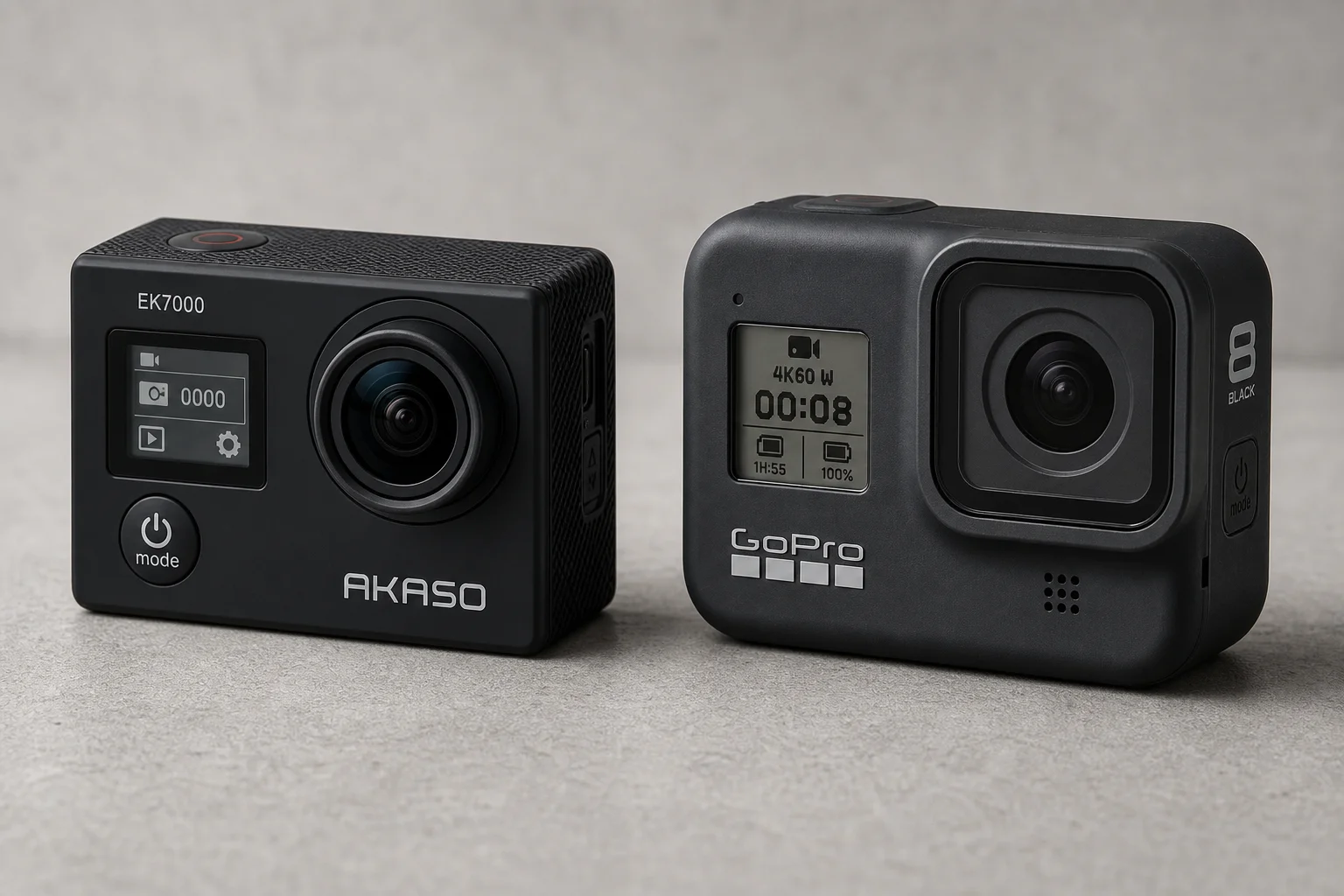
Akaso EK7000 vs GoPro Hero 8 Black: Budget Action Camera Tested
A $50 budget action camera faces off against the GoPro Hero 8 Black. Here's how the Akaso EK7000 really performs in video, audio, and photo quality.
Action Cameras
Best Action Cameras 2026: Five Top Picks Ranked
A comprehensive ranking of five action cameras from budget-friendly to premium, covering durability, video quality, stabilization, and low-light performance.