Action Cameras
Insta360 Ace Pro 2 Review: 8K Footage and a Real Fix for Wind Noise
A practical look at the Insta360 Ace Pro 2, covering 8K and 4K capture, Active HDR, the front wind muffler, flip screen framing and the app workflow that turns a ride into a shareable clip.
Introduction
The Insta360 Ace Pro 2 is the newest action camera from Insta360, and it arrives with a clear brief: higher image quality, better sound, and a more capable package overall. For anyone who rides and wants to record the experience, that combination matters more than a long spec sheet, because the difference between footage you keep and footage you delete usually comes down to how easy the camera is to live with.
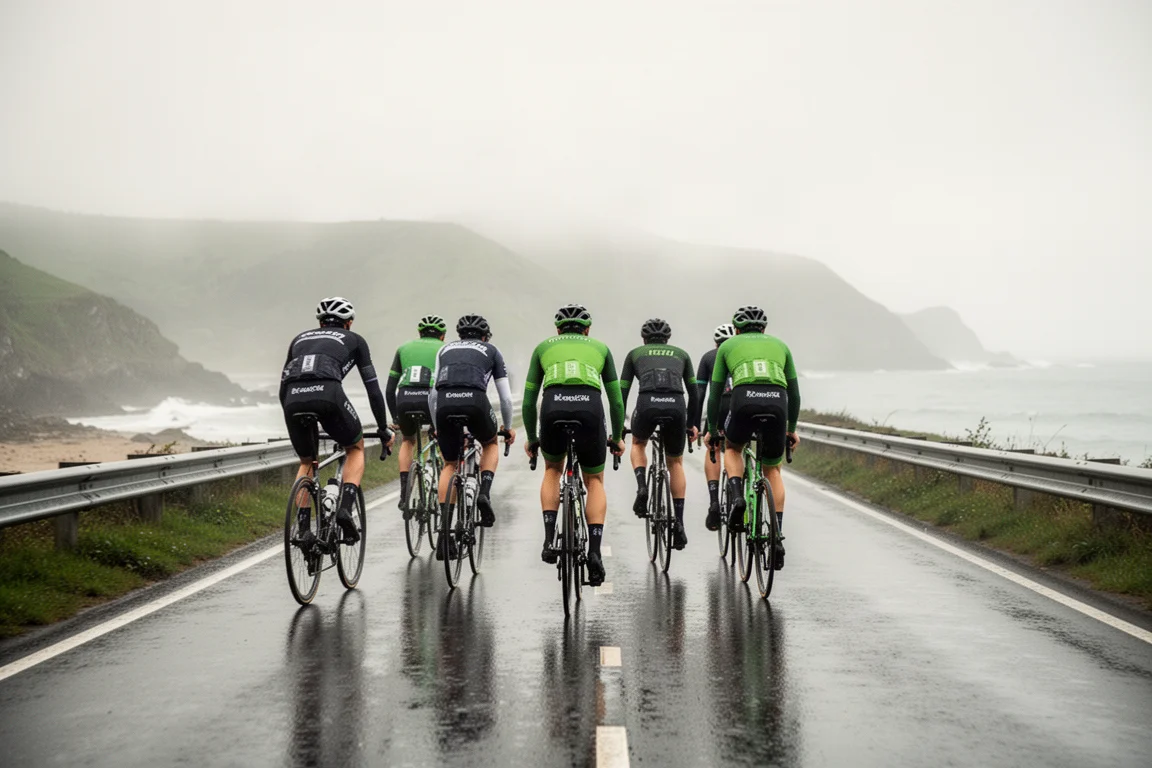
The camera was put through a 50 km group ride that started damp and overcast before the sun broke through. Mixed light, rolling terrain and plenty of talking into the lens is a fair test of what a camera this small can actually do.
Who the Insta360 Ace Pro 2 Is For
This is a camera for riders who want to document their rides without turning every outing into a production. It suits cyclists who talk while they ride, shoot in changeable weather, and want footage that looks sharp and stable without a lot of setup.
It also suits anyone who wants to share clips quickly. The combination of a small body, a screen you can genuinely frame with, and an app that moves footage across in seconds is aimed squarely at people who would otherwise leave the camera at home.
If you mostly shoot short clips in good light and rarely touch advanced settings, the camera is still straightforward to use, but you are paying for headroom you may never need.
Video Quality: 8K, 4K 120fps and Active HDR
The headline is 8K video at 30 frames per second, which is smoother than before and pushes the sensor further than the previous generation. For slow motion, 4K at 120 frames per second delivers silky results, particularly with a rider in front of the lens.
The more practical addition is Active HDR at 4K 60 frames per second, which combines HDR with stabilization at a high frame rate. That means stabilized footage with wide dynamic range on a bright sunny day, which is exactly where action cameras usually struggle most.
8K is best reserved for bright, sunny conditions. It has a noticeable impact on battery life and storage compared to 4K, and for many purposes it is more resolution than you need. It is there when you want it.
Audio Improvements and the Wind Muffler
Sound has long been the weak point of action cameras. Video quality from a camera this small is genuinely impressive, but wind noise at speed makes it hard to hear anything you say. The Ace Pro 2 is the first camera of its kind to address that problem directly.
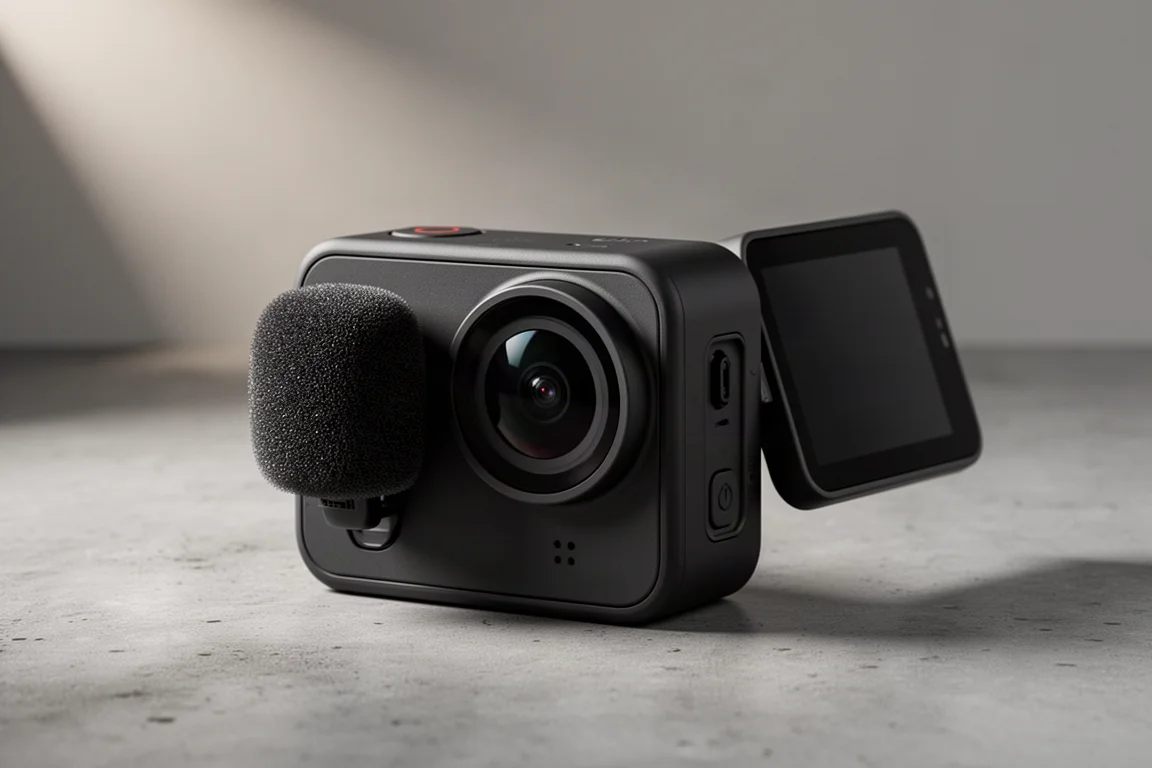
A small wind muffler clips onto the front of the camera and covers the front microphone, with a piece of foam held inside the plastic housing. A spare is included in the box, which matters because the muffler has to be removed to fit a waterproof diving case. There are three microphones on the camera, positioned on the top, the side and the front, and the front one is the main capture point.
Two sound modes do the rest of the work. Voice enhancement is designed to lift your voice, while wind reduction is the default option in the sound configuration menu. In practice the muffler goes a long way toward reducing or eliminating wind noise across different scenarios.
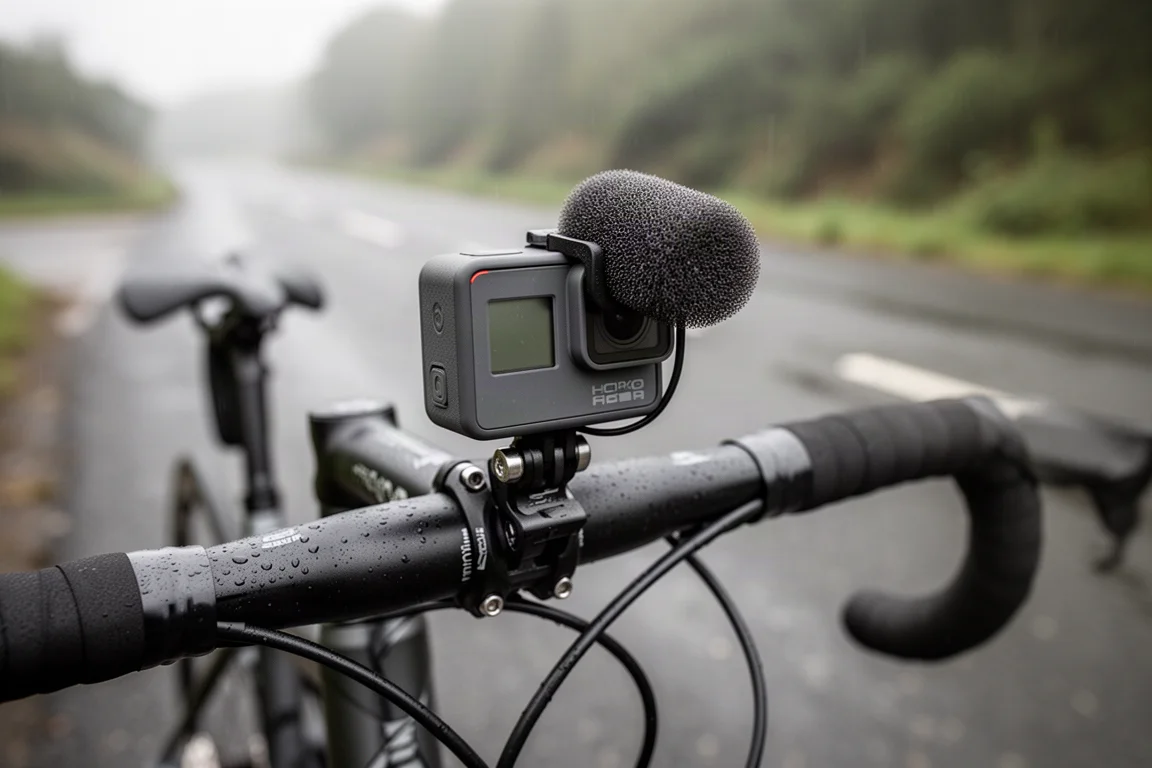
Pairing a Bluetooth microphone from DJI or Rode is now seamless, which was not always the case on the earlier Ace Pro. That remains the best route to really crisp audio, with the trade-off that you have to carry the microphone, attach it to your clothing and keep it charged. Straight from the camera, the improvement is still clearly noticeable.
Everyday Usability and the Flip Screen
The flip out screen is the feature you notice most in daily use. Being able to angle the display forward makes framing yourself simple, so you are not guessing whether your head is in shot or the horizon is level.
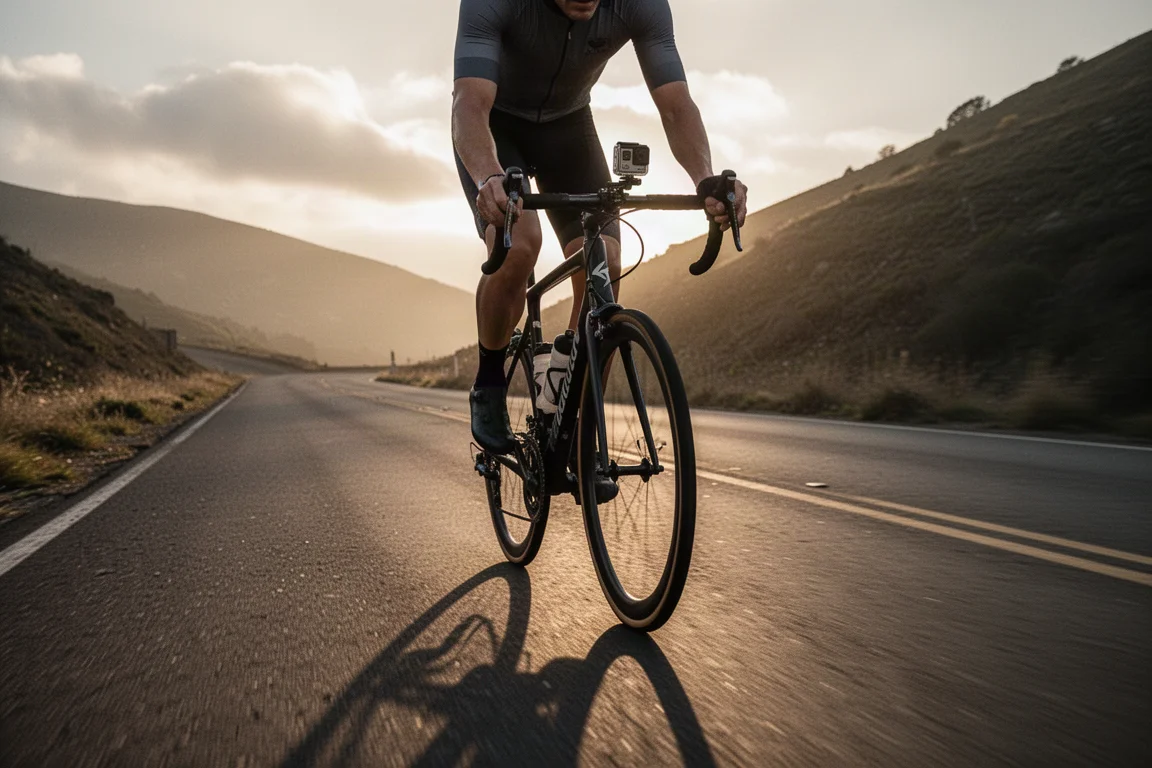
That applies equally when the camera is mounted on handlebars or a helmet. A large, adjustable display makes it much easier to confirm you are filming the road ahead rather than the ground or the sky, which is a common problem with small fixed screens.
App Workflow, AI Editing and Ride Data Overlays
Getting footage off the camera is quick. The Insta360 app for Android and iOS pulls video and photos across in seconds, and a desktop studio app is available for longer editing sessions.
The app also handles the heavy lifting. AI assisted editing can build a video from a ride, sync it to music, and apply themes and layouts automatically. If you prefer control, you can cut clips manually and export at the quality you want before sharing to YouTube, TikTok, Instagram or wherever else you post.
Ride data overlays are the standout extra. Speed, power, heart rate and distance can be pulled from a Garmin or Apple Watch and laid over your footage, which makes point of view riding clips far more relatable and gets across how fast or slow a section really felt. Wahoo is not supported at the moment. The whole process runs through the app and adds no real complexity.
Things to Consider Before Buying
8K is demanding. It affects battery life and storage compared to 4K, and in many situations it is overkill, so plan around 4K with Active HDR as your default and treat 8K as an option for bright days and maximum resolution.
The wind muffler is a small removable part, so the spare in the box is worth keeping track of, and it has to come off if you want to use a waterproof diving case. Bluetooth microphones give the best audio but add something else to carry and charge. Data overlays currently exclude Wahoo devices. It is also worth checking current pricing and availability before you commit, since this is a premium camera with a lot of capability behind it.
Buying Advice
Buy the Ace Pro 2 if you want to record rides with as little friction as possible and you value clean audio as much as clean video. The wind muffler and the improved Bluetooth microphone pairing are the two changes that most directly improve the experience of talking while riding.
If maximum resolution is your priority, 8K at 30 frames per second is there. If shareable, stabilized footage in mixed light is your priority, 4K 60 with Active HDR is likely the setting you will live in, and the app workflow will get it online quickly.
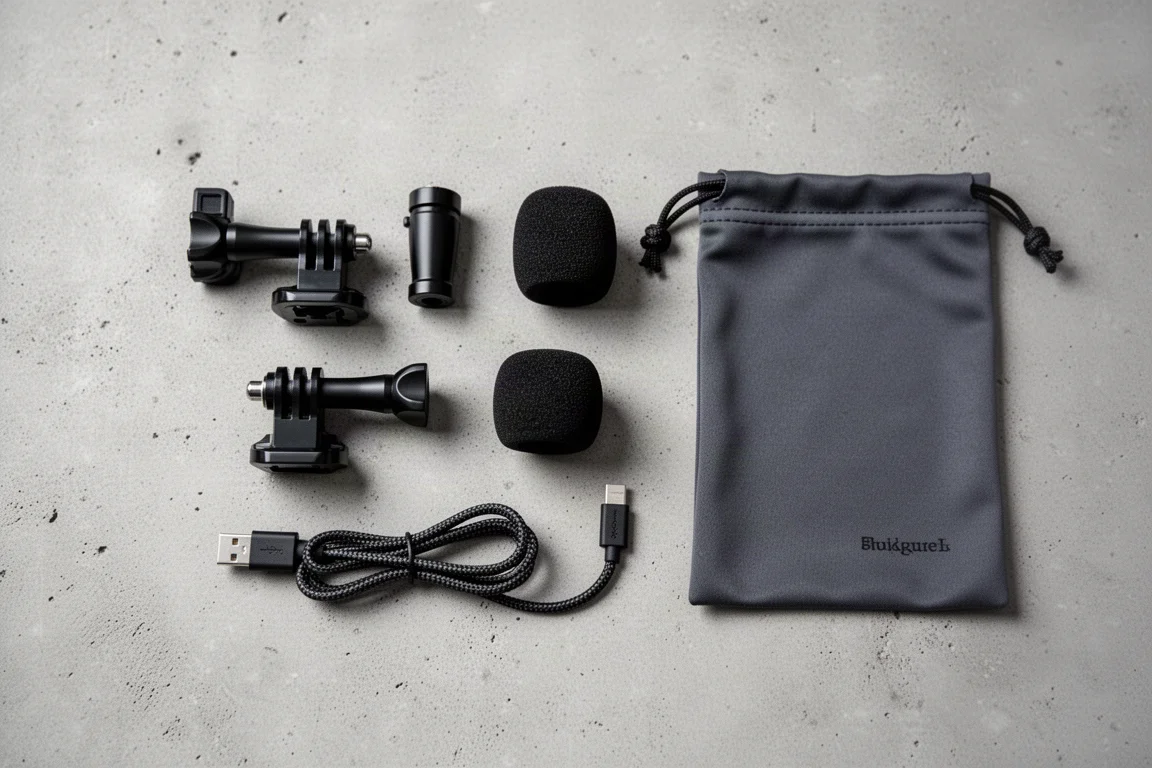
For riders who already own an earlier Ace Pro and found the audio limiting, this is the upgrade that addresses that complaint head on.
Conclusion
The Insta360 Ace Pro 2 improves the parts of an action camera that actually shape whether you use it: image quality, sound, framing, and the path from camera to social feed. The 8K option is impressive, Active HDR at 4K 60 is the practical workhorse, and the wind muffler is a genuinely useful answer to a long standing problem.
Nothing here is complicated to operate, and that is the point. A camera that makes it easy to document a ride is a camera you will actually take with you.
Product link
View more details for Insta360 Ace Pro 2
This product is mentioned in the review. Check the specifications, options, and compatibility before buying.
View more details for Insta360 Ace Pro 2Further reading
Related Reviews
Action Cameras
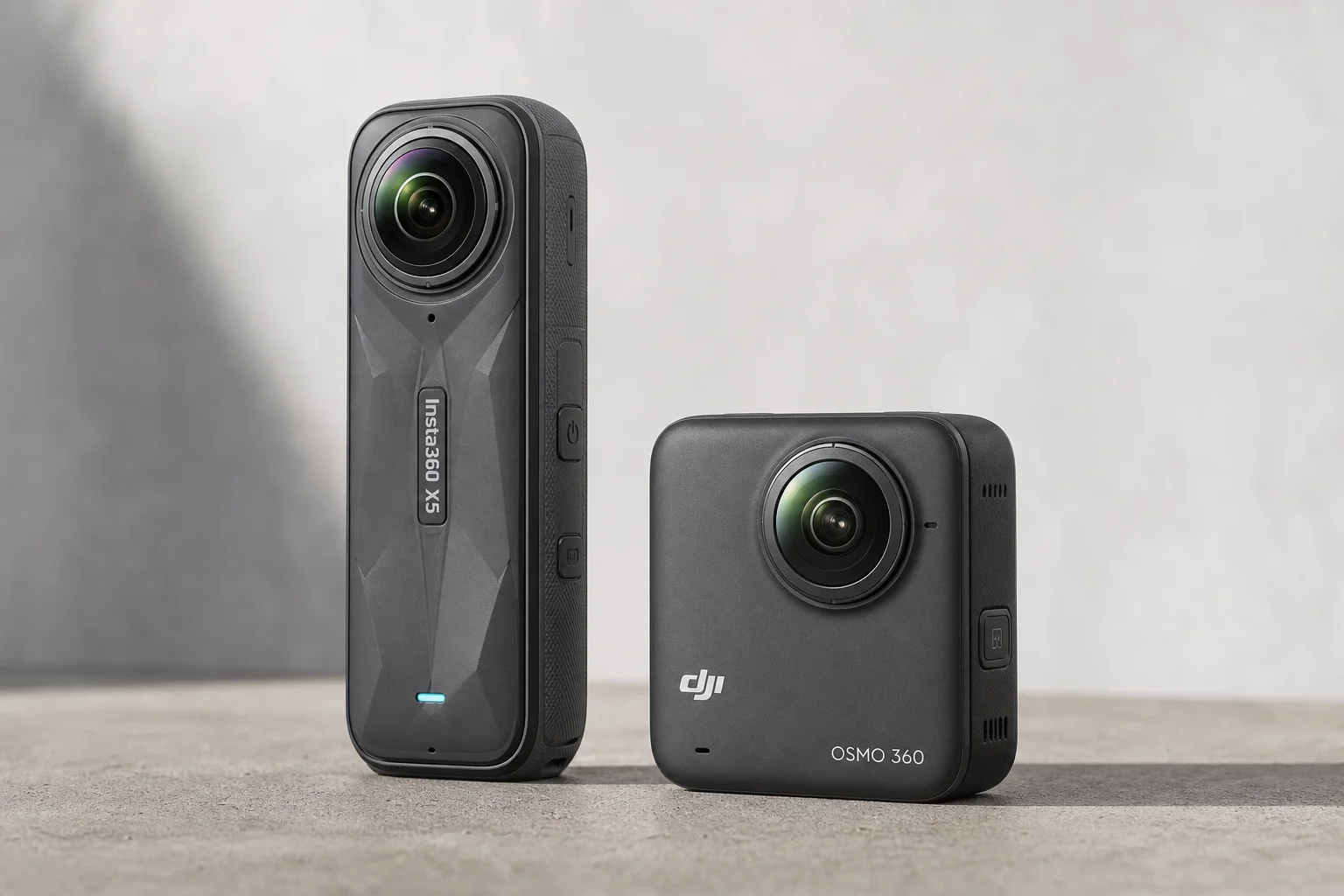
360 Cameras for Adventure Motorcycling: Insta360 X5 vs DJI Osmo 360
Two 360-degree action cameras designed for off-road and adventure riding. A detailed comparison of features, stabilization, and real-world performance for motorcycle touring.
Action Cameras
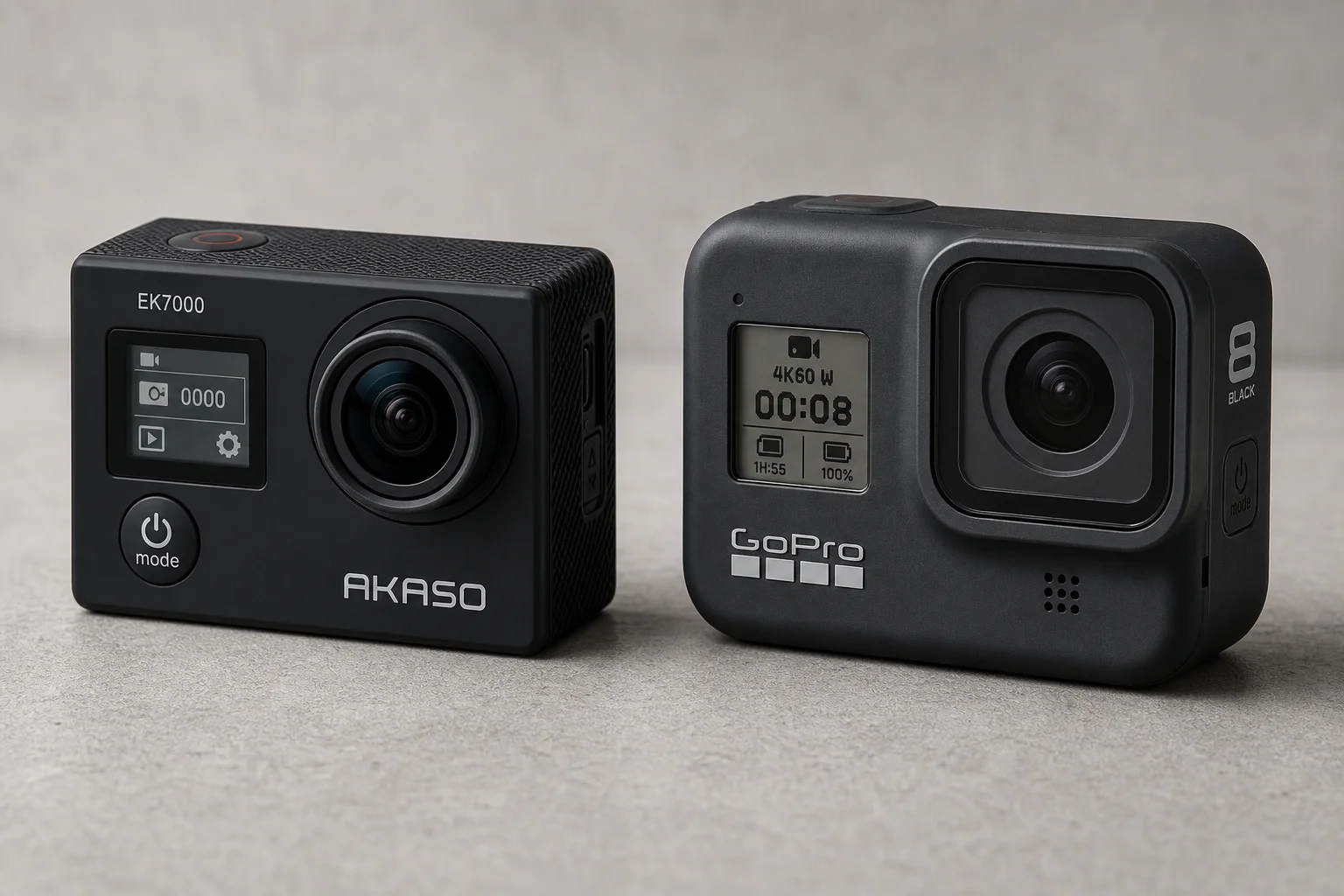
Akaso EK7000 vs GoPro Hero 8 Black: Budget Action Camera Tested
A $50 budget action camera faces off against the GoPro Hero 8 Black. Here's how the Akaso EK7000 really performs in video, audio, and photo quality.
Action Cameras
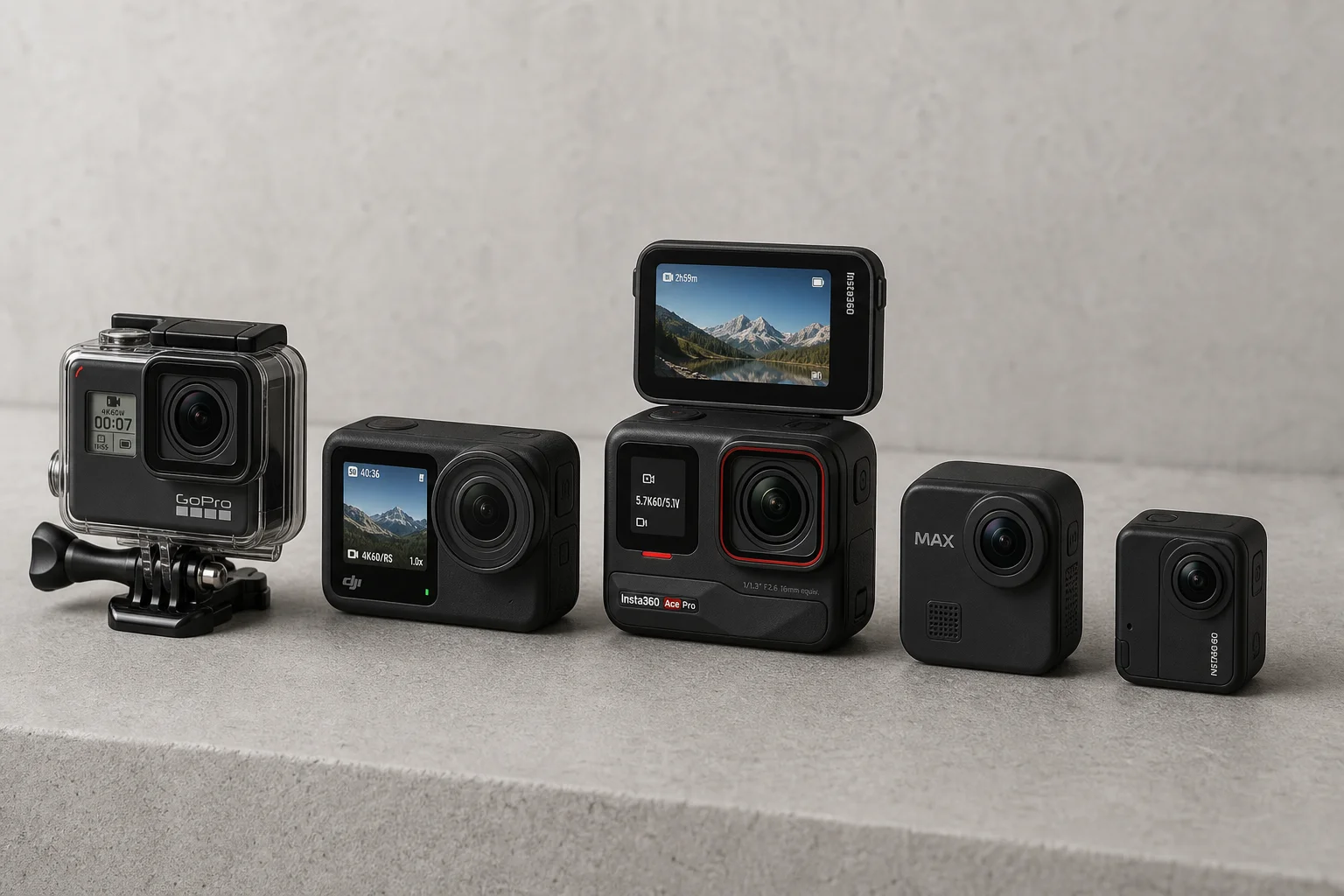
Best Action Cameras 2026: Five Top Picks Ranked
A comprehensive ranking of five action cameras from budget-friendly to premium, covering durability, video quality, stabilization, and low-light performance.