Aquarium Heating
Innovative Marine Helio PTC Review: A Safer Approach to Reef Tank Heating
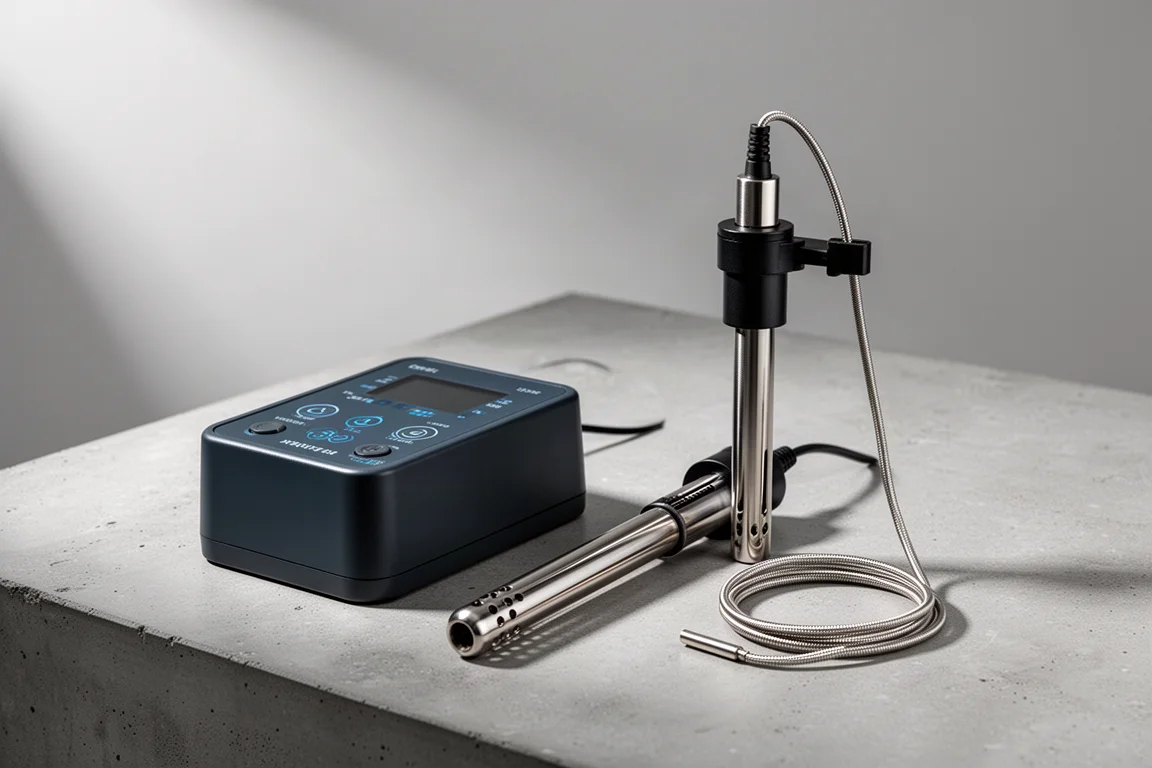
A self-regulating PTC titanium heating element paired with an adjustable controller that ships preset, with audible alarms and room to add a second element.
Introduction
Heating a reef tank has always carried a quiet risk. Most heaters use resistance wire to generate heat, and when the thermostat fails it usually fails in the on position, so the element keeps running and the tank keeps warming. That is why so many reef keepers pair a heater with a separate controller as a backup. Innovative Marine’s Helio PTC takes a different route by moving the safety into the heating element itself.
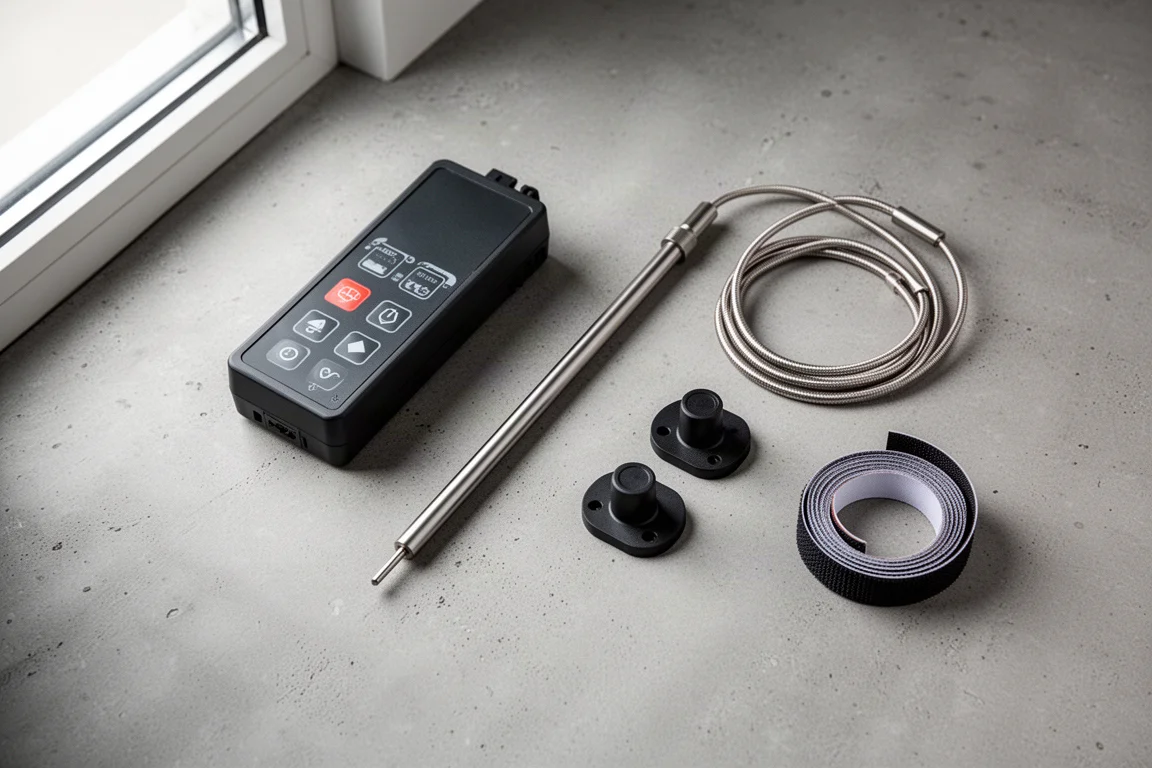
PTC stands for positive temperature coefficient. Inside each Helio heating element is a solid state ceramic chip that regulates its own temperature, so the element resists overheating instead of relying on the thermostat alone to switch it off. The system pairs that element with an adjustable controller that supports up to two heating elements, a titanium temperature sensor, and magnetic mounts for both parts.
Titanium is used for the heating element and the temperature sensor, and the controller arrives preset for easy plug-and-play setup. Together they address the two things reef keepers tend to worry about most: a heater that gets stuck on, and equipment that is fiddly to install.
Who This Product Is For
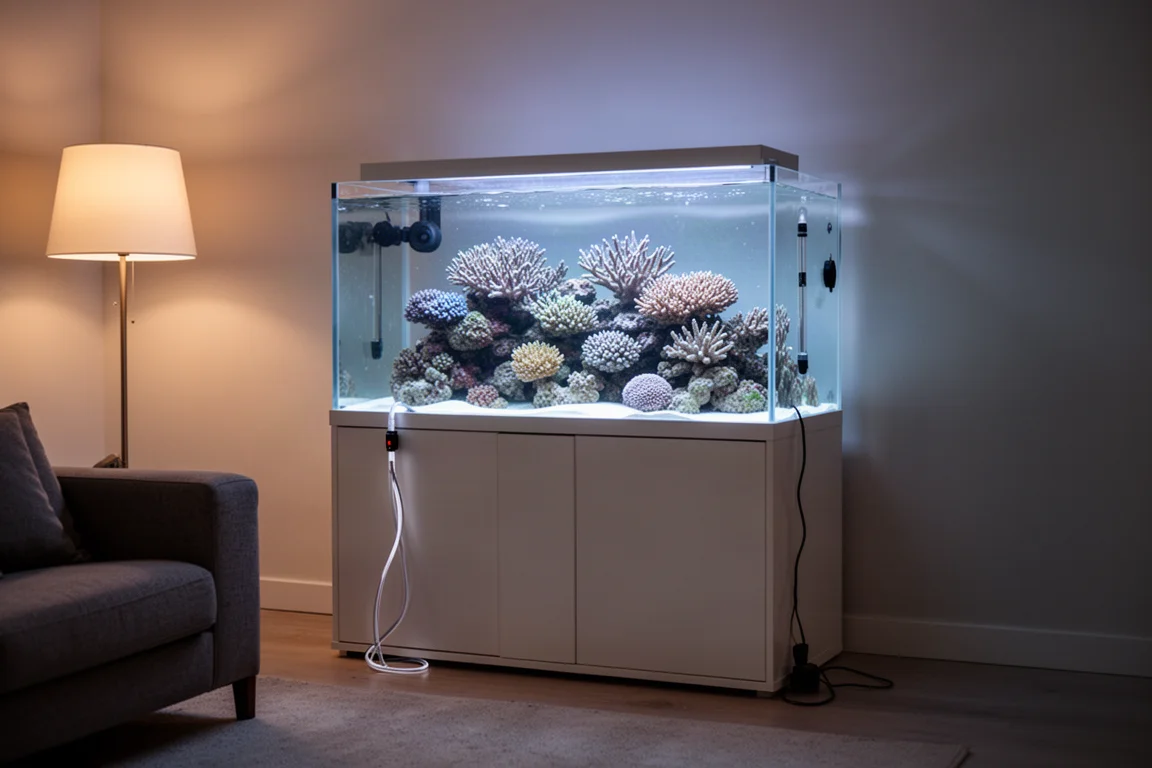
The Helio PTC is aimed at reef keepers who want safety and redundancy designed into the heating system rather than bolted on afterwards. The controller can run one or two heating elements, and you can buy a single element version and add a second element later if you want another layer of redundancy or if you upgrade to a larger tank.
Sizing is straightforward. Single element versions come in 100, 200, 350 and 500 watts for tanks between 10 and 125 gallons. Dual element versions come in 200, 400, 700 and 1,000 watts for tanks between 25 and 250 gallons. The wattage overlap between the two lines exists because the dual element versions add redundancy at a given tank size rather than simply more power.
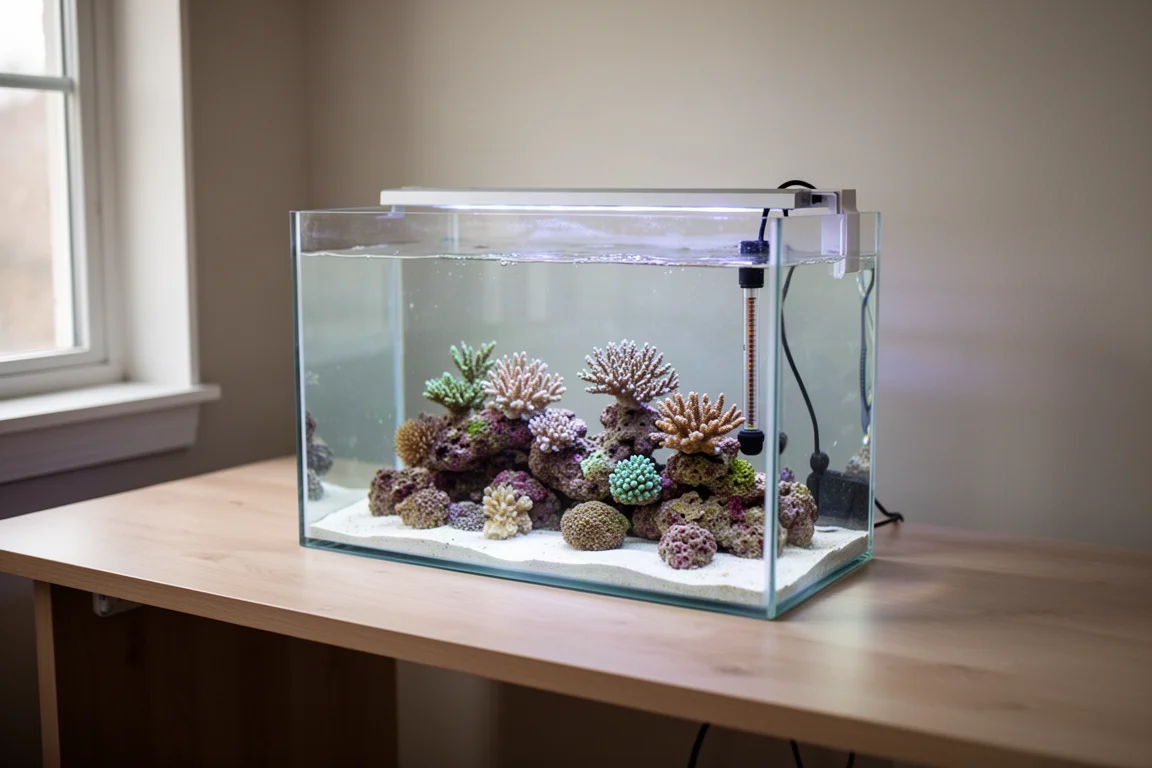
Small tanks and tight sumps are a particular fit. The heating elements are notably small compared with standard heating elements, which matters in nano systems and compact sump compartments where space is at a premium.
Main Strengths
The self-regulating element is the headline. Because the ceramic chip inside a PTC element controls its own temperature, a Helio element will not keep getting hotter and hotter the way a resistance wire element can if the thermostat reads above the water line or stays switched on. That protects the element from damage and reduces the risk of an overheated tank.
The included controller handles everything expected of a modern heater controller. It ships preset to 77 degrees Fahrenheit, with a low alarm preset to 74 degrees Fahrenheit and a high alarm preset to 80 degrees Fahrenheit, both of which trigger an audible and a visual alert. The temperature range you can set runs from 59 degrees Fahrenheit to 93 degrees Fahrenheit, and the alarms can be set beyond that range. Accuracy sits within roughly one degree Fahrenheit, with a resolution of 0.1 degrees, and you can calibrate the controller periodically across a range of plus or minus nine degrees Fahrenheit.
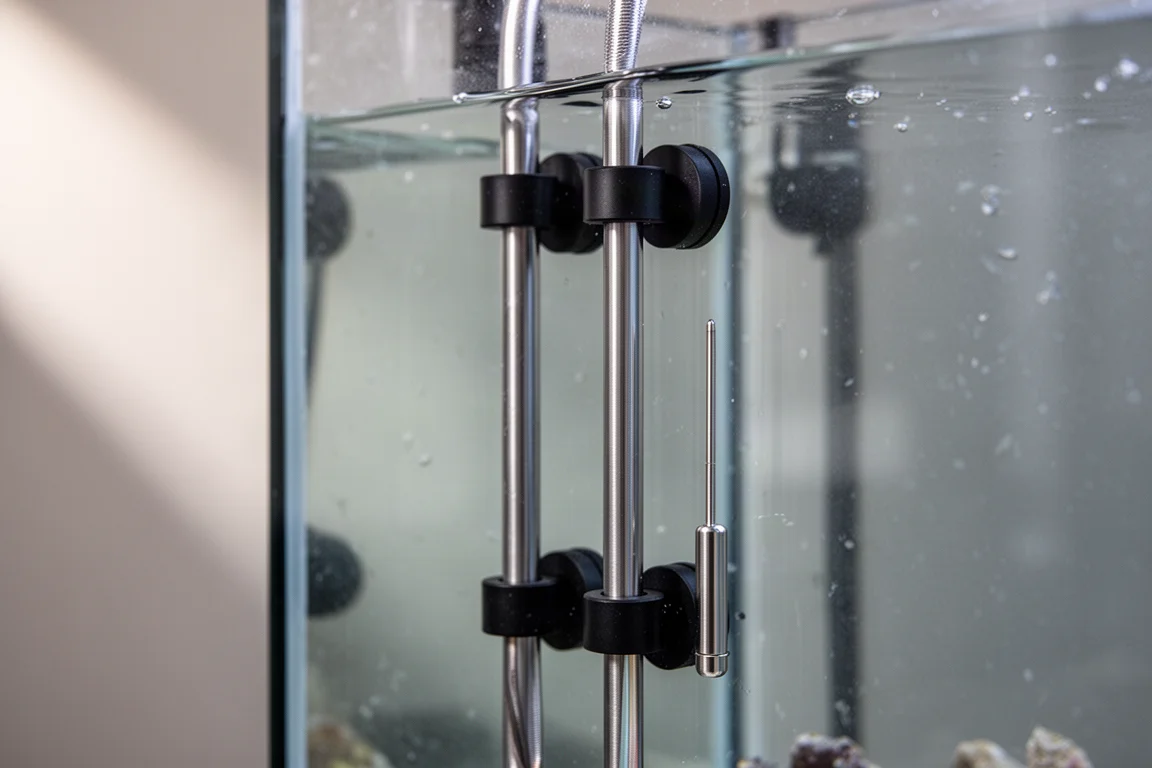
Installation is helped by the magnetic mounts. Both the heating element and the titanium temperature sensor attach magnetically and hold on panels up to half an inch thick. The box also includes double-sided hook-and-loop tape for mounting the controller, along with a comprehensive user manual.
Things to Consider Before Buying
The main trade-off is redundancy. A single element Helio gives you one self-regulating element, while the dual element versions give you two. If backup is the priority, the dual element versions, or the option to add a second element later, are worth planning for.
The presets are convenient, but they are still presets. If you keep your tank at a temperature other than 77 degrees Fahrenheit, or you want different alarm thresholds, you will need to adjust the settings rather than simply plugging it in. Calibration is a sensible part of ownership too, and the accuracy of that calibration depends on the reference thermometer you use. A quality NIST-certified reference thermometer is the recommended choice.
Wattage also needs to match the tank. The single element line tops out at 500 watts for tanks up to 125 gallons, while the dual element line starts at 200 watts for tanks from 25 gallons, so the right pick depends on volume and on how much redundancy you want rather than on one headline number.
Buying Advice
Start with tank volume and decide whether you want one element or two. If your display or sump is short on space, the compact size of the PTC element is a genuine advantage. If your priority is layered safety, or you expect to move up to a larger system, the dual element versions, or a single element setup you can expand later, make the most sense.
Check the thickness of the panel you plan to mount on as well, since the magnetic mounts are rated for panels up to half an inch thick. Before you rely on the readings, plan to calibrate against a trusted reference thermometer, and take a few minutes to confirm that the set temperature and alarm thresholds suit your livestock.
Once those details are settled, the Helio PTC is straightforward to live with. Setup is quick, the alerts are clear, and the self-regulating element means the safety story does not depend on a single thermostat behaving perfectly.
Conclusion
The Helio PTC stands out because it changes where the safety comes from. Instead of relying on a thermostat to switch a resistance wire element off, it uses a PTC ceramic chip that regulates its own temperature, and it wraps that element in a controller with presets, alarms, calibration and support for a second element. For reef keepers who want overheating protection and redundancy built into the heating system itself, it is a well-considered option to weigh against a conventional heater plus controller pairing.
Product link
View more details for Innovative Marine Helio PTC
This product is mentioned in the review. Check the specifications, options, and compatibility before buying.
View more details for Innovative Marine Helio PTCFurther reading
Related Reviews
Aquarium Heating
Best Aquarium Heaters and Controllers 2026: A Practical Reef Heating Roundup
Six heating options for reef and freshwater tanks, from a heavy-duty titanium element to a compact PTC heater, with notes on redundancy and replacement planning.
Saltwater Aquarium Setup
10 Questions About Cycling a Saltwater Aquarium: What You Need to Know
Essential questions and answers for cycling a reef tank or saltwater aquarium, from biome building to light management and bacterial supplements.

Hi-Fi Speakers
Acoustic Energy AE1 40th Anniversary Review: A Modern Take on a British Classic
A compact standmount that revives a 1980s favorite with all-new parts, a warm mid-centric balance, and a price of £1,499 per pair.