Impact Wrenches
Ingersoll Rand 232TGSL Thunder Gun Review: The Street-Legal NASCAR Impact Wrench
A close look at the retail version of Ingersoll Rand's NASCAR pit gun, with real torque data, teardown insights, and tuning potential worth knowing before you buy.
Introduction
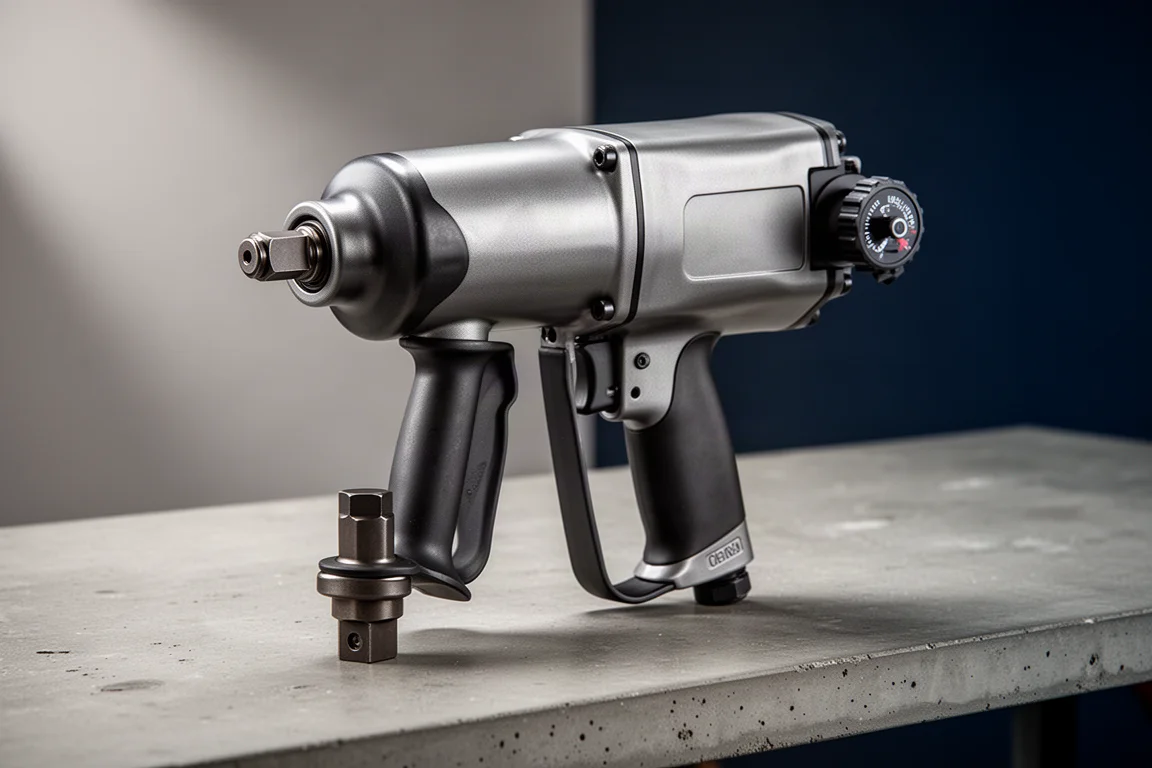
The Ingersoll Rand 232TGSL Thunder Gun has a genuine motorsport pedigree behind it. Until recently, Ingersoll Rand’s Thunder Gun was the wheel gun responsible for zipping off five lug nuts per wheel at every NASCAR pit stop. The 232TGSL is the street-legal, retail version sold to the rest of us, given that very few home garages have a 250 psi nitrogen setup sitting in the corner.
What makes this tool interesting is that it is, by design, a race gun softened just enough for civilian use. It still posts numbers that embarrass plenty of modern rivals, and with a little tuning work it gets even better. Here is what the data says and what you should know before spending your money.
What the Thunder Gun Actually Delivers
Ingersoll Rand rates the 232TGSL at 10,000 RPM, making it the fastest 1/2-inch drive air gun the company has produced in this style. Measured at the standard 90 PSI working pressure most air tools are rated at, this one turned 9,300 RPM, climbing to roughly 10,350 RPM at 150 PSI. The torque rating is 625 ft-lbs, and that figure proved to be remarkably accurate in testing, with measured results landing at 98 percent of the advertised claim.
For context, the old-school Ingersoll Rand 231H, a benchmark full-size air gun still sold today, makes around 450 ft-lbs. The 232TGSL comfortably outpaced it in every test. A high-end cordless option like a Makita high torque impact wrench was clearly more powerful in forward working-torque runs, but in reverse max-torque testing the Thunder Gun closed the gap considerably. At 150 PSI and above, the Thunder Gun showed a genuine low-end torque spike that the older air guns did not match.
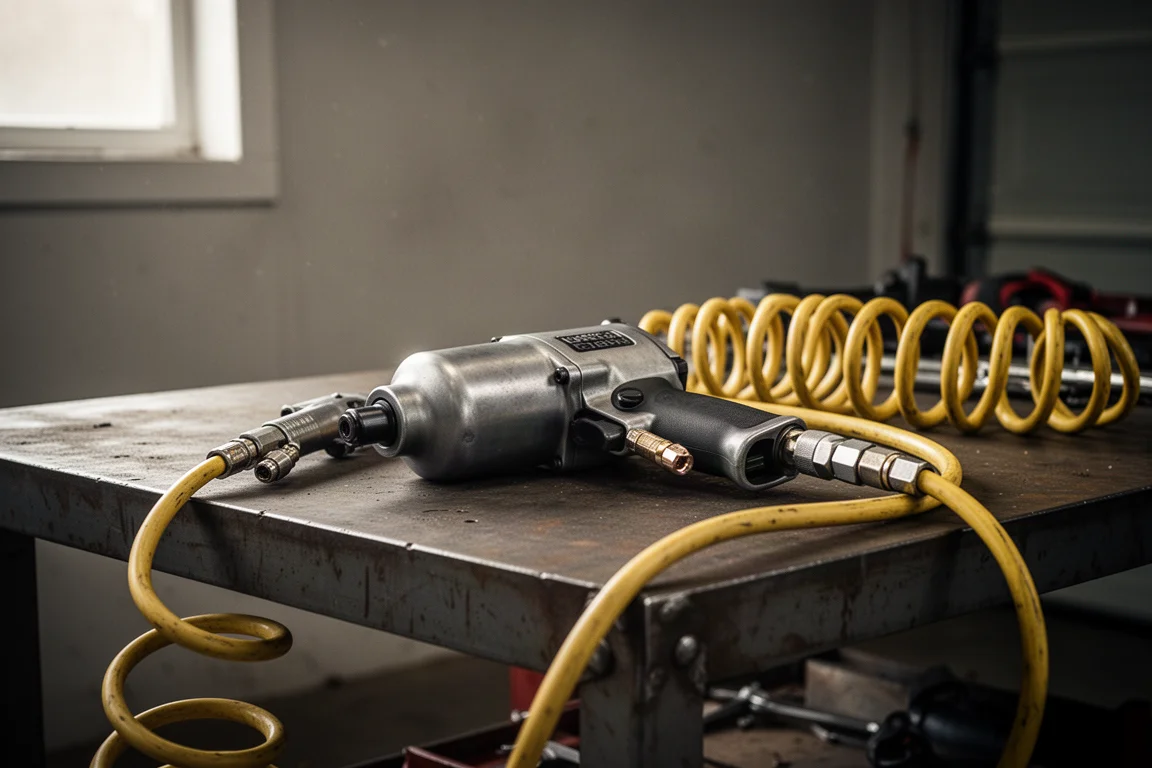
Dimensions matter too. At 7.3 inches long, it is not short for an air tool, but it is considerably shorter than most cordless alternatives, delivering 83.6 ft-lbs per inch of length. At around $200, it sits well above the $120 231C but at roughly a seventh of the price of the pit guns themselves.
Inside the Tool: Why the Mechanism Matters
Crack the gun open and the first thing you notice is the twin hammer mechanism, one of the most common and durable designs in modern air impacts. The pit-lane Thunder Gun, by contrast, uses a far rarer swinging weights mechanism that stores energy while spinning freely off the lug nut and dumps it into the fastener on engagement. That design scales its power dramatically with pressure and RPM, which suits pit stops where the gun is throttled up before hitting the wheel, but it is far less useful in a shop environment where you cannot afford full-throttle contact with a customer’s fasteners.
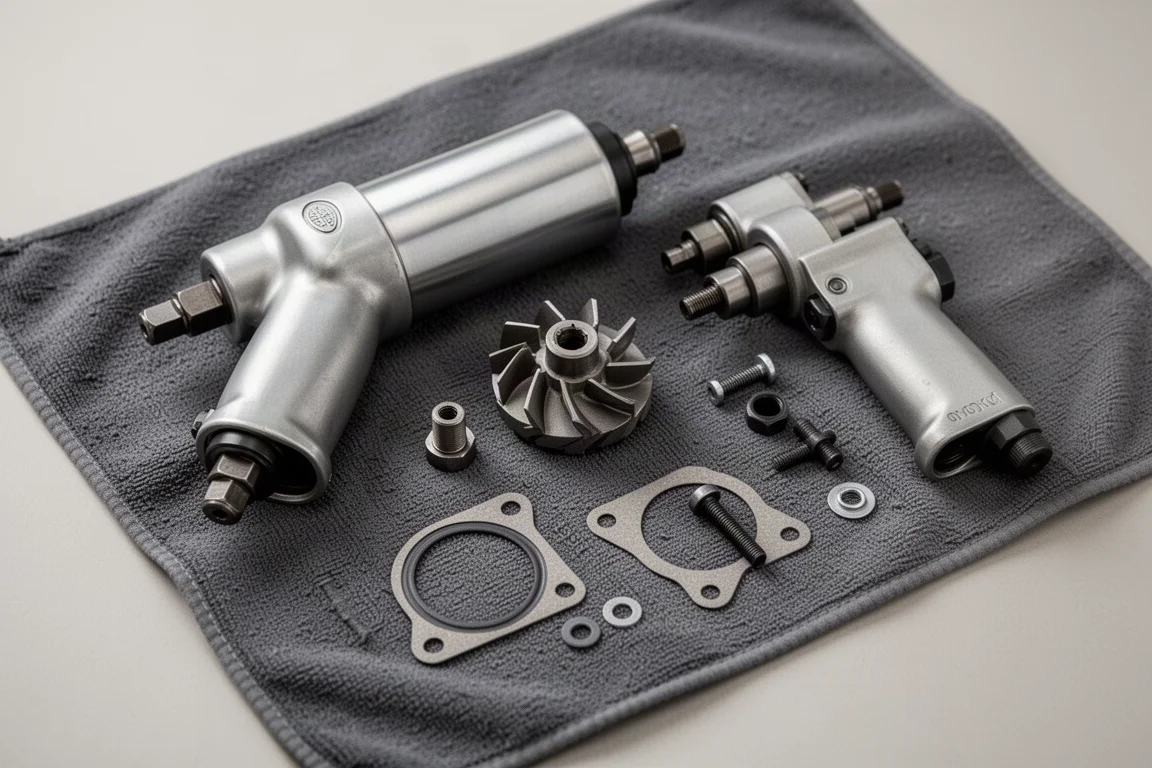
The twin hammer is a durability-first design. Its RPM and impacts-per-minute are effectively the same figure on a stuck fastener, because the mechanism momentarily stops the entire rotating system once per revolution. The TGSL’s 1,200 IPM rating means about 1,200 meaningful impacts until the nut breaks loose, after which the motor spins freely toward that 9,000 to 10,000 RPM territory.
Tuning and Porting: How Far You Can Push It
This is where the Thunder Gun becomes genuinely special. Swapping the stock six-vane rotor for an aftermarket seven-vane rotor with phenolic resin blades pushed measured output to 682 ft-lbs, nearly matching a Makita high torque at 689. The eight-vane rotor landed at 654, an improvement over stock but surprisingly below the seven-vane setup.
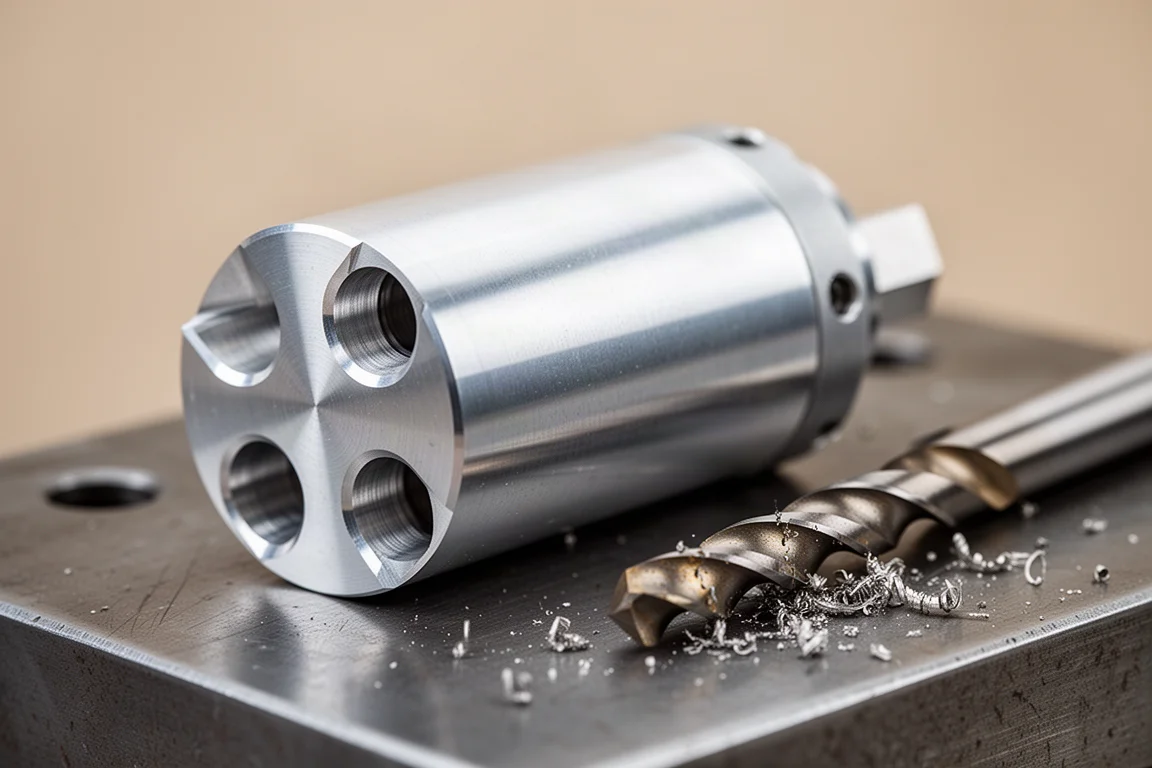
With further porting work, including deburring and chamfering air ports, gasket matching, and progressively drilling out the cylinder exhaust holes to reduce back pressure, the tool reached 727 ft-lbs, cresting 700 and passing the Makita high torque outright. That is roughly 20 percent more than the stock configuration. The trade-off is RPM: measured free speed dropped to around 8,350 RPM, though reinstating the stock six-vane rotor in the ported tool recovered about 9,900 RPM. Running 175 PSI raised the initial dynamic torque but did little for ultimate max torque. Longevity is a fair concern at these output levels, even pit guns historically needed rebuilding after nearly every race.
Things to Consider Before Buying
This gun is loud, thirsty for air, and built around a compressor feeding it decent pressure. At 90 PSI it performs well, but it clearly rewards a larger compressor. The tuning parts that unlock the big numbers may not be easy to source, and modified tools give up some free speed. It is also an old-school air design rather than a modern cordless, so plan for hose routing and a fitting on every job.
Buying Advice
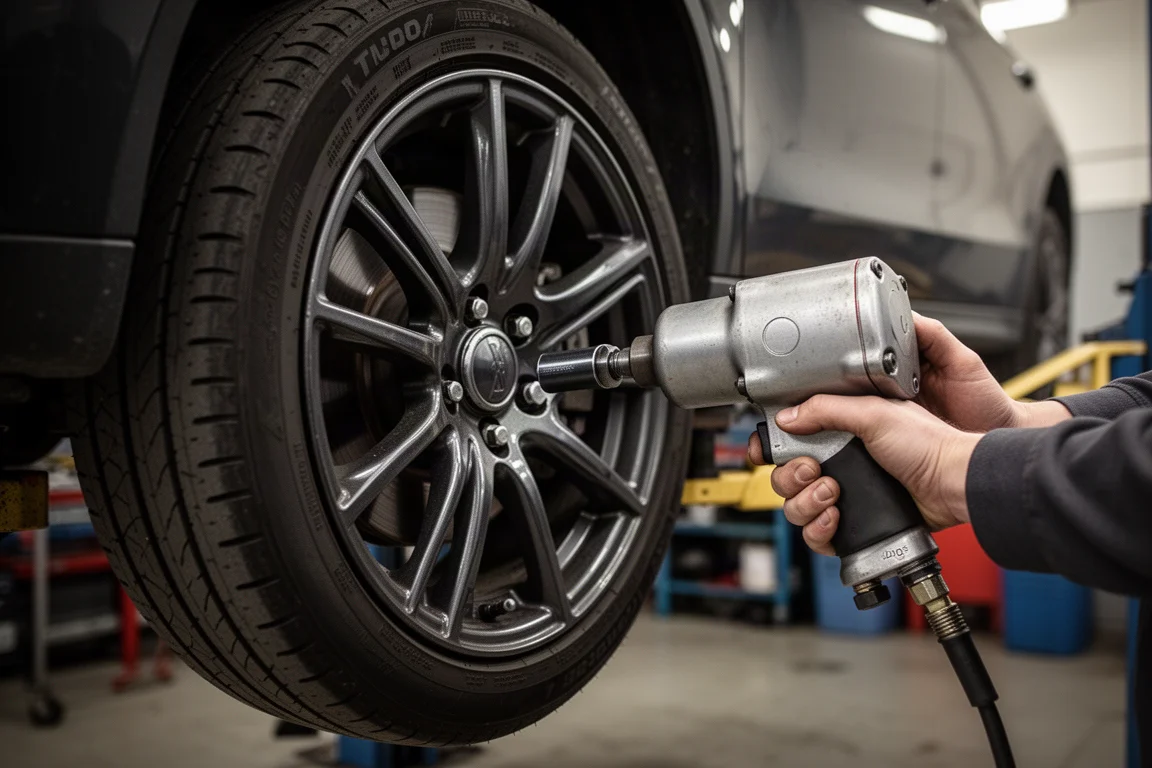
If you want maximum working power per dollar in a full-size air impact and already own a decent compressor, the 232TGSL is one of the most compelling street tools available. It is shorter and more compact than most cordless options, it met its advertised torque figure almost exactly, and it responds beautifully to upgrades. If you mostly do occasional household tasks, a mid-range cordless may be more convenient, but serious shop users have a lot to like here.
Conclusion
The Ingersoll Rand 232TGSL Thunder Gun is a rare case of a race-derived tool that genuinely earns the association. Out of the box it out-torques the classic 231H, approaches high-end cordless territory, and delivers nearly exactly what its rating promises. With basic tuning it becomes something even more potent, making it arguably one of the most performance-rich street-legal impact wrenches you can buy today.
Product link
View more details for Ingersoll Rand 232TGSL Thunder Gun
This product is mentioned in the review. Check the specifications, options, and compatibility before buying.
View more details for Ingersoll Rand 232TGSL Thunder GunFurther reading
Related Reviews
Impact Wrenches
NASCAR Pit Gun Showdown: Thunder Gun vs 232TGSL, Earthquake, and Thor 1894
A real Ingersoll Rand Thunder Gun pit gun goes head to head with the street-legal 232TGSL, Harbor Freight's Earthquake, and the Thor 1894 on the torque dyno.
Impact Wrenches
Vintage vs Modern Impact Wrenches: Five Tools Spanning 60 Years of Torque
From a 1950s Thor Model 55 to today's cordless mid-torque tools, five impact wrenches show how much has changed, and how much hasn't.
Power Tools
Best 1-Inch Pistol Impact Wrenches: Three Heavy-Duty Options Compared
We compare three 1-inch pistol impact wrenches, from a budget-friendly Harbor Freight model to a premium Caterpillar unit, to help you choose the right one.