Indoor Cycling
Indoor Cycling Trainers Compared: From Budget Direct Drive to Premium Setups
A practical comparison of indoor cycling trainer setups, from an entry level direct drive unit under £300 to a fully immersive premium rig.
Introduction
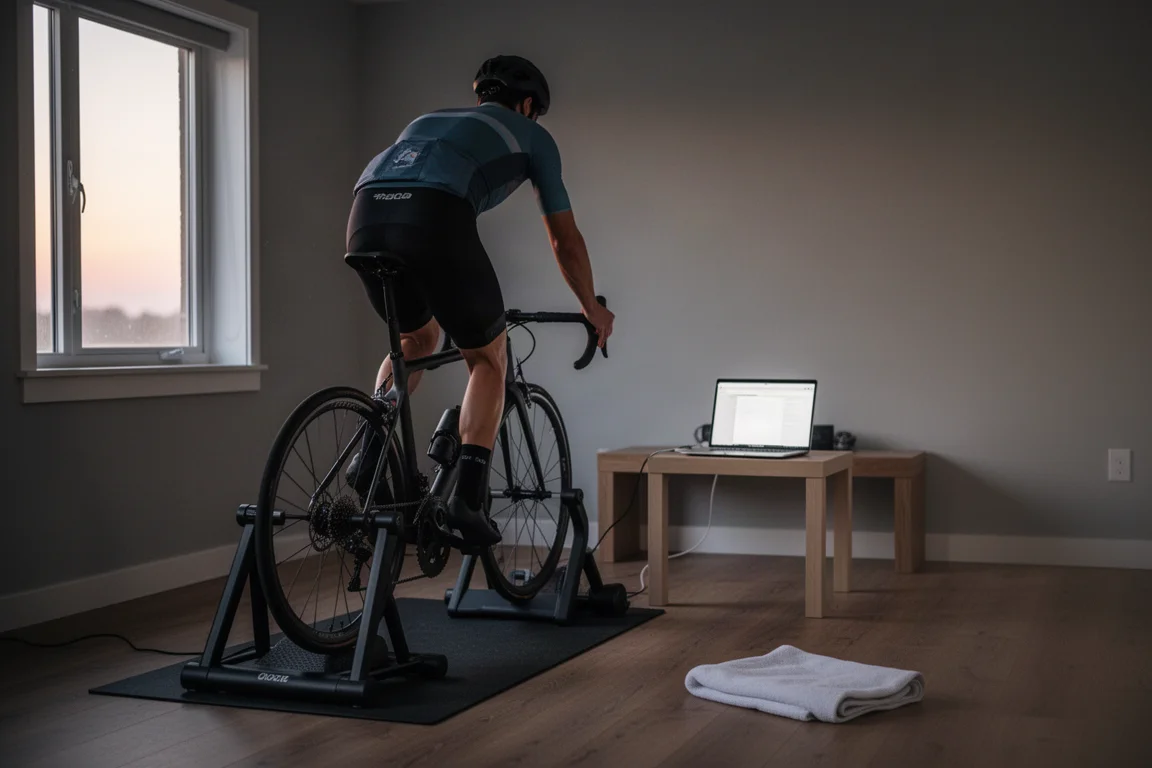
Indoor training tends to divide cyclists. The appeal is easy to understand: it is time efficient, it keeps you warm and dry at least until the sweating starts, it is accessible, and the online community around it is now large enough that you can race, follow a structured plan, or simply ride for the fun of it. The objections are just as familiar. For a lot of riders the experience was boring, unrealistic, and extremely painful, and that impression often comes from hardware that is now well out of date.
That picture has changed. Direct drive, wheel-off trainers feel dramatically better than the wheel-on units of the not too distant past, they measure how hard you are pedalling, and they work with training apps. Prices have moved in the opposite direction to capability: smart trainers are now available for less than €300, and the days of spending a thousand pounds or more just to get started are gone. Zwift remains the largest online training platform by user numbers, which makes it the natural reference point for the setups below, although the hardware itself is not tied to a single app.
What follows is a walk through the current market, starting with the cheapest sensible entry point and finishing with a fully immersive premium setup. The aim is to show what each step up in budget actually adds, so you can decide where your own money is best spent.
What You Need to Start Indoor Cycling
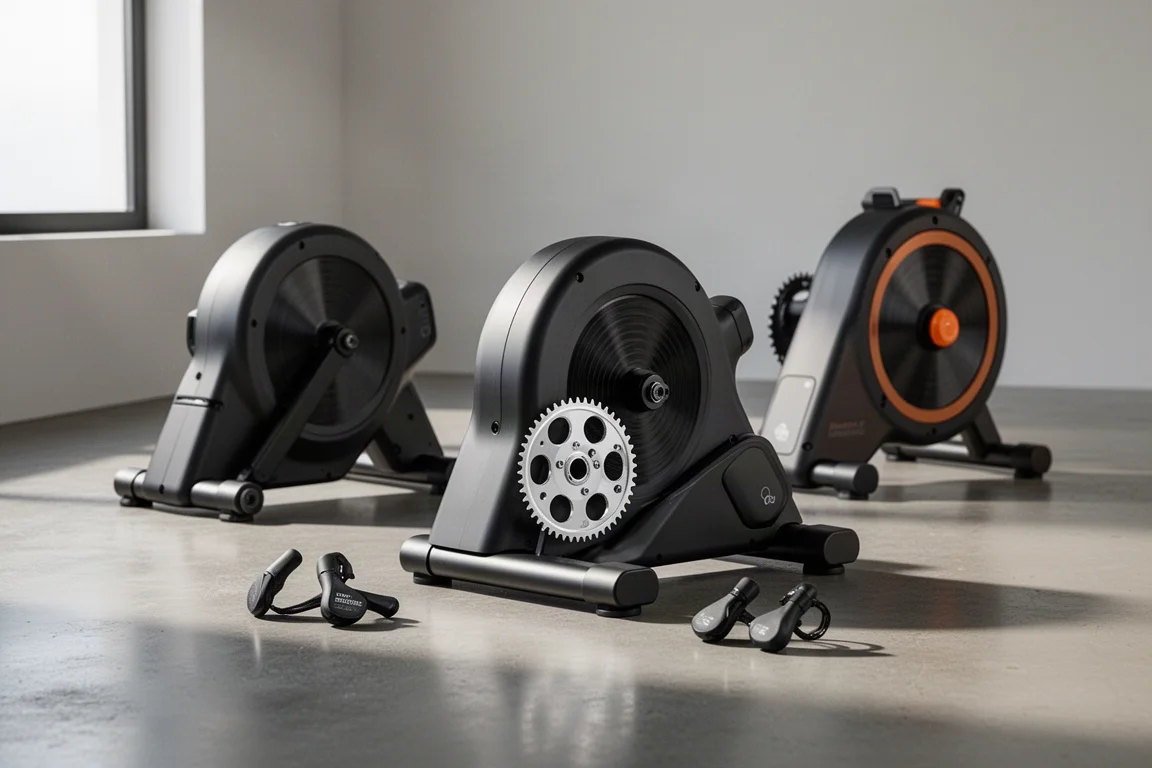
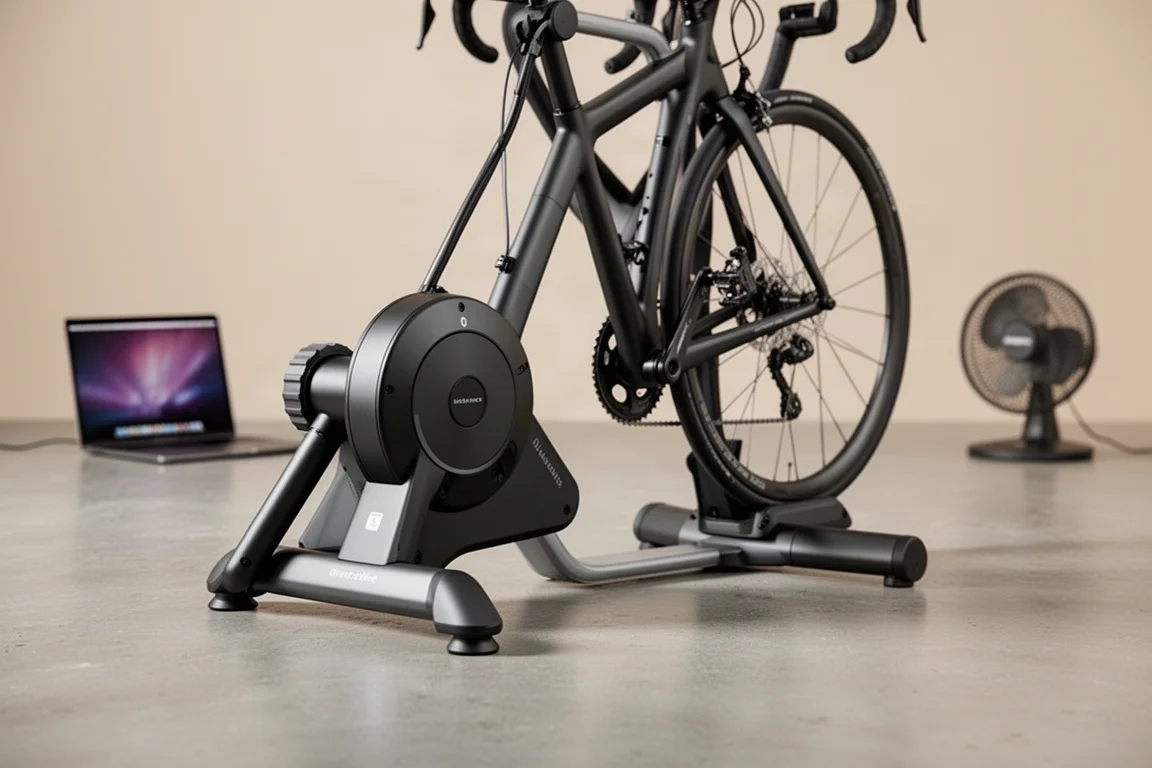
A direct drive smart trainer is the core of any modern setup. These units take the rear wheel out of the equation entirely, driving the resistance unit through a cog or cassette mounted on the trainer itself, and they measure your power along the way.
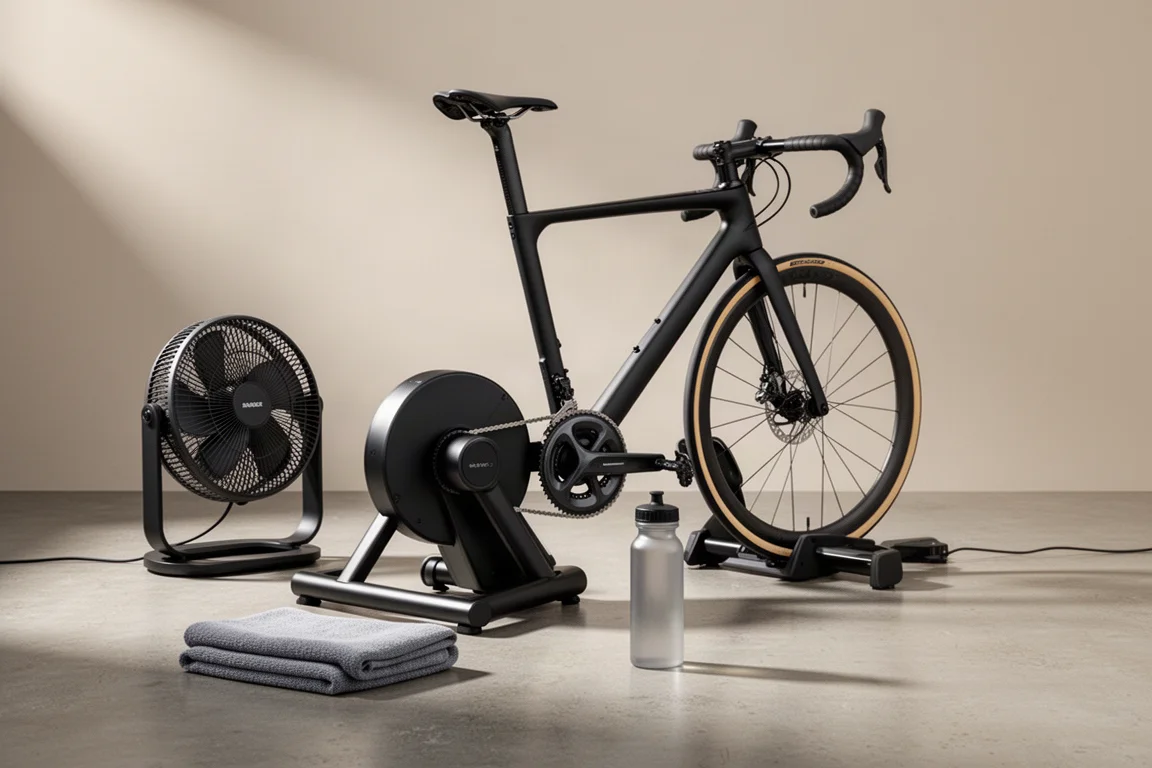
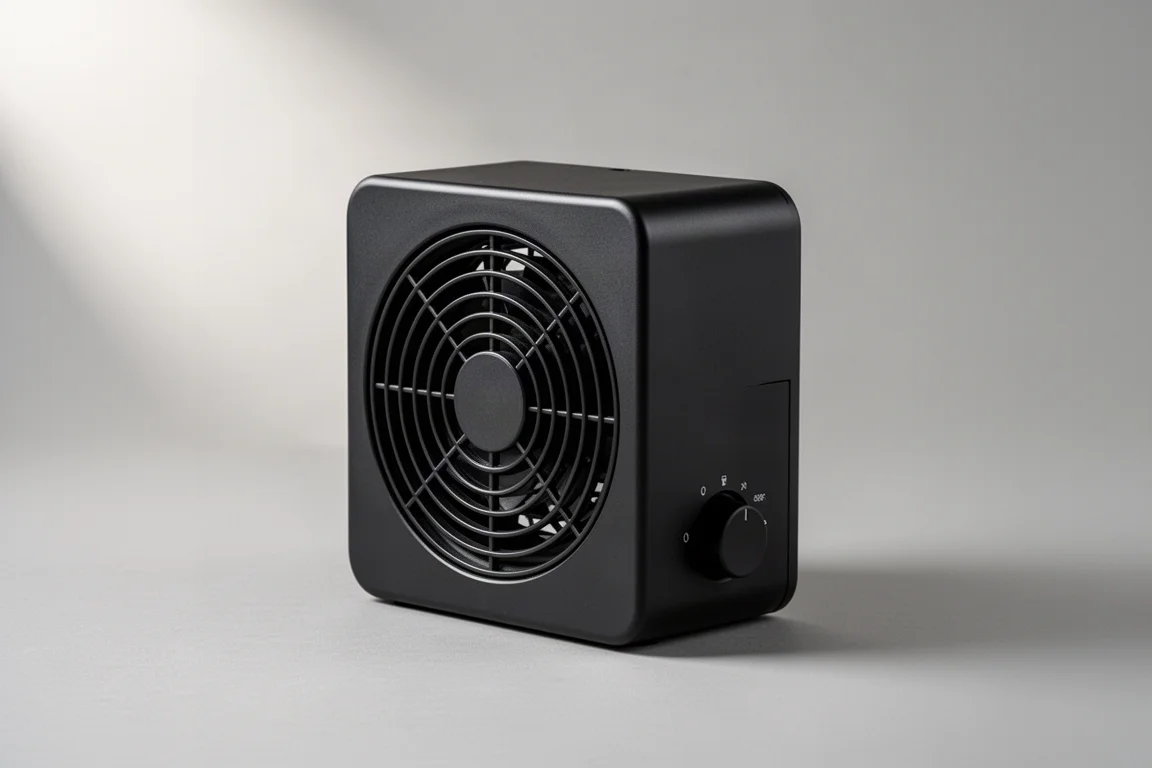
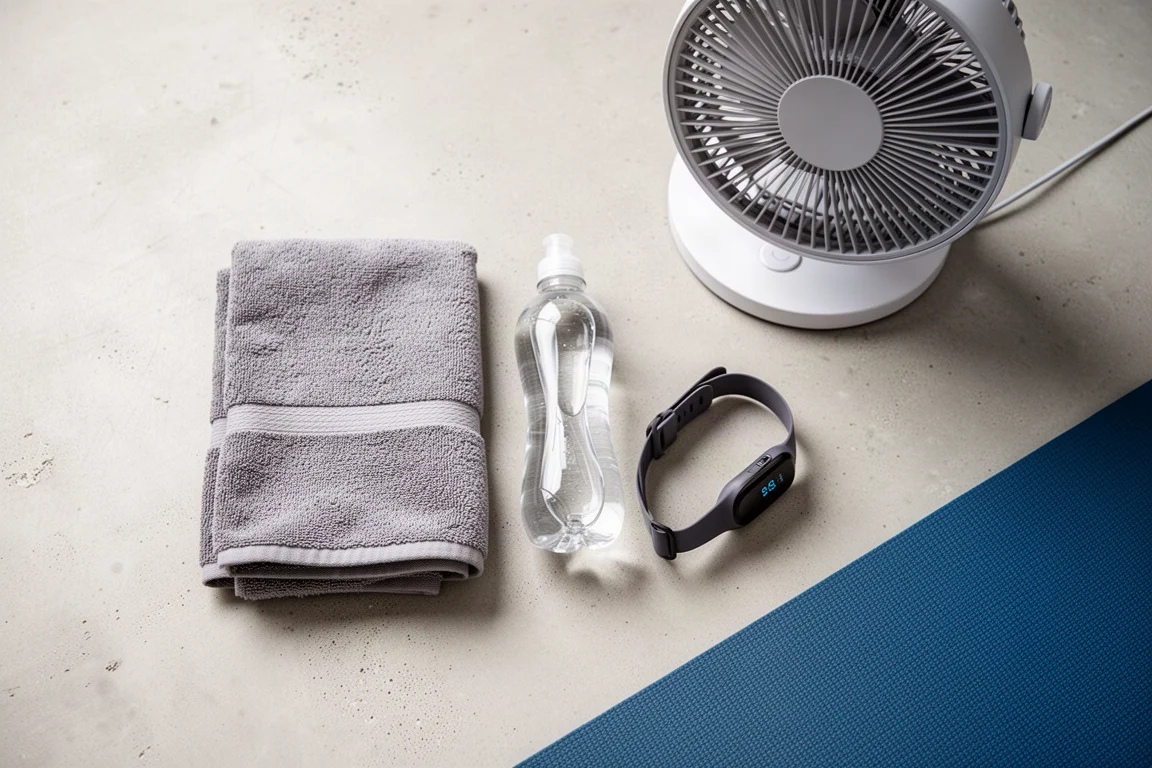
Beyond the trainer, the shopping list is short and cheap. A fan is close to essential, and a regular desktop or floor standing fan does the job perfectly well. Add a mat or an old towel for the floor, plus one or two towels to manage the sweat you will generate even with a fan running. That is about it.
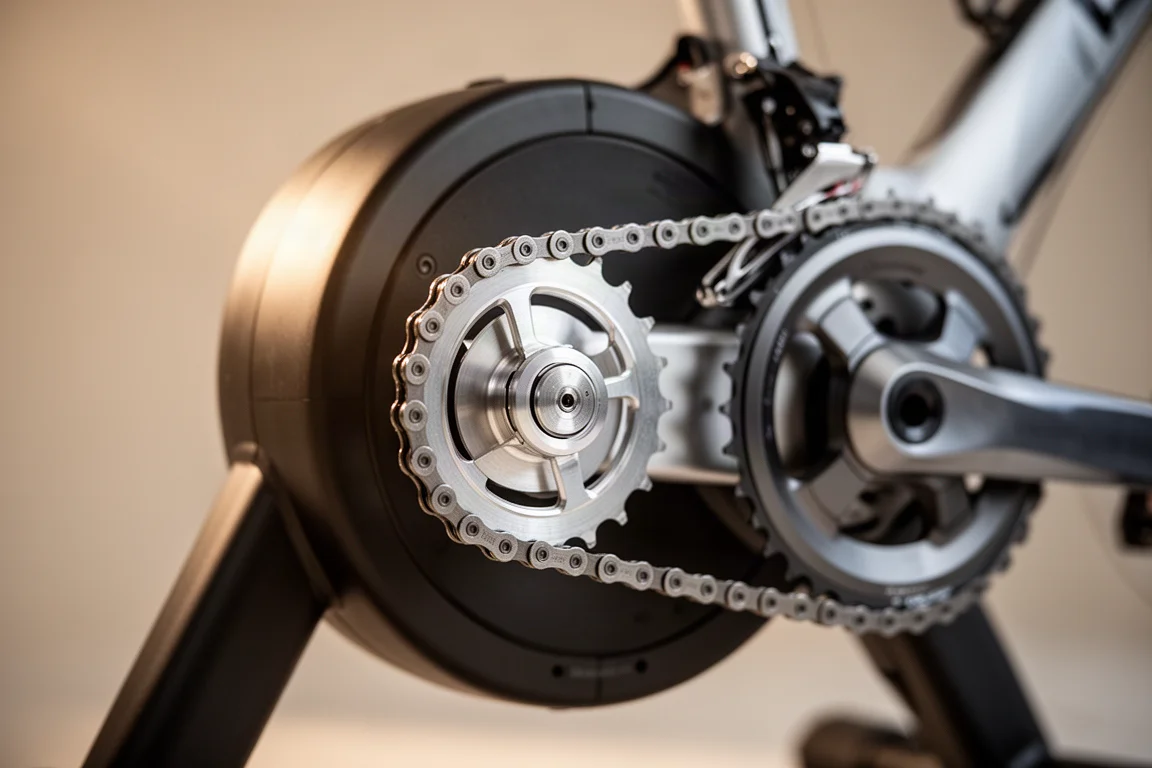
Cassette compatibility used to be an extra headache on top of that. You either bought a cassette specific to your bike, or you repeatedly moved one between your rear wheel and the trainer every time you switched between indoor and outdoor riding. The Zwift Cog and Click removes that problem entirely, and it also brings virtual shifting, which is why it appears on so many of the setups below.
Best Budget Smart Trainer: Van Rysel D100
The Van Rysel D100 is one of the newest arrivals in the entry level bracket, and it is a good illustration of how reasonable the cost of entry has become. In the UK and Europe it is available for under £300 with the Zwift Cog and Click included.
That bundle matters. The Cog and Click adds virtual shifting and lets you run almost any bike on the trainer, so there is no cassette to buy and no swapping parts between sessions. The D100 is also very quiet, which is a genuine advantage no matter how close your neighbours are.
There are limits, and they are worth understanding before you buy. Maximum resistance is 600 watts, which is plenty for endurance and VO2 max work but will clip if you are sprinting or contesting a finish in a race. Gradient simulation stops at 6%, so anything steeper in an app simply stays at that figure. Power accuracy is claimed at plus or minus 5%, which is less precise than the trainers further up this list but still adequate for keeping yourself inside a training zone.
Against that, the unit folds and becomes compact enough to slide under a desk or table, which is useful if space is tight.
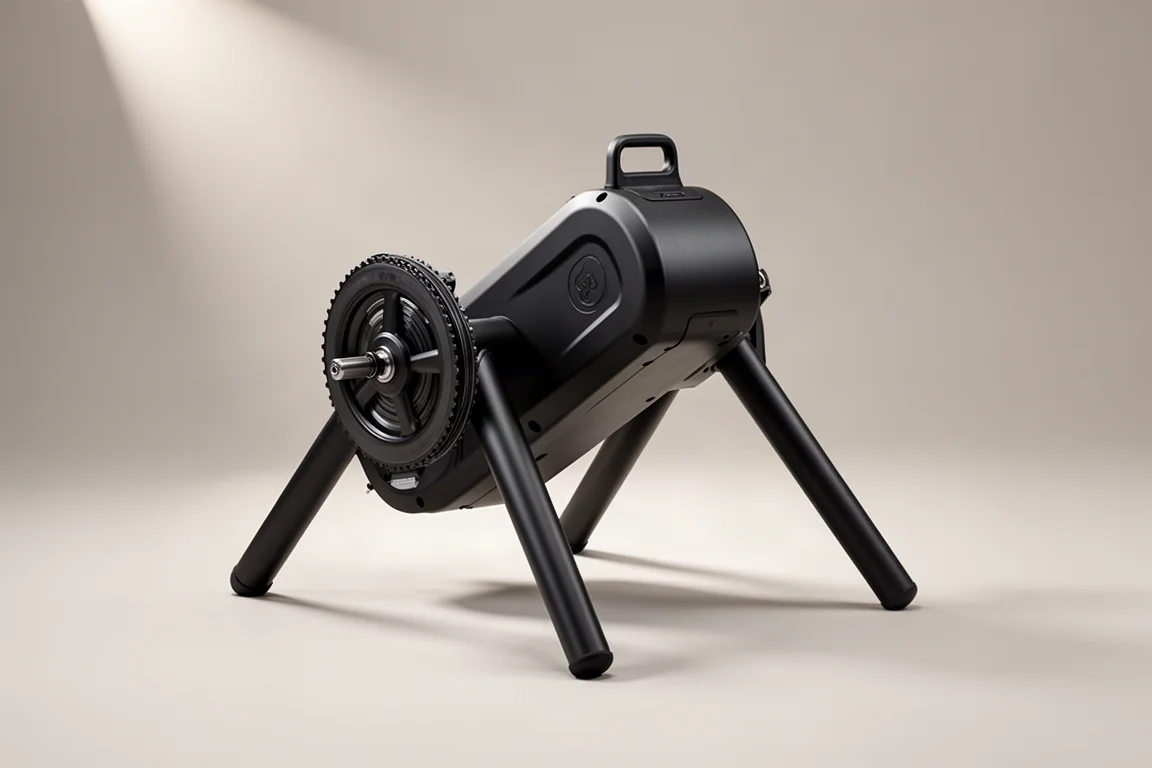
Best Mid-Range Smart Trainer: JetBlack Victory
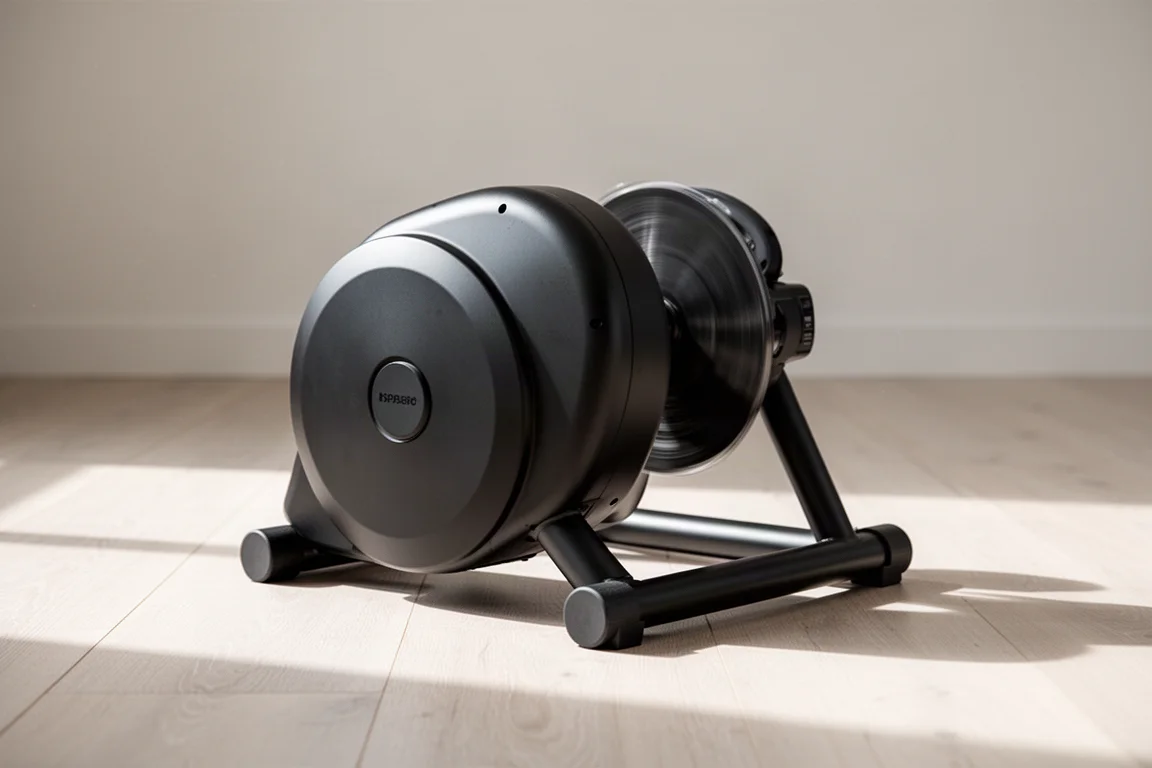
Spending more buys accuracy, headroom, and steeper gradients. The JetBlack Victory arrives with the Zwift Cog and Click and is sold in the USA, UK, Europe, Canada, and Australia, at around $400 in the US and roughly £400 to £450 in the UK.
The numbers step up meaningfully: power accuracy of 2%, a maximum output of 1,800 watts, and gradient simulation up to 18%.
For most riders that combination covers everything a training plan can throw at them, including short sprints and race finishes, without the cost climbing into premium territory. It is roughly the point in the range where the obvious compromises disappear.
A Close Alternative: Wahoo KICKR CORE Zwift One
The Wahoo KICKR CORE Zwift One sits in much the same place as the JetBlack Victory, with similar pricing and similar functionality. If you already own Wahoo accessories, or you simply prefer that ecosystem, this is the like-for-like alternative.
There is also a bundle worth knowing about. The KICKR CORE Zwift One can currently be bought together with a discounted Zwift subscription for around £100 more. If you are starting from nothing and know you will want an app subscription anyway, that package can work out well.
Best Mid-Range Accuracy: Elite Direto XR
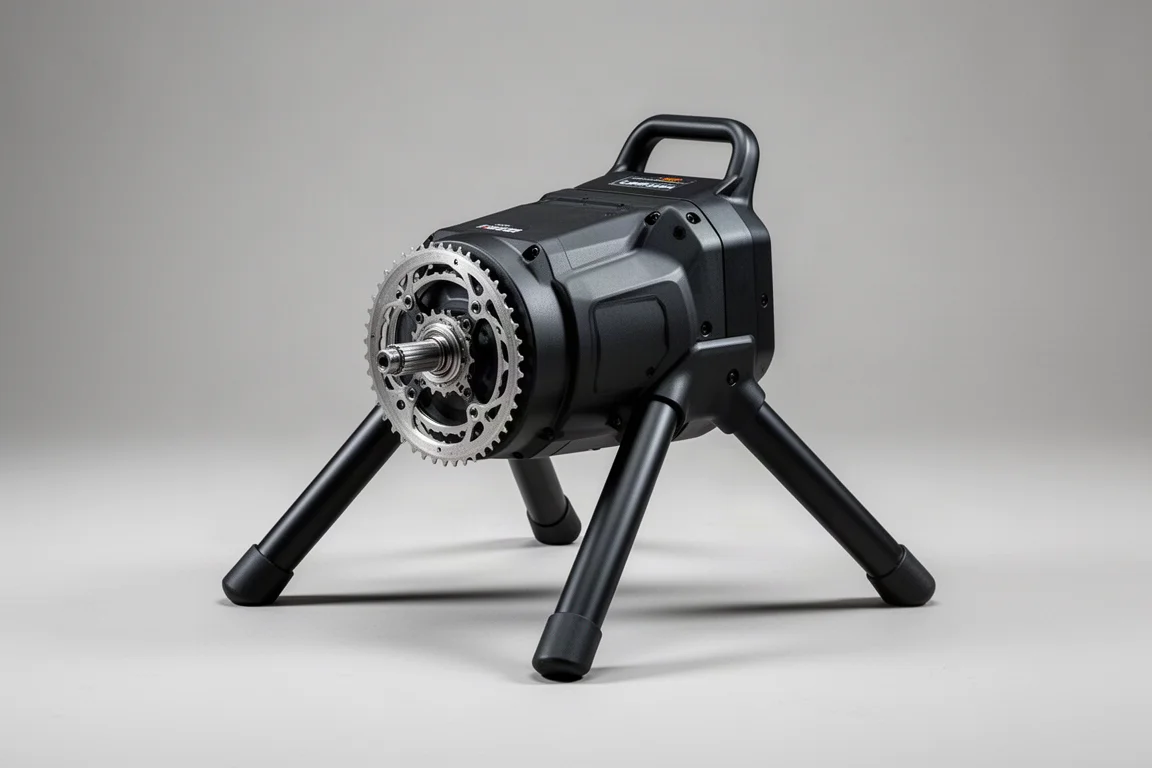
The Elite Direto XR with the Zwift Cog and Click pushes accuracy a little further again, with a claimed figure of 1.5%, and it will simulate steeper gradients than the trainers above it in this list.
If the precision of your power numbers matters to you, whether for structured intervals or for comparing indoor and outdoor efforts, that extra half a percent is the reason to choose this unit over the others in the same bracket. For everyone else the difference is small enough that price and availability should probably decide it.

Either way you are getting the same core benefits: virtual shifting, no cassette to buy, and compatibility with the bike you already own.
Why the Zwift Cog and Click Matters
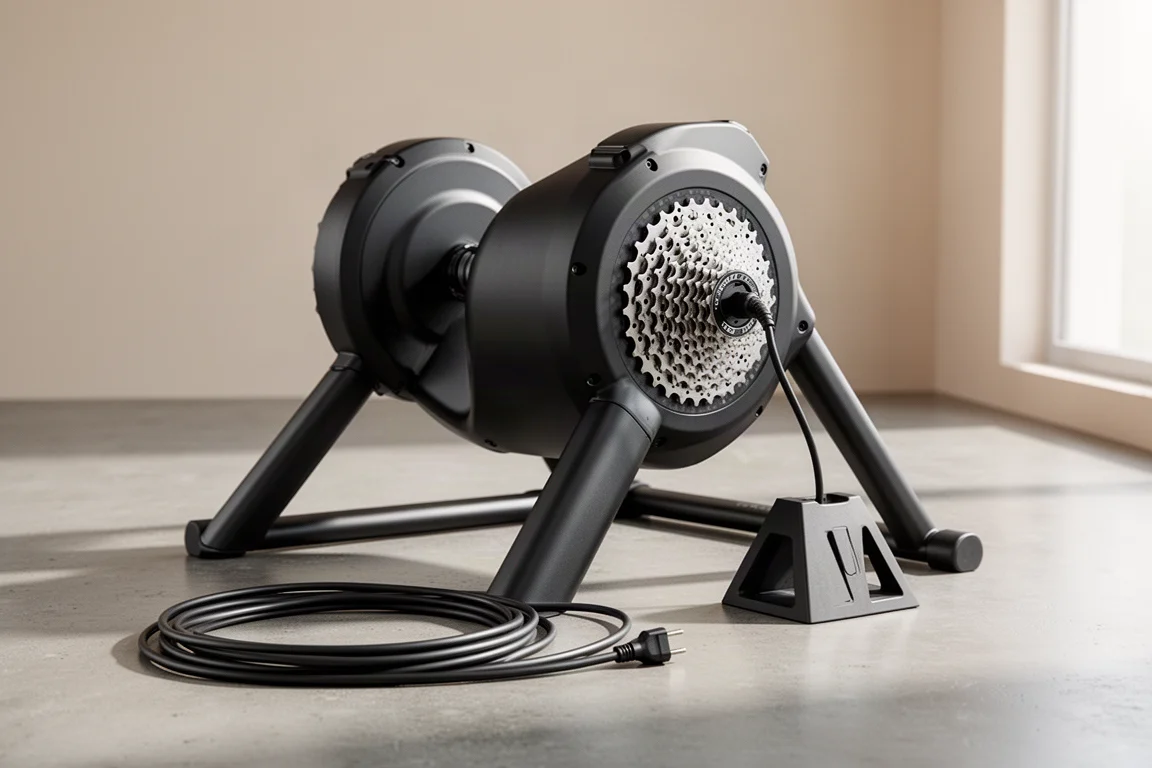
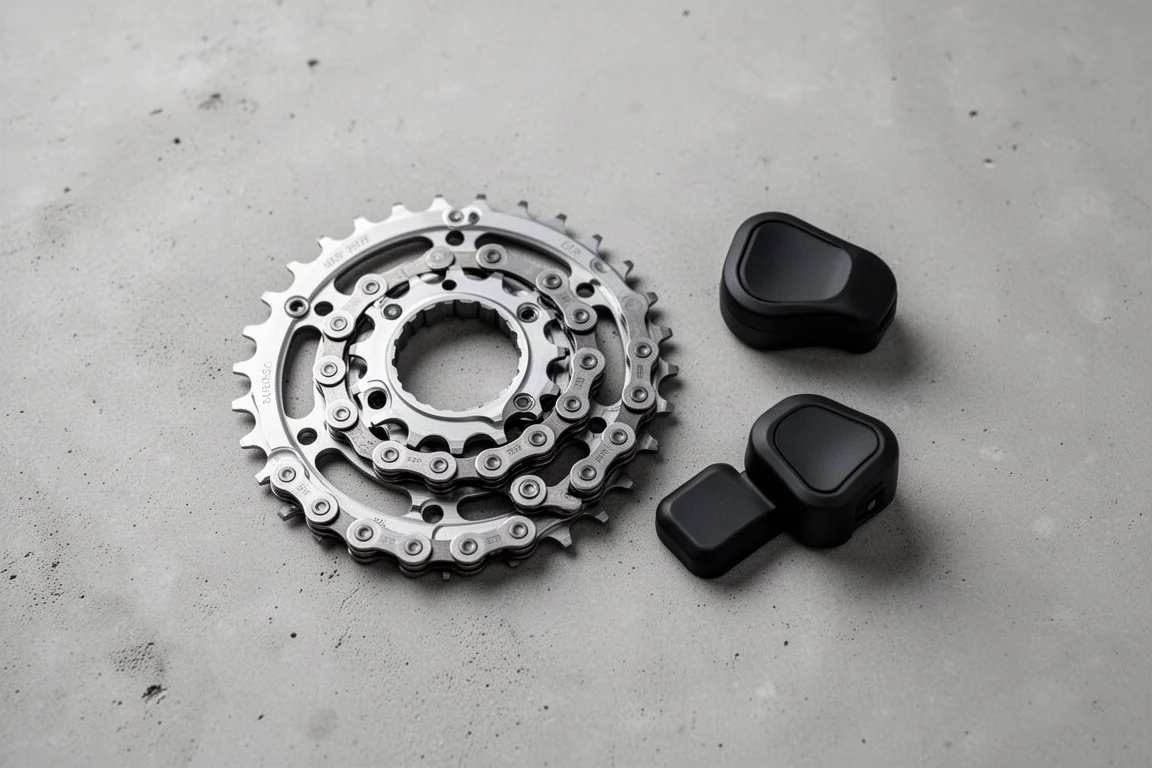
It is worth pausing on the Zwift Cog and Click, because it is the single change that has made modern direct drive trainers far easier to live with. The kit replaces the traditional cassette with a single cog and adds wireless shift buttons that mount on your handlebars, giving you virtual shifting inside a training app.
The practical effect is twofold. First, you no longer need a cassette matched to your bike, and you no longer have to move one between your wheel and the trainer whenever you switch between indoor and outdoor riding. Second, because the system is not tied to a specific drivetrain, almost any bike can be used on the trainer, from a current road bike to an older machine picked up second hand.
Dedicated Indoor Bikes: Zwift Ride and Wahoo KICKR Bike
If budget and floor space are not constraints, a dedicated indoor bike is the most convenient answer. These units stay set up and ready to ride, and they can be adjusted for more than one person, which makes them far easier to share with a partner or a family member.
Zwift Ride
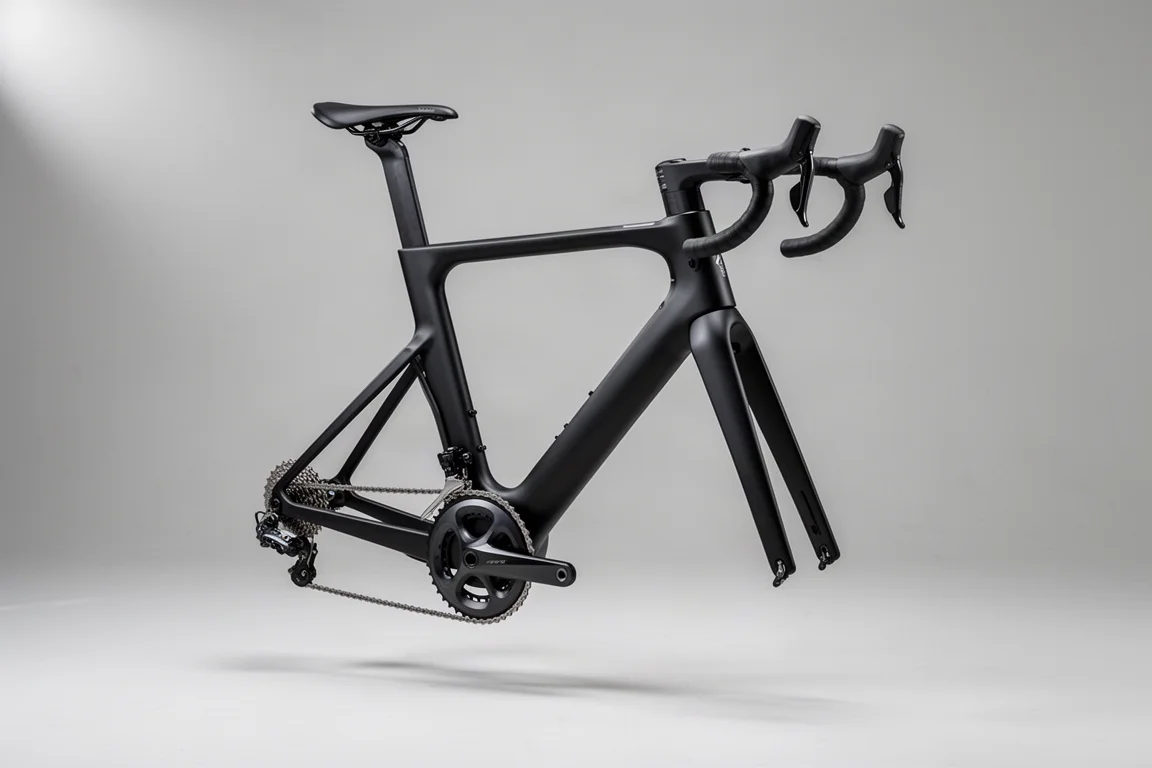
The Zwift Ride is a complete indoor bike rather than a trainer you mount a bike onto. It is compatible with every trainer featured in this guide, so it can be paired with the direct drive unit you already own or plan to buy.
Wahoo KICKR Bike
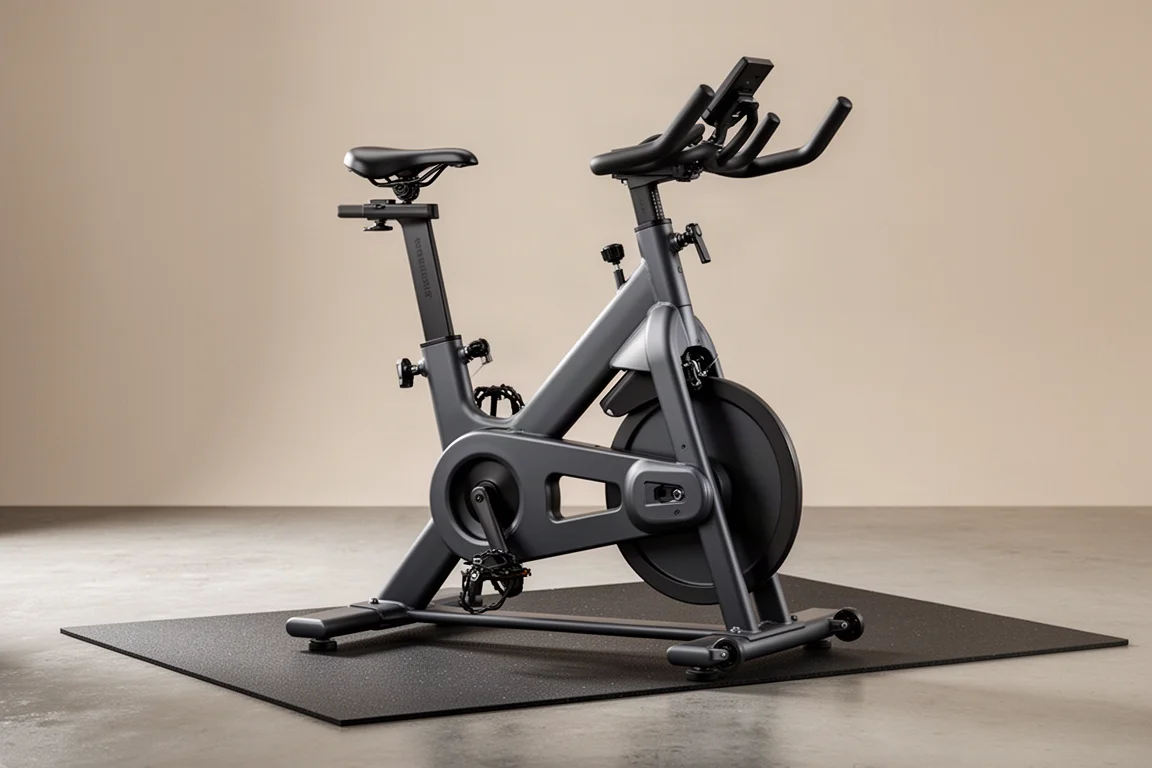
The Wahoo KICKR Bike is the other dedicated option here, and it follows the same logic: leave it set up, adjust it for whoever is riding, and skip the process of fitting and removing a bike every session.
Premium Direct Drive: Wahoo KICKR MOVE
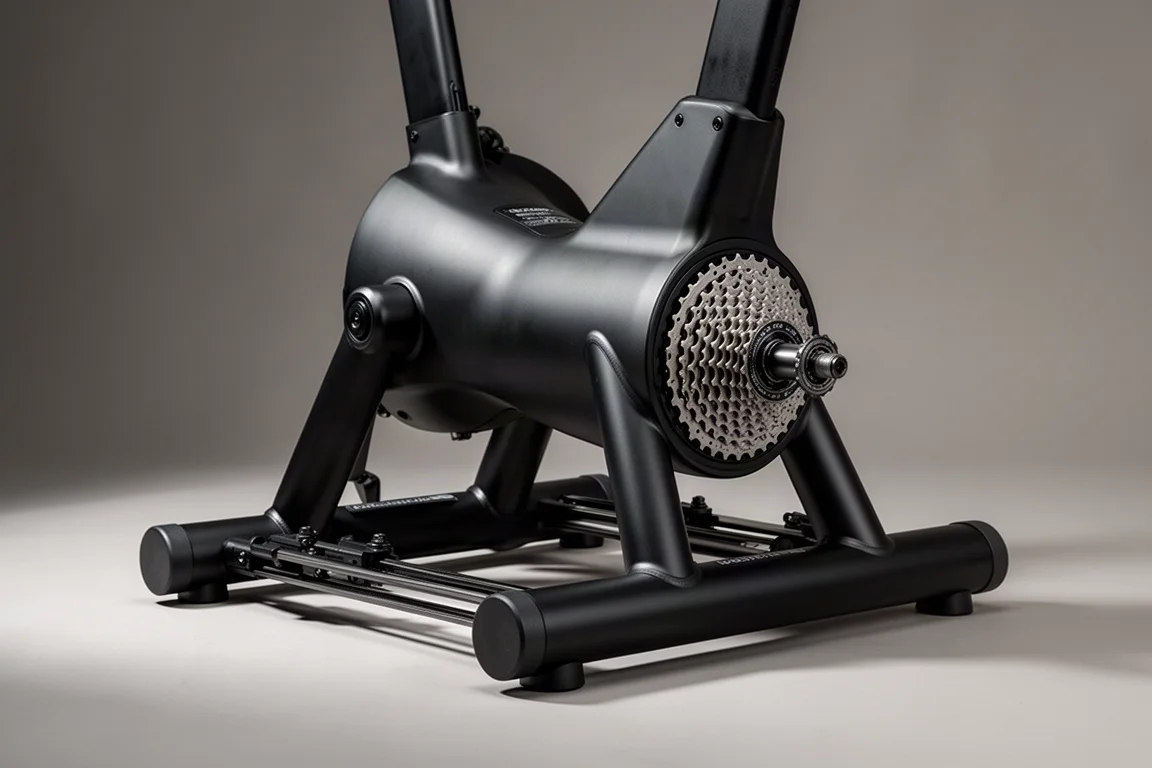
For riders who want to keep using their own bike, the Wahoo KICKR MOVE is the premium direct drive option. It is available with the Zwift Cog and Click, and its claimed power accuracy of plus or minus 1% is about as good as it gets, matching what you would expect from a crank-based power meter or laboratory equipment.
It also measures up to 2,200 watts, far beyond what most riders will ever produce. The feature that separates it from cheaper trainers is the 8 inches, or 20 cm, of front to rear movement built into the base, which adds a noticeable amount of comfort to long indoor sessions. It is also very quiet.
Immersive Add-Ons: Wahoo KICKR CLIMB and Wahoo KICKR HEADWIND
Two accessories turn a good trainer into something closer to a full simulation. Neither is necessary, but both make time on the trainer easier to face.
Wahoo KICKR CLIMB
The KICKR CLIMB raises and lowers the front end of your bike in line with the gradients you are riding, so your position changes as the road tilts. It is a small thing in isolation and a surprisingly effective one in practice.
Wahoo KICKR HEADWIND
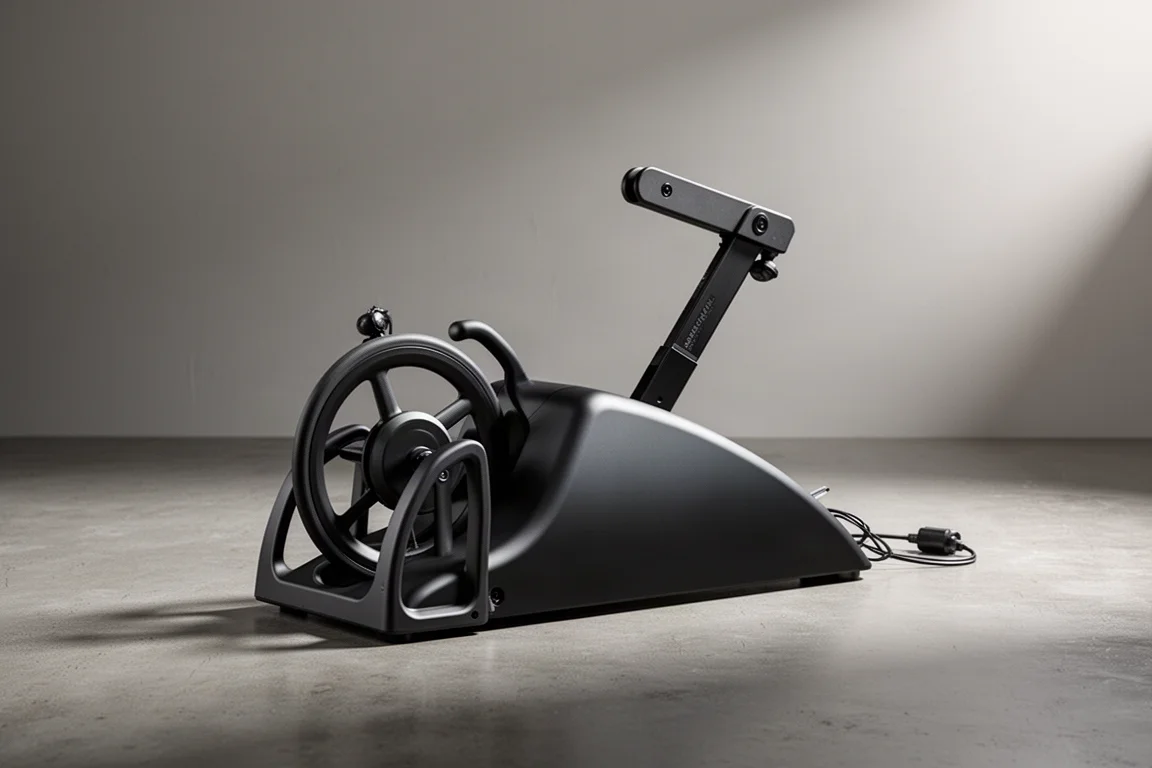
The KICKR HEADWIND is a smart fan that can be controlled from your head unit or automatically by your own heart rate, so the airflow rises with your effort. Combined with the CLIMB and the KICKR MOVE it forms a setup in the region of £2,000, and it removes a lot of the mental resistance to getting on the trainer in the first place.
Buying Advice
The right answer depends on how you intend to ride. If you want to try indoor training without committing much, the Van Rysel D100 covers endurance and VO2 max work, folds away when it is not in use, and includes virtual shifting out of the box. If you race or sprint, the 600 watt ceiling and the 6% gradient limit will frustrate you, and the step up to something like the JetBlack Victory or the Wahoo KICKR CORE Zwift One is worth the money. If power accuracy is the priority, the Elite Direto XR sits at the top of the mid-range group.
Space and setup matter as much as specifications. A dedicated indoor bike only makes sense if you can leave it assembled, and the same applies to a premium trainer and its accessories, which is why most riders keep that kind of setup in place through the winter months and pack it away for the rest of the year.
Conclusion
Indoor training has become cheaper to start and more capable at every price point. Entry level direct drive trainers now include virtual shifting, mid-range units have enough accuracy and headroom for serious structured training, and the premium end offers a level of immersion that makes the hardest sessions considerably easier to begin. Whichever rung you choose, the hardware is no longer the reason to stay away.
Further reading
Related Reviews
Indoor Cycling
Best Budget Smart Indoor Trainer Setups: Six Options Worth Considering
Smart indoor trainers keep getting better while prices come down. Six setups and components worth considering, from the cheapest Zwift-ready option upward.
Indoor Cycling
Best Budget Smart Indoor Trainers for Immersive Cycling in 2026
A practical guide to affordable smart indoor trainer setups, including budget and mid-range options with virtual shifting.
Indoor Cycling
Best Indoor Cycling Apps and Smart Trainers: A Winter Buying Guide
A practical look at the indoor training platforms and smart trainers that matter this season, from a new challenger to Zwift to the entry-level trainer that stands out on value.