Indoor Cycling
Indoor Cycling Gear Guide 2026: Turbo Trainers, Watches, and Head Units
A practical look at the turbo trainers, smartwatches, and bike computers that make up a home indoor cycling setup, and what each piece adds.
Introduction
Indoor training setups rarely arrive fully formed. Most start with a trainer and grow from there: a screen or tablet, a fan, a watch to log the session, and a bike computer to display it. The gear below covers the range of equipment that turns up in real home setups, from direct-drive trainers with movement built in to the watches and head units that record the work.
Some of it is essential. Some of it is a luxury that only makes sense once the basics are in place. Each entry explains what the item does and who it suits.
What We Looked For in an Indoor Setup
Four things separate a setup that gets used from one that gathers dust.
The first is trainer type. Direct-drive units hold the bike without the rear wheel, while wheel-on units press a resistance roller against the tyre. The second is how quickly a bike goes on and comes off, which matters in a shared space. The third is ride feel, where a small amount of movement makes longer sessions more comfortable than a completely rigid frame. The fourth is how the equipment talks to everything else, from head units to training apps.
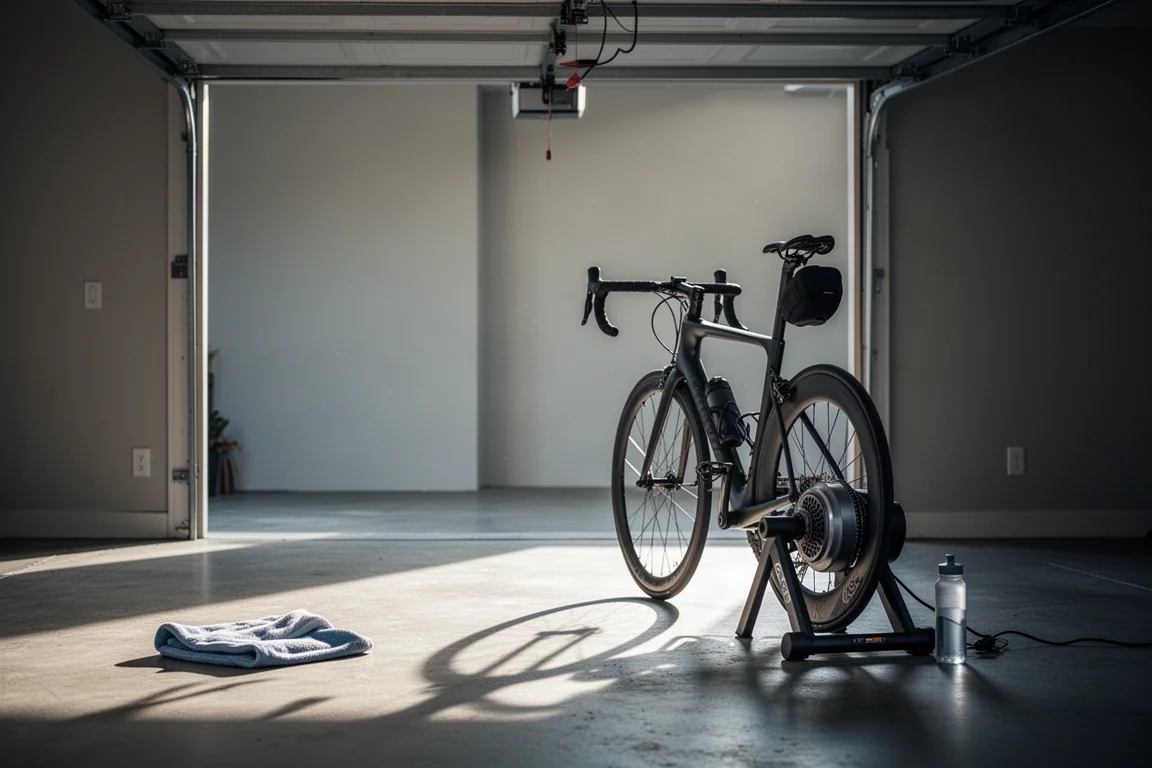
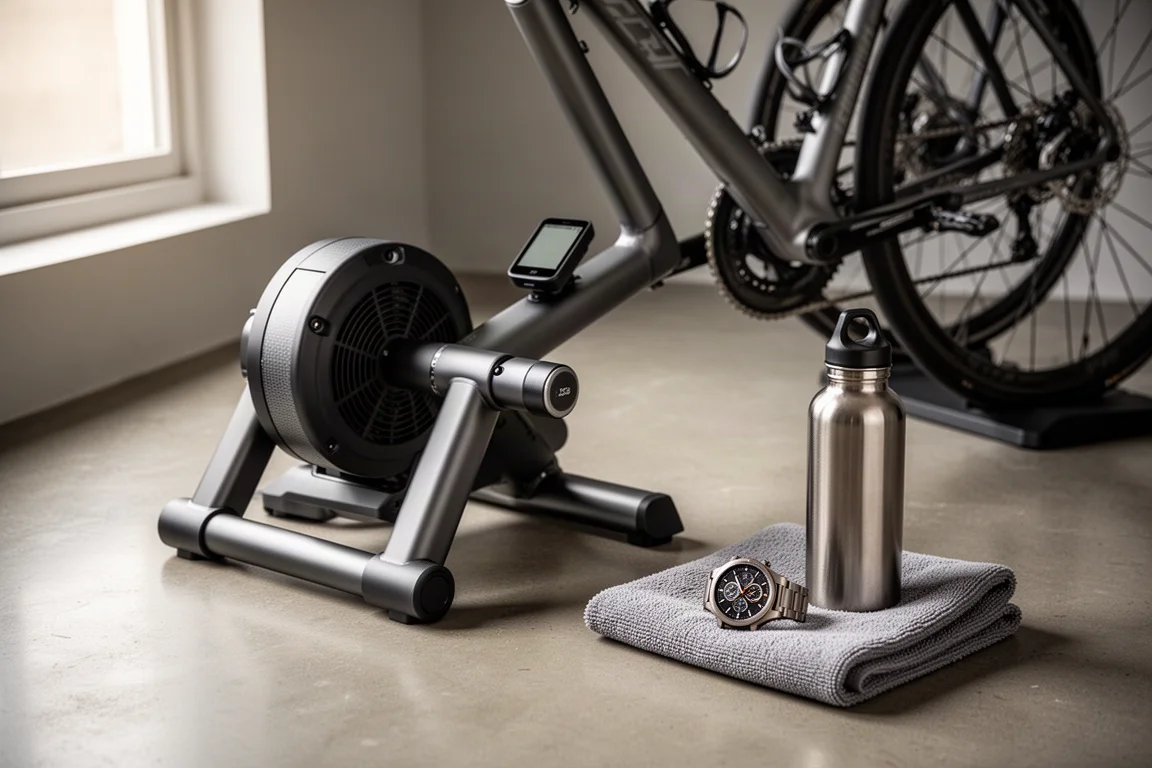
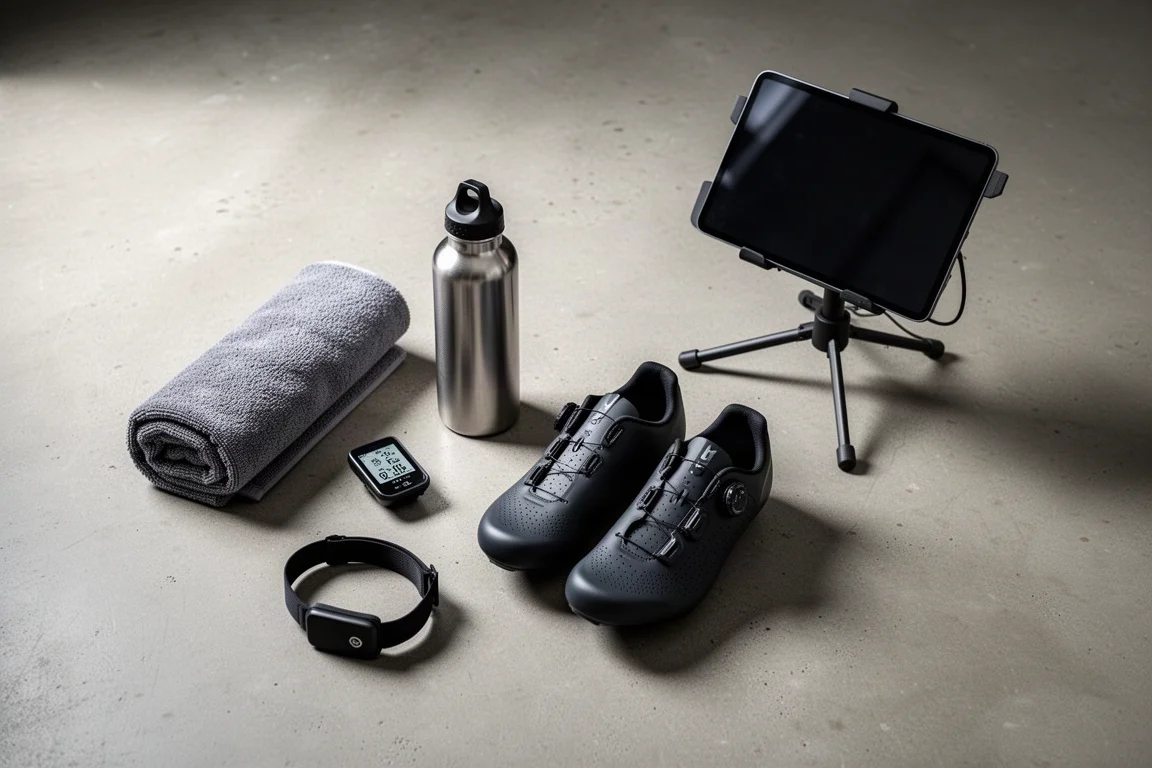
A few practical details come up again and again. Pedal-based power meters are often preferred over trainer power so that indoor and outdoor numbers come from the same source, which keeps training consistent. Fans are strongly recommended, although some riders deliberately train without one to acclimatise to heat. A cheap music stand makes an excellent tablet or laptop holder for around £10 to £15, and it doubles as a place to keep a bottle.
That covers the criteria. Here is how the individual pieces compare.
Tacx NEO 3M: Direct Drive With Movement
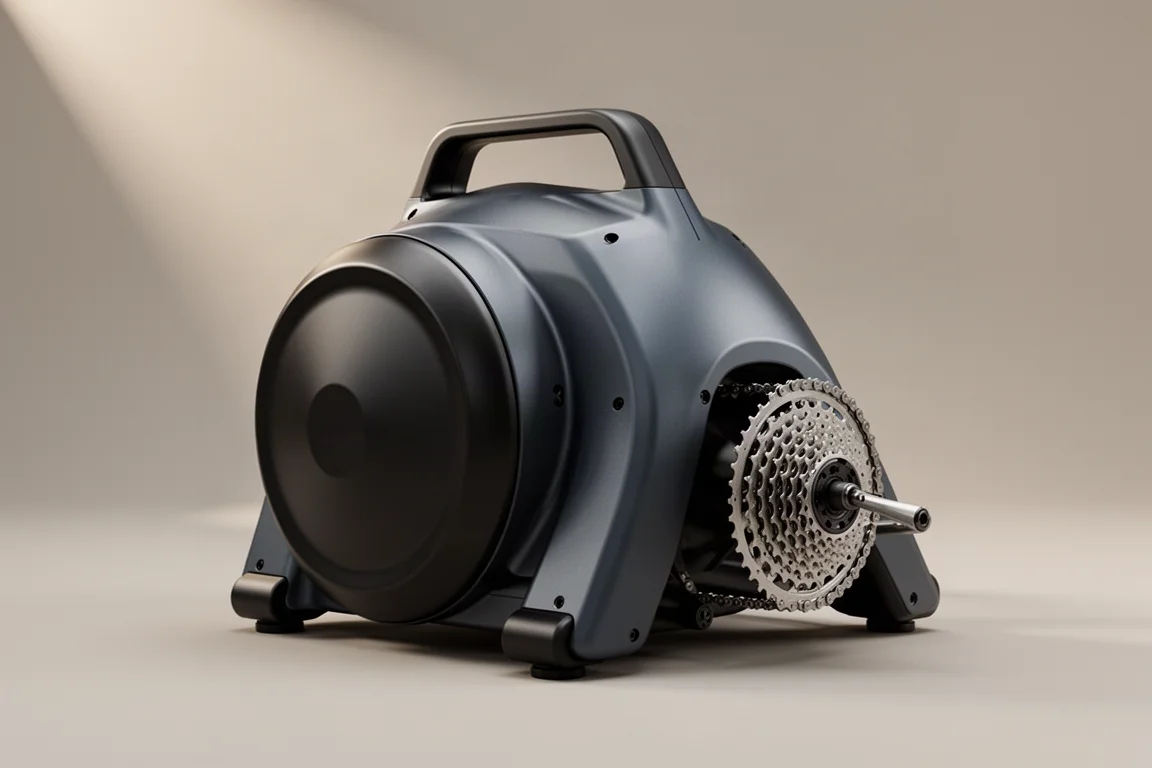
The NEO 3M is a direct-drive smart trainer with one feature that stands out immediately: it slides forward and backward as you pedal, so the bike moves underneath you rather than staying locked in place. The effect is a noticeably less harsh feel than a fully rigid setup, and there is a small amount of sideways movement as well.
It is also fully wireless, which means it can run without being plugged in. Unplugged use costs a couple of features, but full power readings and everything else continue to work, and skipping the power cable removes one more trip hazard from the floor.
A handle is built into the frame. That sounds minor until you try to move a trainer of this size, at which point it becomes the most appreciated detail on the unit.
Tacx NEO 2T: Rocking Motion as an Add-On
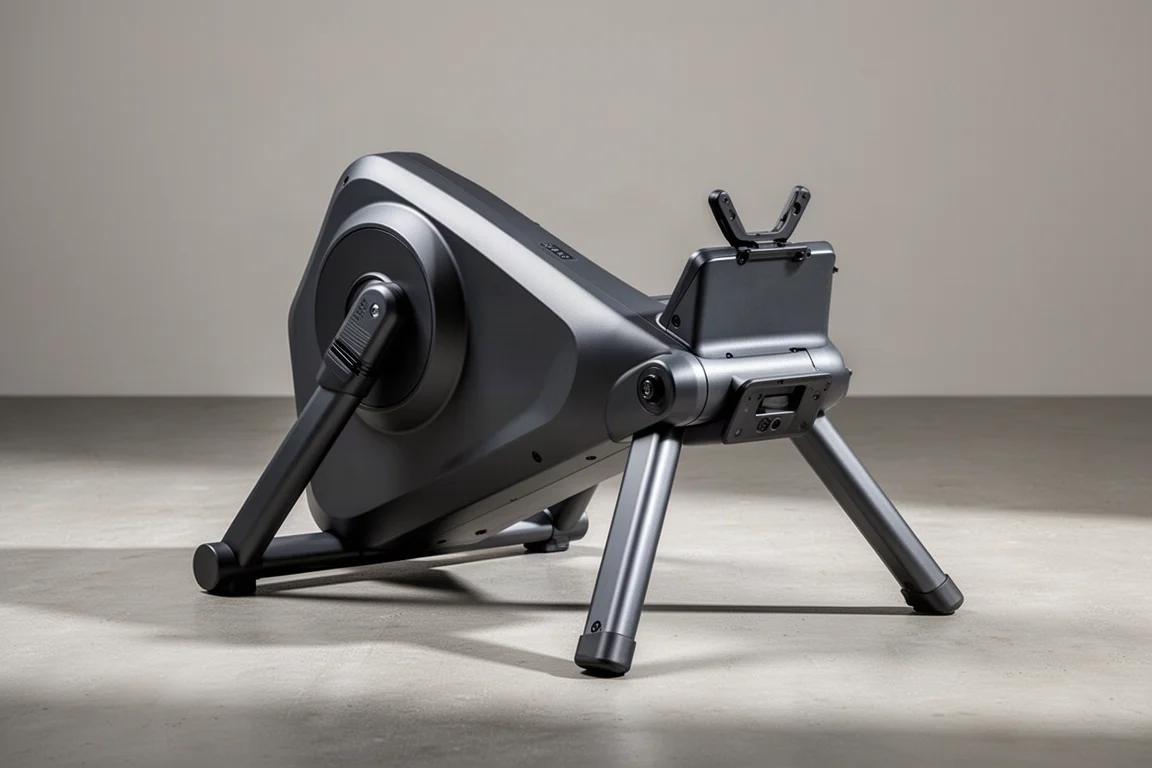
The NEO 2T is a direct-drive trainer that can be made to rock back and forth, but the clips that add that movement attach to the base and are bought separately. Out of the box it stays put.
The other thing worth knowing is weight. Without a handle, shifting a direct-drive trainer around a room is awkward, and anyone who has used a unit with a handle notices the difference straight away. Riders who also record power outdoors sometimes pair a trainer like this with pedal-based power so that both sets of numbers come from the same place.
Tacx Flux S: A Direct-Drive Option for Structured Sessions
The Flux S is a direct-drive trainer used with a bike computer as the display. It holds a fixed spot indoors, which suits a permanent training corner, and it pairs with a head unit for session data and structured workouts.
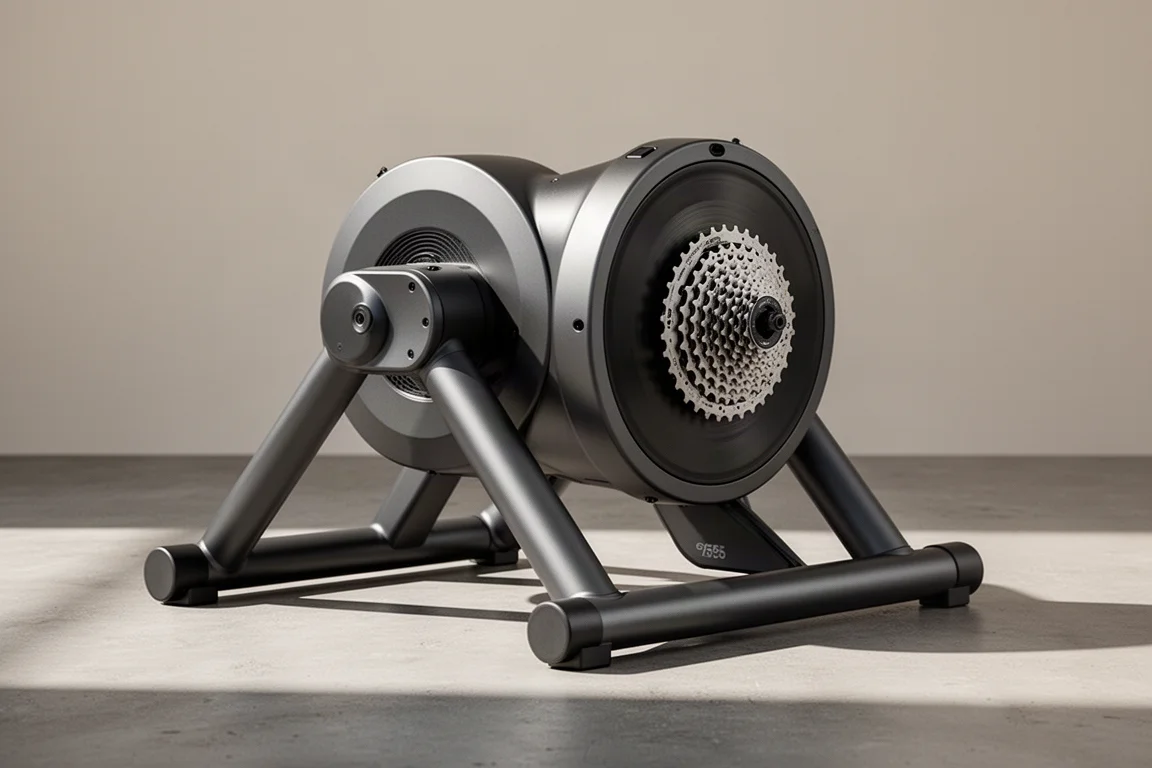
Tacx Boost: Wheel-On Convenience
The Boost is a wheel-on trainer, which means the rear wheel stays on the bike and a resistance unit presses against the tyre. That design makes it remarkably quick to mount and remove a bike, so setting up for a session is not a chore. Adapters for most bikes come in the box, and the resistance unit works with the wheel you already have.
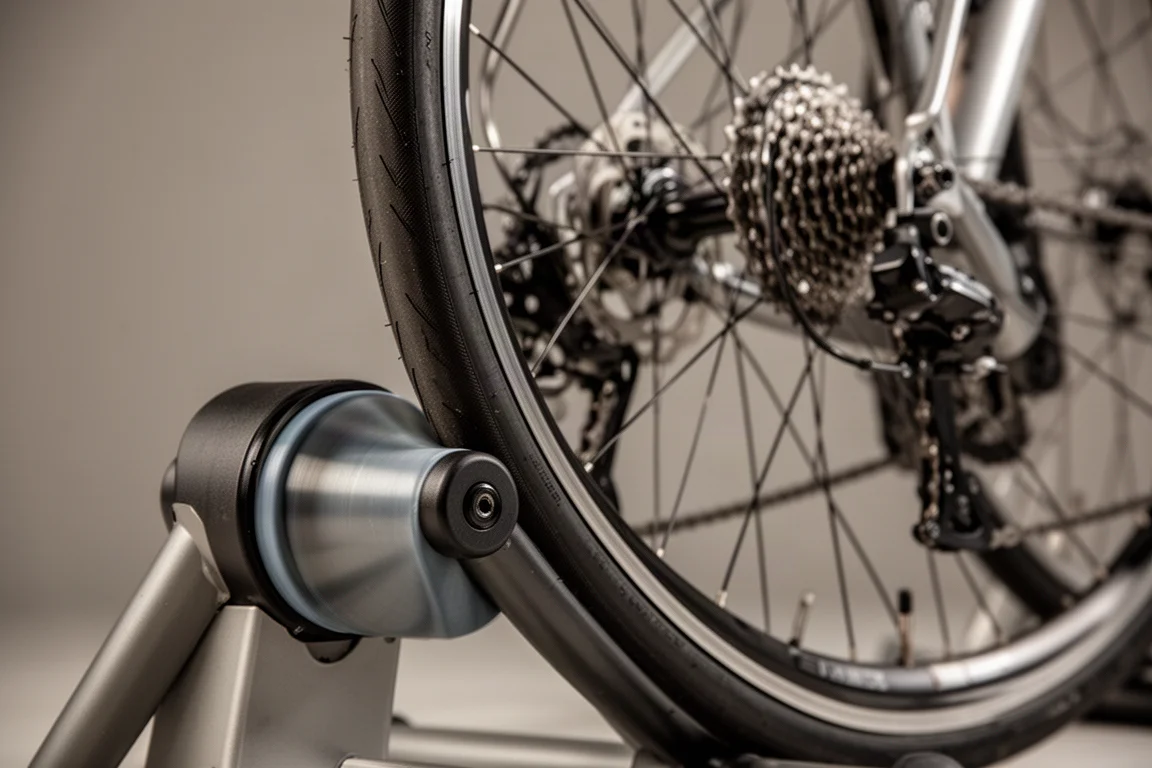
The trade-off is tyre wear. A wheel-on trainer will wear out rear tyres over time, and that is the main thing to plan for. Keep a dedicated training tyre or wheel in mind if the trainer will be used often.
For riders who want to jump on for an easy spin without a long setup, that convenience matters more than the extra features of a direct-drive unit.
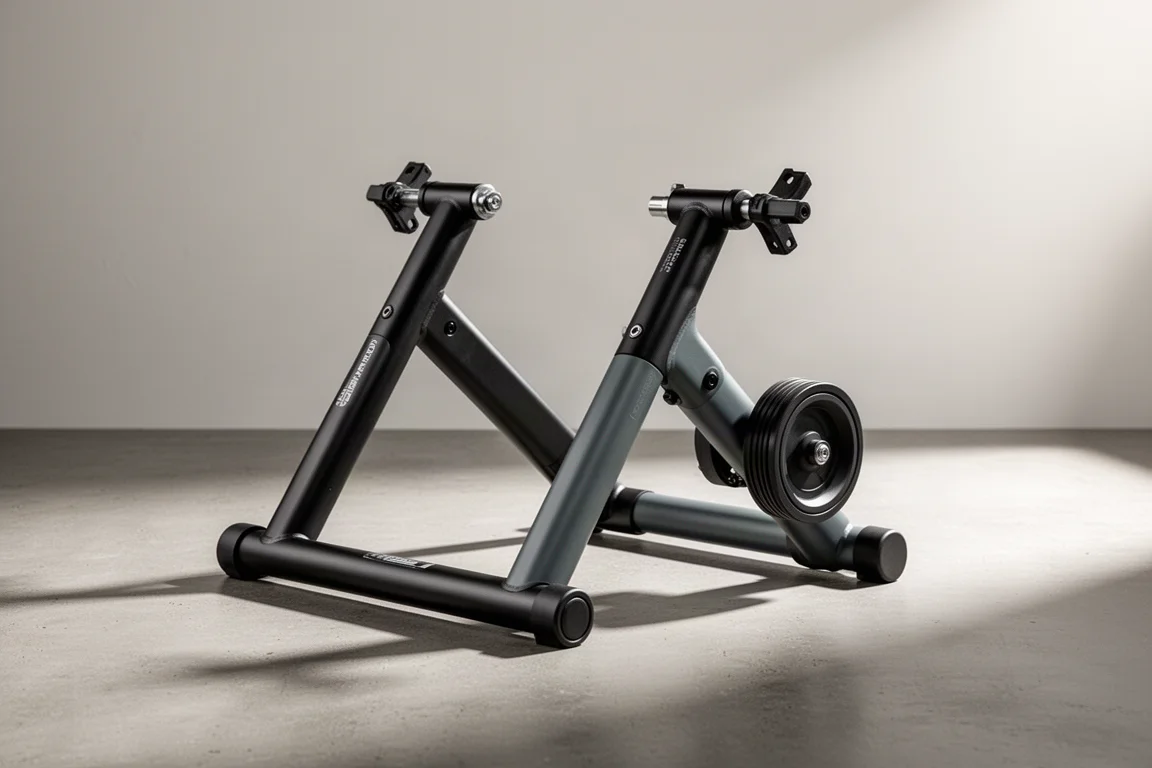
Tacx Galaxia: Rollers for Variety
Rollers sit at the other end of indoor training. The Galaxia is a set of drums that the bike balances on, used alongside a fixed trainer when a rider wants to mix things up. They ask for a bit more skill than a trainer that holds the bike, and they reward a smooth, steady pedal stroke.
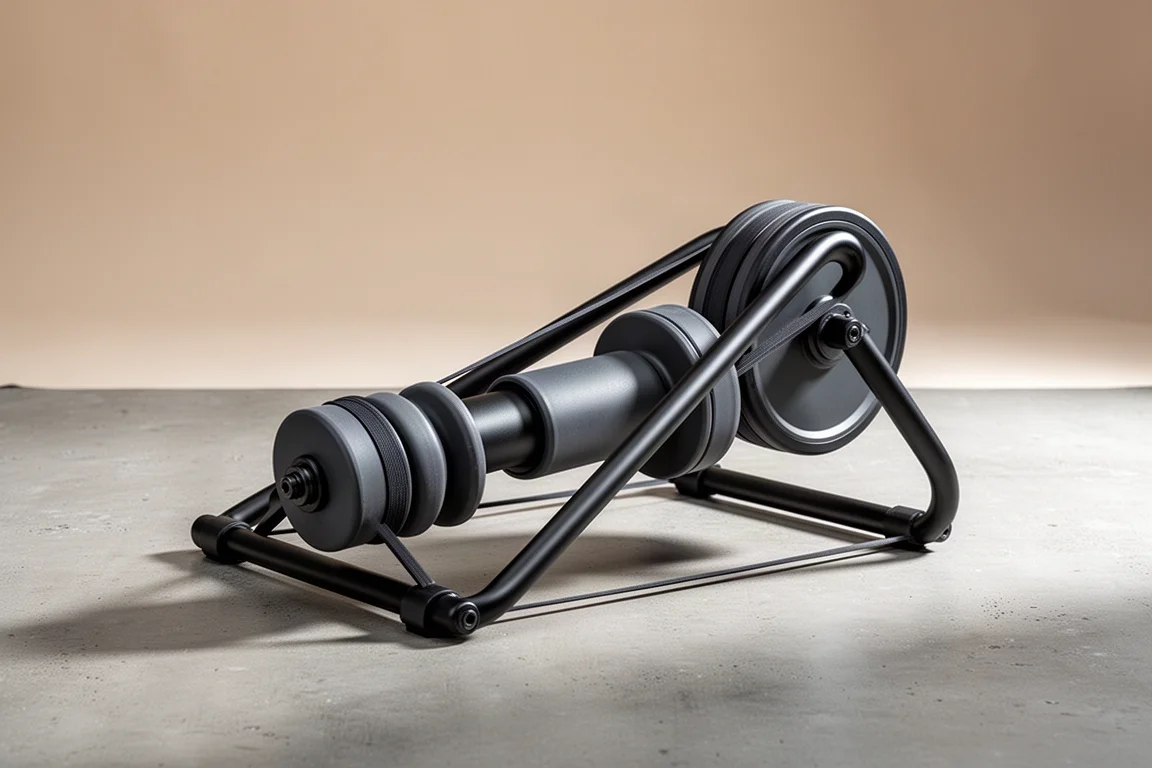
Tacx Alpine: Simulating Climbs Indoors
The Alpine is a gradient simulator. It raises and lowers the front of the bike to mimic climbing and descending, and because it works with a trainer that rocks, the movement carries through: the bike goes up and down at the front and side to side as well. Paired with compatible software, it can also steer.
The most useful part is preparation. Long climbs punish riders who are not comfortable riding out of the saddle at very low speed, and practising that slow, controlled effort indoors builds confidence before it matters on a real climb.
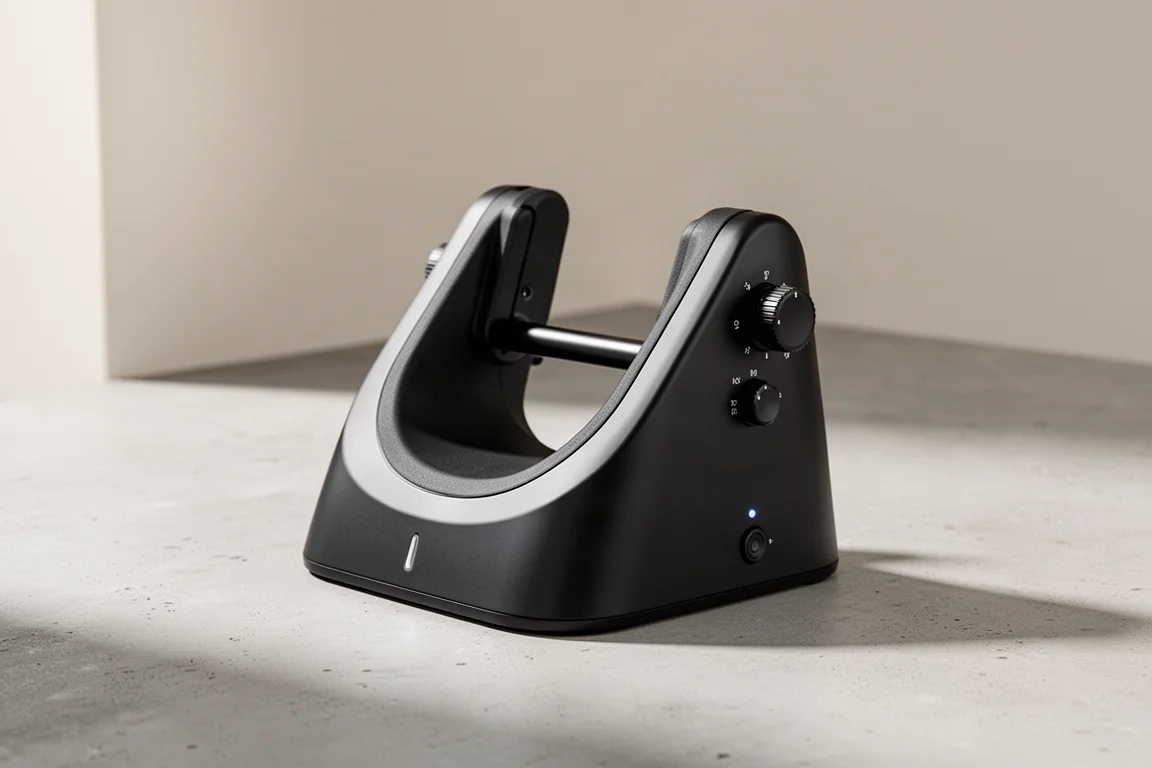
Aellow Bike Mod: Running a Single-Speed Bike on a Trainer
The Aellow bike mod is an aftermarket adapter that lets a single-speed bike be used on a NEO 2T. It is not a Garmin product, and it exists for a specific rider: someone with a fixed-gear or single-speed bike who wants to train indoors on the bike they already own.
With a single gear, resistance has to come from the trainer rather than the drivetrain. ERG mode handles that, setting the resistance and holding a target while the rider chooses the power or follows a structured workout.
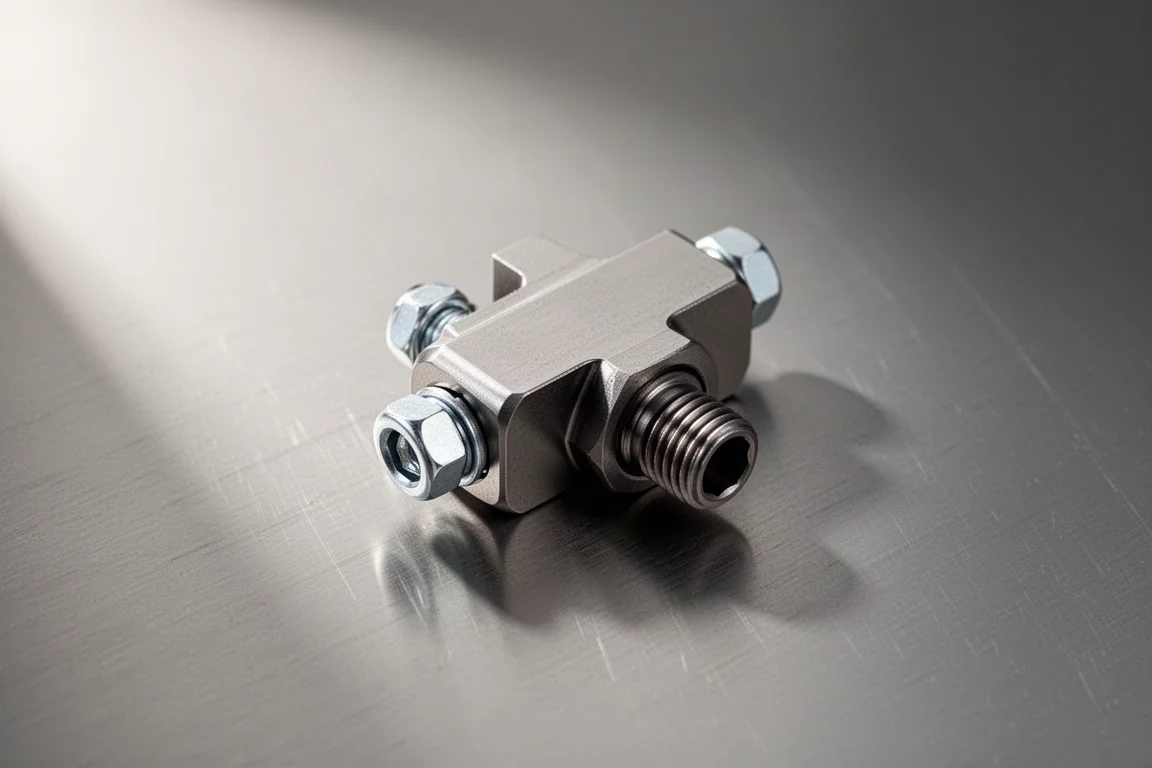
Garmin Fenix 8: The Titanium Everyday Watch
The Fenix 8 in its standard titanium finish handles everyday training and health tracking, and it supports interactive watch faces where tapping different sections switches between screens and data fields.
The Pro model below adds the satellite features, so the standard Fenix 8 is the choice when everyday data and durability are the priority.
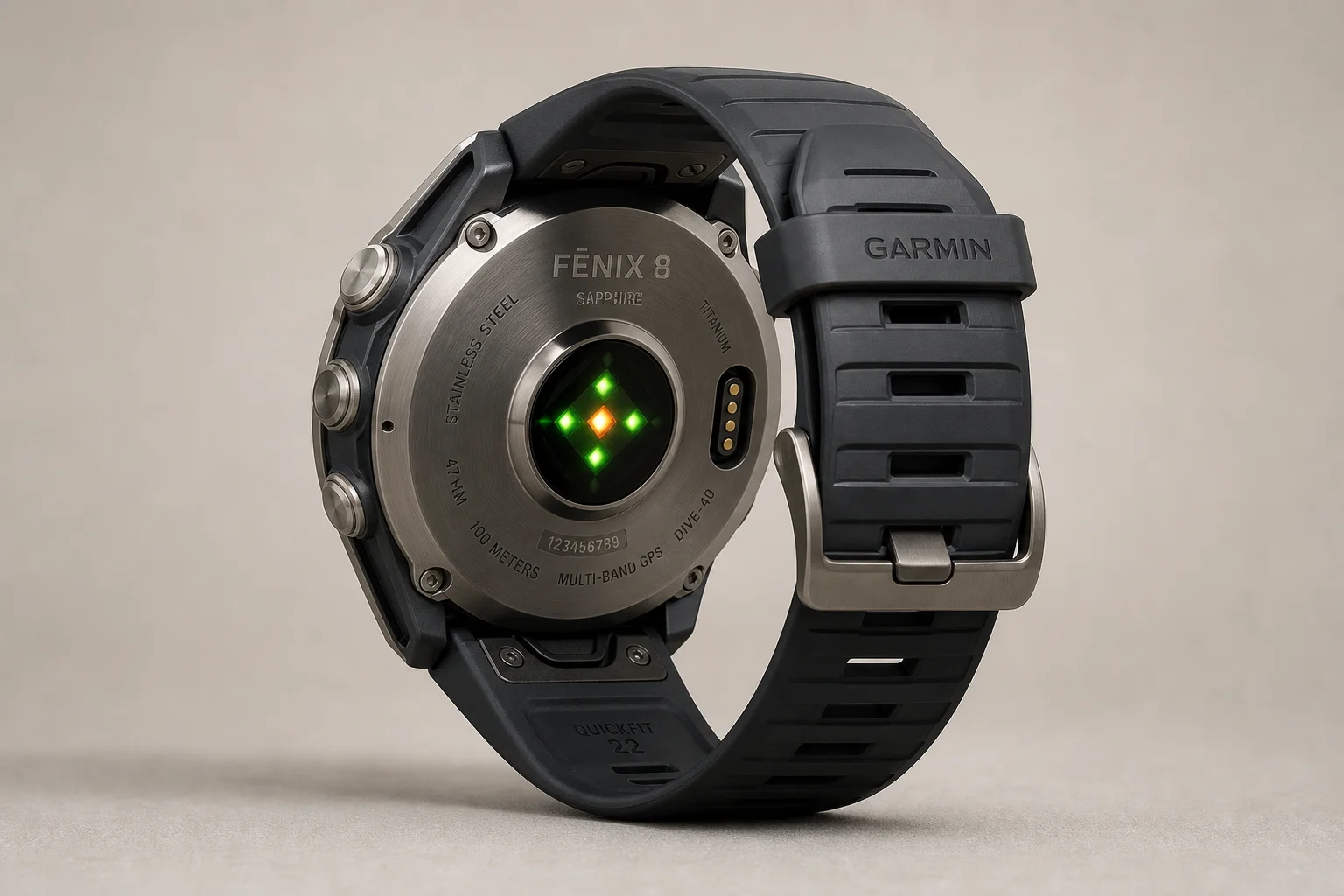
Garmin Fenix 8 Pro: Satellite Messaging for Remote Rides
The Fenix 8 Pro adds inReach functionality, which is why it is the watch that gets worn on rides into areas without phone signal. For anyone who regularly heads somewhere remote, that capability is the entire reason to choose this model over the standard version.

Everything else about the watch follows the same training and health focus as the rest of the Fenix line, so the decision comes down to whether off-grid communication matters for where you ride.
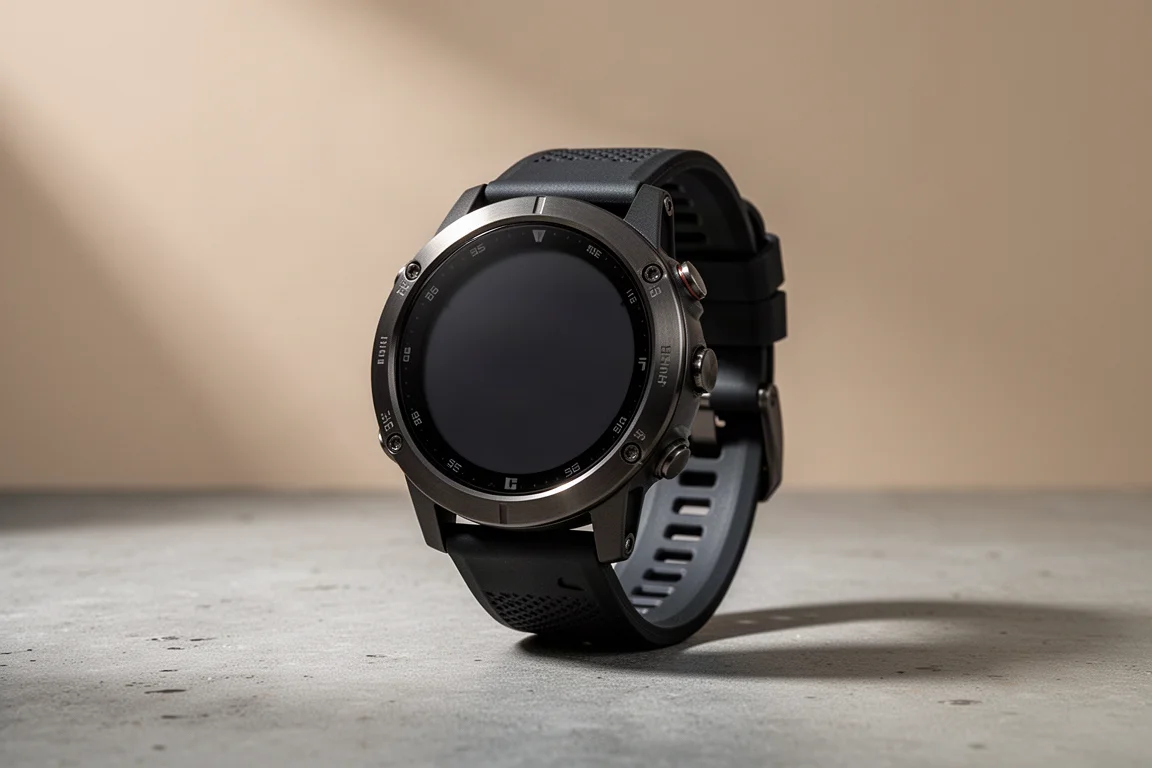
Garmin Venu X1: Thin, Light, and Easy to Read
The Venu X1 takes a different approach: a rectangular case that is thin and light enough to disappear on the wrist, with a display that is still large enough to read at a glance. It is the watch that gets worn most often in a rotation that includes heavier models.
If a bulky sports watch puts you off wearing one daily, this is the form factor that solves it.
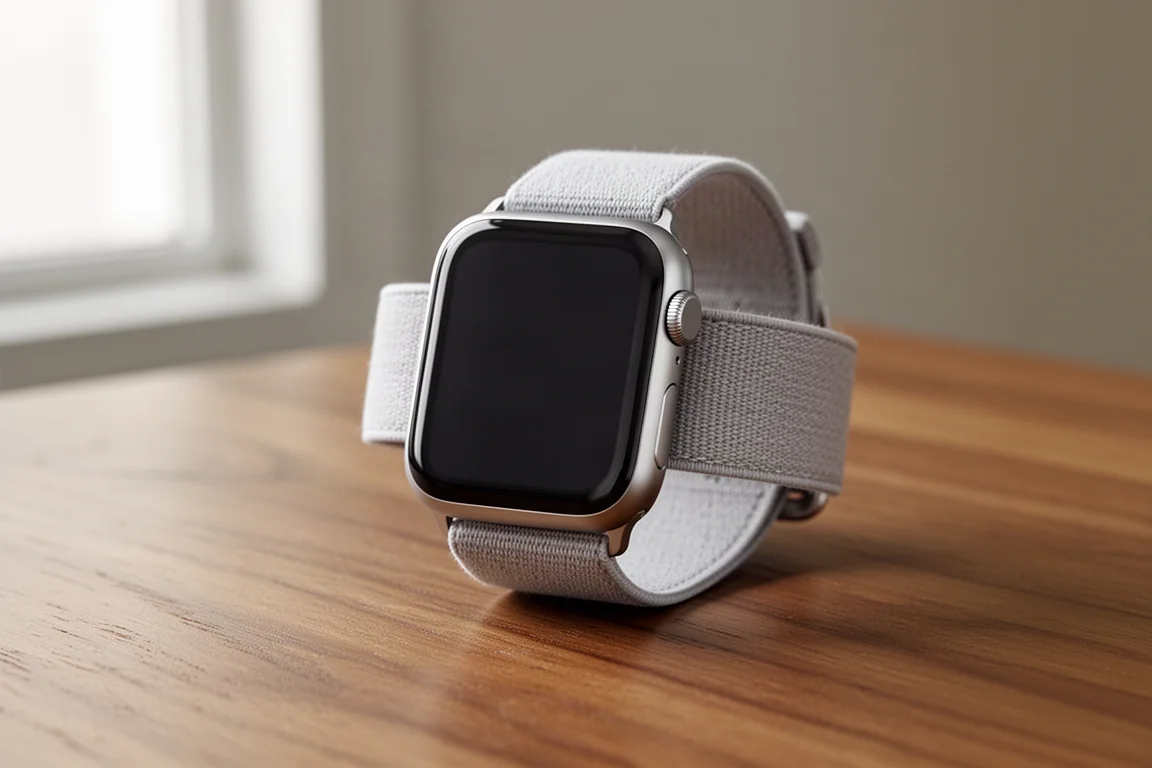
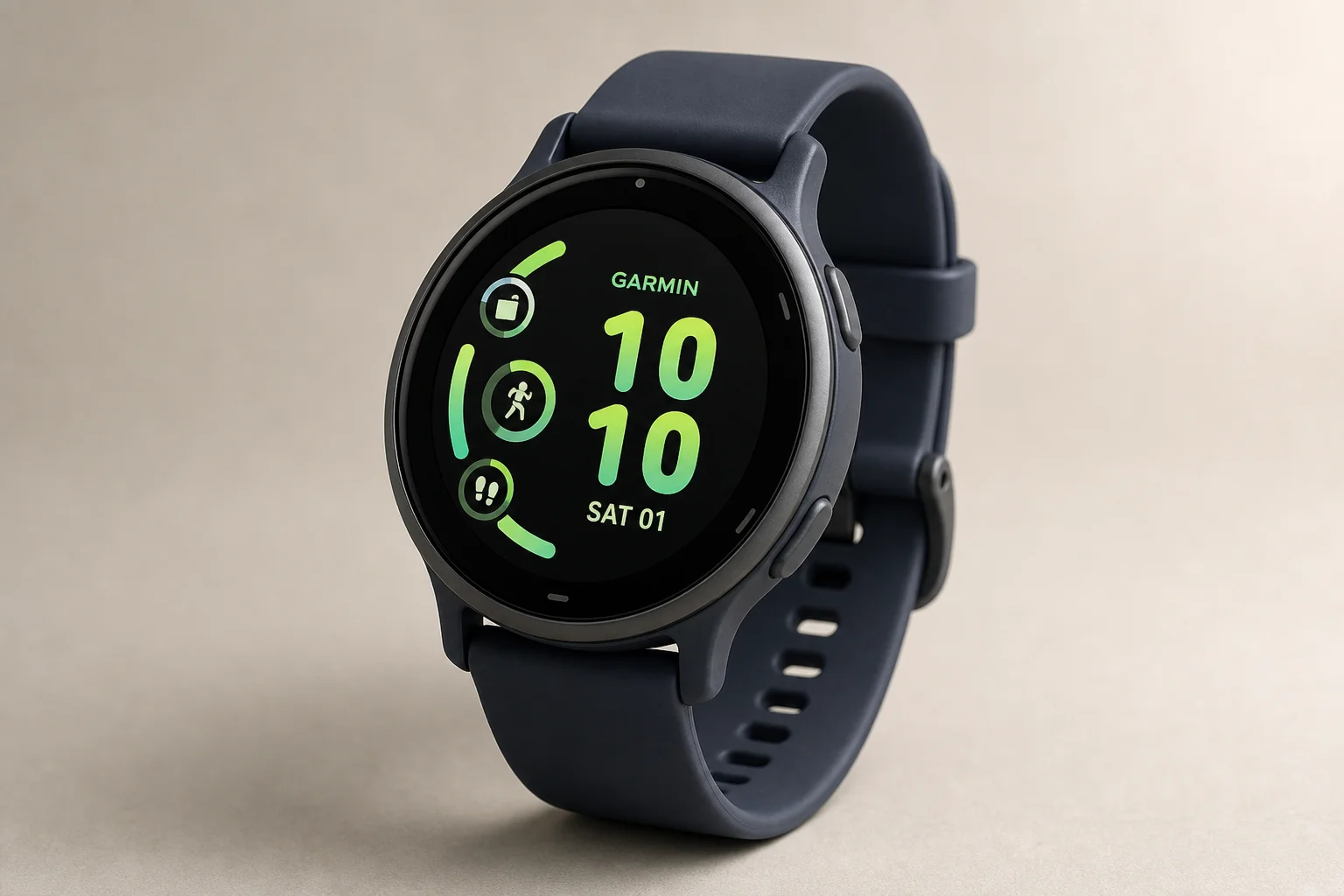
Garmin Vivoactive 5: Simple Tracking and Swappable Bands
The Vivoactive 5 keeps things basic. The display is deliberately plain, showing a number, a date, and little else, which suits riders who want activity tracking without a screen full of data. The silicone band can be swapped for something more decorative.
One caution: wearing a metal bracelet on the same wrist can mark the watch case over time, so it is worth keeping jewellery on the other arm.
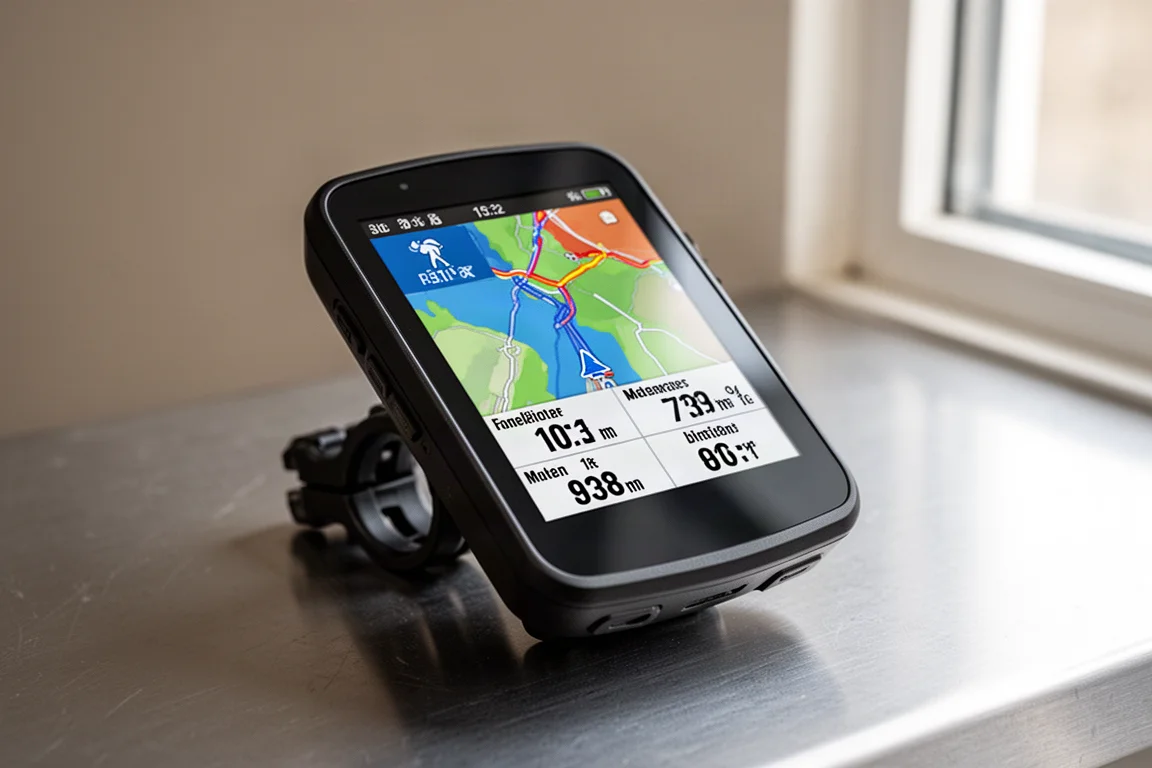
Garmin Edge 1040: The Head Unit at the Center
The Edge 1040 is the head unit that ties a setup together, showing session data indoors and navigation outdoors. Newer head units in this family also include a smart feature that prompts when to eat and drink based on the ride, which is genuinely useful on long efforts where fuelling is easy to forget.
Mounting is worth planning. Elastic bands will hold a computer on the stem, but the position is not ideal, and a proper out-front mount can cost a fair amount, with one quoted around £70.
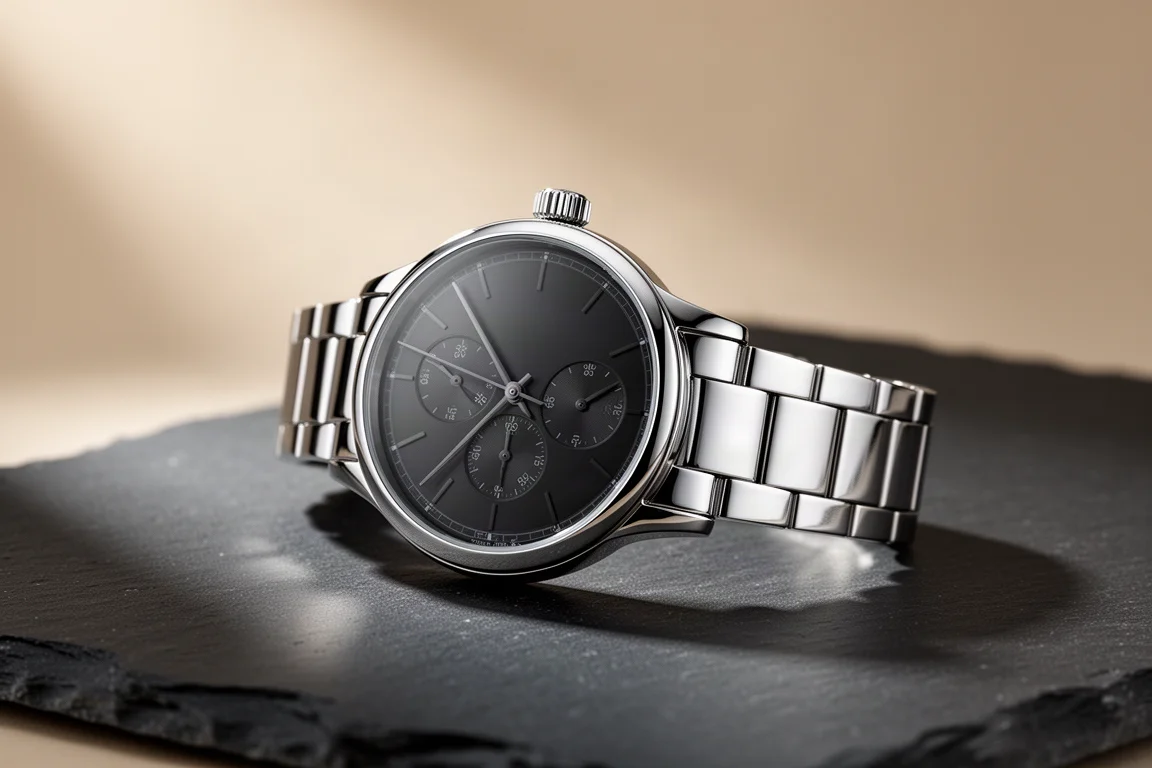
Garmin MARQ Aviator: Built for Flight Training
The MARQ Aviator is designed with pilots in mind, which makes it a natural gift for someone starting flight training. The display layout is minimal and readable: time, UTC time, calorie burn for the day, and temperature with conditions, with a moon phase as part of the theme. The bracelet is comfortable enough to leave on, and charging is only needed roughly every fortnight.
For riders who fly as well as ride, it covers both sides of the day.
Matching Gear to Your Training Space
Start with the trainer, because it decides everything else. A wheel-on unit like the Boost is the fastest to live with, especially where a bike has to come on and off regularly. A direct-drive unit like the NEO 3M or the Flux S gives a more solid platform, and movement built into the frame or added through clips makes longer sessions easier on the body.
Then decide what you need from a watch. The Fenix 8 covers everyday training in a titanium case, the Fenix 8 Pro adds satellite messaging for remote rides, the Venu X1 prioritises a thin, light profile, and the Vivoactive 5 keeps things simple. The MARQ Aviator only makes sense if aviation tools matter to you.
Finally, spend a little on the small things. A fan, a stand for a tablet or laptop, a towel, and a bottle make more difference to whether a session actually happens than any single upgrade. A gradient simulator like the Alpine is a genuine luxury, but it is a useful one if long climbs are on your calendar.
Conclusion
There is no single correct indoor setup. A wheel-on trainer and a cheap stand will get most riders through a winter, while a direct-drive trainer with movement, a gradient simulator, and a head unit with fuelling prompts turns a garage corner into something closer to a training studio.
Pick the trainer that matches how often you will set up, choose the watch that matches where you ride, and spend the rest on the small comforts that keep you coming back to the bike.
Further reading
Related Reviews
Indoor Cycling
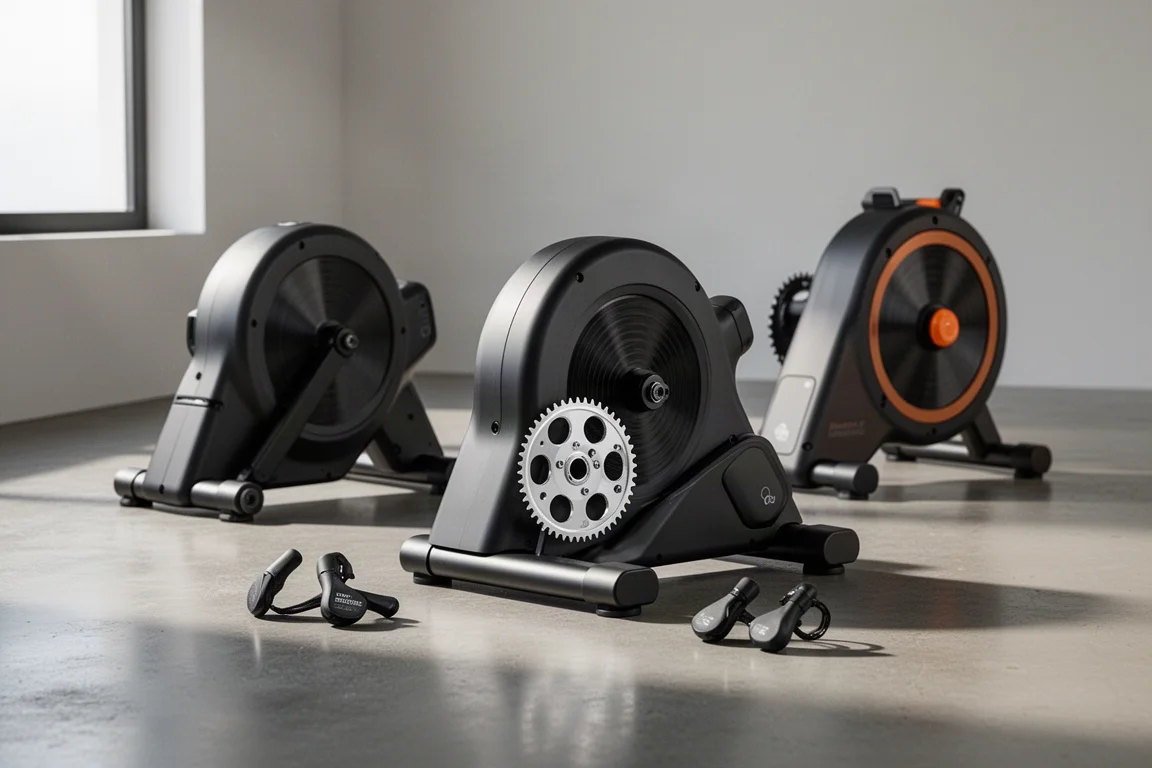
Best Budget Smart Indoor Trainer Setups: Six Options Worth Considering
Smart indoor trainers keep getting better while prices come down. Six setups and components worth considering, from the cheapest Zwift-ready option upward.
Indoor Cycling
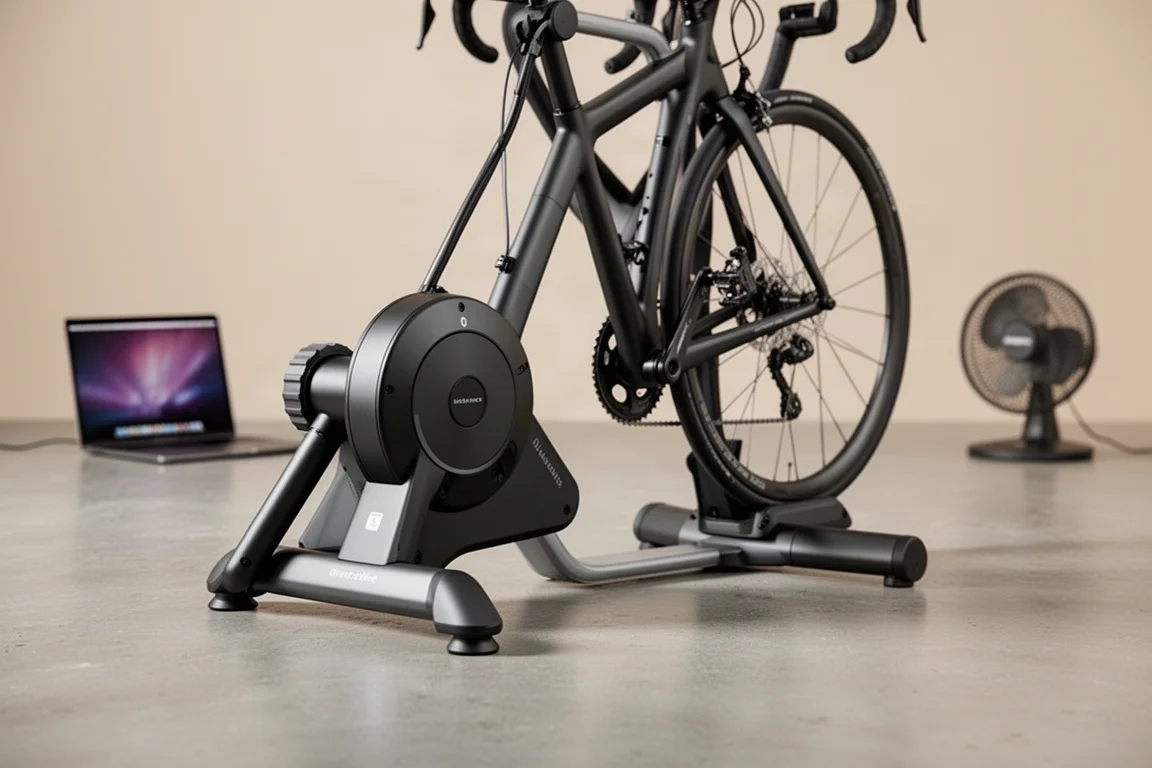
Best Budget Smart Indoor Trainers for Immersive Cycling in 2026
A practical guide to affordable smart indoor trainer setups, including budget and mid-range options with virtual shifting.
Indoor Cycling
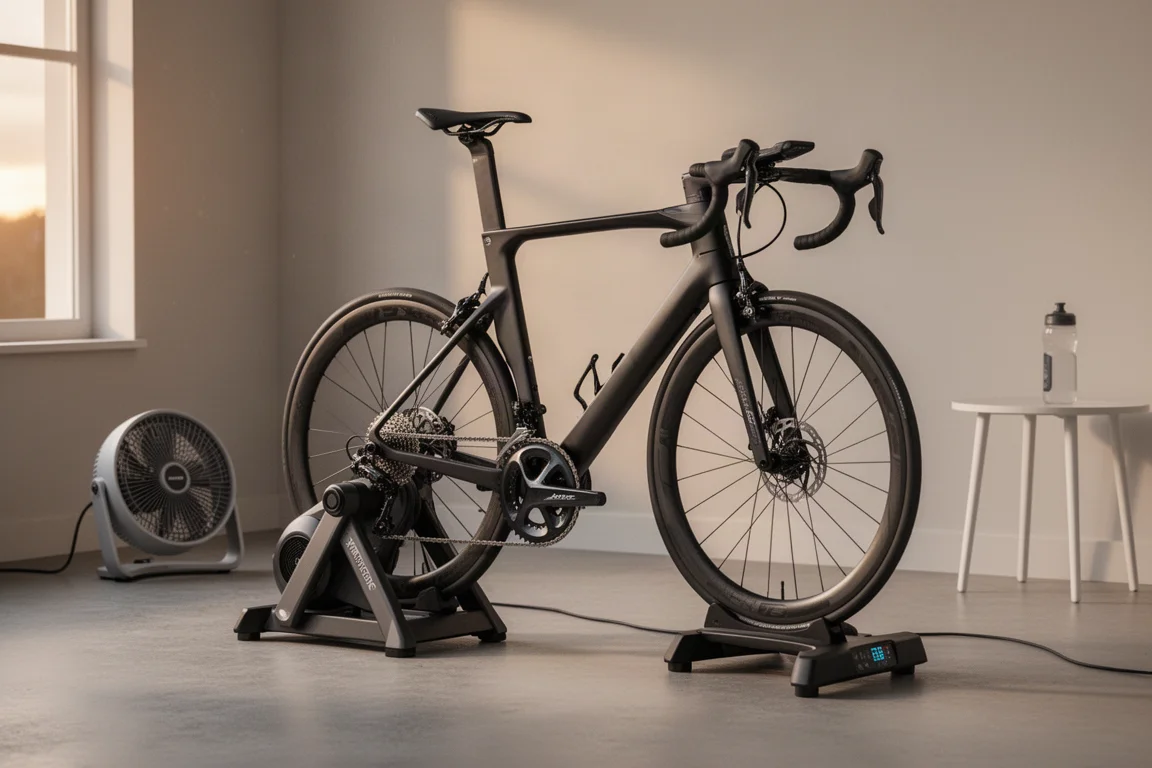
Best Indoor Cycling Apps and Smart Trainers: A Winter Buying Guide
A practical look at the indoor training platforms and smart trainers that matter this season, from a new challenger to Zwift to the entry-level trainer that stands out on value.