Headphone Amplifiers
iFi Pro iCan Signature Review: A Flexible Headphone Amp and Preamp
A close look at the iFi Pro iCan Signature, a compact headphone amplifier and preamp with solid state, tube and tube+ modes, XBass, a 3D soundstage expander and a full set of analogue connections.
Introduction
The iFi Pro iCan Signature is a headphone amplifier and pre-amplifier that deliberately ships without a DAC. That single decision shapes how it fits into a system. Listeners who already own a converter they trust can keep it, upgrade it later, or swap it to chase better synergy with the rest of the chain, rather than being locked into whatever digital stage fits inside a compact chassis.
What the unit does provide is an unusually deep set of analogue controls: solid state, tube and tube+ output modes, an XBass circuit with three selectable frequencies, a 3D soundstage expander, three gain settings, and a connection panel that covers essentially every headphone plug in current use.
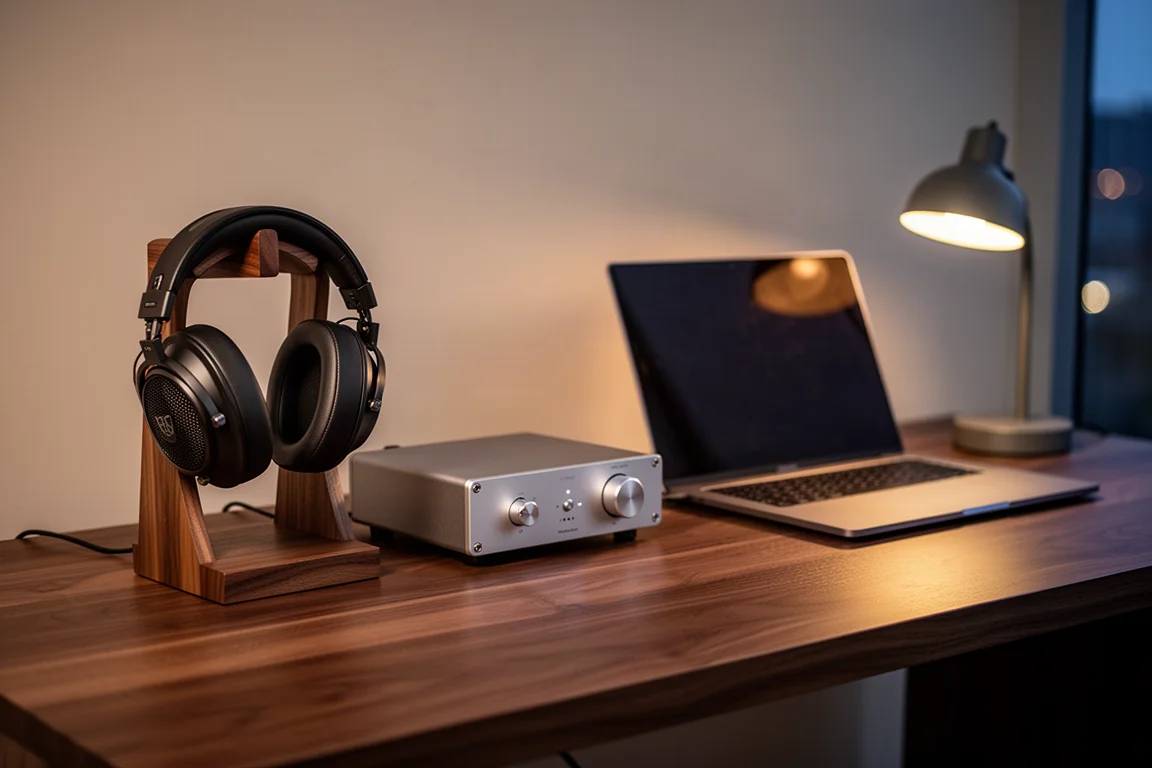
At around $2,300, the Signature sits in premium territory. The more useful question is not whether it sounds good, but whether its flexibility genuinely pays off in a specific desktop or stereo system.
Who This Product Is For
Two kinds of listeners get the most from this amplifier. The first is a desktop headphone user with more than one pair of headphones, particularly planar magnetic models, who wants to tune the presentation to each set rather than accept a single fixed voicing. The second is a stereo listener who wants a compact pre-amplifier with tone shaping, a wide input selection, and outputs that make adding a subwoofer straightforward.
It is a poor fit for anyone who wants one box to handle everything, digital conversion included. The absence of an onboard DAC is a design choice rather than an oversight, and it assumes you already have a converter you are happy with.
Main Strengths
The output mode selector is the heart of the unit. Solid state is the cleanest and most articulate option. The tube setting brings in the natural harmonics and warmth associated with a valve stage. Tube+ runs with less negative feedback, which produces a cleaner, fuller and more natural presentation. In practice, tube+ sits somewhere between solid state and tube in character, even though it occupies the final position on the selector, which is worth knowing before you start comparing settings.
XBass offers three frequencies at 10 Hz, 20 Hz and 40 Hz. The two lowest settings work in a region that is felt more than heard, so the change is subtle. The 40 Hz setting is the one that earns its place, adding warmth and body to headphones that benefit from it. The boost stays tasteful throughout and preserves the overall tonality rather than turning the low end into a party trick.
The 3D soundstage expander is most useful with closed-back headphones. The effect is less a wider stage than a greater sense of dispersion between individual instruments. Push it too far and the presentation turns thin and less focused, particularly in a stereo system, so it rewards restraint.
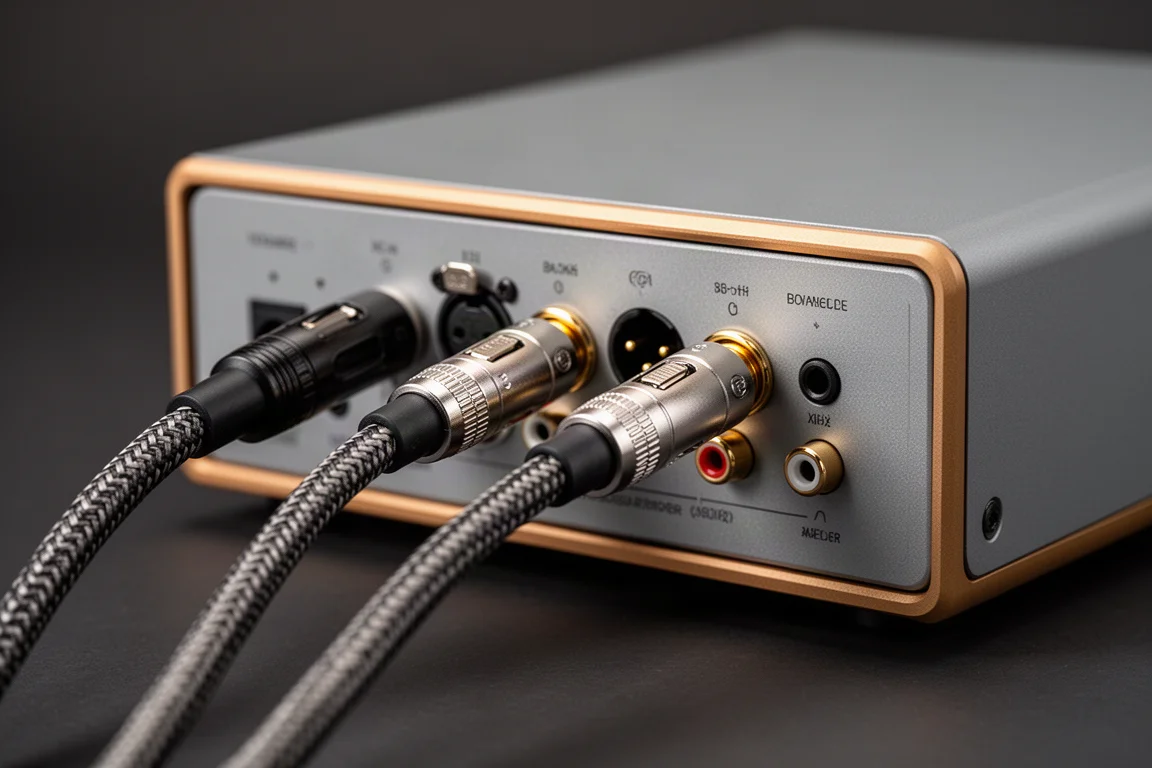
Gain is selectable at 0, 9 and 18 dB, which is enough range to keep the volume control in a sensible part of its travel with both sensitive and demanding headphones. The connection set is comprehensive: 4-pin XLR, 6.35 mm, 3.5 mm and 4.4 mm balanced outputs on the front, with balanced XLR inputs, three RCA inputs, balanced XLR outputs and unbalanced RCA outputs on the back.
Headphone matching is where the flexibility shows. Planar magnetic headphones pair particularly well and never run the amplifier out of power. A neutral dynamic model such as the Sennheiser HD 600 responds well to tube+ with a little 40 Hz boost, producing a warm but still detailed result that is easy to listen to for long stretches. More detail-forward headphones such as Meze models benefit from solid state plus a touch of bass boost, which brings out sparkle and snappiness.
Design and Build Quality
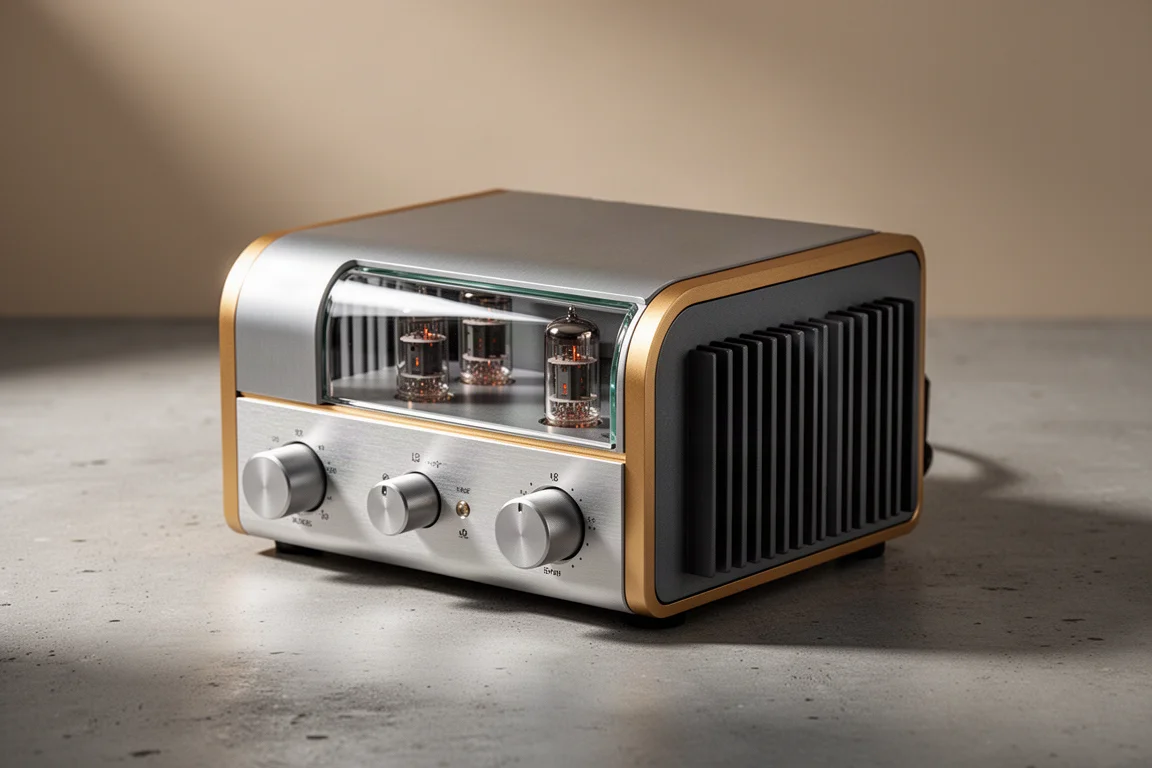
The chassis is aluminium, with a gently curved top surface that catches light in a way a flat panel would not. Ventilation is handled as part of the design rather than as an afterthought, with heatsink-style detailing on the sides and top. The Signature finish adds gold accents that stop short of looking cheap, which is not an easy balance to strike.
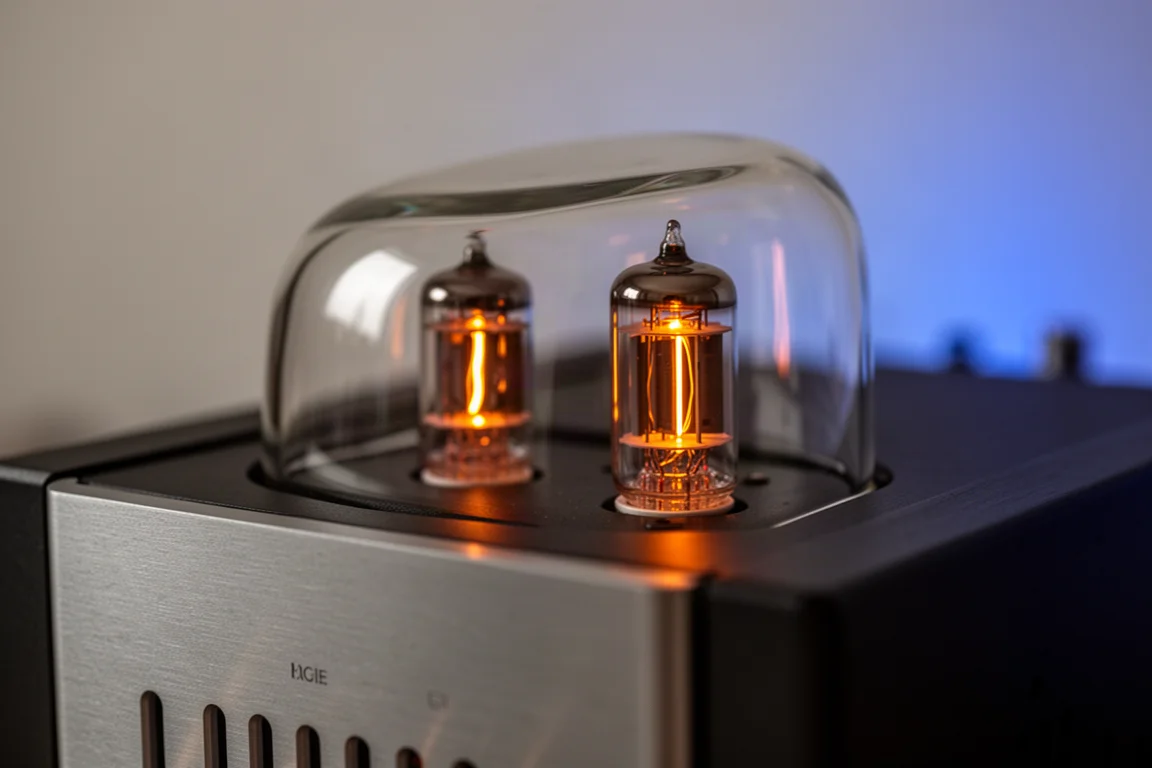
The two NOS General Electric 5670 tubes sit under a glass enclosure on the top plate, and the padding on the upper surface is intended to let the unit stack with other components in the same family or sit on a desktop without transferring vibration. The overall attention to detail is high, and the unit is one of the better finished pieces of desktop audio hardware in this price bracket.
Things to Consider Before Buying
The most important consideration is the missing DAC. If you do not already own a converter you like, budget for one, because the amplifier cannot stand in for it.
The remote control is the weakest element. It is an aluminium remote, but it does not feel like one, and the finish reads closer to an inexpensive plastic handset than to the metal component it controls. The button layout is logical and every function works as expected, so this is a materials and feel issue rather than a usability one.
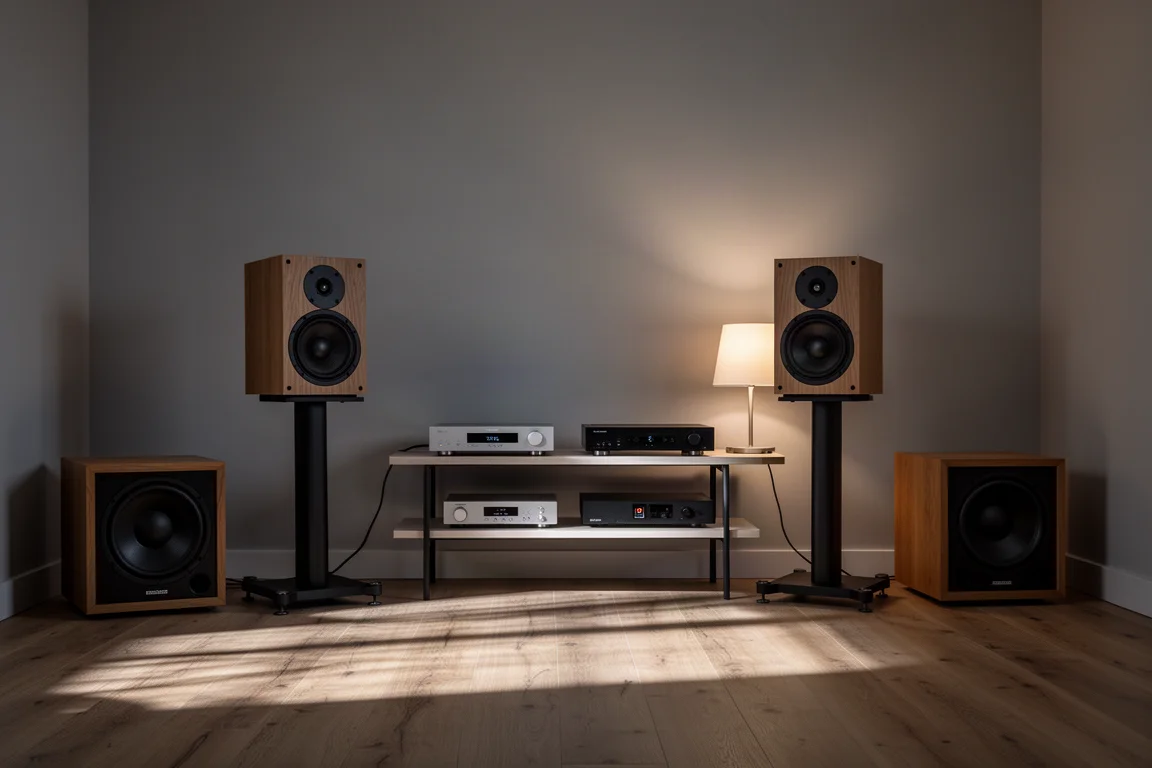
The 3D expander and the two lowest XBass settings both require care. Neither is a set-and-forget control, and both can push the sound toward thin and unfocused if overused. In a stereo system, bass depth is also shallower than what a full-size pre-amplifier delivers, which is the trade-off for the compact chassis. Pairing the unit with a subwoofer closes that gap.
Setup Notes for Stereo and Desktop Systems
The output arrangement makes subwoofer integration simple. Using the balanced XLR outputs to feed a power amplifier and the RCA outputs to feed a subwoofer keeps both paths independent, and the low-frequency extension and nuance that result are a strong argument for the pre-amplifier role.
A gain setting of 9 dB, the middle option, worked well across a desktop setup with powered speakers and headphones and a stereo system, though the correct setting will vary with the rest of the chain. The aim is to keep the volume control away from the top of its travel rather than pushing it past the halfway point.
In a stereo system with active speakers, the pre-amplifier adds warmth and low-frequency weight. Take it out of the chain and some of that low bass thump disappears. The solid state mode is the more forward and articulate option, which makes it a practical choice for film dialogue, while tube and tube+ deliver the soundstage, imaging and vocal body that define the unit’s character.
Buying Advice
Buy the Pro iCan Signature if you own several headphones with different signatures, if you already have a DAC you intend to keep, and if you want a single compact box that can serve as both a headphone amplifier and a stereo pre-amplifier. The feature set is genuinely useful rather than decorative, and each control produces an audible, repeatable result.
If the price is difficult to justify, the original Pro iCan remains a strong alternative: it delivers a very similar sound, while the Signature is quieter and more nuanced, with an upgraded power supply that iFi says lowers the noise floor alongside improved internal components.
Either way, plan the rest of the system around the unit. A good converter in front of it, and a subwoofer alongside it in a stereo setup, will let the amplifier do what it does best.
Conclusion
The iFi Pro iCan Signature earns its price through flexibility rather than through any single headline specification. Solid state, tube and tube+ modes, a well-judged bass boost, a soundstage expander, three gain settings and a complete set of inputs and outputs add up to an amplifier that can be tuned to a wide range of headphones and speakers. The remote disappoints and the missing DAC has to be part of the budget, but for listeners who want to shape their sound rather than accept it, this is a compelling desktop and stereo centrepiece.
Product link
View more details for iFi Pro iCan Signature
This product is mentioned in the review. Check the specifications, options, and compatibility before buying.
View more details for iFi Pro iCan SignatureFurther reading
Related Reviews
Headphone Amplifiers
Creative Labs Sound Blaster X5 Review: A Flexible USB DAC and Headphone Amp
The Sound Blaster X5 pairs a fully balanced dual-DAC headphone amp with DSP, mixing, recording, and console audio in one compact USB-powered enclosure.
Headphone Amplifiers
Fosi Audio K5 Review: A Tiny Budget DAC Amp for Travel, Gaming, and Hotel Listening
A compact USB-C DAC amp with tone controls, optical and coaxial inputs, and a clean mid-forward sound that suits efficient headphones and IEMs.
Headphone Amplifiers
Fosi Audio SK01 Review: A Tiny Headphone Amp That Doubles as a Three-Band EQ
A compact $72 audio box with treble, mid-range, and bass controls, a loudness button, and a capable headphone stage. Here is where it earns its place.