Aquarium Equipment
Hygger Mini Wave Maker Review: Affordable Aquarium Flow Control
A compact, programmable wave maker for small aquariums, offering customizable flow patterns and quiet operation at an accessible price point.
Introduction
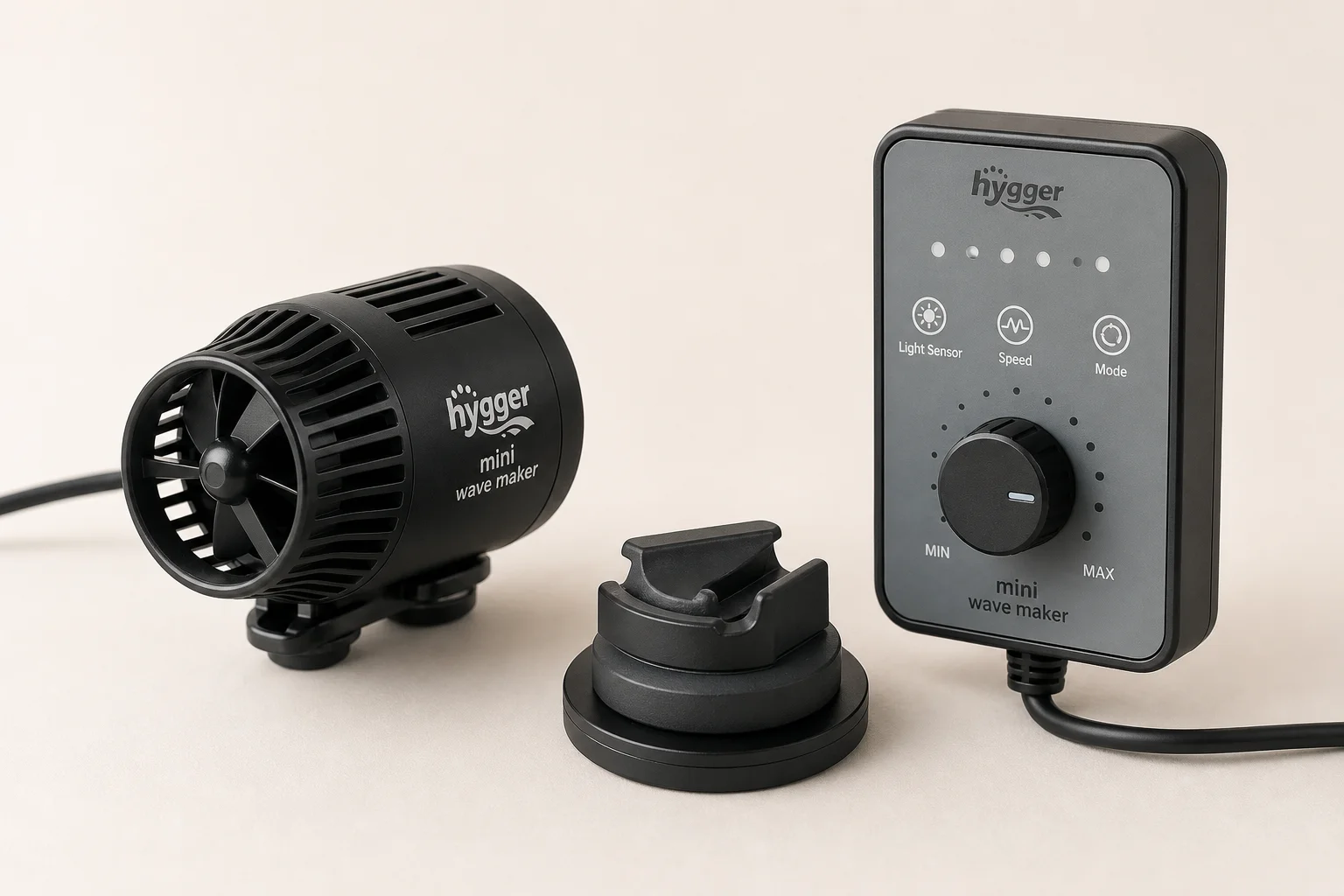
The Hygger Mini Wave Maker is a compact, programmable pump designed for small aquariums. At USD 69, it offers customizable wave patterns and quiet operation, making it a practical choice for aquarists looking to add water movement without significant noise or expense. This review covers the unboxing, setup, controller programming, and real-world performance after six months of continuous use.
What You Get in the Box
The Hygger Mini Wave Maker arrives with a small but complete set of components. The main power head is compact and lightweight, designed to fit easily into small tank spaces. Inside the box you’ll find the pump unit itself, a magnetic mounting bracket that attaches to the outside of the aquarium, an internal holder that positions the pump inside the tank, rubber feet that dampen vibration, a propeller that slides into the magnet assembly, and a power cable that connects to the controller.
The rubber feet are an important detail. They insert into the internal holder and help reduce vibration noise during operation. Assembly is straightforward: the rubber feet line up and push into the holder, the propeller slides down inside the magnet, and the cable plugs into the controller. The entire setup requires no tools and takes only a few minutes to complete.
Installation and Mounting
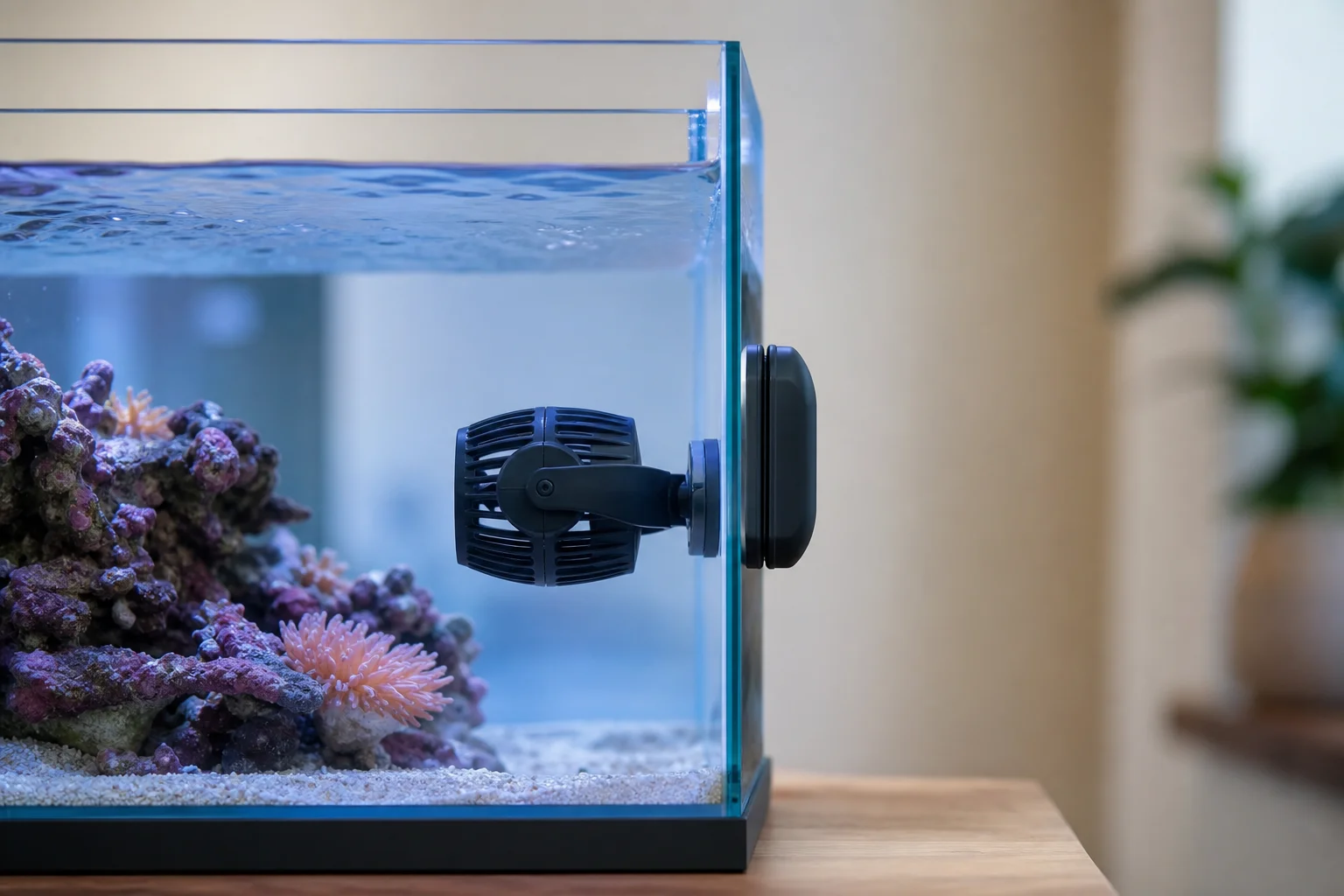
The magnetic mounting system is the key to installation. The external magnet attaches to the back of the aquarium or wherever you choose to position it. The internal holder, with the pump unit and rubber feet installed, sits inside the tank and aligns with the external magnet. This design keeps all electrical components outside the water while allowing the pump to operate inside.
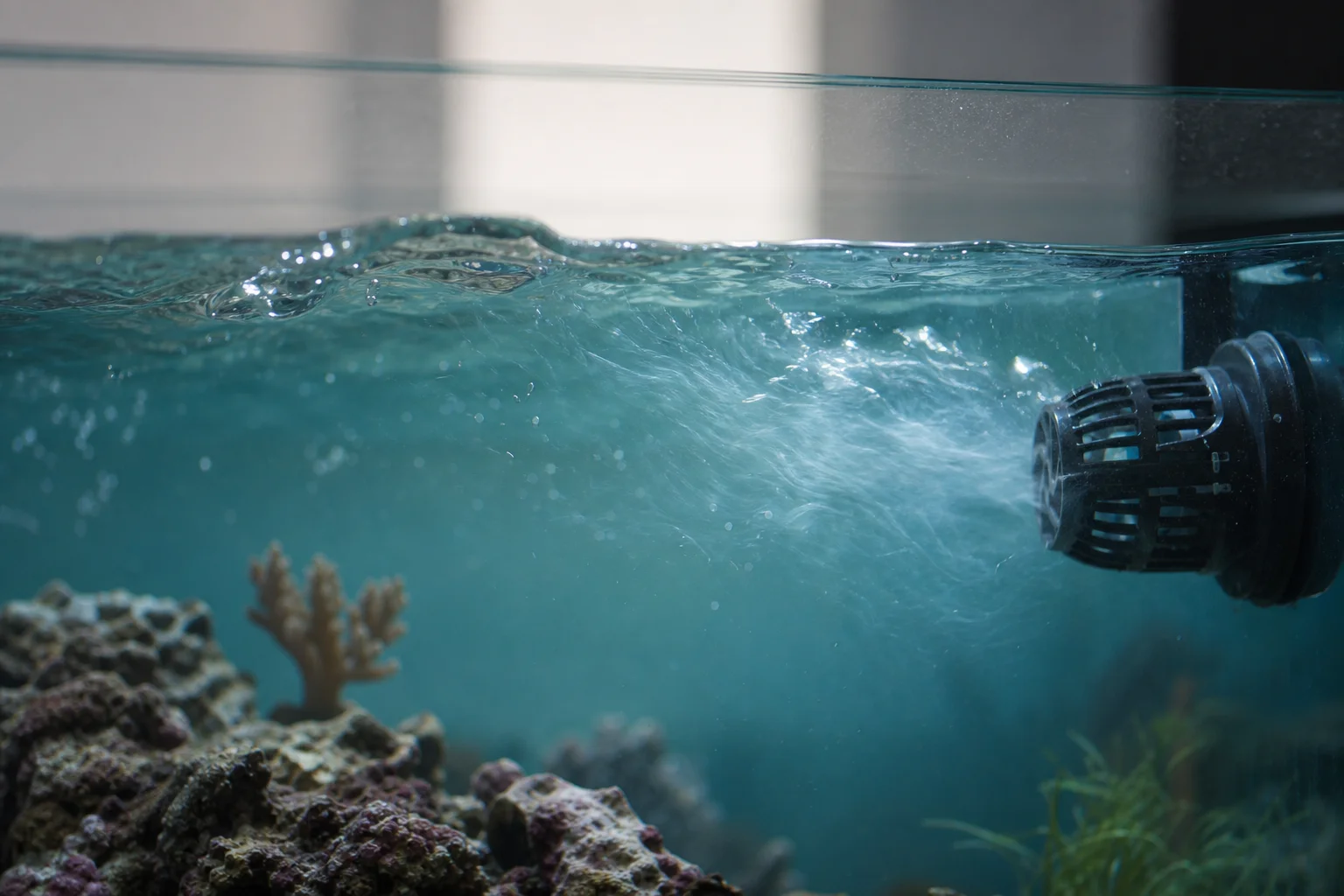
The compact size of the pump unit makes it suitable for small aquariums. The propeller is quiet during operation, with no rubbing or grinding noise. However, the unit is designed for tanks of 20 gallons or smaller. If you need stronger flow or have a larger tank, running two units facing each other is recommended.
How the Controller Works
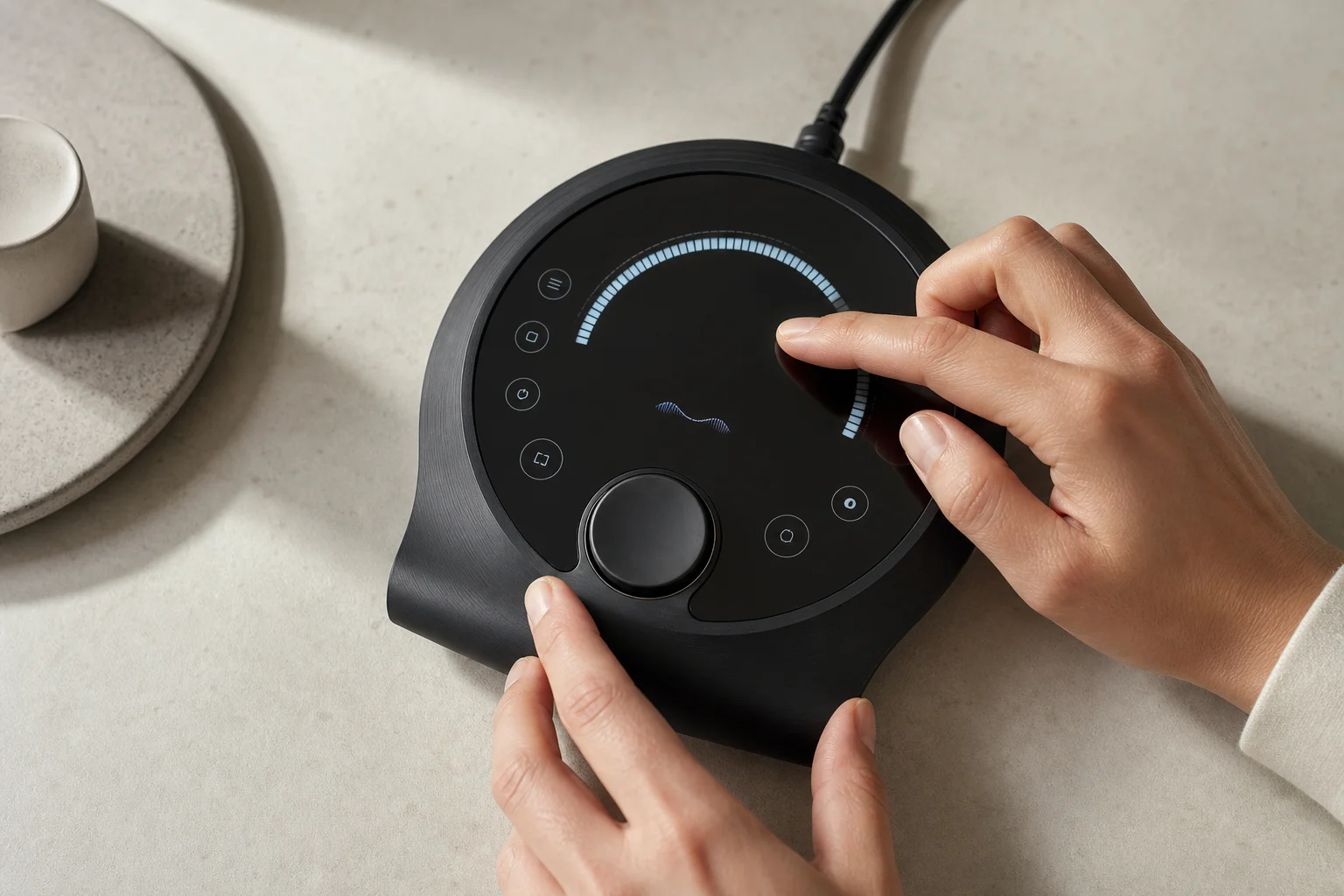
The controller is touch-sensitive and requires no hard pressing of buttons. When first plugged in, the display shows zeros across all digits. The controller uses a 24-hour time format and requires initial setup to match your local time and desired programming.
The controller has four main settings per time period:
The first number represents the time of day. The second number controls power output: 1 equals 40 percent power, 2 equals 60 percent, 3 equals 80 percent, and 4 equals 100 percent. The third number selects the wave motion type. The fourth number adjusts wave frequency.
The wave motion options are: Classic Wave (number 1), Nutritional Transfer Wave (number 2), Constant Stream (number 3), and Random Mode (number 4). The Nutritional Transfer Wave produces a gradual up-and-down motion that many aquarists prefer for its gentle, natural appearance.
Programming Wave Patterns and Timing
The controller divides the day into five time periods based on natural light cycles. Dawn runs from 5:30 a.m. to 7:30 a.m., Sunrise from 7:30 a.m. to 9:30 a.m., Day from 9:30 a.m. to 2:00 p.m., Afternoon from 2:00 p.m. to 4:30 p.m., and Night from 4:30 p.m. to 5:30 a.m.
To program each period, press the S button to enter program mode. Use the M button to move between the four settings for that time period. Each setting automatically locks after a few seconds. For example, you might set the morning period to full power (4) with Nutritional Transfer Wave motion (2) and the slowest frequency (A). The frequency scale runs from 1 (fastest) to A (slowest), allowing you to fine-tune turbulence levels.
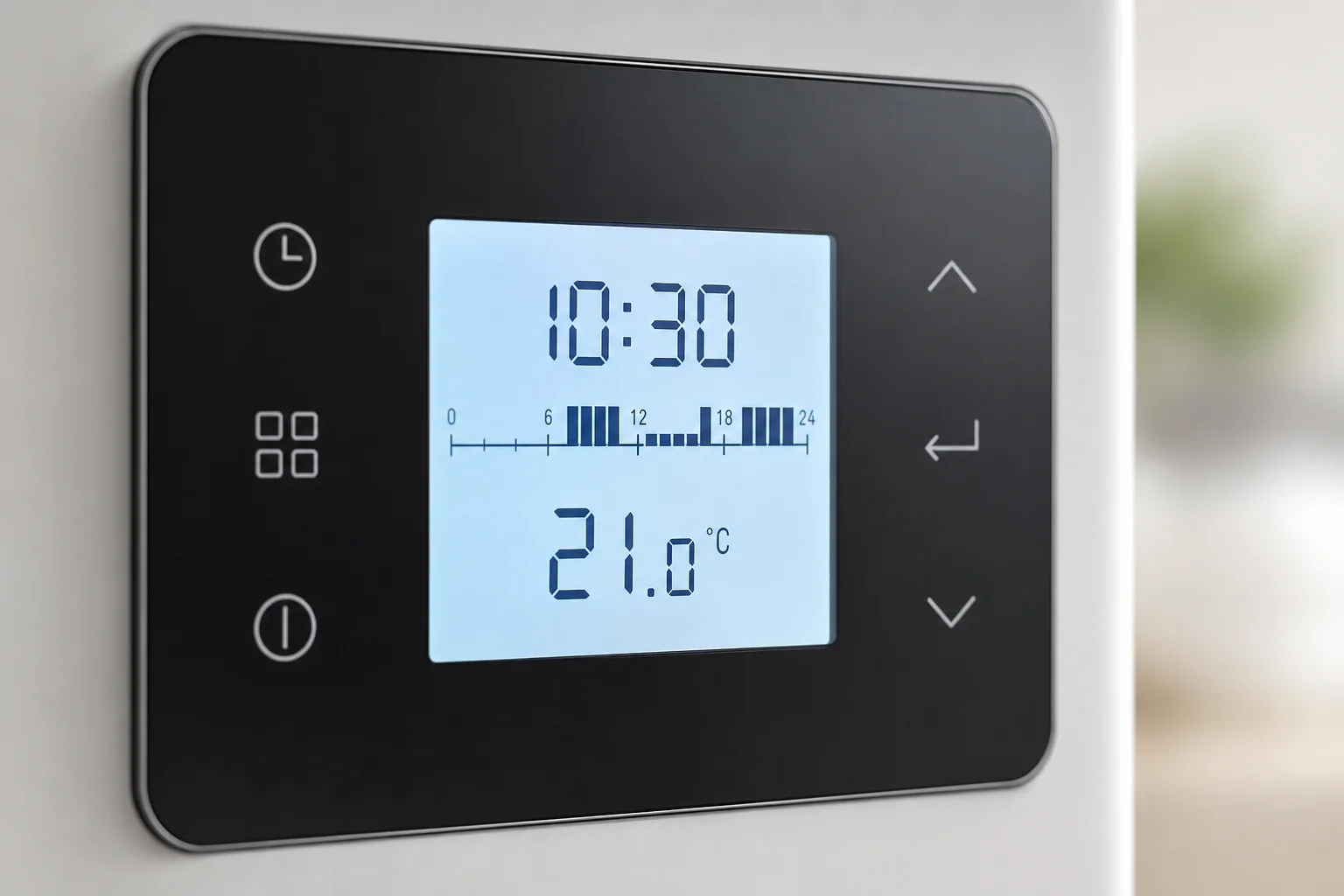
After six months of continuous operation, the unit remains quiet and reliable. The programming system, while initially confusing due to the instruction manual, becomes intuitive once you understand the four-number structure. The ability to adjust power, wave type, and frequency for each time period allows for realistic simulation of natural water movement throughout the day.
Conclusion
The Hygger Mini Wave Maker delivers quiet, customizable water movement for small aquariums at a budget-friendly price. It suits aquarists with tanks of 20 gallons or smaller who want programmable flow without significant noise or complexity. The touch-sensitive controller and time-based programming offer flexibility, though the initial setup requires patience to understand the menu system. For the price, it represents solid value for basic wave-making needs.
Product link
View more details for Hygger Mini Wave Maker
This product is mentioned in the review. Check the specifications, options, and compatibility before buying.
View more details for Hygger Mini Wave MakerFurther reading
Related Reviews
Aquarium Equipment
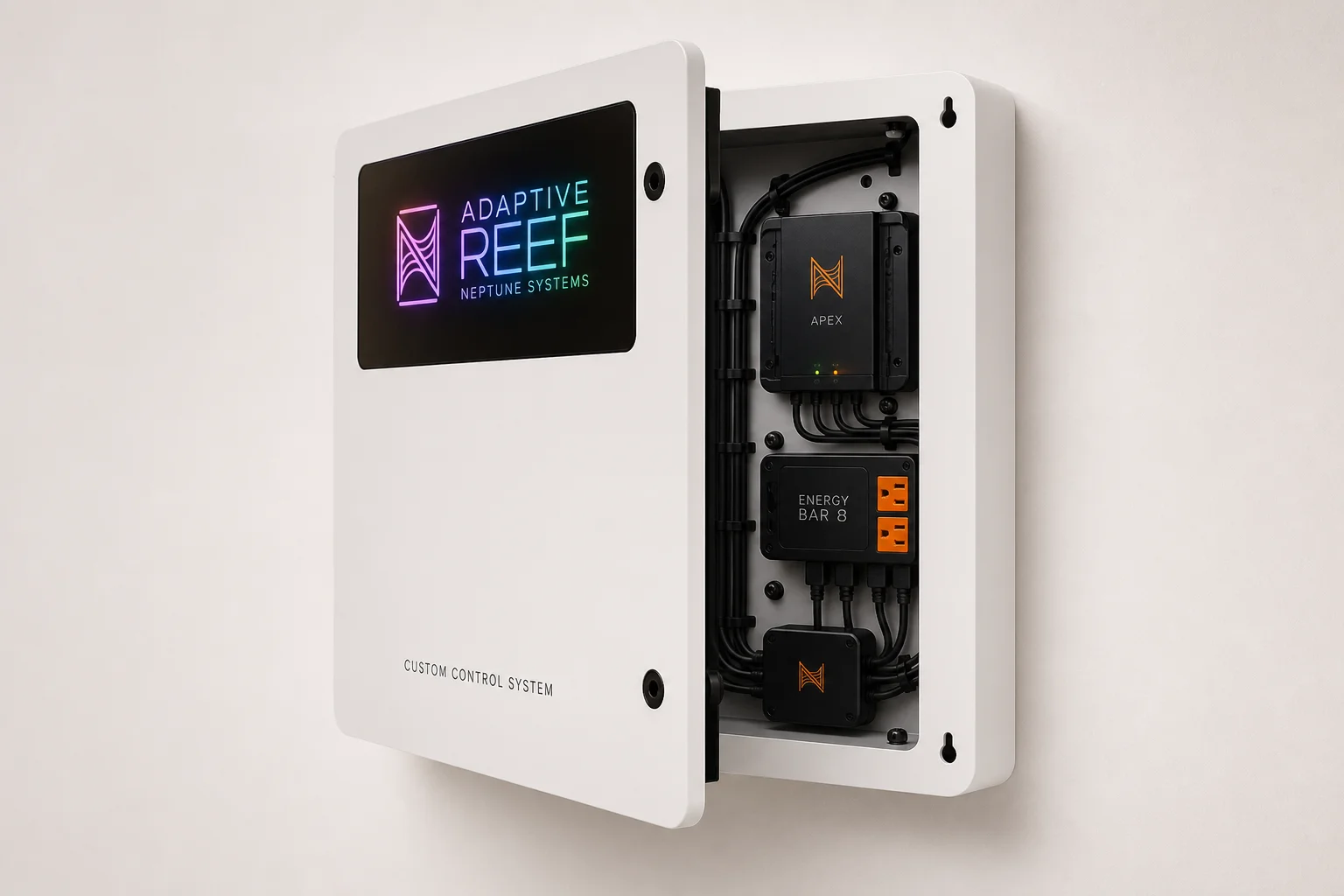
Adaptive Reef Neptune Systems Custom Control Board Review: Purpose-Built Organization for Apex Systems
A pre-configured controller board designed specifically for Neptune Systems Apex setups, offering integrated cable management, tablet mounting, and RGB lighting in a ready-to-use package.
Aquarium Equipment
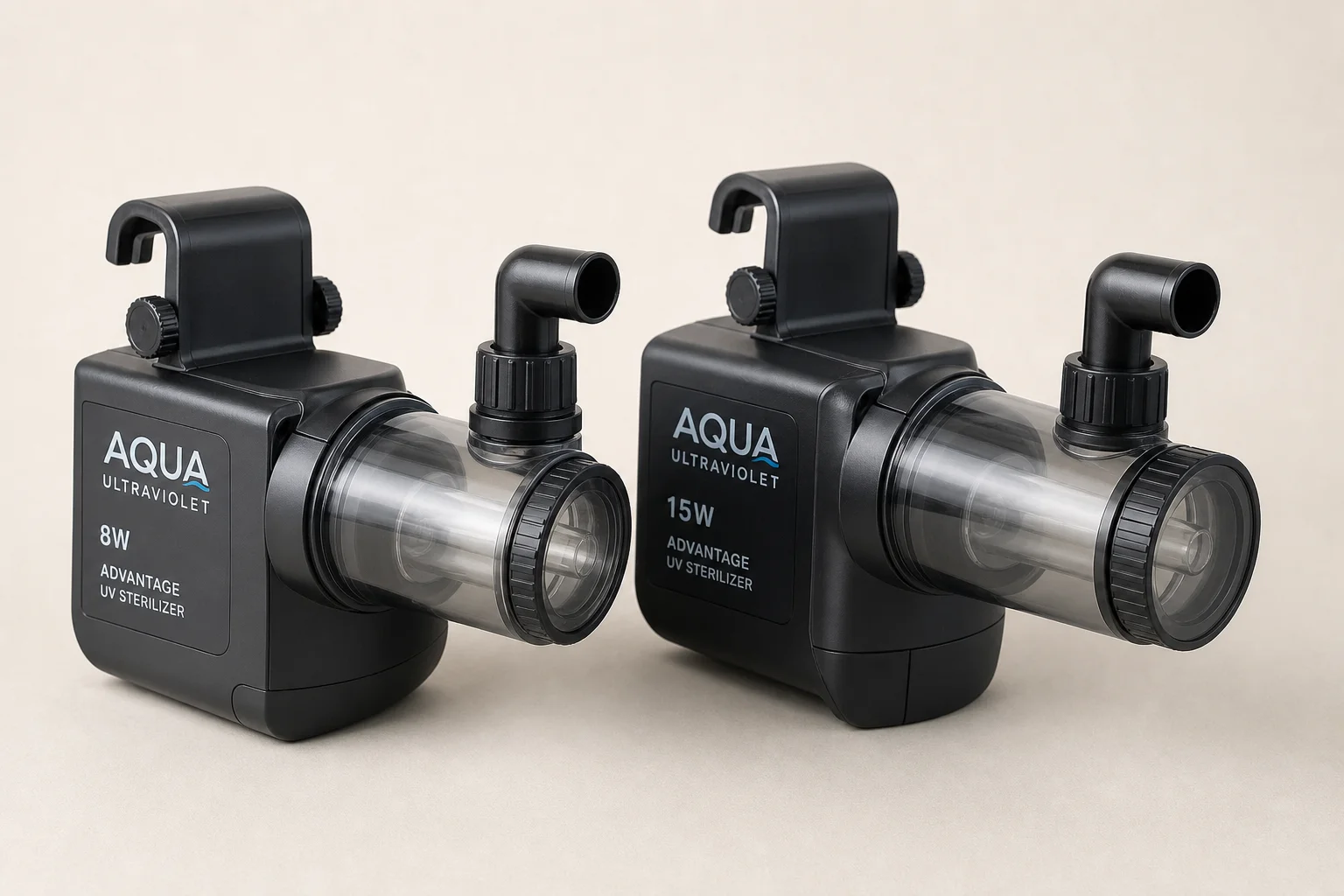
Aqua Ultraviolet Advantage Hang-On UV Sterilizer: 8-Watt vs 15-Watt Guide
Two compact UV sterilizers designed for aquarium owners seeking parasite and algae control without complex plumbing or large footprints.
Aquarium Equipment
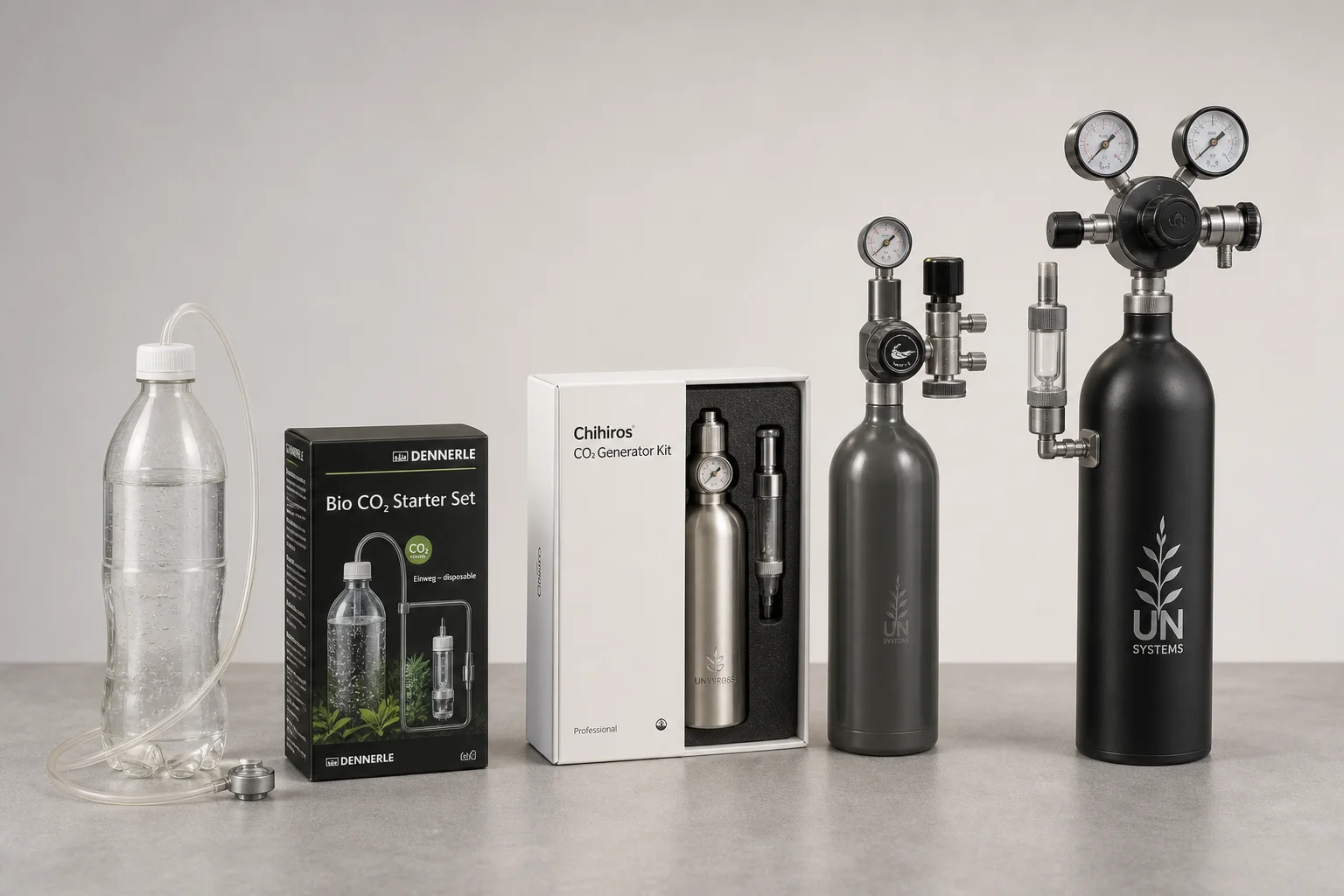
Best Aquarium CO2 Systems: Five Options From Budget DIY to Multi-Tank Setups
A practical guide to five aquarium CO2 systems, from homemade fermentation kits to pressurized cylinders with multi-tank regulators. Find the right setup for your tank size and budget.