Welding Equipment
HTP Pro Pulse 220 Review: Testing Smaller MIG Wire for Faster Deposition
A practical test on the HTP Pro Pulse 220 shows whether a smaller MIG wire can actually put down more weld in less time.
Introduction
When MIG welding, the choice of wire diameter is often treated as a straightforward rule: thicker material calls for thicker wire. But a closer look at real-world performance suggests there is more flexibility than the textbook suggests. This test on the HTP Pro Pulse 220 explores whether a smaller wire can actually deliver a higher deposition rate and deeper penetration, especially on machines with limited amperage.
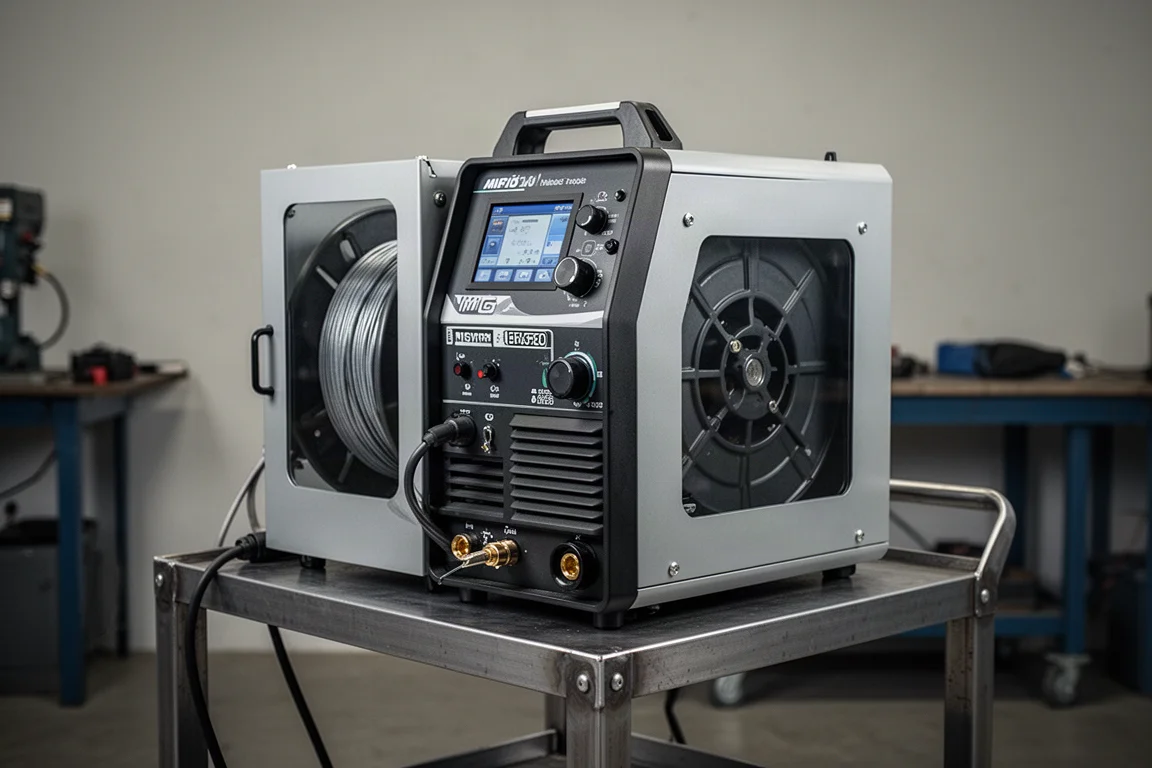
The machine used here is the HTP Pro Pulse 220, a 200 amp class MIG welder. The test focuses on 1/4 inch thick mild steel, keeping everything below 200 amps. This represents the upper end of material thickness that is reasonable to weld regularly with a 200 amp class machine. Mill scale was removed from the steel to eliminate that as a variable, which is a good general practice regardless of the job.
The Test Setup
The baseline weld was run with 0.030 inch ER70S-6 MIG wire. Manual settings were used throughout, with a wire feed speed of 618 inches per minute. That is an aggressive feed rate, but it produced around 200 amps and 24.5 volts with a solid result. The technique was kept simple: a straight push angle of 10 to 15 degrees, about 45 degrees into the joint, staying close to the leading edge of the puddle.
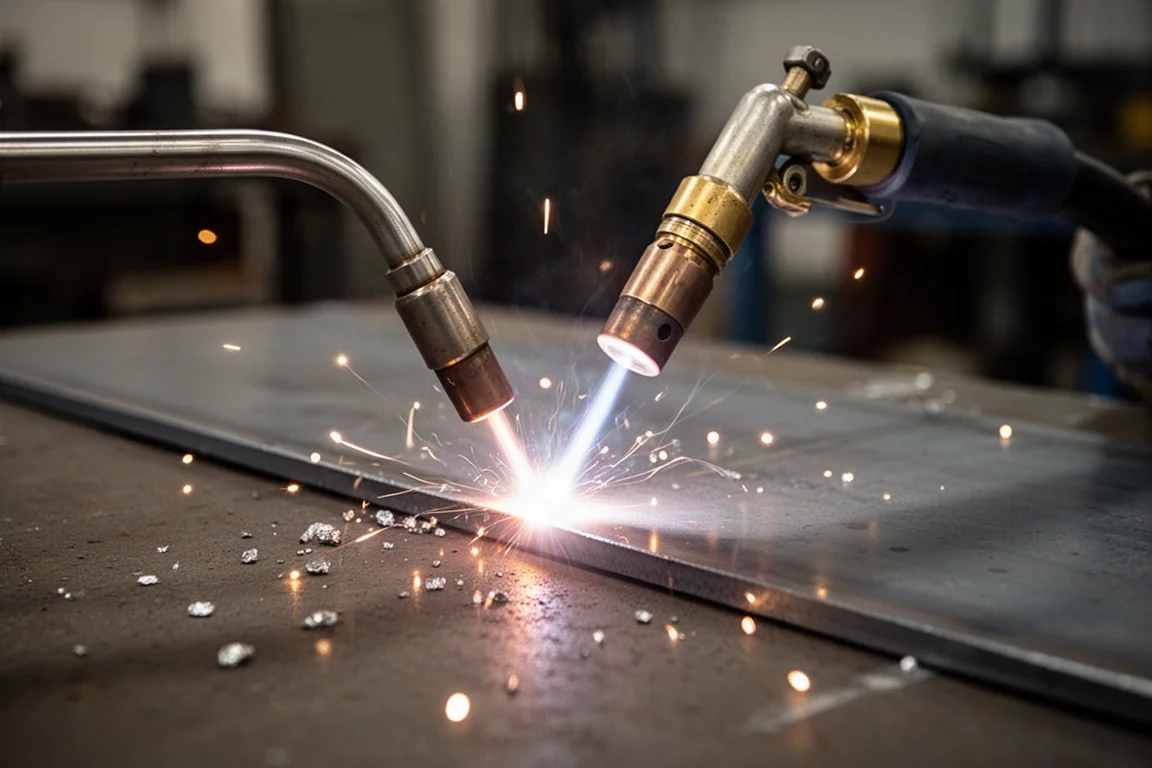
The arc ran smooth with a classic frying bacon sound and some spatter, which is expected when running this much amperage through a wire this size. No anti-spatter was used. The majority of the run sat around 180 to 190 amps, and the resulting bead looked clean on the surface. Some larger spatter collected on the bottom, but it chipped off easily without any anti-spatter treatment.
Comparing the Welds
After establishing the baseline, the machine was switched to 0.035 inch wire. The HTP Pro Pulse 220 is one of the few machines in its class that accepts a large 12 inch roll of wire, which makes changing sizes straightforward. Offline tests settled on 420 inches per minute and 23 volts, giving a very similar amperage and overall appearance to the baseline.
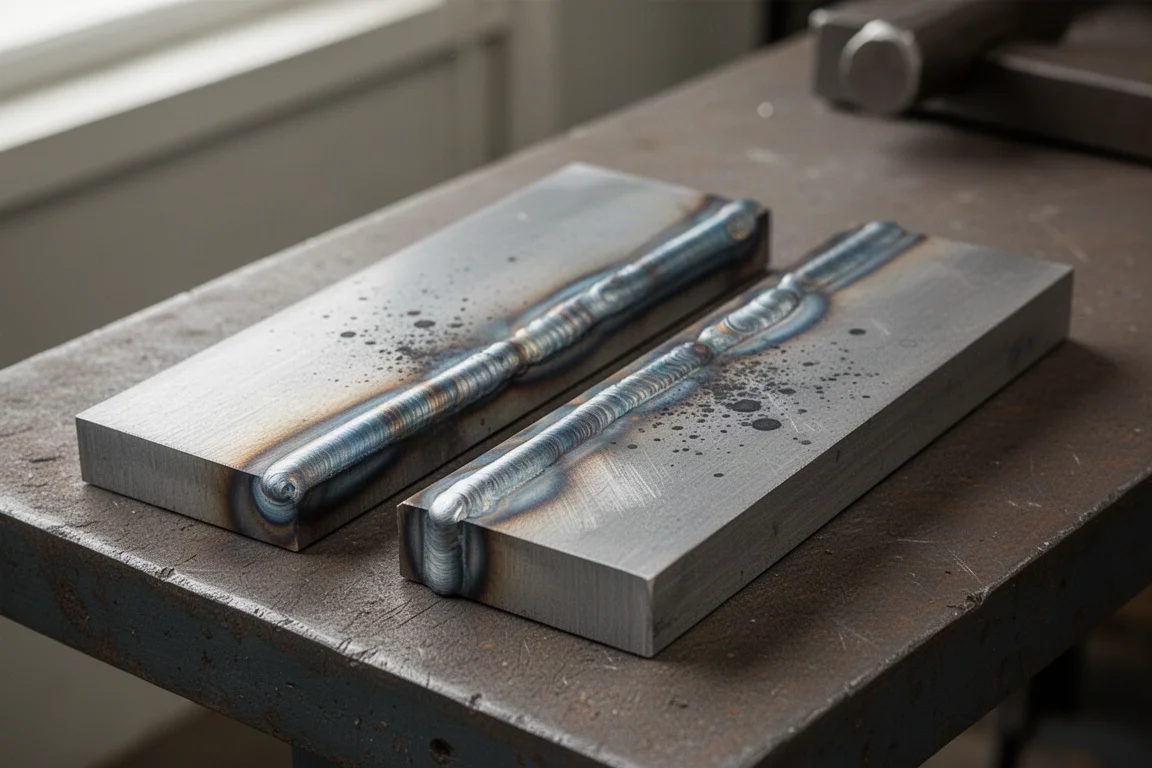
The second weld was run on the back side of the same coupon so both could be sliced through for comparison. The goal was an apples-to-apples test: the same technique, the same push angle, the same target fillet weld size. The 0.035 weld ran at a similar 180 to 190 amps, and the arc behaved much like the first. The resulting fillet weld measured just over 3/16 inch, close to the 0.030 weld at the same size. Spatter levels were comparable between the two.
The Results: Time and Deposition
The key finding came from weld time. The 6 inch weld with 0.030 wire took 26 seconds, while the same weld with 0.035 wire took 31 seconds. That is roughly a 20 percent time savings with the smaller wire. Both welds ran at similar amperage, produced a similar size weld, and showed a similar bead profile.
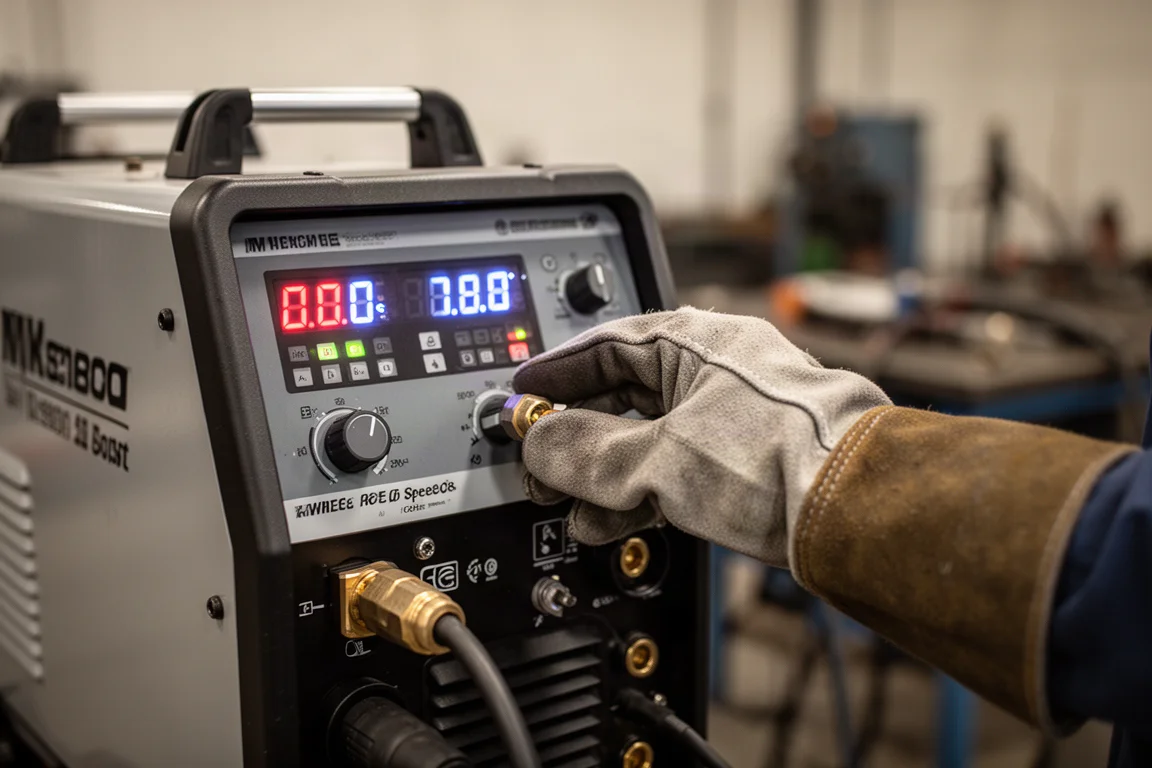
This makes sense from a physics standpoint. The same amperage pushed through a smaller cross-sectional area creates a higher current density, which produces an arc that punches into the material more effectively. That is the same reason flux core wire tends to dig in better. The penetration difference was not dramatic, but the 0.030 wire did show a slight edge.
Penetration and Fusion
A cross-section was taken from each weld to verify fusion down to the root of the joint. Both welds showed proper fusion at the bottom corner, which is reassuring for short circuit MIG on thicker plate. While deeper penetration would always be welcome on 1/4 inch material, the results here are typical for this process.
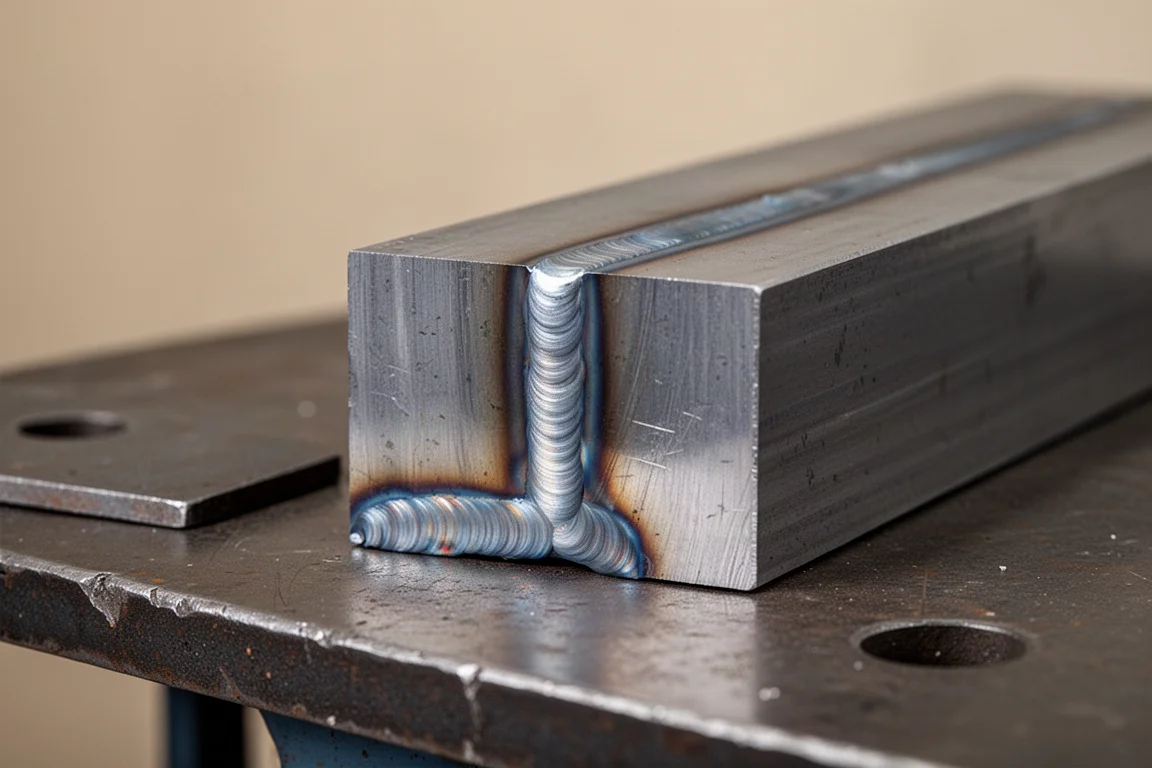
Between the two wire sizes, there was no night and day difference in penetration. The 0.030 wire performed marginally better, consistent with the higher current density theory. For most practical purposes, either wire would produce an acceptable weld on this material thickness.
The Real Limitation: Wire Feed Speed
The practical limit in this scenario is not the wire itself but how fast the machine can feed it. To hit 180 amps with 0.030 wire, the feed rate needed to exceed 600 inches per minute. Not every machine can manage that. On a machine limited to around 450 inches per minute, the 0.030 wire would not reach the same amperage, and the deposition rate would drop below what the 0.035 wire could achieve.
Conversely, on a larger machine with more amperage headroom, the 0.035 wire could overtake the smaller wire simply by pushing more amps through it. The best choice depends on the machine’s feed speed capability and the amperage range you need to reach.
Buying Advice
For the HTP Pro Pulse 220, the practical conclusion is to keep 0.030 wire loaded across the board. It reaches close to the machine’s maximum amperage just by turning up the wire feed speed, and it saves time on each weld without sacrificing quality. There is no strong reason to switch to 0.035 for most work on this machine.
For a larger MIG machine, sticking with 0.035 wire makes sense because it allows the machine to run at full capacity. While 0.045 wire performed slightly better on 1/2 inch plate in earlier testing, the improvement was not significant enough to justify the hassle of changing wire spools.
Conclusion
The textbook ranges for wire diameter still apply as a starting point, but this test shows that a smaller wire can be genuinely beneficial when the machine can feed it fast enough. On the HTP Pro Pulse 220, 0.030 wire delivered a 20 percent time savings over 0.035 wire at the same amperage, with comparable penetration and weld quality. Riders and welders alike should consider their machine’s feed speed limits before choosing a wire size, rather than defaulting to the thickest option available.
Product link
View more details for HTP Pro Pulse 220
This product is mentioned in the review. Check the specifications, options, and compatibility before buying.
View more details for HTP Pro Pulse 220Further reading
Related Reviews
Welding Equipment
Berger 135 MP Multi-Process Welder Review: A $120 Flux Core, Stick, and TIG Machine
A practical look at the Berger 135 MP, a budget multi-process welder that handles flux core and stick welding with surprising competence for the price.
Welding Equipment
Hobart Handler 140EZ Review: A Simple MIG Welder for DIY Projects
A look at the Hobart Handler 140EZ, a 120-volt MIG welder with an easy set mode that makes it approachable for hobbyists and first-time welders.
Welding Equipment
HTP Freedom 250 Pulse MIG Welder Review: A Solid Performer for Controlled Welds
A practical look at the HTP Freedom 250 pulse MIG welder, covering how pulse transfer works, where it shines, and who should consider it.