Welding Equipment
HTP MIG 2800 Review: A Multi-Process Welder That Handles Stick Welding With Ease
A closer look at the HTP MIG 2800 as a stick welding machine, tested on thick steel with two different electrodes to see how it performs.
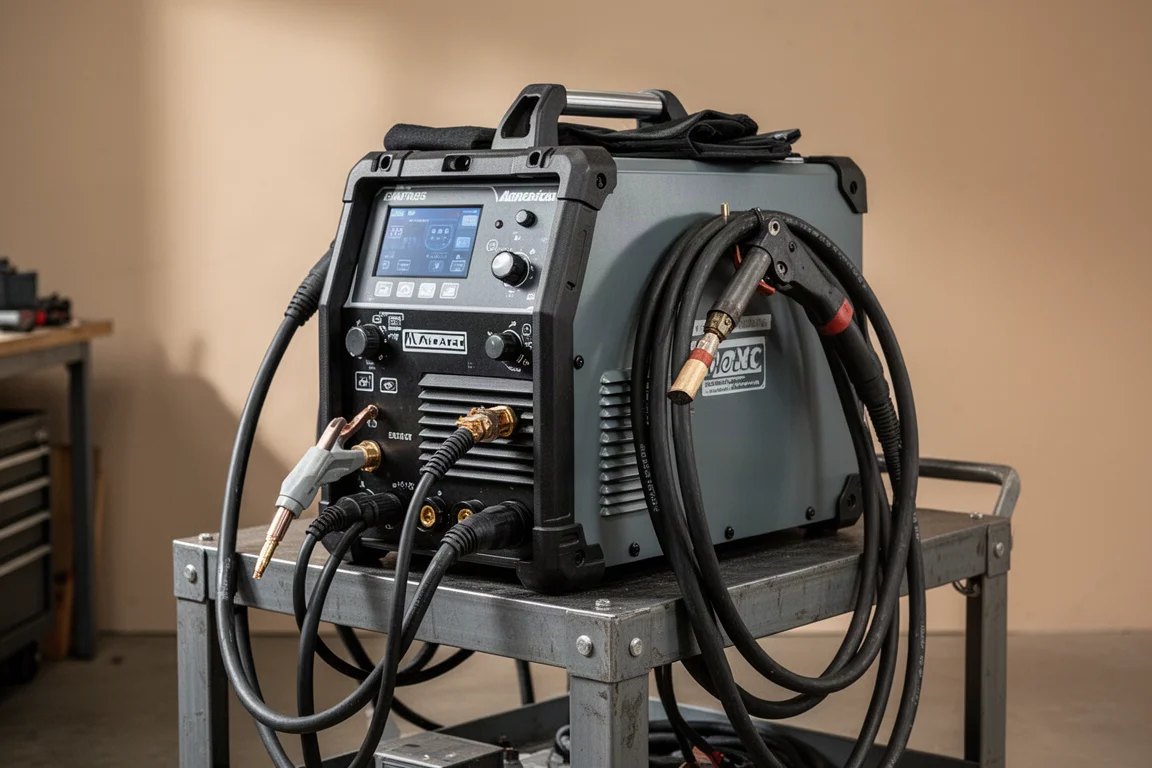
Introduction
Stick welding thick steel is a demanding test for any welding machine. The HTP MIG 2800 is a multi-process welder that handles MIG, flux-cored, and stick welding, and it also includes an arc gouging mode. This review focuses on how it performs when running stick electrodes on 1/2-inch mild steel, comparing a high-deposition single pass against a traditional three-pass approach.
The machine is designed with heavy-duty use in mind, but it is also approachable for hobbyists who want a better tool from the start. Its performance in this test shows what it can do when pushed with different electrodes and techniques.
Who This Product Is For
The HTP MIG 2800 suits welders who need one machine that can handle multiple processes. It is built for all-day heavy-duty use, but it also appeals to hobbyists who prefer investing in quality equipment upfront. If you work with MIG, flux-cored, or stick welding, this machine covers all of those bases without requiring a separate unit for each process.
It is especially relevant if you weld thicker steel and want the flexibility to choose between high-deposition electrodes for productivity or traditional electrodes for versatility. The machine’s arc gouging mode adds another layer of capability for those who need to remove welds or prepare joints.
Stick Welding Performance on Thick Steel
The test involved running fillet welds on both sides of a 1/2-inch thick mild steel T-joint. One side used a 7024 high-deposition electrode in a single pass, while the other used a 7018 electrode with three passes. The HTP MIG 2800 handled both approaches without issue, delivering stable arcs and consistent performance.
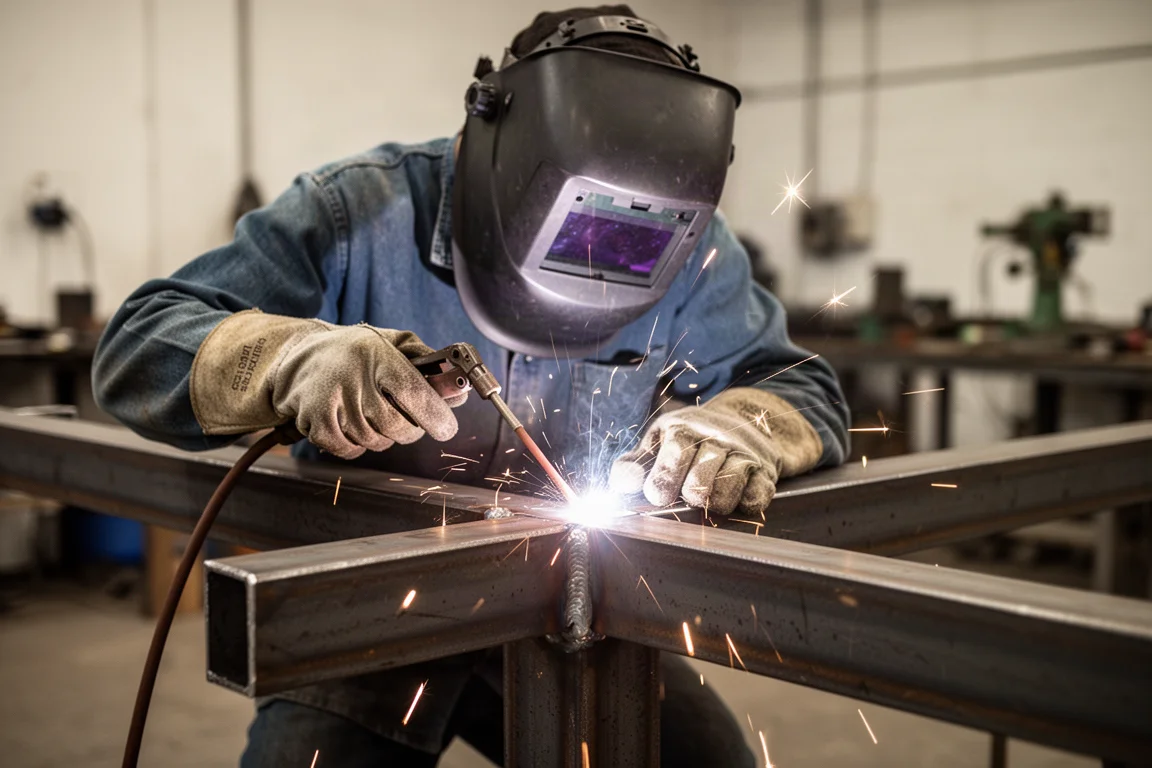
The machine’s controls made it straightforward to adjust amperage between electrodes. Running the 5/32-inch 7024 at 180 amps produced a smooth, easy weld that took just 37 seconds. Switching to the 1/8-inch 7018 required dropping to around 125 amps, and the machine responded cleanly to the change. The ability to fine-tune settings quickly is a practical advantage when moving between different rods and techniques.
Single Pass With the 7024 Electrode
The 7024 electrode, often called a jet rod, is designed for high deposition rates in flat and horizontal positions. Its thick flux contains a significant amount of iron powder, which allows it to deposit a large volume of weld metal quickly. Running it is notably easy because the flux can rest on the material, controlling arc length automatically.
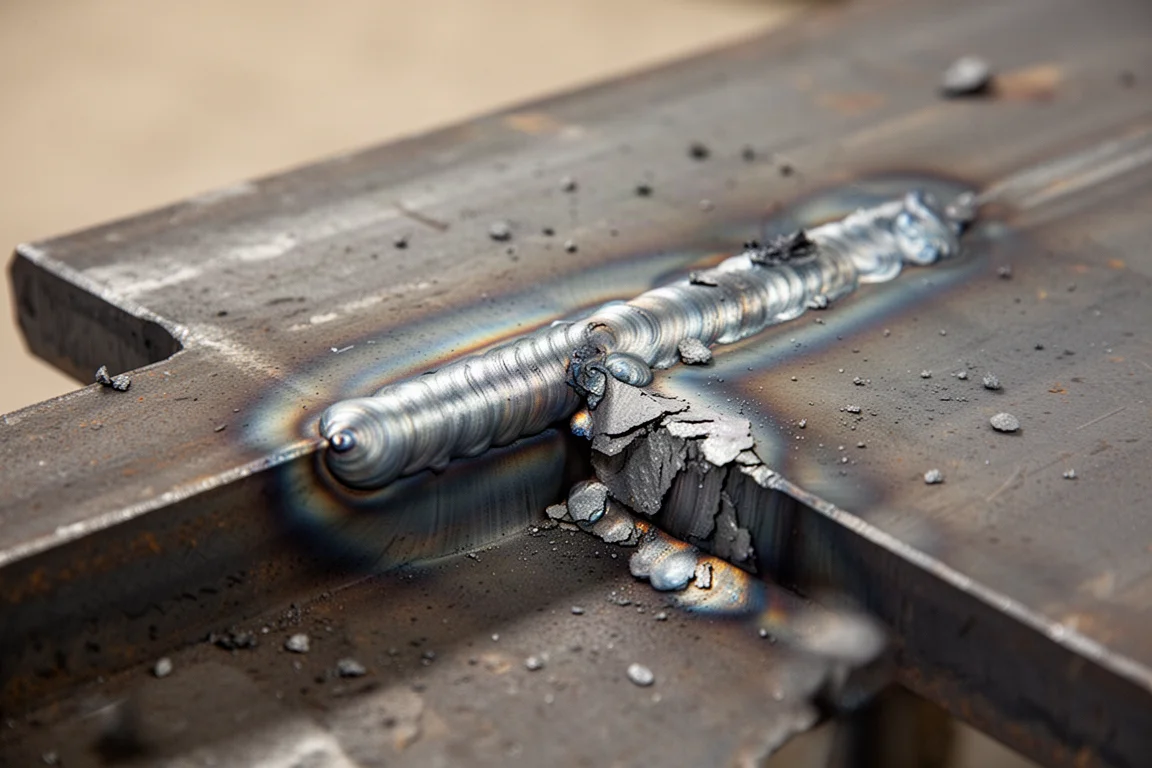
The single pass weld sized at 3/16 inch, slightly smaller than the target of 1/4 inch. The weld itself was smooth and clean, with slag peeling off easily. The main limitation is that the 7024 is restricted to flat and horizontal positions, making it a specialized tool rather than an all-around electrode. For production work where those positions apply, the productivity gain is substantial.
Three Passes With the 7018 Electrode
The 7018 electrode is a more versatile option, capable of welding in all positions including vertical and overhead. It requires more manual control of arc length, but the weld puddle is highly recognizable and the slag follows along cleanly behind the arc. This electrode is a common choice for structural work because of its reliable penetration.
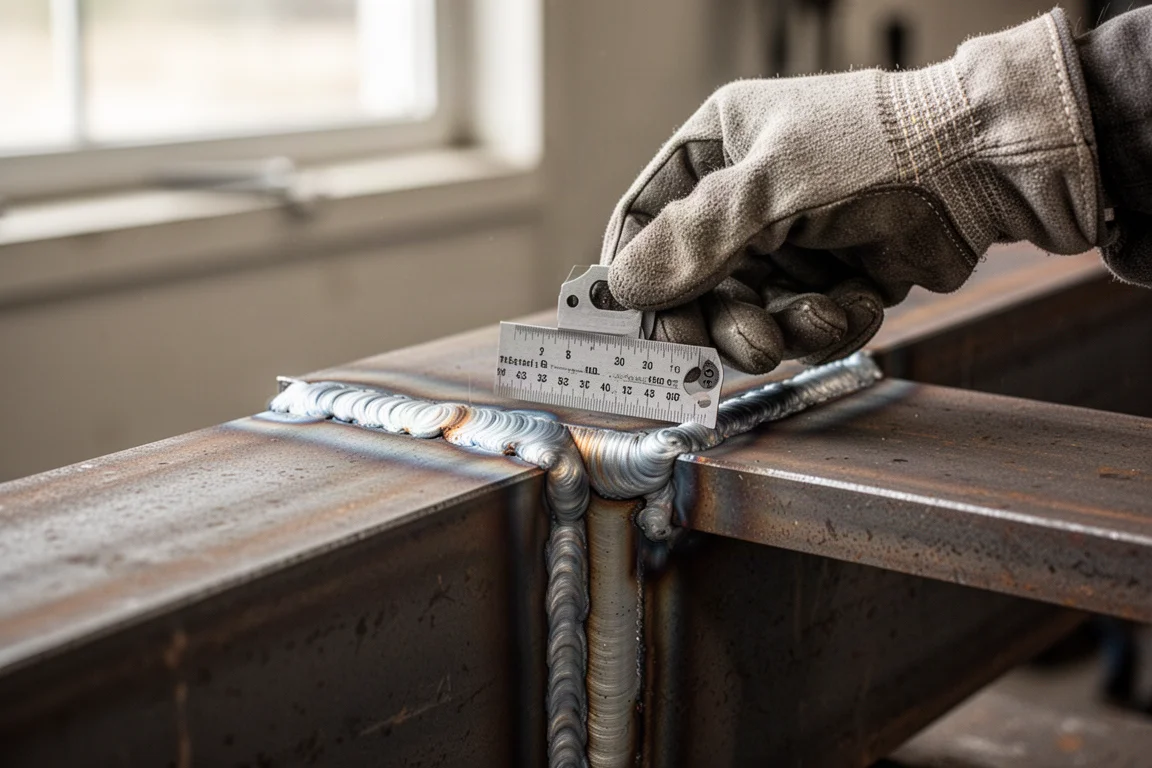
Running three passes on the same joint took 1 minute 50 seconds of arc time, nearly three times longer than the single pass. The final weld sized at 1/4 inch, matching the target. The additional time includes chipping slag and loading new electrodes, which highlights the productivity advantage of the 7024 when the application allows it.
Comparing Penetration and Results
Cutting the samples apart revealed important differences between the two approaches. The 7018 weld showed good penetration into both plates, though the second bead sat slightly low, creating a less-than-ideal profile. The 7024 weld penetrated both plates as well, but not to the same extent, with a slight lack of fusion at the root.
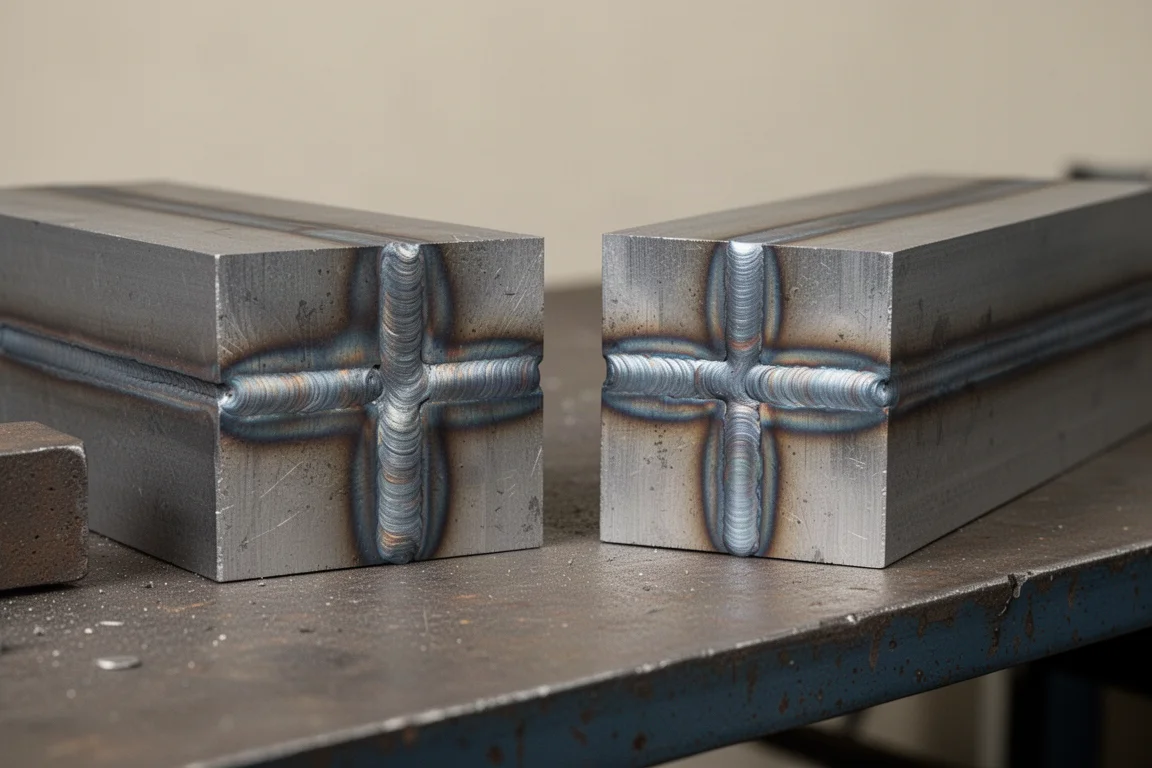
The lack of fusion in the 7024 sample could potentially be corrected with higher amperage, though that risks undercut and spatter. The 7018 proved more reliable from a penetration standpoint. However, the results depend on the specific machine settings, technique, electrode brand, and material used on that day. Neither electrode is inherently superior; each has its place depending on the job requirements.
Buying Advice
The HTP MIG 2800 is a capable multi-process welder that performs well in stick welding applications. Its user-focused design is evident in how easily it handles different electrodes and amperage settings. The machine’s performance in this test demonstrates its versatility, whether you are running high-deposition rods for productivity or traditional electrodes for all-position work.
For hobbyists, investing in a better tool upfront can make a meaningful difference in weld quality and ease of use. For professionals, the machine’s heavy-duty construction and multi-process capability make it a practical addition to any shop. If you are in the market for a welder that can handle MIG, flux-cored, stick, and arc gouging, the HTP MIG 2800 is worth serious consideration.
Conclusion
The HTP MIG 2800 proved itself as a reliable stick welding machine in this test. It handled both a high-deposition single pass and a traditional three-pass approach with consistent results. The comparison between the 7024 and 7018 electrodes highlighted the trade-offs between productivity and versatility, with each method producing acceptable welds on thick steel.
The machine’s thoughtful design and multi-process capability make it a strong choice for both heavy-duty users and hobbyists who want room to grow. Whether you prioritize speed or all-position flexibility, the HTP MIG 2800 delivers the performance needed to get the job done.
Product link
View more details for HTP MIG 2800
This product is mentioned in the review. Check the specifications, options, and compatibility before buying.
View more details for HTP MIG 2800Further reading
Related Reviews
Welding Equipment
Berger 135 MP Multi-Process Welder Review: A $120 Flux Core, Stick, and TIG Machine
A practical look at the Berger 135 MP, a budget multi-process welder that handles flux core and stick welding with surprising competence for the price.
Welding Equipment
Hobart Handler 140EZ Review: A Simple MIG Welder for DIY Projects
A look at the Hobart Handler 140EZ, a 120-volt MIG welder with an easy set mode that makes it approachable for hobbyists and first-time welders.
Welding Equipment
HTP Freedom 250 Pulse MIG Welder Review: A Solid Performer for Controlled Welds
A practical look at the HTP Freedom 250 pulse MIG welder, covering how pulse transfer works, where it shines, and who should consider it.