Reef Aquarium Lighting
How to Choose Reef Tank Lighting: Wattage, Spectrum, and Fixture Styles
A practical reef lighting guide covering wattage targets, spectrum, fixture size, four mounting approaches, and the shimmer you can expect before you buy.
Introduction
Reef tank lighting is often the single most expensive piece of equipment in a build, which is exactly why it deserves planning rather than guesswork. A well-chosen fixture can outlive the tank it was bought for. The cheapest path is usually to get it right the first time instead of buying twice.
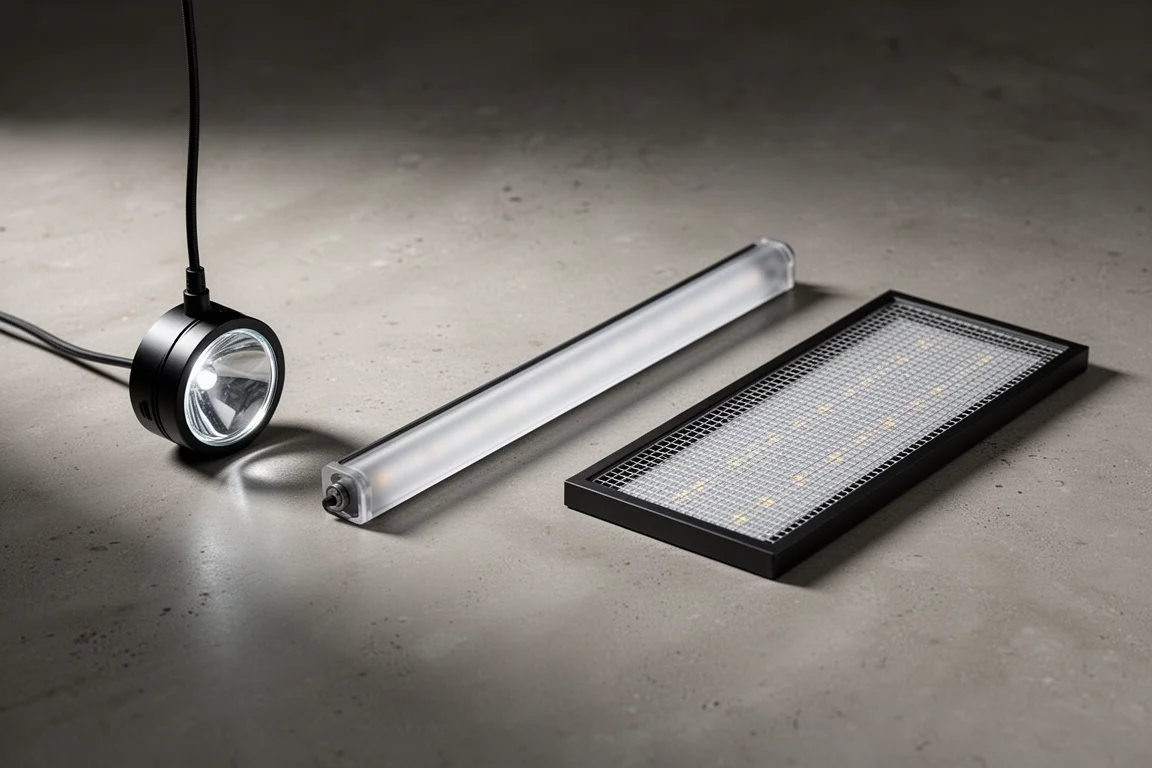
The decision also does not depend on brand loyalty. What matters is what you are trying to grow, how much of the tank you need to cover, and how much control you want over the way light moves in the water. This guide covers the four practical approaches to lighting a reef tank, the fixtures that fit each one, and the visual differences you can predict before you spend anything.
How to Match a Reef Light to Your Corals
Set brand preferences aside and start with a single question: what am I trying to achieve? For almost everyone keeping corals, the answer is healthy growth. That reframes the purchase around output and coverage instead of logos.
PAR is the usual language for this. LPS corals are generally grown in the 50 to 150 PAR range, while SPS are usually kept at 200 to 350 PAR. Those figures are rarely printed on the box, and not every reefer owns a PAR meter.
A practical shortcut is the wattage the fixture draws from the wall, which is listed in the product description. As a rough guide for a two foot section of tank:
- Roughly 50 to 100 watts: the LPS sweet spot. This band covers fixtures such as the Kessil A360, the Red Sea ReefLED 50 and the AI Prime, or a pair of light bars.
- Roughly 100 to 150 watts: mixed tanks with SPS placed in the brightest positions. This is where the AI Hydra 32, EcoTech Radion XR15 and Kessil A500X sit.
- Roughly 150 to 200 watts: SPS-dominant systems, including the EcoTech Radion XR30 and large panel fixtures.
Wattage alone will not tell you everything, but it gets you much closer than guessing and it stops you from buying more light than you need.
Spectrum is the second half of the equation. Most manufacturers publish a spectrograph on the product page, and it is worth finding before you buy. What you want is a wide blue band, not a narrow spike. A spectrum that looks like a thin laser line, or a miniature Eiffel Tower, is a warning sign.
The band you are looking for spans roughly 390 nanometres in the violet through 470 nanometres in the light blue, with royal blue around 450 nanometres. The reason is biological. Chlorophyll a absorbs most strongly in the violet range, chlorophyll c2 in the royal blue range, and carotenoids in the light blue range. Natural sunlight covers all of it, and corals evolved around that. Provide only one narrow slice and the coral has to adapt its biology around it.
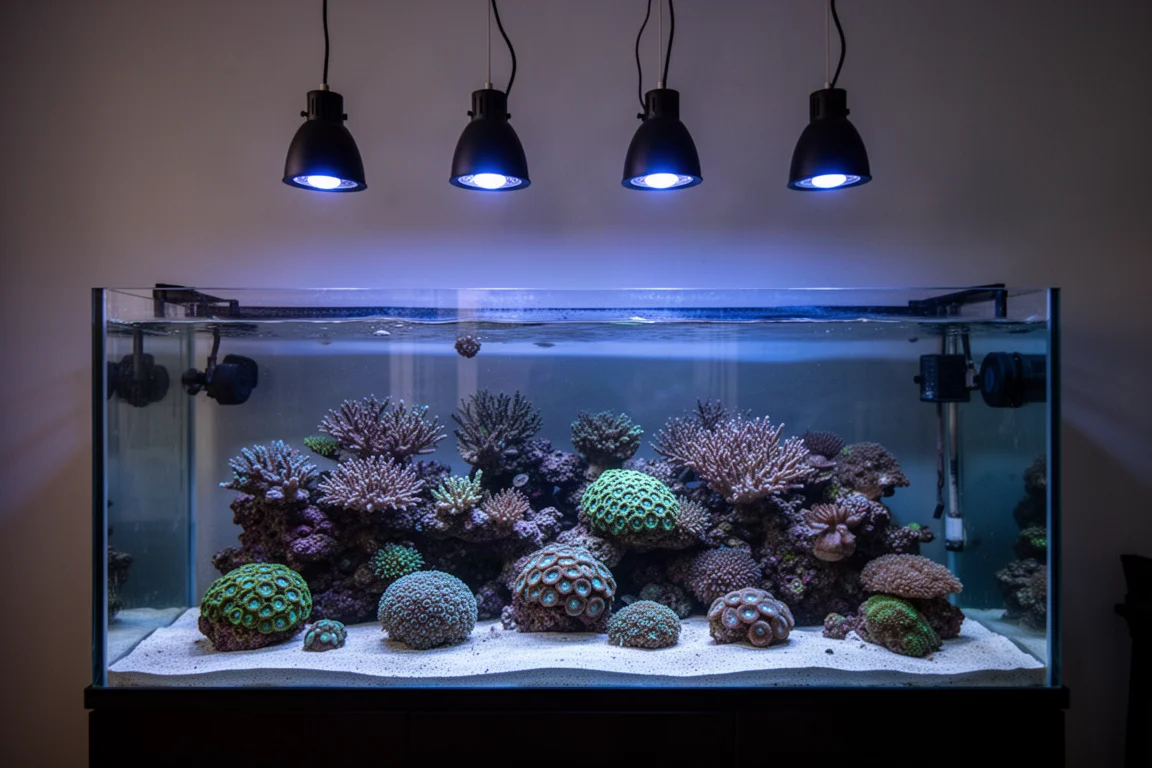
Existing owners can widen a narrow spectrum rather than replace it. Adding strip lighting that extends output into the violet and light blue regions, instead of repeating the same narrow peak, is a straightforward fix. If a manufacturer does not publish spectrum data at all, treat that as a reason to look elsewhere.
Why Fixture Size Matters More Than You Think
The best lighting approaches blanket the tank and reduce shadowing. This is one of the biggest adjustments reefers face after moving from metal halide and T5 lighting to LEDs.
A small fixture with a wide beam angle can look as though it fills the tank, but the coverage is uneven once you measure it. A compact light is easily obstructed, and anything sitting in its shadow receives very little. Shadowed areas can cut PAR dramatically, sometimes by around 75 percent compared with lit areas, and the consequences show up as oddly shaped corals, growth on one side and nothing underneath.
Large light sources handle this differently. When a wide fixture is partly blocked, light still reaches the coral from both sides. That does not mean size is the only solution. You can also spread wide-angle fixtures roughly 12 to 18 inches apart to cover a tank, or add fill lighting to the sides of existing pendants to create a three-point setup that mimics the sun and the sky.
The takeaway is simple: corals do best when light reaches them from more than one direction.
Modular Pendant Lights: Compact Fixtures With Flexible Coverage
Modular pendants are the most popular approach in the hobby, and for good reason. They are low profile, they leave the top of the tank open, and they are easy to mount. Popular options include the Kessil, EcoTech Radion, AI Hydra, GHL Mitras and Red Sea ReefLED ranges.
The main pitfall is spacing. Packaging often suggests placing modules 24 inches apart, but the tanks that do best tend to run them every 12 to 18 inches instead. Look at long-running successful tank builds and you will notice how rarely you find a 24 inch gap.
AI Prime
The AI Prime is a compact modular pendant and a common first recommendation for beginners, because it is affordable and simple to set up. Over a two foot section it falls in the roughly 50 to 100 watt class, which suits LPS tanks, and it scales well if you later add strip lighting around it.
AI Hydra 32
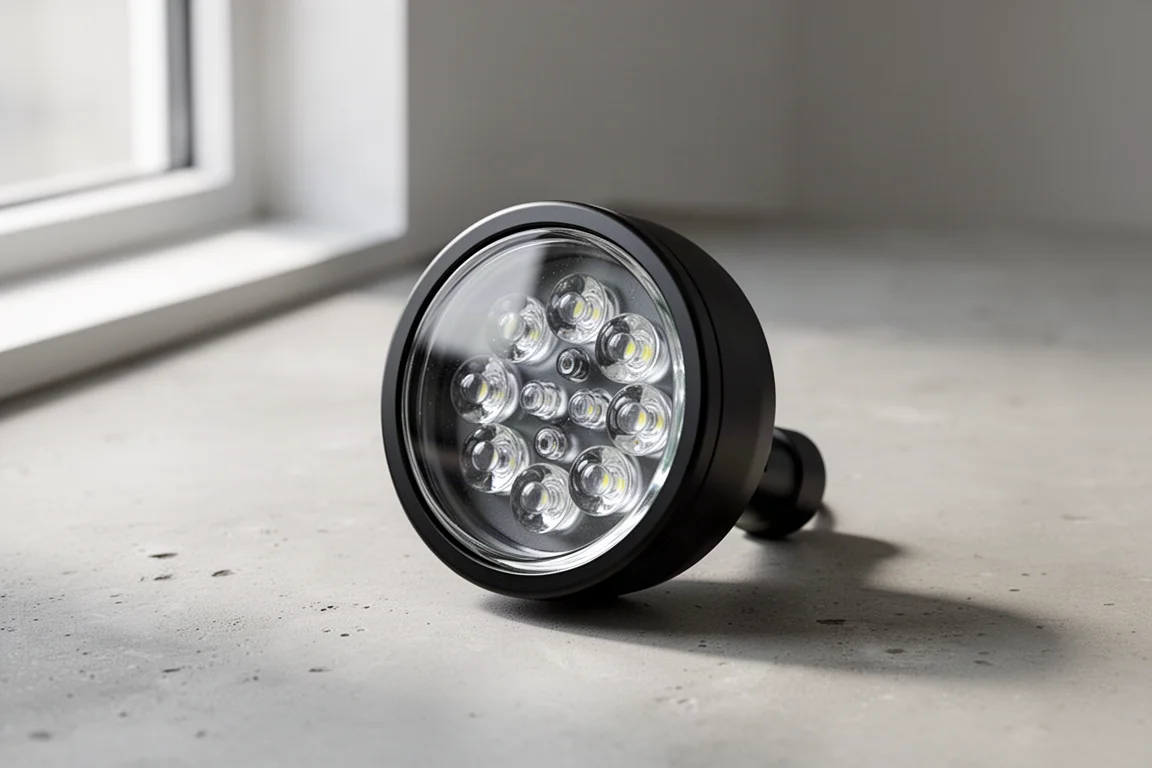
The AI Hydra 32 steps up into the roughly 100 to 150 watt class, the range that suits mixed reefs where SPS corals occupy the highest-light positions and LPS sit lower in the aquascape.
EcoTech Radion XR15
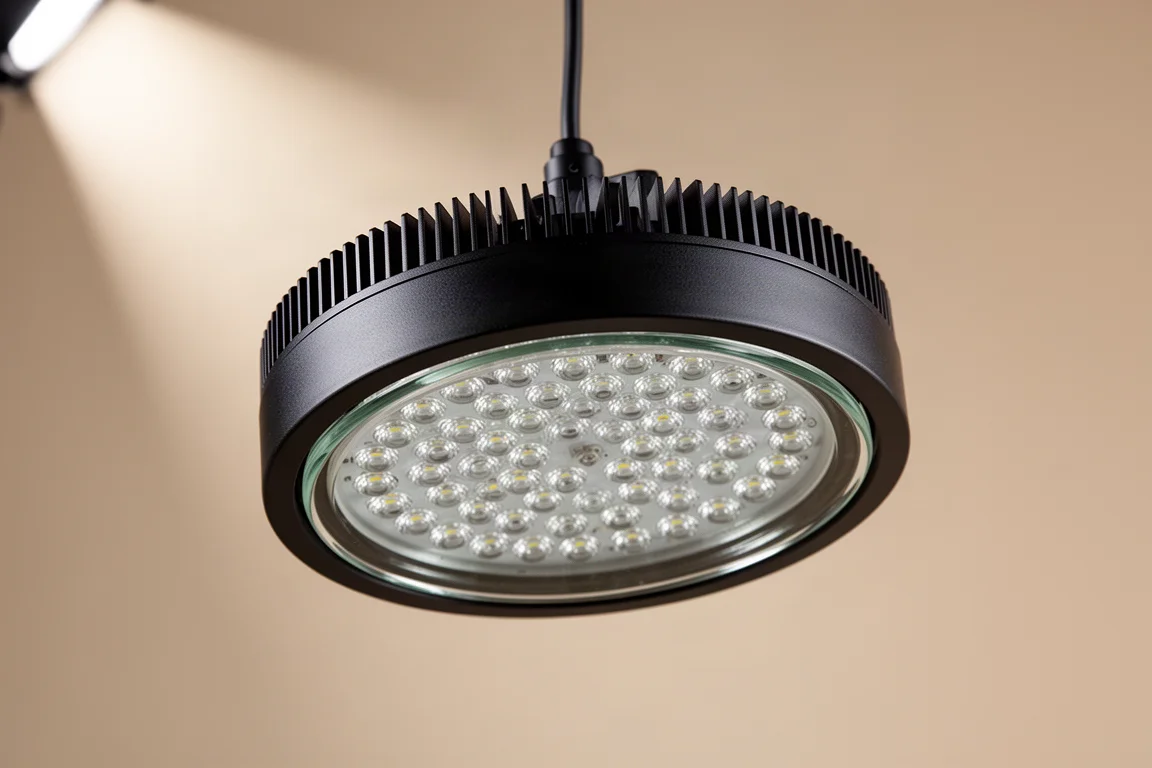
The Radion XR15 sits in the same 100 to 150 watt range for mixed tanks, and its blue spectrum is adjustable. A broad blue peak can be tuned slightly to widen the band further. It mounts easily, and paired with strip lighting such as the AI Blade it produces a large and remarkably even sweet spot.
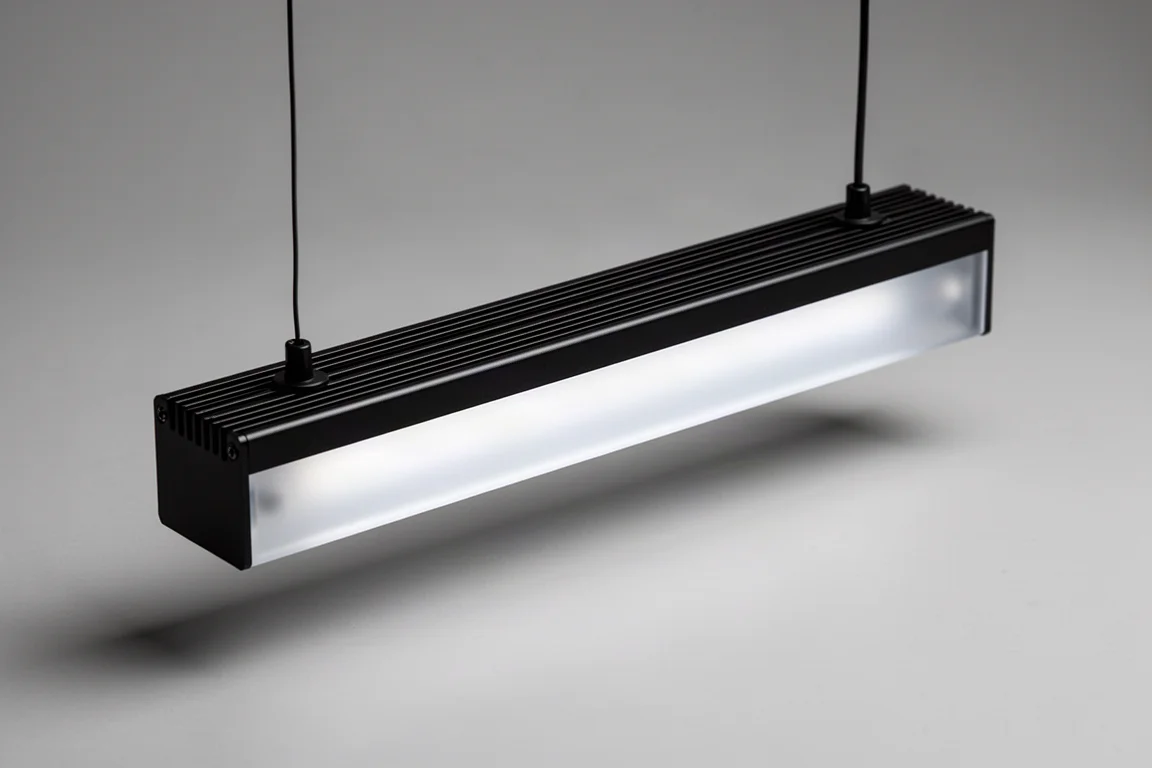
EcoTech Radion XR30
The Radion XR30 is the higher-output member of the family, landing in the roughly 150 to 200 watt class intended for SPS-dominant tanks where the whole aquascape needs strong light.
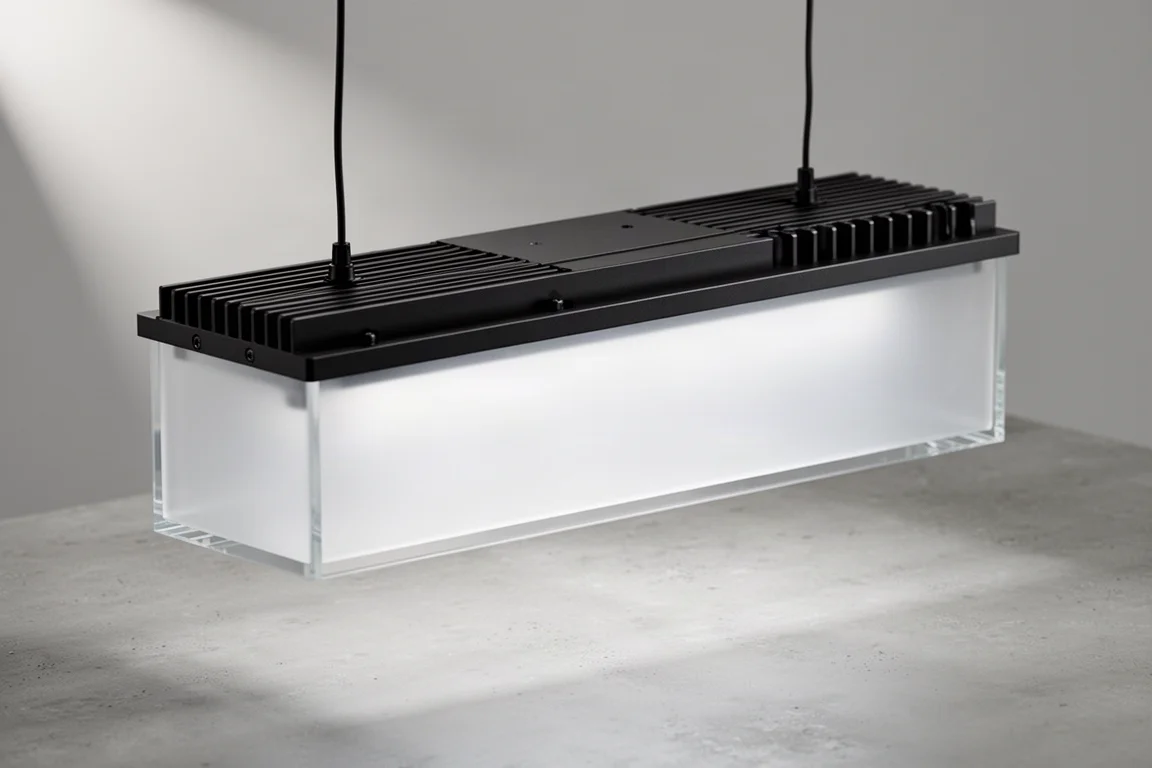
Kessil A360
The Kessil A360 is a compact single point source in the 50 to 100 watt LPS class. On its own, with no sky-like fill around it, it produces a sharp shimmer with a lot of movement that some reefers love and others find too busy. Its output and shimmer can be tuned.
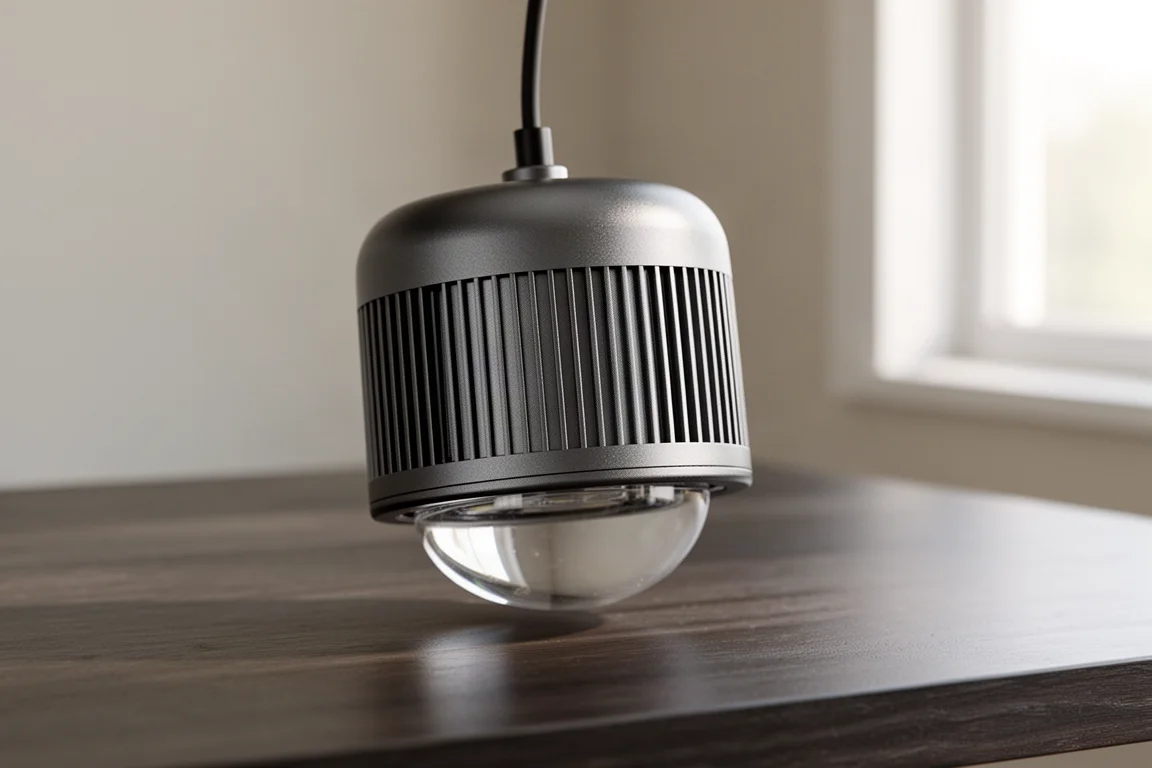
Kessil A500X
The Kessil A500X moves up into the roughly 100 to 150 watt band used for mixed reefs, giving more output per module when you need to reach further down into the aquascape.
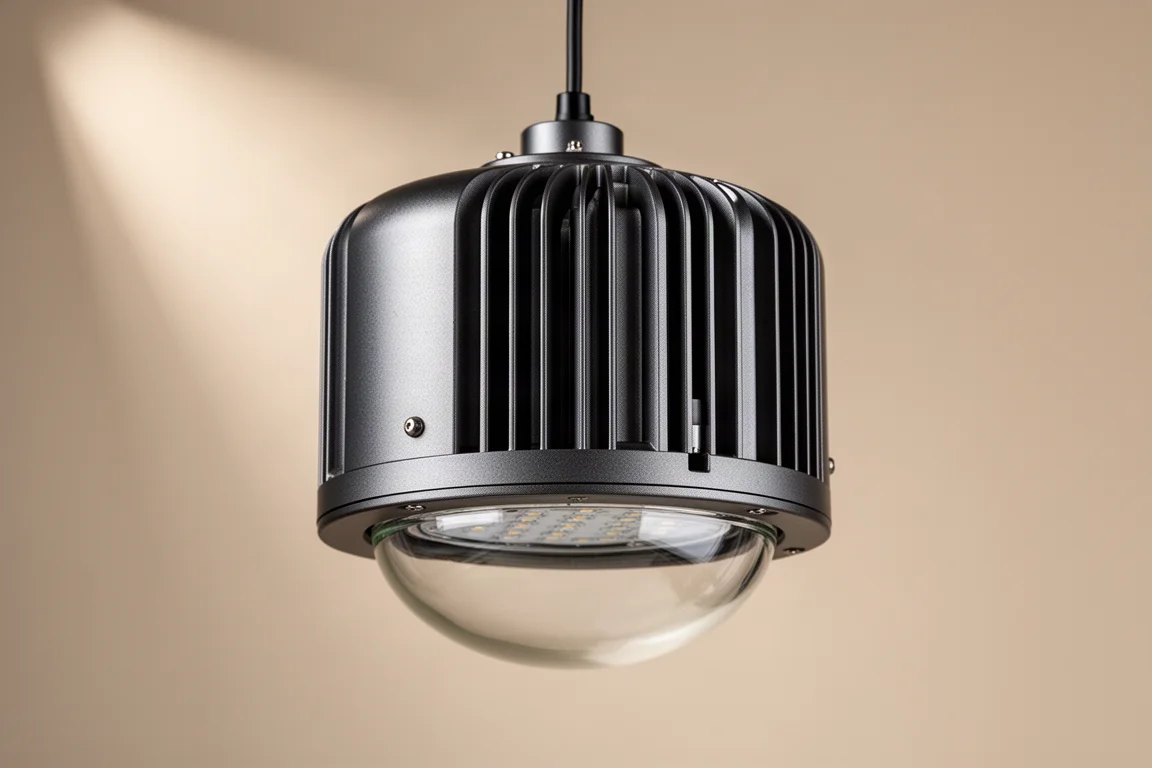
Red Sea ReefLED 50
The Red Sea ReefLED 50 is another compact fixture in the 50 to 100 watt LPS range. As a compact point source it fits neatly into three-point setups, where its shimmer is softened by fill lighting on either side.
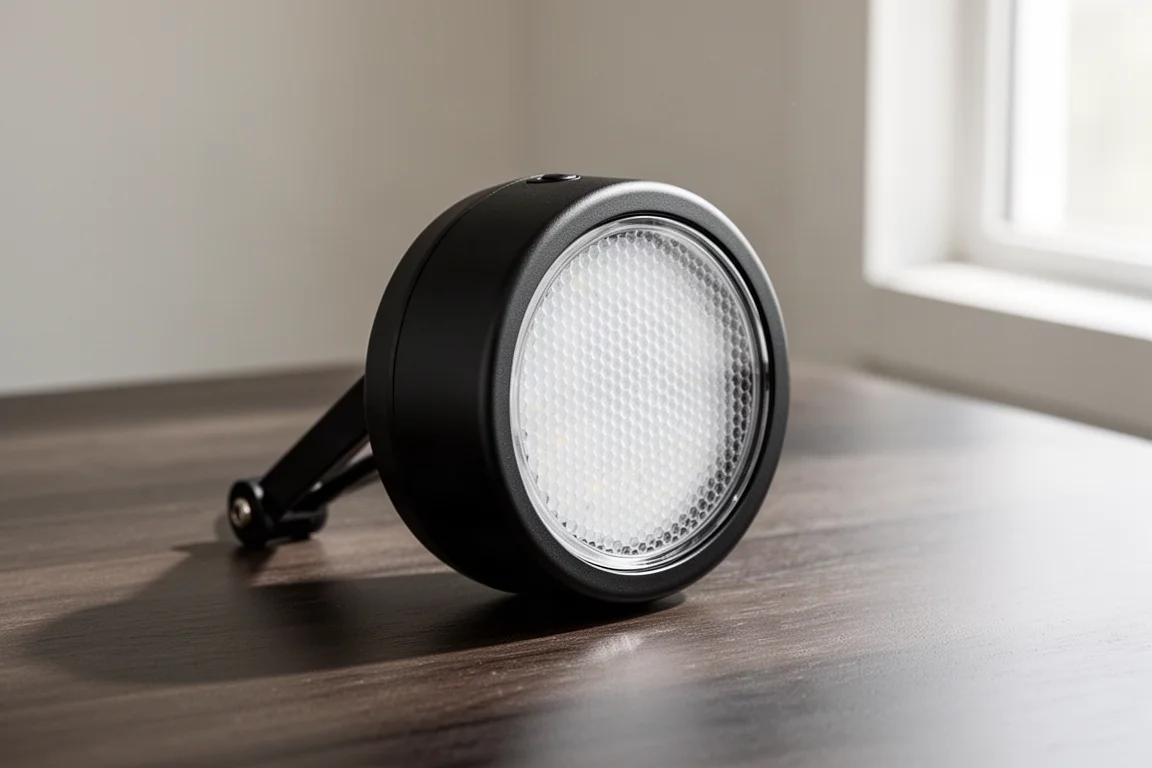
GHL Mitras
The GHL Mitras is one of the established modular pendants, designed to be spaced across the tank. As with other modules, spacing of 12 to 18 inches rather than 24 inches gives the most even coverage.
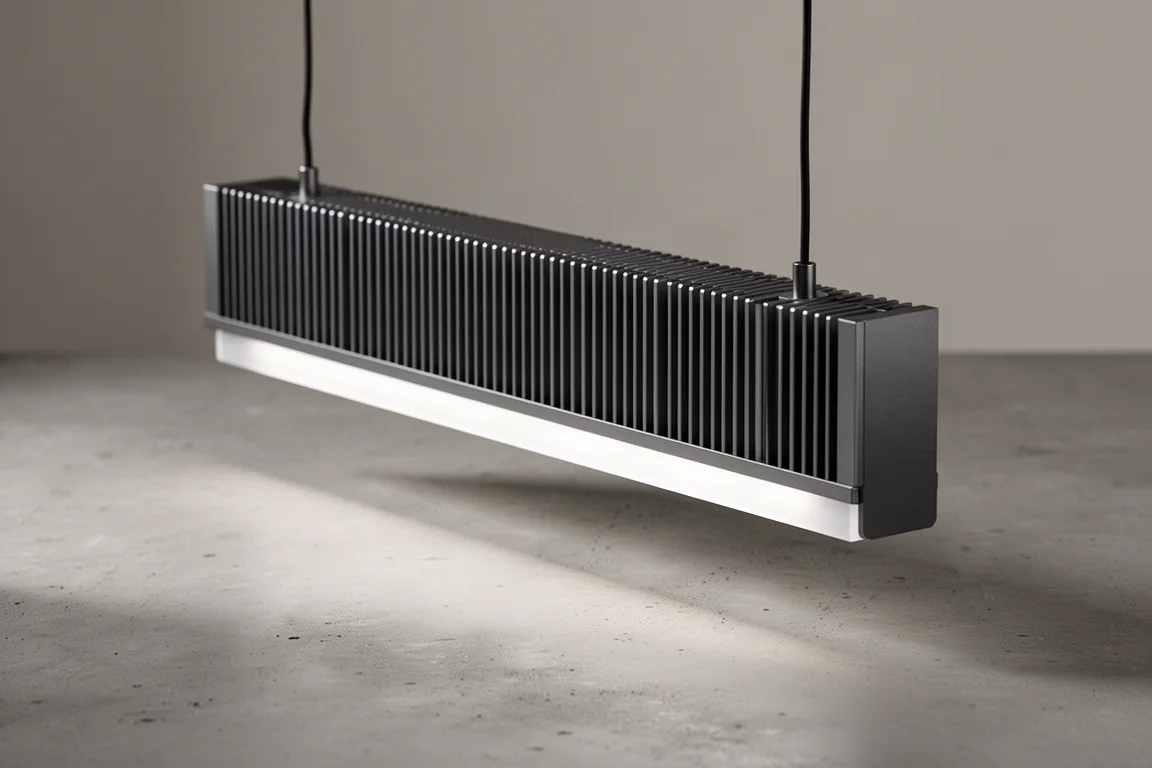
Large Panels and Fixtures: Fewer Units, Wider Coverage
Large panels are underused relative to how well they perform. These are wide light sources that wrap corals in light from a smaller number of units, which often works out cheaper because the same overall LED count and cost can cover the same area with fewer fixtures. That makes a spacing of one unit every 24 inches entirely reasonable.
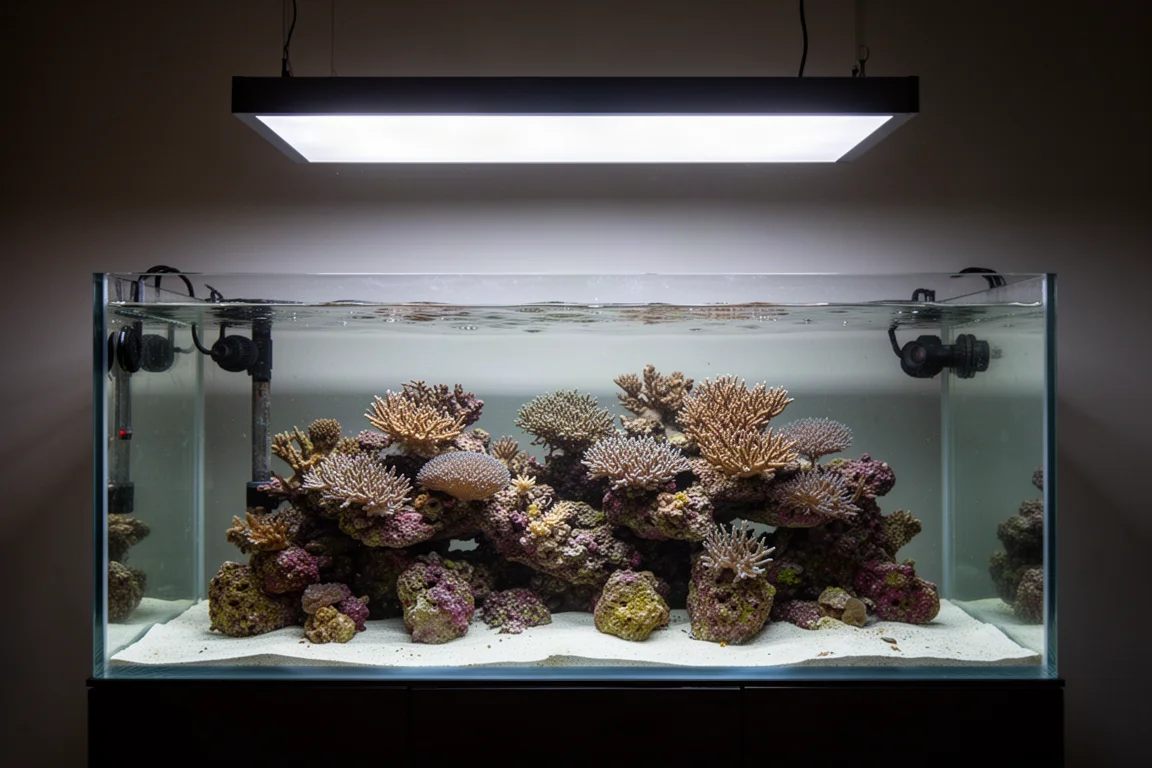
The friction is physical. Panels are large in a hobby that prizes small, and many are awkward to mount. Drilling into a ceiling and sourcing brackets are common requirements, and that alone is enough to put plenty of reefers off.
ATI Straton
The ATI Straton is a large panel that delivers end-to-end coverage from a single fixture, which keeps the top of the tank clean and removes the need to position several modules.

Philips Coral Care
The Philips Coral Care is a heavy panel, in the region of 20 plus pounds, and it does not come with a bracket. Mounting has to be planned from the start, and that single practical hurdle has kept a capable fixture from being more widely adopted.
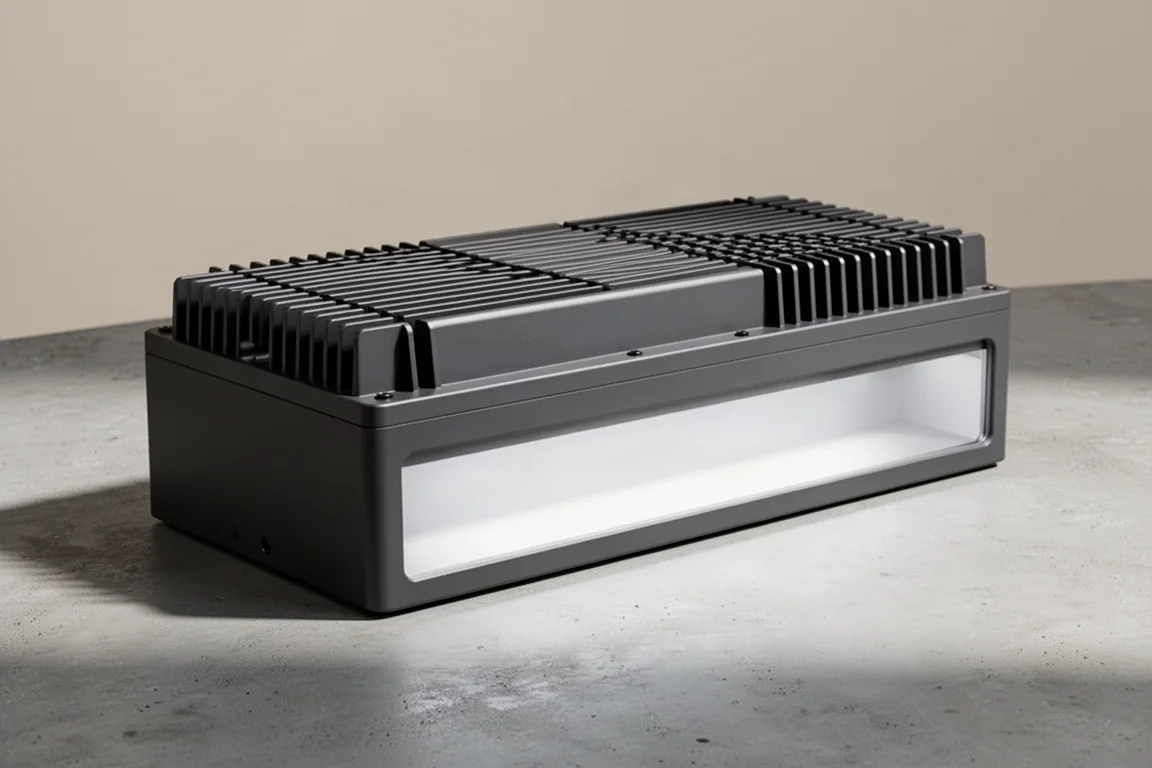
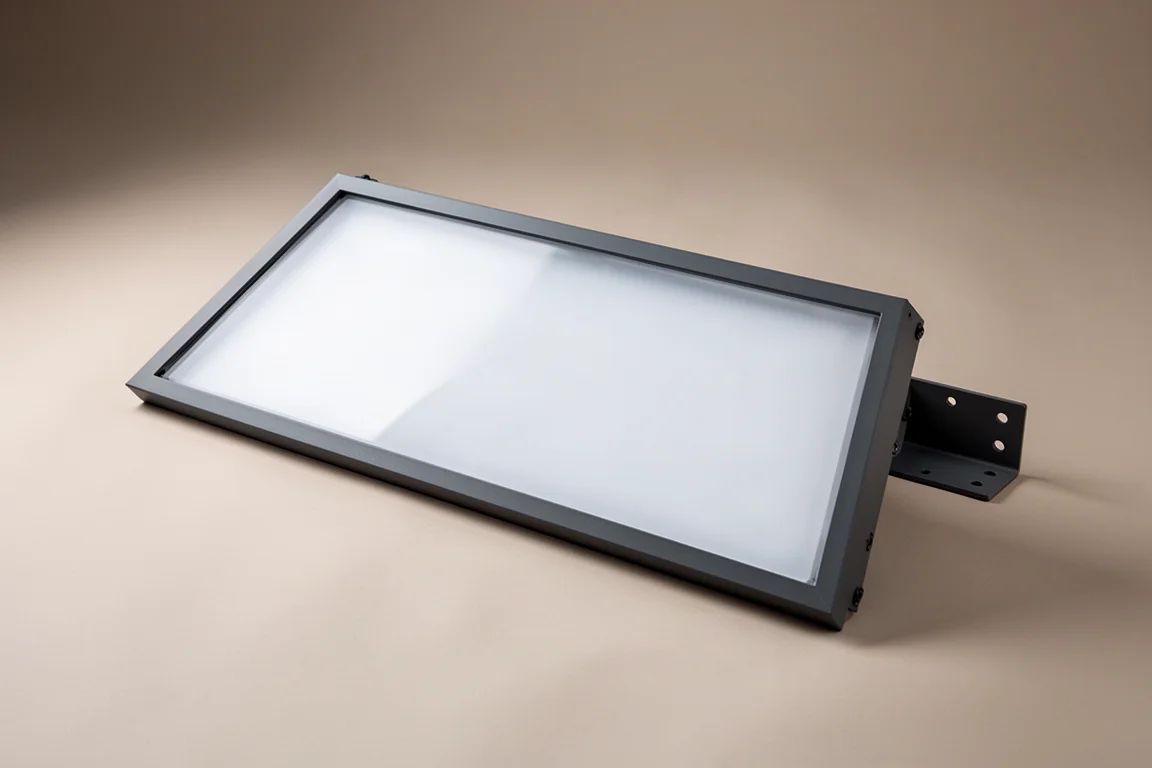
Neptune Sky
The Neptune Sky is a large panel that shares its bracket hole pattern with the Radion, so mounting kits already available for that fixture can be used. It also runs a diffuser, which mutes shimmer and produces a calmer, more evenly lit appearance. It typically sits in the higher-output group used on SPS-dominant tanks.
Light Bars and Modular Fixtures: Building One Big Light
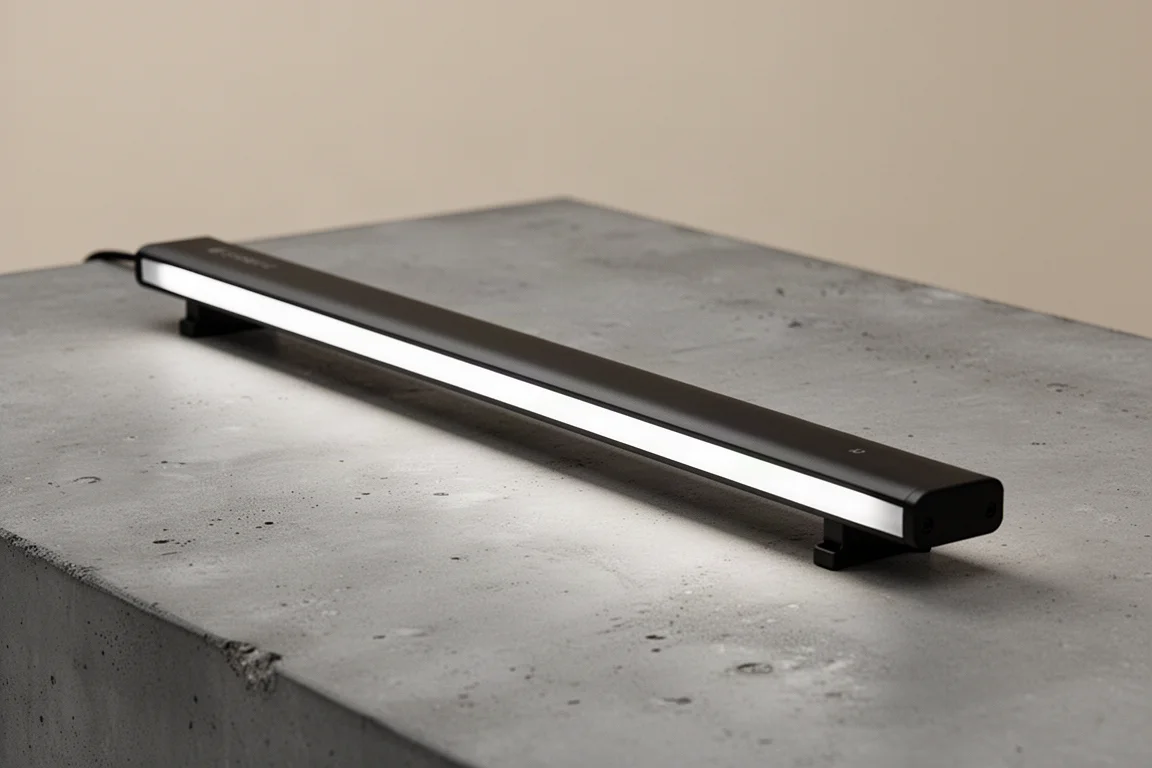
Light bars are combined to create one large fixture, and they solve the coverage problem with very little fuss. The AI Blade and Reef Brite XHO are among the most common, and their end-to-end coverage wraps corals in a blanket of light.
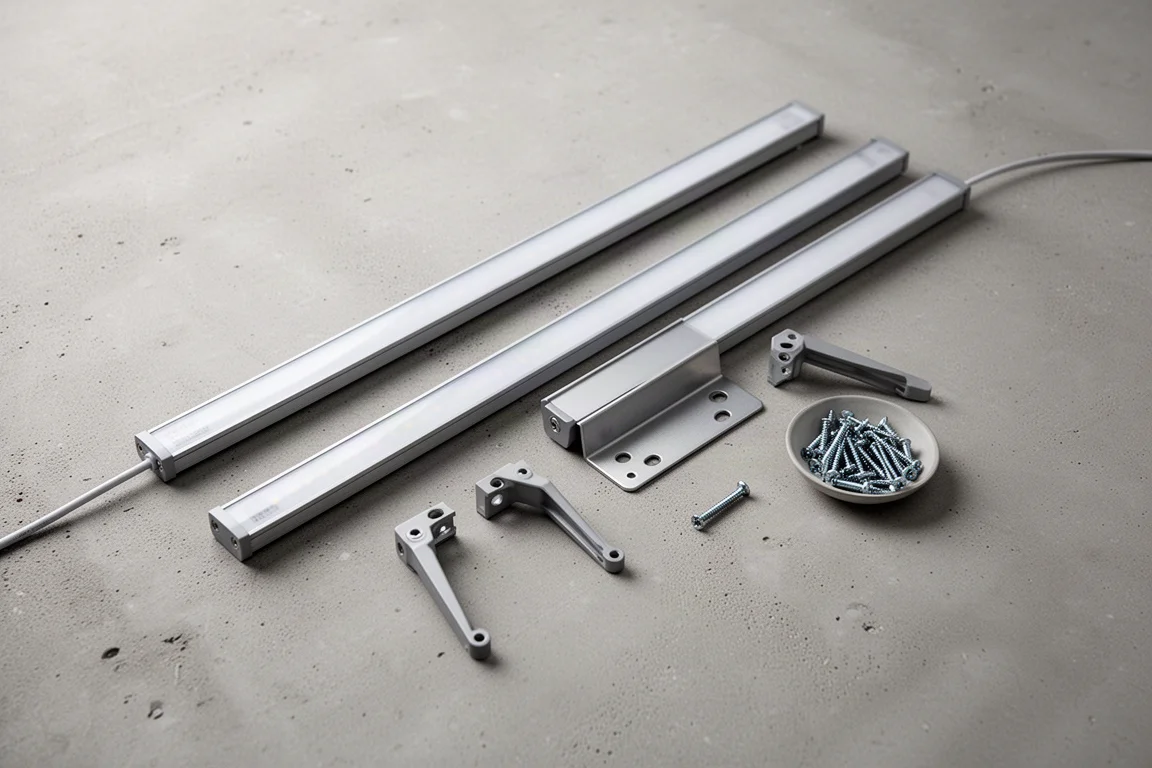
Mounting is about as simple as it gets. Some bars rest directly on the top edge of the glass, and optional legs raise them a few inches if you prefer. Four bars across a tank deliver the same effect as a single large fixture, which is essentially what a T5 fixture always was: a set of light strips in a frame.
AI Blade
The AI Blade mounts directly on the glass edge or on optional legs, and several bars combine to cover a tank end to end. The Glow and Grow variants are built to extend output into the violet and light blue regions, which makes them useful for widening a narrow spectrum rather than repeating it. Each bar houses LED pucks behind a diffusion pane, which produces shimmer while the acrylic lens acts as its own fill light. A Blade-only setup is a legitimate way to light a tank, and many people will like the shimmer it produces on its own.
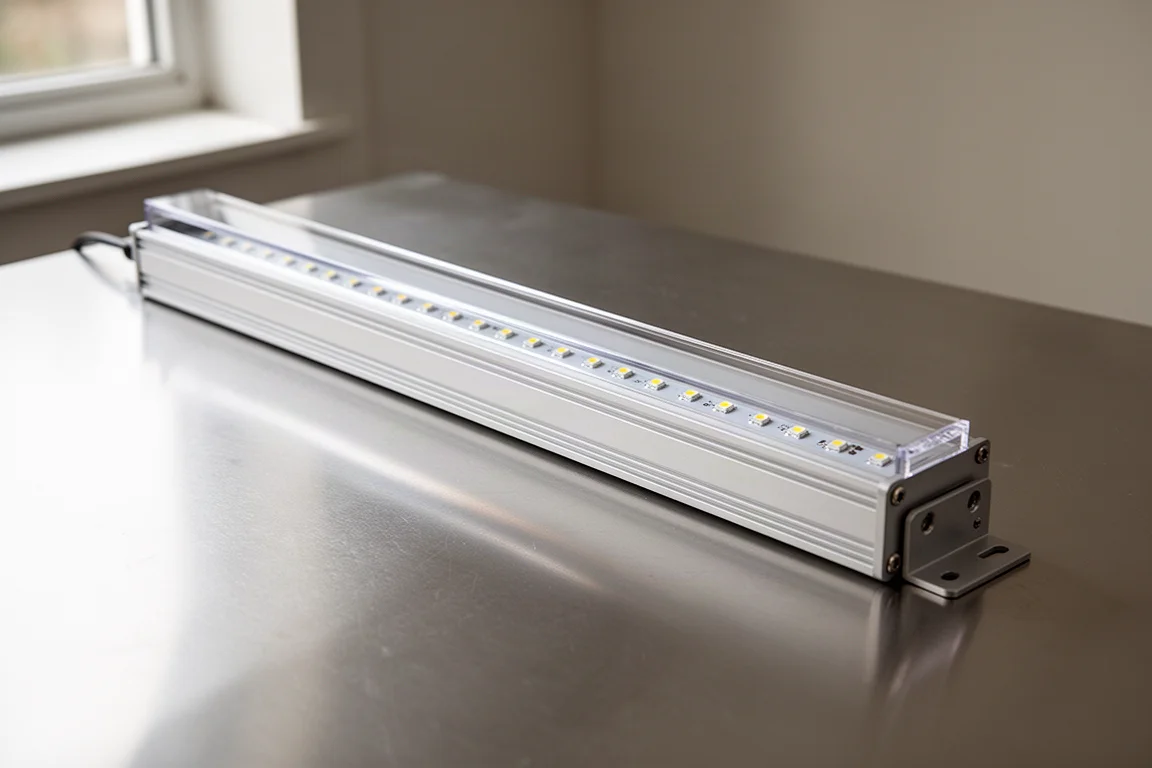
Reef Brite XHO
Reef Brite XHO strips can be bracketed together into a single end-to-end fixture. Builds that combine several strips produce coverage that holds up against much larger fixtures, which is an impressive result for a stack of slim bars.
Hybrid Three-Point Setups: Sun and Sky in One Tank
The hybrid approach uses a single point of light to emulate the sun, flanked by wide strip lights that emulate the blue sky filtering down around it. It is often cheaper than a full module layout, with better shadow reduction and more spread.
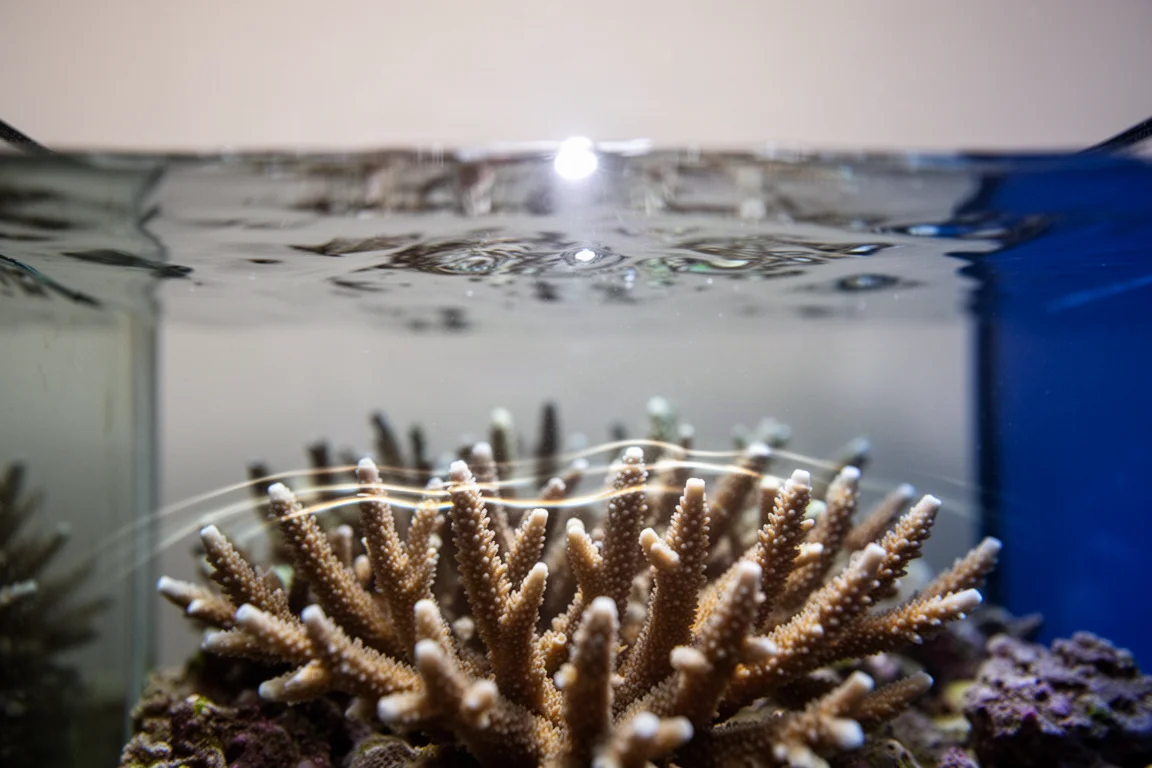
It is also the most flexible way to work with equipment you already own. If you already have a compact module, you can add strips on either side and bring the setup up to a modern standard instead of replacing everything.
Workable combinations include a Kessil pendant flanked by AI Blade strips, a Radion XR15 with Blades, or a Red Sea ReefLED with Blades. Kessil pendants paired with T5 banks have been used in the same way for years.
The visual payoff is the reason many reefers prefer it. A single tunable point of light creates the shimmer and movement you see when your face is in the water while snorkelling or diving, and the strip lighting softens it to taste. You can dial shimmer up or down by adjusting the balance between the point source and the fill.
Understanding Shimmer Before You Buy
Shimmer is not a detail you have to discover after the fact. Fixture design determines which of five looks you will get, and each one has a visible cause.
Disco shimmer scatters small patches of colour around the tank like a disco ball, with reds and greens flickering in random directions. It comes from narrow focus lenses on individual LEDs, where a beam reflects off surface ripples and throws colour across the tank. If a fixture shows small round lenses over each emitter, expect disco.
TV static resembles the fuzz of an analogue television signal, or small ants running across the tank. It appears when a fixture uses a very large number of low-power LEDs, each contributing a tiny point of movement.
Chaos shimmer comes from a single point source with no sky-like fill buffering it. Sharp lines and heavy movement dominate, and reactions to it are polarised.
No shimmer at all looks like a still image. Large banks of diffused light, or any fixture with a diffuser over the LEDs, produce this. The tank looks beautiful and settled, but the fish appear to float in a picture.
Perfect shimmer, for many reefers, comes from a compact point source flanked by strip fill. Shimmer is present, softened and adjustable.
The comparison people usually make is this: a tank with shimmer looks like a piece of the reef sitting behind you at home, while a tank without it looks like a photograph of one on the wall.
Buying Advice: Matching the Approach to Your Tank
Beginners do not need to overthink the first purchase. Simple fixtures such as the AI Prime are affordable, easy to set up and a fine starting point. If you later decide you want full coverage, adding Blade strips to the front and back of the tank solves it without replacing what you already own.
For everyone else, the fixture matters less than the reasoning. The examples in this guide are just examples. Take the principles, decide what you are trying to achieve, and pick the tool that fits that job.
If you want a single recommendation for the majority of tanks, a three-point hybrid is the most versatile: a Kessil, a Radion or a Red Sea ReefLED as the point source, flanked by AI Blade strips. For reefers who prefer one clean solution, a Blade-only arrangement also works well and brings its own shimmer along with the fill light it generates.
Spacing deserves the last word. Modular pendants perform best every 12 to 18 inches rather than 24. Large panels justify one unit every 24 inches. Hybrids combine both.
Conclusion
Reef lighting rewards planning. The right fixture can last longer than the tank around it, and correcting a poor choice later costs more than choosing well in the first place.
Match wattage to the corals you keep, check the spectrum before you buy, blanket the tank rather than spotlighting it, and pick an approach you can actually mount. Do that, and the light will do its job for years.
Further reading
Related Reviews
Reef Aquarium Lighting
Aqua Illumination Hydra HD vs Hydra Edge: Which Reef LED Fits Your Tank?
A practical comparison of the Aqua Illumination Hydra HD and Hydra Edge reef LED lines, covering form factor, optics, spectrum, control, and mounting.
Reef Aquarium Lighting
Best Reef Tank Lights 2026: How to Choose the Right Lighting for Your Tank
A practical guide to the four main reef lighting categories, with picks for wide angle flood lights, elevated fixtures, soft diffused light, and hybrid setups.
Reef Aquarium Lighting
Kessil AP9X Review: One Slim Fixture for Standard Rectangular Reef Tanks
A single-fixture reef LED built for standard rectangular aquariums, with rectangular light spread, built-in WiFi, and spectrum tuning that removes most of the guesswork.