Reef Aquarium Lighting
Aqua Illumination Hydra HD vs Hydra Edge: Which Reef LED Fits Your Tank?
A practical comparison of the Aqua Illumination Hydra HD and Hydra Edge reef LED lines, covering form factor, optics, spectrum, control, and mounting.
Introduction
The Aqua Illumination Hydra HD and Hydra Edge are both high-performance reef LED fixtures, and at first glance they have a great deal in common. They even sit in the same price bracket. What separates them is a set of practical design choices: form factor, LED count, optics, spectral approach, control layout, and mounting flexibility.
This guide walks through what the two lines share, how the four main fixtures differ, and which situations tend to favor each one.
Shared DNA: What the Hydra HD and Hydra Edge Have in Common
Both lines are aimed at growing the most light-demanding corals. They share identical power consumption, wide spectrums that cover blues and violets as well as daylight, and an app that allows granular control over spectrum, power distribution, intensity, and light schedule. Each fixture uses an actively cooled aluminum heat sink, works with the HMS aluminum rail mounting system, and has dedicated moonlighting built in. Freshwater versions are also available in the lineup.
Where they diverge is everything downstream of that shared foundation: the housing, the number of diodes, the lenses, the shape of the spectrum, and how much of it you can fine-tune channel by channel.
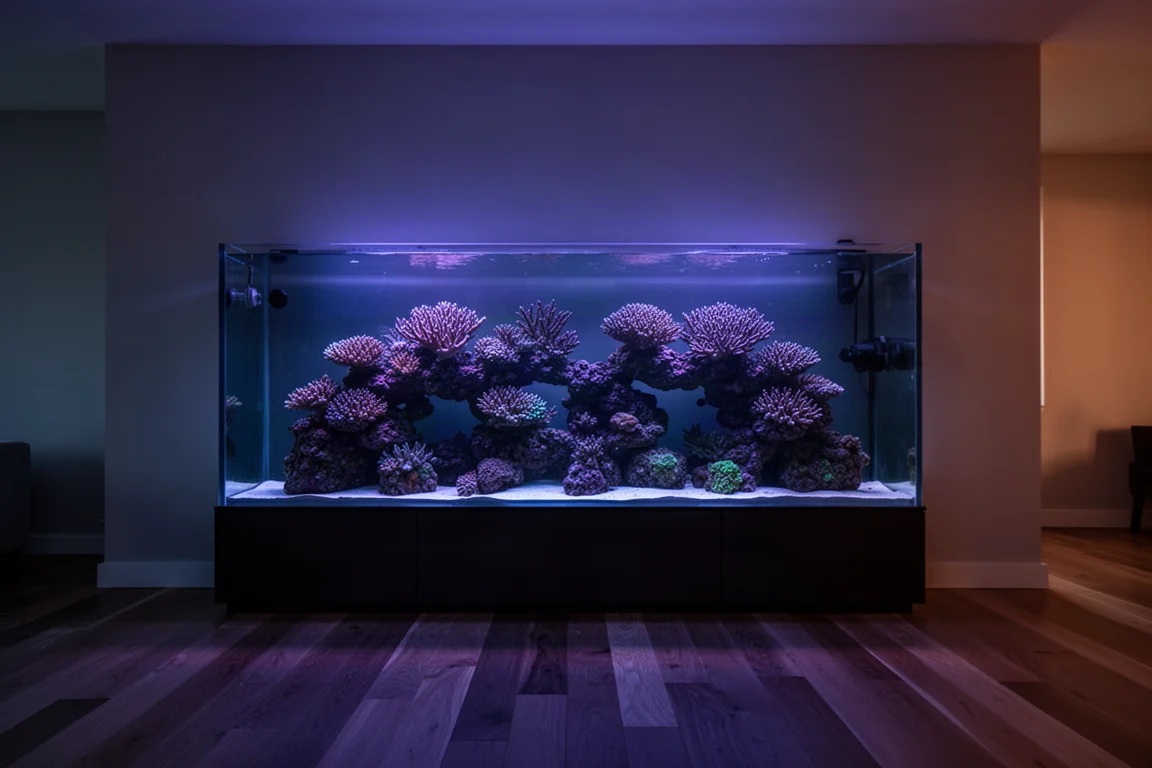
That shared foundation matters when you weigh the two lines against each other. Both are built to the same performance standard, so the decision usually comes down to the kind of spread and control you want over your own aquarium rather than one line trailing the other.
Hydra HD 32: Compact Multi-Puck With Tighter Optics
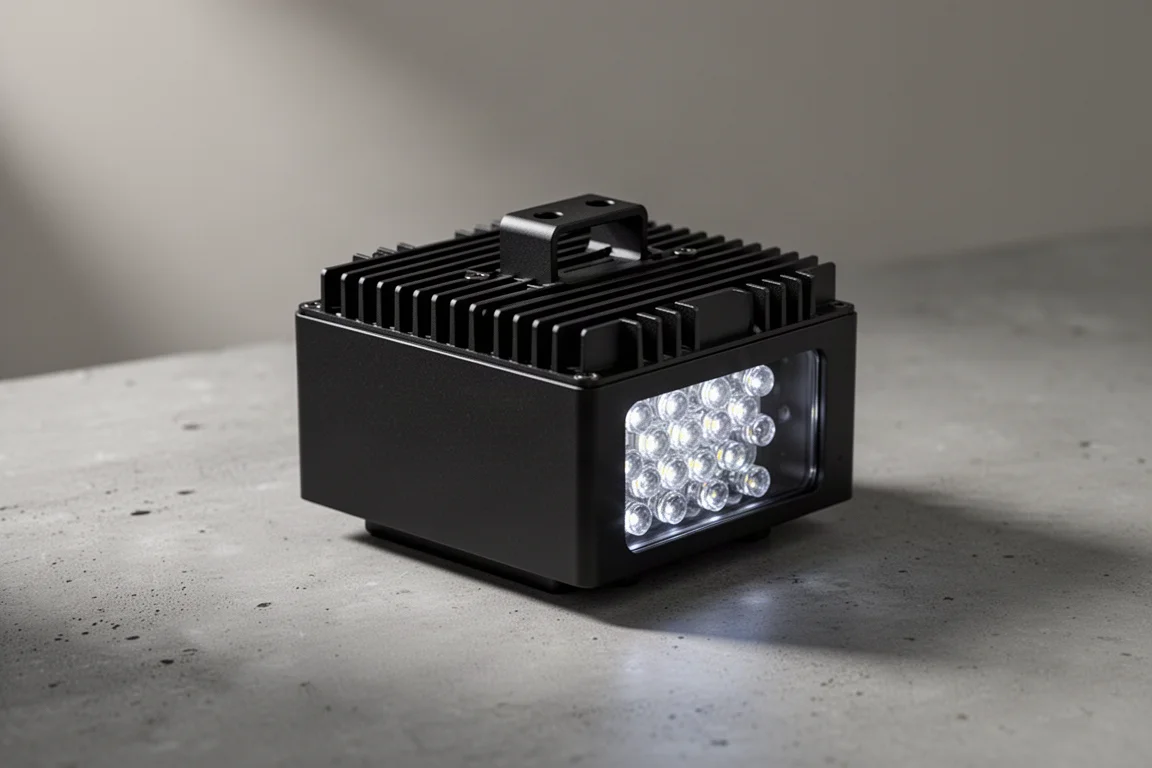
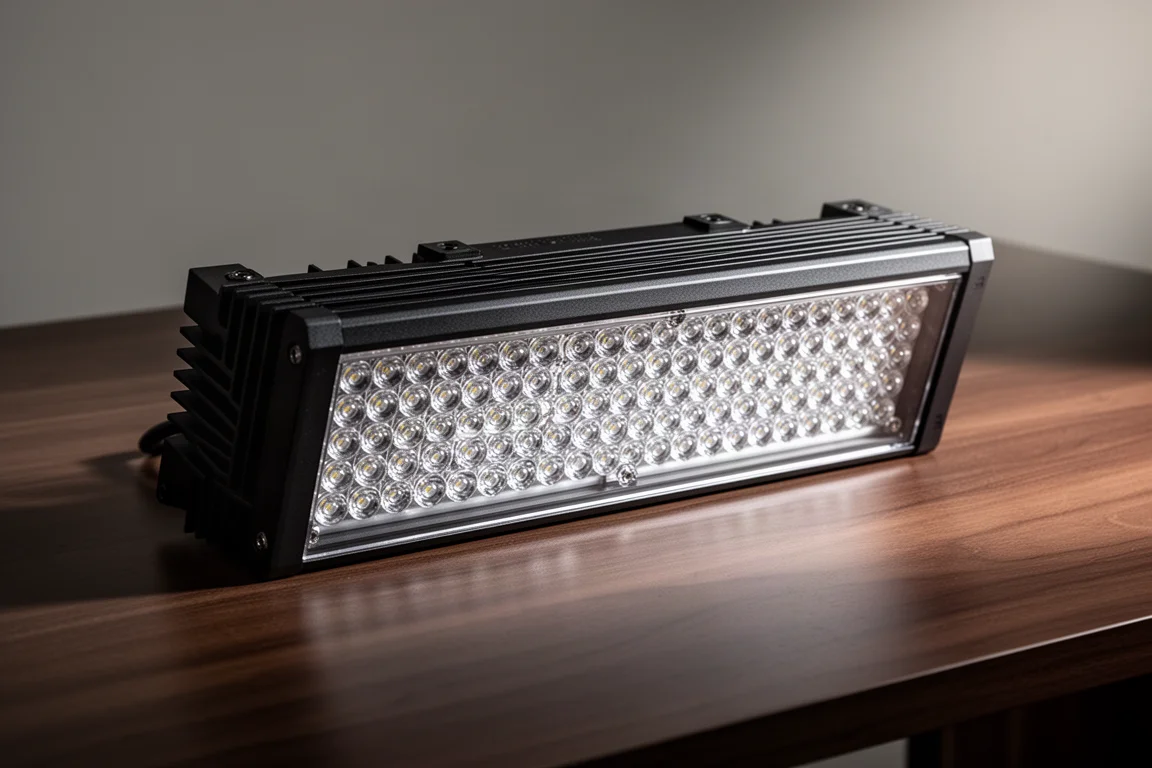
The Hydra HD line takes a multi-puck approach. The HD 32 packs 32 LEDs into a compact housing, with diode colors spanning blue, royal blue, violet, UV, cool white, green, and photo red. Dedicated moonlighting is included on top of that count.
Because there are seven diode colors, the HD offers seven channels of control, one for each color. Its 80-degree TIR lenses produce a tighter cone of light, which translates into higher PAR numbers directly below the fixture. A mounting height of around 12 inches off the water surface is recommended in order to achieve an even spread.
Hydra HD 64: More LEDs for Larger, Deeper Reefs
The Hydra HD 64 follows the same formula with 64 LEDs instead of 32, keeping the same diode mix, the seven channels of control, and the 80-degree TIR optics.
That combination is most useful when you want more intensity under the fixture. The tighter optics help push light toward the bottom of aquariums over 24 inches tall, and they make it easier to create dramatic high and low PAR zones for coral placement in a mixed reef. It also suits setups where you would rather keep the fixture higher off the surface of the water.
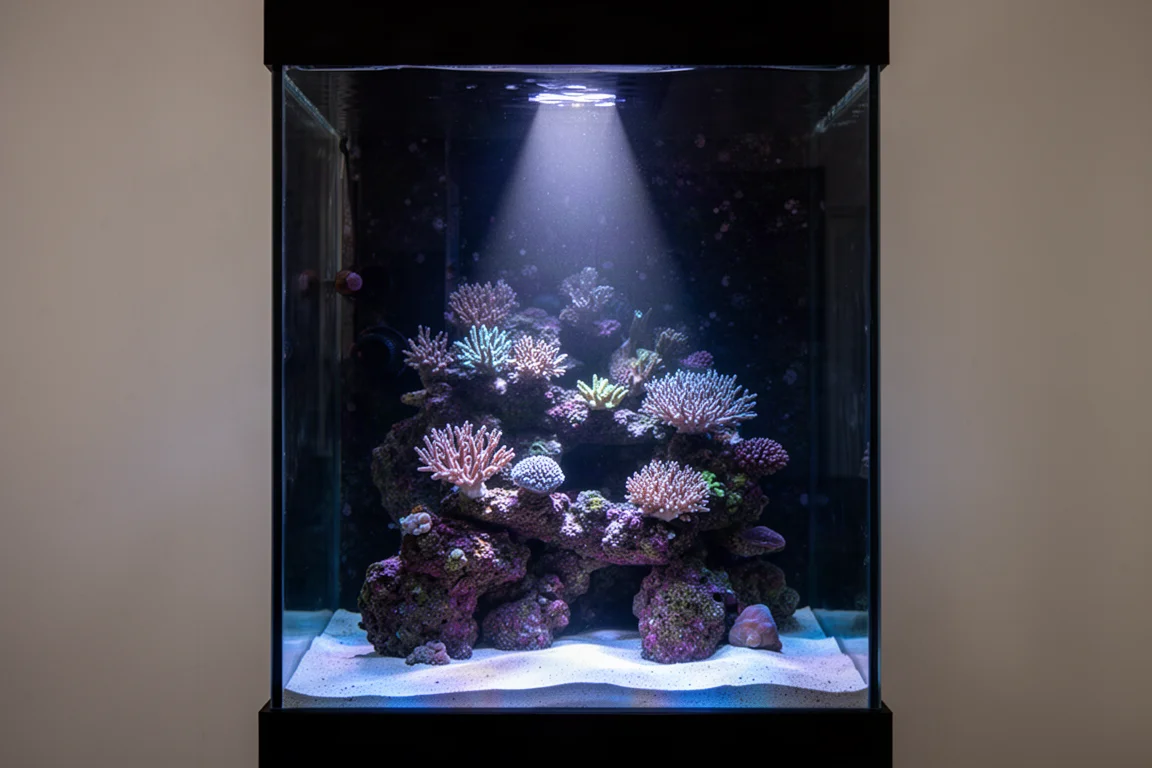
For a wide aquarium, the practical trade-off is coverage. A tighter cone keeps the brightest area centered under each fixture, so planning the number of units and their spacing matters as much as the LED count itself.
Hydra Edge 44: Wide, Even Coverage From a Slim Panel
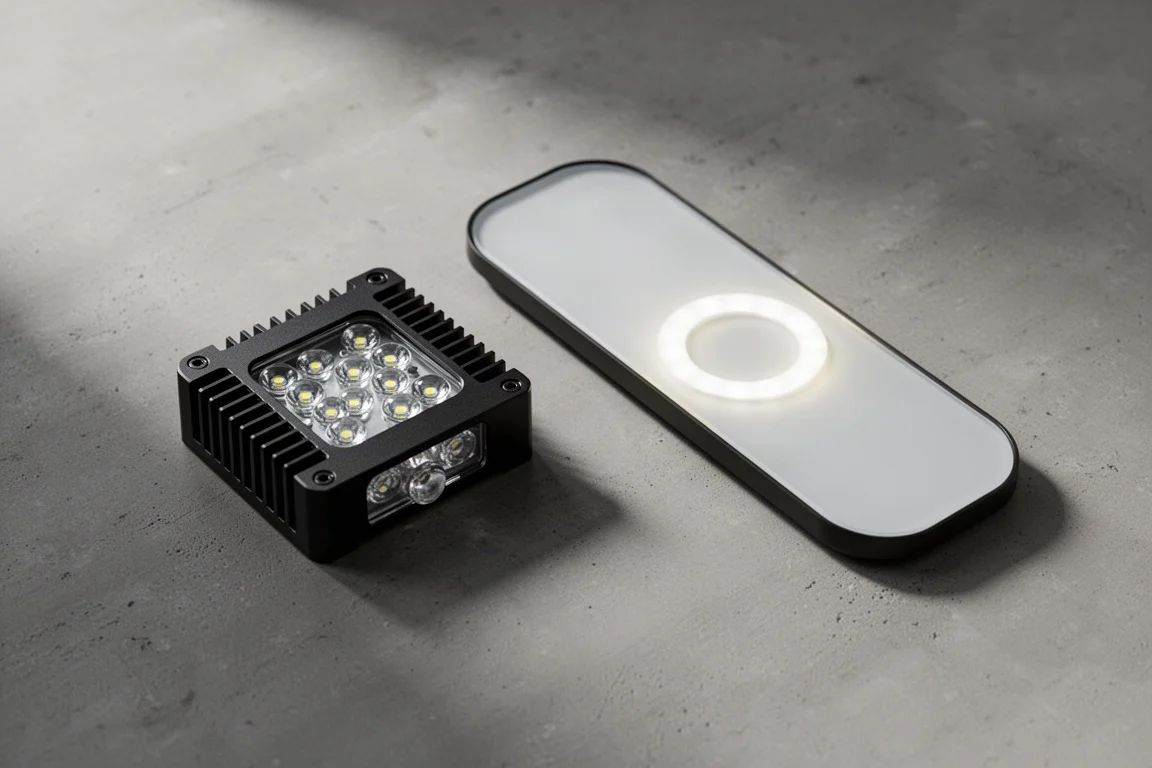
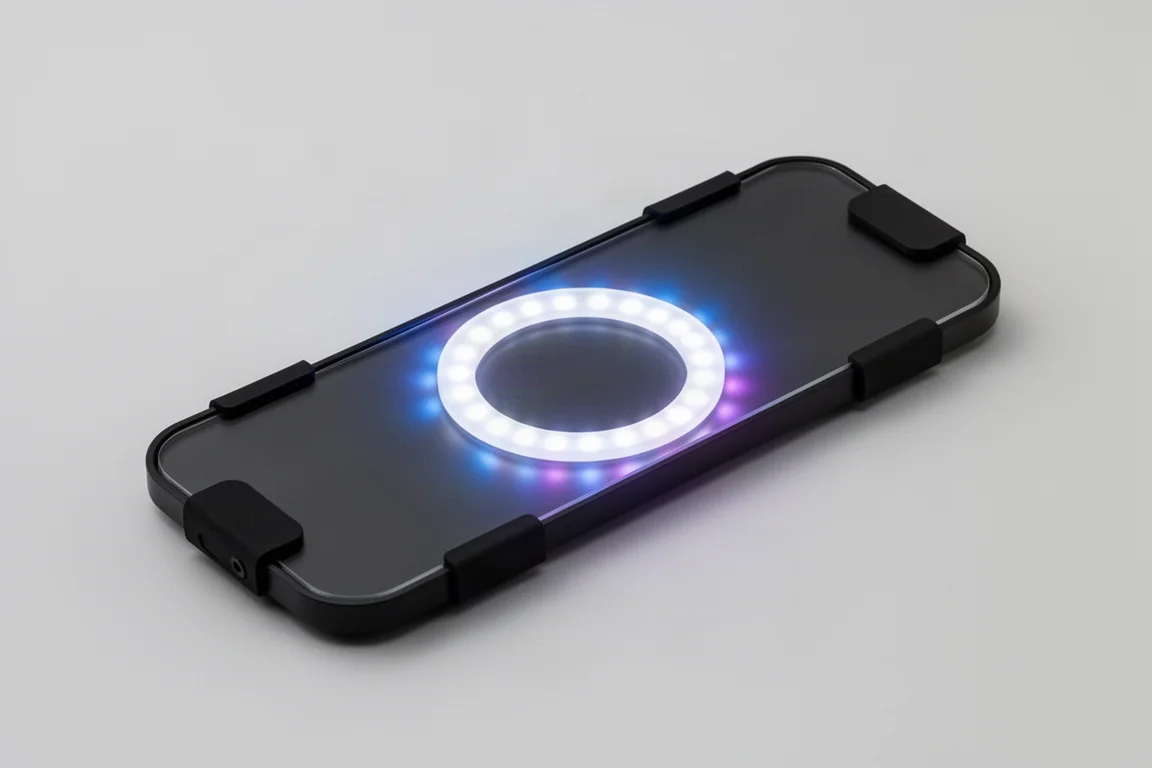
The Hydra Edge takes a different physical route. It is a mini panel, longer and wider than the HD pucks and thinner as a result, with a rounded profile and rubber covers over all of the hardware for a more refined look.
The Edge 44 carries 44 LEDs plus dedicated moonlighting, and it introduces the Solar Blue spectrum. Instead of color channels with strong single wavelength peaks, Solar Blue spreads energy more evenly across the blue and violet range, covering blue, royal blue, violet, multiple near UV wavelengths, and UV, balanced with both cool and warm white LEDs. That works out to eight diode colors organized into five channels of control, with the near UV and UV diodes grouped into a single balanced channel.
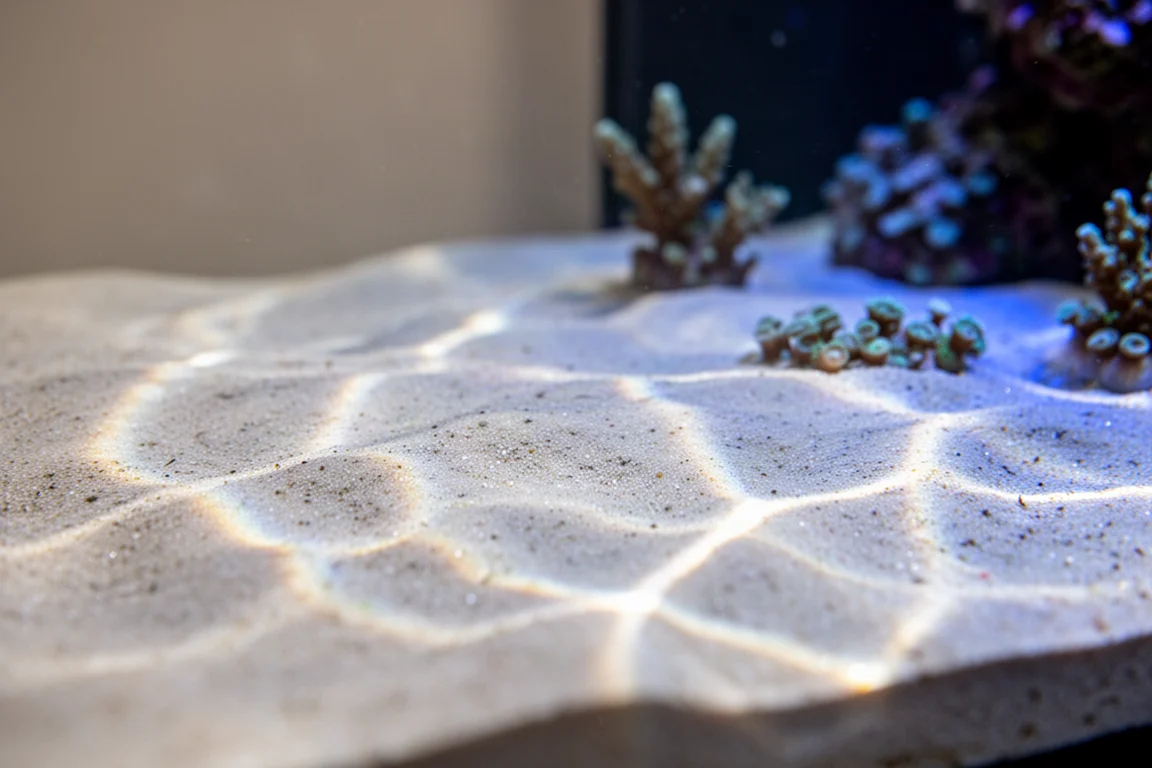
Cool and warm white diodes sit at the center of the fixture as part of what Aqua Illumination calls the Solar Ring, behind an optic that makes them the main source of caustics or shimmer. The result is larger, more cohesive shimmer lines, and the white channel controls both how much white is in the spectrum and how much shimmer appears in the tank.
Optics are the other major difference. The Edge uses 100-degree Edge Field optics, a noticeably wider design than the TIR lenses on the HD, which spreads light more evenly over a larger area, reduces hard shadows, and produces a flatter PAR distribution. It also blends the separate LED colors together better, which means less visual color separation. The recommended mounting height for the Edge is 7 to 9 inches off the water surface.
Hydra Edge 68: The Largest Edge Panel With Solar Blue
The Hydra Edge 68 scales the same panel design up to 68 LEDs plus dedicated moonlighting. It keeps the Solar Blue spectrum, the five channels of control, the Solar Ring white diodes, and the 100-degree Edge Field optics.
For larger aquariums, that means the same wide, even field of light with better color blending, in a fixture that covers more area than the 44. The 44 and the 68 are the two options to compare when even distribution matters more to you than a tighter, more intense cone.
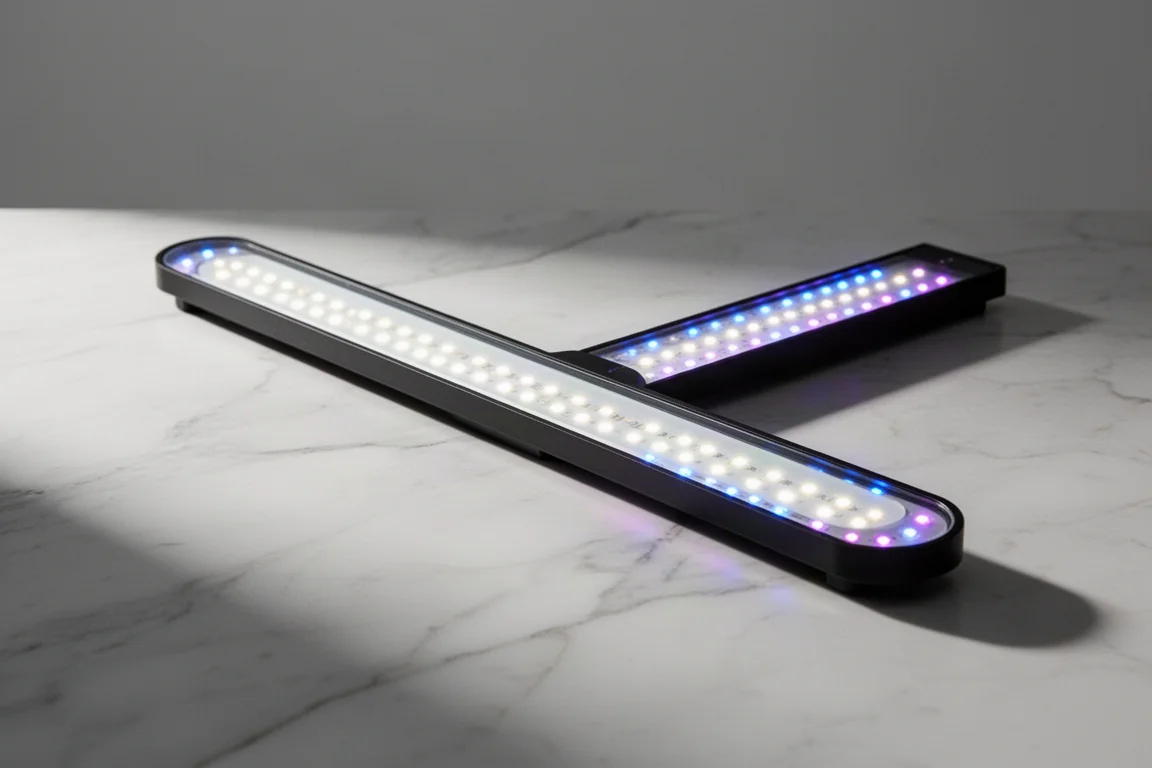
Both Edge models also differ from the HD in how they attach to a mounting system. Their attachment points sit on the ends of the fixture rather than on the top, which makes them uniquely capable of tilting to angle light toward specific areas of the aquarium.
Mounting and Control Flexibility Across the Range
Both lines are compatible with the HMS aluminum rail mounting system, and there is a wide range of options available, from single and dual arm setups to hanging kits. That breadth matters, because the two lines ask for different mounting heights: roughly 12 inches for the Hydra HD to achieve a comparably even spread, and 7 to 9 inches for the Edge.
Control is where the two philosophies meet. The HD gives you one slider per diode color across seven channels, including individual green and red wavelengths. The Edge consolidates the near UV and UV diodes into a single balanced channel for five channels in total, but adds control over the white Solar Ring, which shapes both the daylight content of the spectrum and the intensity of shimmer in the reef.
Buying Advice: Which Hydra Suits Your Reef
The Hydra HD line tends to be the better fit if you want more granular control, including separate green and red wavelengths, or if you need tighter optics to penetrate to the bottom of aquariums over 24 inches tall. It also suits mixed reefs where you want more dramatic high and low PAR zones for coral placement, or setups where you would rather keep the fixture higher off the surface of the water.
The Hydra Edge line tends to win out if you want a wider representation and a more even distribution of the blue and violet end of the spectrum, a flat and even spread of light across the aquarium, and better color blending with the ability to dial in the amount of caustics or shimmer. The tilting capability and the refined slider set are further reasons to choose the Edge if you like to tune the spectrum to your taste.
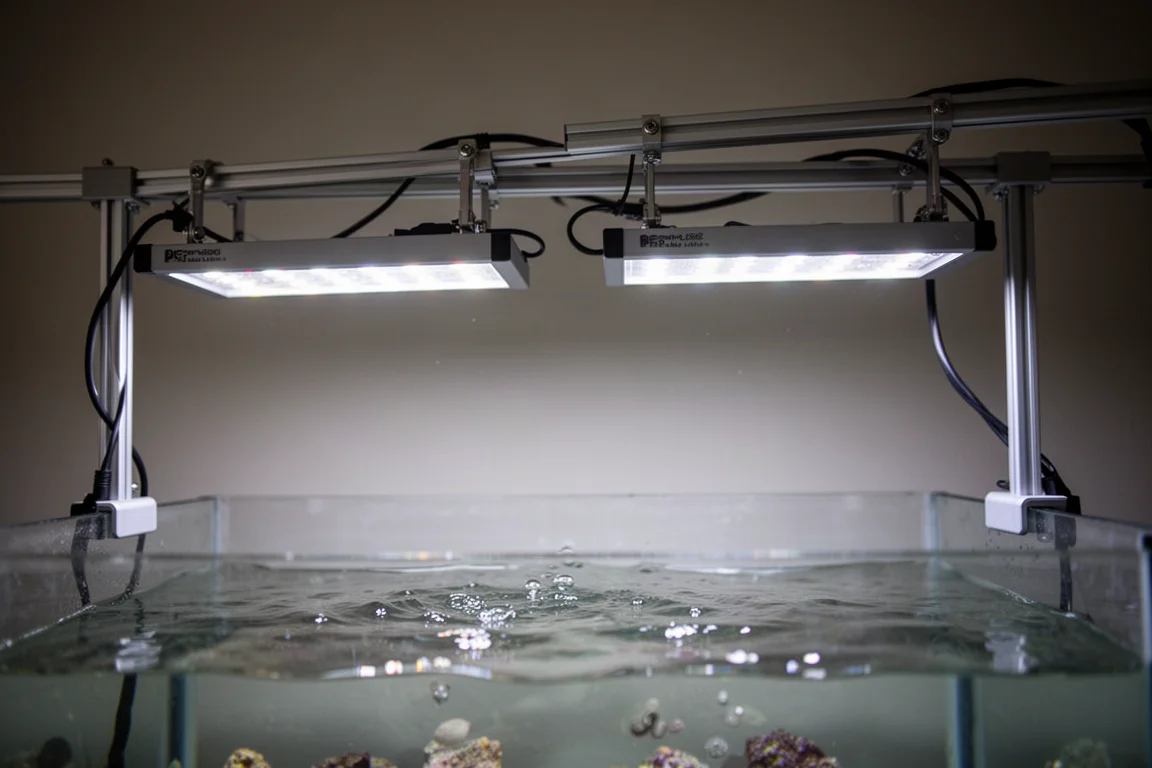
Neither line is a compromise on output. The choice is really about the shape of the light and the degree of control you want over it, so match the fixture to the depth, dimensions, and coral mix of your tank rather than to the model number alone.
Conclusion
The Hydra HD 32 and Hydra HD 64 remain powerhouse LED fixtures, and many reef keepers rely on them for growing impressive reef systems. The Hydra Edge 44 and Hydra Edge 68 take the same foundation a step further, aligning the lineup with the features and performance that modern reef keepers look for: wider and more even coverage, stronger color blending, dialable shimmer, and the ability to tilt the fixture where it is needed.
If you know your aquarium’s depth and how you want the light distributed across it, the decision between the two lines is usually straightforward.
Further reading
Related Reviews
Reef Aquarium Lighting
Best Reef Tank Lights 2026: How to Choose the Right Lighting for Your Tank
A practical guide to the four main reef lighting categories, with picks for wide angle flood lights, elevated fixtures, soft diffused light, and hybrid setups.
Reef Aquarium Lighting
How to Choose Reef Tank Lighting: Wattage, Spectrum, and Fixture Styles
A practical reef lighting guide covering wattage targets, spectrum, fixture size, four mounting approaches, and the shimmer you can expect before you buy.
Reef Aquarium Lighting
Kessil AP9X Review: One Slim Fixture for Standard Rectangular Reef Tanks
A single-fixture reef LED built for standard rectangular aquariums, with rectangular light spread, built-in WiFi, and spectrum tuning that removes most of the guesswork.