Reef Aquarium Lighting
Best Reef Tank Lights 2026: How to Choose the Right Lighting for Your Tank
A practical guide to the four main reef lighting categories, with picks for wide angle flood lights, elevated fixtures, soft diffused light, and hybrid setups.
Introduction
Reef tank lighting is not one product category so much as four, and each one solves a different problem. A fixture that produces a dramatic, high contrast look over a small tank can be the wrong tool entirely in a tall hood, while a light that blankets a tank in soft, even coverage can leave the water looking flat compared with what many reefers expect.
The goal is to match the light to the job before spending money. That means understanding the four main lighting approaches, then weighing the details that decide whether a fixture actually works in your setup: wattage, mounting height, shimmer, and how much control you genuinely want.
The Four Lighting Categories at a Glance
Almost every reef light on the market falls into one of four groups.
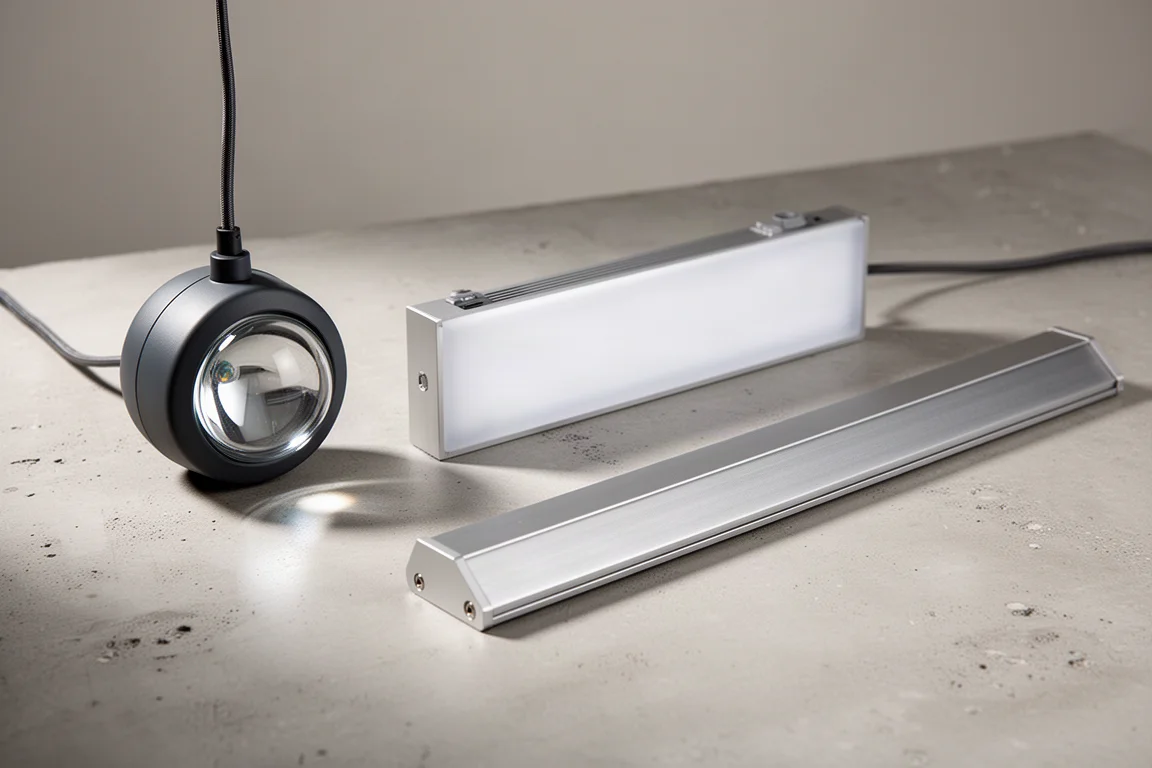
Wide angle flood lights use a broad lens, often around 160 degrees, to throw light across a large area from a low mounting height. Elevated fixtures use narrower optics, typically 90 degrees or even 55 degrees, and are designed to hang higher above the water. Soft diffused lighting spreads a large, even sheet of light over the tank, usually from T5 tubes, LED strips in the same long form factor, or a panel. Hybrid lighting combines two of those approaches, most commonly a wide angle flood light with a fill light.
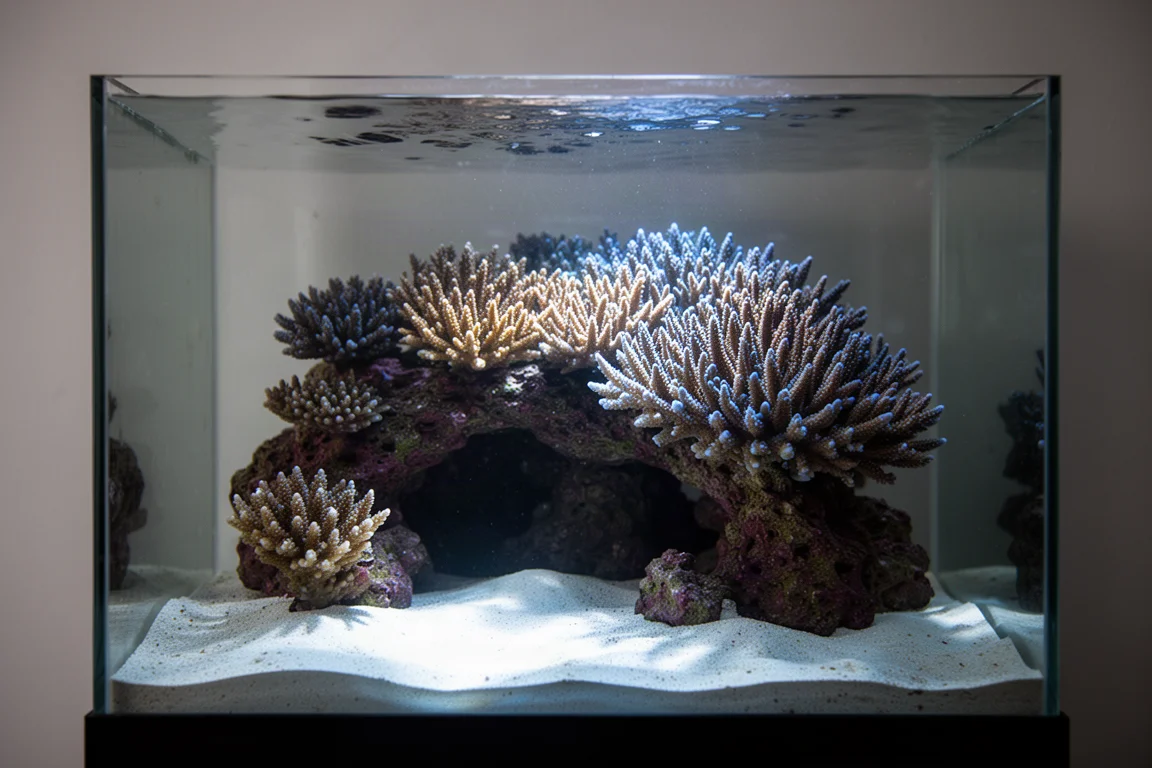
The category matters more than any single specification, because it determines the mounting height a light is optimised for, the character of the light in the tank, and which corals it suits. Wattage, mounting hardware, shimmer and control come next.
Wide Angle Flood Lights: Compact, Wide and Contrasty
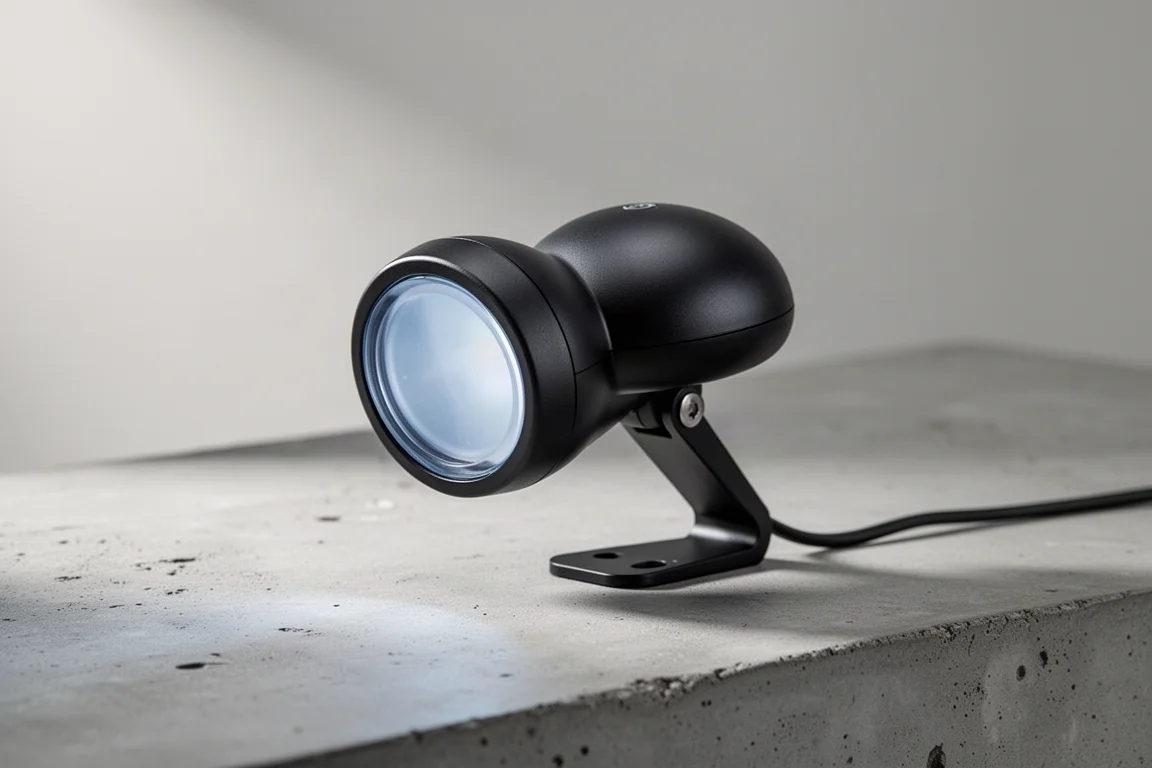
These are the small, single-lens fixtures that flood a wide area with light from close to the water. Because the lens spreads light so aggressively, they work best at roughly 8 to 9 inches above the surface, where a single unit can cover close to a 24 by 24 inch area with fairly even edge-to-edge coverage.
The visual signature is contrast. The small light source is blocked by rockwork and aquascape, so caves and shadowed areas stay dark instead of being washed out by a blanket of light. That contrast reads as depth and makes a tank more visually interesting.
This category suits encrusting corals that grow across rockwork, zoanthid gardens that spread outward, and corals such as euphyllia that sway rather than needing intense light aimed straight down at one point. Mounting several units together is another advantage: where the beams intersect, they behave like one larger fixture. The small form factor also makes them simple to mount on an arm over the tank, without hanging anything from a ceiling.
Kessil A360
A compact wide angle flood light built around a single domed lens. It delivers the contrast-heavy look this category is known for, covers a wide area from a low mounting height, and can be combined with additional units for larger tanks.
EcoTech Radion XR15
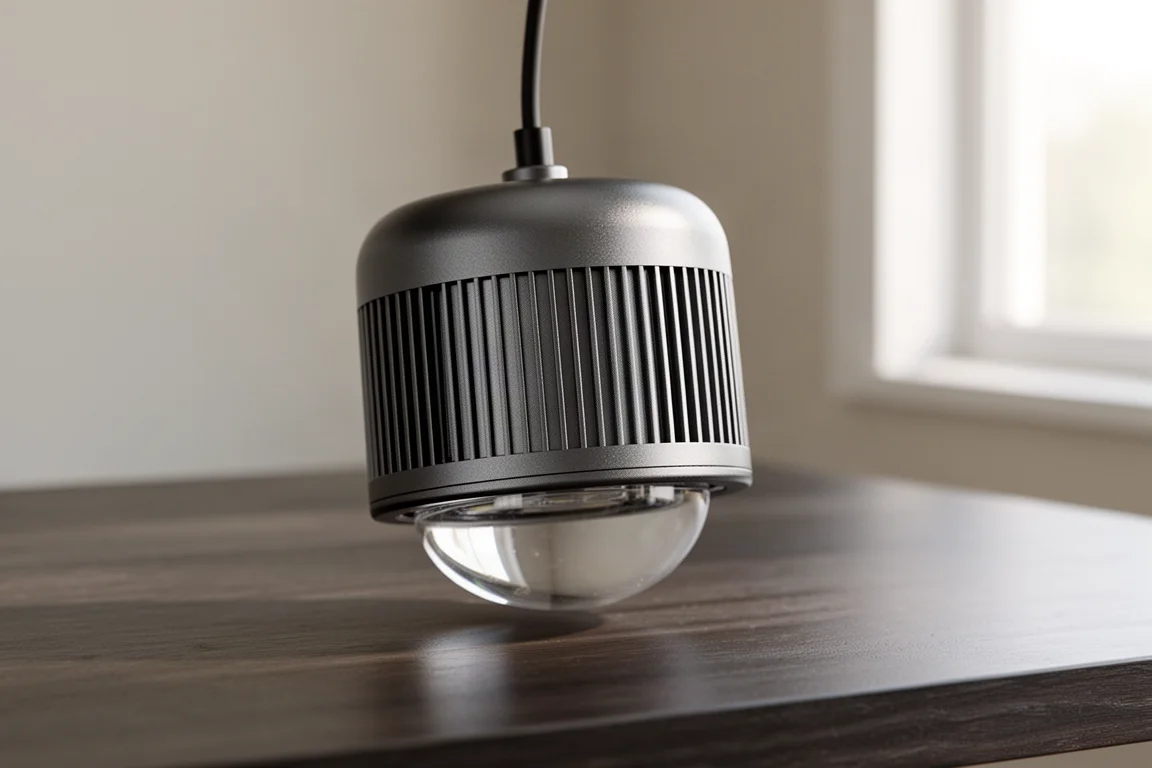
A 90-watt-class fixture that fills the same flood-light role with a softer, frosted output. The diffuser mutes the hard shimmer lines you get from bare LEDs while still spreading light widely. It also has one of the more complete mounting systems available, with an arm that spans the tank plus a version that comes over the back.
Elevated Lighting: Higher Mounts, Narrower Optics
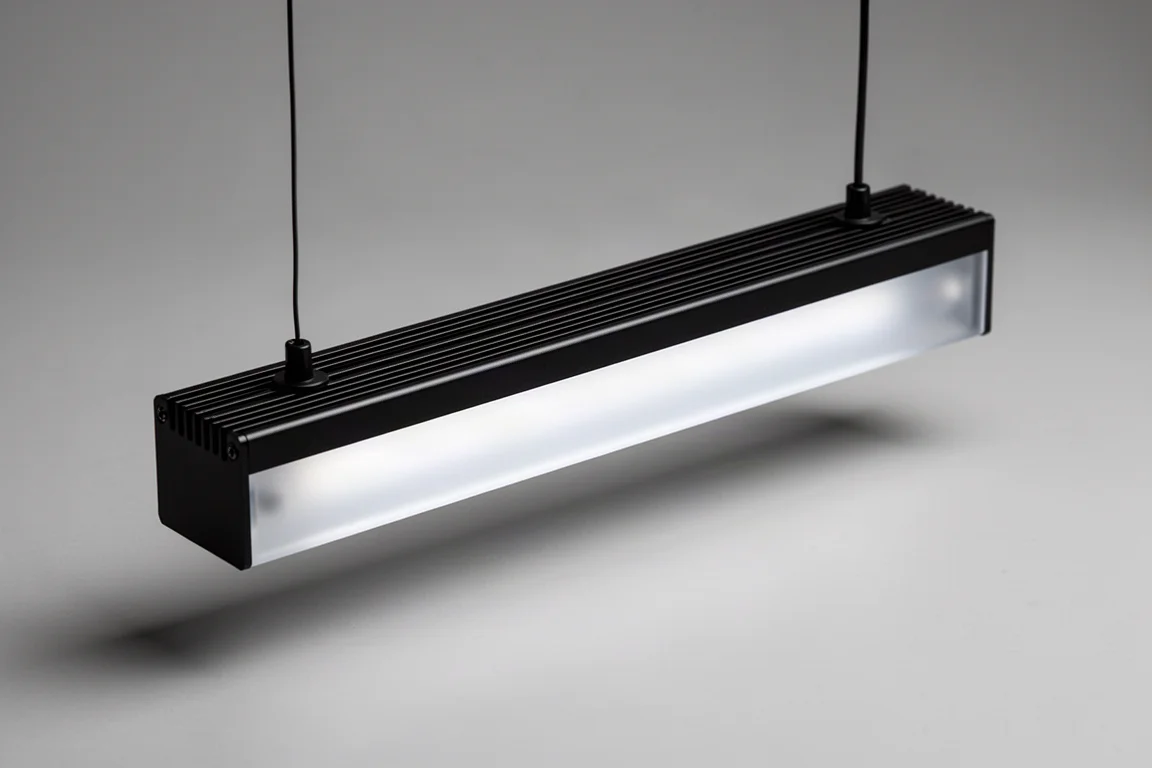
Elevated fixtures do almost the same job as flood lights, but with narrower optics. A 90 degree or 55 degree lens does not spread light as far, so the fixture has to be mounted higher, typically around 12 to 14 inches, to cover the same footprint. Some designs are intended to sit even higher, in the 16 to 18 inch range.
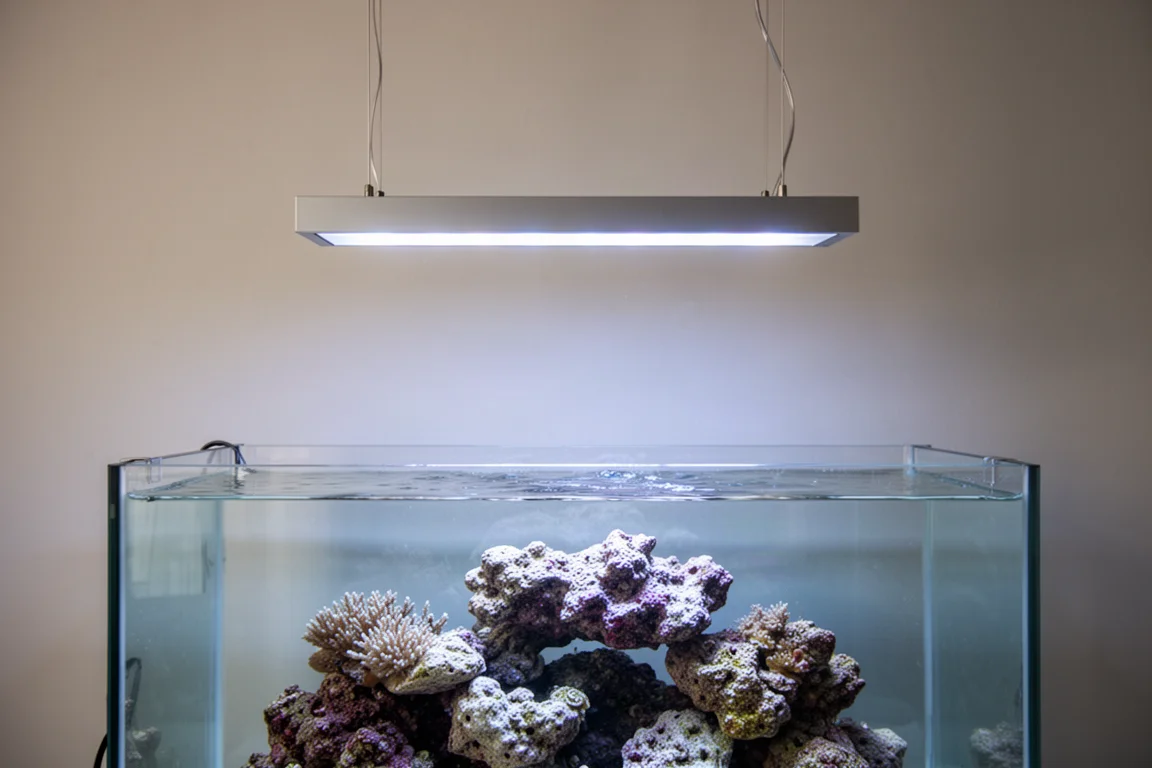
The payoff is access. With a fixture hanging well above the water, the top of the tank stays clear and maintenance does not require moving anything out of the way. This category also flexes in the other direction: lowering a fixture below its recommended height concentrates the beam and pushes light deeper into a tall tank. The trade-off is less spread and a real risk of a hotspot directly under the light, which is why a narrow beam is best reserved for tanks that genuinely need depth penetration.
AquaIllumination Hydra 32
A roughly 90-watt elevated fixture designed around a 12 to 14 inch mounting height. On its own it can carry a 24 by 24 inch cube, and because it sits higher than a flood light, it keeps the top of the tank clear.
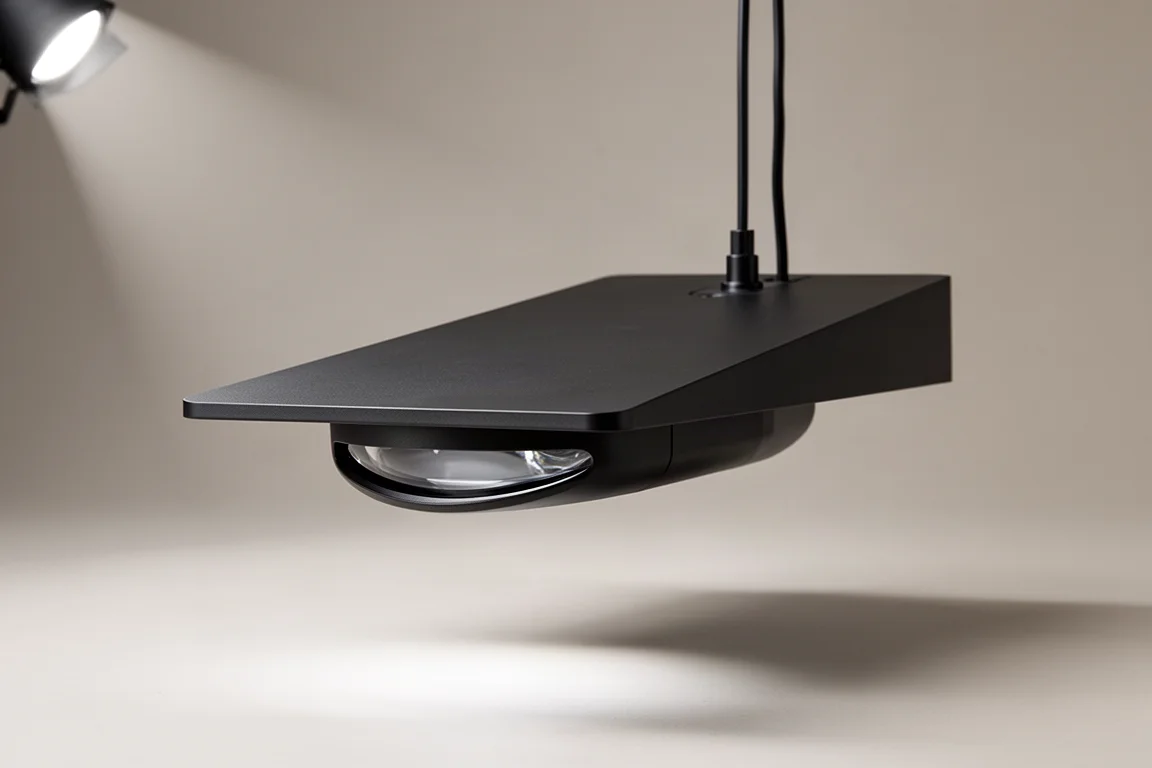
AquaIllumination Hydra 64
The higher output option in the same family, aimed at reefers who want punch from a small number of fixtures. It suits a deep tank or a mixed reef where a couple of cords is more appealing than a broad grid, even if some shadowing comes with that choice.
Soft Diffused Lighting: Blanketing Corals in Light
Soft diffused lighting has nothing to do with a diffuser disc on a small pendant. The defining rule is that the light source is larger than the object being illuminated. Since the object is the coral and aquascape rather than the whole aquarium, a fixture wider than the colonies it covers will wrap them in light and remove the shadows that cause problems as corals grow.
That matters most for branching SPS colonies. A small frag is fine under almost anything, but once a colony grows, it starts shading its own inner branches and its neighbours. Soft, even light arriving from many angles keeps those shaded sections productive. This is the category behind wall-to-wall SPS tanks.
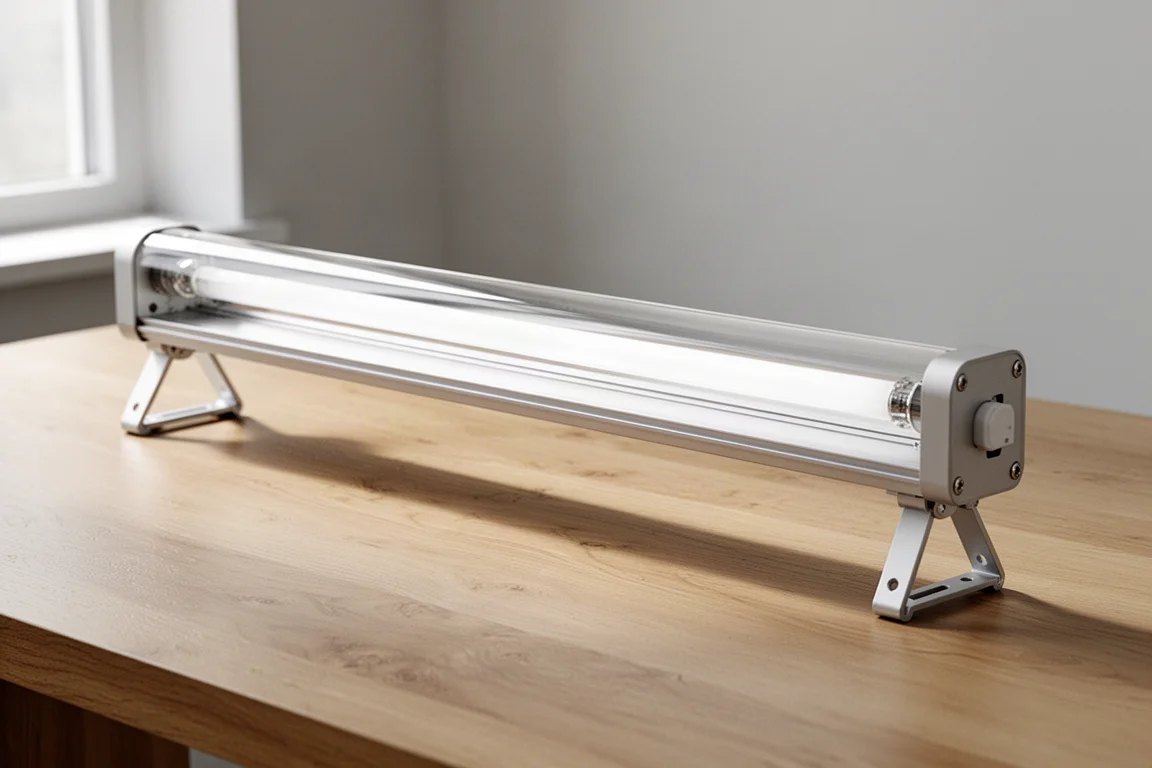
T5 banks have done this for years, and LED strips in the same long, narrow form factor are now just as viable. In side-by-side comparisons, LED strips have matched and in some cases outperformed T5 tubes on light distribution, while adding shimmer and a degree of dimming that tubes cannot offer.
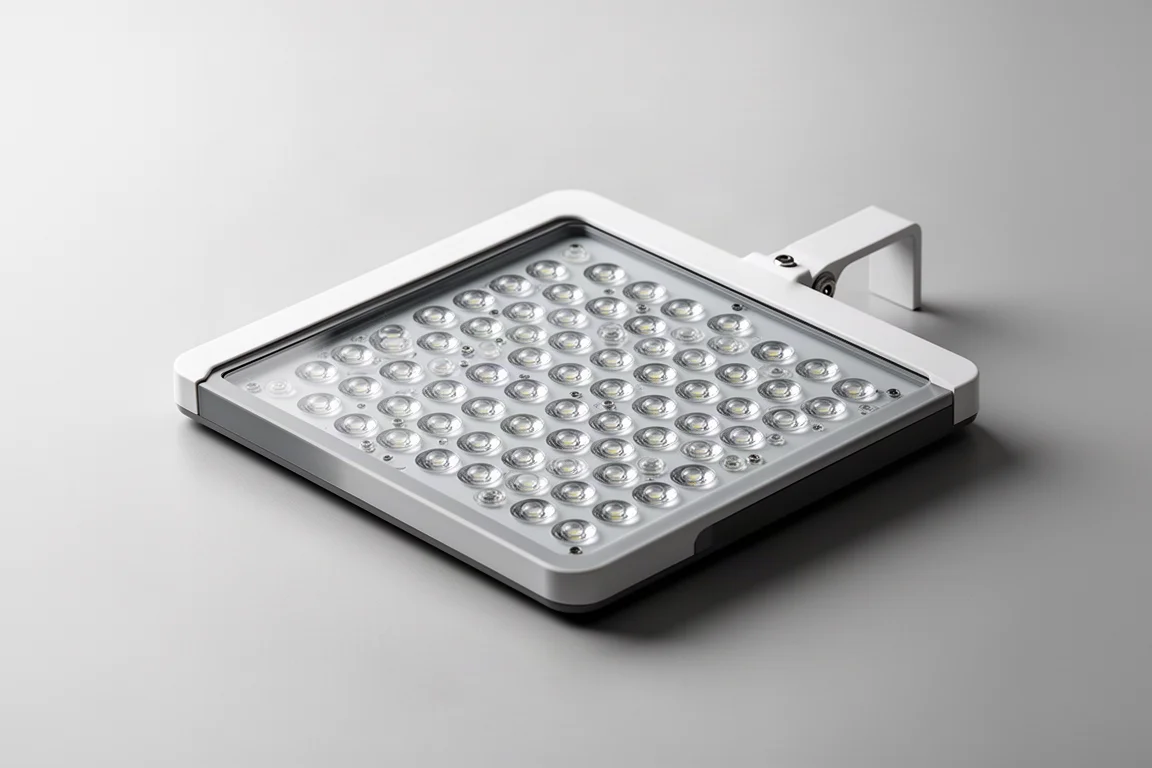
A third option sits between the two extremes: panel lights built from a grid of LEDs with a diffused plate underneath. They are not as large as a T5 array over a full tank, but they behave like a softer version of a flood light rather than a full blanket of light, while remaining configurable like other LEDs.
Aquatic Life T5
A traditional T5 fixture, and still one of the most reliable ways to cover a tank in soft, even light. It is plug-and-play, produces no shimmer at all, and pairs naturally with a wide angle flood light mounted in the centre of the fixture.
Philips CoralCare
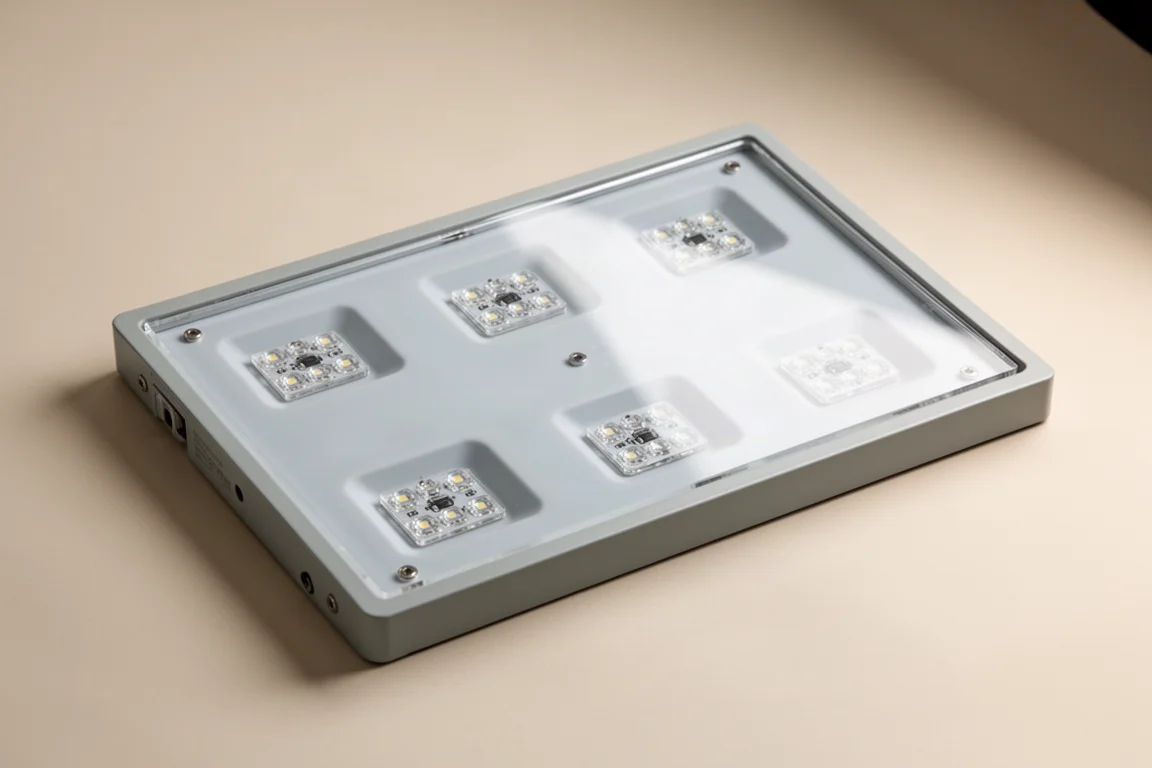
A large panel fixture with a diffused plate on the underside. It sits in the middle ground between a flood light and true soft diffused lighting, and its diffuser produces muted, gentler shimmer rather than the hard caustic lines of an undiffused LED pendant.
Hybrid Lighting: Combining Two Approaches
Hybrid lighting takes two technologies that each do one thing well and runs them together. In the past that meant a metal halide for contrast, punch and shimmer, supplemented by T5 tubes for fill light. Today the same result comes from a wide angle flood light paired with T5 tubes, or from an LED flood light paired with LED strips as the fill light.
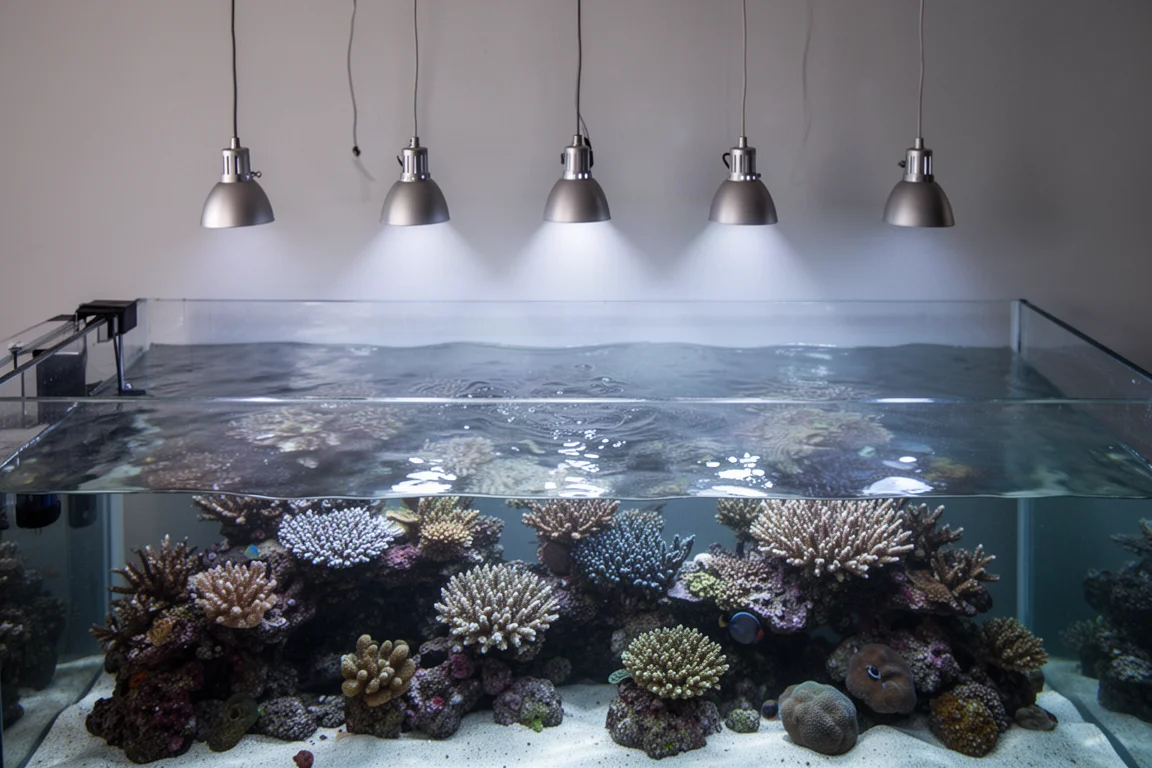
The LED-only version keeps the contrast and shimmer of the point source, adds fill light to remove shadows, and does away with bulb changes along with much of the heat that came with halides. It also retains full colour control.
There is a second, less obvious form of hybrid lighting: rows of small fixtures whose overlapping cones of light blend into something soft and even. Six or eight small pendants over a 120 gallon tank, or two larger fixtures split into four smaller ones for the same money, create more intersection points and a gentler, more diffused result than a single broad fixture.
Kessil A360X
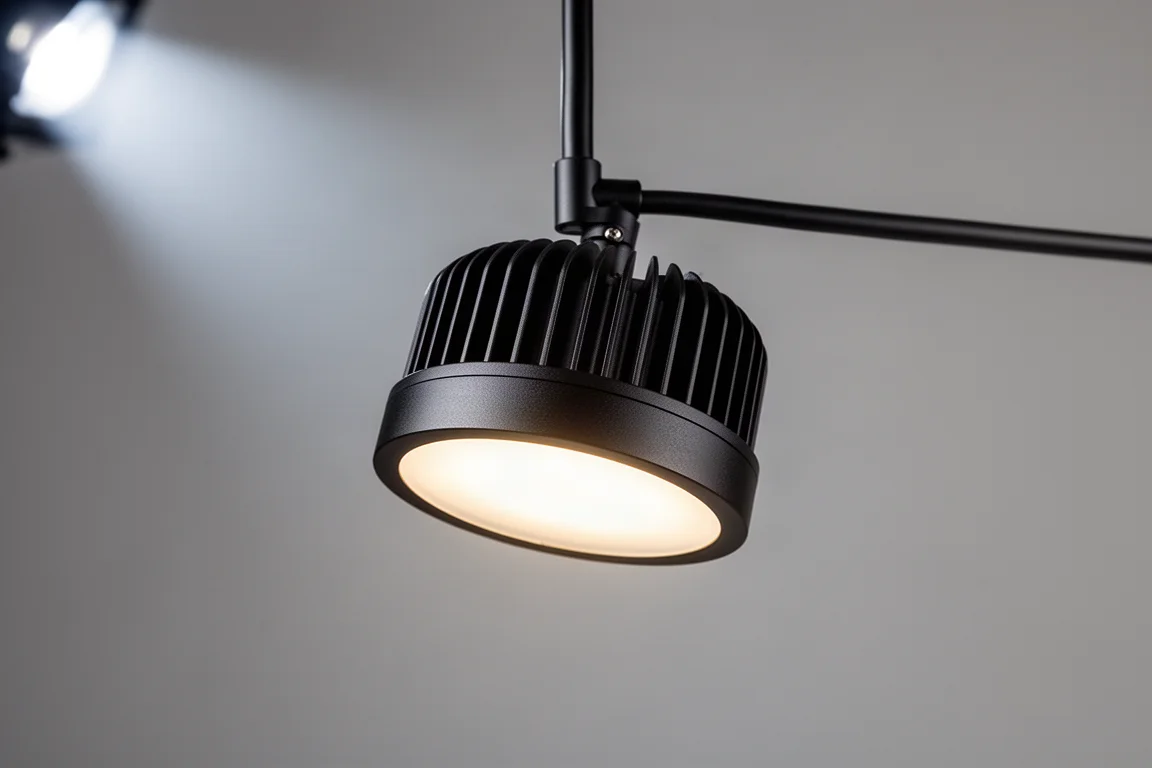
A single-point LED pendant with the most pronounced shimmer in its class. Its standout feature is a swappable lens: fitting a narrower reflector changes the optimal mounting height from around 8 inches to 12 or 14 inches while keeping the same output and distribution. It also uses a spectrum philosophy where the colour channels stay tuned to a workable reef spectrum, so it is difficult to set up badly.
EcoTech Radion XR30
The higher output Radion, and a natural centrepiece for a hybrid setup. Its spectrum was developed through testing in coral aquaculture facilities, and it can be run with every channel at full output and then dialled back with a single intensity control to reach a target PAR. On large tanks, mounting multiple units sideways front to back and running them at a low percentage delivers strong coverage and long service life.
AquaIllumination AI Prime
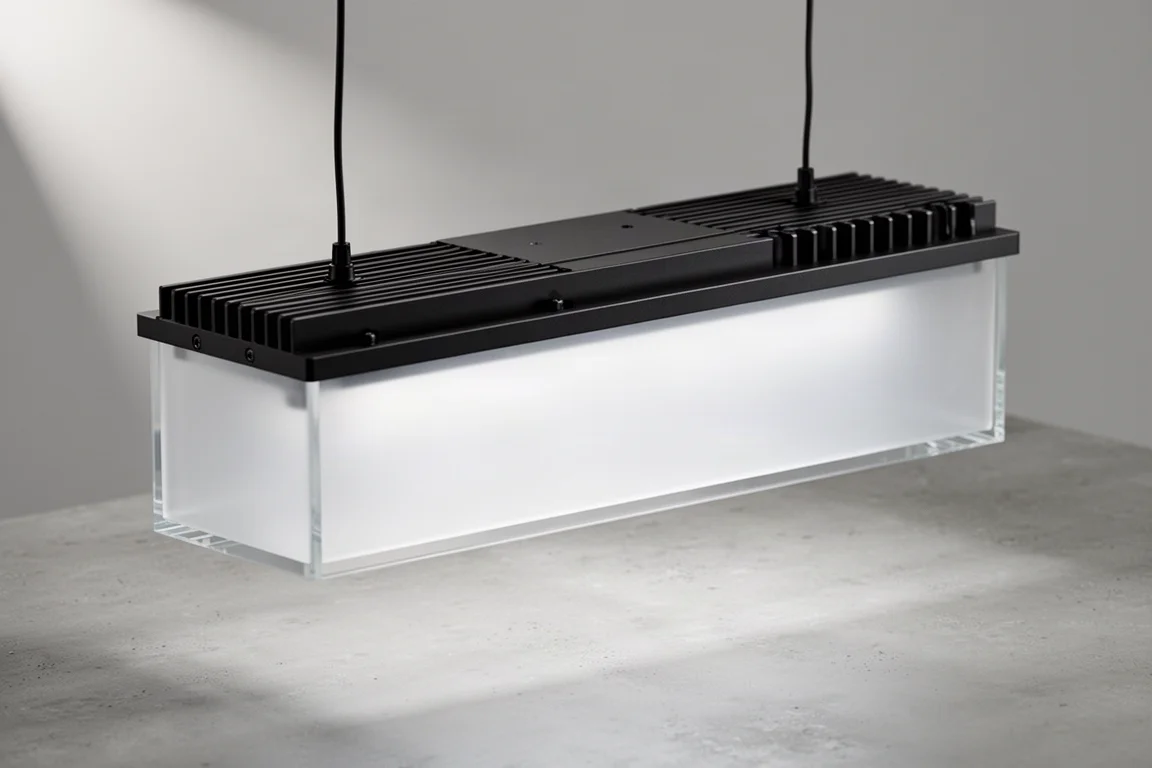
A roughly 55-watt fixture that has become one of the most popular entry points into reef lighting, and just as importantly one of the most popular building blocks at the other end of the hobby. A single unit suits a small tank; rows of them over a larger system create the overlapping cones that produce a soft, diffused look.
Wattage, Mounting, Shimmer and Control
Wattage falls into three practical bands. The 50 to 60 watt band is entry level: it suits smaller tanks and low to medium PAR corals such as LPS and softies, and most units in this range run near full output, so little of the wattage is wasted. It also scales, since units can be added as a tank grows.
The 90 watt band is the sweet spot for many reefers. A single fixture covers a 24 by 24 inch cube, and where a large tank might need six to eight small pendants, three or four of these do the same job with fewer cords and a cleaner look on top of the tank. For SPS systems in this band, expect to run close to maximum output.
The 150 watt band is for punch: deep tanks, mixed reefs, and reefers who want to keep fixture count and cord clutter to a minimum and can accept some shadowing. The trade-off is that these lights are often turned down to hit target PAR, which means paying for output you do not use. Many reefers now prefer several 90-watt fixtures instead.
Mounting is a bigger decision than it looks. The main options are a glass clamp that holds the light over the top, an arm or leg arrangement with a bar between two supports, or a hanging kit suspended from the ceiling. Larger fixtures are harder to mount, and big T5 arrays generally need ceiling suspension or wall arms. Rimless and braced tanks can rule out clamp mounts entirely. Fixtures from the larger brands tend to have the widest accessory range, including arms that span the tank and arms that route over the back.
Shimmer is the aesthetic wildcard. T5 tubes produce none, because there is no single point of light to refract through the surface ripples. A single-lens pendant produces the strongest shimmer. Frosted or diffused fixtures land in between, with muted movement closer to the T5 end of the scale. An exposed grid of LEDs, each with its own lens, can scatter colour across the tank in a static-like effect, and raising the fixture to blend them comes at the cost of the optimal mounting height.
Control has moved in the opposite direction to what most people expect. Full colour sliders and app control are no longer the priority; the trend is toward setups that work out of the box. A timer that simply switches a light on for nine hours remains a valid and common approach. On the more advanced side, fixtures are increasingly designed to run all channels at full output with a single intensity slider to reach the right PAR, or to pair colour channels in a way that keeps the spectrum sensible whatever you do. A few also publish guidance on how many units a given tank needs and where to set them.
Buying Advice: Matching a Light to Your Tank
Start with the tank and the mounting height, not the fixture. If the light has to hang 12 to 14 inches above the water because of a hood or canopy, an elevated fixture will outperform a flood light that is optimised for 8 inches. If the top of the tank needs to stay clear for maintenance, an elevated or hanging option makes more sense.
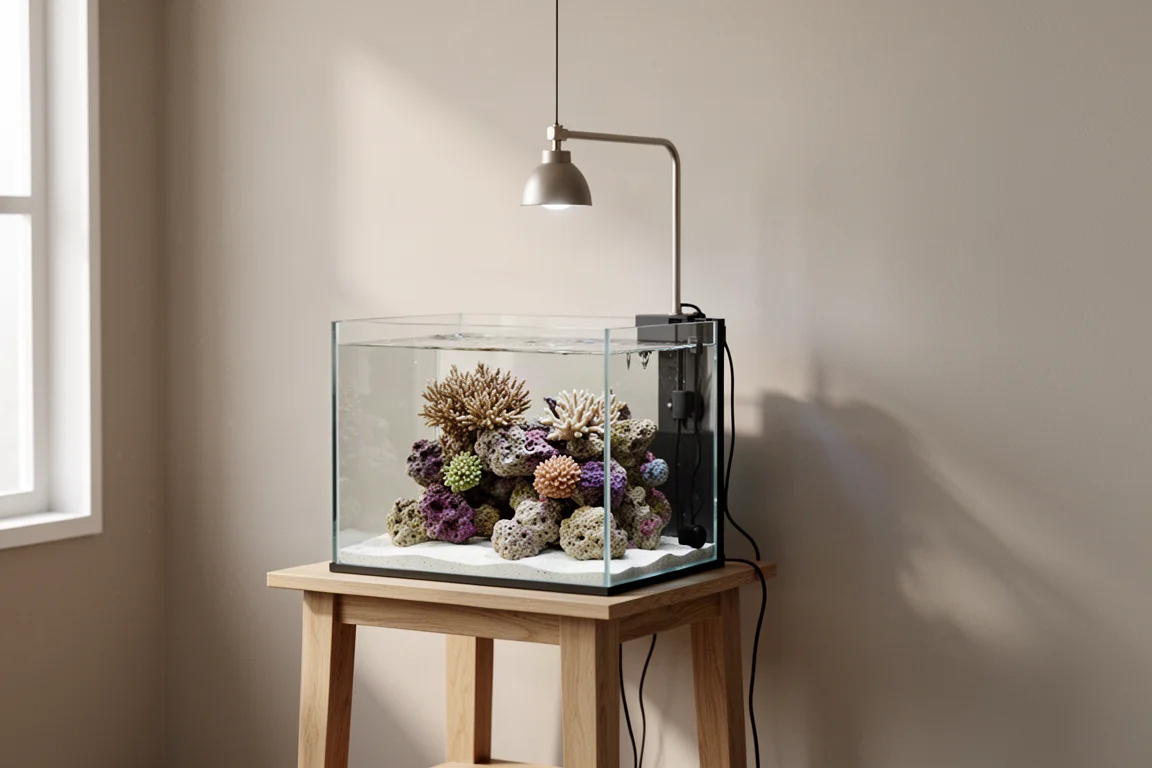
Then match the light to the corals you plan to keep. Encrusting corals, zoanthid gardens and swaying LPS do well under a wide angle flood light that produces contrast and shadow. Branching SPS colonies need soft, diffused light from a large source so they do not shade themselves as they grow. Mixed reefs fall somewhere in between, and a hybrid setup with a flood light in the centre and fill light around it remains the most flexible arrangement.
Finally, decide how much control you actually want. A simple timer and a fixture with a fixed, sensible spectrum removes a lot of guesswork and is genuinely enough for most tanks. Full spectrum control is worth having if you intend to tune the light over time, but it is not a requirement for a healthy reef.
Conclusion
The four categories exist because they solve different problems, and the right answer depends on mounting height, coral type, and how much you want to fiddle. Wide angle flood lights deliver contrast and easy mounting. Elevated fixtures trade spread for access and depth. Soft diffused lighting keeps growing colonies lit from every angle. Hybrid setups combine the best of each, whether that means a flood light with T5 fill or a grid of small LEDs blended into one soft source.
Pick the category first, then choose the fixture within it. That single decision removes most of the risk from buying reef lighting.
Further reading
Related Reviews
Reef Aquarium Lighting
Aqua Illumination Hydra HD vs Hydra Edge: Which Reef LED Fits Your Tank?
A practical comparison of the Aqua Illumination Hydra HD and Hydra Edge reef LED lines, covering form factor, optics, spectrum, control, and mounting.
Reef Aquarium Lighting
How to Choose Reef Tank Lighting: Wattage, Spectrum, and Fixture Styles
A practical reef lighting guide covering wattage targets, spectrum, fixture size, four mounting approaches, and the shimmer you can expect before you buy.
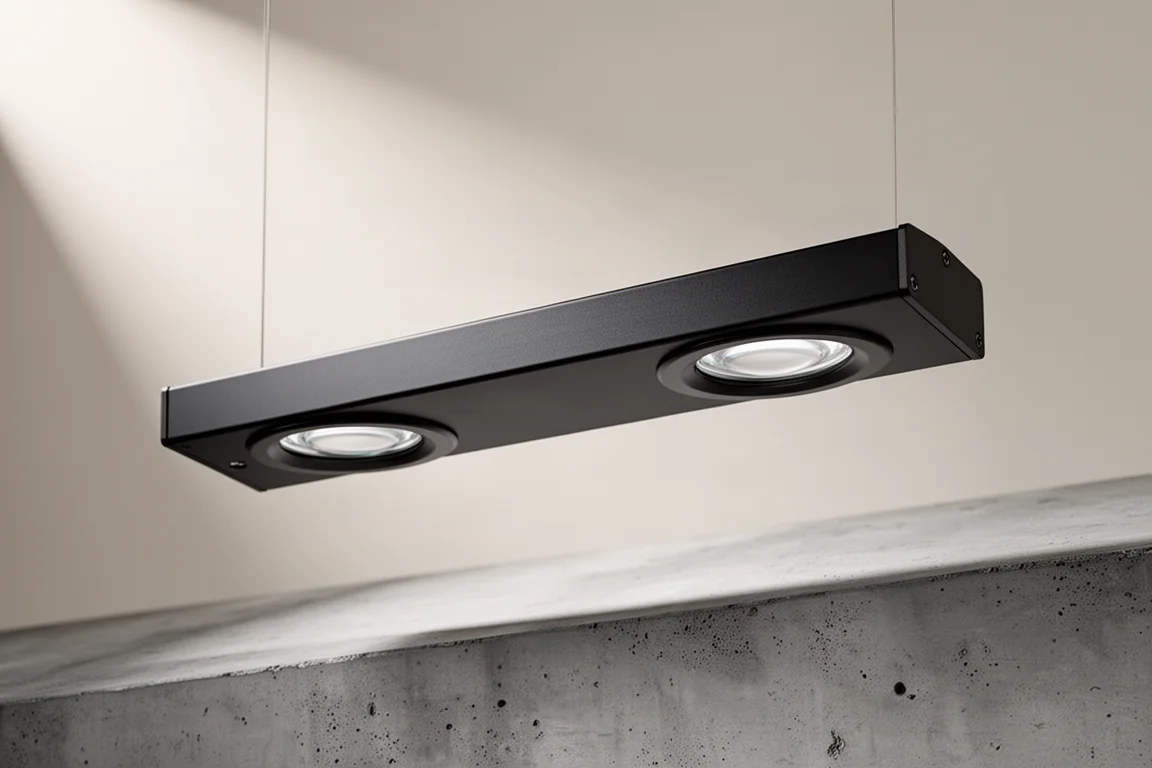
Reef Aquarium Lighting
Kessil AP9X Review: One Slim Fixture for Standard Rectangular Reef Tanks
A single-fixture reef LED built for standard rectangular aquariums, with rectangular light spread, built-in WiFi, and spectrum tuning that removes most of the guesswork.