Running Hydration
How to Carry Water on a Run: Bottles, Belts, Vests and Bladders Compared
A practical guide to the main ways of carrying water while running, from handheld bottles and waist belts to hydration vests and bladders, plus how to work out how much fluid you actually need.
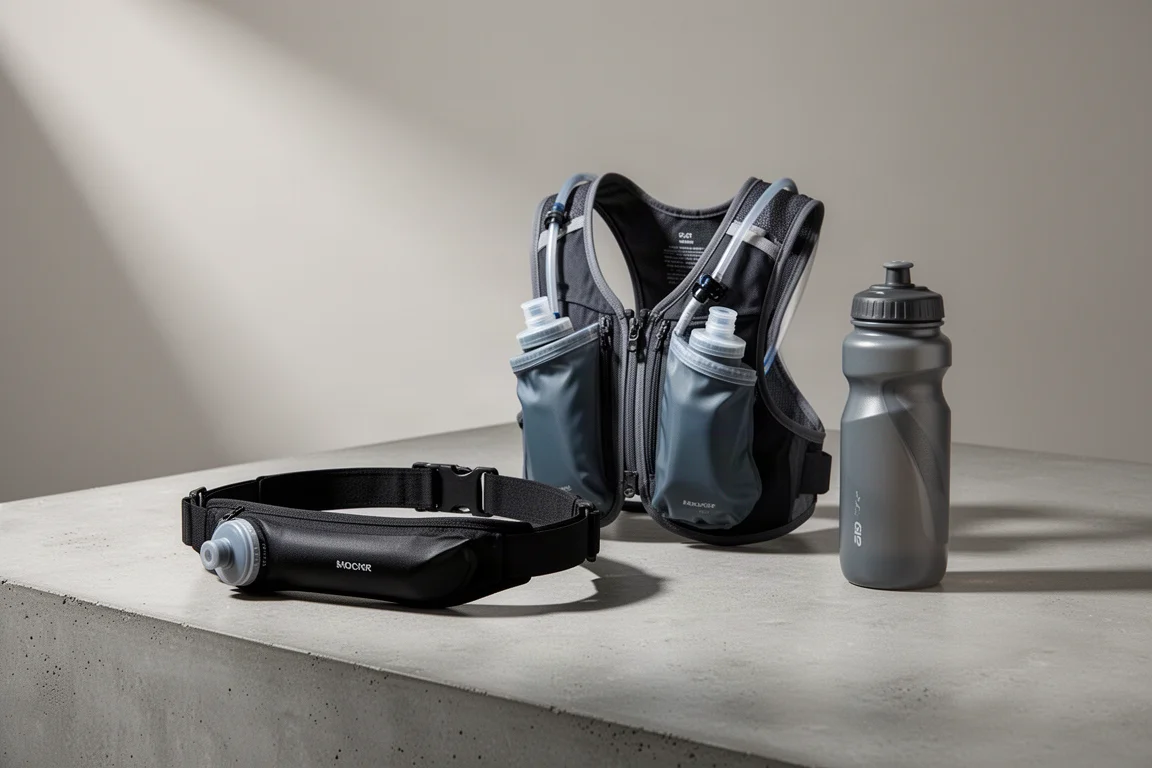
Introduction
Water is not optional when you run long distances or head out in hot and humid conditions, and at some point you have to decide how you are going to carry it. There is no single right answer, because hydration needs vary enormously from one runner to the next.
How much you need depends on your personal sweat rate, how far you plan to run, the conditions you are running in, and how well hydrated you already are before you start. What follows is a practical look at the main carrying options, from cheap handheld bottles through to hydration vests and bladders, plus a simple way to estimate your own fluid needs.
Estimating How Much Fluid You Need
Unlike fuelling, where the guidelines are relatively clear, hydration is highly individual. That makes a rough personal measurement more useful than a generic rule.
A straightforward test you can run yourself: weigh yourself without clothes before your session and weigh the fluid you intend to take with you. After the workout, towel yourself down and weigh yourself again without clothes. Subtract your post-exercise weight from your pre-exercise weight, then subtract the post-exercise bottle weight from the pre-exercise bottle weight. Add the two values together to find out how much you sweated, then divide that number by the duration of your workout to calculate your sweat rate.
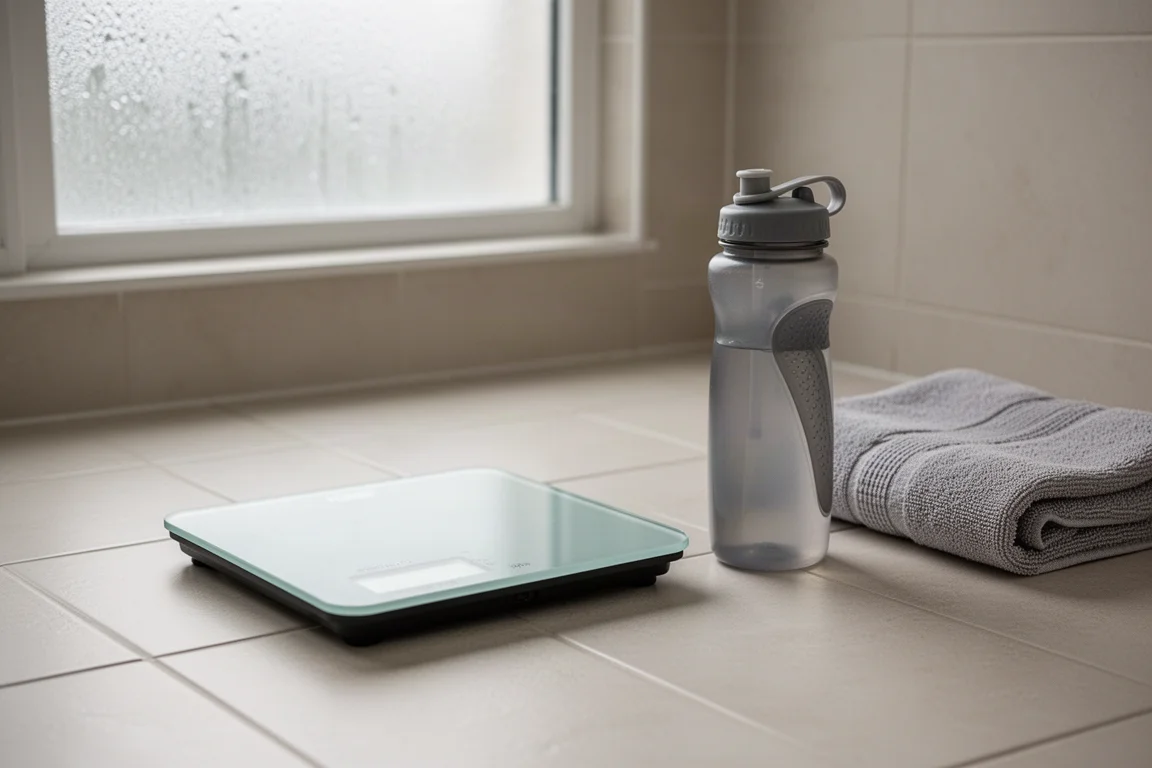
Once you have a rough figure, you can match a carrying method to the volume you actually need rather than guessing. A short easy run may call for a few sips, while a long unsupported effort may need well over a litre.
Handheld Bottles: Simple and Cheap
The handheld bottle is the easiest place to start. Around 500 ml is a sensible upper limit for a hand-carried bottle, and beyond that it starts to become awkward.
Bottles come in several shapes. There is the standard simple bottle, but more commonly runners use ergonomically shaped versions with indentations for the fingers, a hole through the middle for grip, or a strap around the outside. These are popular with people getting into running because they are cheap, quick to buy, and require no straps or fit adjustments. You simply grab one and head out of the door.
The other advantage is that the bottle sits in your eyeline for the entire run, which serves as a constant reminder to drink and stay on top of your hydration.
The trade-offs are real, though. Capacity is limited, there is the constant sloshing noise, one hand is taken out of action, and many runners notice a slight feeling of off-balance. Swapping hands from time to time helps, but the compromise remains.
Waist Belts and the Hands-Free Option
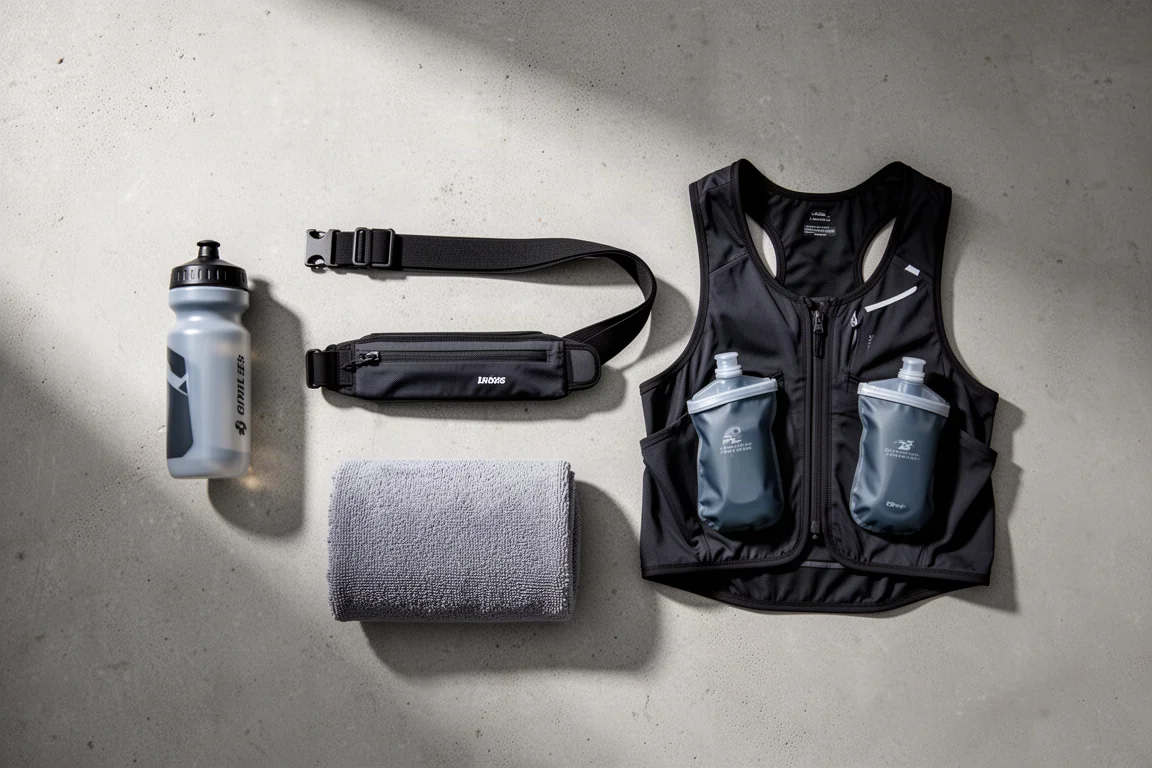
Waist belts are available in a wide range of sizes and pocket arrangements, and they suit runners who want nothing in their hands but also do not want a pack on their back.
The variety is considerable. Some belts have a holster that takes a standard 500 ml bottle or a flask. Others place a flask at the front and add a rear pocket, which can hold a further 500 ml plus a phone, gels, and even poles on more extreme outings.
A curved-bottle design is particularly effective: the bottle wraps around the lower back so it stays close to the body and barely registers while you run. Typically these hold around 330 ml of fluid, which is enough for a shorter session, and the same belt can swallow a phone and a few small essentials without feeling bulky.
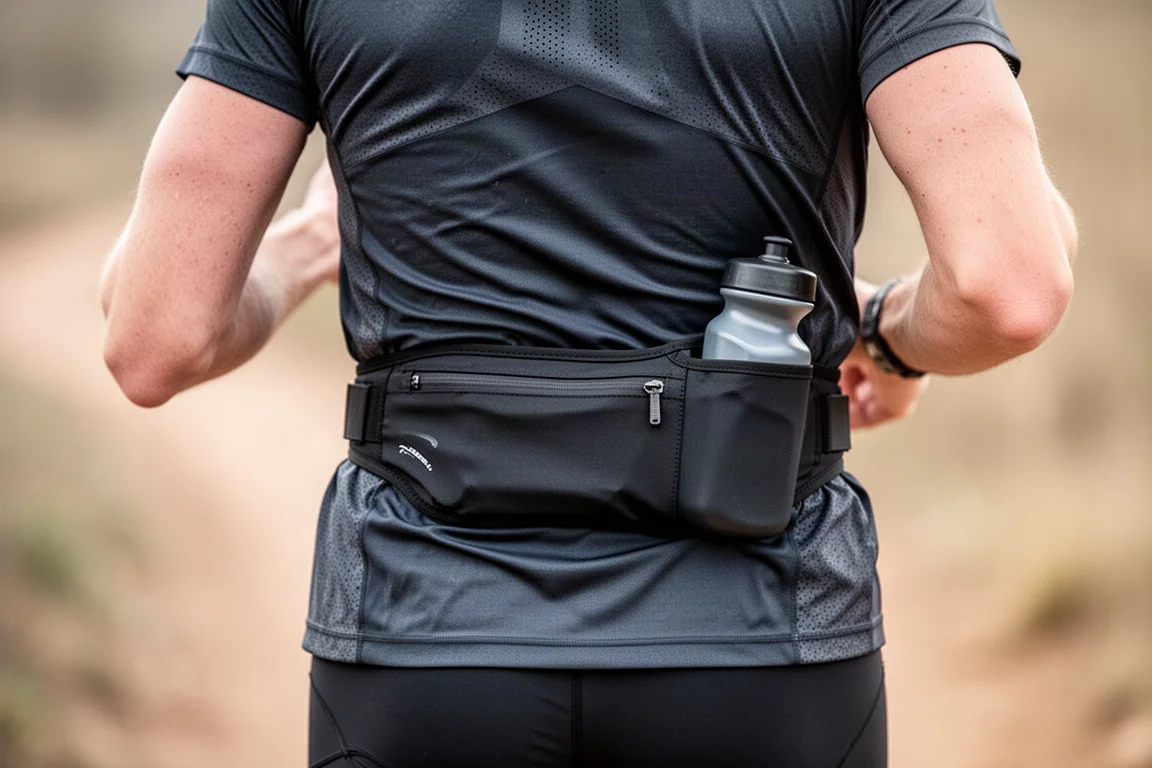
The appeal is straightforward. You stay hands-free, the load stays low and close to your centre of gravity, and small items travel with you instead of being left behind. The main limitation is total fluid capacity, so a belt is usually best for shorter runs or as a supplement to another source of water.
FlipBelt: A Curved Bottle That Wraps Around the Back
FlipBelt is a running waist belt built around exactly that curved-bottle idea. The bottle bends to follow the contour of your back, so it sits flush against the body instead of bouncing at your side, and it holds around 330 ml of fluid.
That makes it a sleek option rather than a bulk-carrying one. The belt is designed to be barely noticeable in use, and alongside the bottle there is room to stash a phone, keys, gels, and other small essentials. For a short run, or as a top-up between aid stations on a longer route, it covers the basics without adding a layer or occupying your hands.
It is worth being clear about what it is not. With roughly 330 ml of capacity, it will not replace a vest or a bladder on a long self-supported run. Its strength is convenience: it goes on like a belt, carries a small amount of fluid and your valuables, and disappears into the background of the run.
Hydration Vests: Versatility With an Extra Layer
Hydration vests are the most versatile category here, and they range from compact designs with a couple of small flasks at the front to much larger versions that can carry spares and essentials for big days in the mountains.
Two things are worth weighing up before you commit to one. First, a vest is another layer on top of you, which matters on long runs and particularly in hot conditions. Second, fit is everything. Any slight movement will cause rubbing, and over a long distance that can lead to bruising. A well fitted vest, by contrast, is barely noticeable at all.
Flask choice shapes the experience. Small hard flasks take up very little space but carry less fluid, and as you drink the remaining water sloshes around. Soft flasks are a popular alternative: each one holds about 500 ml, they can be filled and collapsed as you drink, they do not slosh as much, they weigh very little, and you drink from them with a simple squeeze up to your mouth. Extra flasks can be stored in the back.
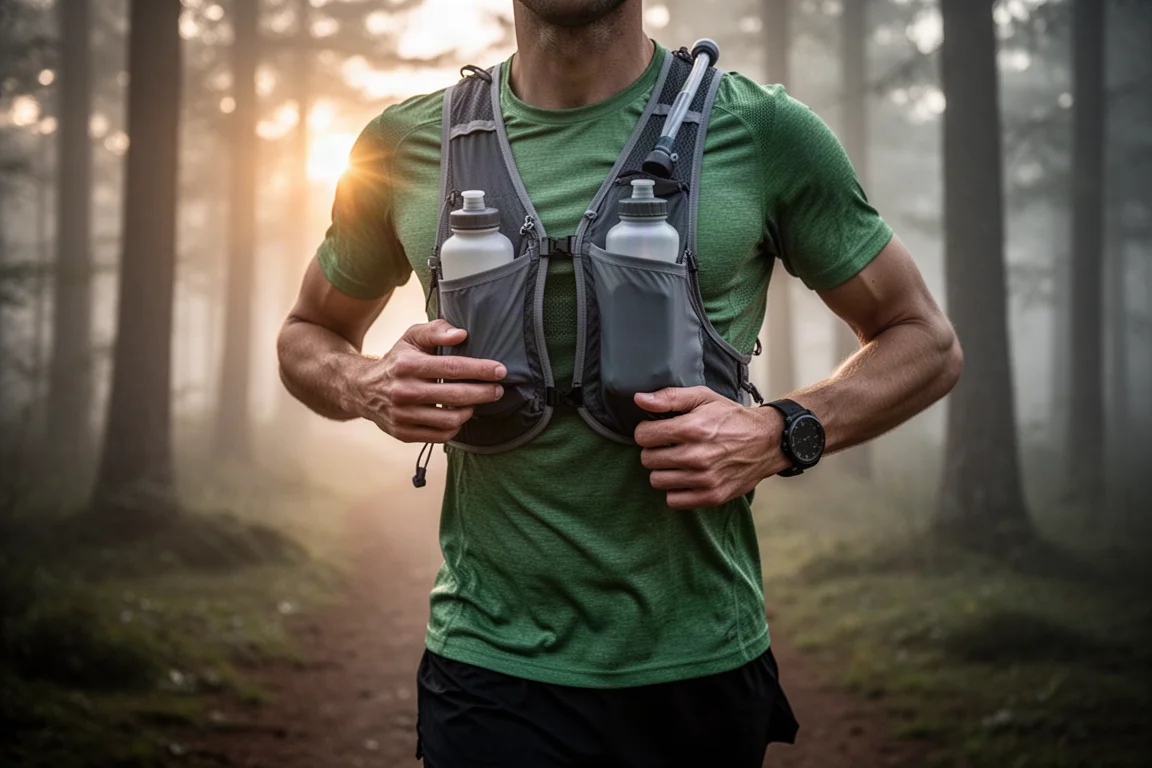
For most runners, the decision comes down to how much fluid and kit you need to move with, and how much extra warmth you are willing to accept on a hot day.
Bladders and Running Without Carrying Water
Bladders are the option for genuine self-sufficiency, when you know you may not have access to water on the go. They hold anywhere from 750 ml up to 3 litres and sit in the back of a vest, with a tube running to the front so you can sip on the move.
There are two practical drawbacks. Refilling a bladder mid-run is fiddly, and because it is out of sight you cannot easily see how much you have drunk, which makes it easy to be caught out as it runs dry.
If you would rather carry nothing at all, the alternative is to plan your route around water. That might mean a public fountain on the way, stashing a bottle somewhere along a loop you pass repeatedly, running loops past your own house, or choosing an adventure route with shops where you can buy something.
Buying Advice
Match the method to the run rather than chasing one do-everything solution. A handheld bottle or a waist belt covers short sessions and warm-weather easy runs. A belt like FlipBelt sits in that same convenient, hands-free bracket, with enough capacity for a modest amount of fluid plus a phone and small essentials.
For longer efforts, a hydration vest with soft flasks gives you more capacity without forcing you into a bladder, and it remains workable on routes where you can refill. Move up to a bladder only when you genuinely need to be self-sufficient between water sources.
Whichever route you take, use your own sweat rate as the starting point, then check the fit before you rely on it on a long run. Comfort on a two-hour outing is a different question from comfort on a twenty-minute one.
Conclusion
Carrying water is a personal decision, and the best setup is the one that matches your sweat rate, your distance, and your conditions. Handheld bottles keep it cheap and simple, waist belts keep your hands free with a low, discreet load, vests carry the most without occupying your hands, and bladders suit runners who need to be self-sufficient.
Work out roughly how much you lose, pick the lightest option that covers that volume for the runs you actually do, and check the fit carefully before you take it out on a long day.
Product link
View more details for FlipBelt
This product is mentioned in the review. Check the specifications, options, and compatibility before buying.
View more details for FlipBeltFurther reading
Related Reviews

Backpacking Gear
Building a 10 lb Base Weight: An Ultralight Backpacking Gear List
A practical walkthrough of the ultralight pieces behind a 10 lb base weight, from a 765 g pack and a roomy one-person tent to a full camp chair and a dependable water filter.

Road Bikes
10 New Road Bikes Worth Watching: Aero, Titanium, Steel and Endurance Standouts
A practical roundup of 10 new road bikes, from aero flagships chasing single-watt gains to titanium, steel and endurance platforms built for real roads.
Bikepacking Gear
11 Bikepacking Essentials for Long-Distance Cycling
Eleven bikepacking essentials for long-distance cycling, from a steel gravel frame and a two-person tent to helmet lights, packable gloves, and a frame bag that puts weight in the right place.