Cycling
Hotta vs Canyon Aeroad CFR: A 1990s Carbon Superbike Meets a Modern Benchmark
A 1993 carbon monocoque time trial frame and a modern UCI-legal aero road bike compared on the road, including what the timing data actually shows.
Introduction
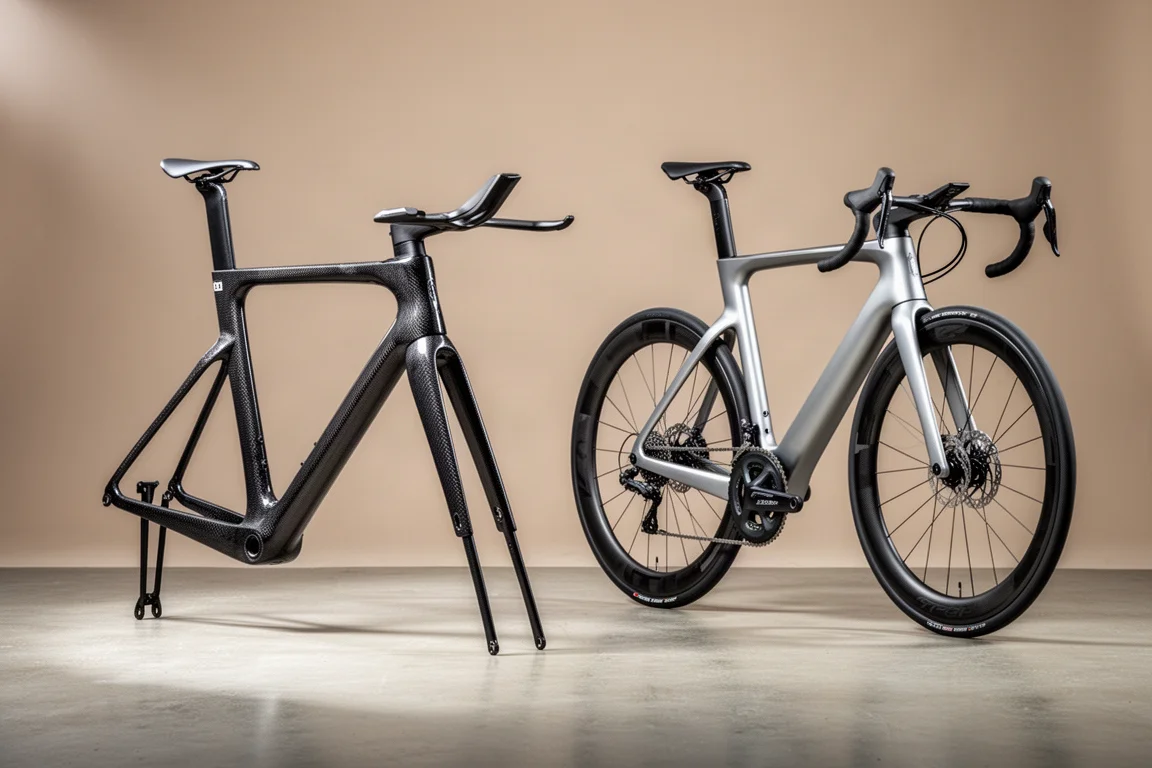
Roughly three decades separate the two machines in this comparison, and very little else connects them. One is a carbon monocoque that appeared before carbon monocoques were normal, created by a small composites company that had been building camera bodies. The other is a modern UCI-legal aero road bike shaped by wind tunnel testing and computational fluid dynamics.
Both are superbikes in the sense that matters. Each was built to go fast, and each has a racing record at the sharp end of the sport. What makes the pairing genuinely interesting is that they sit on opposite sides of a rule change that reshaped what a competitive race bike was allowed to look like.
This guide looks at what each bike is, how they behave on real roads, and what the timing data from a back-to-back comparison actually suggests. It also covers who each machine realistically suits, because they are aimed at very different buyers.
What Makes These Two Bikes Worth Comparing
The Hotta was devised in 1992 and reached production in 1993. It used a carbon monocoque frame at a time when almost every other race bike on the start line was still a slim steel tube frame. On looks alone it was radical for its era, and it has aged in a way that still turns heads.
The Canyon Aeroad CFR represents the opposite approach. It is a current, UCI-compliant aero road bike, which means its shape exists inside a rulebook written specifically to stop designs like the Hotta from being raced. Every tube profile is the product of simulation and testing rather than the limits of the materials available at the time.
That contrast sets up the real question: does three decades of aerodynamic development translate into a measurably faster bike, or does the older frame still hold its own?
There is a second reason the comparison is worth the effort. Both bikes were designed around speed first and comfort second, so the differences between them are mostly about stiffness, front-end behaviour and how demanding the riding position is, rather than about outright design philosophy.
The Hotta: A Carbon Pioneer From 1993
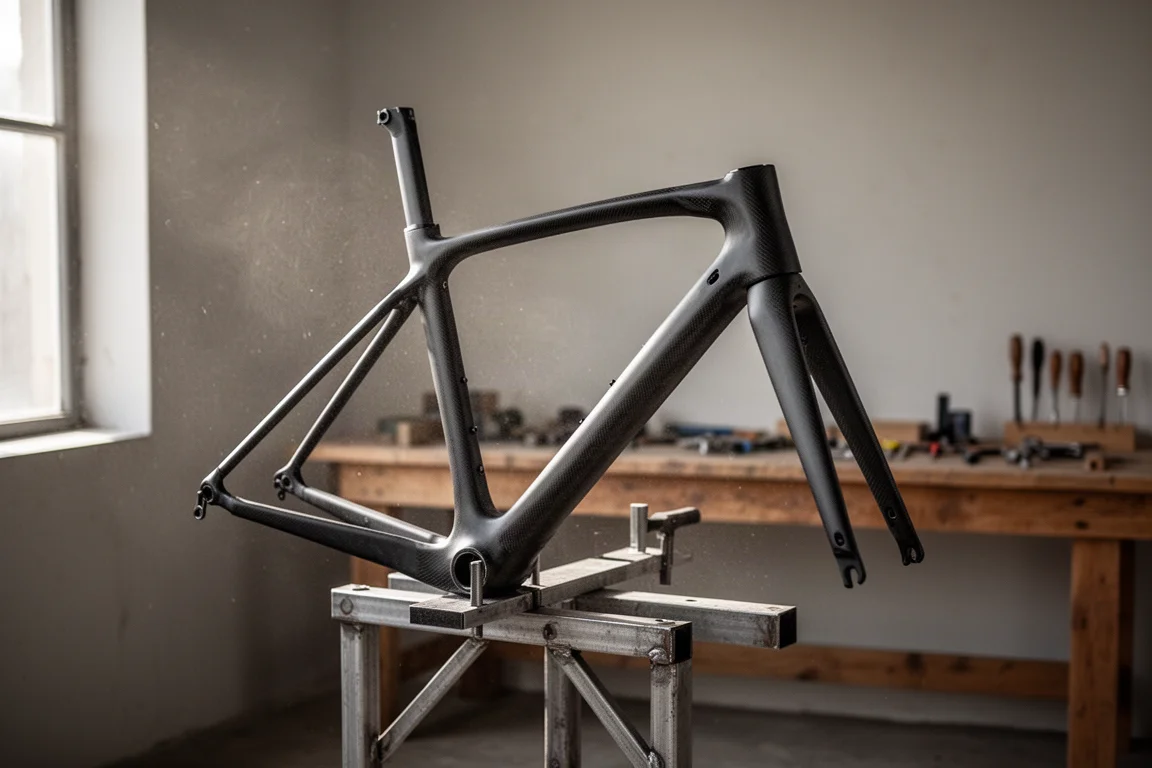
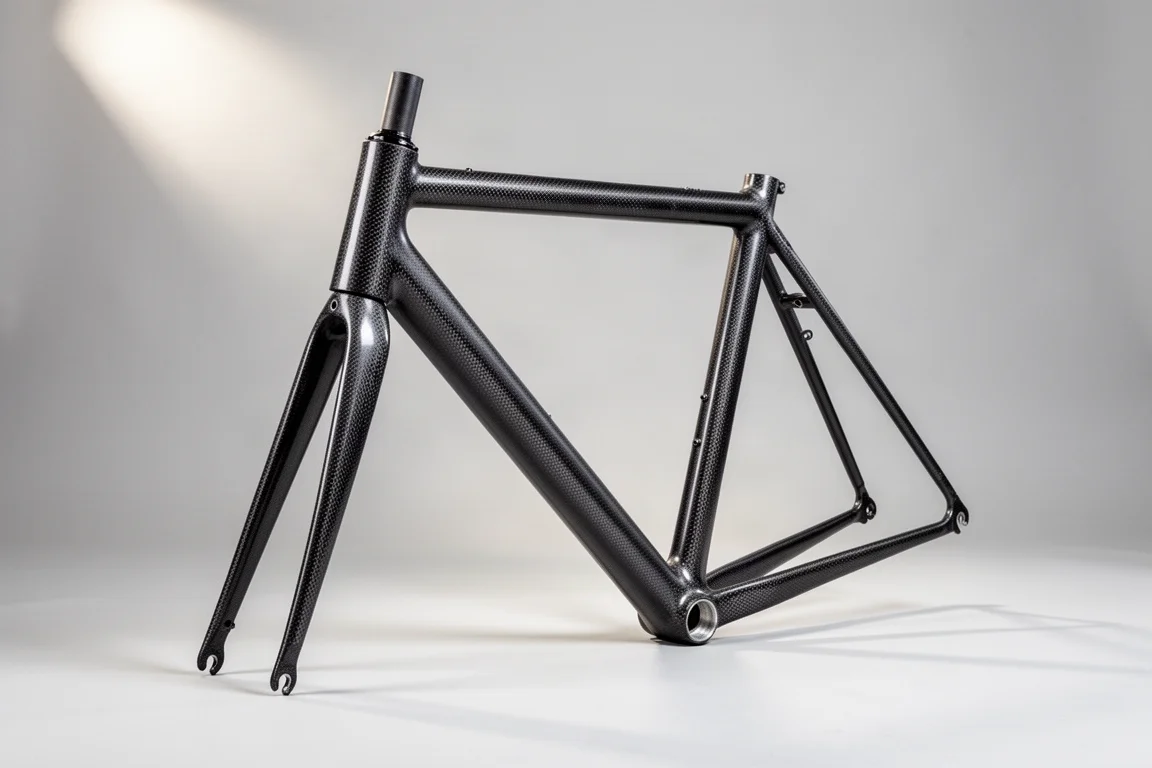
The Hotta’s frame is built in three pieces that are formed in a mould and then brought together. It was the creation of Simon Ask, who was working for a composites company called Carbon Infinity that was making camera bodies at the time. As a keen cyclist, he saw the potential of the material and applied it to bicycle frames.
The original concept used a monostay rear end in the style of the Lotus 108. The production model that followed in 1993 switched to dual rear stays and a bladed carbon fork to make the design more commercially viable. The fork turned out to be the commercially significant part, because it could be fitted to sponsor-correct frames far more easily than a complete frame could be.
That is exactly what happened. The Motorola and Festina teams ordered the forks for their time trial bikes, and Chris Boardman used a Hotta fork on the machine he rode for his hour record. Boardman also won the 1997 and 1998 Tour de France prologue time trials on a Hotta frame, although it carried different badging at the time, which is why the result is easy to miss in the record books.
The frame then disappeared from professional racing entirely. The Lugano Charter banned this and every other unconventional-looking design from pro competition, and the Hotta was pushed into becoming a labour of love rather than a race weapon. Domestic time trial wins in the UK came first, and the frame remains a genuine piece of carbon history rather than a curiosity.
The Modern Benchmark: Canyon Aeroad CFR
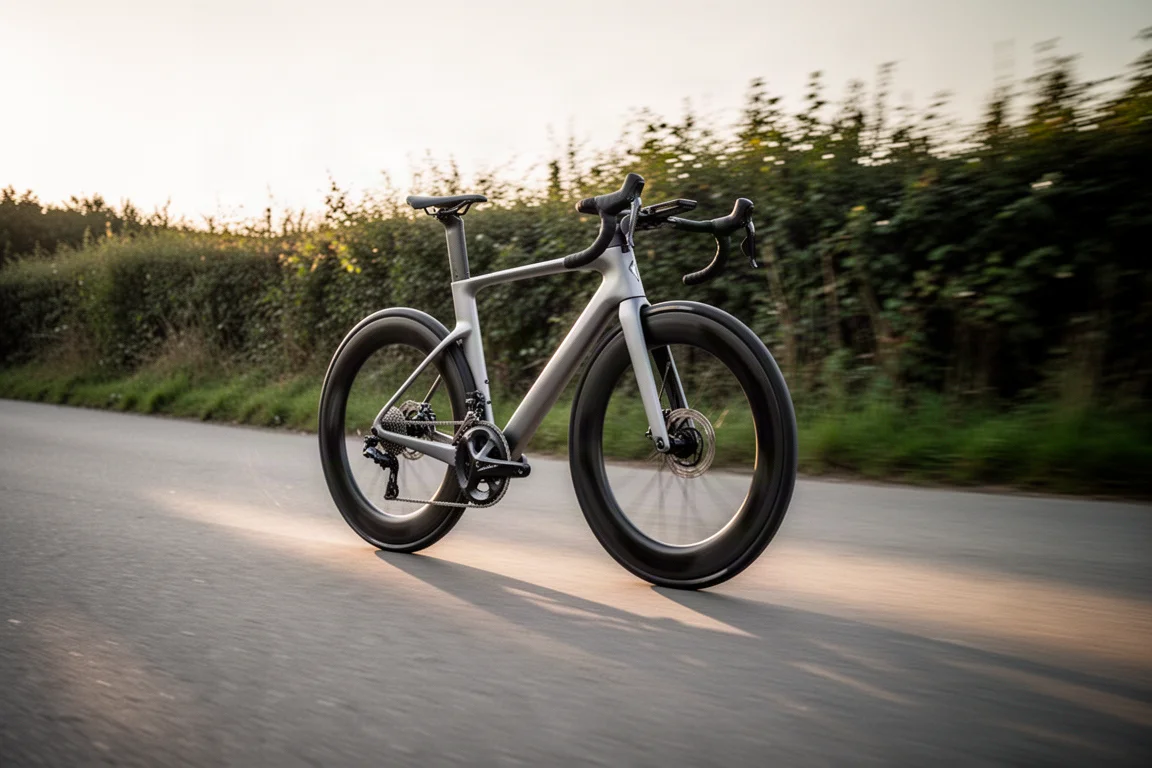
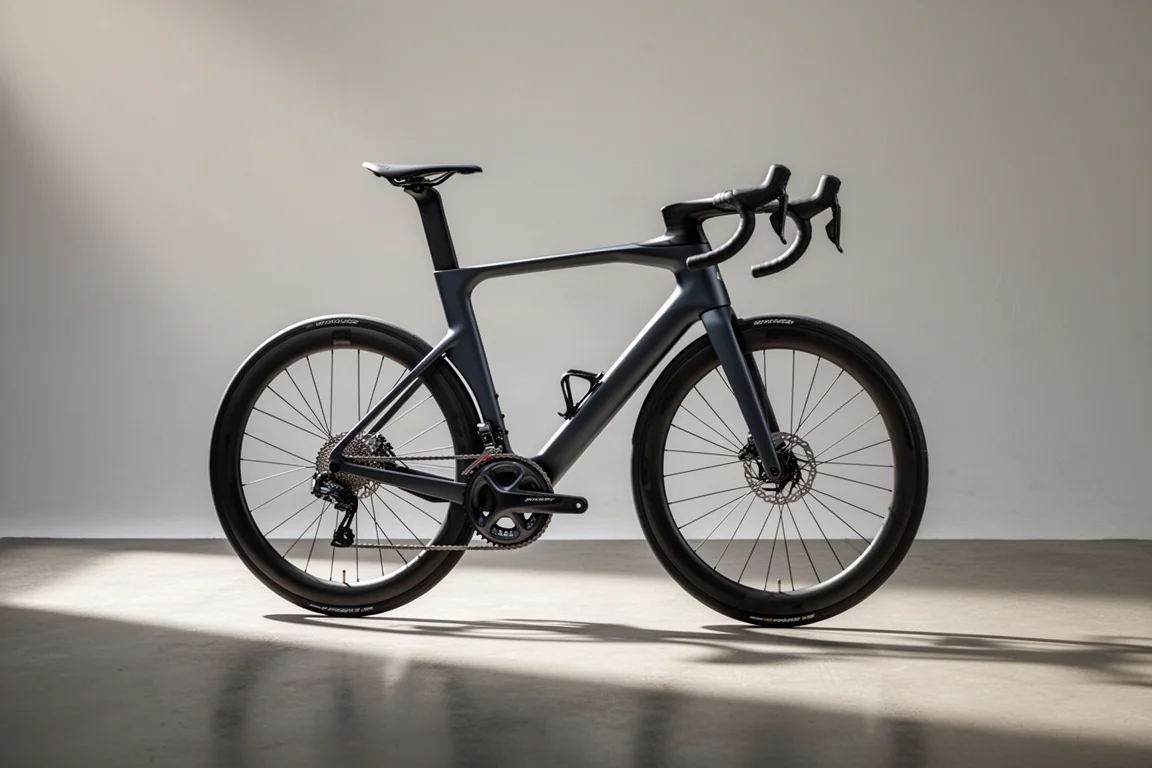
The Canyon Aeroad CFR is what a superbike looks like when it is built to the current rulebook. It runs disc brakes, and its tubeless tyres are around 10mm wider than the very narrow rubber fitted to the classic Hotta build in this comparison.
Where the Hotta was designed primarily to be light, using the construction methods and materials available at the time, the Aeroad CFR exists to be aerodynamic. Its shape comes from extensive simulation work, which produces the hard-edged tube profiles that are completely absent from the older frame.
The difference is obvious the moment you ride it. The front end is stiff and confidence-inspiring, and the bike holds a line where the older machine wanders. The bottom bracket area feels solid under load, and the saddle stays planted even when you push hard out of the saddle, which matters on a bike whose frame layout puts unusual demands on stiffness.
That stiffness changes how the bike feels rather than just how it measures. Riders stepping onto the Aeroad CFR after time on a flexible retro machine typically describe it as stable and fast, and the geometry is forgiving enough that the position can be set up for long efforts rather than a single short burst.
How They Compare on the Road
The most striking difference is the front end. The classic Hotta build pairs a flexible bladed fork with a lightweight front wheel, and together they can produce noticeable oscillation at speed. On gusty roads and rough surfaces, holding a straight line becomes genuine work.
That is compounded by the riding position. The Hotta’s geometry sits extremely low at the front, with nothing in the way of modern spacers or a raised cockpit to lift the rider up. Time trial bikes of that era did not offer the adjustability that riders now take for granted, and the hip angle that results is punishing over anything longer than a short effort.
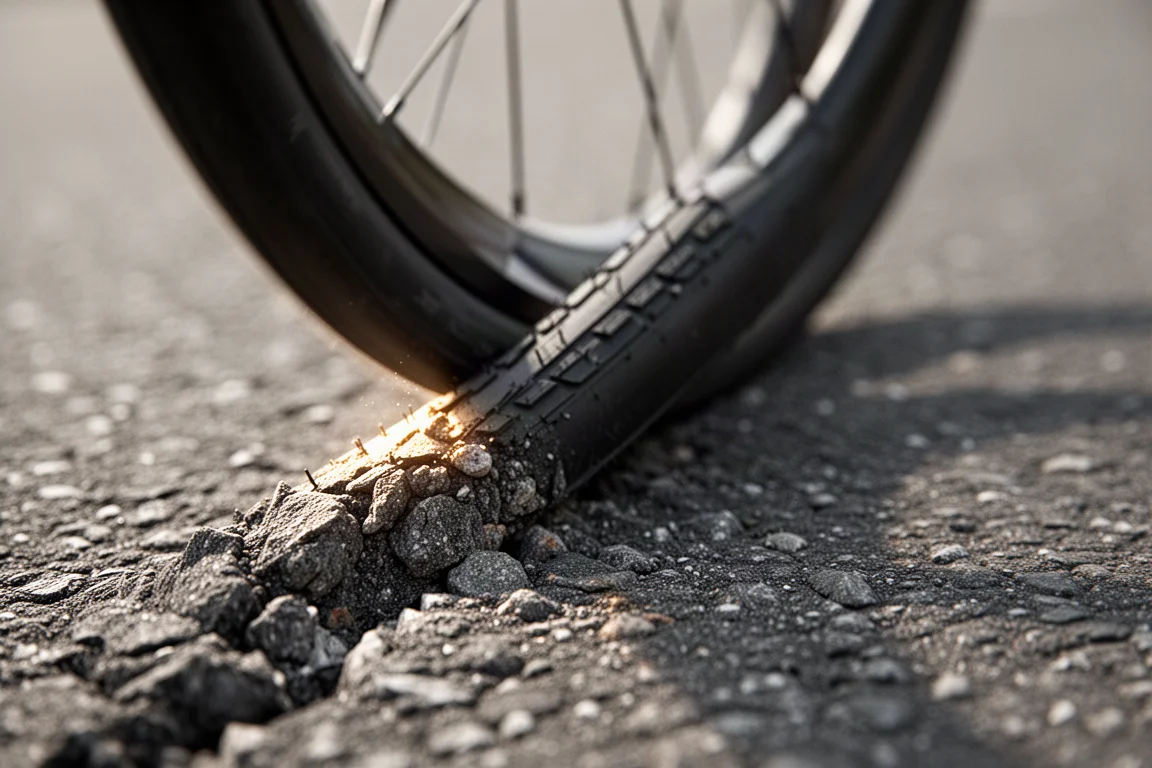
The narrow tyres add to it. On coarse tarmac, they transmit every bump straight through the frame, and the bike skips and bounces instead of settling. The Canyon does the opposite. Wider tubeless tyres and a stiff, composed front end mean the rider can stay in an aerodynamic position because the bike is not constantly asking for corrections.
What the comparison really shows is that the old bike is not slow because of its frame. It is slow because of the position it forces and the components it was originally built around.
Position, Tires, and Comfort
Several factors shape outright speed, and the frame is only one of them. A rider’s position on the bike, the width and pressure of the tyres, and how much the front end flexes all have a measurable effect before aerodynamics enters the conversation.
The classic Hotta build wins on none of these. Its low front end makes an efficient position hard to hold, and its narrow tyres lose speed on rough surfaces because the rider absorbs vibration instead of pedalling smoothly. Comfort is not a soft consideration here, since a rider who cannot hold position cannot hold power.
This is why the retro-modern Hotta build is such a useful experiment. The same frame, fitted with modern wheels, modern tyres, modern gearing and a modern cockpit, becomes a completely different machine. Raising the hands into a higher position with bent elbows turns out to be faster, not slower, because the rider can actually sustain it.
The lesson is straightforward for anyone shopping for speed. Tyres, wheels, cockpit setup and position do more for real-world pace than the frame material alone, and a well-chosen modern road bike delivers all of it out of the box.
What the Timing Data Suggests
The back-to-back runs on the same roads produced a useful set of numbers. An easier effort averaging around 31 km/h at roughly 200 watts came out 21 seconds quicker on the Canyon Aeroad CFR than on the classic Hotta build.
A harder effort averaging about 42 km/h was 20 seconds faster on the Canyon. That same effort was a further 20 seconds faster still on the retro-modern Hotta, the original frame rebuilt with contemporary components.
The honest conclusion is that the test cannot prove the Hotta frame is faster than the Canyon frame, because the builds differed in so many other ways. What it does show clearly is that the Hotta frame is far from rubbish three decades on, and that a well-set-up rider on a good frame with good equipment remains the dominant factor. Frame aerodynamics matters, but position and contact points matter more.
Buying Advice: Which One Makes Sense for You
These two machines are not really competing for the same buyer, which makes the decision easier than it first appears.
The Hotta is a collector’s item. Original frames are rare, they date from the early 1990s, and availability is limited and inconsistent. Anyone buying one should go in expecting a project: an aggressive position, a flexible front end, and components that need replacing with modern equivalents before the bike is genuinely quick. The frame rewards that effort, but it is not a straightforward purchase.
The Canyon Aeroad CFR is the practical choice for anyone who wants speed without compromise. It is a current flagship race bike with disc brakes, wide tubeless tyres, a stiff frame and a geometry that can be set up for real riding rather than a single short effort. It is the bike most riders would actually be faster on from day one.
If you want a competitive machine that works immediately, the modern aero road bike is the sensible answer. If you want a piece of cycling history that can still hold its own when fitted with contemporary equipment, the older frame is a far more rewarding object than its age suggests.
Conclusion
Thirty years of development did produce a faster, stiffer and far more comfortable bike in the Canyon Aeroad CFR, and it remains the realistic purchase for anyone chasing performance. At the same time, the Hotta frame still performs well enough that it cannot simply be dismissed as an antique.
The comparison ultimately comes down to what you want from a bike. Performance without compromise points to the modern machine. History, character and a genuinely special frame point the other way. Either way, the fact that a 1993 monocoque can still be discussed in the same breath as a current flagship says a great deal about how far ahead of its time it was.
Further reading
Related Reviews
Cycling
2026 Bike of the Year and the Cycling Gear Worth Watching
A drop bar roundup for 2026 covering the Ridley Kanzo Fast 2.0, Shimano Dura-Ace Di2 R9300, Trek Checkpoint ALR Gen 3, Specialized Tarmac SL9, Garmin Fenix 9 and Insta360 X6.
Cycling
Best All-Road Bikes 2026: Six Versatile Endurance Road Bikes Worth Considering
A practical look at six all-road and endurance road bikes, from lightweight carbon speed machines to steel all-rounders and comfort-focused mile eaters.
Cycling
Best All-Road Bikes 2026: 8 Endurance Bikes for Road and Light Gravel
Eight all-road bikes that blur the line between endurance road and light gravel, compared on tire clearance, ride character, practicality, and value.