Kitchen Knife Sharpening
Horl Knife Sharpener Review: Rolling Sharpening Made Simple
A closer look at the original German-made rolling sharpener, how it compares to whetstones, and who it really suits.
Introduction
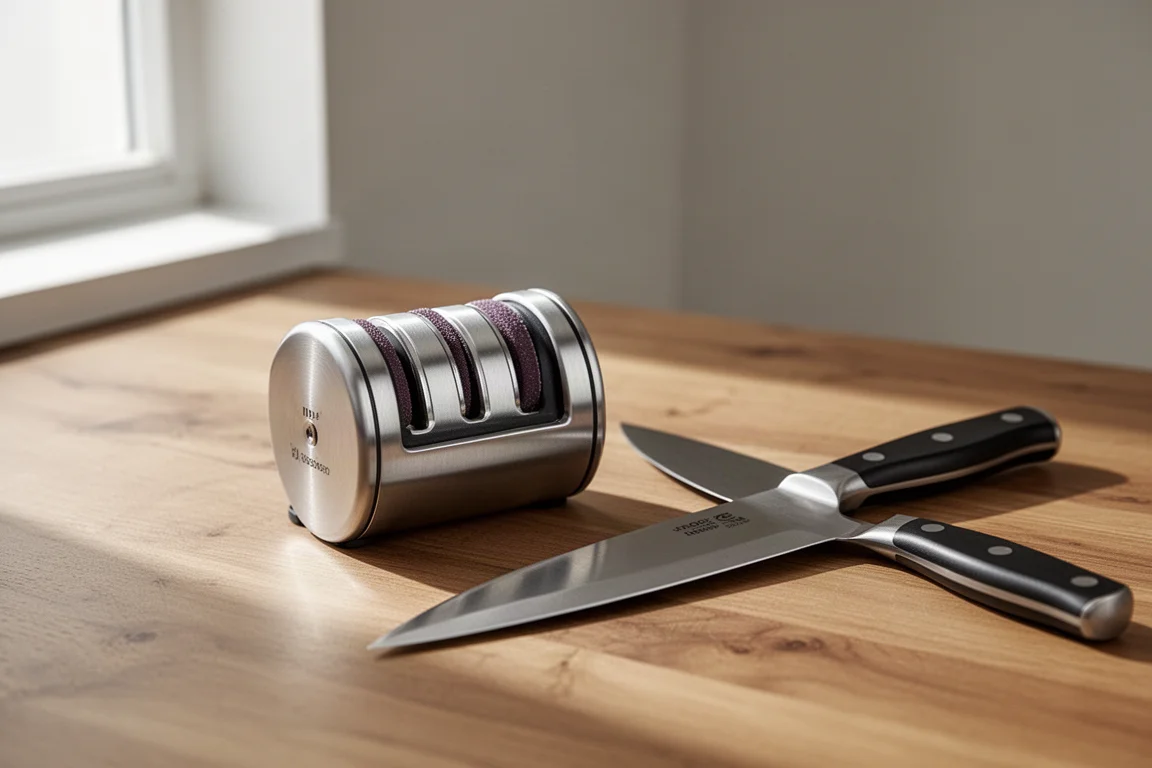
Rolling knife sharpeners have flooded the market in recent years, and plenty of them are rough imitations of the original. The Horl is the product that started the category. It is designed and made in Germany, it is built to a noticeably higher standard than the knockoffs, and after extensive testing it has earned a place alongside the whetstones in a professional knife shop. This review walks through how it works, what it does well, and where it stops.
What the Horl Actually Does
The Horl is designed primarily for kitchen knives, and it works the secondary edge only. That distinction matters. A Japanese kitchen knife typically has a wide primary bevel that dictates how it cuts through food, plus a small secondary edge right at the tip of the grind. The Horl sharpens that secondary edge, which is exactly what you do in day-to-day maintenance.
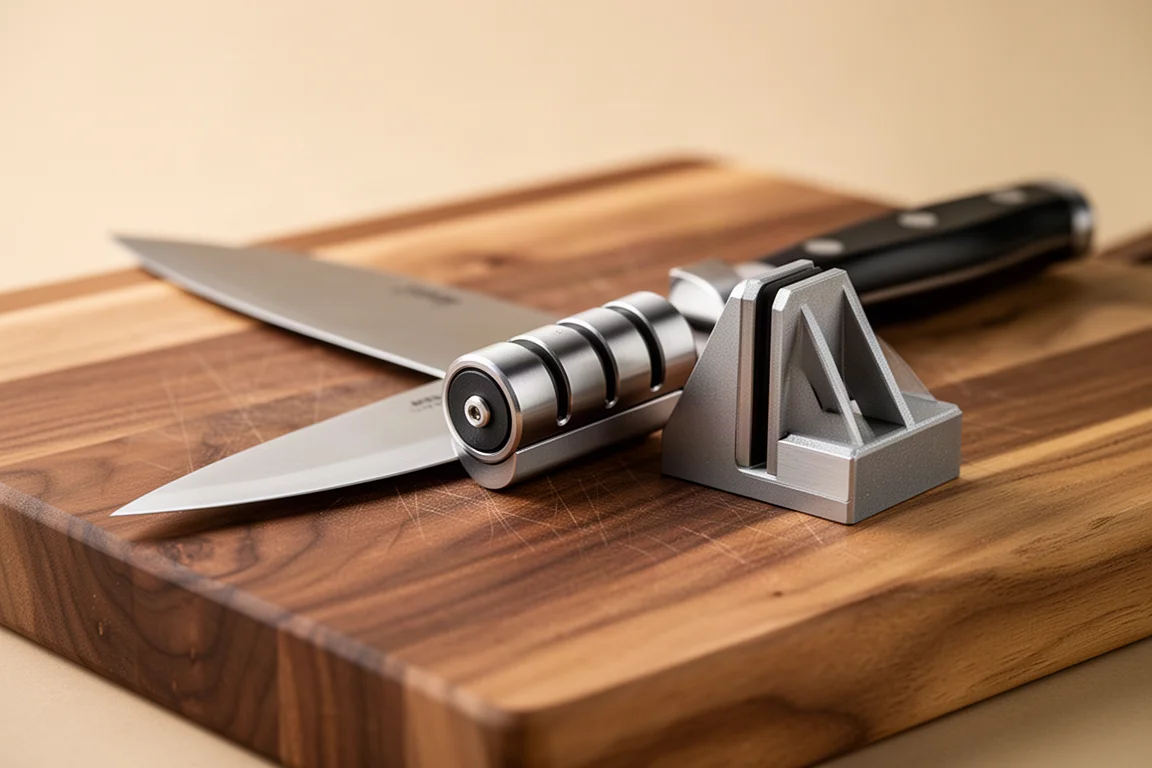
The limitation is worth knowing upfront: because the Horl only touches the secondary edge, repeated sharpening slowly thickens the knife. Eventually the primary bevel needs thinning, which is work for whetstones or a professional sharpening service. The device automates the trickiest part of whetstone sharpening, holding a consistent angle, and that is precisely why it has become a genuine alternative for people who never got comfortable with stones.
How the Sharpening Process Works
The core of the system is a magnetic angle block with two positions: 15 degrees for most Japanese knives, and 20 degrees for Western-style chef’s knives or a more rugged, workhorse edge. You lay the knife flat on the table against the guide, and the block’s rubber feet hold everything in place.
The sharpener itself ships with two rollers: a coarse diamond grit around 400, and a finer ceramic deburring wheel closer to 1,000 grit. You pinch the middle of the roller, slide it back and forth along the edge, and the wheels roll independently. Work slowly and cover the full edge, all the way back to the heel and sweeping around the curved tip, so the original edge profile stays intact.
Feeling for the Burr
The technique mirrors whetstone sharpening. After a set of strokes on one side, you feel for a burr, a rough fold of steel that feels like Velcro along the opposite side of the edge. It needs to be present along the entire length before you flip the knife and work the other side.
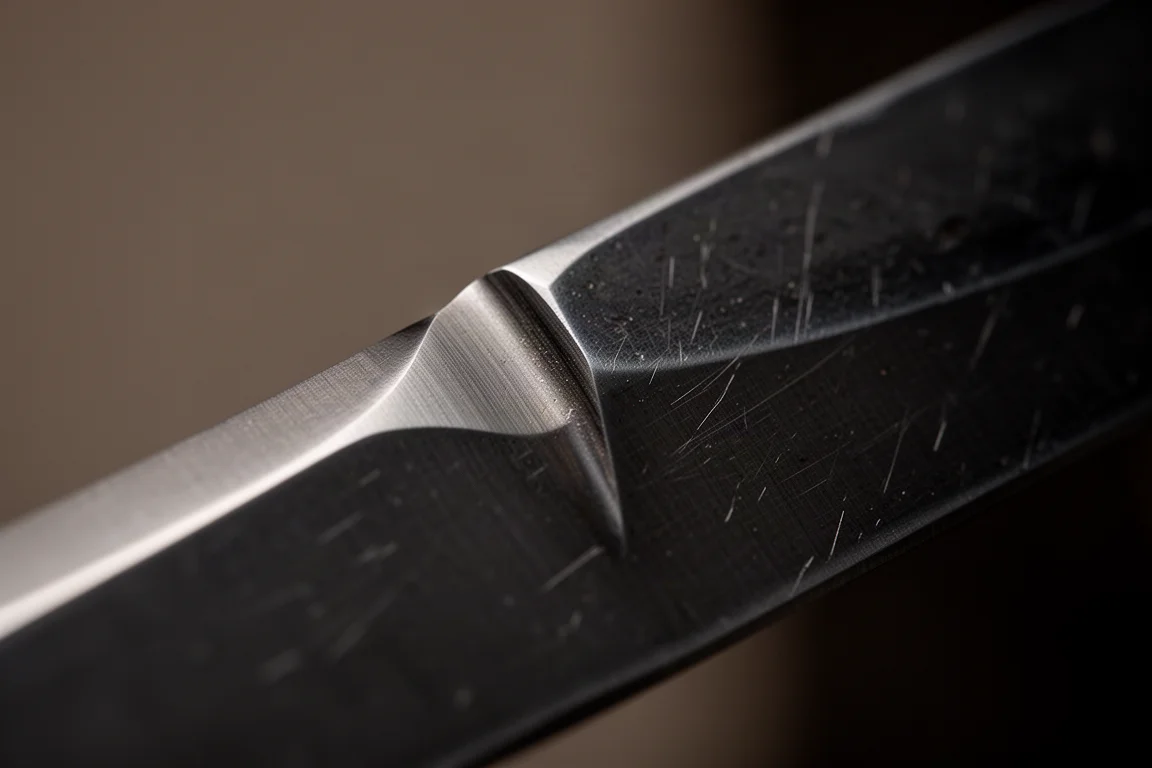
If ten or twenty strokes do not produce a burr, alternate sides rather than grinding one side completely before starting the other, or you will end up with a lopsided edge. Some heavily used sections of the blade take longer, so the whole edge needs extra time, not just the part that feels dull. On a very dull knife, roughly twenty strokes per side, alternating, until the burr forms consistently.
Deburring and Refining
Once the burr is raised on both sides, switch to the ceramic deburring wheel. Around ten strokes per side removes the burr, which otherwise gets in the way of delicate cuts like tomato skin. Keep the roller aligned with the edge rather than curling around too far, or the stone grooves can catch the knife tip.
Results With the Standard Setup
Straight out of the box, the two included stones produce a sharp, toothy edge around the 400-grit level. It will not slice sashimi, but it rips through tomato skin and handles a full prep session comfortably. A lingering burr can be cleaned up with alternating strokes on the ceramic side, or with a ceramic honing rod held at 15 degrees, which is how many shops finish their knives.
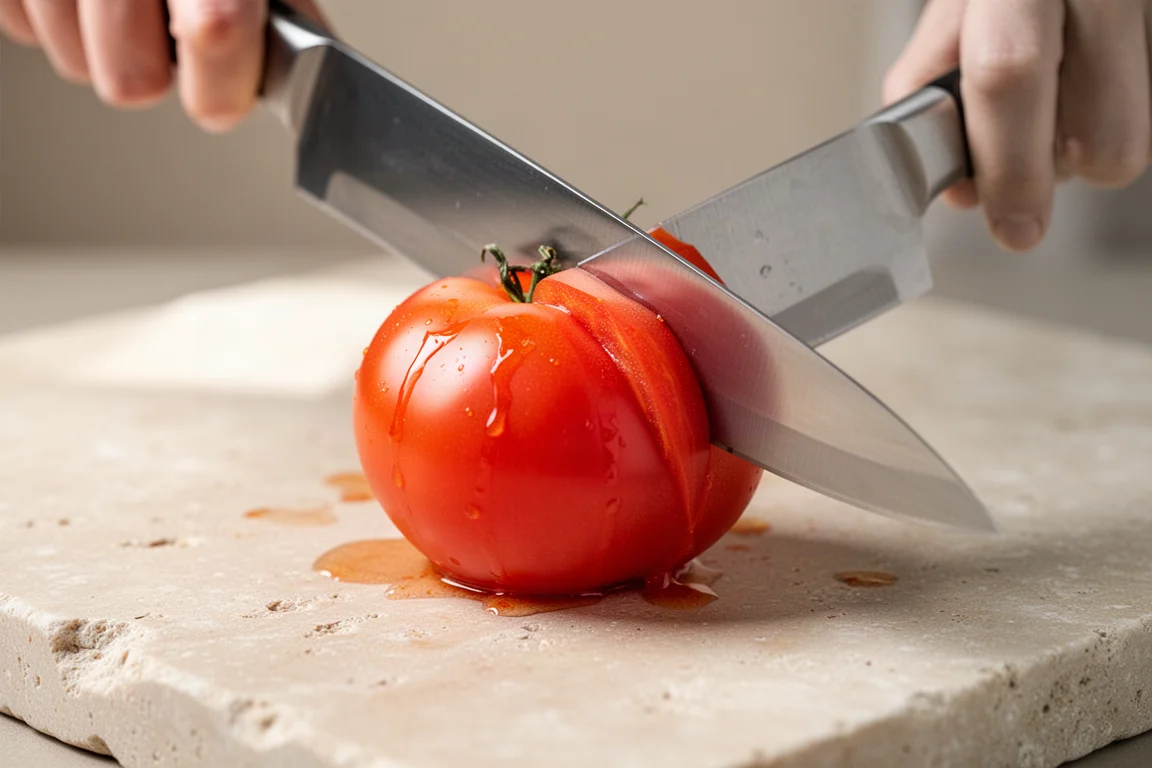
For Western knives in softer steel, that toothy edge is arguably ideal, since it bites into pepper skins and tomato skins exceptionally well.
Finishing With an Upgrade Kit and Strop
Higher-end Horl models accept swappable plates, and the upgrade kit adds fine and super fine whetstones, roughly 3,000 and 6,000 grit. These cut more slowly and need several minutes per side, but the payoff is a noticeably more polished edge that approaches the out-of-the-box sharpness of a good Japanese knife. You will not feel a burr at this stage; it is pure polishing, judged by eye and by how the knife cuts.
A leather strop finishes the job. Lay it flat, hold roughly a 15-degree angle, and sweep the edge across with very light pressure, like spreading butter on toast. Rough patches make a scraping sound where burrs remain. Regular stropping, or a few passes on a ceramic rod a couple of times a week, extends the time between full sharpenings considerably.
Who Should Buy It
Long-time whetstone users may or may not need this. The clear audience is everyone else: people who want a sharp knife without the learning curve, those without time or access to in-person instruction, and anyone for whom traditional stones are physically difficult. Even committed whetstone users with busy households may find it a practical quick-tune-up tool between full sharpening sessions. Grinding residue builds up on the blade since no water lubricant is involved, but a quick rinse handles it.
Conclusion
The Horl does what a whetstone does but removes the hardest parts of the process: angle control and technique. It will not thin a knife or replace stones entirely for enthusiasts, and the included stones deliver a workhorse edge rather than a polished one unless you add the upgrade kit. For anyone who has struggled with sharpening, though, it is one of the few quick systems that treats the knife well and produces genuinely good results.
Product link
View more details for Horl Knife Sharpener
This product is mentioned in the review. Check the specifications, options, and compatibility before buying.
View more details for Horl Knife SharpenerFurther reading
Related Reviews
Kitchen Knife Sharpening
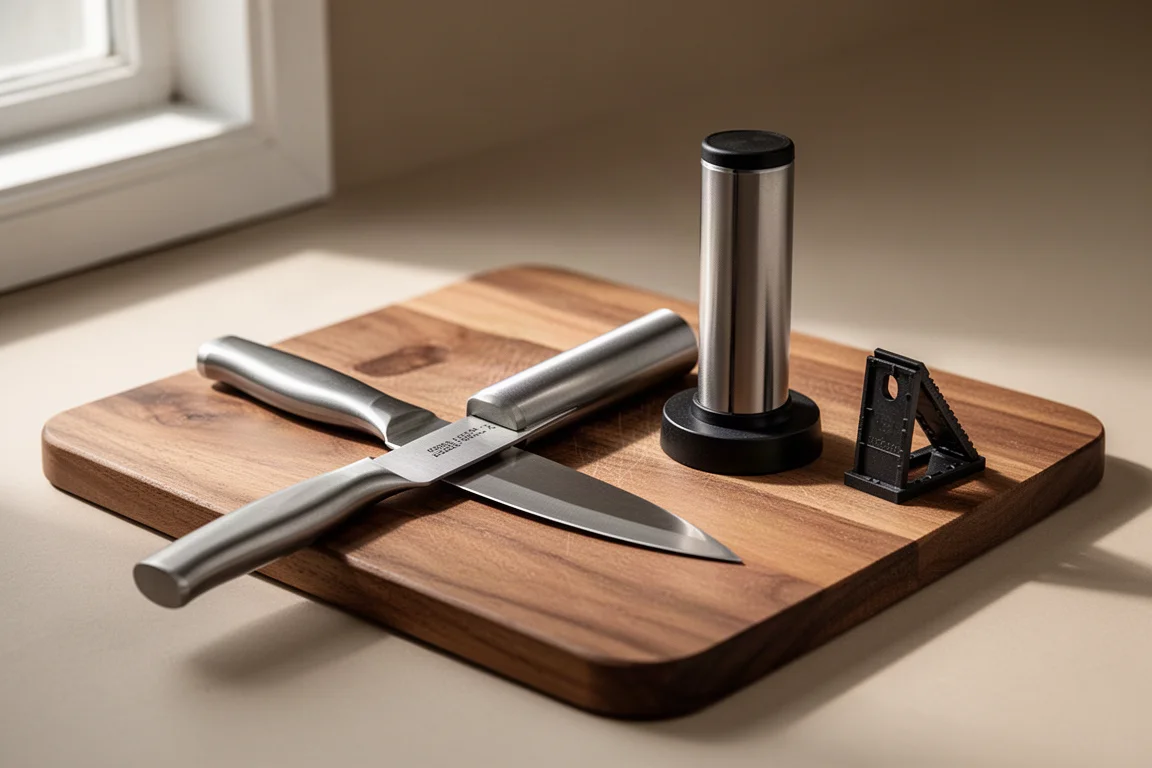
Tumbler Rolling Knife Sharpener vs Whetstone: Which One Actually Gets a Kitchen Knife Sharp?
We put the Tumbler rolling sharpener head to head with a basic whetstone setup using the Tojiro Togi Grip angle guide, and the results were clearer than expected.

Kitchen Tools
HORL Rolling Knife Sharpener Review: Beginner-Friendly Sharpening Without the Learning Curve
The HORL rolling knife sharpener delivers consistent results with minimal technique required. A practical alternative to whetstones for home cooks who want sharp knives without the maintenance hassle.
Kitchen Tools
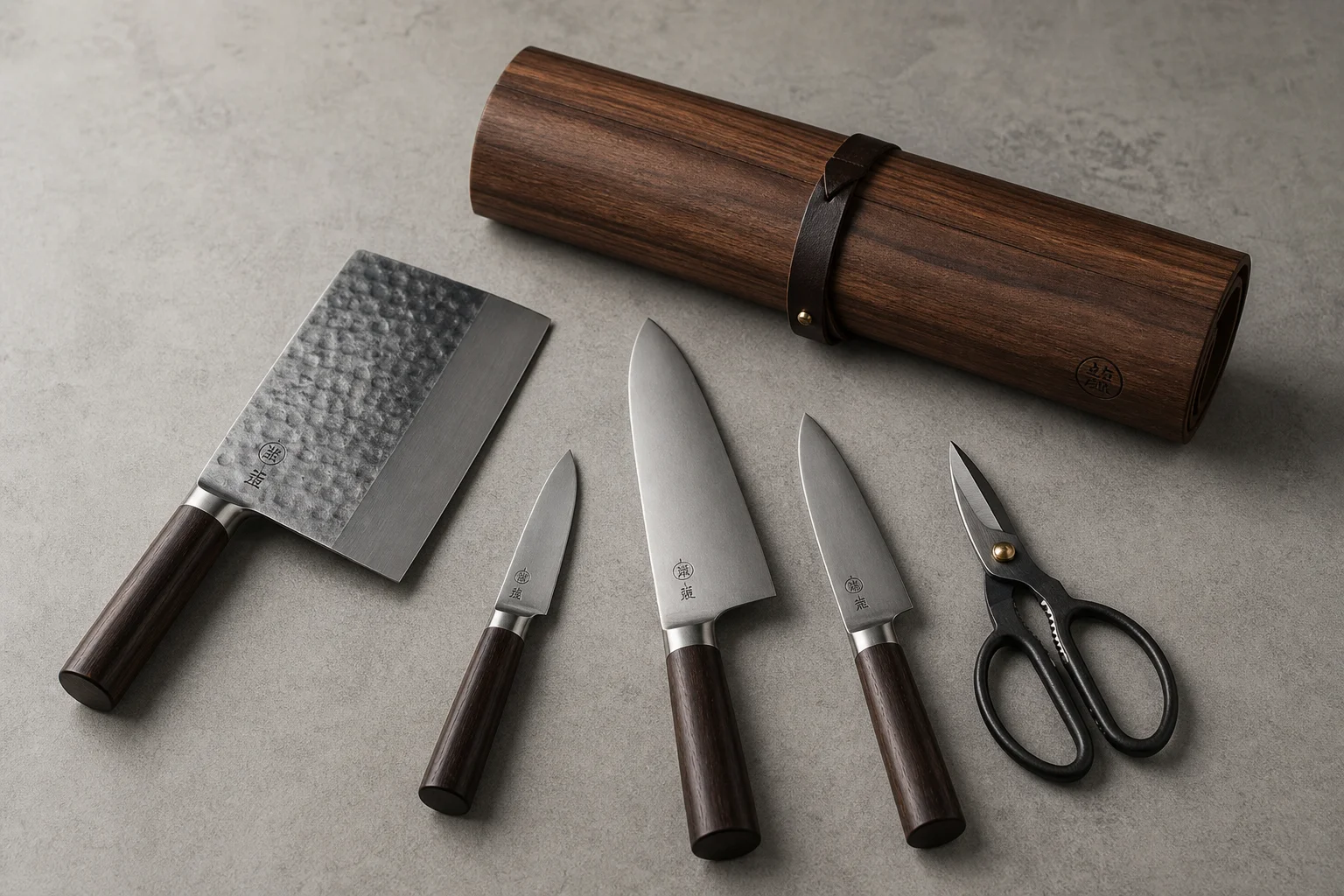
Professional Kitchen Tools: Essential Knives and Accessories Every Chef Carries
A practical guide to the knives, storage solutions, and specialized tools that professional chefs rely on daily, from carbon steel blades to budget-friendly finds.