Cookbooks
Honest Kitchen Cookbook First Look: One Day of Korean Home Cooking, Reviewed
We cooked a full day of meals from Sarah and Namsoon's new Korean cookbook to see whether the food lives up to the story-heavy format.
Introduction
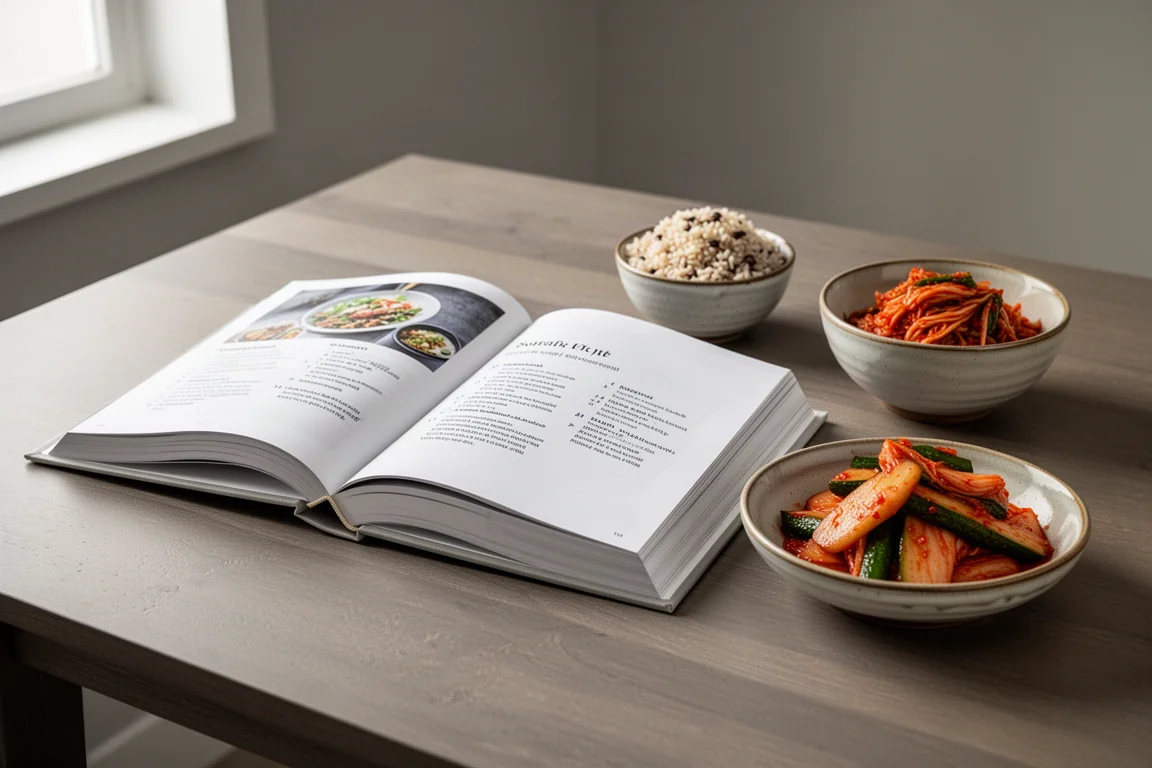
Some cookbooks ask to be cooked from. Others ask to be read. Sarah and Namsoon Ahn’s new Korean cookbook from America’s Test Kitchen tries to do both, and after reading it cover to cover and cooking a full day of meals from it, we have a clear picture of where it succeeds and where it splits opinion.
The concept behind our first look is simple: read the entire book, pick a day’s worth of dishes, cook them, and report back honestly. For this test we made three recipes: a classic mixed rice bowl, quick cucumber kimchi, and the soy-based dipping sauce that ties the meal together.
What This Cookbook Actually Is
Sarah Ahn started her project as a website, Honest Kitchen, with a simple mission: document her mother Namsoon’s cooking. Her mother ran a restaurant before the family moved on, and the recipes collected here are family recipes first, restaurant recipes second. Sarah’s popularity on social media led to a role on America’s Test Kitchen’s social team, and the publisher backed turning the website into a physical book.
The structure reflects that online origin. The front matter groups recipes into starter dishes, the most popular recipes from her channels, and impressive occasion cooking. Interspersed between sections are family history pieces, including the story of Namsoon’s journey from North Korea to South Korea and eventually the United States, and explanations like why some rice dishes mix in barley and other grains, a legacy of periods when rice was scarce and rationed.
That historical context is genuinely one of the book’s strengths. The personal storytelling is more divisive. Roughly speaking this is two-thirds cookbook and one-third diary, and if you are not already familiar with Sarah’s online content, the tone can feel jarring. Several stories are emotional, sometimes melancholy, and not every reader will want that much narrative between recipes.
There are also quirkier editorial choices. A section listing the reasons Namsoon’s cooking is special reads a little like a proud-family tribute, and the recurring references to one particular warehouse club grocery chain come up often enough to become a running distraction. And then there is the publisher’s own introduction, which spends its opening paragraphs describing the location and square footage of its test facility rather than the food, and closes by directing readers to its app, website, newsletter and social channels. It is an unusual choice that no other cookbook publisher does quite the same way.
Cooking Three Dishes From the Book
We cooked three dishes for one full day of meals: cucumber kimchi, a mixed rice bowl built from separately seasoned vegetables, and the accompanying soy sauce.
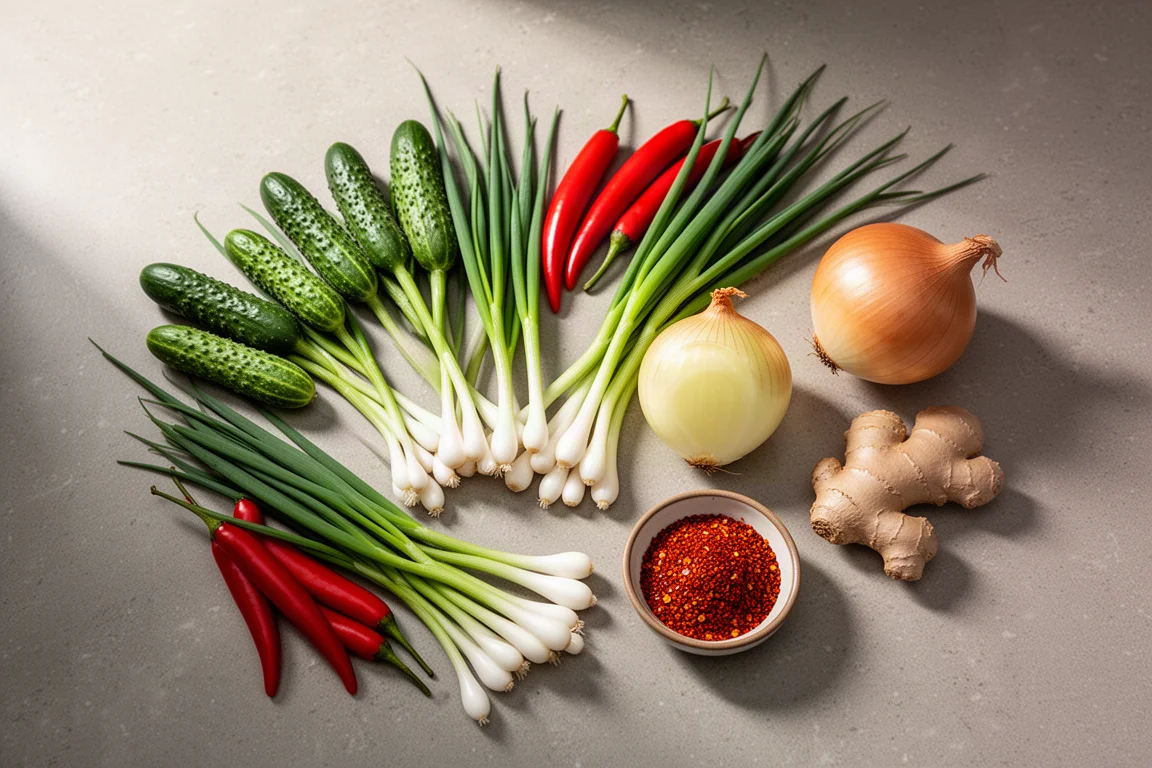
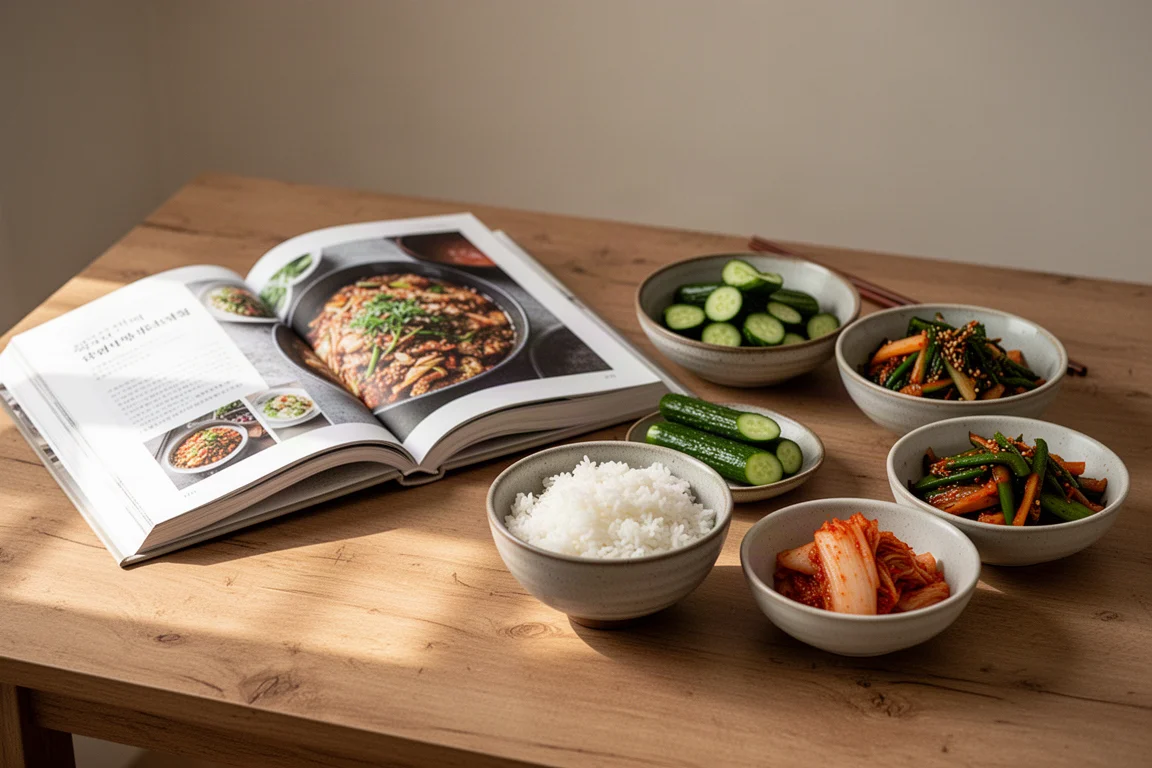
The cucumber kimchi was the standout of the day. The method seasons the cucumbers with salt and sugar first to draw out water so the kimchi does not become diluted, a small piece of technique that the book explains well. The result delivers exactly what good cucumber kimchi should: fresh cucumber flavor, real heat up front, and a light fermented fish note in the background rather than an overpowering one. Three tablespoons of fish sauce sounds like a lot, but it stays restrained.
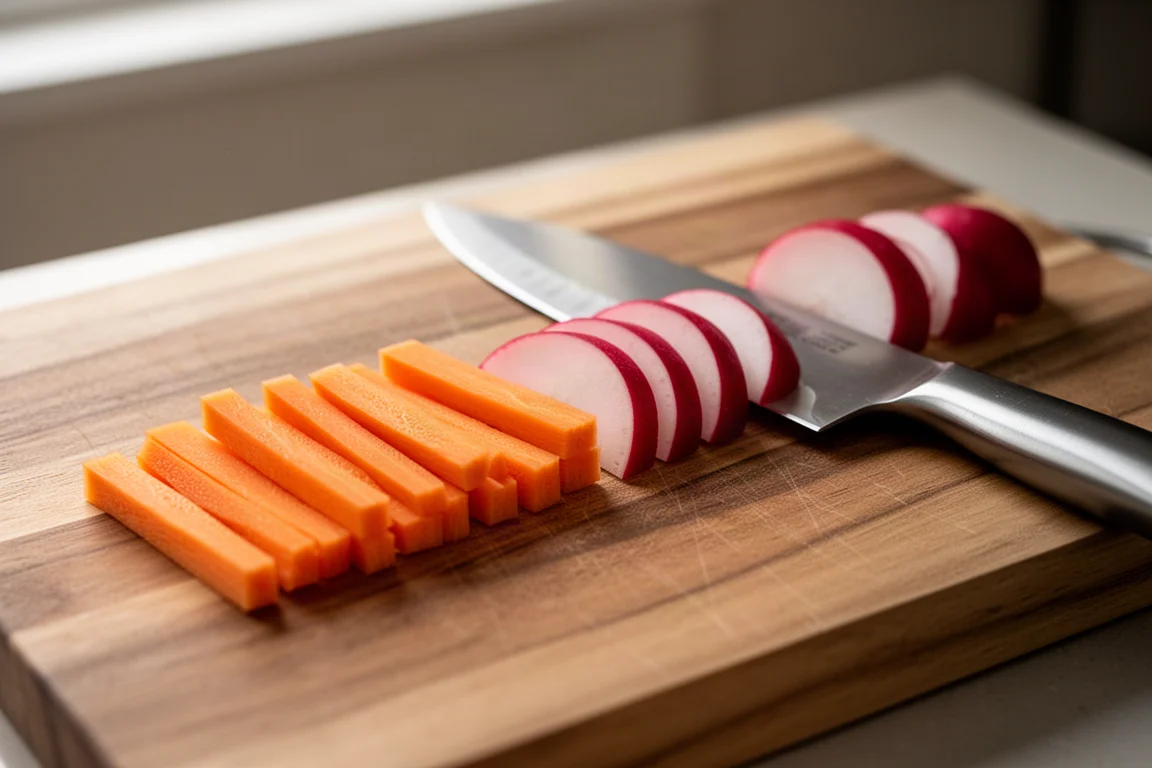
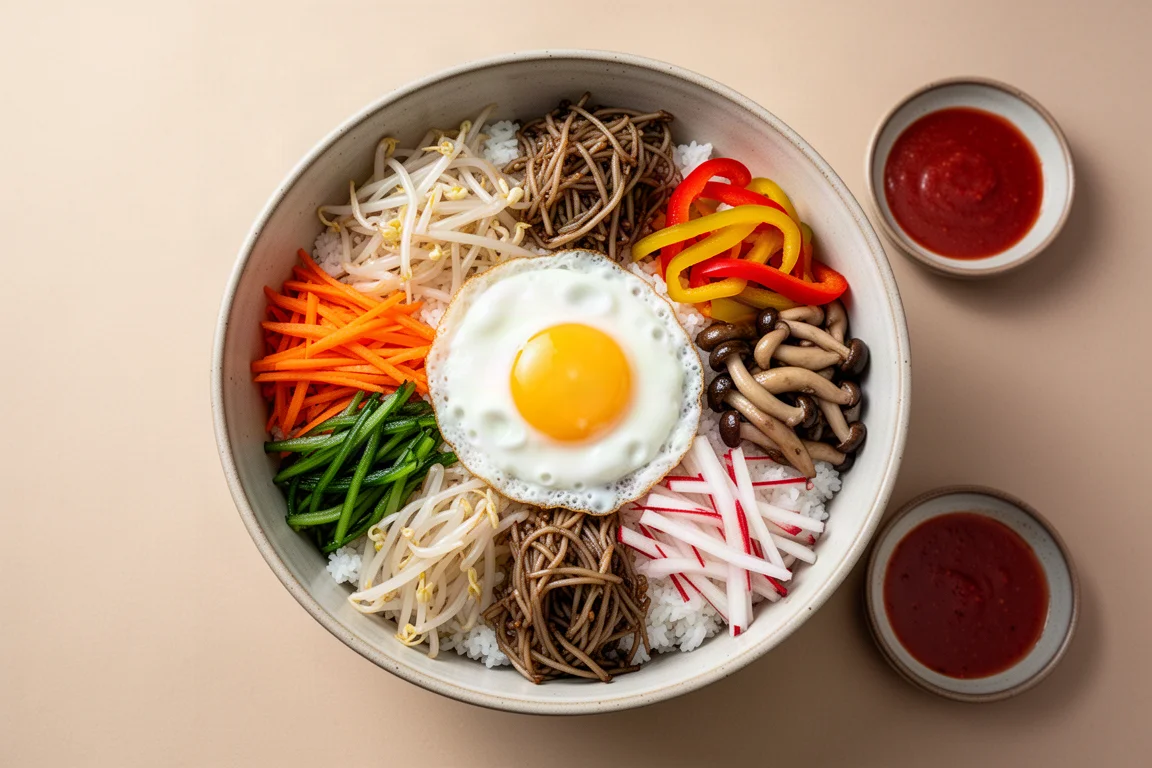
The mixed rice bowl is a flexible clean-out-the-fridge dish, and the book says as much, encouraging substitutions. We steamed oyster mushrooms, prepared bean sprouts, carrots, bell pepper and radish, each seasoned individually, then arranged everything over rice. The book is emphatic that uniform knife work matters so no single ingredient dominates, and it backs this up with genuinely useful cutting guides, including a plank-first approach to round vegetables like carrots that is easier than the classic lengthwise method. Matchstick work is still the most tedious task in cooking, and the book admits it.
A few instructions frustrated us. Quantities listed as “divided” force you to reconstruct which portion goes where, and some measurements give tablespoons for one ingredient and grams for another, without consistency. These are small things, but they add friction when you are juggling multiple dishes.
How the Meal Tasted
The flavors land the way good Korean home cooking should. The mixed rice bowl reads sweet-forward rather than spicy-forward, with the sauce adding heat that stays balanced. Individual components performed differently: the bean sprouts were the weakest element, slightly dusty, while the marinated radish, carrots, egg and roasted bell pepper all earned their place. The rice absorbs some of the seasoning, so a little extra salt helps.
The cucumber kimchi, eaten alongside, is where the day peaked. Its heat and garlic cut through the milder rice bowl perfectly, and it is the kind of recipe that makes the whole book feel worth it. If we cook more from this title, it will be the kimchi chapter first.
One more thing worth knowing: only a portion of the recipes here, roughly thirty of the book’s one hundred eleven, also appear on Sarah’s website, and the web versions carry more mechanical detail, brand recommendations, and pairing suggestions. The book trades that depth for story, which is the central trade-off of the whole project.
Who This Book Is Really For
This is a book that works best for readers who already follow Sarah’s content and want a physical artifact of it. If you come in cold, the heavy storytelling, much of it tied to family history and loss, may feel unexpected for a cookbook. If you already know and love her voice, the same material will feel like part of the appeal.
For cooks who mainly want technique and structure, the useful information is there, just compressed. Instructions run tight, often three short paragraphs, because so much page space goes to prose. Longer recipes stretch awkwardly across pages as a result. The recipes themselves are easy to follow, the timing held up well, and the whole day’s cooking took remarkably little effort for the payoff.
If your priority is cooking intuition over memoir, Monica Lee’s Sunmat is a strong companion. It frames Korean cooking as developing an instinct for what is happening in the pan rather than measuring every quarter teaspoon, which suits recipes that repeat the same salt-and-sugar ratios across components. For readers who found the storytelling here too heavy, that book takes nearly the opposite approach.
Buying Advice
Buy the Honest Kitchen cookbook if you are drawn to Korean home cooking with a family story attached, and especially if you want approachable banchan-style side dishes and kimchi recipes that genuinely deliver on flavor. Skip or supplement it if you want maximum technical detail per page; the author’s own website fills that gap better than print allows. Pair it with Sunmat if you would rather build intuition than follow stories.
Conclusion
The food we cooked was good, in a couple of cases very good, and the cucumber kimchi alone justifies the effort for us. The book’s split personality is real, though: a solid Korean cookbook wrapped around a deeply personal family memoir. Whether that combination delights or frustrates you depends almost entirely on how you feel about story-driven food content. Go in knowing which kind of reader you are, and this book will treat you accordingly.
Product link
View more details for Honest Kitchen Cookbook
This product is mentioned in the review. Check the specifications, options, and compatibility before buying.
View more details for Honest Kitchen CookbookFurther reading
Related Reviews
Cookbooks
Africana Cookbook Review: A Pan-African Journey Worth Cooking Through
We cooked 13 dishes from Africana by Llorado Umashayor over one week. Here is what worked, what stumbled, and who this beautiful cookbook is really for.
Cookbooks
By Heart by Haley Catalano: First Look at a Calm, Practical Cookbook
We cooked two recipes from By Heart by Haley Catalano, including a tomato-based sandwich and chicken fat mashed potatoes, to see if the book's calm, detail-first approach holds up in a real kitchen.
Cookbooks
Charred by Genevieve Taylor Review: Vegetable Grilling Beyond Corn and Halloumi
We cooked 11 recipes from Charred over four days. Here is what works, what falls flat, and whether the book earns a spot on your shelf.