Kitchen Essentials
Home Cook Kitchen Essentials: Boards, Cookware, and Tools Worth Owning
Five kitchen essentials that cover cutting, cooking, grating, and storage, plus honest guidance on which upgrades actually matter.
Introduction
Setting up a home kitchen does not require a drawer full of gadgets. A small set of well-chosen tools covers nearly every task a home cook faces, and choosing well means your knives stay sharper, your pans last longer, and your prep work gets easier. This guide walks through the essentials: your main knives, a cutting board that protects them, cookware that handles everything from eggs to tomato sauce, a few hand tools you will actually reach for, and one cheap workhorse most people overlook.
Start With the Right Knives
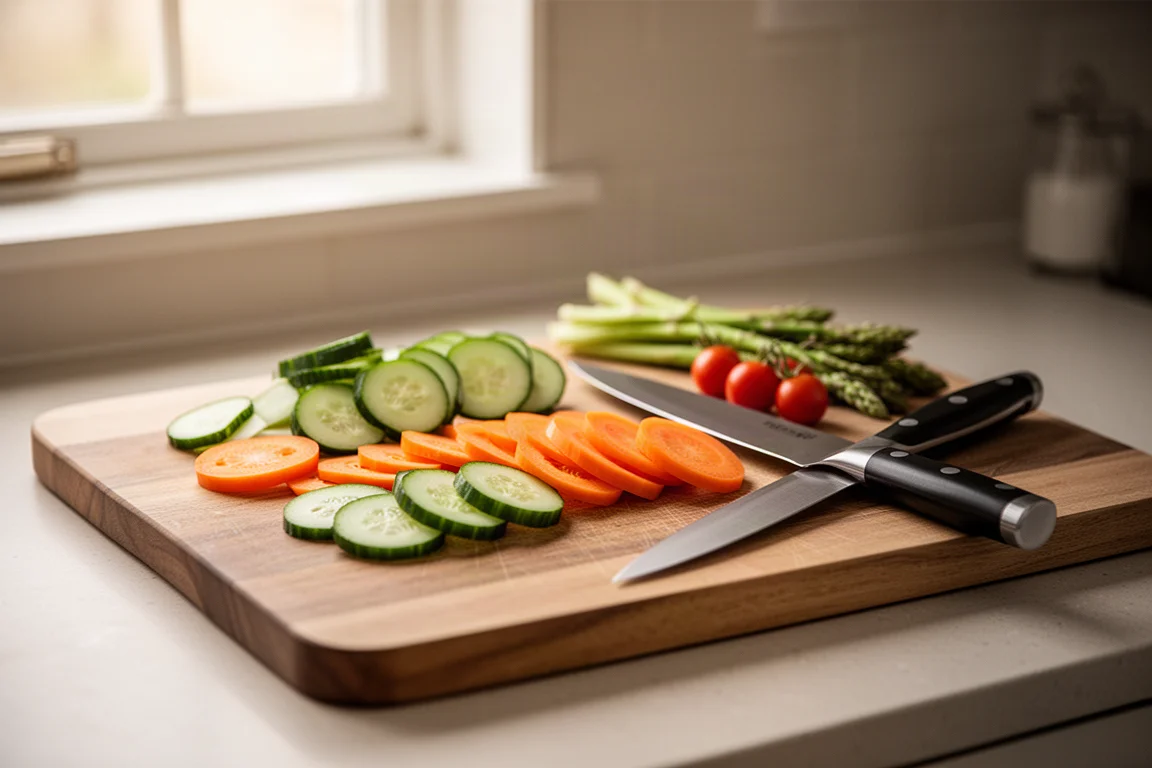
Before the boards and pans, it helps to know what knives you actually need. You do not need four knives. You need one main knife and one small companion. For the main knife, a santoku, a bunka, or a gyuto will all do the job. The santoku and bunka are compact and versatile, ideal for smaller kitchens, and differ mainly at the tip: the bunka has a reverse tanto (k-tip) that lends itself a little better to intricate tip work like brunoise cuts of shallot and garlic, while the santoku has a sheep’s foot tip. The gyuto, the Japanese equivalent of a chef’s knife, adds length for slicing and larger vegetables while still handling fine work, and its profile supports both push-pull chopping and rocking cuts. If you have the space and comfort with a longer blade, the gyuto is the more versatile pick.
Complement that with a petty knife. It handles small jobs like halving hard-boiled eggs, trimming strawberries, breaking down a chicken, and fine garnish work, so your main knife stays on the board and your breakfast and lunch prep stays quick.
Cutting Boards That Protect Your Edge
Whatever knife you choose, do not cut on the countertop. The board is the second essential, and wood is the way to go. Any wooden board beats plastic or bamboo, and glass or stone boards should be avoided entirely if you care about your edge.
Larchwood Enterprises End-Grain Cutting Board
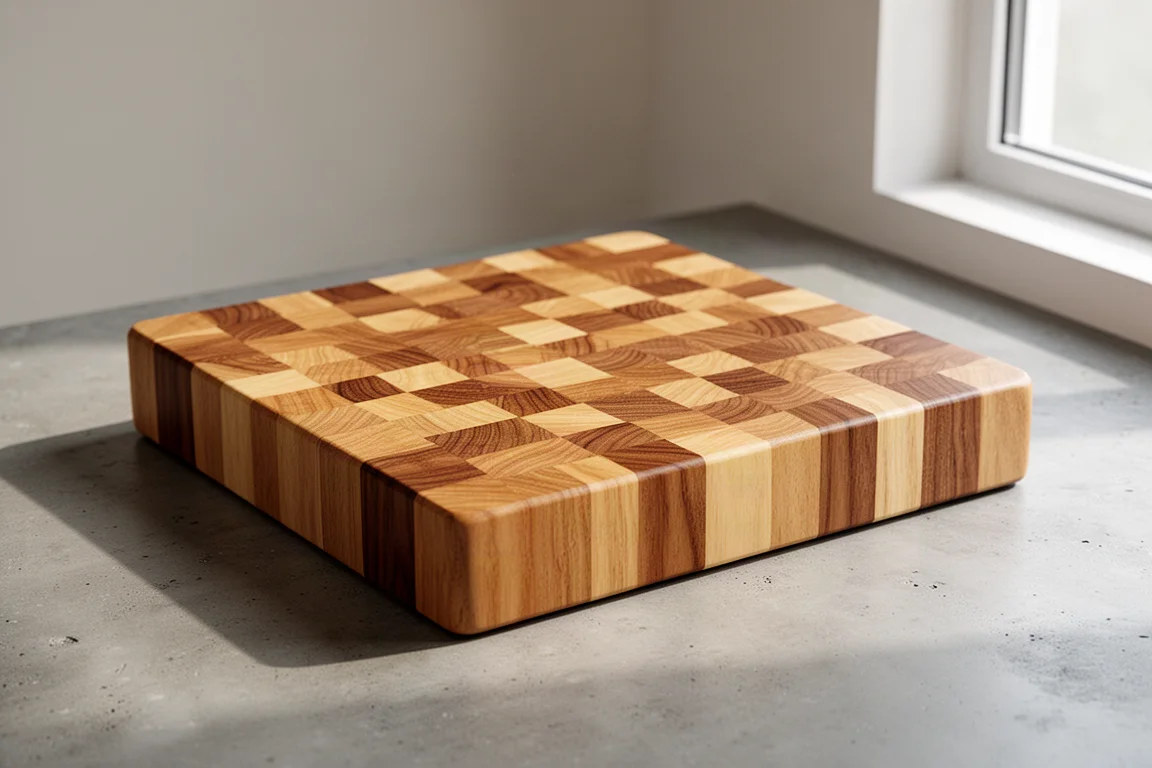
The end-grain boards from Larchwood Enterprises, made in Cape Breton, Nova Scotia, stand out. Because the wood fibers stand upright, the knife edge slips between the grains instead of cutting across them, so the board is gentler on your edge and effectively self-healing. The wood is naturally antimicrobial, and these are described as lifelong products, with stories of boards being passed down to grandchildren. If you want something that keeps your knives sharp for longer and lasts decades, this is a wise investment.
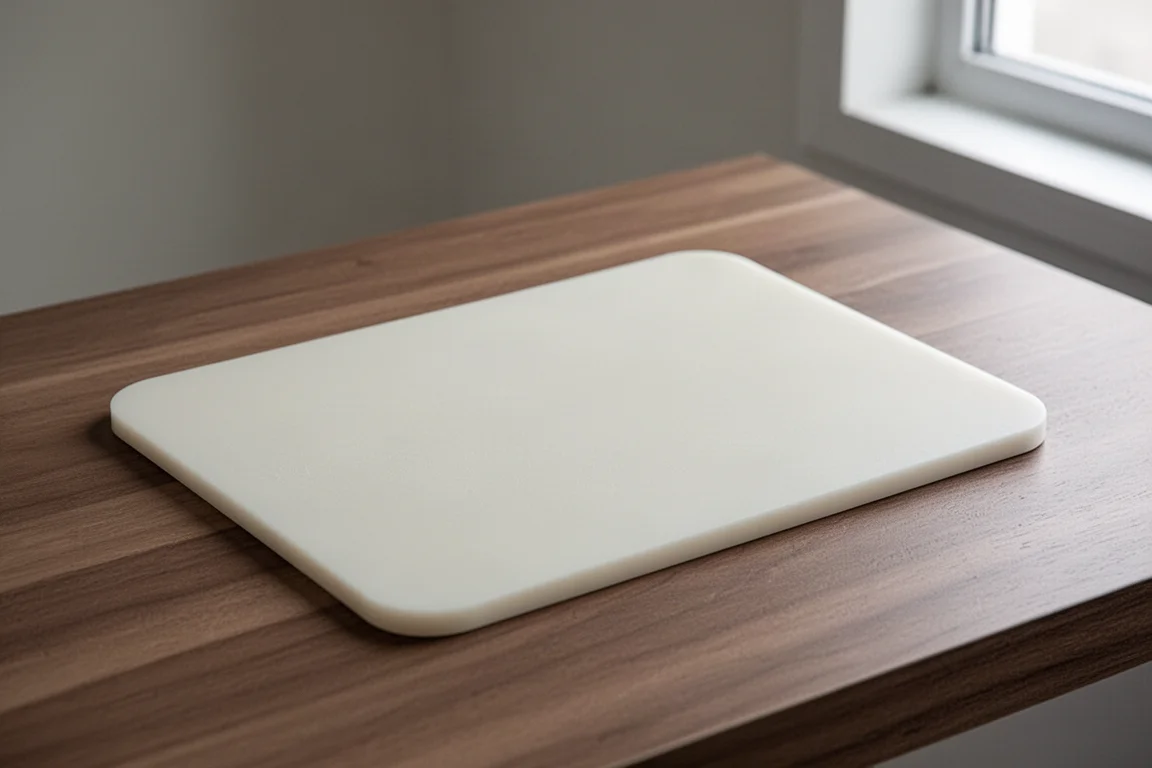
Hasegawa Hi-Soft Cutting Board
On the other end of the spectrum, the Hi-Soft boards from Hasegawa are a fantastic option if you would rather skip a large wooden board. They are even kinder to knife edges than wood, keeping your knives sharp for longer. The trade-off is looks: they will not dress up a countertop the way a large end-grain board does, but functionally they are hard to beat.
Keep a Beater Knife On Hand
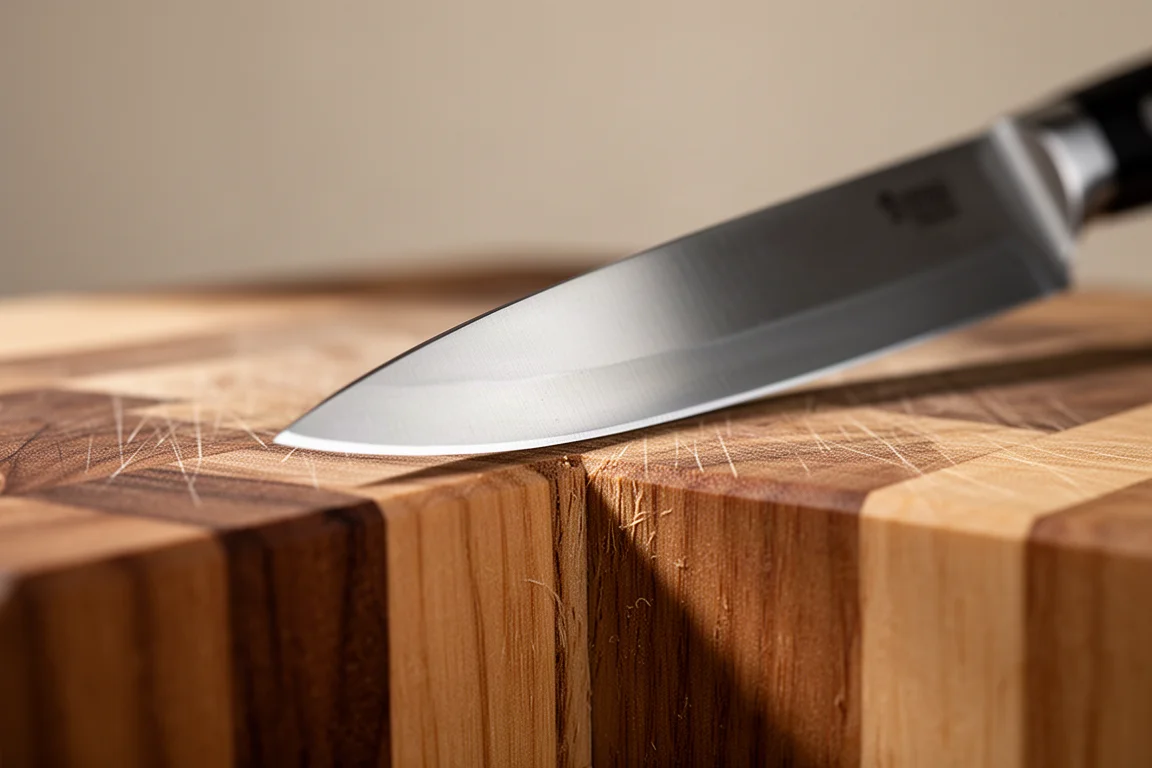
Not an upgrade, but worth keeping: the old or inexpensive knife you were about to replace. Keep it for the jobs that would damage a nicer Japanese knife. Cutting through bones, frozen food, hard cheese rinds, nuts, hard candies, plastic, or splitting a lobster all fall into this category. The rule of thumb: anything you would not bite through with your teeth should not be cut with your good knife. Even beater knives will chip eventually, but that is exactly what they are for.
Cookware: One Pan, One Pot
For cookware, two pieces cover almost everything a home kitchen demands.
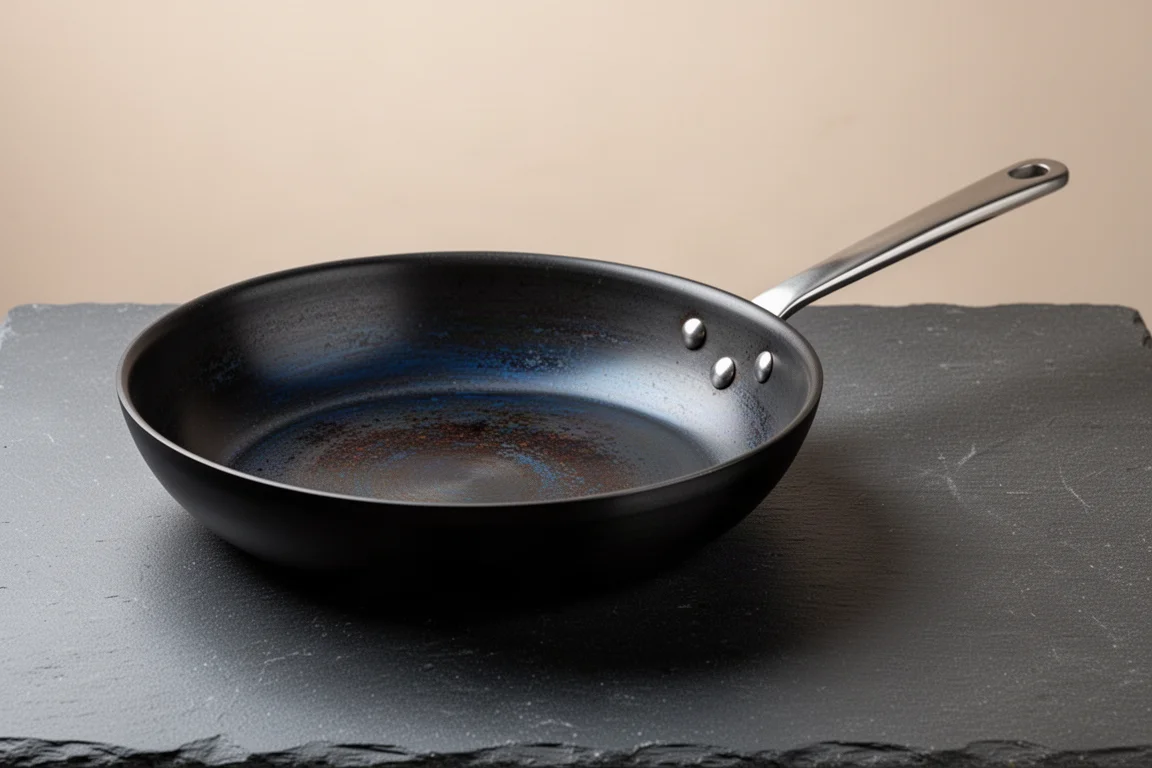
De Buyer Carbon Steel Pan
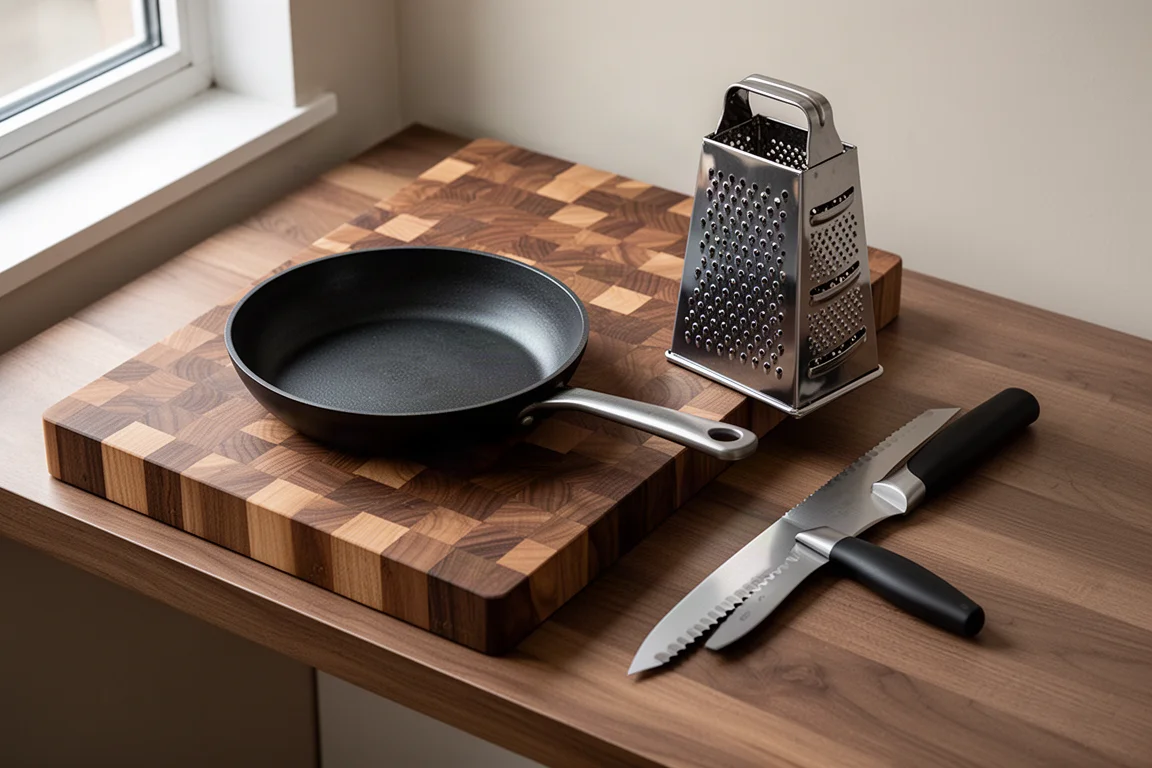
A carbon steel pan like this one from De Buyer heats very evenly, so you avoid the burned-on-one-side, undercooked-on-the-other problem. Better still, you can develop a genuine non-stick surface by seasoning it with oil: bring the oiled pan up to its smoke point, pour off the oil, and wipe it out. No coating concerns, and metal utensils are fair game, which pairs perfectly with a metal fish spatula. One caution: acidic ingredients like tomato sauce and vinegar will strip the seasoning and turn the surface sticky, so save those dishes for the pot.
A large stainless steel stock pot rounds out the set. It handles mashed potatoes, stock, rice, and, importantly, all of your acidic cooking that would ruin a seasoned carbon steel pan.
Hand Tools That Earn Their Place
A few hand tools see more daily use than anything else in the drawer.
The Y-style vegetable peeler is the first. It stays sharp a long time, works well held upside down, and good versions add a ginger grater and a potato-eye remover on the corner.
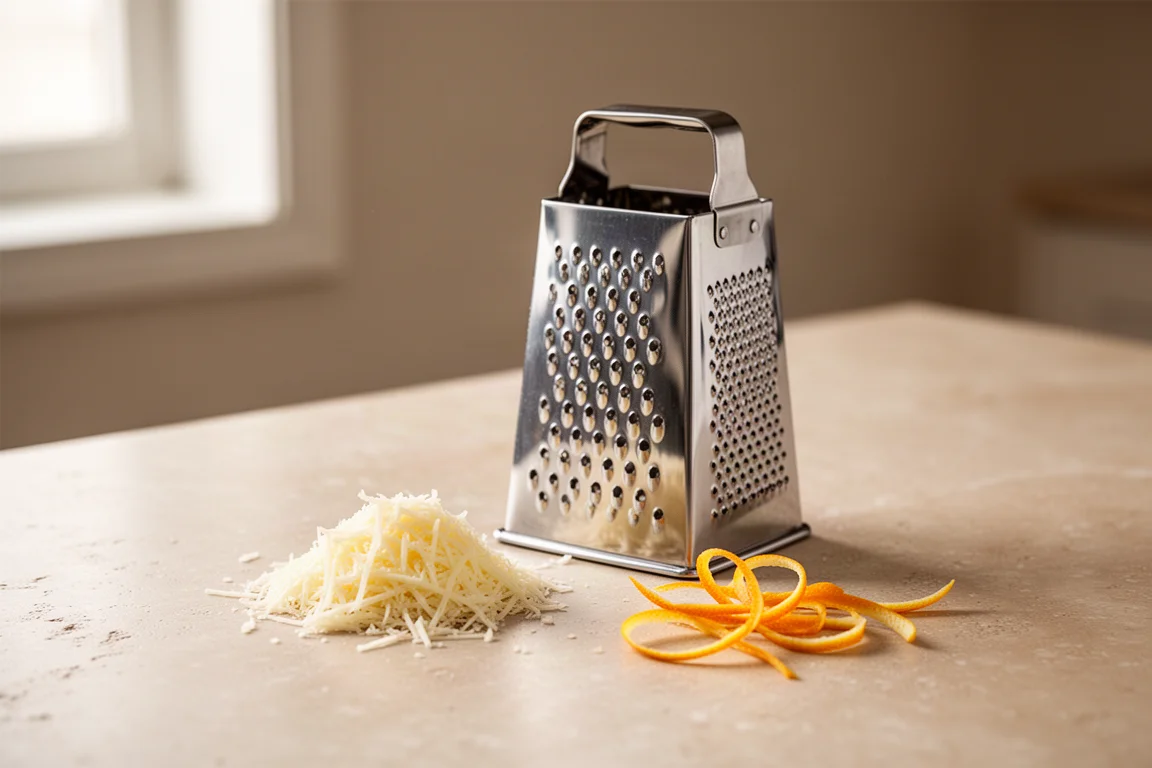
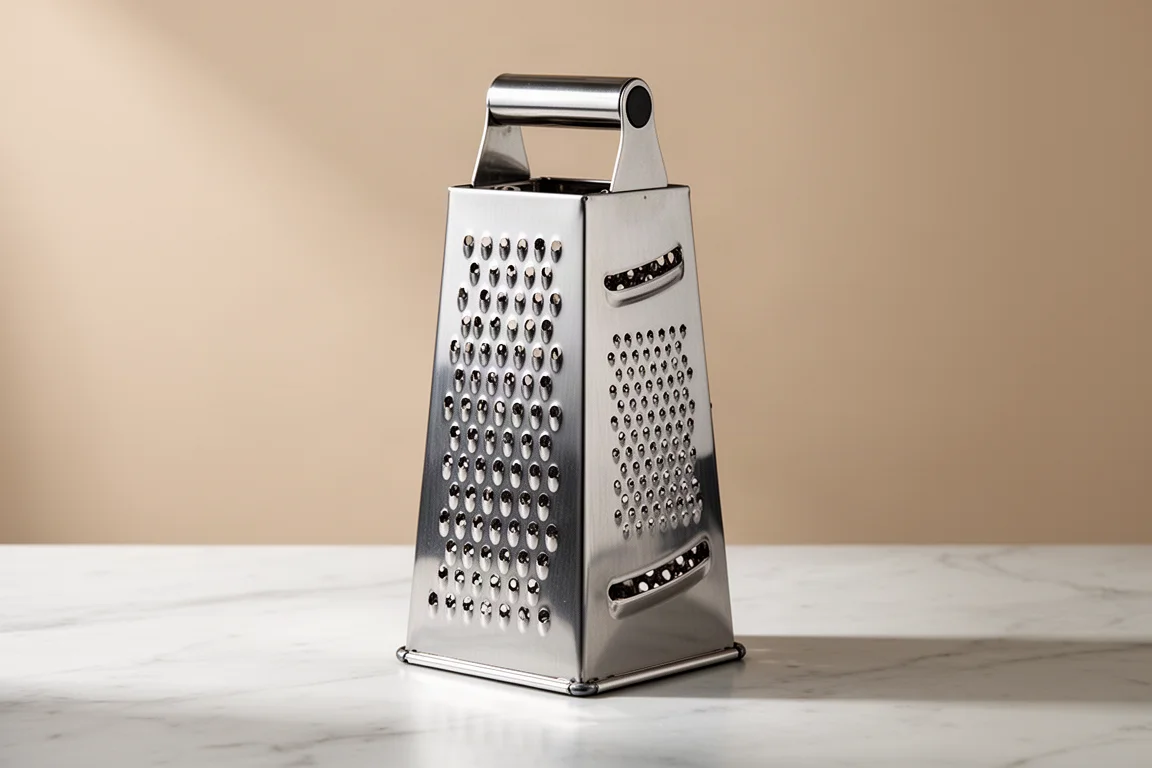
The box grater is the next genuine game changer. The Microplane box grater offers multiple sides, including a mandoline side (handle it with care), a standard cheese grater, a zester, and more. It is the kind of purchase that prompts the same reaction from many buyers: hesitation at the price, then regret at not buying it twenty years earlier.
Rounding out the kit: a bench scraper for scooping prep off the board and sparing your knife edge from scraping duty, an angled metal fish spatula that flips food in the pan with ease and works safely on carbon steel, and a pair of tweezer tongs for delicate flipping, precise plating, and even reaching the nooks and crannies when cleaning the kitchen.
Store Your Knives Properly
The last essential is not a specific product but a habit: some form of knife storage. Tossing knives loose in a drawer means edges bumping into other knives and hard objects, dulling your prized possessions quickly. A wall-mounted magnetic strip, keeping knives in their original boxes, or simple knife guards all solve the problem. The goal is simple: store your knives safely, keep them accessible, and protect the edges you invested in.
The Bread Knife Exception
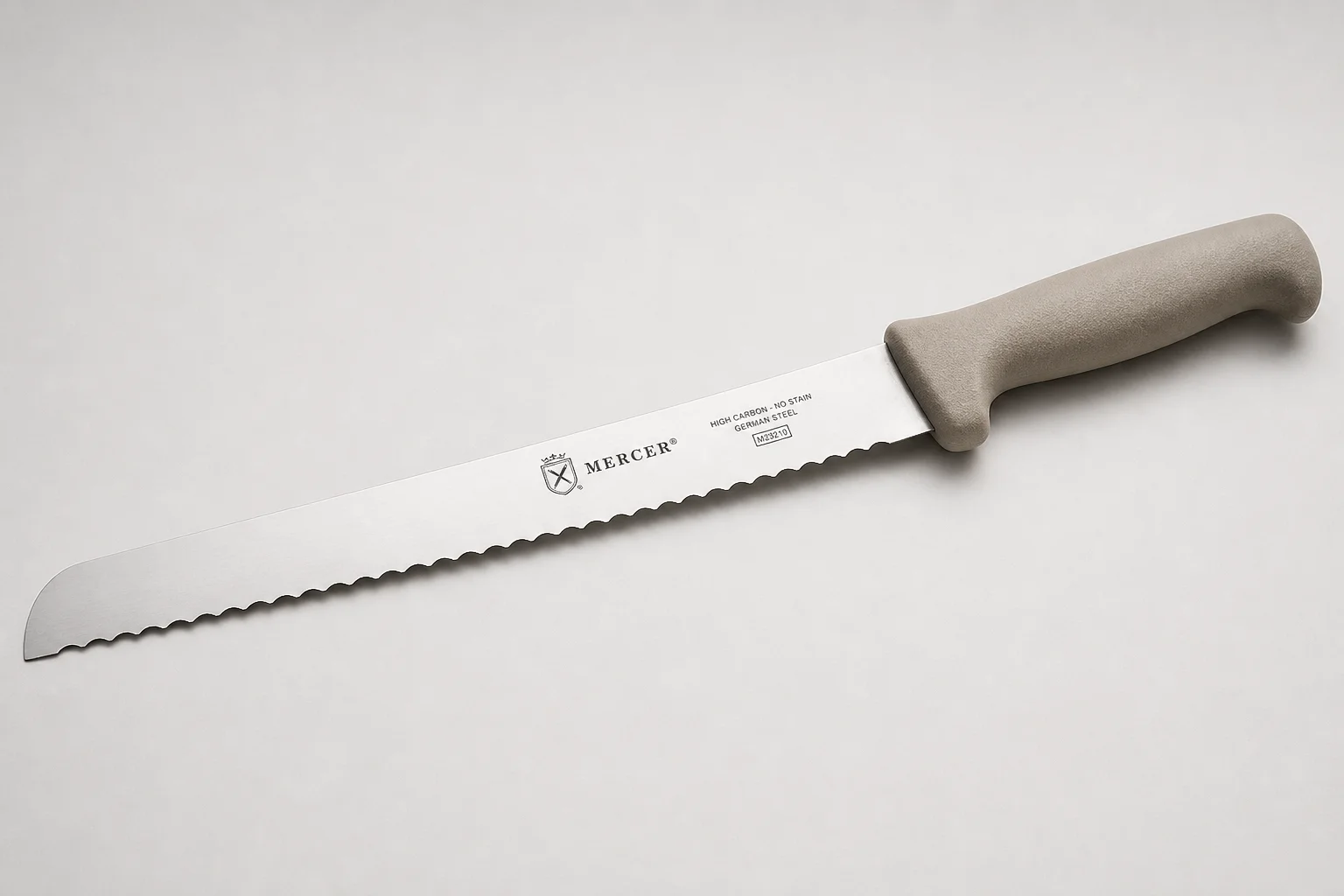
A bread knife is genuinely essential, but it is the one tool where spending big money makes little sense. Serrated knives are notoriously difficult to sharpen, and finding someone who can do it properly is hard, because only the manufacturer tends to have the exact sized sharpening tools for each mini serration.
The Mercer bread knife solves this neatly. Available for around 30 dollars, it is a no-frills knife that feels good in the hand and arrives razor sharp. When it dulls in five years or so, you simply spend another 30 dollars rather than hunting for a sharpening service. There is no reason to spend 300 dollars on a bread knife you cannot realistically maintain.
Conclusion
A capable kitchen comes down to a short list: one main knife paired with a petty, a board that protects your edges, a carbon steel pan plus a stock pot, a handful of well-made hand tools, proper knife storage, and an affordable bread knife. Every item here earns its spot through daily use rather than novelty, and together they cover nearly everything a home cook will encounter.
Further reading
Related Reviews
Kitchen Essentials
Best Aluminum Foil 2026: Four Picks for Everyday Cooking
We compare regular and heavy duty foil from Reynolds, Kirkland Signature, and If You Care, plus what actually matters when choosing a roll.
Kitchen Essentials
Pam vs Chosen Foods Cooking Spray: Which One Belongs in Your Kitchen?
Traditional propellant sprays versus propellantless options, and why the delivery mechanism matters more than the oil inside.
Kitchen Essentials
Best Garlic Shortcuts: Two Pantry Options That Actually Taste Like Garlic
We look at the garlic substitutes worth keeping on hand, and the two options that actually deliver real garlic flavor without peeling or mincing.