Desk Setup
A High-End Desk Setup for Speakers and Headphones: 10 Parts That Earned Their Place
A four-month desk build for loudspeaker and headphone listening, covering the sit-to-stand desk, the 5K monitor, the DAC, the amplifier, the subwoofer and the parts that did not work out.
Introduction
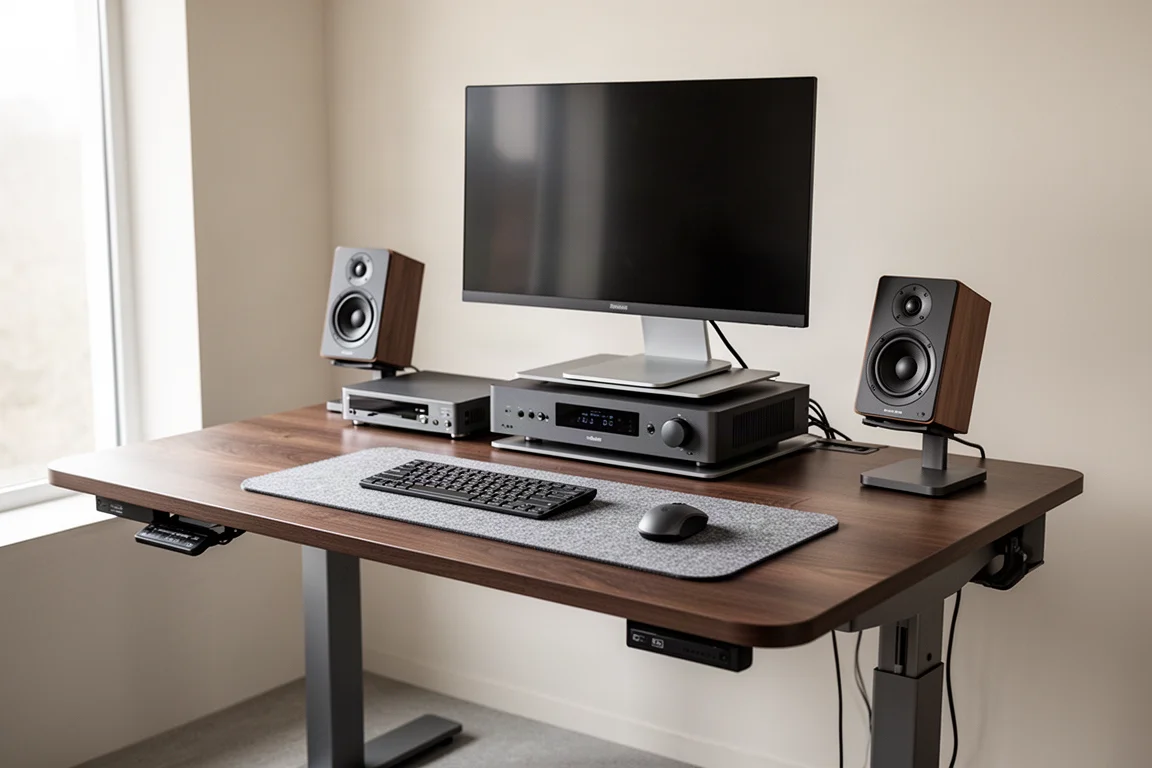
A desk that has to serve both loudspeaker and headphone listening asks more of its parts than most office setups. It has to carry the weight of real audio hardware, keep a small forest of cables out of sight, and still leave enough usable surface for a keyboard, a mouse and a monitor.
This build took around four months and went through several configurations before it settled. Components came and went, more than one pair of speakers was tried, and the final chain now runs from a laptop through a dock, a DAC and preamp, an integrated amplifier and a compact subwoofer. What follows is the configuration that stayed, with the trade-offs worth knowing before buying any of it.
How This Desk Setup Was Evaluated
Four things decided whether a component earned a permanent place. First, load capacity: the desk itself had to support up to 120 kg, and the speakers standing on it weigh 13 kg each. Second, cable management, because a desk full of computer and audio gear fails quickly once the cables are visible from the front. Third, footprint depth: on a desktop that is 58 cm deep, the amplifier had to fit into a strip roughly the depth of a hardback book. Fourth, and most importantly, whether the sound justified the space it occupied.
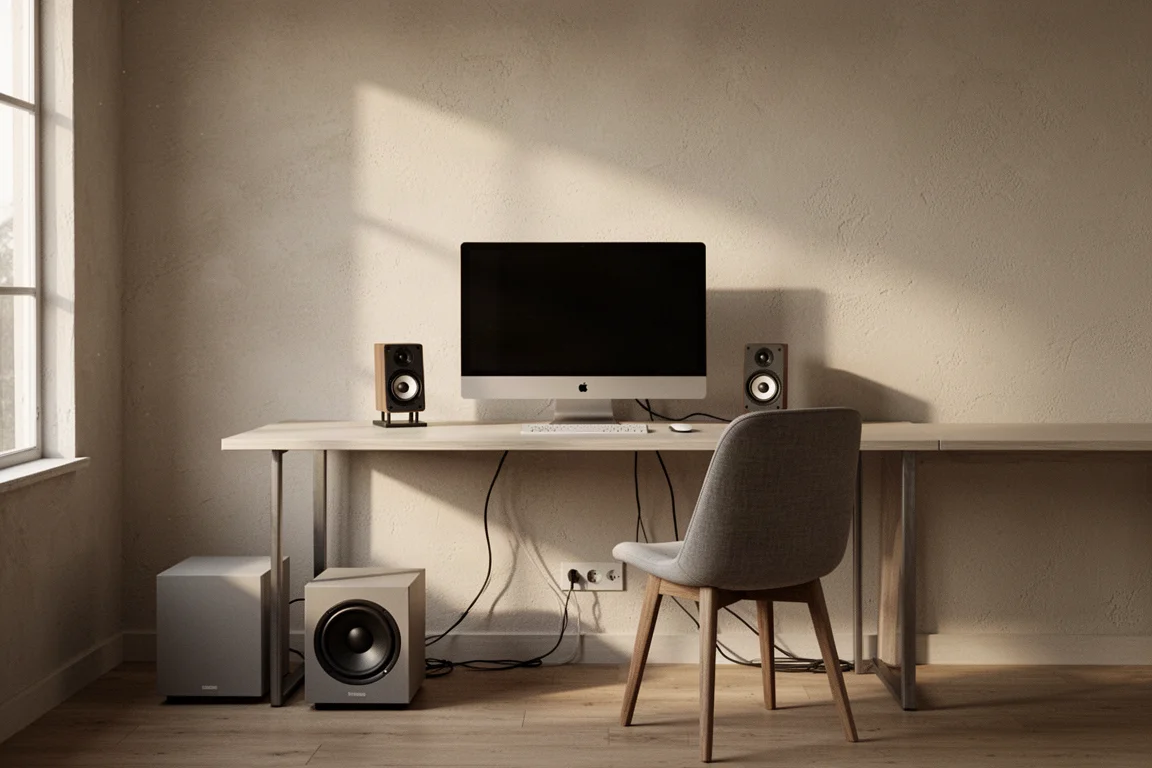
The audio side also had to work in a room where the desk sits close to the front wall. That position exaggerates the mid-bass lift of small speakers and provokes room modes once a subwoofer joins in. It shaped two of the most important choices in the final system.
The Foundation: Secretlab Magnus Pro
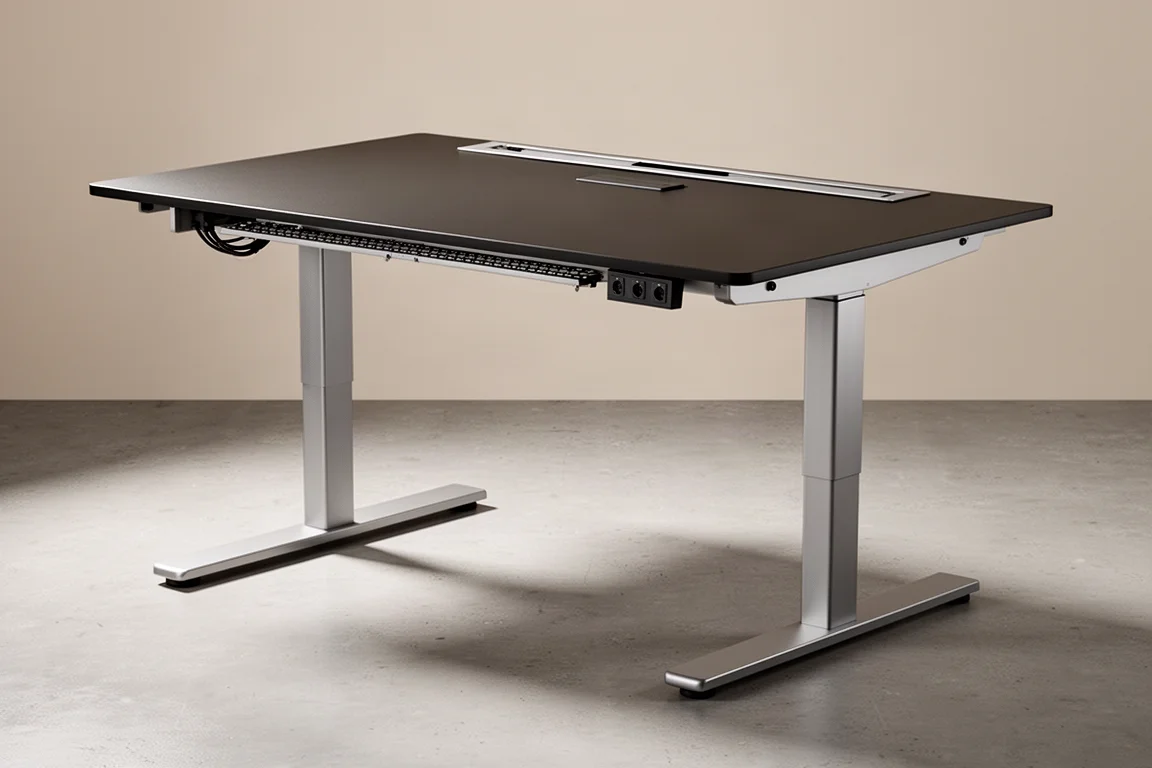
The Secretlab Magnus Pro is a motorized sit-to-stand desk with a steel chassis and an MDF top covered by a steel plate. The motor is whisper quiet, and the frame feels improbably solid because the manufacturer rates desk support up to 120 kg. The usable desktop measures 150 by 58 cm, which is not the deepest surface on the market, and 12 cm of that depth goes to a built-in feature at the rear.
Two features carried the decision. The first is a built-in power column that routes electricity from the floor, up through the leg, to a socket at desktop level, so only a single cable to the wall stays visible. The second is a full-length cable management tray hinged at the back of the desk. With a monitor, a dock, two laptops, a converter, an amplifier and a subwoofer in the chain, nothing dangles from the back of the desk, and the cables live in that tray instead. The aesthetic leans distinctly towards gaming, which will not suit every office, but the cable tray alone justifies the spend.
The Display: Asus ProArt PA27JCV
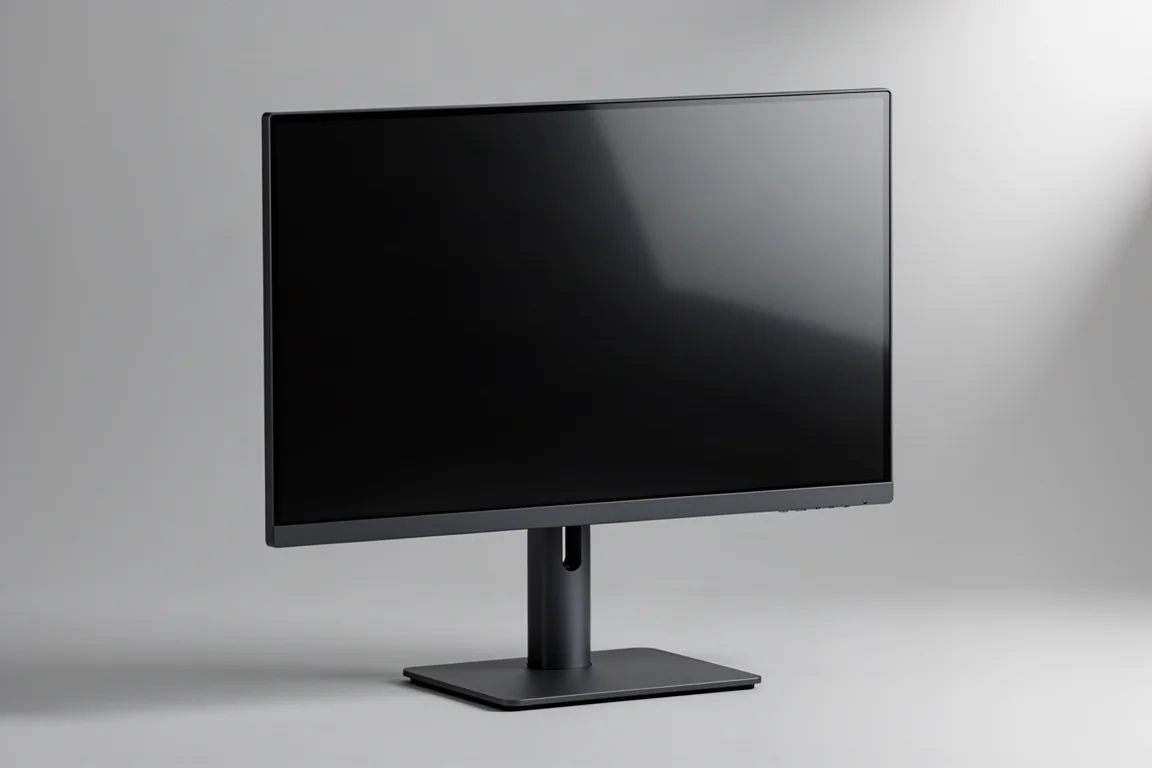
The monitor is an Asus ProArt PA27JCV, a 27-inch panel running at 5K resolution, connected to a laptop over a single USB-C Thunderbolt cable, with a stand that adjusts for height and tilt. The resolution is the point: 5K provides enough screen real estate to keep several windows open at once without constantly shuffling them around, which matters when a browser, a chat window and an audio application all need to stay visible.
Connectivity beyond what the laptop and the monitor offer natively comes from a separate dock, so the single-cable approach works best when the rest of the chain is planned around it.
The Dock: iVANKY FusionDock Max 1
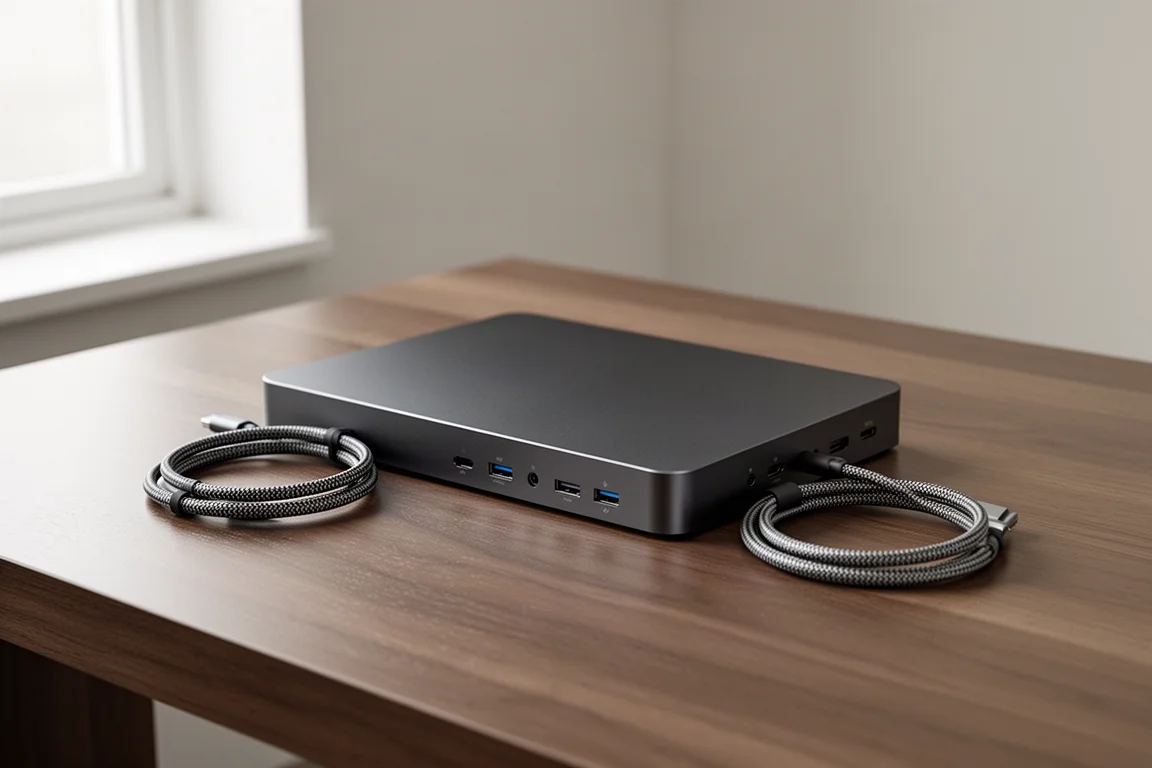
The iVANKY FusionDock Max 1 expands connectivity well beyond what the laptop and monitor provide on their own. It uses a dual cable connection and two built-in Thunderbolt 4 controller chips to double the bandwidth available from the laptop, while also supplying 96 W of charging power. It also means that adding a second monitor later requires nothing more than plugging it in.
In daily use it has been flawless apart from a couple of occasions where the screen went black for no obvious reason and then came back. That may be a power management behaviour rather than a fault, but it is worth knowing before committing to a dual-cable dock.
Desk Input: The Keychron K3 Max
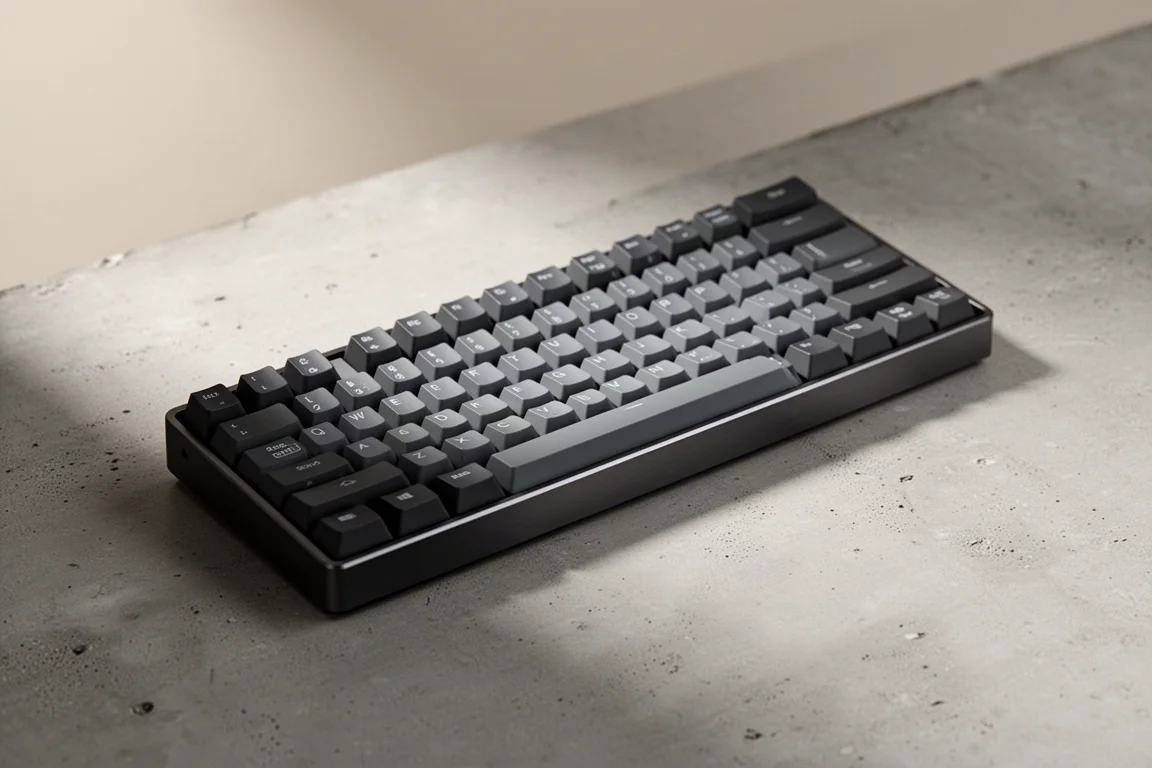
The keyboard that ended up as the daily driver is a Keychron K3 Max with Gateron low-profile red switches. Two alternatives were tried first: a Logitech MX Keys Mini, which was returned, and a NuPhy Air60 V2, which was kept as a backup. The low-profile layout keeps the desk visually quiet and leaves the mouse hand with room to work.
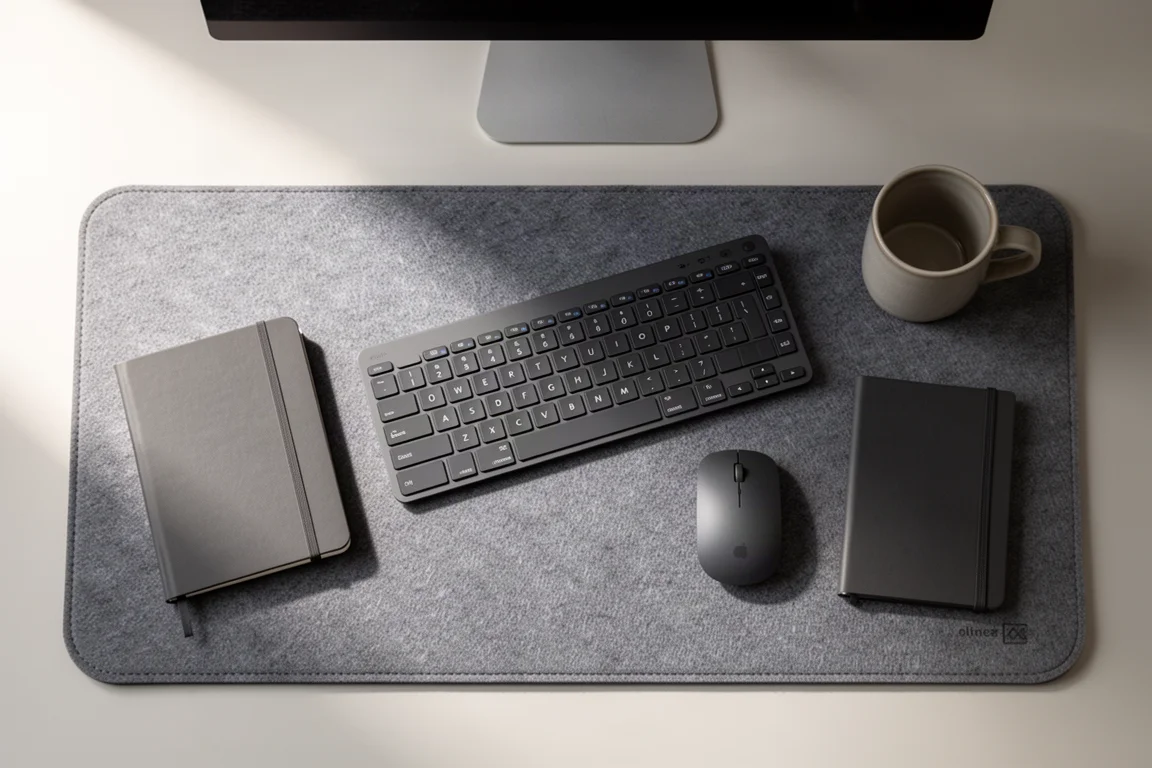
A low-profile mechanical board is a sensible middle ground on a desk shared between typing and listening sessions. It takes up less depth than a full-size keyboard and does not compete with the speakers for space, which matters when the surface is only 58 cm deep.
The Mouse That Stayed: Logitech MX Master 4
The Logitech MX Master 4 remains the benchmark mouse for this kind of desk. It sits on a felt desk mat, and the felt surface turns out to be better under a mouse than the leather mat bundled with the desk, even though the leather looks smarter.
That is a small detail with a real effect: on a desk where the surface is shared by a keyboard, a mouse and a felt mat, the mat is the part that decides how the mouse actually feels in use.

The DAC and Preamp: FiiO K13 R2R
For headphone listening, and as the front end of the speaker chain, the desk runs a FiiO K13 R2R, which works both as a DAC and as a preamp. That combination is what made it the right size for this build, because only a compact power amplifier then needs to sit behind it to drive passive speakers.
Its built-in parametric EQ also proved genuinely useful. With the speakers close to the front wall, the in-room response carried a mid-bass lift around 115 Hz, and the EQ notch removed it. The workaround was effective rather than elegant, but it kept a full-sized amplifier off the desktop.
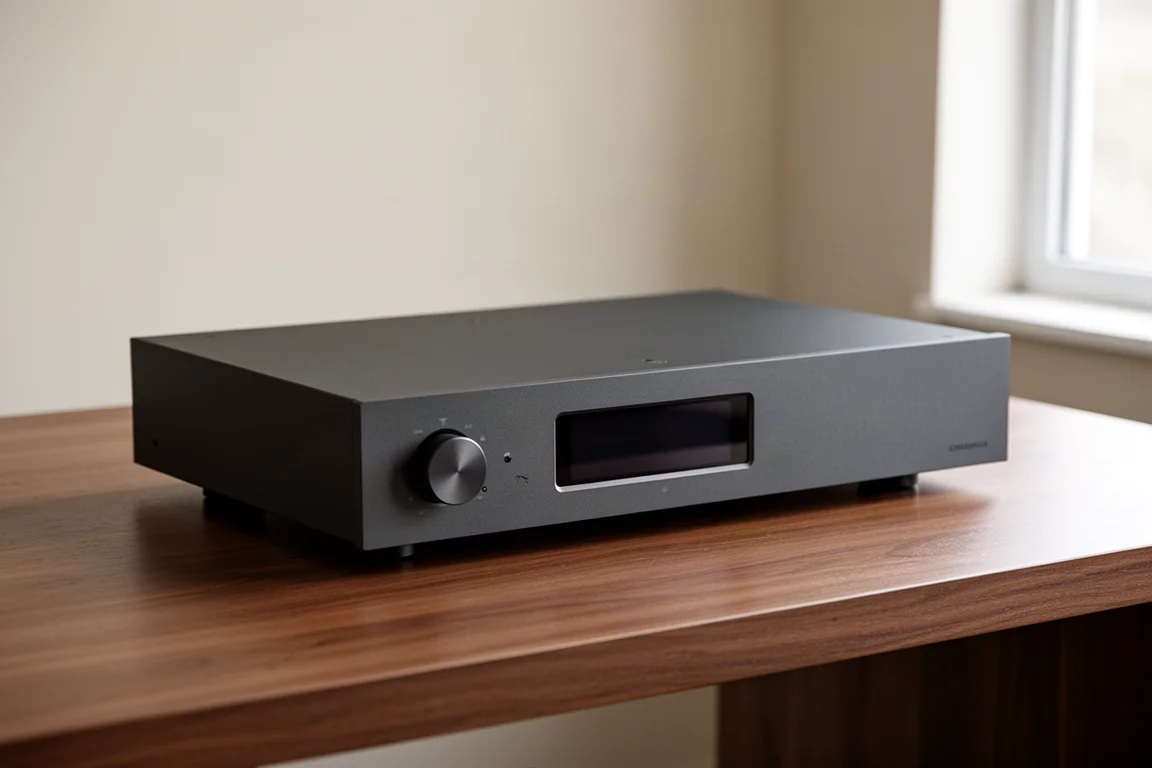
The Amplifier: Lyngdorf TDAI-1120
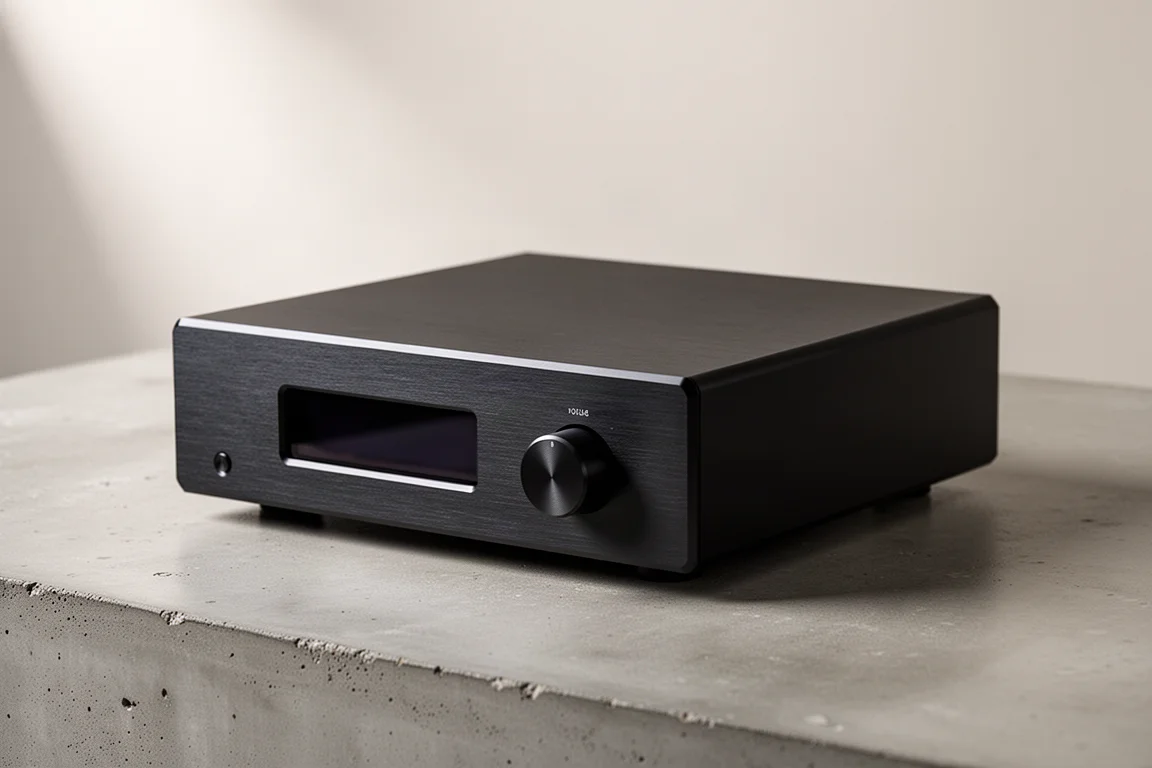
The main speakers are passive, so they need an outboard amplifier, and that amplifier has to fit into a shallow strip between the front edge of the desk mat and the start of the cable tray. The Lyngdorf TDAI-1120 fits that gap with no room to spare, and it doubles as a monitor riser.
On sound alone this would be a harder recommendation. It delivers 60 W per channel into 8 ohms, and the presentation leans towards the thin end of the tonal spectrum. It is direct digital, and it can sound threadbare at times rather than rich or full-bodied. What keeps it on the desk is RoomPerfect, the room compensation algorithm that also handles subwoofer integration, and which asks considerably less of the user than Dirac Live does. The before and after measurements show why it stays: before correction, the in-room response carried both the speakers’ 115 Hz bump and a 35 Hz peak introduced by the subwoofer provoking room modes, and after RoomPerfect both were cleanly resolved.
The Loudspeakers: Wilson Audio TuneTot
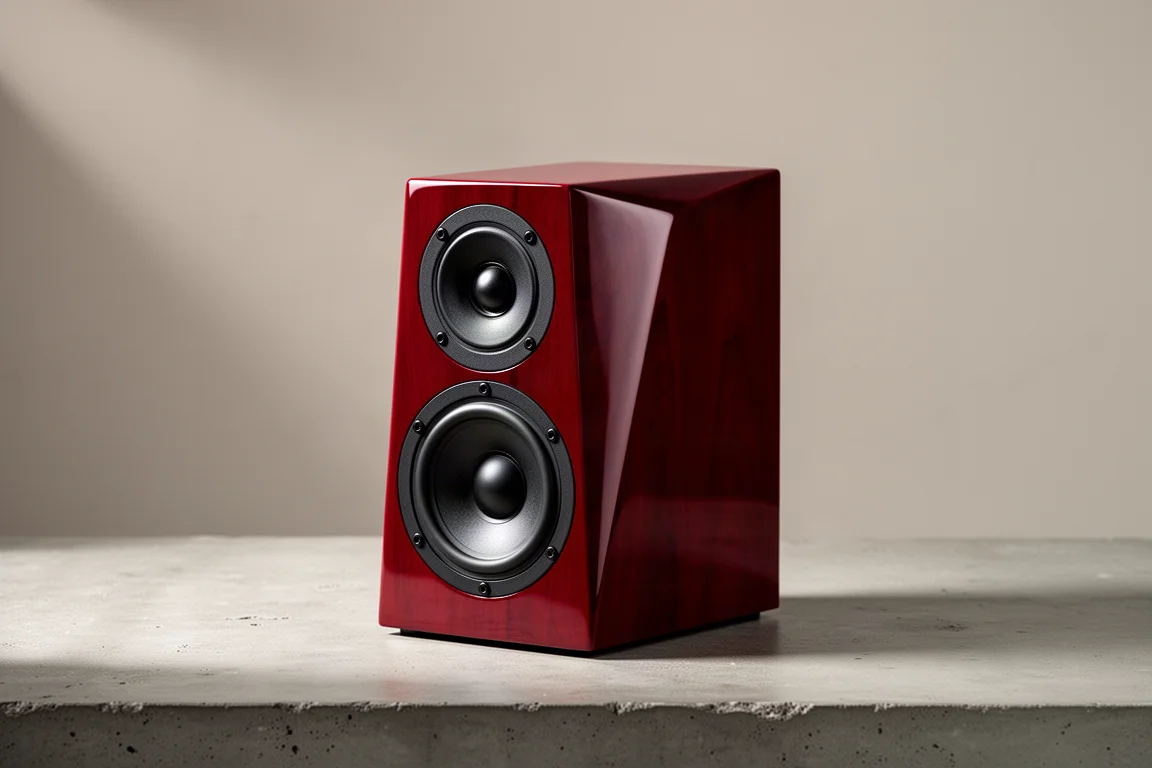
The main speakers are a pair of Wilson Audio TuneTot, passive two-way stand mounts weighing 13 kg each, finished in red. They are heavy for their size, too heavy for even the largest desktop stands from Kanto, so they sit on IsoAcoustics ISO-155 stands instead: less elegant to look at, considerably sturdier, and sturdiness matters when the speakers on top cost around €12,000.
On a desk, close to the front wall, they show a mid-bass bump around 115 Hz that has to be corrected before they make sense in this position.
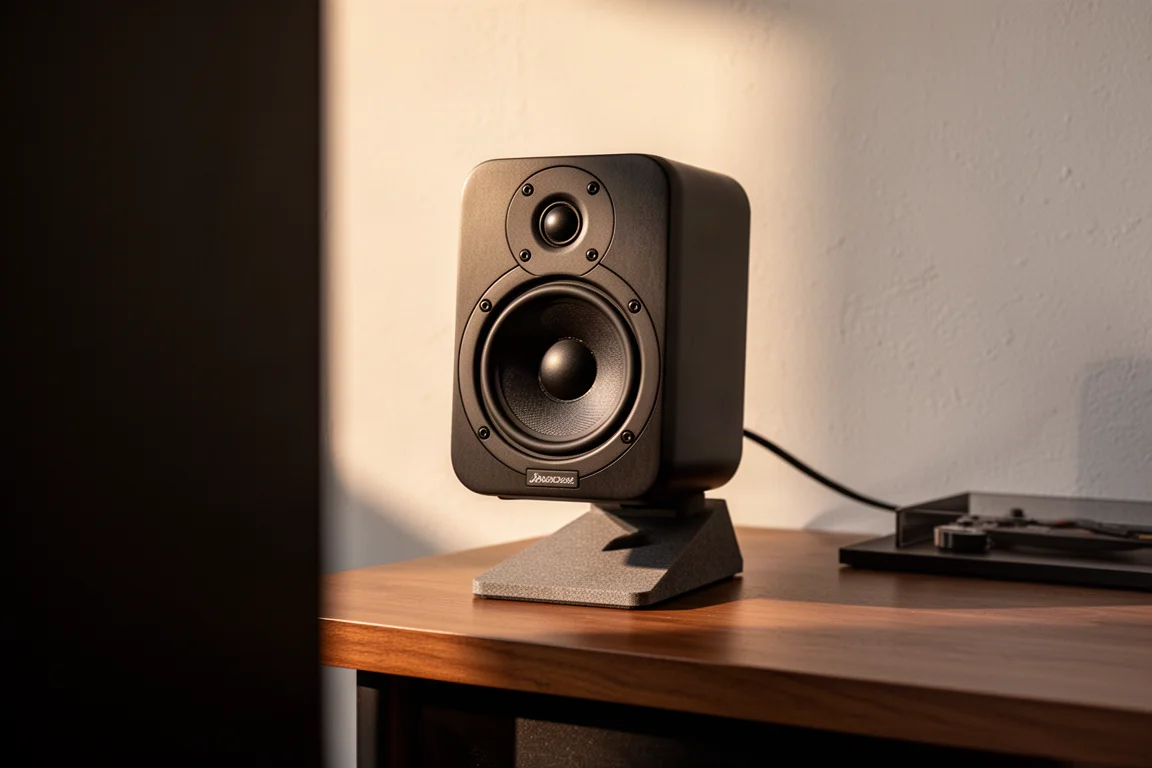
Handled properly, and with a subwoofer integrated by RoomPerfect, they sound extraordinary on a desktop. That is the outcome the whole build was aimed at, and it is why a passive pair displaced the active speakers that were tried first.
The Subwoofer: KEF KC62
The KEF KC62 adds the bottom end. It sits 75 cm to the left of the listening chair rather than under the desk, so it cannot be kicked by accident, and it connects to the amplifier wirelessly through the KEF KW1 transmitter and receiver kit, which keeps another cable out of the tray.
A subwoofer on a desk brings its own problems: before room correction, the KC62 provoked room modes and a 35 Hz peak in the in-room response. Integrated properly, it fills in the low end without drawing attention to itself.
Headphones for Long Sessions: Meze 105 AER
For headphone work the desk runs a Meze 105 AER for all-day editing. They are supremely comfortable over long sessions and particularly good with the human voice, which is exactly what hours of cutting and trimming require. A second pair, the FiiO FT7, covers music playback.
One detail worth noting: the magnetic cable routers that steer cables away from the desk mat sit close to the headphone station, and the magnets have not audibly affected either pair.

Where This Build Needed Caution
Not everything that arrived stayed. A slim monitor riser made from 15 mm MDF with steel legs, measuring 91 by 26 cm with a 12.5 cm lift and a 50 kg rating, bowed in the middle under the weight of the monitor and was discarded. A pair of compact active desktop speakers, each with a 3.5-inch aluminium mid-bass driver, a 1.5-inch ribbon tweeter, dual side-firing 3.5-inch passive radiators and 70 W plus 30 W of Class D amplification, sounded hard, brittle and dynamically inert, and went back within the week. An IKEA Alefjäll chair looks the part but becomes uncomfortable after a couple of hours, particularly for taller users, and is already on its way out. Each of those was a rushed decision made to match a colour scheme or a budget rather than a requirement, which is the pattern worth avoiding.
Buying Advice: Where to Spend First
If a desk setup has to support both speakers and headphones, the desk is the right place to start. A steel-chassis sit-to-stand frame rated to 120 kg, with an integrated power column and a full-length cable tray, solves problems that no accessory can fix later.
From there, spend in the order the room demands. If a subwoofer is part of the plan and the desk sits close to a wall, room correction and subwoofer management matter more than amplifier character, which is why a modest 60 W integrated with RoomPerfect displaced a more powerful alternative. If most listening happens on headphones, a combined DAC and preamp with parametric EQ covers both jobs in one small box. And if the monitor is doing real work, a 5K panel removes the daily friction of shuffling windows around.
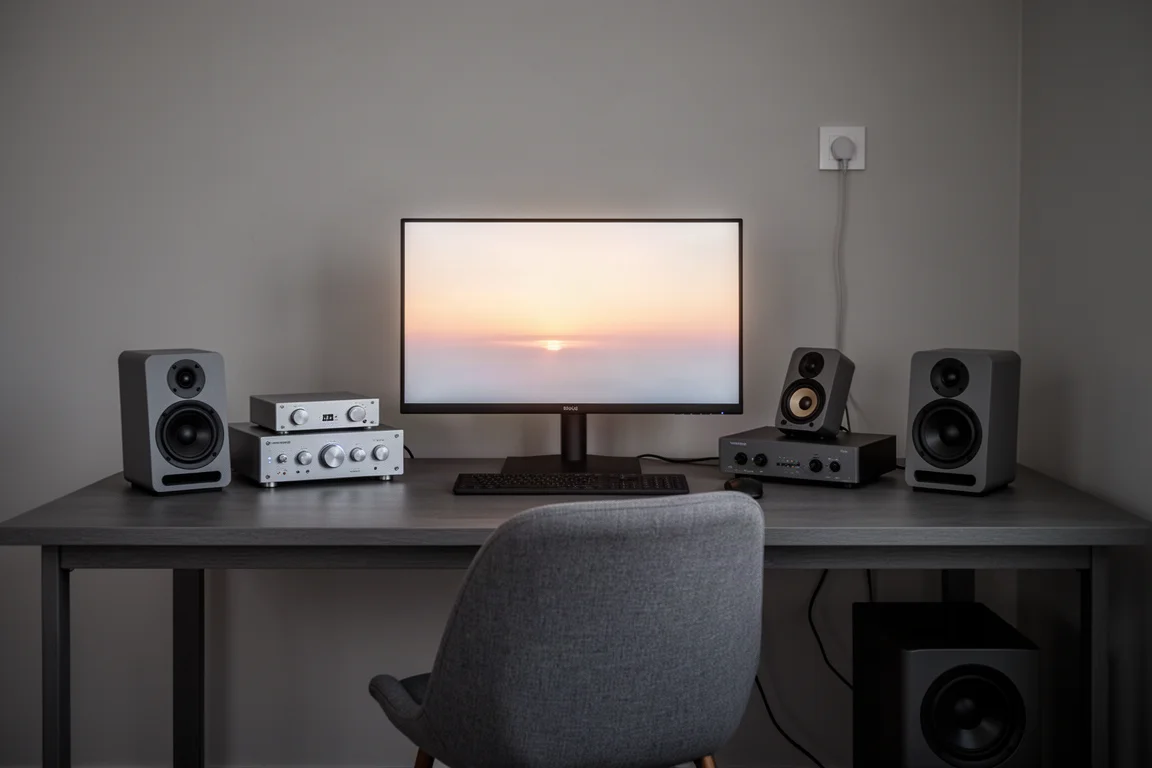
The one place to be sceptical is very cheap desktop speakers. The gap between a budget pair and a proper pair was the single largest difference in this entire build, and it was audible within seconds.
Conclusion
The final configuration is built around a Secretlab Magnus Pro desk, with an Asus ProArt PA27JCV at 5K, an iVANKY FusionDock Max 1 for connectivity, a Keychron K3 Max and a Logitech MX Master 4 for input, a FiiO K13 R2R as DAC and preamp, a Lyngdorf TDAI-1120 with RoomPerfect driving a pair of Wilson Audio TuneTot speakers, a KEF KC62 subwoofer connected wirelessly, and a Meze 105 AER for long editing sessions.
Almost everything on the desk earned its place, and the two exceptions were both rush purchases rather than considered ones. That is the most useful lesson from the build: decide what the desk has to support, then buy for that requirement rather than for the look of the moment.
Further reading
Related Reviews
Desk Setup
Cable Management Tier List 2026: The Best Desk Cable Solutions Ranked
A practical ranking of 35 cable management products, from S tier essentials to F tier misses, to help you clean up your desk setup.

Backpacking Gear
Building a 10 lb Base Weight: An Ultralight Backpacking Gear List
A practical walkthrough of the ultralight pieces behind a 10 lb base weight, from a 765 g pack and a roomy one-person tent to a full camp chair and a dependable water filter.

Road Bikes
10 New Road Bikes Worth Watching: Aero, Titanium, Steel and Endurance Standouts
A practical roundup of 10 new road bikes, from aero flagships chasing single-watt gains to titanium, steel and endurance platforms built for real roads.