Hi-Fi Accessories
Hi-Fi Accessories Worth Spending More On: Cables and Racks
Two supporting pieces that reward a little extra budget: interconnect cables that survive years of component swaps, and a modular rack that makes moving gear easy.
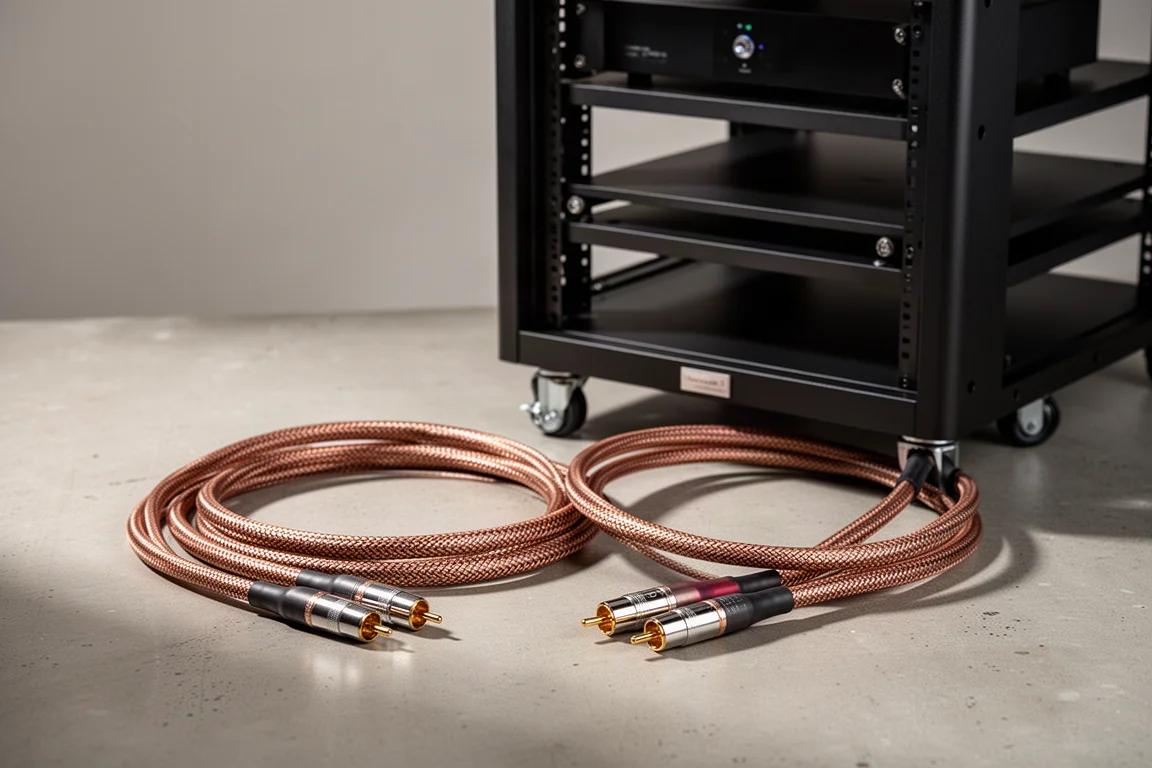
Introduction
Most of the money in a hi-fi system goes toward speakers, amplifiers, turntables, and streamers, and that is where the largest differences usually live. But a handful of supporting pieces quietly decide how pleasant the whole system is to live with: the cables running between components, the rack everything sits on, and the small parts that keep connections reliable.
These are the items nobody enjoys thinking about, and they are also the items people tend to buy at the absolute lowest price. That trade-off often backfires. Here is where a modest extra spend makes sense, and where it does not.
Where It Pays to Spend More
The pattern is consistent. Accessories that you touch, handle, and rebuild every time the system changes are worth buying properly once. Cables get unplugged and rerouted. Racks get moved. Connectors get loosened and tightened again. Anything that survives dozens of those cycles without fraying, bending, or loosening has already paid for itself.
The same logic applies to power. Occasional hum is not always a sign of poor mains supply; it is often a grounding issue, and a professional-grade power conditioner has solved that kind of ground loop problem in more than a few setups. This is a category where a modest unit, roughly in the $50 to $100 range and sometimes as little as $25, is worth keeping around as insurance. It works perfectly well as an unusually good power strip even if it never fixes a noise problem. Units in this class tend to last for many years and carry a warranty, and prices do move: one popular model dropped from $169 to $99.
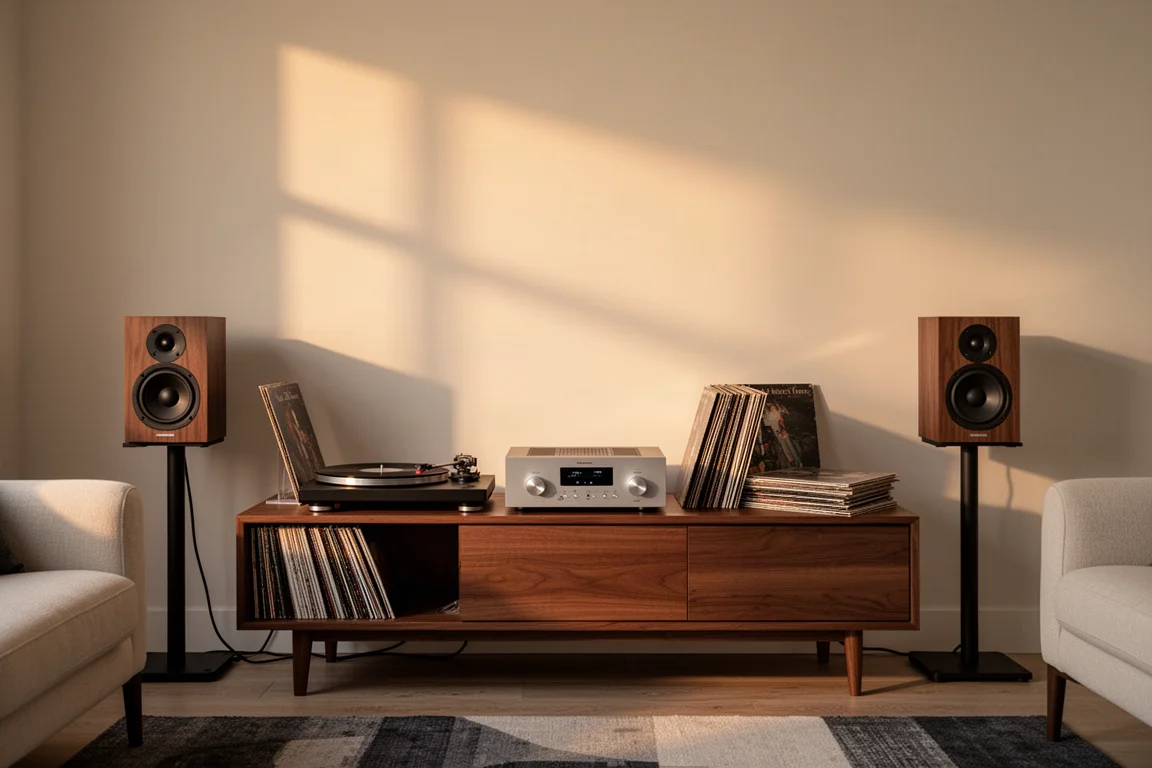
Think of the decision as buy once, cry once. A cheap accessory that has to be replaced twice costs more than the good one bought first, and it costs time and irritation along the way.
Cables: Why Cheap Ones Cost More Over Time
Discounted cable bundles are tempting during sale events. They arrive in quantity, they look fine, and they usually work at first. The problem shows up later: connectors loosen, shielding is thin, and noise creeps into the system. A batch of cut-rate cables bought for around $50 during a sale is a useful illustration, because none of them stayed in service long term.
The alternative is not exotic cable at four-figure prices. It is simply well-built cable with proper shielding and solid connectors. Shielding matters because an intermittent RCA has been the source of noise in otherwise clean systems, and a better cable either removes that noise or reduces it to the point where it stops being distracting.
Connection quality also matters more than people expect, especially when equipment gets swapped regularly. A cable that stays seated, does not oxidize, and does not crackle when it is nudged is doing real work in a system.
World’s Best Cables: Built to Survive
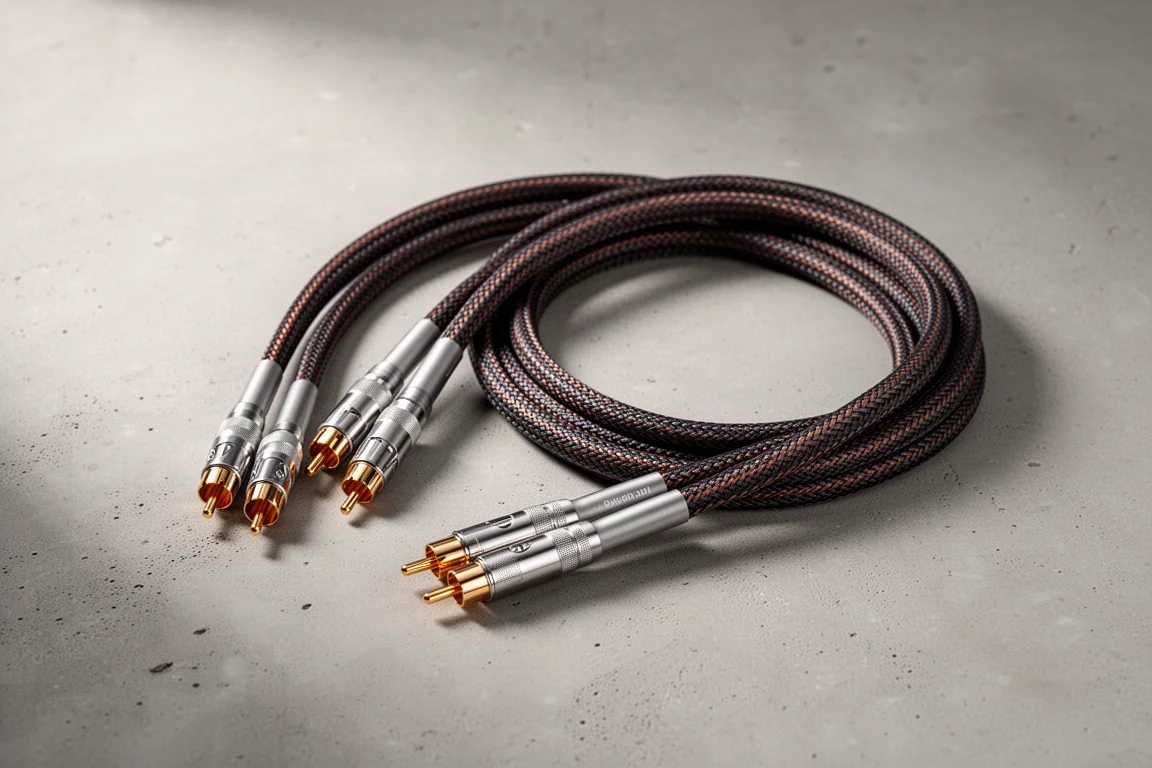
World’s Best Cables sits in the sensible middle of the market: more than the bargain bundles, far less than audiophile exotica. Pairs commonly fall somewhere between $25 and $92 depending on length and connector type, with longer 5 ft runs reaching around $116 and shorter options landing in the $30 to $60 range.
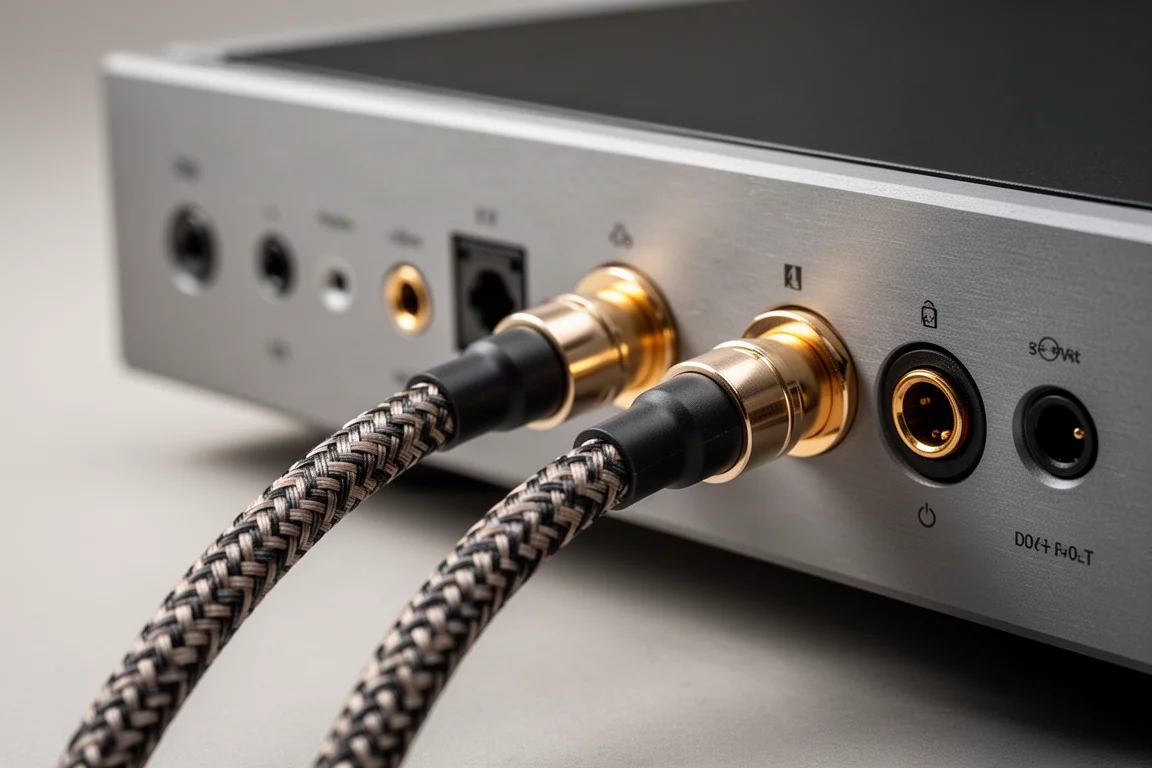
Short lengths are particularly useful. A 1.5 ft pair is close to ideal between a DAC and a preamp, where a longer cable only adds clutter behind the rack. Connector choices include Canare and Amphenol terminations, and the range covers RCA, optical, coaxial, and HDMI, so a system can be standardized on one family of cables instead of a drawer of mismatched spares. Entry-level cables from other established brands serve the same role if you want a second reference point.
Two practical notes. First, similarly branded products have appeared that imitate the naming, so it is worth confirming that a listing is the actual cable you intend to buy. Second, there is no need to buy everything at once. Adding a pair or two each month builds a full set within a few months without a single large outlay, which is a comfortable way to upgrade gradually.
Racks and Stands: Why a Real Rack Changes Daily Use
Stacking components on a console or wherever they happen to fit is the default for most systems, and it works until it does not. The moment equipment starts rotating in and out, the lack of a rack shows up as tangled cable runs, scratched surfaces, and a genuine reluctance to try anything new because moving one component means moving four.
A proper rack fixes all of that at once. It gives every component a defined position, makes cable management far easier, and turns a component swap into a five-minute job. It is also one of the few purchases in this hobby that can plausibly serve for thirty years, outlasting most of the electronics sitting on it.
Speaker stands deserve a mention in the same breath. Isolation matters most when a speaker shares a surface with other gear or sits on a desk, where vibrations have somewhere to travel. Budget stands with hollow metal columns that can be mass-loaded with kitty litter or steel shot handle that job well, and a good pair does not have to be expensive.
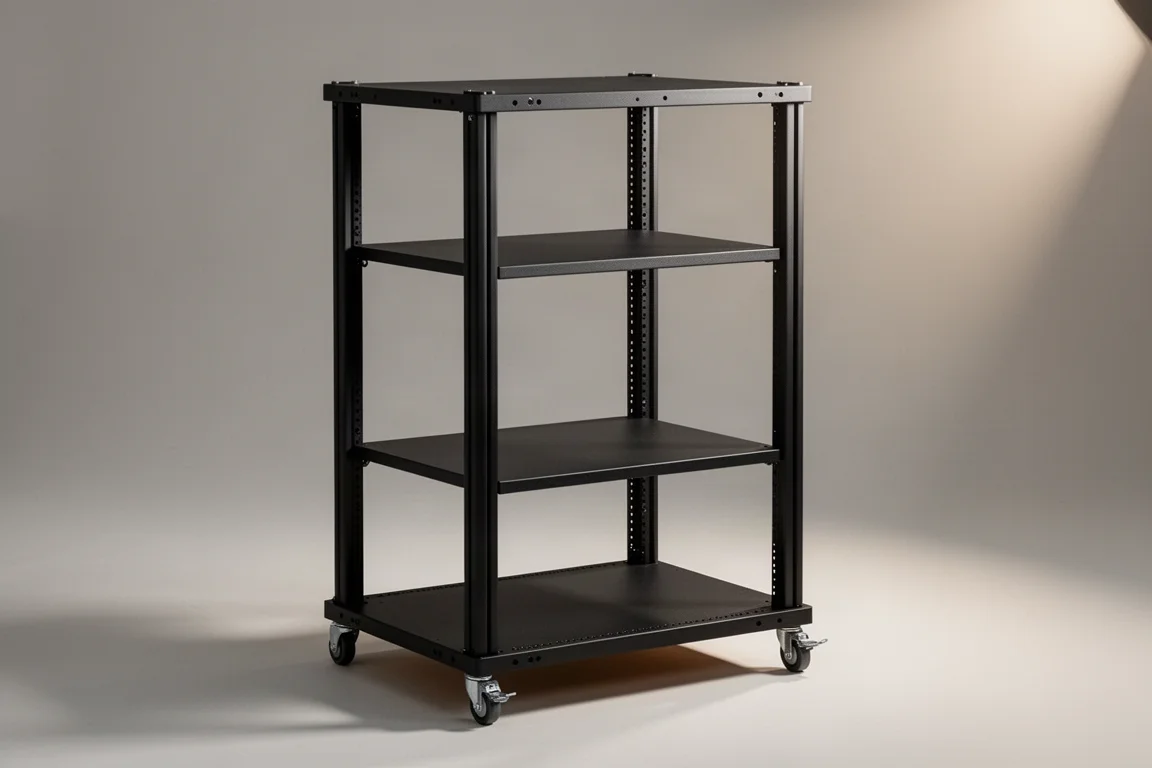
Pangea Vulcan Stands: Adjustable Shelves and Real Casters
The Vulcan design is simple: shelves separated by metal columns. The useful part is that the columns are interchangeable. If a pair of tall monoblocks needs to live on the bottom shelf, taller columns can be fitted so the bottom two levels accommodate large components while the levels above stay tight and tidy.
Casters are the option worth taking seriously. With around 200 lb of equipment loaded on, a rack that slides out for access and slides back afterward saves an enormous amount of time and frustration, and it protects wood floors from being chewed up by posts digging in under load. Casters do transmit a little more vibration than fixed posts, which is a fair trade for anyone regularly changing components.
The Vulcan stands come from Pangea, a company based in Michigan. The stands themselves are not manufactured in the United States, but they are designed there, which is a reasonable reason to prefer them over visually similar alternatives.
What You Do Not Need to Overspend On
Not every accessory justifies a premium. Small connection hardware is a good example: banana plugs, spades, and adapters that let vintage gear with push pins or screw terminals accept modern connectors typically cost between $10 and $20. They make wiring far easier, avoid the familiar problem of a stray strand of speaker cable causing a short, and they are not a place where spending more buys anything meaningful.
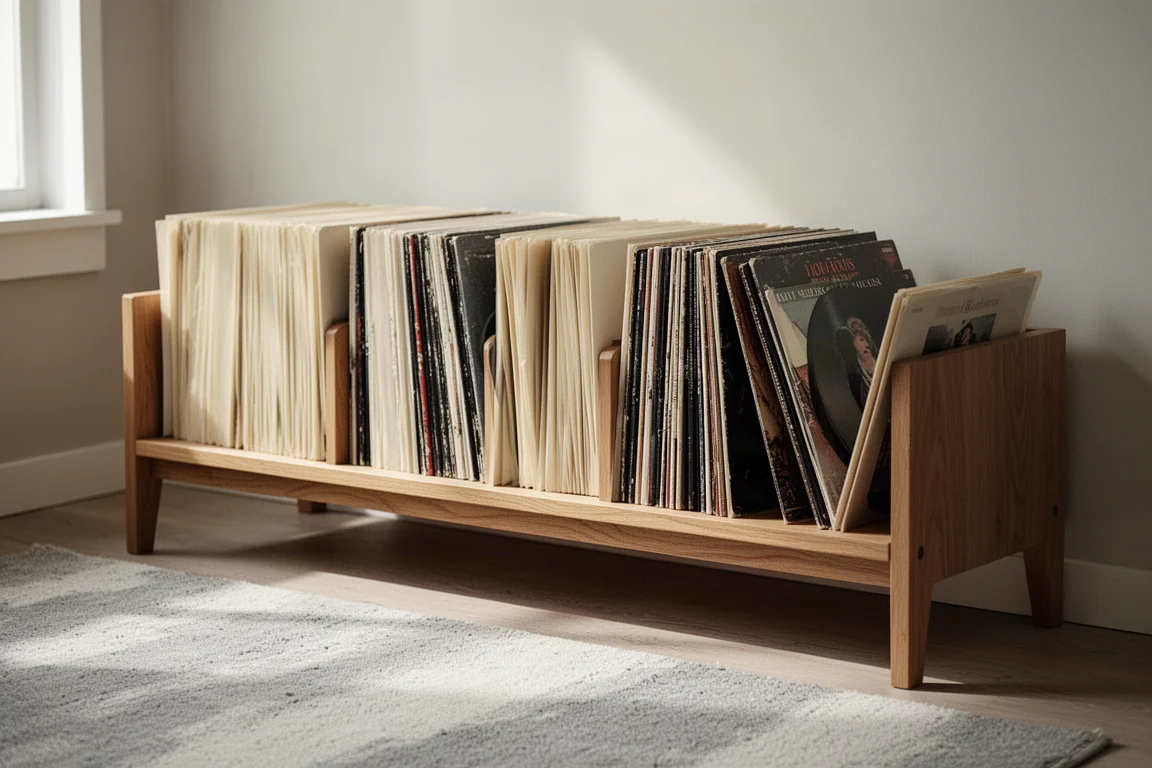
Storage follows a similar rule. Vinyl and CD collections need somewhere safe to live, and organization pays off because a collection you can browse is a collection you actually play. Sleeves and shelving matter more than brand prestige here, and a simple, well-organized system is easier to keep than a large unmanaged one.
The broader point: spend on the accessories you physically handle and rebuild constantly, and stay relaxed about the ones that simply sit there doing a simple job.
Overall Buying Advice
Build the supporting system gradually rather than all at once. Cables can be added a pair at a time until every run in the system is covered. A rack or stand is worth buying once, in a size and configuration that can grow, and with casters if components get moved. A power conditioner can wait, but a modest one in the $50 to $100 range is a low-risk purchase that doubles as a quality power strip.
Buy the version you will still be happy with in ten years, and let the cheap stuff go. If you are unsure about a cable, buy one pair and live with it before committing to a full set. If you are unsure about a rack, measure the tallest component you own or plan to own, and check whether the columns can be changed later.
And if the total feels like a lot of money for accessories, remember what these items replace: repeated replacements, noise problems, and an afternoon lost every time you want to move a single box.
Conclusion
The accessories that deserve real money are the ones you handle constantly. Well-built cables with proper shielding keep a system quiet and stay in service through years of swaps, and a modular rack with adjustable columns and casters makes the whole hobby easier to enjoy. Both are buy-once purchases that tend to outlast the electronics they support, and both can be approached gradually, one pair or one shelf at a time.
Further reading
Related Reviews
Hi-Fi Accessories
Affordable Hi-Fi Accessories Under $100: A Practical Gift Guide
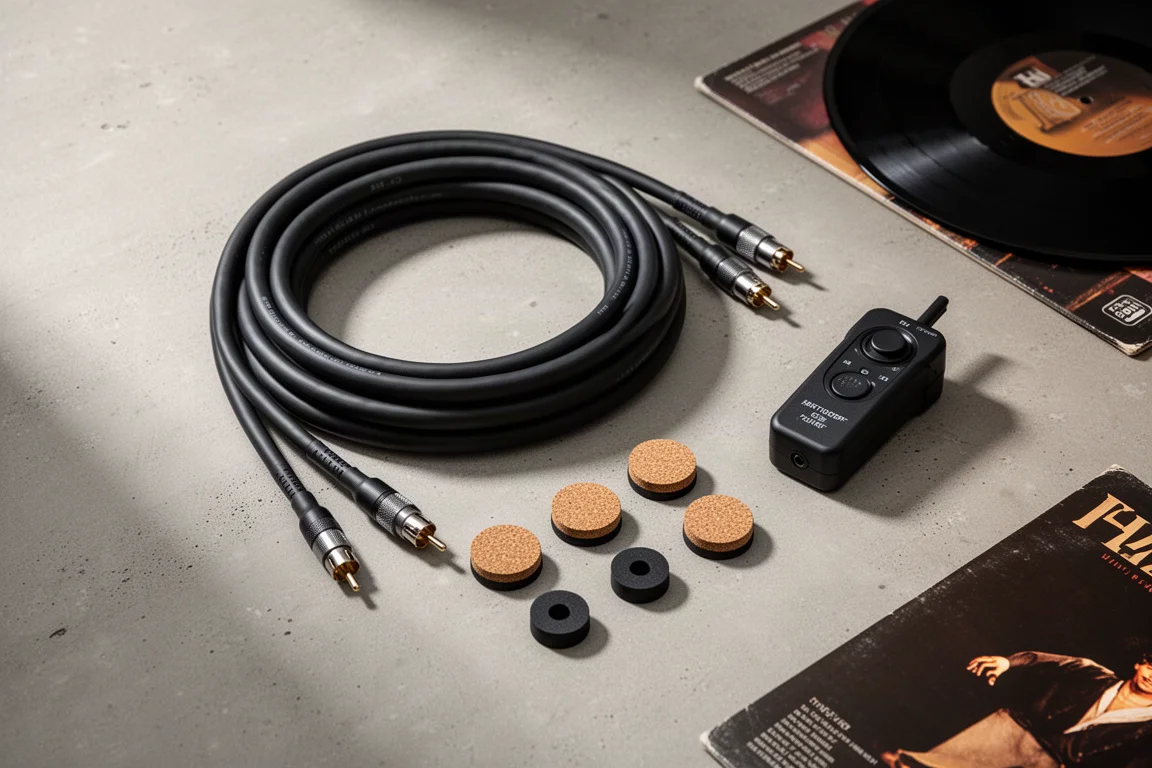
A practical guide to budget Hi-Fi upgrades, from 12-gauge speaker cable and isolation pads to affordable bookshelf speakers, a warm stereo receiver, and a vinyl anti-static device.
Hi-Fi Accessories
Five Affordable Hi-Fi Upgrades to Modernize a Vintage or Budget System
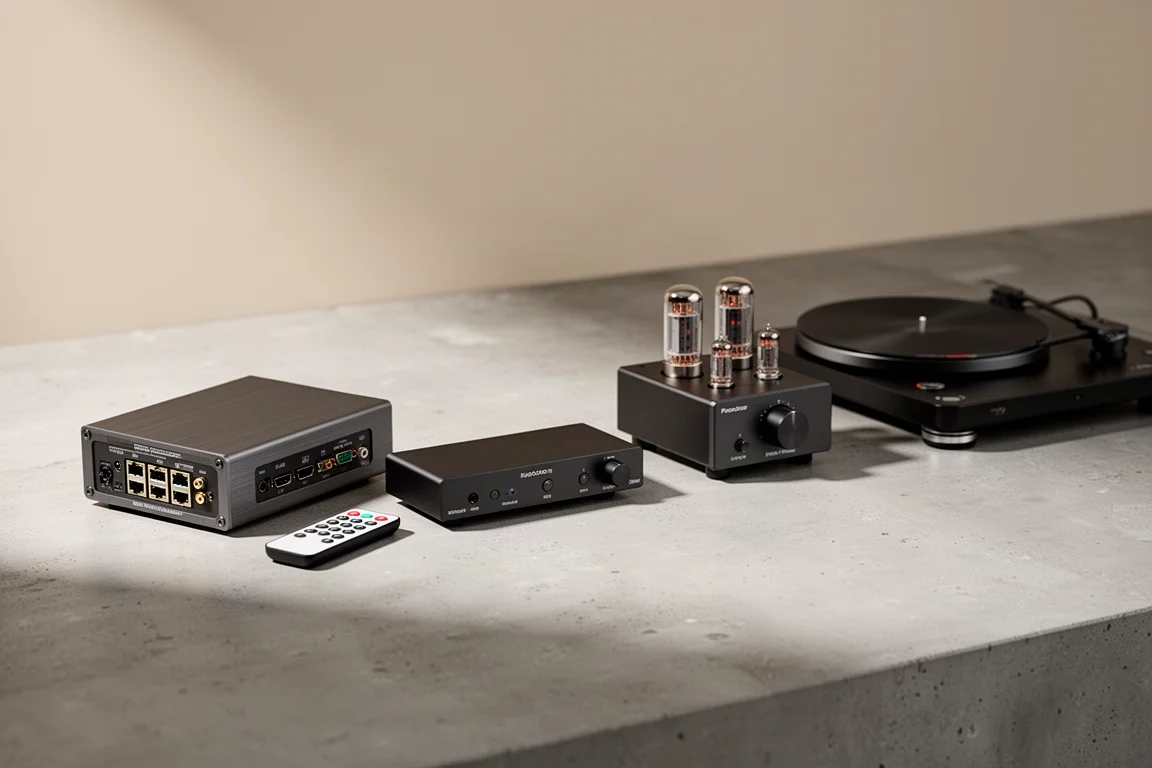
Five inexpensive add-ons that bring HDMI, extra inputs, phono support, and CD playback to a modest hi-fi setup.
Hi-Fi Accessories
Best Hi-Fi Accessories for Summer: Five Upgrades That Improve What You Hear
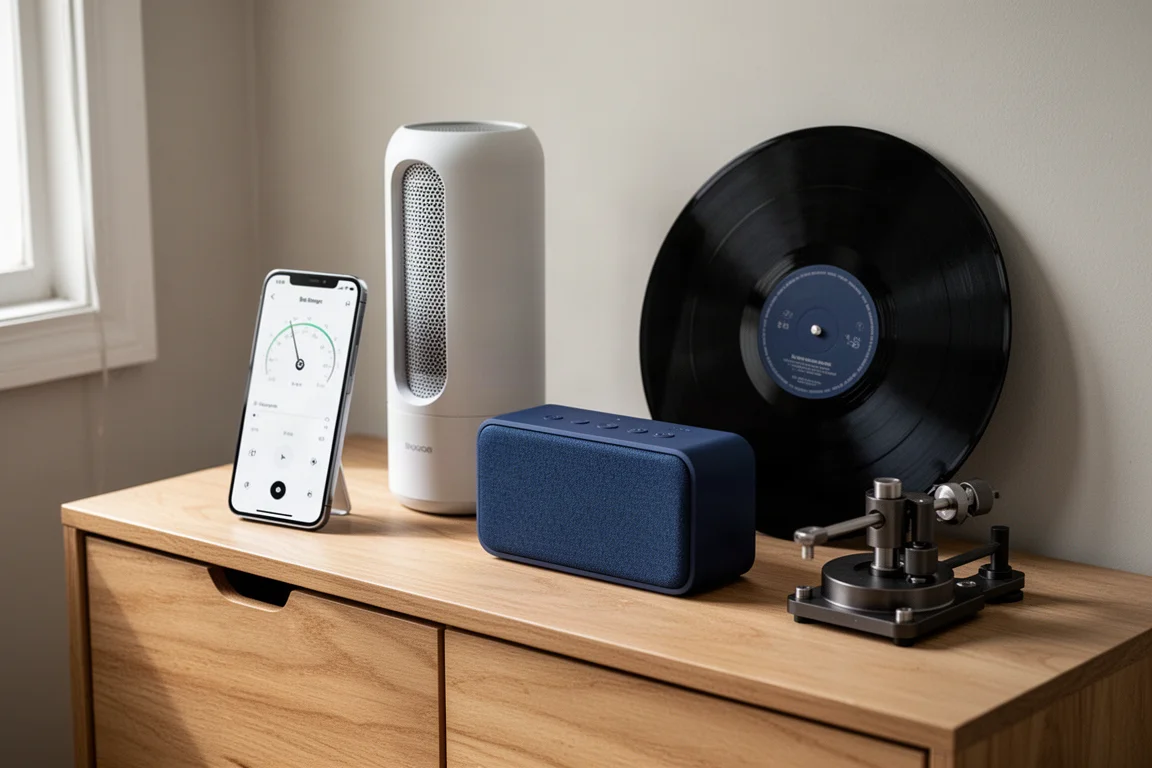
A free room-measuring app, a genuinely quiet fan, a serious Bluetooth speaker, and two vinyl essentials that make summer listening better.