3D Printing
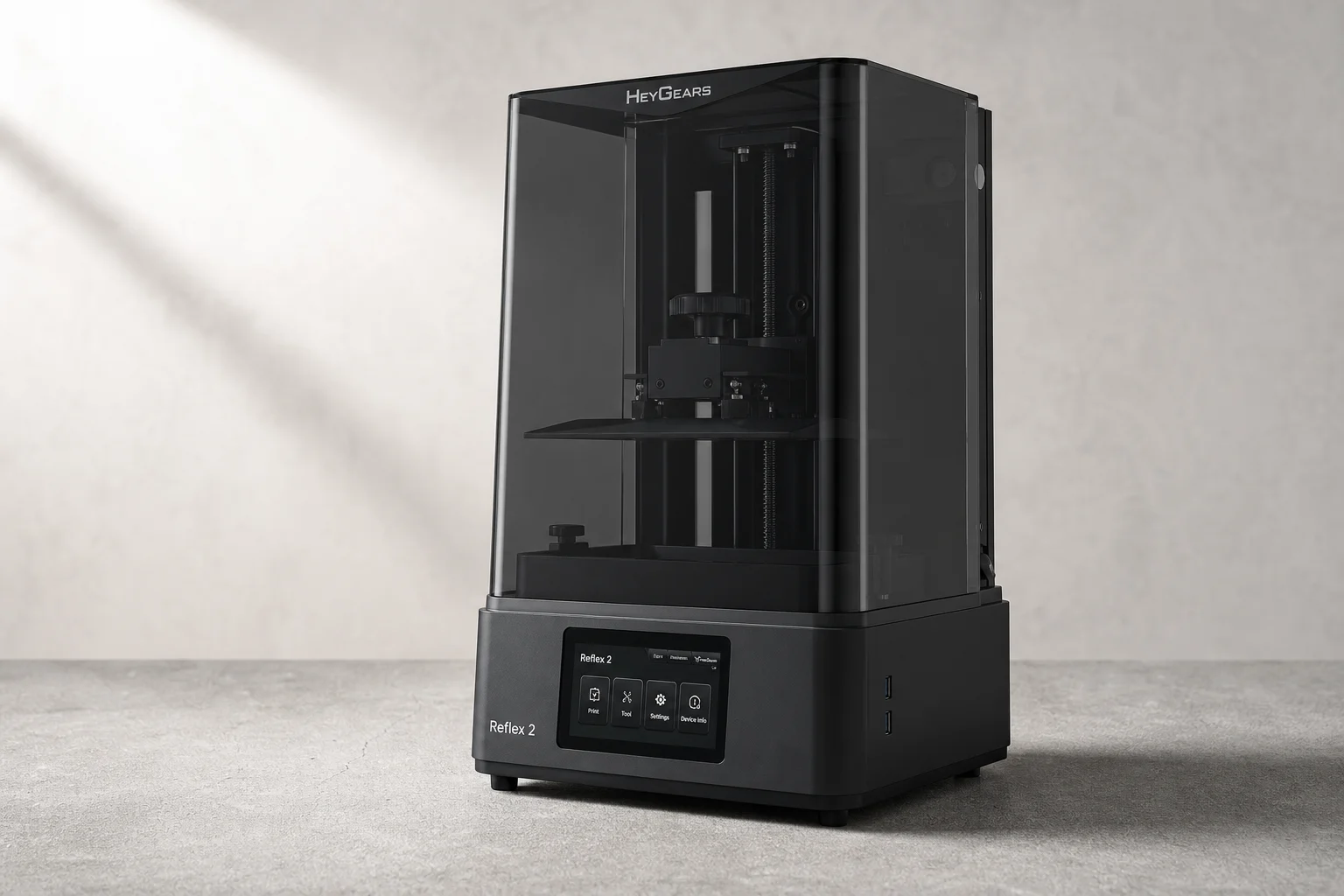
HeyGears Reflex 2 Resin 3D Printer Review: Industrial-Grade Parts at Home
The HeyGears Reflex 2 delivers production-quality resin prints with minimal hassle. We tested its strength, precision, and real-world capabilities across multiple engineering resins.
Introduction
Resin 3D printing has long carried a reputation for producing fragile display pieces that belong in a collector’s cabinet, not a workshop. But the technology has evolved dramatically. Modern engineering resins now match or exceed the strength of polycarbonate, withstand temperatures that rival advanced thermoplastics, and enable small-batch production of genuine end-use parts. The HeyGears Reflex 2 represents a significant step forward in making this capability accessible to makers, engineers, and entrepreneurs who want production-quality parts without the complexity that has traditionally plagued resin printing.
Who This Printer Is For
The Reflex 2 targets makers and small manufacturers who need parts stronger and more precise than FDM can deliver, but don’t have the budget or volume for injection molding. If you design custom tools, create camera mounts, prototype mechanical assemblies, or need to replace injection-molded components in low quantities, this printer addresses a genuine gap in the maker toolkit. It is not designed for bedroom printing or casual hobbyists who want to avoid post-processing; resin printing still requires proper ventilation, personal protective equipment, and careful material handling.
Ecosystem and Quality-of-Life Features
HeyGears has built the Reflex 2 around a complete ecosystem designed to remove guesswork from resin printing. The printer ships pre-calibrated from the factory with AI-assisted light uniformity across 86,000 zones, ensuring consistent results from the first print. The LCD screen is rated for over 6,000 hours of operation.
The real innovation lies in the software and hardware integration. A heated scraper module stirs and warms resin uniformly before printing, reducing failure risk. The pulsing release module flexes the build platform with air pulses, making part removal gentler and more reliable. Most importantly, the washing and curing stations are WiFi-enabled and communicate directly with the printer. When you finish a print, the software automatically sends the correct wash temperature, cure time, and pre-bake settings to the appropriate station based on the resin used. This eliminates the most common source of resin printing failures: incorrect post-processing.
For someone who finds resin printing tedious, these features are transformative. Automatic resin refill, idiot-proof residue detection, and done-for-you print profiles mean you can actually use the machine instead of letting it collect dust.
Transparent Resin Performance
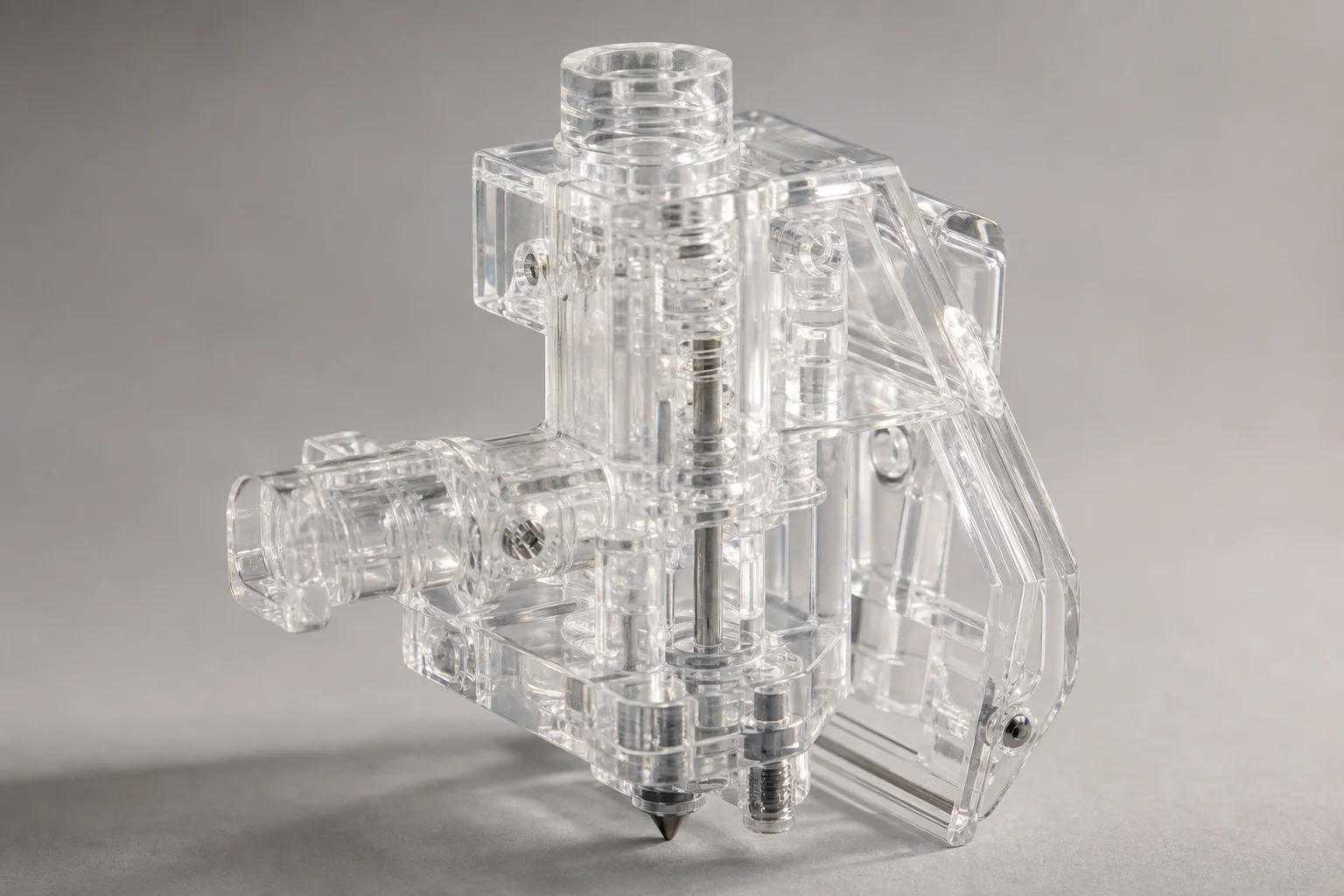
Testing began with HeyGears’ PAT10 Modeling Resin in transparent. This resin claims high transparency, easy post-processing, excellent anti-yellowing properties, and toughness suitable for industrial use. The goal was ambitious: print a fully transparent Spartacus toolhead with complex internal geometry.
Using HeyGears’ Blueprint Studio slicer, the design was loaded, the resin selected, and “one click print” was engaged. The software handled bed leveling, resin heating, and print generation automatically. While the one-click feature proved roughly 80-90% effective, it is not infallible. The toolhead face failed on one part, and support placement was suboptimal. However, HeyGears’ customer support team reviewed the uploaded files, identified the issue, and provided corrected settings within hours.
The printed parts themselves were impressive. Dimensional accuracy is a given with resin printing, but the strength was surprising. These parts genuinely feel like polycarbonate or acrylic, not fragile resin. They show no yellowing despite non-optimal curing settings. Transparency is excellent, though curing in a water bath would improve clarity further. The only real complaint is support contact marks, which are visible on transparent parts and require sanding to remove. However, the resin sands easily once supports are removed.
Tiny printed screws with R and L lettering demonstrate the precision resin achieves. This level of detail and transparency would be impossible with FDM and would require expensive injection mold redesign.
Strength and Durability Testing
The PAU20 Tooling Resin represents HeyGears’ toughest standard offering. It combines polycarbonate-like rigidity and toughness with long-term UV and humidity resistance, finishing in a matte black suitable for end-use parts. HeyGears claims it is tough enough for jigs, structural components, camera mounts, and industrial tools.
A CN3D-designed toolhead cover for the Sovol SV08 Max was printed as a replacement for the original injection-molded part. Previous attempts with FDM failed because the thin clasps would break immediately. The resin version is dramatically stronger, more precise, and more aesthetically pleasing than any FDM alternative. Small adapter pins that would be impossible to print cleanly on FDM came out perfectly.
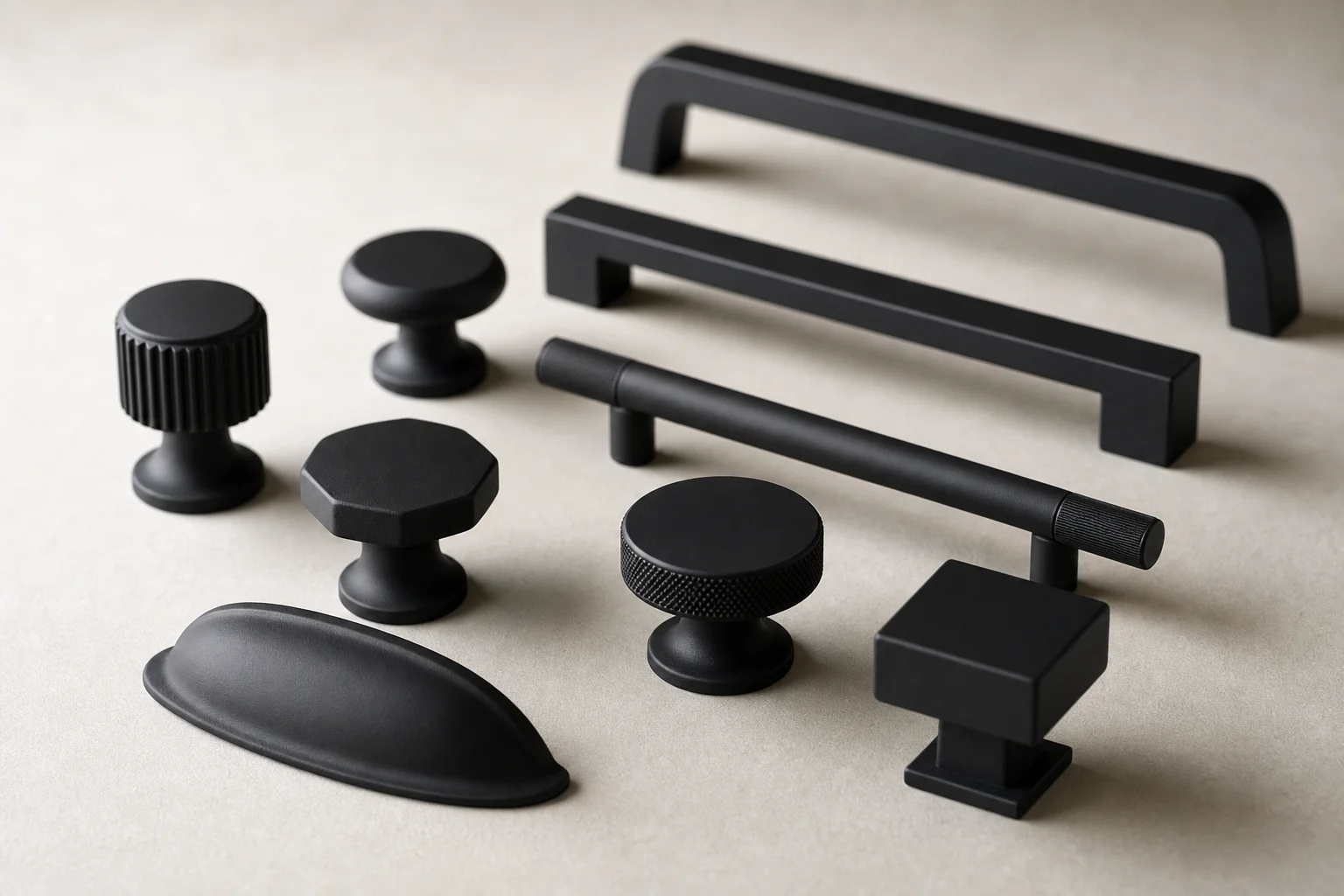
A silicone mold for custom earplugs printed with exceptional smoothness and dimensional accuracy, far superior to previous FDM attempts. A full assortment of knobs and handles for various fasteners printed without the layer-adhesion and shear failures that plague FDM. The material cost for a solid knob printed without supports comes to approximately $0.51, making small-batch production economically viable.
Load-Bearing Applications
The question of whether supports are truly necessary led to an experiment: printing knob designs flat on the build plate without supports. Concerns about print failure or part damage during removal were significant, but the Reflex 2’s calibration and the PAU20 resin’s toughness made it work flawlessly. The only marks visible are tiny remnants where the part released from the build plate, comparable to sprue marks from injection molding. These marks are easier to sand than support contact points and do not affect function.
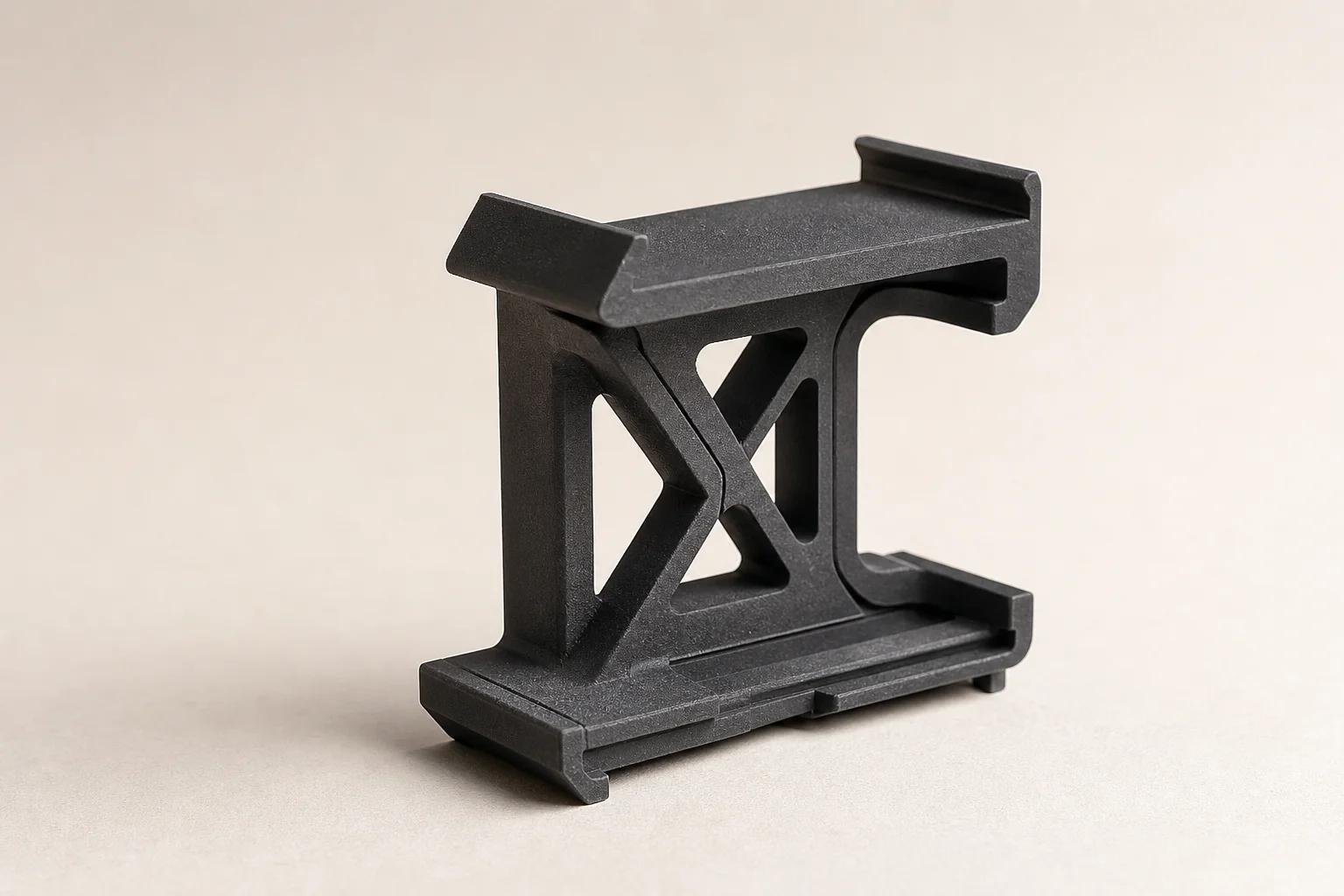
A camera mount quick-release bracket designed to hold the weight of lights, microphones, and expensive cameras was tested under load. The tiny lips that hold the equipment are supposed to be CNC-machined, and previous FDM attempts in polycarbonate and PPS-CF never held an edge well enough for real weight. The PAU20 version is far more dimensionally accurate with much sharper edges. Under tension testing, the bracket held 75 kilograms without breaking, far exceeding any FDM equivalent.
A specialty sewing tool, printed in response to community requests, proved even stronger than FDM or injection-molded versions despite its thin profile. A carabiner printed from the same resin held 20 kilograms without any sign of failure, demonstrating that resin can handle genuine load-bearing applications.
Real-World Workshop Applications
The PAH270 Modeling Resin represents the extreme end of HeyGears’ lineup. Beyond strength and rigidity, it offers ultra-high heat resistance up to 270 degrees Celsius, a level only PEEK can match. This resin is designed for turbocharger housings, exhaust shields, and injection molds themselves. This opens a compelling possibility: distributed manufacturing where small-batch production and large-batch production are bridged by resin-printed injection molds.
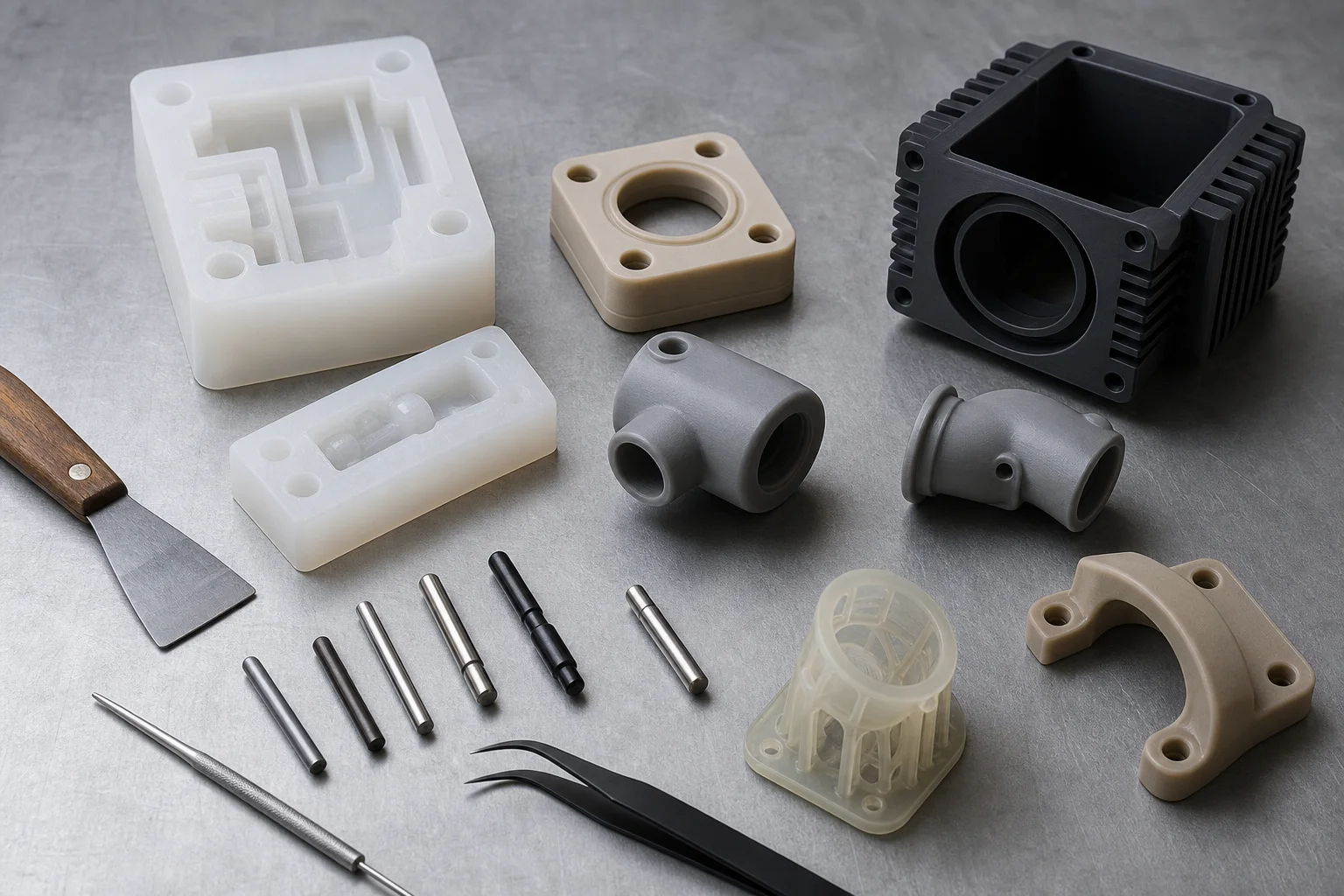
While nothing will replace tool steel for high-volume injection molding, the ability to print molds in PAH270 resin fills the gap between small-batch 3D printing and traditional injection molding. For entrepreneurs and engineers, this is a significant capability. The Reflex 2 with its compatible resin ecosystem enables production of ultra-strong, detailed end-use parts in a basement workshop for applications that FDM and even SLS cannot match.
Buying Advice
The Reflex 2 is not a casual purchase. It requires proper ventilation, PPE, and careful material handling. It is messier than FDM and demands more post-processing attention. However, if you need production-quality parts that are stronger and more precise than FDM can deliver, and you do not have the volume or budget for injection molding, the Reflex 2 closes a real capability gap. The ecosystem integration, pre-calibration, and software support make it far more approachable than traditional resin printers. The range of compatible engineering resins means you can choose the right material for each application, from transparent parts to heat-resistant components.
For makers, engineers, and small manufacturers, the juice is genuinely worth the squeeze.
Conclusion
Resin 3D printing has matured into a legitimate manufacturing tool. The HeyGears Reflex 2, combined with its range of engineering resins, delivers capabilities that FDM simply cannot match. Whether you need transparent optical components, load-bearing brackets, heat-resistant parts, or small-batch production of end-use components, this printer provides a path forward that was not available at the pro-consumer level before.
Using the affiliate link in this review provides an exclusive $50 off coupon on your entire purchase.
Product link
View more details for HeyGears Reflex 2
This product is mentioned in the review. Check the specifications, options, and compatibility before buying.
View more details for HeyGears Reflex 2Further reading
Related Reviews
3D Printing
3D Printer Wishlist 2026: Industry Hopes and Manufacturer-Specific Improvements
A comprehensive review of what the 3D printing industry needs in 2026, from universal standards to manufacturer-specific feature requests across leading brands.
3D Printing
3D Printing Trends 2026: Multi-Material Systems, Stronger Filaments, and Desktop Metal Casting
FormNext 2025 revealed the direction of 3D printing in 2026: accessible multi-material printers, high-strength filaments, and innovative software solutions that bring industrial capabilities to the desktop.
3D Printing
Bambu Lab 3D Printer Lineup 2025: Which Model Fits Your Needs
A comprehensive breakdown of Bambu Lab's current printer lineup, from mid-range workhorse models to flagship multifunction machines, with honest trade-offs for each.