3D Printing
Bambu Lab 3D Printer Lineup 2025: Which Model Fits Your Needs
A comprehensive breakdown of Bambu Lab's current printer lineup, from mid-range workhorse models to flagship multifunction machines, with honest trade-offs for each.
Introduction
Bambu Lab has expanded its lineup significantly over the past two years. If you bought a P1S a year ago, you might wonder whether your printer is already outdated. The reality is more nuanced. The company now offers models ranging from affordable mid-range machines to integrated multifunction platforms, each solving different problems. Understanding what changed and why helps you decide whether an upgrade makes sense or whether your current machine still delivers real value.
The P1 Series: Mid-Range Workhorse Printers
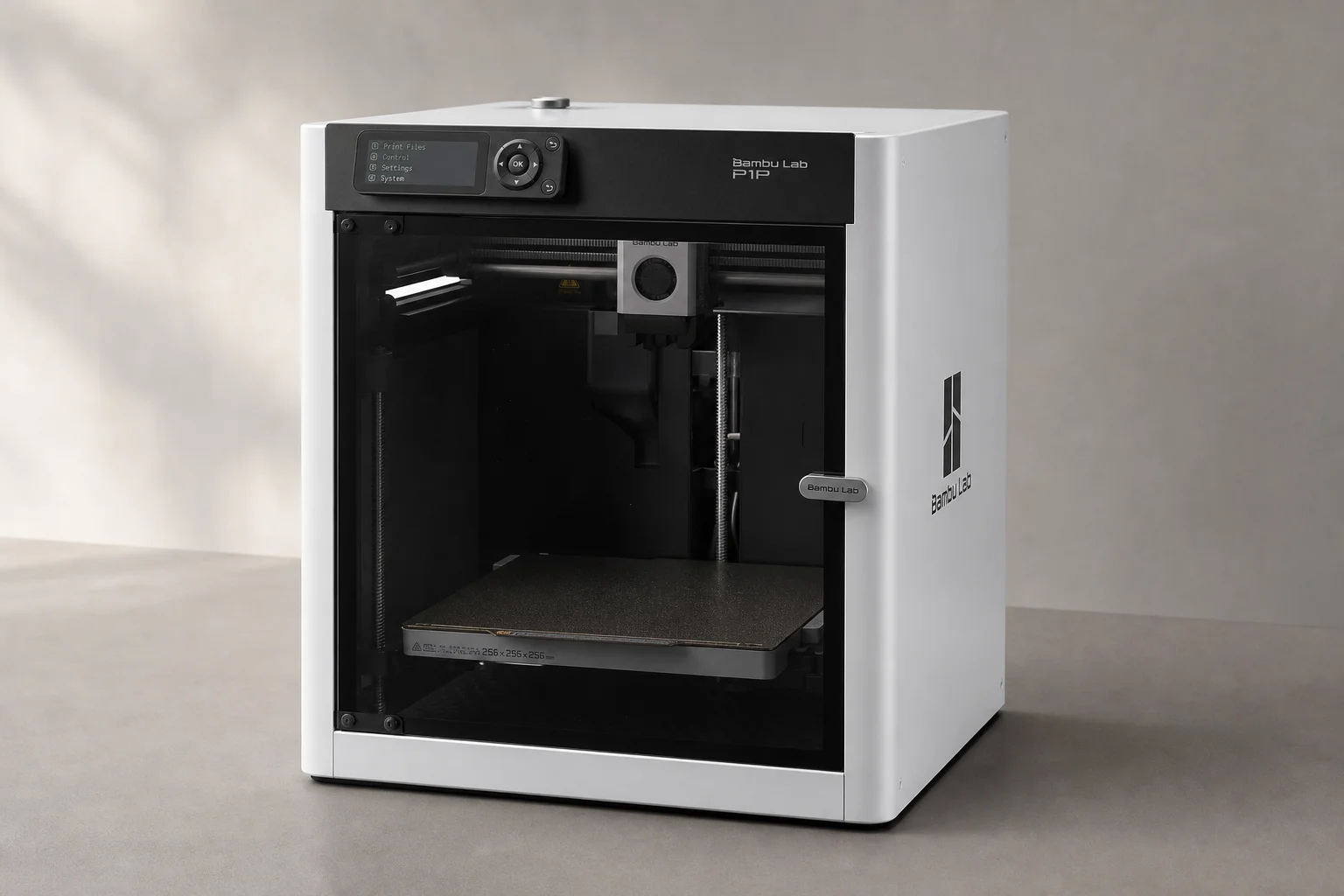
The P1 series forms the foundation of Bambu Lab’s consumer lineup. The P1P launched in 2022 as an open-frame printer designed for makers who prioritize speed and affordability. It reaches 500 mm per second and originally sold for $699, though prices have dropped to around $399. The design philosophy was clear: build a fast, minimal machine and let makers modify it as they wish. The market had other ideas.
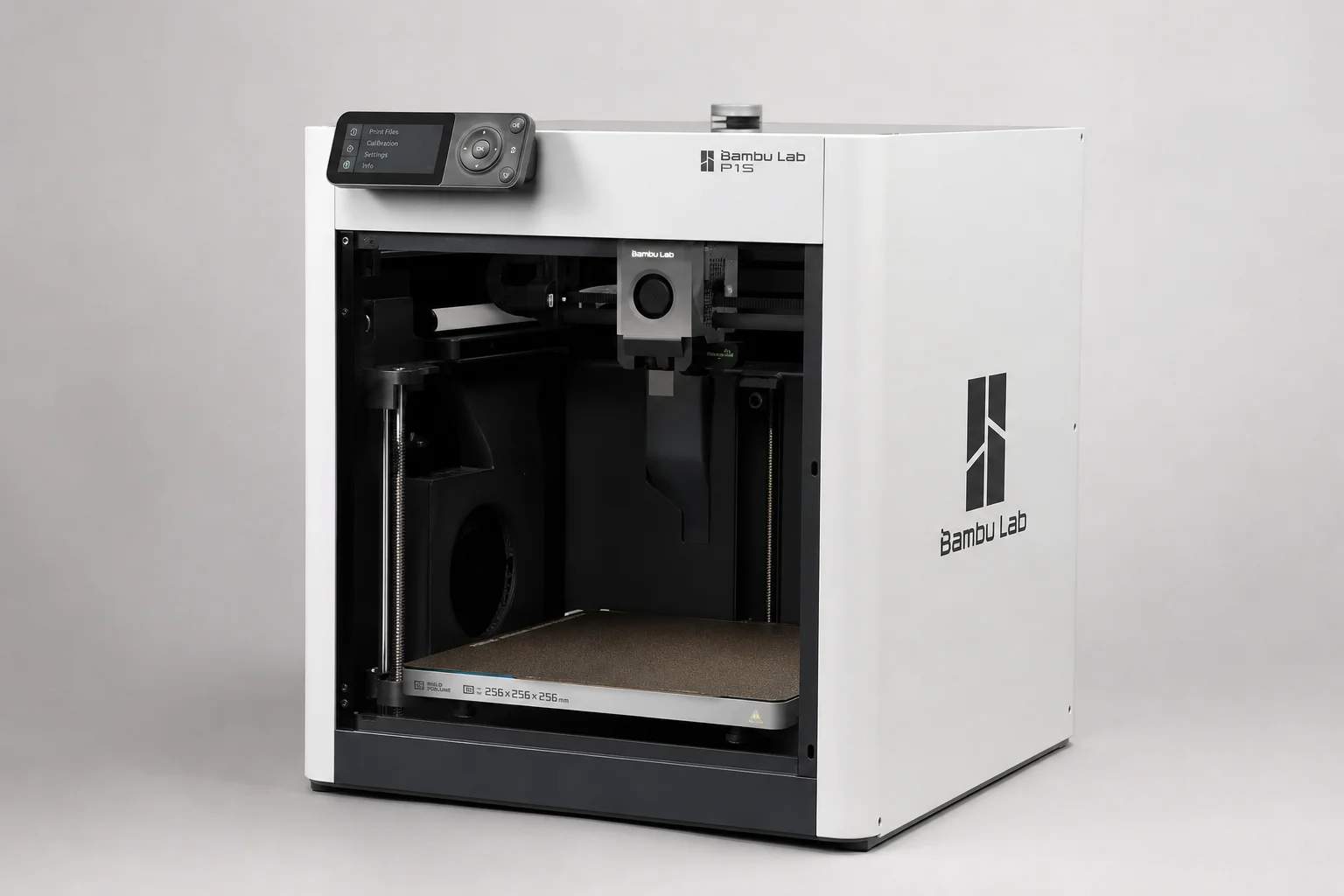
Most buyers didn’t want to tinker. They wanted a printer that worked reliably out of the box. That feedback led to the P1S in 2023, which added an enclosed heated chamber and AI camera. The enclosure transformed the experience from a do-it-yourself workshop into a furnished studio. Print quality improved, material compatibility expanded, and the machine became far more approachable for users who simply wanted results. The P1S became a bestseller because it solved the real problem: reliability without requiring modification skills.
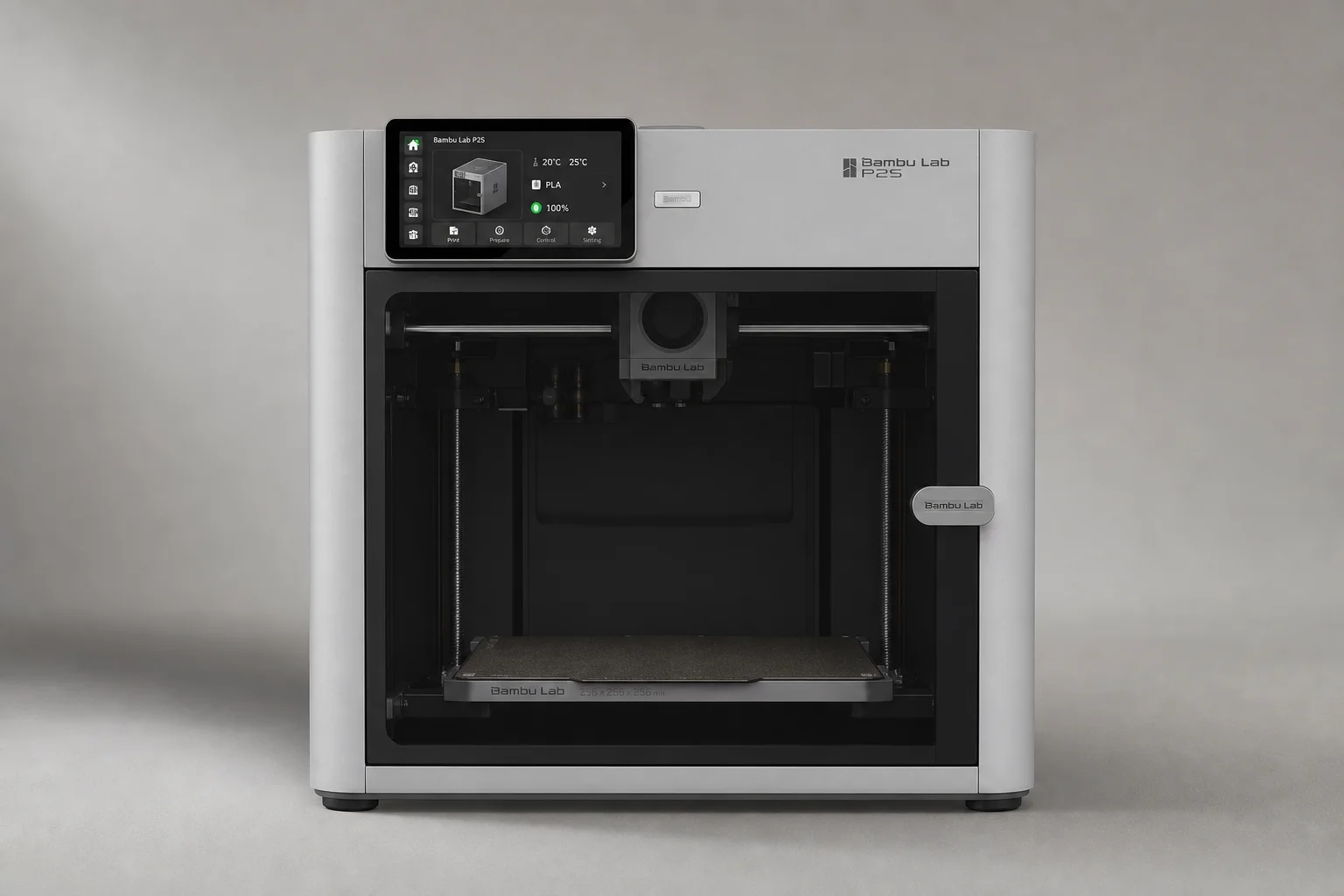
The P2S arrived in 2025 and represents a genuine step forward, not just a refresh. The key upgrade is servo motor technology inherited from the H2 series, which increases extrusion force by 67%. This matters most when printing high-performance materials like carbon fiber or complex geometries. Clogging risk drops by 80%, and the machine now includes 23 sensors monitoring feed rate, tension, nozzle temperature, chamber humidity, and more. The system predicts problems and adjusts in real time, similar to how modern vehicle stability systems work.
Should you upgrade from a P1S to a P2S? Only if you regularly print advanced materials or your P1S shows signs of wear. For standard resin and general-purpose printing, the P1S remains excellent value and will continue to serve well.
Multicolor Printing: The AMS Systems
Bambu Lab’s automatic material system promised to revolutionize multicolor printing. The original AMS (2022) could theoretically switch between 16 colors automatically. In practice, it jammed frequently, ran noisily, and humidity caused filament to become brittle. Late-night jam clearing and filament snaps became common complaints.
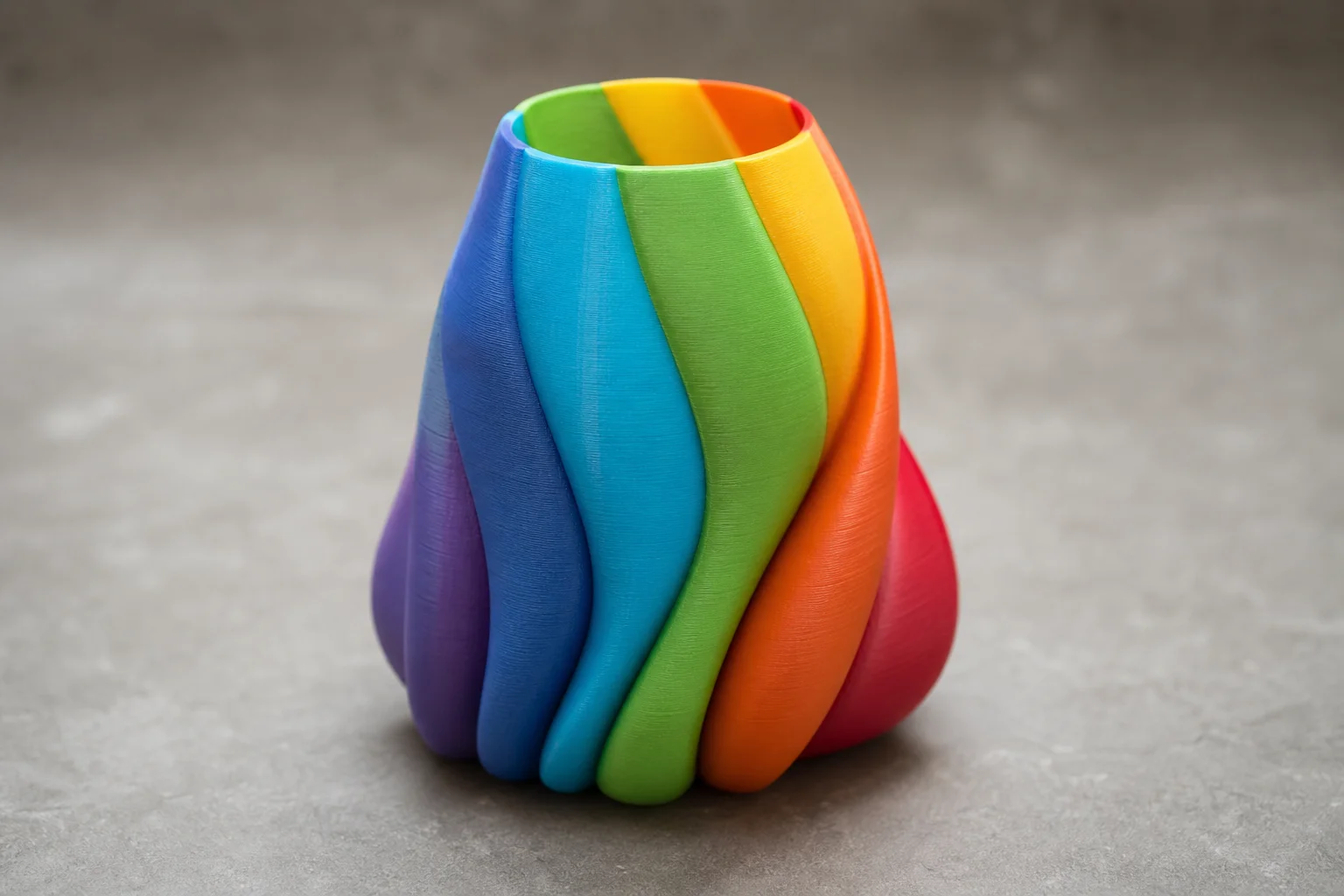
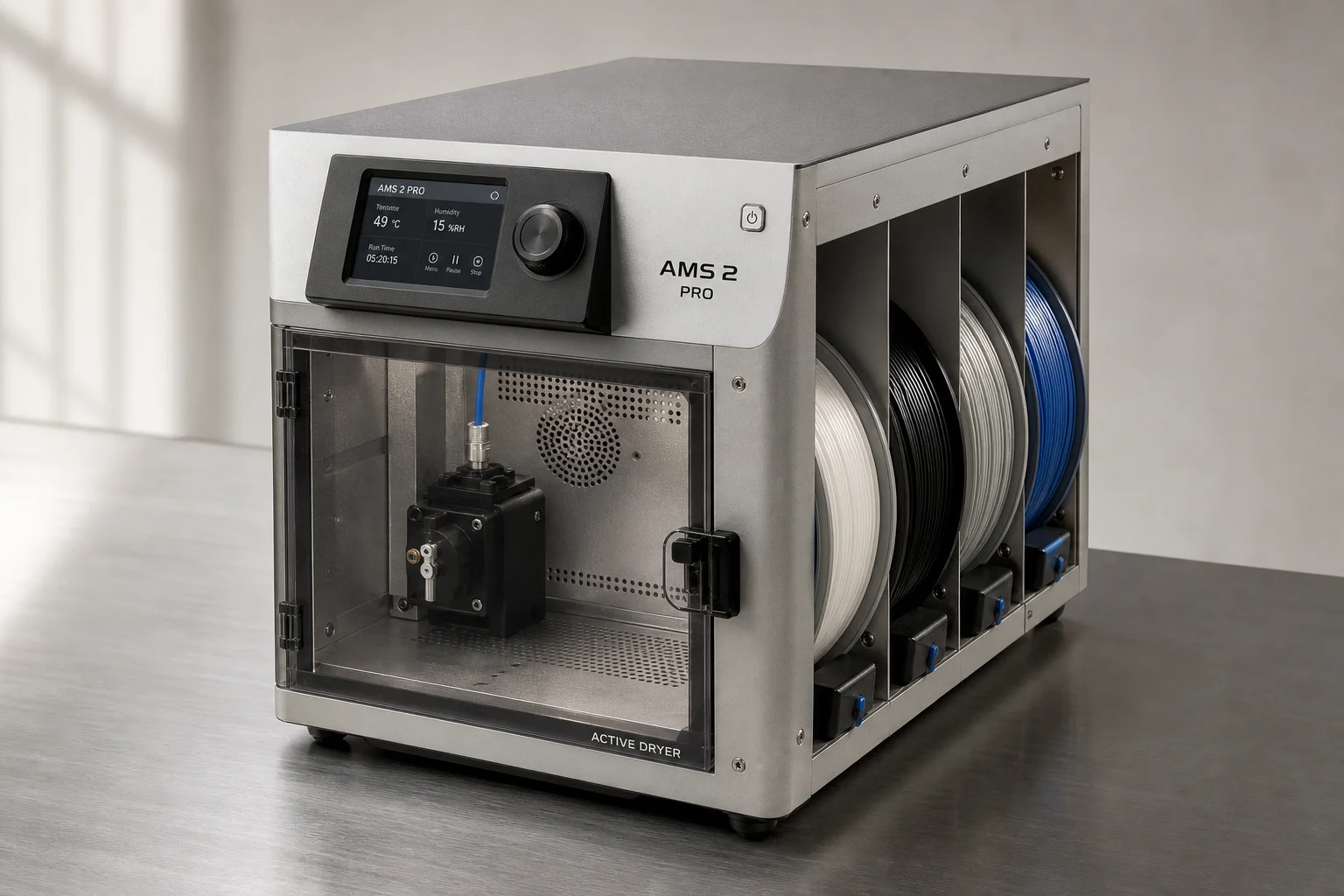
The 2025 AMS2 Pro addressed these pain points with precision engineering. The jamming problem is solved through a brushless servo motor and open-access Bowden tubes, allowing you to clear jams in seconds rather than half an hour. Humidity is now managed by a built-in active dryer that runs up to 65°C and automatically switches between drying and storage modes. A smart valve keeps the chamber sealed and dry. Motor redesign and smarter swap algorithms cut noise by approximately 40%.
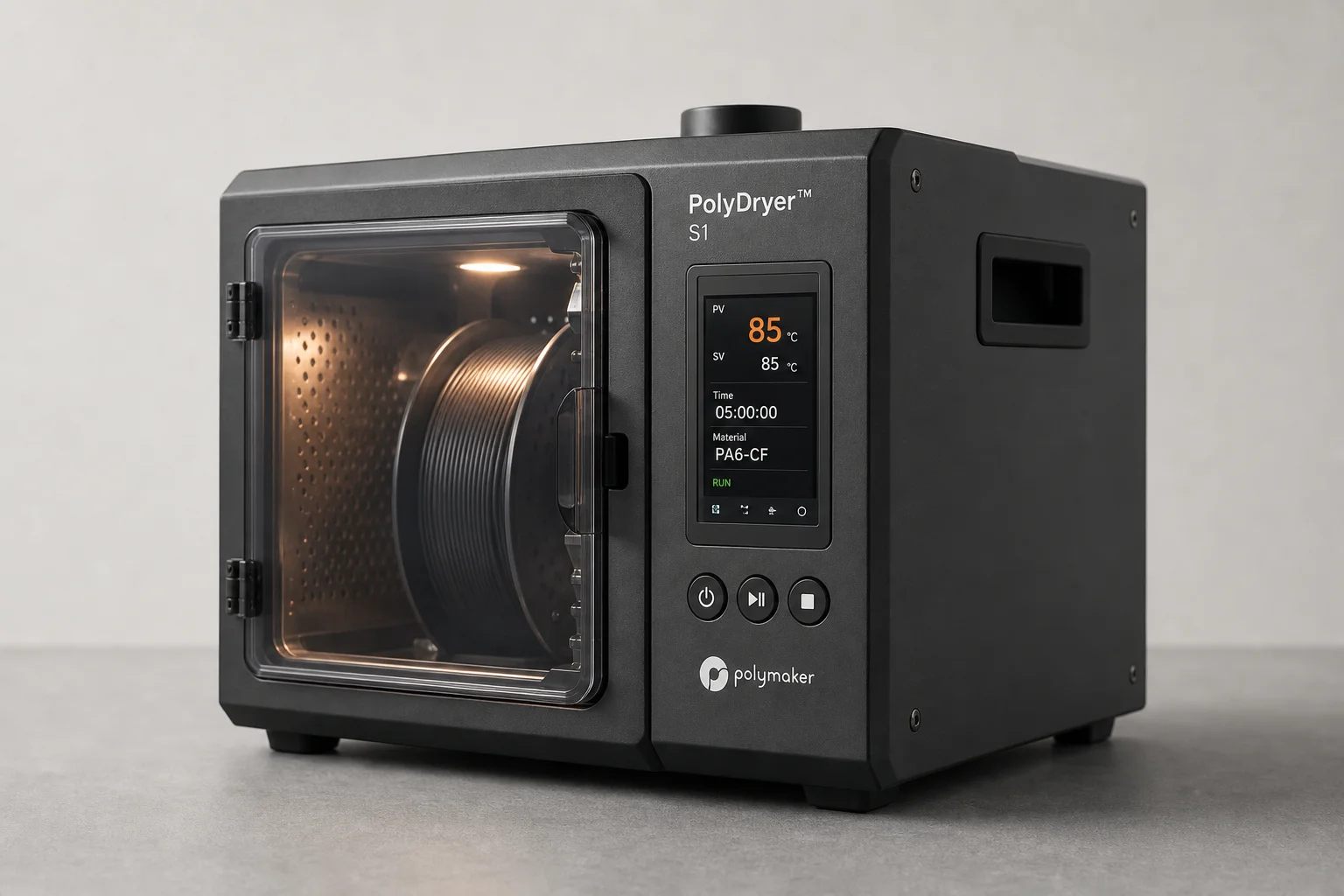
For makers working with advanced materials like nylon, polycarbonate, or PPS, the AMS HT offers a different approach. It’s a single-spool high-temperature dryer reaching 85°C to prevent moisture-related brittleness. It includes a bypass mode that sends filament directly to the print head, skipping the AMS path entirely. This proves essential for tricky materials like carbon fiber or TPU that tend to jam in standard systems.
The choice between them depends on your workflow. The AMS2 Pro is the comfortable daily driver for general multicolor work. The AMS HT is the specialized tool for advanced materials and demanding applications.
The X1C: Flagship Single-Color Printer
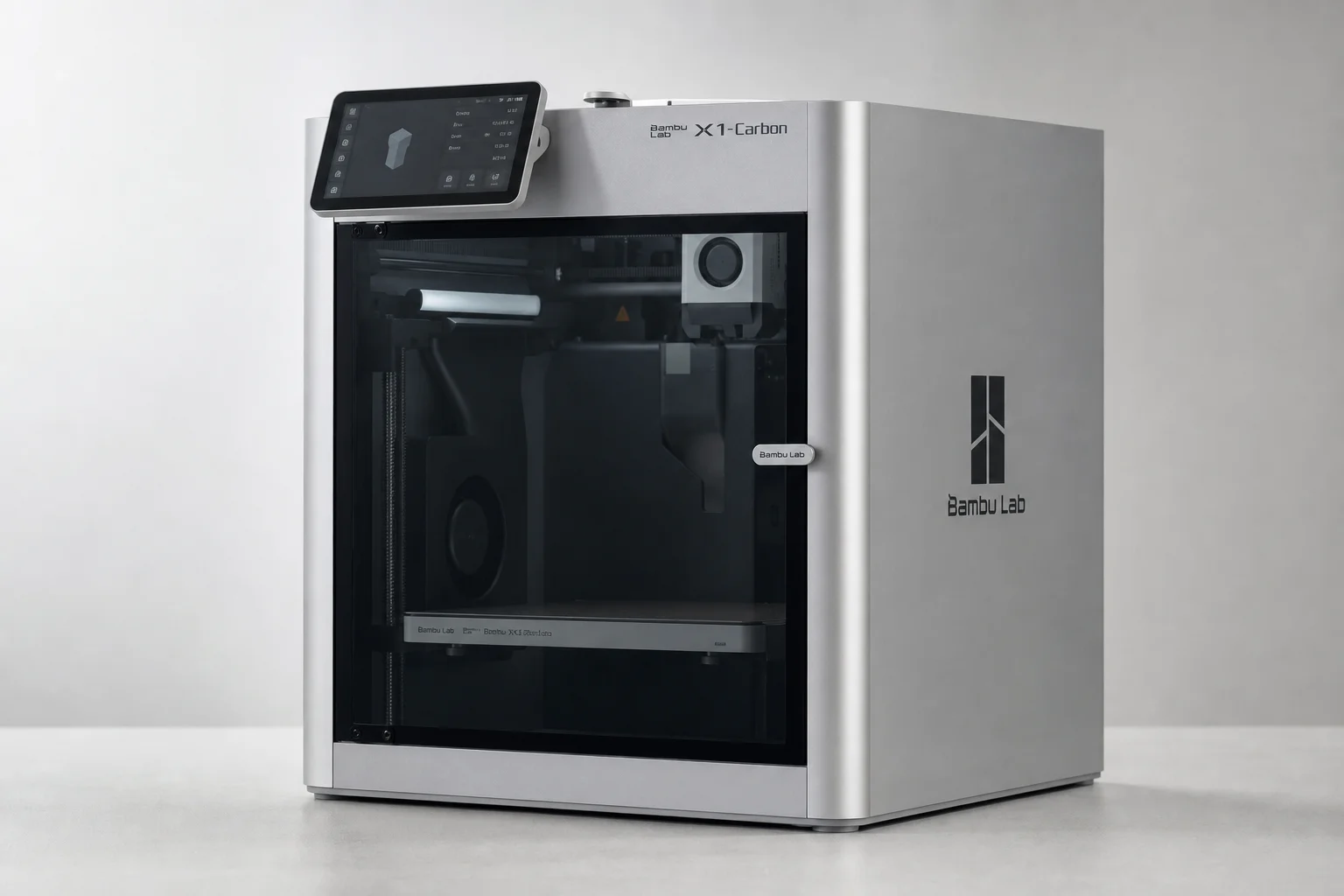
The X1C launched in 2022 and fundamentally changed expectations for consumer 3D printers. It delivered specifications previously reserved for industrial machines: 500 mm/s speed, 20,000 mm/s squared acceleration, 7-micron layer accuracy, and AI vision features. For the price, it was revolutionary.
The H2 Series: Multifunction Flagship Machines
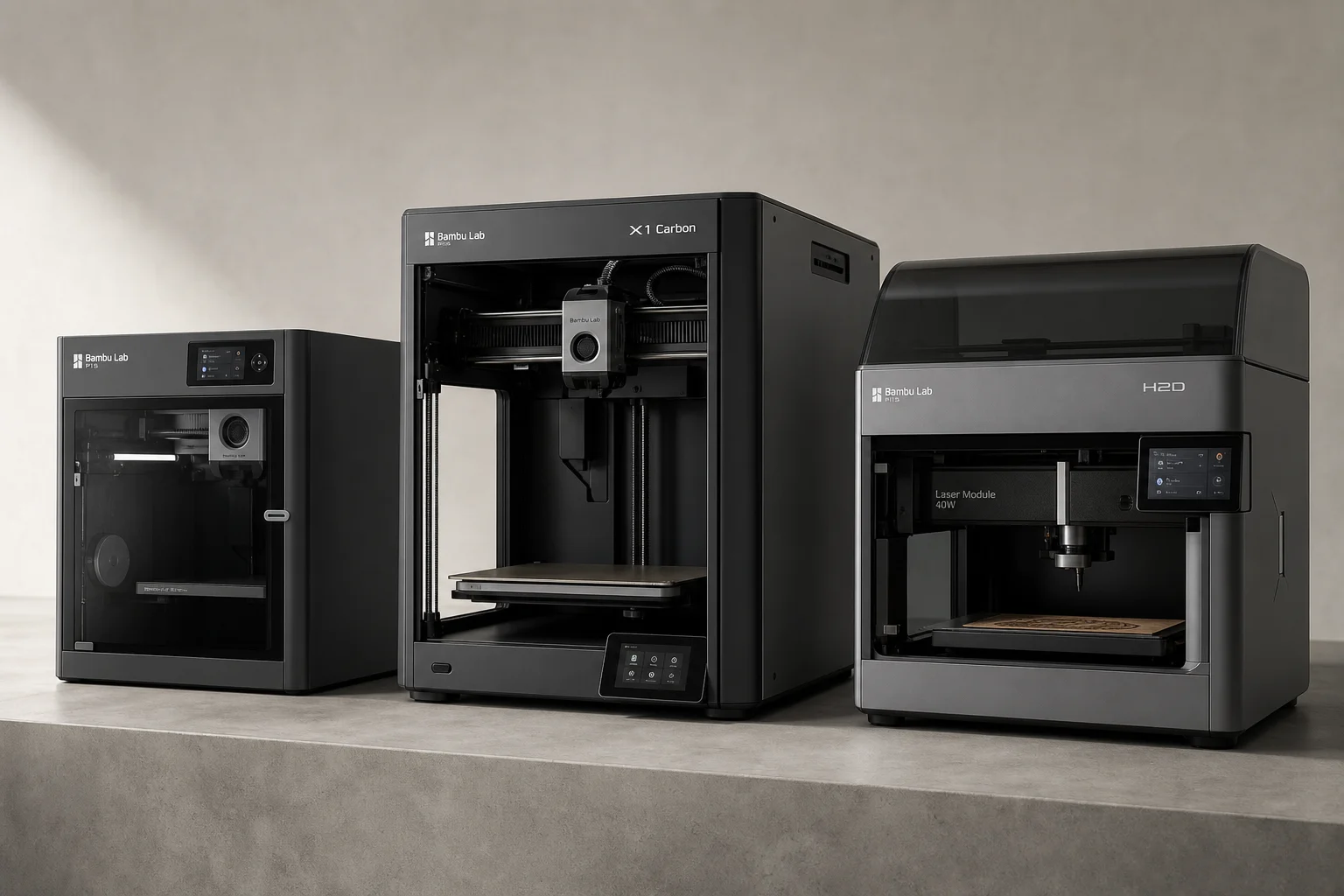
In 2025, Bambu Lab introduced the H2 line, a departure from single-function printing. The H2 series integrates 3D printing, laser engraving, cutting, and pen plotting into unified platforms. The goal is one machine doing the work of four.
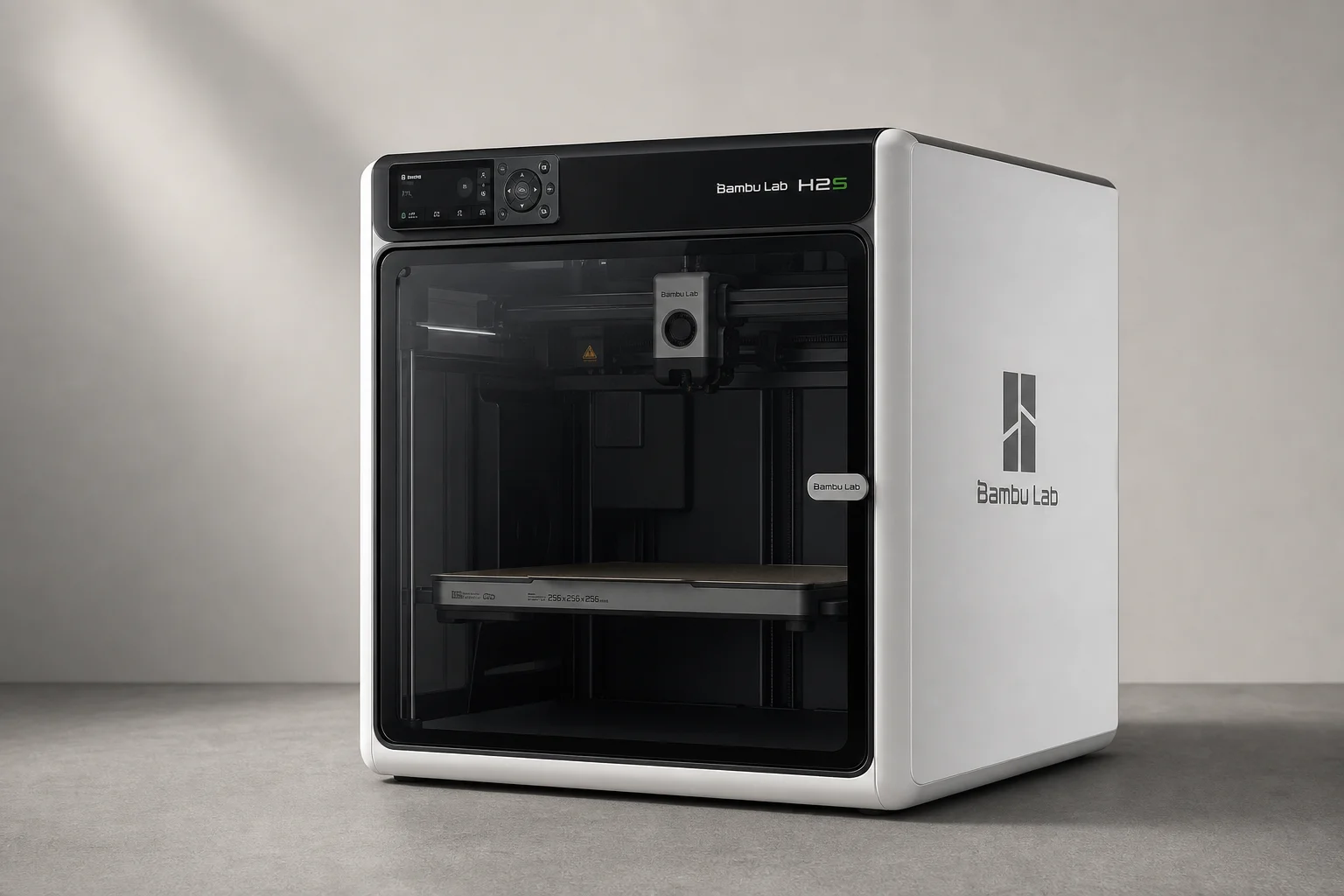
The H2S is essentially a supersized X1C with a 220% larger build platform (340 x 320 x 340 mm). It prints fast enough to produce a full-size helmet in one session. Despite the larger footprint, it’s claimed to be 30% faster than the X1C while priced lower at $1,249.
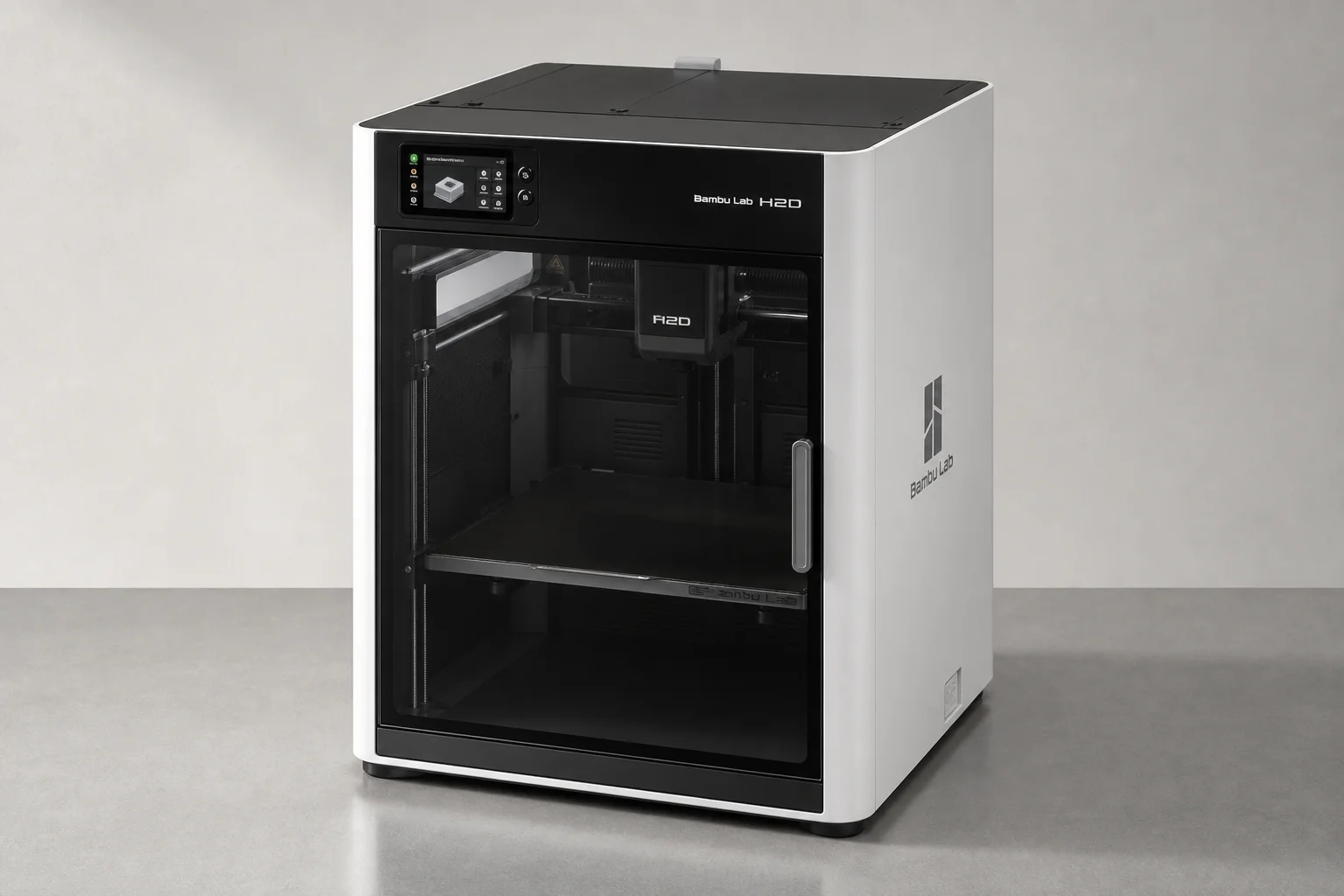
The H2D combines all four functions: 3D printing, laser engraving, cutting, and pen plotting. The traditional workflow requires three separate machines and three separate alignments, introducing errors and consuming time. The H2D prints a part, auto-aligns using a top camera, engraves, and trims in one continuous operation.
The practical trade-off is maintenance. Laser work vaporizes material that settles deep inside the machine, including spots difficult to reach. This drives up maintenance costs. A standalone laser engraver costs roughly the same as the H2D’s laser module, and standalone machines are easier to maintain. The H2D makes sense only if you genuinely need automatic alignment between printing and engraving steps.
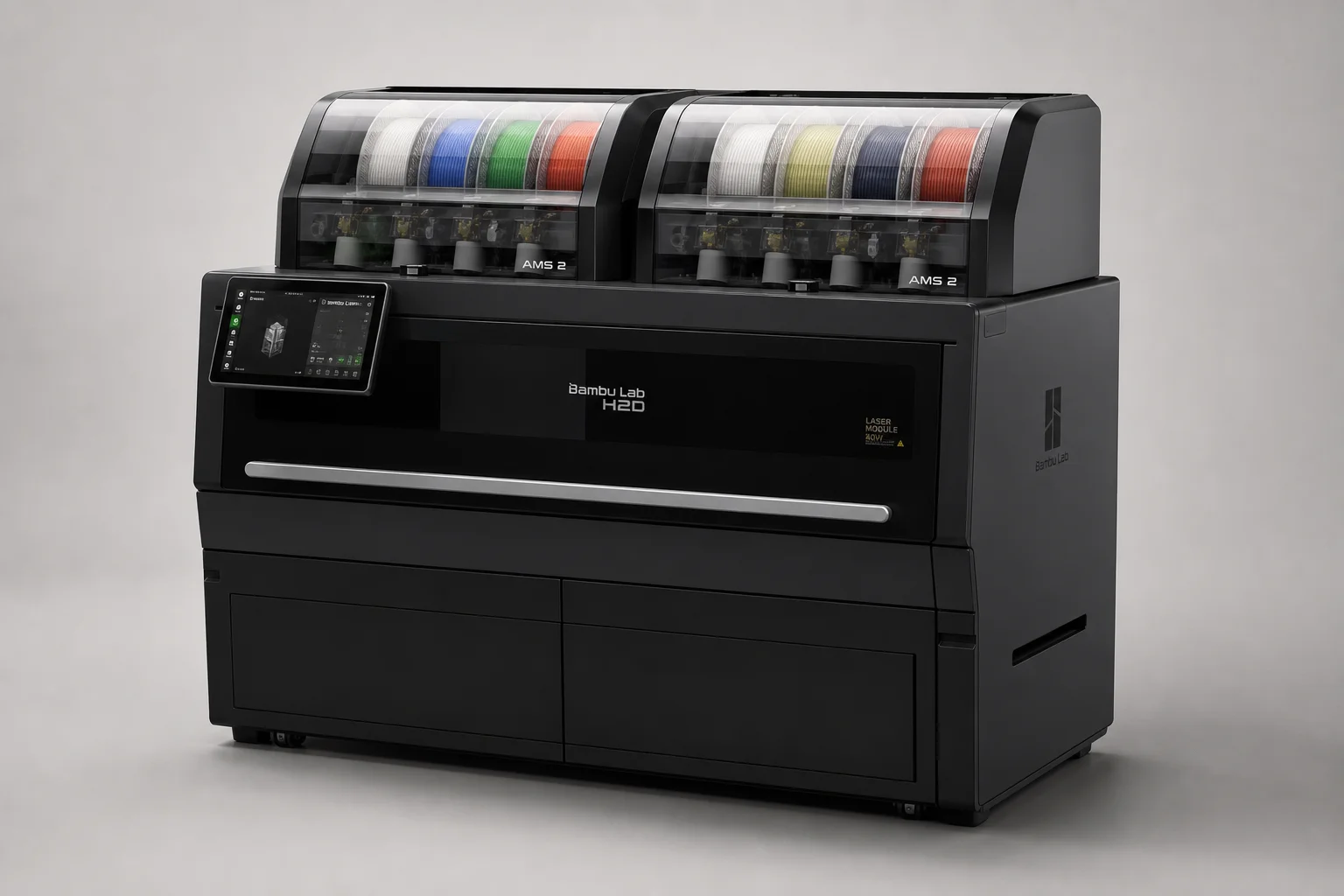
The H2D Pro, priced at $3,799, targets businesses and professional labs. It adds enterprise-grade Wi-Fi security, a hardware network switch, and dual AMS systems for production workflows.
Coming in Q4 2025, the H2C introduces a Vortekch quick-swap hotend system with seven nozzles and 8-second heat-up time. It eliminates purge towers, which waste filament at every color swap. The H2C swaps hotends instead, enabling seven-color printing with zero waste. This represents a genuine innovation in multicolor workflow efficiency.
Choosing the Right Printer for Your Workflow
The P1S remains the best value for makers who want reliability without complexity. The P2S justifies its cost only if you print advanced materials regularly. The X1C is the flagship single-color option for those who want maximum speed and precision. The H2S offers the largest build platform at a competitive price. The H2D makes sense if your workflow genuinely requires integrated printing and laser work with automatic alignment. The H2D Pro is for professional operations. The AMS2 Pro handles multicolor printing well for general materials, while the AMS HT is essential for advanced filaments.
Bambu Lab’s expansion means there’s now a machine for nearly every use case, but it also means you should match your actual workflow to the tool rather than chasing the newest release.
Conclusion
Bambu Lab’s lineup has grown substantially, but each model serves a distinct purpose. Your P1S isn’t obsolete unless you’ve outgrown its capabilities. The newer models offer real improvements in specific areas: the P2S for advanced materials, the H2 series for multifunction work, and the improved AMS systems for reliable multicolor printing. Evaluate your actual printing needs, not the hype cycle, and you’ll find the right machine for your workflow.
Further reading
Related Reviews
3D Printing
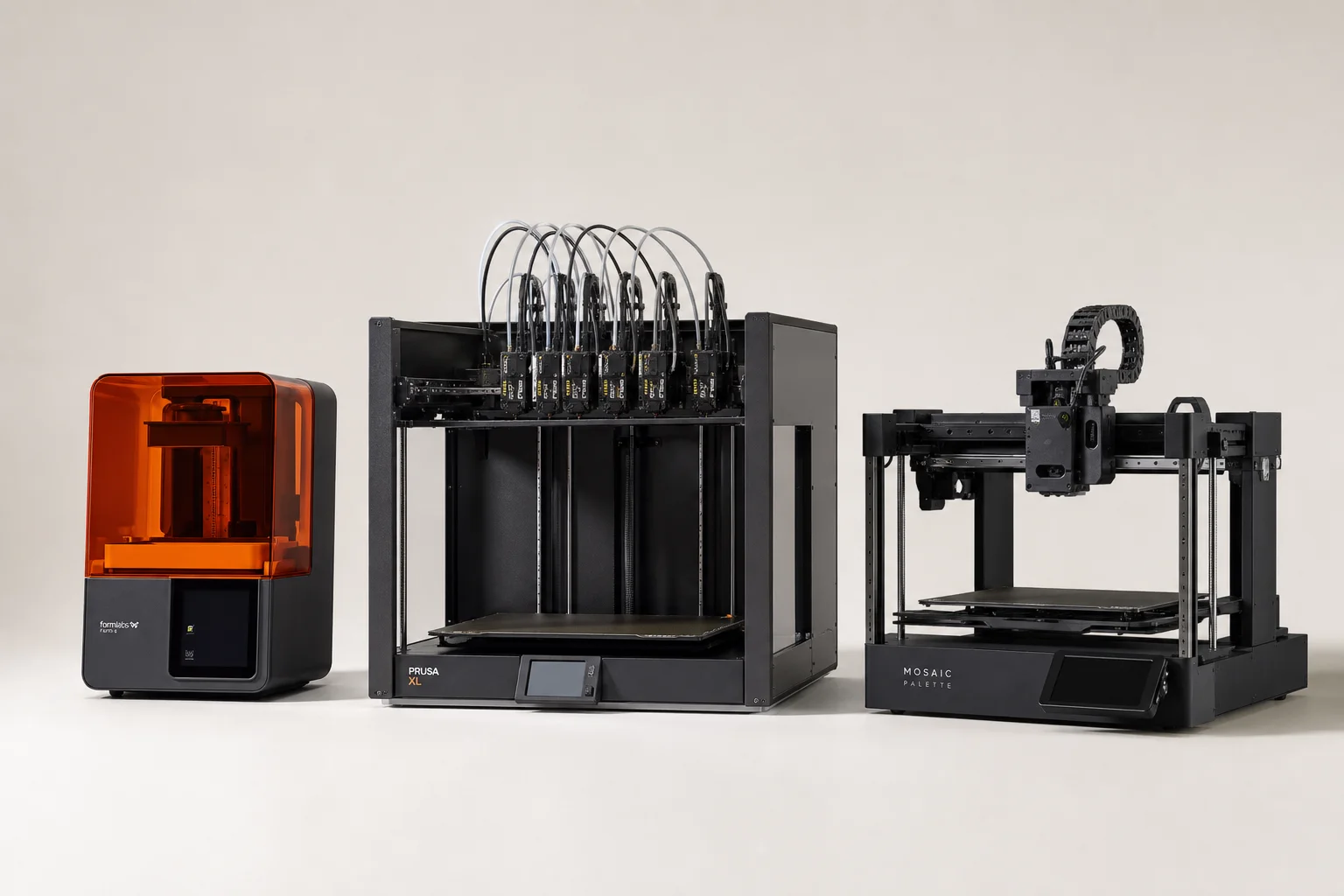
3D Printer Wishlist 2026: Industry Hopes and Manufacturer-Specific Improvements
A comprehensive review of what the 3D printing industry needs in 2026, from universal standards to manufacturer-specific feature requests across leading brands.
3D Printing
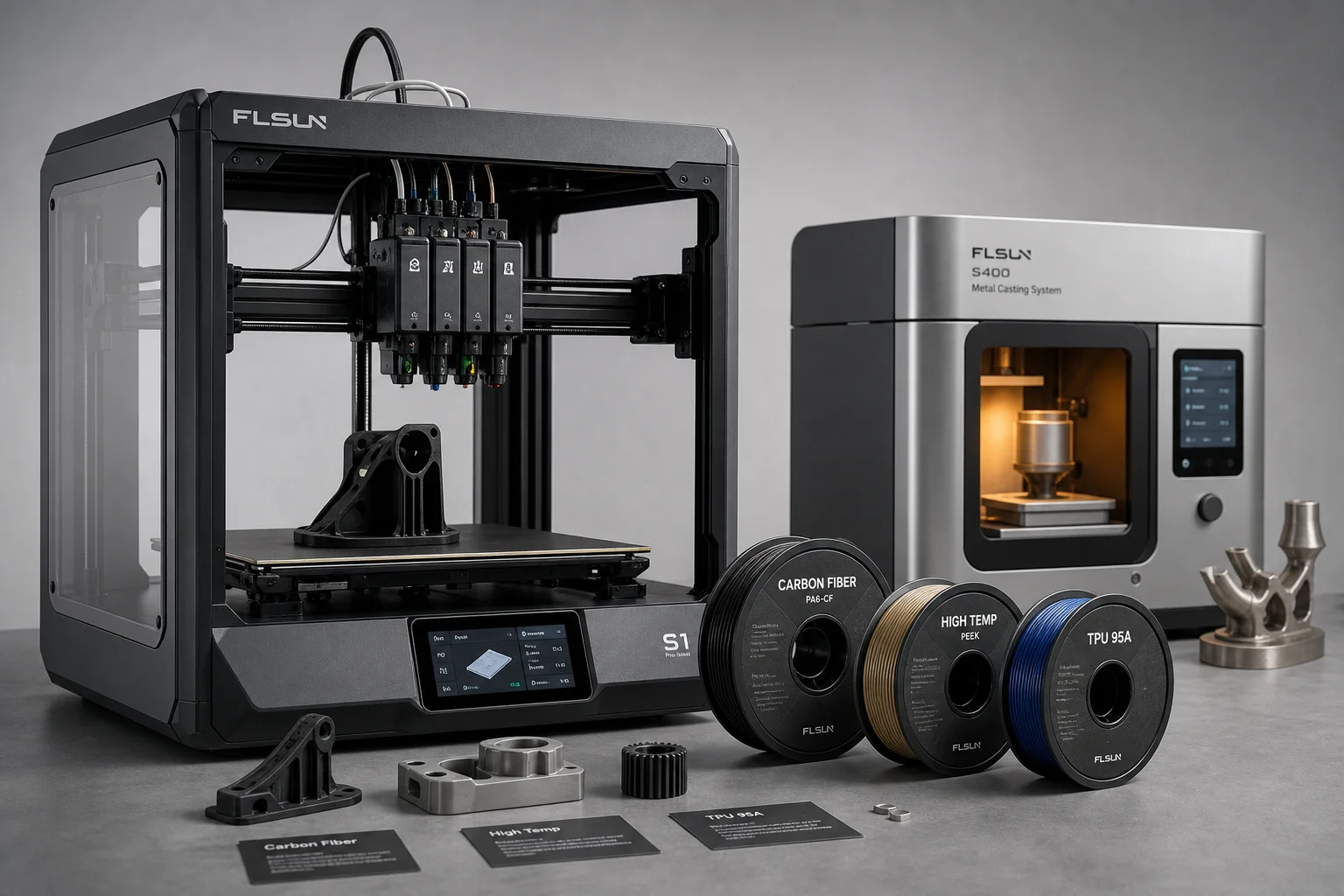
3D Printing Trends 2026: Multi-Material Systems, Stronger Filaments, and Desktop Metal Casting
FormNext 2025 revealed the direction of 3D printing in 2026: accessible multi-material printers, high-strength filaments, and innovative software solutions that bring industrial capabilities to the desktop.
3D Printing
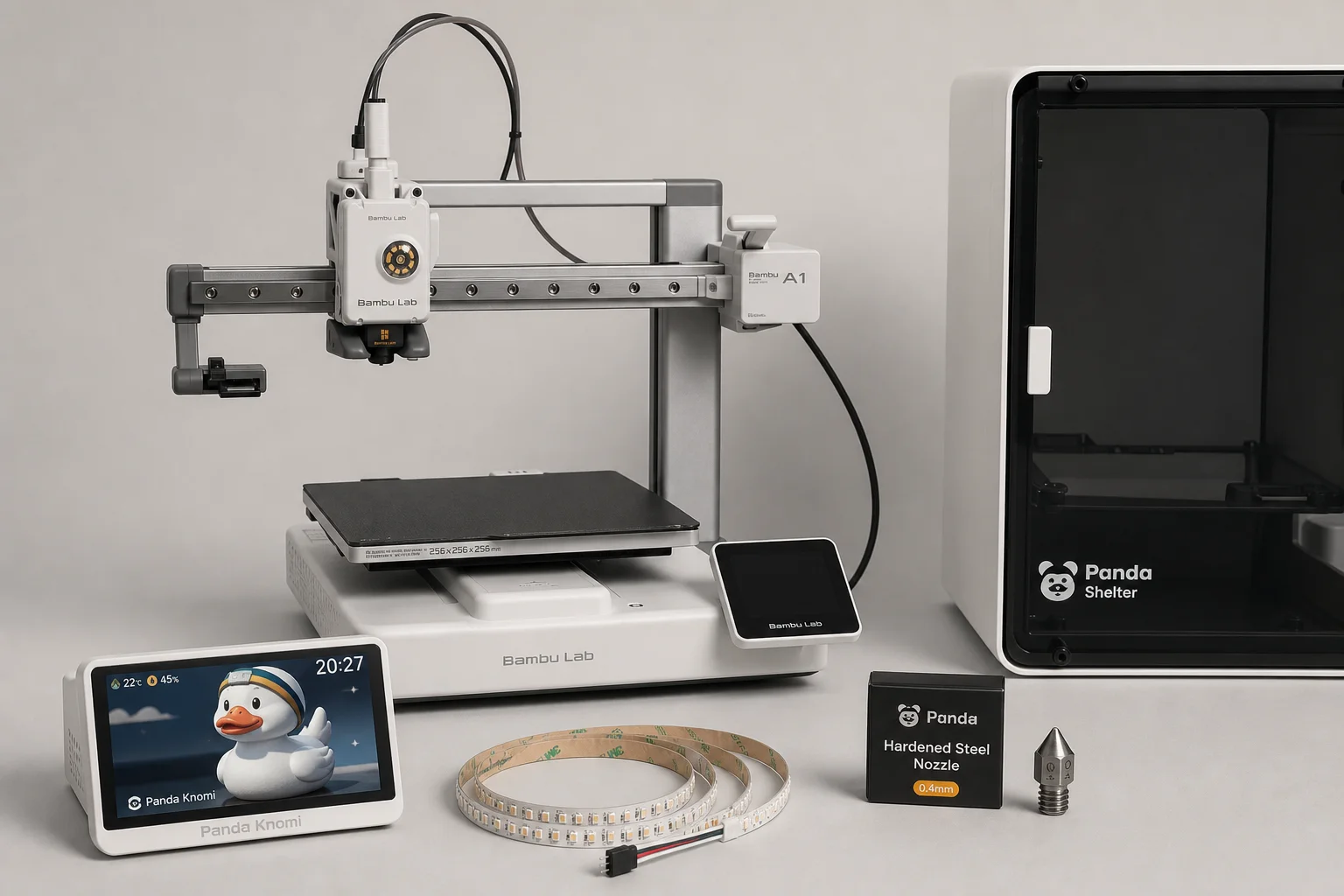
Bambu Lab A1 Upgrades Guide: Nine Practical Enhancements Ranked
A comprehensive ranking of nine upgrades for the Bambu Lab A1 3D printer, from essential display modules to premium mounts and enclosures.