Saltwater Aquarium Kits
Hello Reef 15-Gallon Kit Review: A Saltwater Start Without the Guesswork
A compact saltwater starter kit that bundles proven equipment, a six-week guided setup course, and ongoing support into a single box.
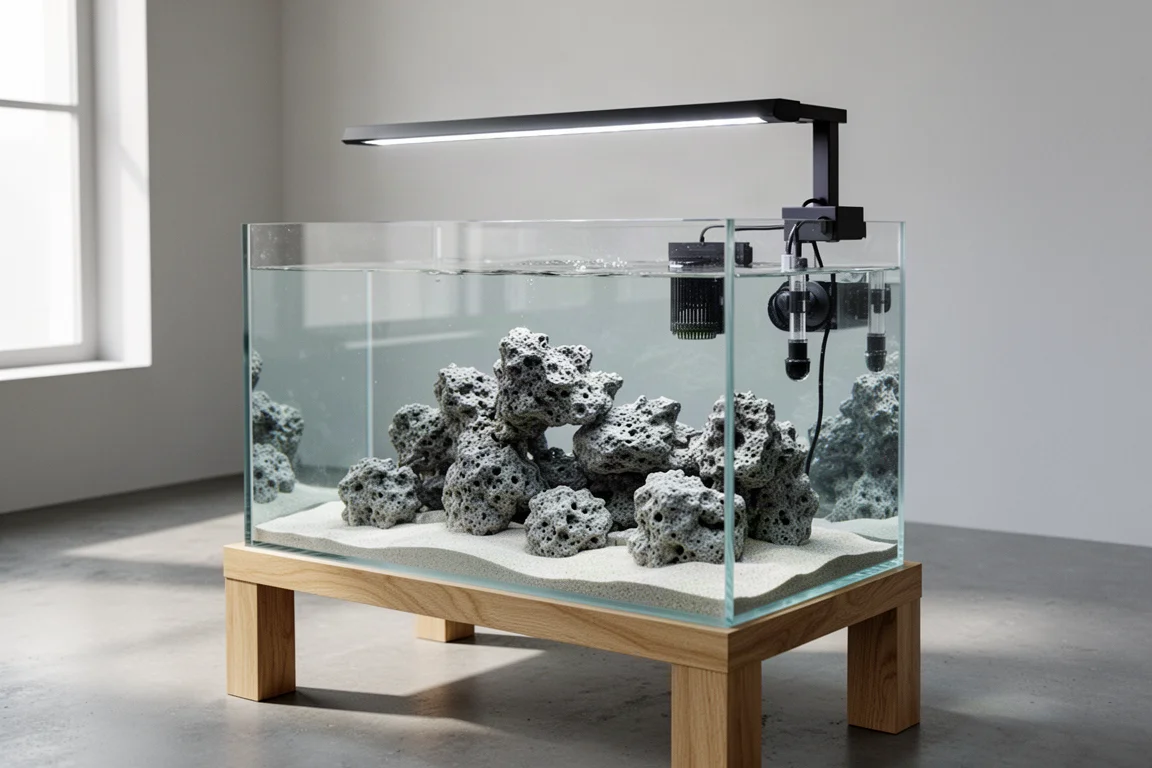
Introduction
Saltwater aquariums have a reputation problem. The hobby rewards patience and good equipment, but the first steps are usually the hardest. A curious beginner talks to an experienced keeper, sees a mature system with every bell and whistle, and quietly decides the whole thing is beyond them.
The Hello Reef 15-gallon kit was built around that exact moment. The premise is simple: remove the equipment guesswork, put the right components in one box, and pair them with education that walks a new owner through the first six weeks, which is when most people give up.
This review covers what is in the kit, who it suits, and the trade-offs worth understanding before buying.
Who This Kit Is For
The kit is aimed at people who are curious about saltwater but unsure where to start, including freshwater keepers who have admired reef tanks from a distance and hesitated. It is also a practical answer for anyone who keeps getting asked how to get into the hobby by a friend, a nephew, or a family member, because the included guidance carries a beginner through the stages that normally cause frustration.
Experienced reefers are not shut out. A 15-gallon footprint suits a small second system in an office, a bedroom, or a kitchen, and the components are the same ones a seasoned keeper would choose anyway.
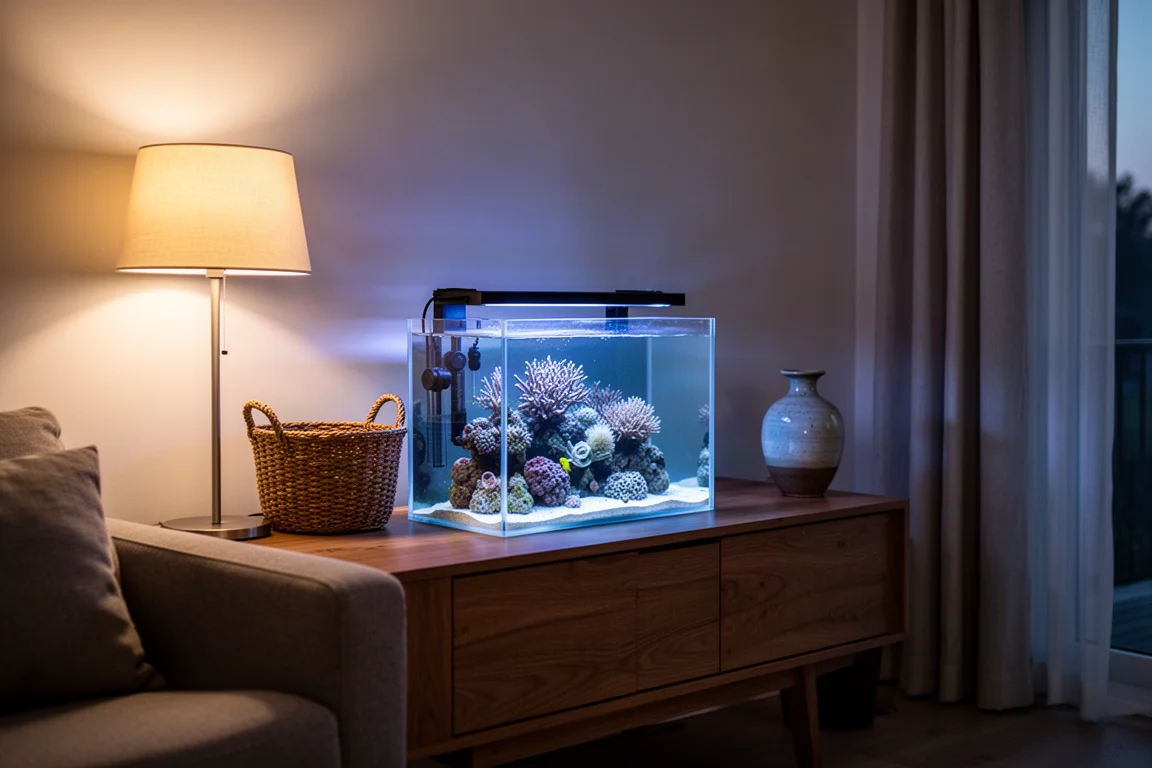
That dual purpose is deliberate. Because the kit relies on equipment that stands on its own rather than entry-level substitutes, it works as a genuine small reef tank as much as a starter system. There is little here that would need to be replaced once the owner gains experience.
What Comes in the Box
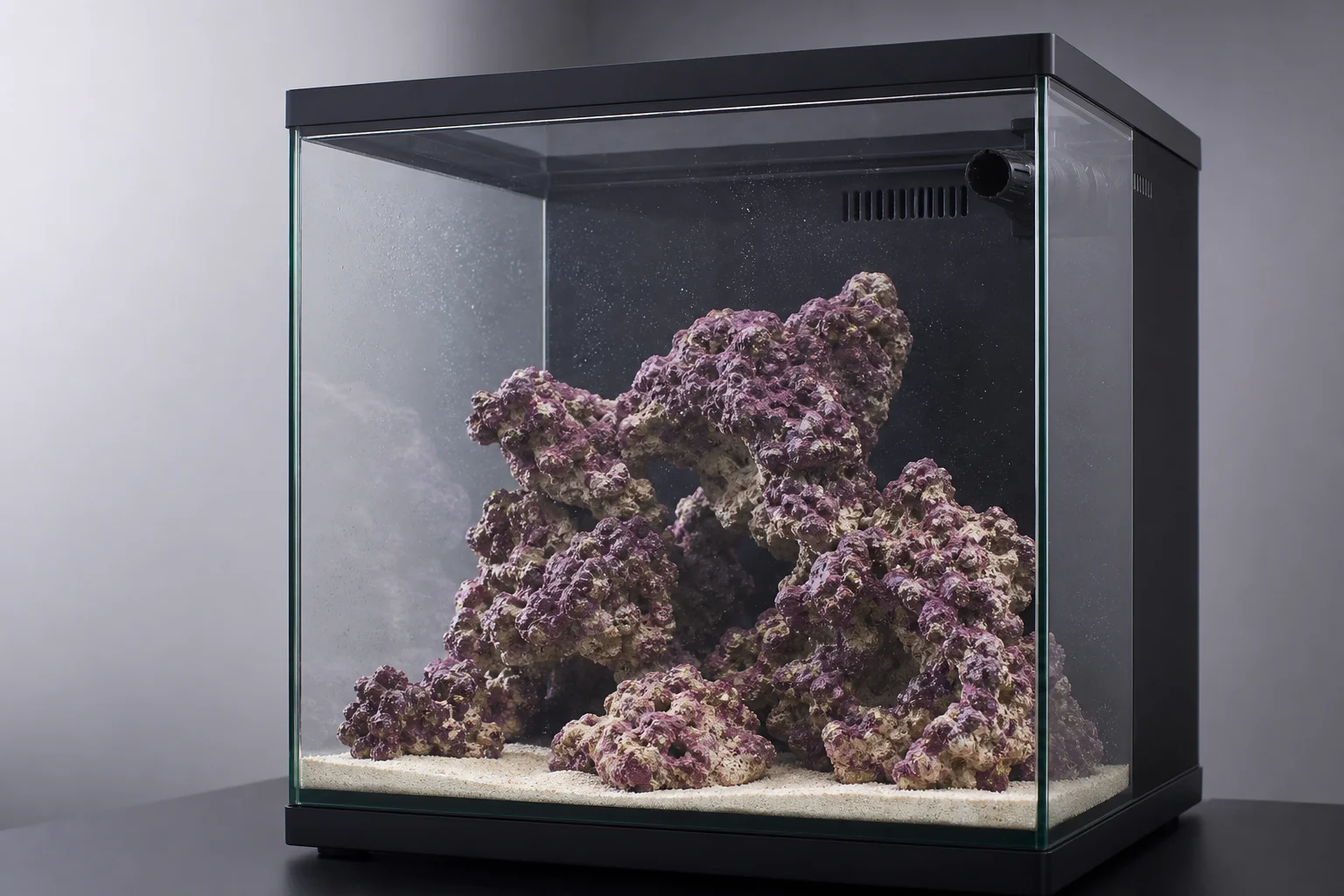
Unboxing is organized rather than chaotic. Components are numbered and labeled, and a template is provided for building the rock structure, which removes much of the guesswork from aquascaping a first tank.
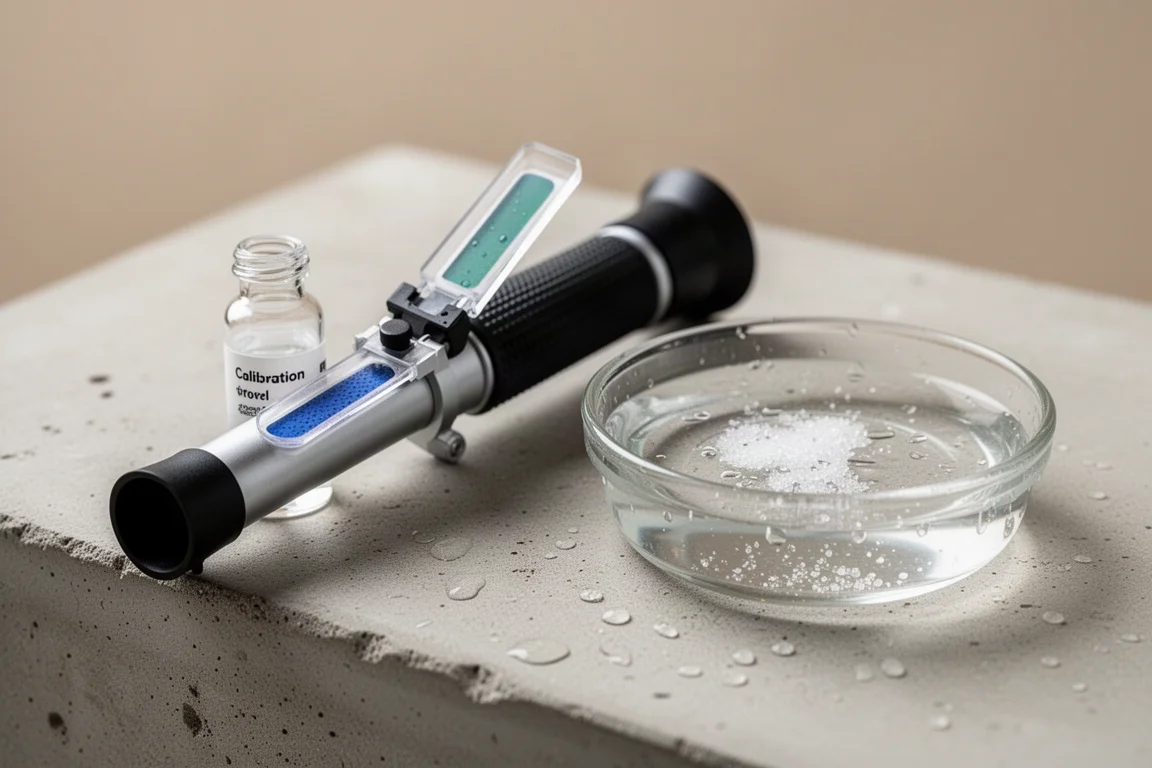
Inside the kit you get an AI LED light, a return pump, a powerhead, an Eheim heater, aquarium rock and sand, salt, rock epoxy, an algae scraper, a filter sock, carbon, and a refractometer with calibration solution. A pair of nylon gloves is included for handling epoxy while building the rockwork. The kit also ships with a gift card toward a first animal purchase, so the tank’s first inhabitants are partly covered.
One detail stands out. Many starter kits include a floating hydrometer instead of a refractometer. Hydrometers do work, but they can fail if they are not cleaned and maintained properly, and inaccurate salinity readings are one of the most common sources of beginner trouble. Supplying a refractometer and calibration solution addresses that risk directly.
Main Strengths: Equipment Selected for the Long Run
Every major component is a brand a reefer would consider buying separately: an AI LED light, an Eheim heater, and Aquaforest salt among them. The value argument here is not that the kit is cheap. It is that the equipment is worth keeping, which makes the bundle a reasonable starting point rather than a disposable one.
The kit is also described as saving roughly 15 percent compared with buying the same items individually, and it takes the compatibility question off the table entirely. Nothing has to be matched, tested, or returned because it does not fit.
The practical result is a setup process that feels close to just add water. Fill the tank, mix the salt, and follow the numbered steps. A new keeper ends up with a working system without assembling a shopping list from scratch, and the equipment leaves room to upgrade later instead of forcing a rebuild.
Main Strengths: The Six-Week Guided Setup
The kit includes a six-week instructional course delivered in weekly stages. Rather than dropping dozens of videos at once, the program releases a small set of lessons, waits for the tank to cycle, then continues. That pacing mirrors the biology of a new aquarium, where rushing the cycle tends to create problems further down the line.
Support continues through Hello Reef Connect, where owners can send questions as they come up. The course also includes bonus lessons on optional equipment such as an auto top off, explaining when it becomes genuinely useful rather than presenting it as something required on day one.
For anyone who has watched a beginner struggle through forum threads with contradictory advice, the structure is the point. There is one path, delivered in order, with someone to ask when something looks wrong.
Things to Consider Before Buying
Two points are worth being honest about. First, this is a 15-gallon system, so the footprint is compact and the room for livestock is limited compared with a larger tank. It is an excellent size for learning and for small spaces, but it is not a large reef display and should not be treated as one.
Second, the kit rewards patience. There is no instant gratification here. The six-week course is built around waiting for the tank to cycle, and the week-by-week delivery is intentional rather than a limitation of the platform. Anyone who wants every lesson and every answer on day one will find the pacing slower than expected.
It is also worth noting that an auto top off is not part of the kit. It is covered in the bonus material as an optional upgrade, which is a sensible choice for beginners, but buyers who already know they want one should plan for it separately.

Neither point is really a flaw. Both are questions of fit. A buyer who wants a compact, carefully guided first tank will find the trade-offs reasonable, while someone hoping to stock a display quickly is looking at the wrong product category.
How It Compares With Building a Setup From Scratch
The traditional route is a store visit, a long conversation with staff, and then collecting every piece individually: light, filtration, pumps, heater, rock, sand, salt, and test equipment. In the past, walking out with a complete mid-sized reef setup could mean a bill around $2,500, followed by an evening of assembly and a lot of unanswered questions about whether everything was installed correctly.
Hello Reef’s counter-argument is straightforward. Bundling comparable equipment saves roughly 15 percent against buying each item separately, arrives labeled and in order, and eliminates the compatibility guesswork. The trade-off is a fixed component list, though the individual pieces can be upgraded over time if an owner wants to.
Where Hello Reef Is Heading
The brand’s stated direction is to educate, expand, and keep newcomers in the hobby rather than losing them in the first month. That mission extends beyond saltwater: the company also offers a Glowfish freshwater kit and has announced an upcoming 33-gallon Glowfish Angel freshwater kit, aimed at the same idea of a complete, guided system for people who are new to aquarium keeping.
Buying Advice
As a first saltwater tank, the kit’s main advantage is confidence. Everything needed is in one box, the setup is documented step by step, the equipment is worth keeping, and the bundle is described as costing less than assembling the same parts individually, with a gift card included toward a first animal purchase.
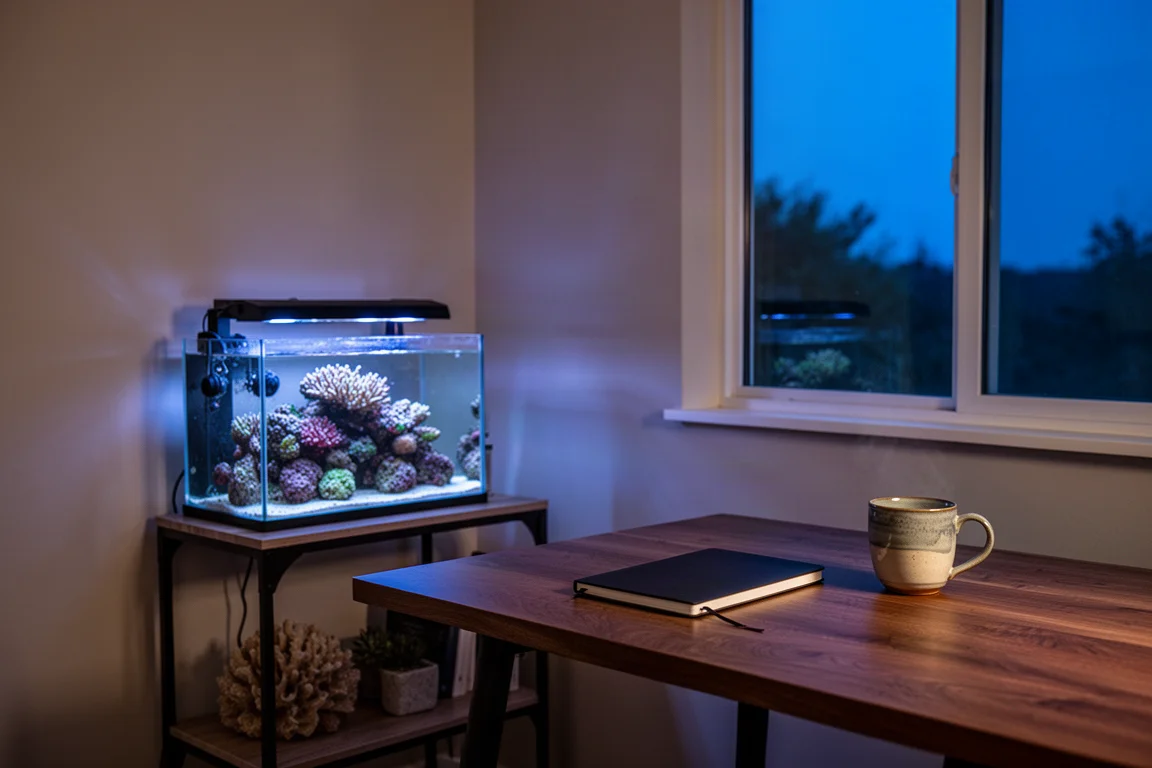
Experienced reefers should treat it as a convenience purchase for a small second system rather than a replacement for a main display. For gifting, it is one of the few aquarium buys that arrives with instructions the recipient can realistically follow, which makes it a strong option for a teenager, a partner, or a friend who has been talking about starting a tank for years.
Conclusion
The Hello Reef 15-gallon kit does not try to be everything. It targets one problem, the overwhelming first step into saltwater, and solves it with curated equipment, a paced six-week course, and ongoing support. The result is a system that suits beginners who want a real reef tank without the trial and error, and experienced keepers who want a compact second setup with components they would have chosen themselves. Buyers who understand the 15-gallon footprint and accept the slower, guided pace will find a lot to like here.
Product link
View more details for Hello Reef 15-Gallon Kit
This product is mentioned in the review. Check the specifications, options, and compatibility before buying.
View more details for Hello Reef 15-Gallon KitFurther reading
Related Reviews
Saltwater Aquarium Setup
10 Questions About Cycling a Saltwater Aquarium: What You Need to Know
Essential questions and answers for cycling a reef tank or saltwater aquarium, from biome building to light management and bacterial supplements.

Hi-Fi Speakers
Acoustic Energy AE1 40th Anniversary Review: A Modern Take on a British Classic
A compact standmount that revives a 1980s favorite with all-new parts, a warm mid-centric balance, and a price of £1,499 per pair.

Studio Monitors
ADAM Audio A8H Review: A Three-Way Studio Monitor That Also Knows How to Have Fun
A three-way active studio monitor with an 8-inch woofer, a handmade AMT tweeter, and two distinct tunings, the ADAM Audio A8H aims to satisfy both critical work and everyday listening.