Heating
Hcalorie SS2 Diesel Heater Review: A Toolbox-Style 8kW Heater That Just Works
A compact 8kW diesel heater with no-assembly setup, app scheduling, and a dry heat output, plus a few trade-offs to know before buying.

Introduction
The Hcalorie SS2 is an 8kW portable diesel heater aimed squarely at people who want heat without the usual assembly chore. Unlike older diesel heaters that require drilling mounting holes, plumbing a fuel tank, and running lines, this one arrives essentially ready to run: fit the exhaust pipe, add diesel, apply power, and it fires up.
It is also aimed at a familiar audience. The same brand’s refrigerators have earned a solid reputation among van campers and preppers, and the SS2 carries over that practical, no-nonsense approach. After extended use, the verdict is straightforward: it is a well-designed, simple unit with a handful of real limitations that are worth understanding before you buy.
Who This Product Is For
The SS2 is built for spaces up to 250 square feet. That makes it a strong fit for a 160 sq ft shed, a tent trailer, a camper, or a boat cabin. It is slightly undersized for a 400 sq ft garage, though it still worked well in that use case. Anyone who has run a Buddy-style propane heater and grown tired of refilling bottles overnight and wiping condensation off everything in the morning will immediately see the appeal of a dry diesel heat source.
Camping at altitude is also covered: the unit is rated to operate above 6,000 meters (over 19,600 feet) thanks to a built-in barometer that adjusts the fuel-air mixture for optimal combustion.
Main Strengths
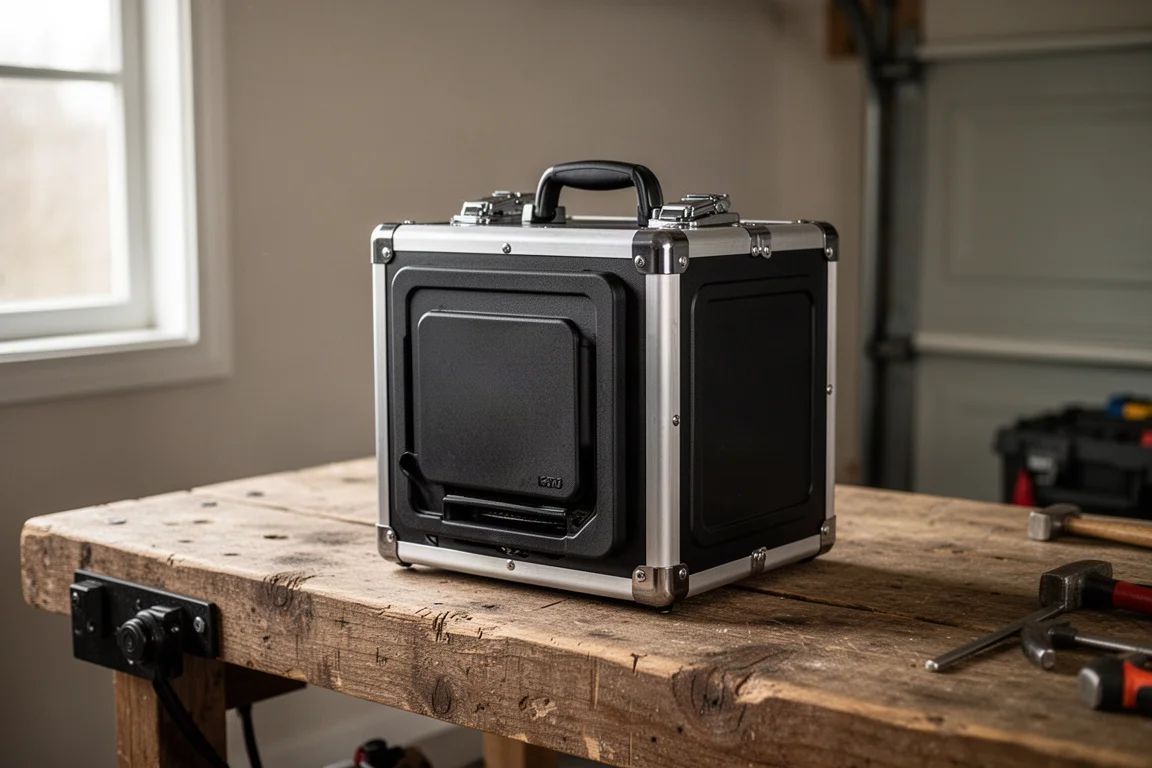
The form factor is the standout feature. The SS2 looks and opens like a metal toolbox, with metal hinges and latches, a hard ABS top and bottom, and a heavy, planted feel. It will not tip over easily, it will not spill fuel, and the flat top surface doubles as a shelf for a power station or other gear. Dimensions are 15.5 inches long, 11 inches wide, and 10.5 inches tall (39.37 x 27.94 x 26.67 cm), with a 1.58-gallon (6 L) fuel tank.
Setup is genuinely minimal. The box includes a 110/240V power brick, a 12V power cord with battery terminals, a well-written product-specific manual (with photos of the actual unit rather than generic images), and a remote that arrived pre-paired. The only tool required is a nut driver or screwdriver for the two clamps on the exhaust pipe and muffler.
On first startup, it fired up clean: no smoke, no break-in smell, and heat output right away. Power draw at full output ramps to about 70 watts and then settles around 55 watts, dropping further as heat demand falls, which makes it easy to run from a small power station all night.
App Control and Scheduling
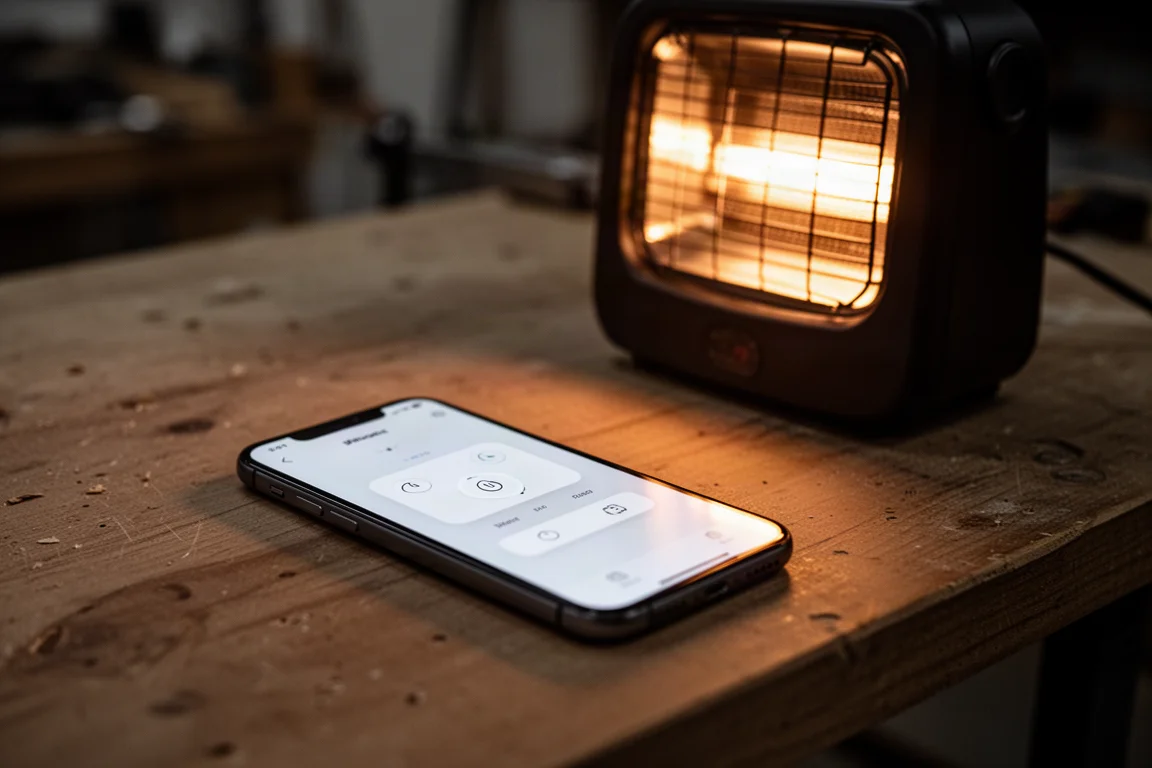
The Bluetooth app, available for Android and iOS, is one of the best reasons to choose this unit. It displays detailed data, gives full control, and allows you to set the unit’s clock and schedule run times. You can have it turn on at 10 p.m., run until 7 a.m., or stop earlier to save fuel. That means you can come back from the fire pit or a fishing trip to a warm tent, or set it to shut off before you wake up. Bluetooth and remote range is roughly 100 yards (300 feet).
Things to Consider Before Buying
The most important caveat: always power the unit down properly and let it complete its shutdown cycle. The cooldown cleans the combustion chamber, and skipping it by simply unplugging the unit will foul it over time. Similarly, because there is no fuel filter and no way to service the fuel pump without drilling out rivets, you should burn off or drain all fuel before long-term storage so old diesel does not gel in the tank.
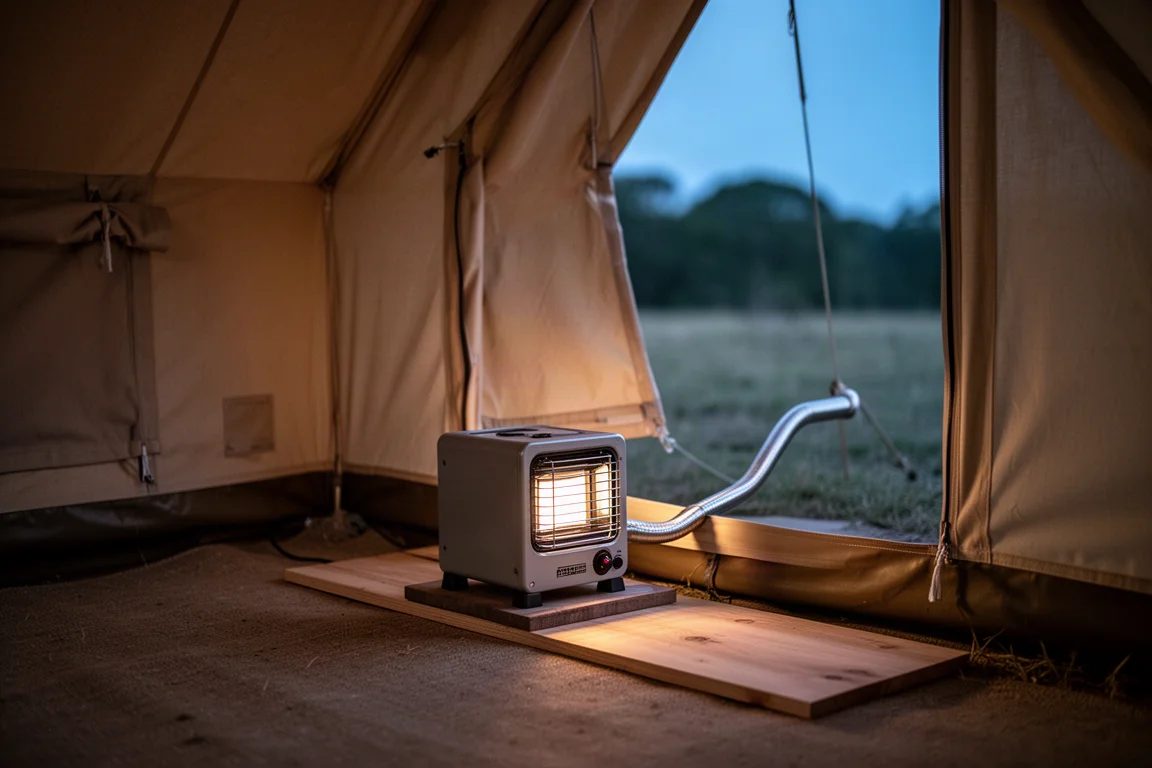
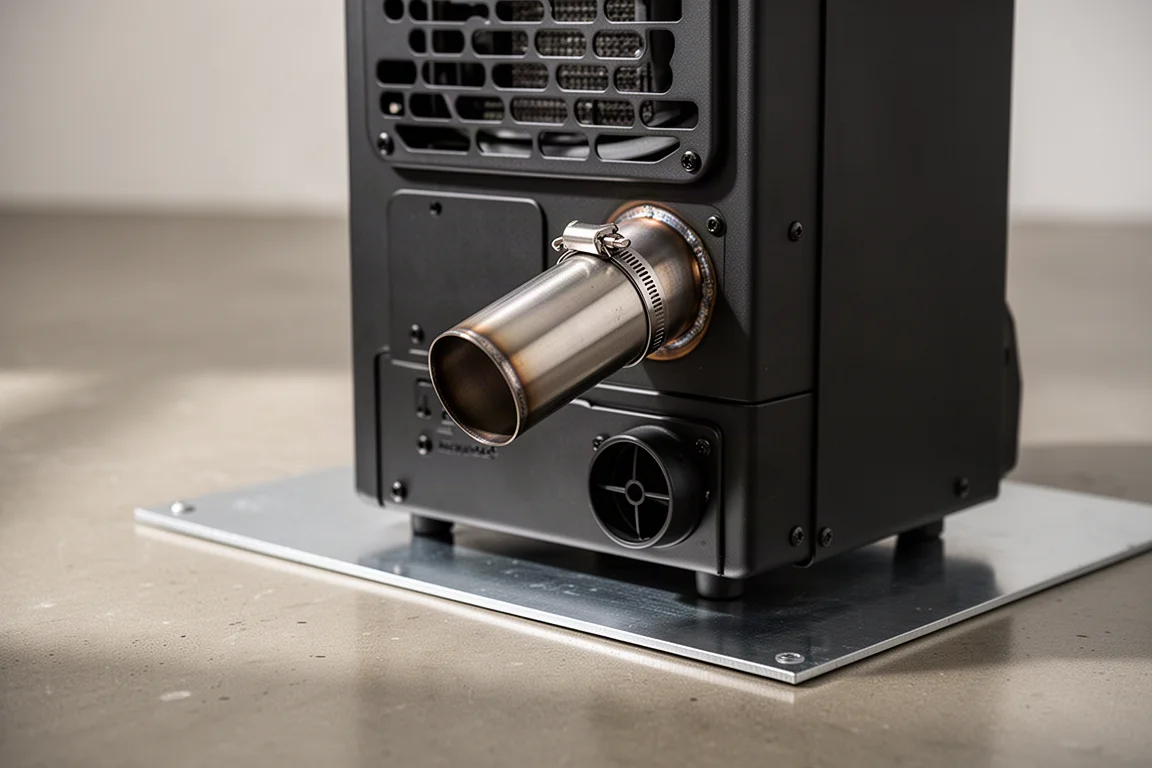
The legs are about an inch too short. The exhaust pipe sits close to the ground, gets very hot, and can scar wood surfaces or pose a fire risk on dry grass. Plan to place the unit on a wood plank, aluminum sheet, or similar heat-resistant barrier. Adding taller legs or 3D-printed extensions is a common workaround.
Ducting users should take note: the intake side is flat and not designed for duct attachment, and the exhaust-side lip is thin, making clamping awkward. If you plan to duct the hot air any distance, get a 3-inch to 4-inch adapter (commonly sold as a dryer adapter) and move up to a 4-inch hose, or the back pressure will trigger an error code and shut the unit down.
Performance and Fuel Use
Heat delivery is fast and dry. Unlike propane heaters, there is no condensation to wipe down afterward, which matters a great deal on a boat or in a tent trailer where trapped moisture leads to mold. The manufacturer claims fuel consumption of 0.15 to 0.46 liters per hour, or roughly 1.5 to 4 liters over an 8-hour night, so the 6-liter tank should comfortably cover a cold night even at high output. Experienced users running in sub-freezing temperatures report raising ambient temperatures by roughly 30 degrees Fahrenheit at high output, so expect around 62 degrees inside when it is 32 outside.
The fuel pump does click audibly, but the blower motor masks it for most users, and it was not considered disruptive.
Buying Advice
If your use case matches the SS2’s strengths, an enclosed space of 250 square feet or less, a desire for dry heat, and minimal setup, it is easy to recommend. Budget for a heat-resistant pad under the unit, photograph the fault-code page of the manual before your first trip, and pick up the 3-inch to 4-inch duct adapter if you plan to duct the output. A small power station on the flat top, such as a compact EcoFlow-class unit, will run the heater all night on the included power brick.
If you need internal fuel filtration, easy pump access for spares, or full ducting flexibility out of the box, those are the areas where the design asks you to compromise.
Conclusion
The Hcalorie SS2 is a significant step up from the diesel heaters of a few years ago: no assembly, clean first start, thoughtful app scheduling, and a genuinely durable toolbox design. The short legs, lack of a fuel filter, and ducting limitations are real but manageable with a little preparation. For shed, tent, camper, and boat owners who want dependable dry heat without fuss, it is a strong choice.
Product link
View more details for Hcalorie SS2 Diesel Heater
This product is mentioned in the review. Check the specifications, options, and compatibility before buying.
View more details for Hcalorie SS2 Diesel HeaterFurther reading
Related Reviews
Heating
Best Diesel Heaters Tested: Civil, Vevor, HCalory and LF Bros Compared
Four budget diesel heaters put through fuel efficiency, heat output, alternative fuel and teardown testing, with a clear buying recommendation.
Heating
Milwaukee M18 Cordless Propane Torpedo Heater Review: A Genuinely Practical Shop Heater
A cordless propane torpedo heater with 30,000 to 70,000 BTU output, M18 battery or AC power, and surprisingly easy setup. Here is what to know before buying.
Backpacking Gear
Backpacking Gear Staples: 13 Pieces Worth Building a Kit Around
A practical look at thirteen backpacking essentials that earn a permanent place in the pack, from a minimal cook kit to a sub-two-pound framed backpack.