Camping Shelters
Haven Tent Review: A Lay-Flat Hammock Tent Built Around Better Sleep
A close look at the Haven Tent, a lay-flat floating hammock shelter that uses an insulated sleeping pad as its structural core, plus the trade-offs to weigh before buying.
Introduction
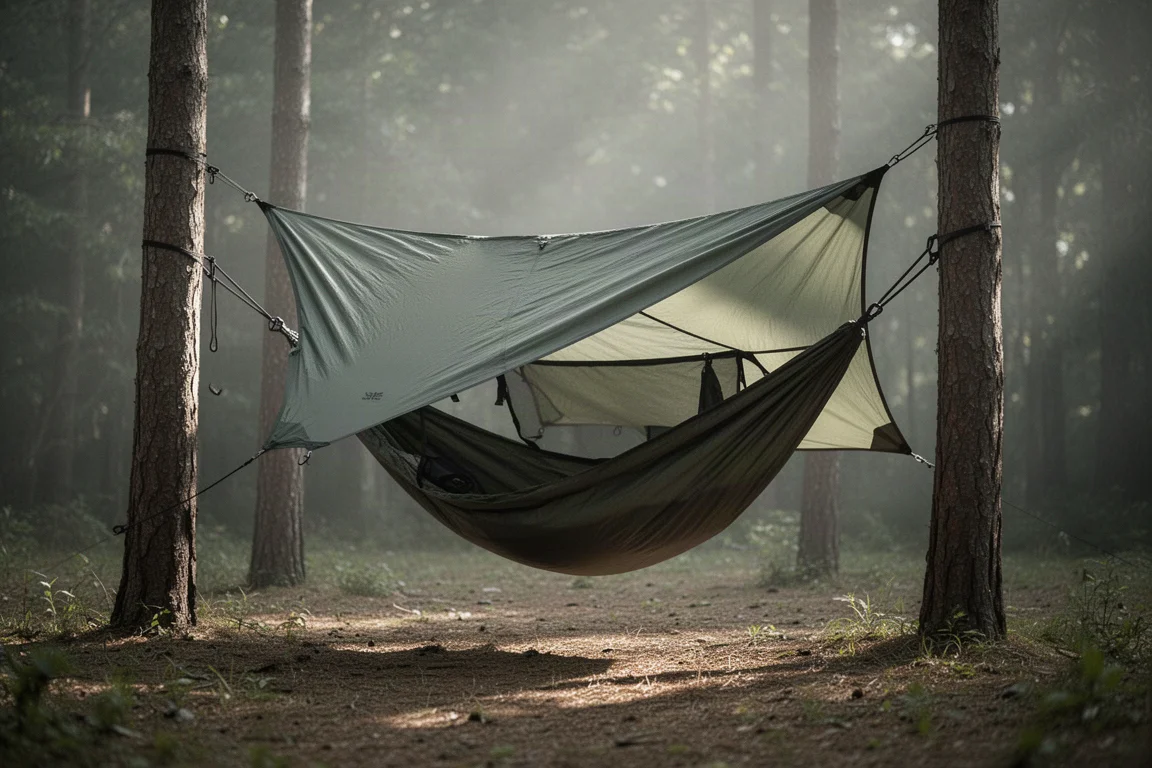
Suspended camping shelters have a devoted following, but gathered-end hammocks are not for everyone. Sleeping in a deep banana-shaped curve suits some campers and frustrates others, and the search for a flatter, more natural sleeping position often leads toward bridge hammocks. The Haven Tent takes a different route entirely: a lay-flat floating hammock tent that uses an insulated sleeping pad as its structural core, creating a flat platform in the air that feels much closer to sleeping on the ground.
The concept is simple to describe and clever in execution. Rather than shaping the sleeper’s body to the fabric, the design combines a sleeping pad with a structural ridgeline and arcing webbing to hold a flat, stable surface between two trees. The experience sits somewhere between a hammock and a ground tent, and it is built around a single priority: sleep quality.

This review covers the standard-size Haven Tent, what arrives in the package, how the shelter sets up, how it sleeps, and the compromises the design asks you to accept.
Who the Haven Tent Is For
This shelter is aimed at campers who want to sleep off the ground without accepting the curved posture of a gathered-end hammock. It is especially relevant for uneven ground, where a flat pitch for a ground tent can be difficult or impossible to find. Hang it between two trees and the terrain underneath stops mattering.
It also suits campers who treat sleep as the main objective of a trip. The full kit is built around comfort rather than minimum weight, which makes it a reasonable fit for car camping, overnighters, and weekend backpacking trips where covering long distances is not the first priority.
It is a less natural fit for ultralight thru-hikers counting every gram. The complete setup, including the pad and all shelter components, comes in at roughly 7 lbs, so anyone whose trips are defined by daily mileage and pack weight will likely look elsewhere.
Design and Setup
Setup starts with the tree straps. The included daisy chain style straps wrap around each trunk, and carabiners clip directly onto the end loops of the shelter body. Because the design relies on a structural ridgeline, the hang distance matters less than it does with a conventional hammock. Once body weight settles into the shelter, the ridgeline holds the geometry steady, which removes most of the fiddling that normally goes into dialling in a comfortable hang.
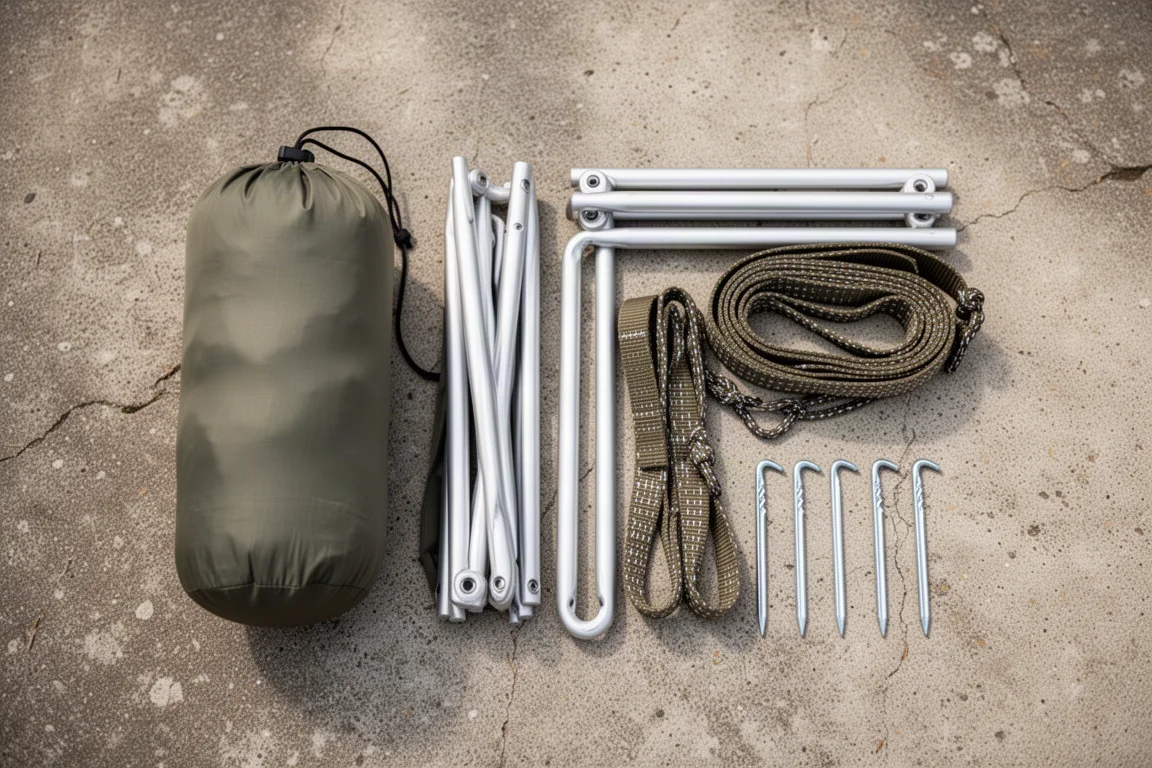
Two folding aluminium spreader bars then slot into dedicated pockets. These are not load-bearing. Their job is to open up interior space so the sleeping pad is easier to inflate and the cabin feels less closed in.
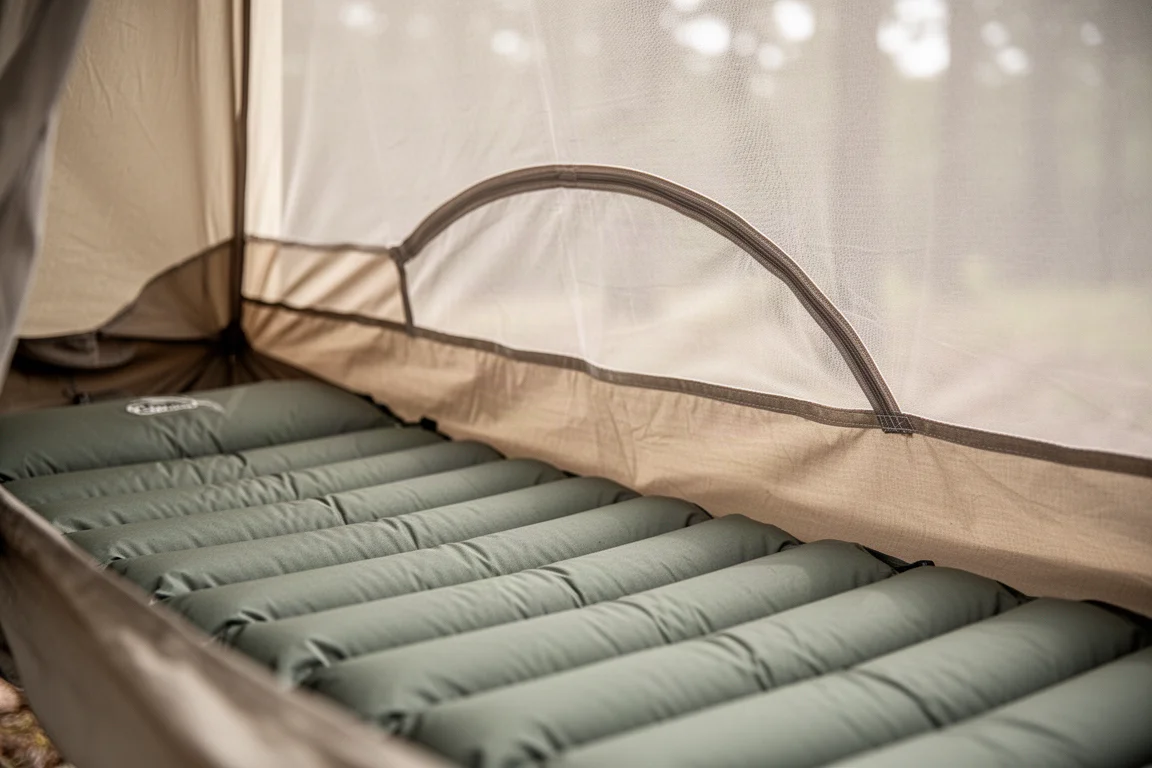
The sleeping pad is the heart of the system. The standard pad measures 24 in wide by 78 in long and 4 in thick, and it is insulated, which matters because cold air moving underneath a suspended shelter needs a barrier between it and the sleeper. Horizontal baffles keep the pad from folding in on itself from side to side, while high-strength webbing arcs run along the shelter body and an opposing arc runs underneath. Together these elements flatten out under body weight instead of collapsing inward.
Weather protection is integrated rather than added on. The rainfly is attached to the body, fully seam taped, and the shelter body is seam taped as well. A toggle on the body and a grommet on the fly let you pull the fly tight against the shelter when conditions turn, and vents at each end provide airflow. Guy lines allow the fly to be pitched out for ventilation on one side while the other stays buttoned down. The bug net runs on a full-length zipper and can be removed completely when insects are not a concern, which trims weight and simplifies the setup.
Sleeping Comfort and Lay-Flat Experience
Inside the shelter, the flat lay is the defining feature. Whether you settle on your back or roll onto your side, the platform stays level and stable, and the gentle swing of a suspended shelter is still there. Sitting up is possible, and movement does not feel like it will tip the structure.
The trade-off is width. At 24 in, the standard model is narrower than most campers expect, and it can feel confining, particularly with the fly fully closed. Opening the fly into a porch configuration with trekking poles makes a meaningful difference to how spacious the interior feels. Campers who want more room should consider the XL version, which adds both cost and weight.
Organisation is handled well. Three pockets at each end of the pad give a place for a phone, keys, and small items, and there is room to hang a backpack inside. An insulated pad cover is available as an optional accessory, and it uses zoned synthetic insulation: more fill around the torso and hips, less at the feet, and a moderate amount around the neck and head. Used with the insulated pad and a cold-rated sleep system, that combination has kept sleepers comfortable at overnight temperatures in the low teens Fahrenheit.
Main Strengths
The clearest strength is that the design delivers what it promises. The flat lay genuinely resembles sleeping on the ground, which is the entire reason someone would choose this shelter over a gathered-end hammock. Cold air underneath is addressed by the insulated pad and the optional zoned pad cover rather than left to a separate underquilt.
Modularity is the second strength. The rainfly can be pitched higher, removed, or swapped for a larger tarp if you want more covered space. The bug net comes off and goes back on quickly. The toggle and grommet closure lets you seal the shelter down without leaving your sleeping position, which is a real convenience when weather changes after dark.
Seam taping on both the fly and the body, plus end vents and adjustable guy lines, gives a useful range between fully sealed and fully open. In porch mode the shelter becomes a comfortable place to sit, cook, and watch the view rather than only a place to sleep.
Packing and carrying are straightforward. Everything in the full kit stows together, and the assembled weight of around 7 lbs is the price of the comfort on offer.
Things to Consider Before Buying
Weight is the first consideration. At roughly 7 lbs for the complete setup, this is not a lightweight backpacking shelter, and it was never intended to be. The design prioritises sleep, so it makes the most sense for trips where pack weight is not the deciding factor.
Interior width is the second. The standard 24 in platform works, but it is tighter than many campers prefer, and the XL version is the better answer for anyone who wants more room, at the cost of more money and more weight.
Coverage is worth thinking through as well. The included rainfly is a good match for the shelter, but some campers may prefer to use a longer, larger tarp over the top for extra covered space. It is also worth noting that specifications can change between production runs, so details of the current model may differ slightly from earlier versions.
Buying Advice
The decision comes down to what you value most on a trip. If you have never slept well in a gathered-end hammock but like the idea of being off the ground, this shelter solves that specific problem more directly than most alternatives. If you regularly camp on uneven ground or want a sleep-first setup for car camping and shorter backpacking trips, the weight penalty is easier to justify.

Size is the main choice to make before ordering. Campers who are comfortable in a narrow, enclosed space will be fine with the standard model. Anyone who wants elbow room, or who plans to spend long evenings inside the shelter, should look at the XL version instead.
Accessories are worth planning at the same time. The insulated sleeping pad is essential to the structure, so it is not optional. The zoned insulated pad cover is the sensible add-on for cold-weather trips, and a set of trekking poles turns the included fly into a genuinely usable porch. If you already own a large tarp, it can substitute for the included fly when you want maximum coverage.
Conclusion
The Haven Tent is a smart, well-executed answer to a specific complaint. It takes the flat, familiar posture of ground sleeping and lifts it into the air, using an insulated pad, a structural ridgeline, and arcing webbing to build a stable platform between two trees. The result is modular, weather-ready, and genuinely comfortable, with an interior that can be sealed down tight or opened into a sheltered porch depending on the evening.
The compromises are clear and honest: around 7 lbs of kit, a narrow standard footprint, and a rainfly that some campers will want to supplement. For anyone whose trips are defined by sleep quality rather than minimum pack weight, those trade-offs are easy to accept.
Product link
View more details for Haven Tent
This product is mentioned in the review. Check the specifications, options, and compatibility before buying.
View more details for Haven TentFurther reading
Related Reviews
Camping Shelters
Alps Mountaineering Stealth 1 Bivy Review: A Waterproof Claim That Does Not Hold Up
The Alps Mountaineering Stealth 1 Bivy carries a 2,000 mm hydrostatic head rating and a waterproof claim, but sustained rain exposure and build quality concerns make it difficult to recommend.
Camping Shelters
AquaQuest Safari Hybrid 20 ft x 13 ft Tarp Review: Two Years Under a Very Large Roof
A long-term look at the AquaQuest Safari Hybrid 20 x 13 tarp, covering build quality, weather protection, setup realities, and who should buy one.
Camping Shelters
Backcountry Light Mesa 3 Hot Tent and Floor SL Tarp Review
A practical look at the Backcountry Light Mesa 3 four-season hot tent and its optional Floor SL Tarp, covering materials, stove jack design, packed weight, pricing, and the trade-offs to weigh before buying.