Camping Shelters
Haven Tent Layflat Hammock Review: A True Lay-Flat Shelter With a Narrow Use Case
A suspended shelter that finally lets side and stomach sleepers lie flat, weighed against a heavy packed weight, a cramped interior, and a finicky setup.
Introduction
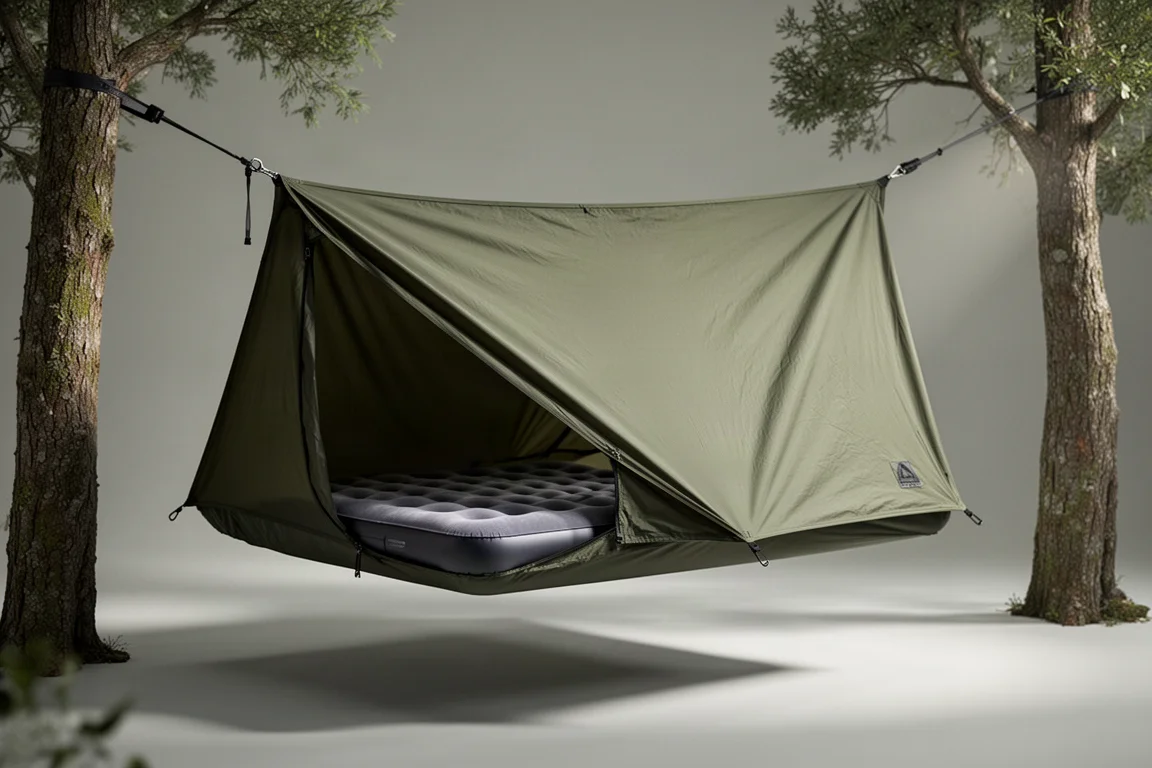
Most hammocks ask side sleepers to compromise, and stomach sleepers to give up entirely. The Haven Tent Layflat Hammock takes a different route: instead of a fabric sling that curves around the body, it builds a flat sleeping platform into a suspended shelter. That makes it one of the very few hammock-style options that side and stomach sleepers can actually use.
The idea is genuinely appealing. The execution, however, comes with trade-offs that grow heavier the further you plan to carry it.
What the Haven Tent Layflat Hammock Is
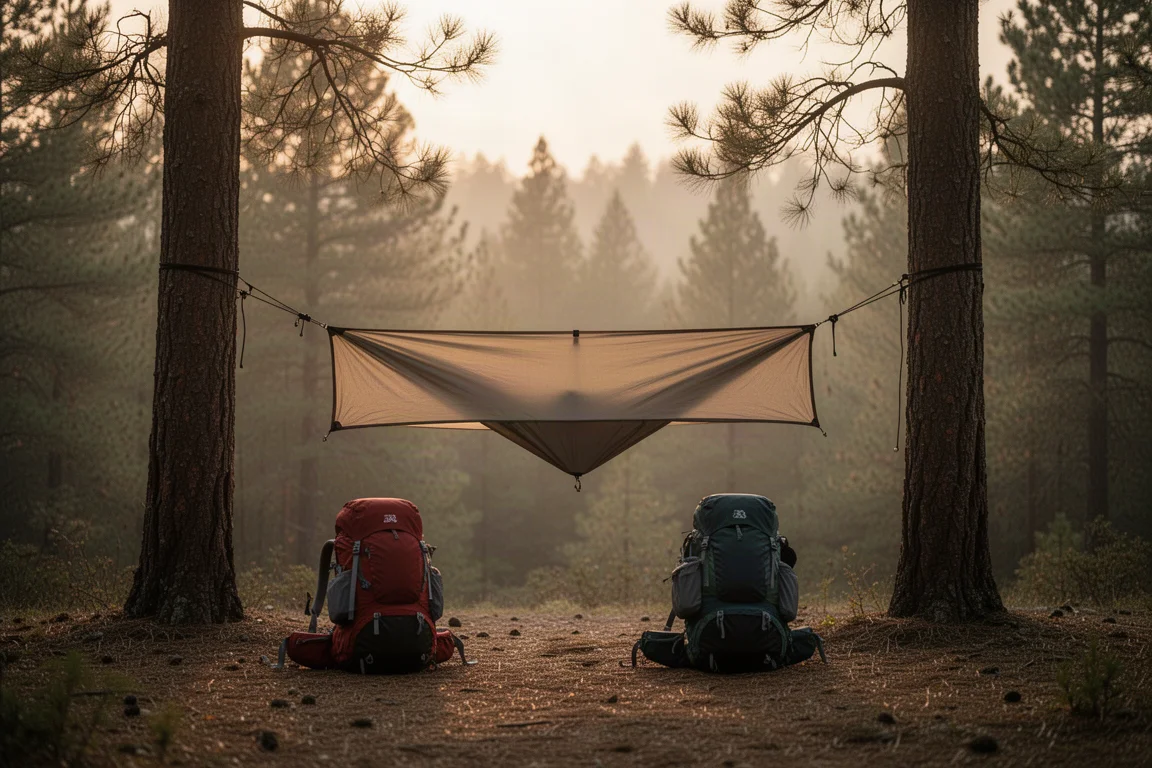
This is closer to a small suspended tent than to a traditional gathered-end hammock. A dedicated air mattress sits inside the fabric body and creates a flat surface to sleep on, while a ridge line runs above the sleeping area. The shelter is designed around that specific mattress, so the two work as a single system rather than as separate pieces of gear.
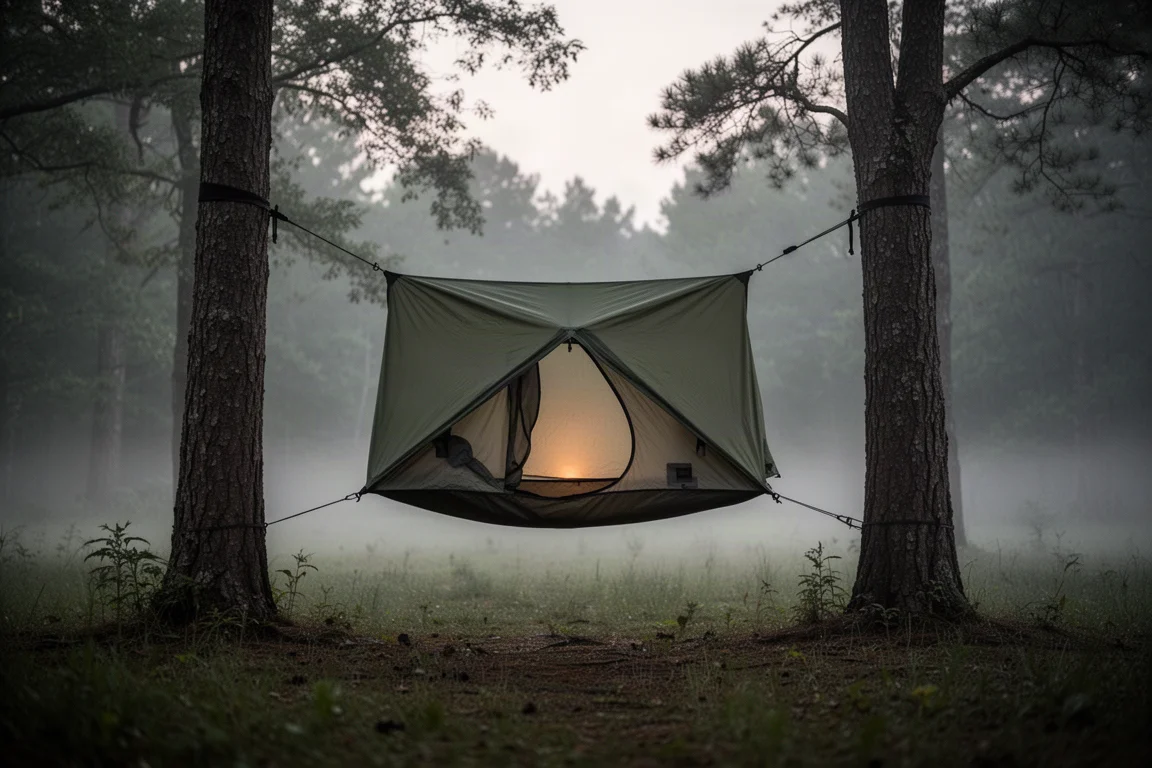
Because the mattress is not interchangeable, its weight and the shelter’s weight are effectively one number. That single figure shapes almost every decision about where this thing makes sense, and it is the first thing worth understanding before you consider buying one.
Who This Product Is For
The clearest use case is a short overnight trip with low mileage. If the walk in is brief and the campsite is likely to be uneven, a suspended shelter removes the need for a flat patch of ground. That is the one benefit nothing else here can replicate, and it is a real one.
The second use case is car camping. When weight stops mattering, the lay-flat design and the ability to hang a pack or other gear from the ridge line make for a comfortable and unusual setup. It also pitches on the ground using a couple of trekking poles when there are no trees available, which adds flexibility for sites without suitable anchor points.
Main Strengths: Build Quality and Versatility
Construction is a genuine strength. The shelter is well made from quality materials, and the pricing reflects that without tipping into the top bracket: $315 for the regular size and $335 for the extra large. For a high-quality shelter, that avoids the $400 to $500 range that some premium options occupy.
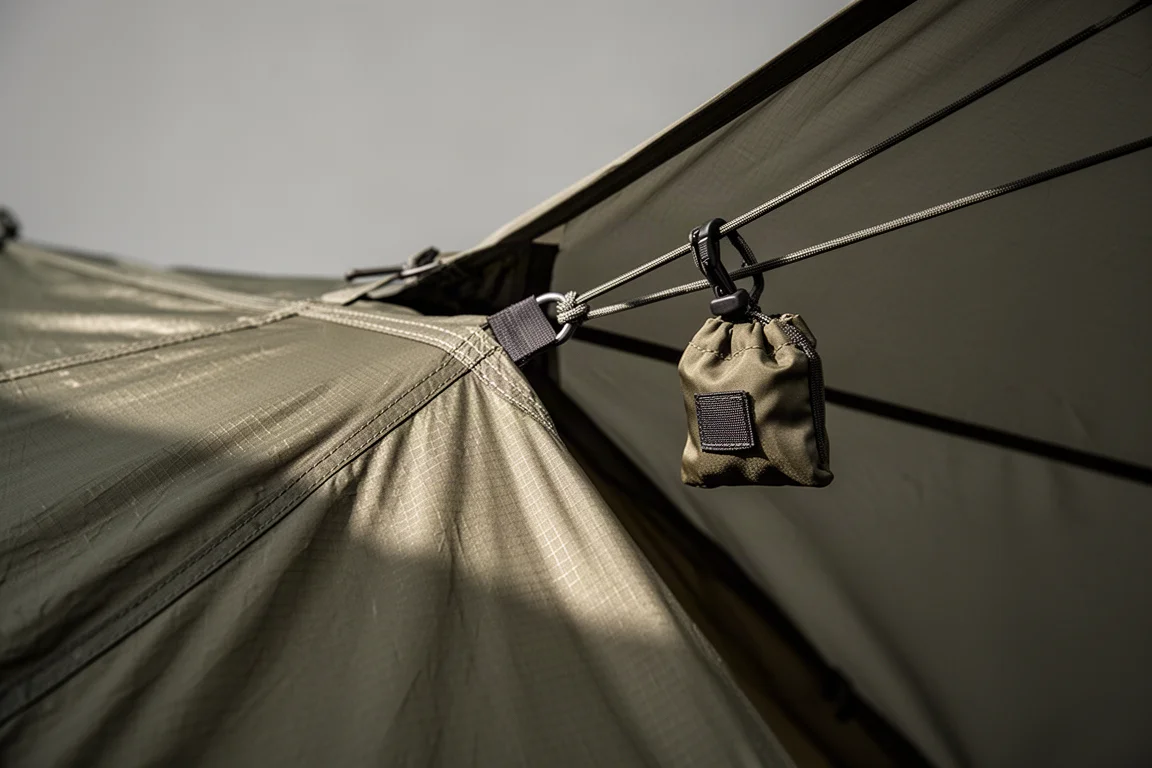
Versatility is the other clear plus. The same body works as a hanging shelter or as a ground shelter with trekking poles, and the ridge line can carry a pack or loose gear out of the sleeping area. For a narrow-purpose product, that is more adaptability than the design strictly requires.
Weight and Packed Size
Weight is the headline problem. A complete one-person setup comes in at almost 8 lb with the air mattress included, and around 5 lb without it. Many four-person backpacking tents weigh less than the full system, and a typical one-person shelter plus a sleeping pad weighs considerably less again.
Because the design depends on the included mattress, there is no way to swap in a lighter pad to bring that number down. That removes the usual route to saving weight, and it is the main reason this shelter is hard to justify on anything longer than a low-mileage overnight. Once you accept that constraint, the rest of the product is easier to evaluate on its own terms.
Interior Space and Sleep Comfort
The interior feels small. Even in the extra large size, which measures 30 in across, the usable width is roughly the width of a sleeping pad. Suspending gear from the ridge line does clear the floor and keeps the space usable, but the sense of a narrow cabin remains.
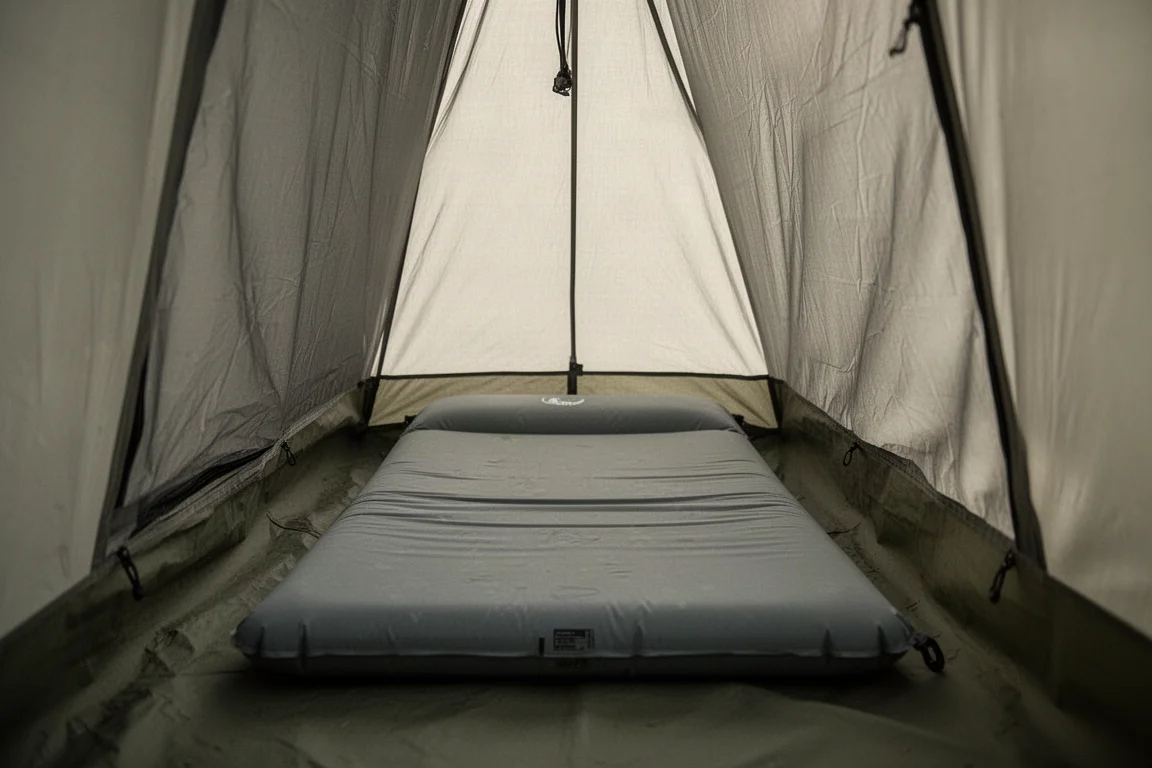
Part of that impression comes from the mattress, which bows in the middle under body weight. It is not quite rigid enough to stay completely flat, and the result is a slightly folded, more cramped feeling inside. Larger sleepers on the extra large size and smaller sleepers on the regular size will notice it least, because their weight spreads across the mattress more evenly. Side sleeping and even stomach sleeping are both possible, which is more than most hammocks can offer, but the space still feels tight.
Setup, Stability, and Real-World Use
Pitching takes some care. The head end needs to sit slightly higher than the feet, otherwise you end up sleeping downhill. Hips need to be centered for the same reason. Getting in and out, or simply moving around inside, tends to push the mattress to one side or the other, and correcting that usually means getting out of the shelter entirely.
None of these points is a dealbreaker on its own. They are the kind of compromises worth accepting when a piece of gear delivers a large advantage in return. Here, the advantage is being suspended off the ground, and whether that is worth the weight and the fuss depends entirely on where you camp. It is also worth noting that established, flat campsites are easiest to find on short on-trail overnights, which is exactly the situation where the suspension benefit matters least.
Buying Advice
Buy this if you want a flat sleeping surface in a hanging shelter and you keep your mileage low. Car campers, casual overnighters, and anyone who camps where the ground is reliably rough will get the most from it. It will not hurt you, and it will not fall apart, because the materials and build quality are sound.
Skip it if you are counting ounces, if you want one shelter that flexes across many trip types, or if you are looking for the most capability per dollar. Lighter, larger, and cheaper shelters exist, and there are better trekking pole shelters if pitching on the ground is your priority.
At $315 to $335, this is not an outrageous price for a well-made shelter. It is, however, a narrow-purpose purchase. The real risk is not that it fails you in the field. It is that it stays in the closet while a more versatile shelter goes into the pack.
Conclusion
The Haven Tent Layflat Hammock solves a real problem: side and stomach sleepers can finally lie flat in a suspended shelter. The catch is what that solution costs in packed weight, interior space, and setup fuss. For short, low-mileage trips and for car camping, the trade can make sense. For almost everything else, a lighter and more versatile shelter is the smarter buy.
Product link
View more details for Haven Tent Layflat Hammock
This product is mentioned in the review. Check the specifications, options, and compatibility before buying.
View more details for Haven Tent Layflat HammockFurther reading
Related Reviews
Camping Shelters
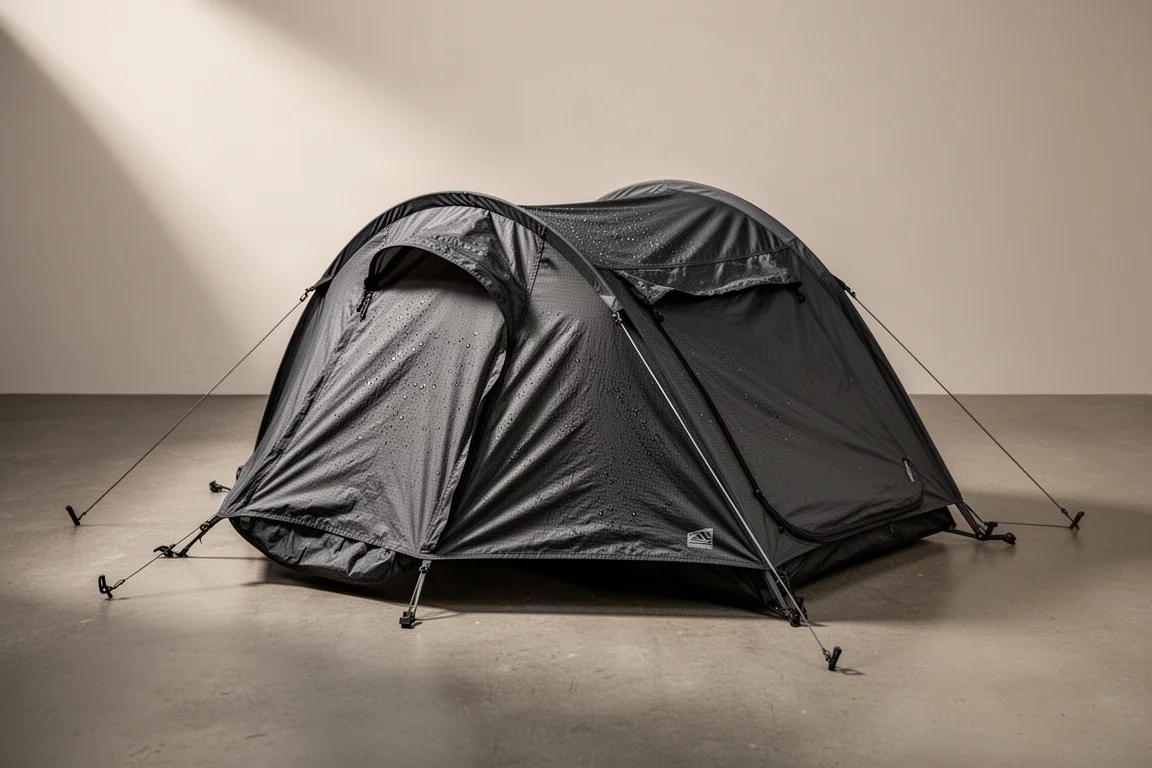
Alps Mountaineering Stealth 1 Bivy Review: A Waterproof Claim That Does Not Hold Up
The Alps Mountaineering Stealth 1 Bivy carries a 2,000 mm hydrostatic head rating and a waterproof claim, but sustained rain exposure and build quality concerns make it difficult to recommend.
Camping Shelters
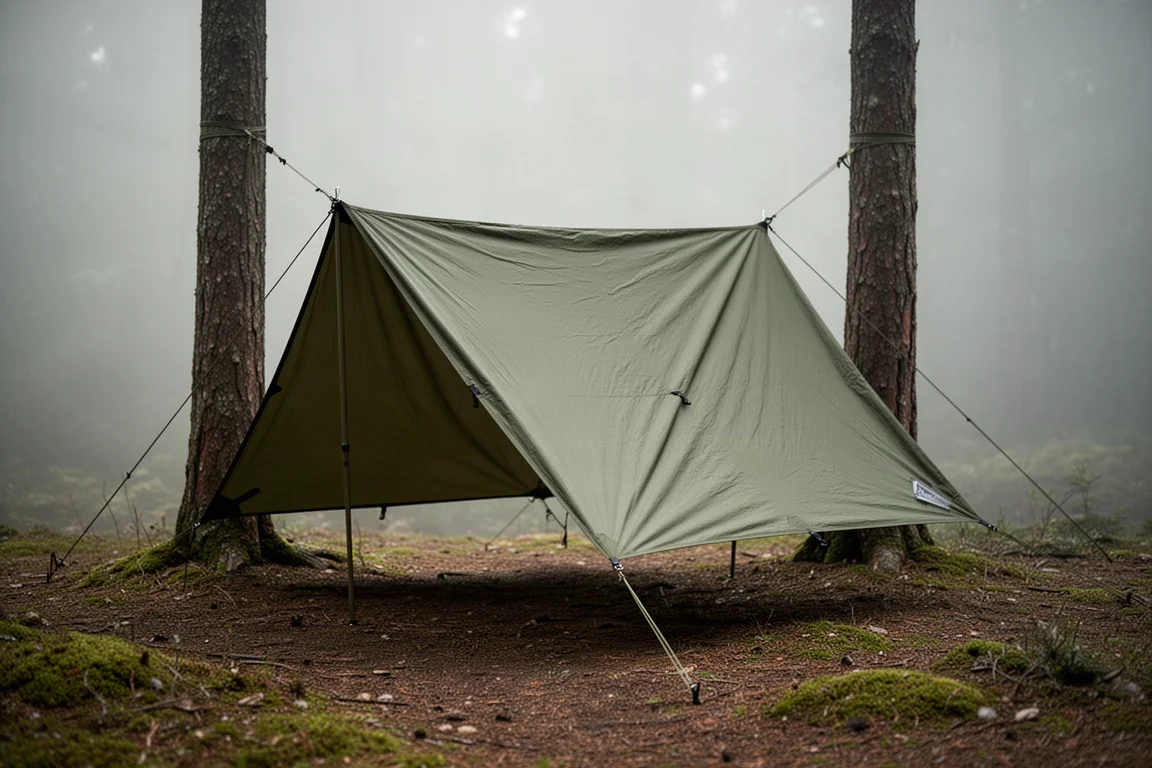
AquaQuest Safari Hybrid 20 ft x 13 ft Tarp Review: Two Years Under a Very Large Roof
A long-term look at the AquaQuest Safari Hybrid 20 x 13 tarp, covering build quality, weather protection, setup realities, and who should buy one.
Camping Shelters
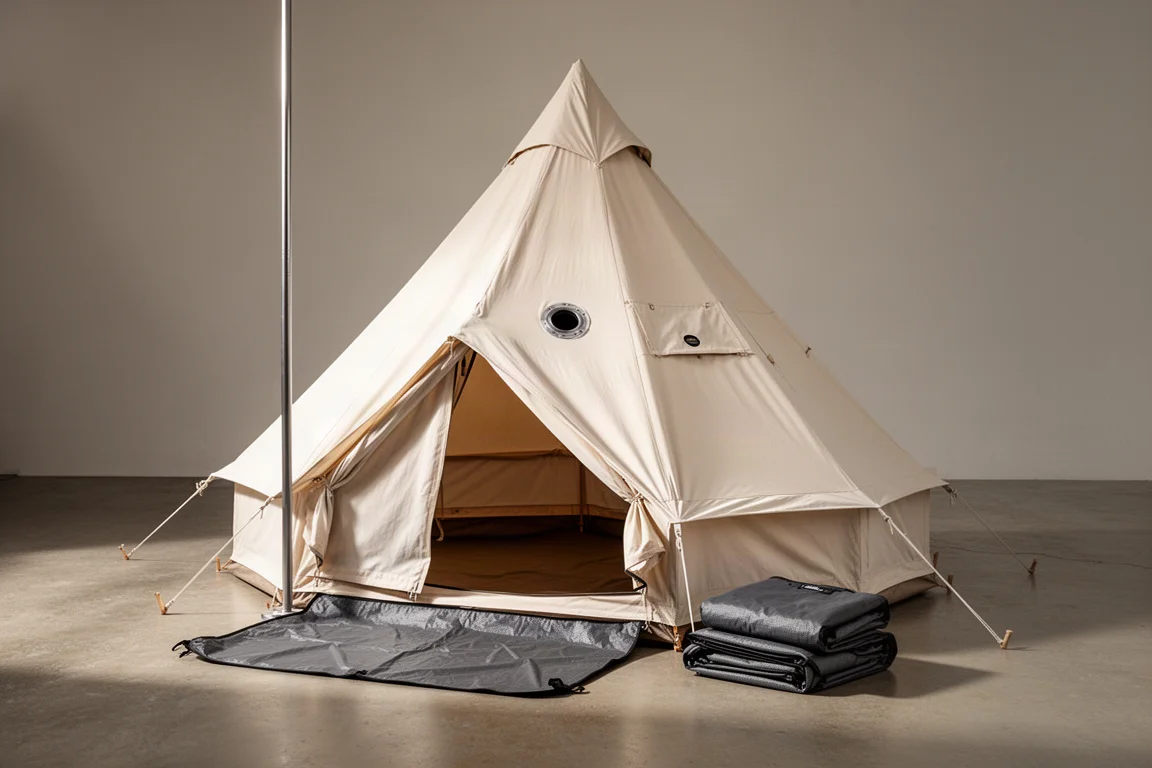
Backcountry Light Mesa 3 Hot Tent and Floor SL Tarp Review
A practical look at the Backcountry Light Mesa 3 four-season hot tent and its optional Floor SL Tarp, covering materials, stove jack design, packed weight, pricing, and the trade-offs to weigh before buying.