Tools & Electrical
Hastronica Solder Seal Wire Connectors: A Better Way to Join Wires
Heat shrink tubing with built-in low temperature solder promises a sealed, soldered connection with just a heat gun. We put that claim to the test.
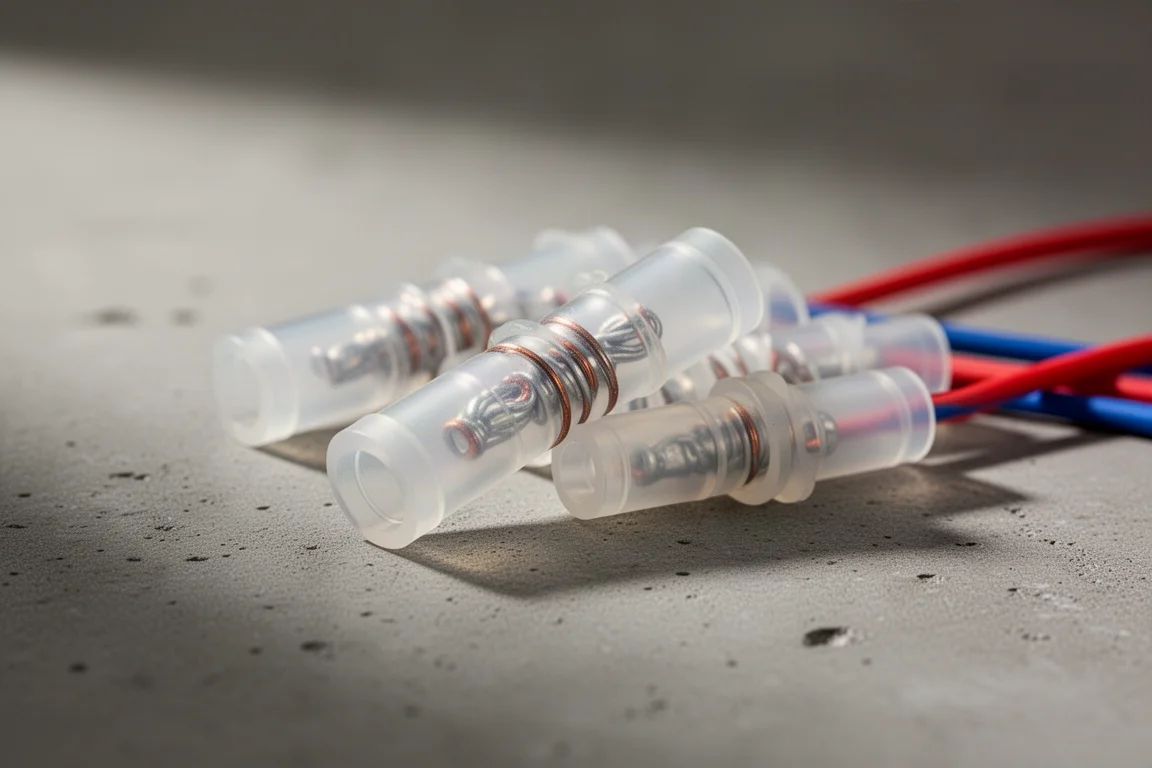
Introduction
Some products make you wonder how you worked without them, and solder seal wire connectors fall squarely into that category. They look similar to ordinary crimp connectors at first glance, but the idea is entirely different: heat shrink tubing with a ring of low temperature solder built into the middle and waterproof hot melt adhesive at each end. Apply heat with a heat gun and the whole thing shrinks, seals, and solders the wires in one step. No crimping tool, no separate soldering iron, no guesswork.
Who This Product Is For
These connectors suit anyone who regularly joins wires and wants a joint they can actually trust: automotive wiring, marine work, home workshop projects, and repair jobs where moisture is a real concern. They are also a good fit for people working with a range of wire sizes, since the kit covers everything from fine 26 gauge wire up to hefty 10 gauge.
What Makes These Connectors Different
The most obvious advantage over standard blue butt connectors and crimp connectors is visibility. Because the tubing is translucent, you can actually see inside and confirm that the wires are making a solid connection, something a crimp connector never lets you do. Each connector is also printed with its compatible wire gauge range, so the 14 to 16 gauge version, for example, tells you exactly what it accepts.
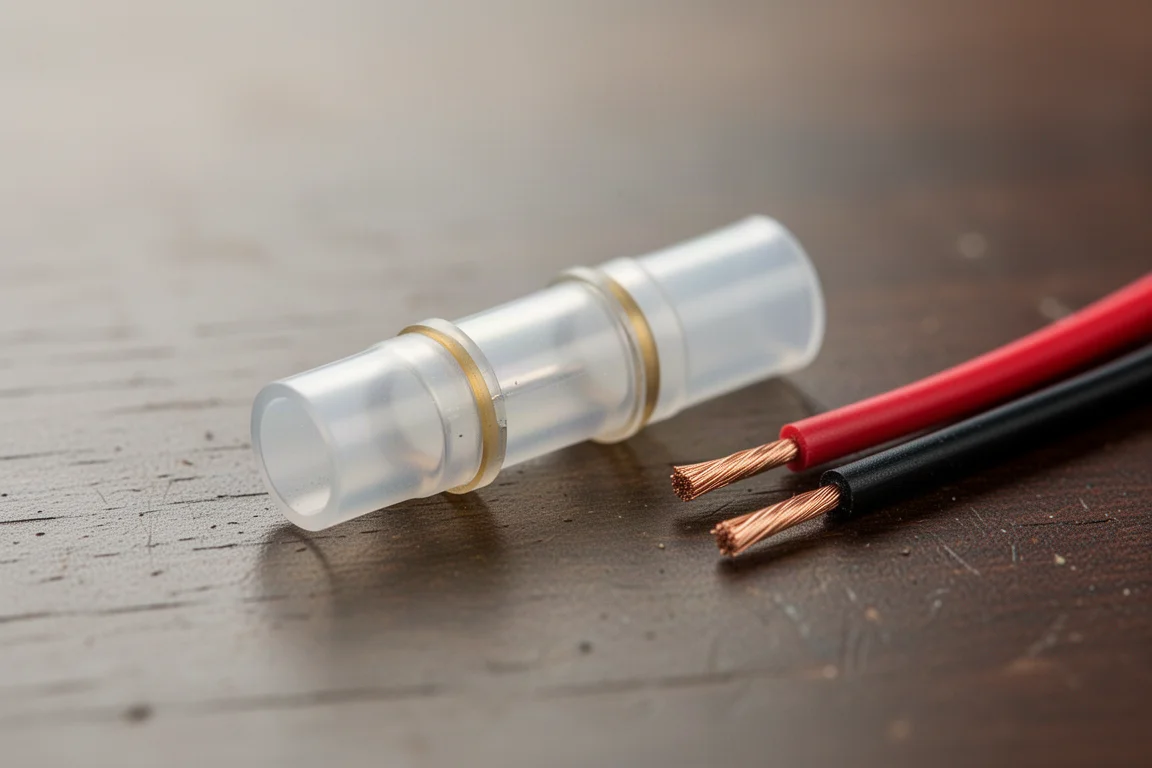
There is no partial crimping involved either. You heat shrink the entire assembly rather than just sealing the sides and fiddling with the middle. The manufacturer claims an IP67 rating, though how well the joint seals depends on doing the shrink properly and getting everything closed up as tightly as possible.
Putting Them to the Test
The process is straightforward. Strip the wires back to bare metal, feed one wire all the way through the connector, intertwine the strands, and apply heat. Working the sides first locks the wires in place, then a few more seconds of heat on the middle melts the low temperature solder and completes the joint. It does take a bit of heat to get everything properly warmed up, and the connector stays hot to the touch for a while afterward.
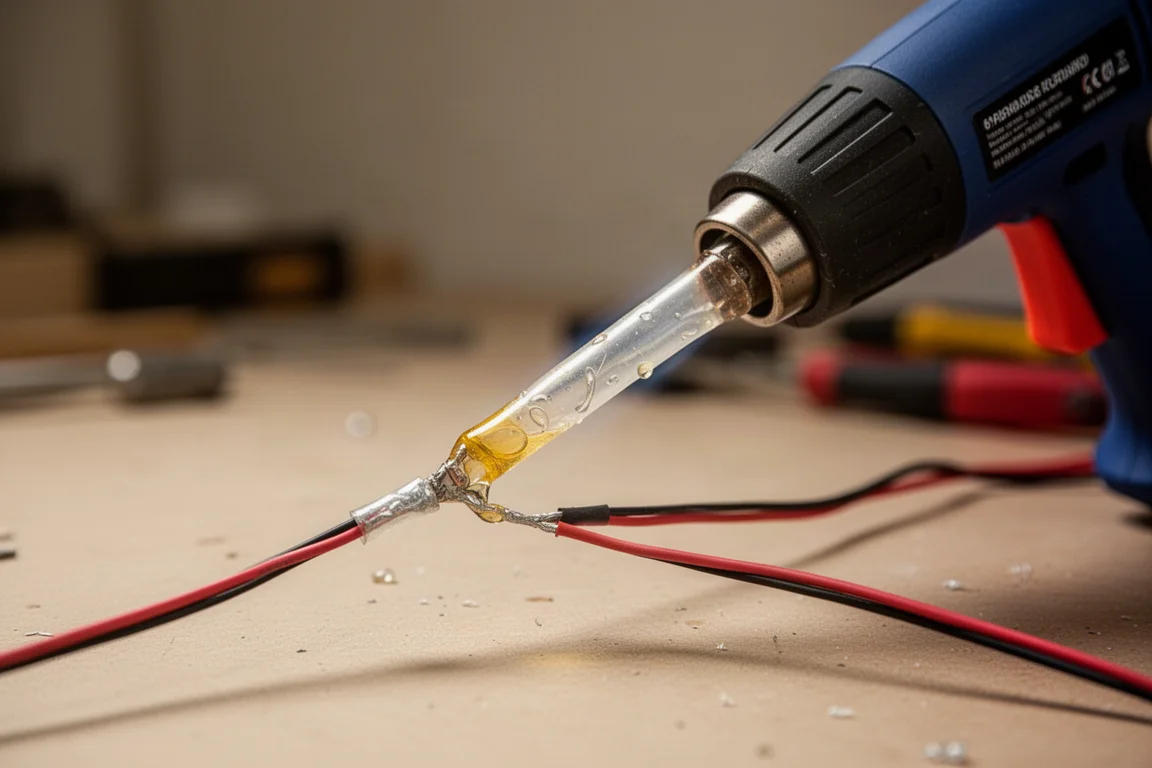
Smaller connectors melt faster, which makes quick work of fine wire jobs like small gauge signal wiring. One lesson learned the hard way: do not strip the wire jacket back too far, or the seal will not close cleanly over the exposed section. With the right strip length, the resulting seal is tight and visibly watertight.
How the Joints Hold Up
The finished joints are genuinely convincing. Once the solder ring cools, the connection is hard and solid where it matters, while the unshrunk sides retain a little flexibility. The solder flows thoroughly around the intertwined strands, producing a joint that inspires far more confidence than a standard crimp, where the connection quality is always something of a mystery.
Even a larger connector tested with a smaller gauge wire inside still produced a decent seal on both sides, more than expected given the size mismatch. The solder also cools quickly, which speeds up the workflow once you get into a rhythm.
Cutting One Open
The real proof comes from slicing a finished connector open. The seal inside holds up well, and the solder is visibly melted around the wire strands rather than sitting loosely in place. Adding more heat re-melts the solder easily, showing just how little temperature this low temp solder needs to flow properly.
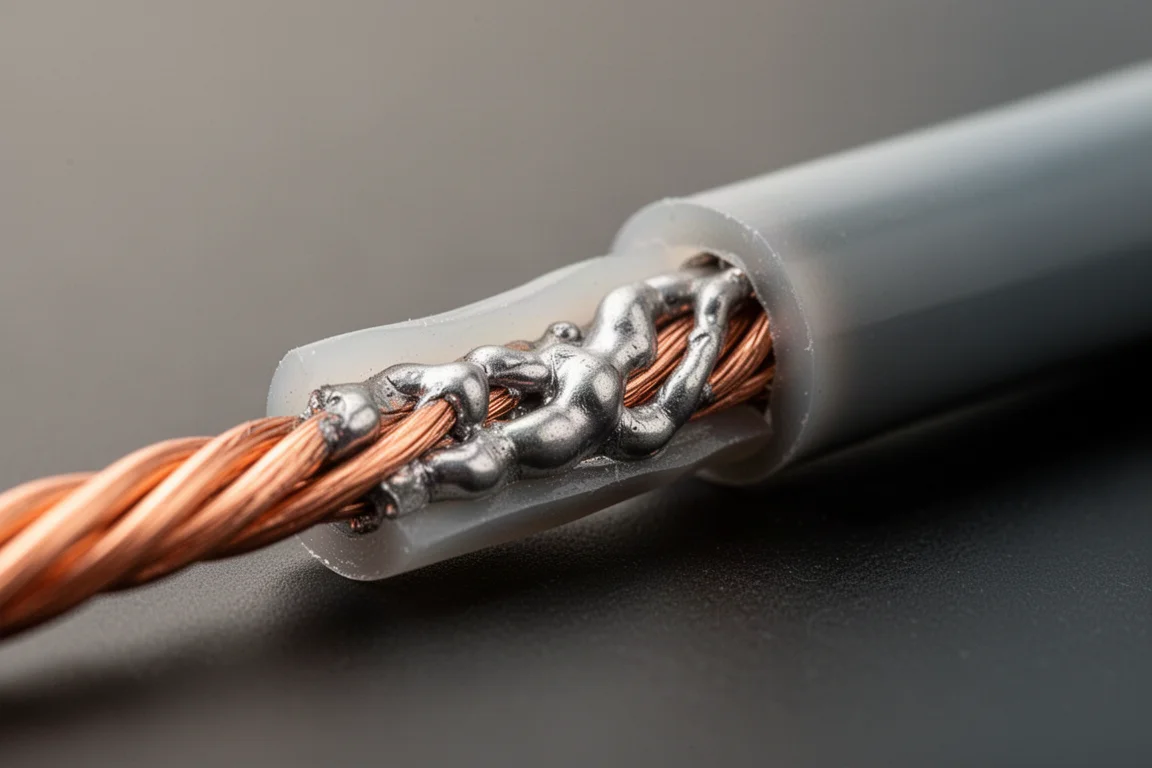
The cut-away reveals a properly wetted solder joint, which is exactly what you want to see. That kind of joint quality is the core argument for choosing these over crimp connectors.
Things to Consider Before Buying
The honest trade-off is time. A crimp connector is faster, plain and simple. These take longer because you are waiting for the adhesive to seal and the solder to flow. You also need a heat gun, so if you do not already own one, that is an additional tool to budget for.
On the plus side, the finished joint is dramatically better: a soldered, IP67 rated, waterproof connection instead of a crimp that often lets water in. The kit also covers a wide size range, from around 26 gauge up through large 10 to 12 gauge connectors, so one assortment handles most jobs. Pricing is reasonable for what you get, far from the expensive end of the connector market.
Buying Advice
If you mostly do quick, dry, low-stakes wiring, regular crimp connectors still have a place. But if your connections face moisture, vibration, or simply deserve to be done right, solder seal connectors are the stronger choice. Take your time with the heat, avoid stripping the jacket back too far, and match the connector size to your wire gauge using the printed markings.
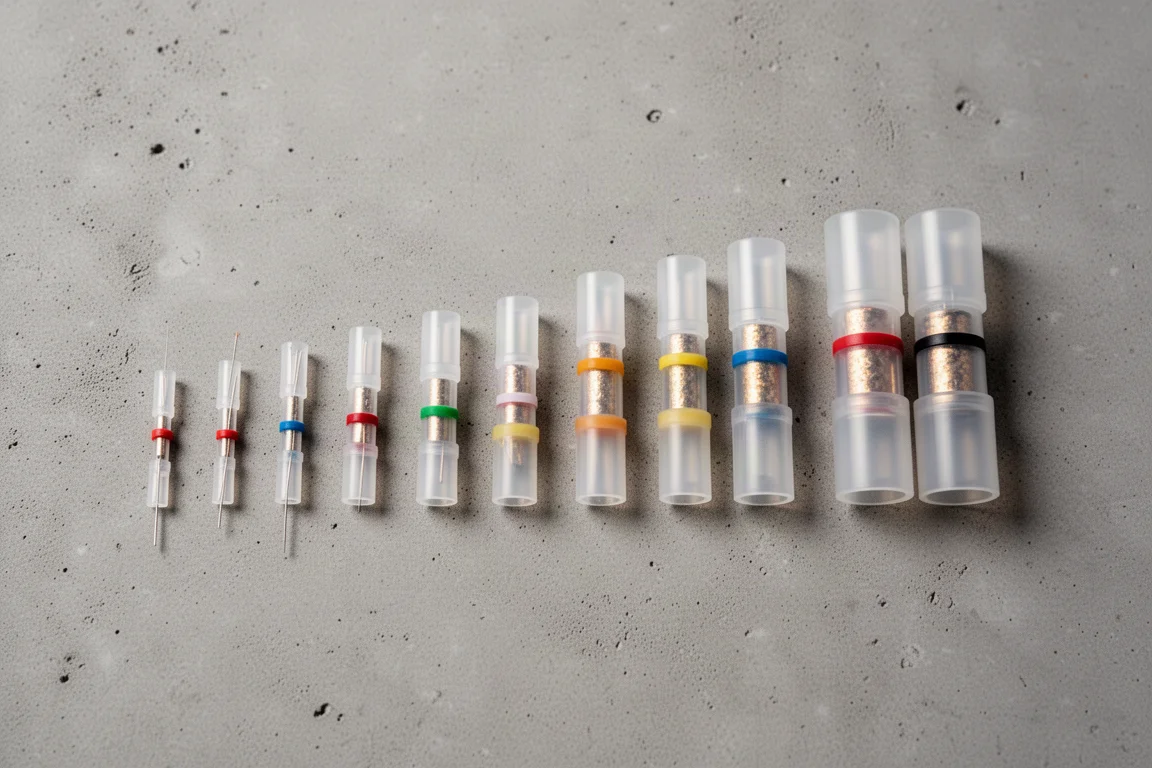
For the price, the quality of the joints makes this an easy recommendation for any toolbox that already has a heat gun in it.
Conclusion
Solder seal wire connectors deliver on their promise: a visible, soldered, waterproof joint made with nothing more than a heat gun. They are slower than crimping, but the resulting connection is far more trustworthy, and the assortment covers a useful range of wire sizes. For anyone tired of wondering whether a crimp really held, these are well worth trying.
Product link
View more details for Hastronica Solder Seal Wire Connectors
This product is mentioned in the review. Check the specifications, options, and compatibility before buying.
View more details for Hastronica Solder Seal Wire ConnectorsFurther reading
Related Reviews
Automotive Tools
ALAIAL 1/2" Digital Torque Adapter Review: Turn Any Ratchet Into a Precision Tool
A practical look at the ALAIAL 1/2" digital torque adapter, an affordable way to add torque measurement to your existing ratchet.
DIY Tools
Beginner's Guide to Taping Drywall with Rollers and Corner Tools
A practical walkthrough of drywall taping using rollers and affordable corner tools, designed for first-time DIYers.
FPV Drones
Complete 6S 5-Inch FPV Freestyle Build Guide: Parts, Assembly, and Setup
A step-by-step walkthrough of building a reliable 6S 5-inch FPV freestyle quadcopter with the DJI O3 system, from frame assembly through Betaflight configuration.