DIY Tools
Beginner's Guide to Taping Drywall with Rollers and Corner Tools
A practical walkthrough of drywall taping using rollers and affordable corner tools, designed for first-time DIYers.
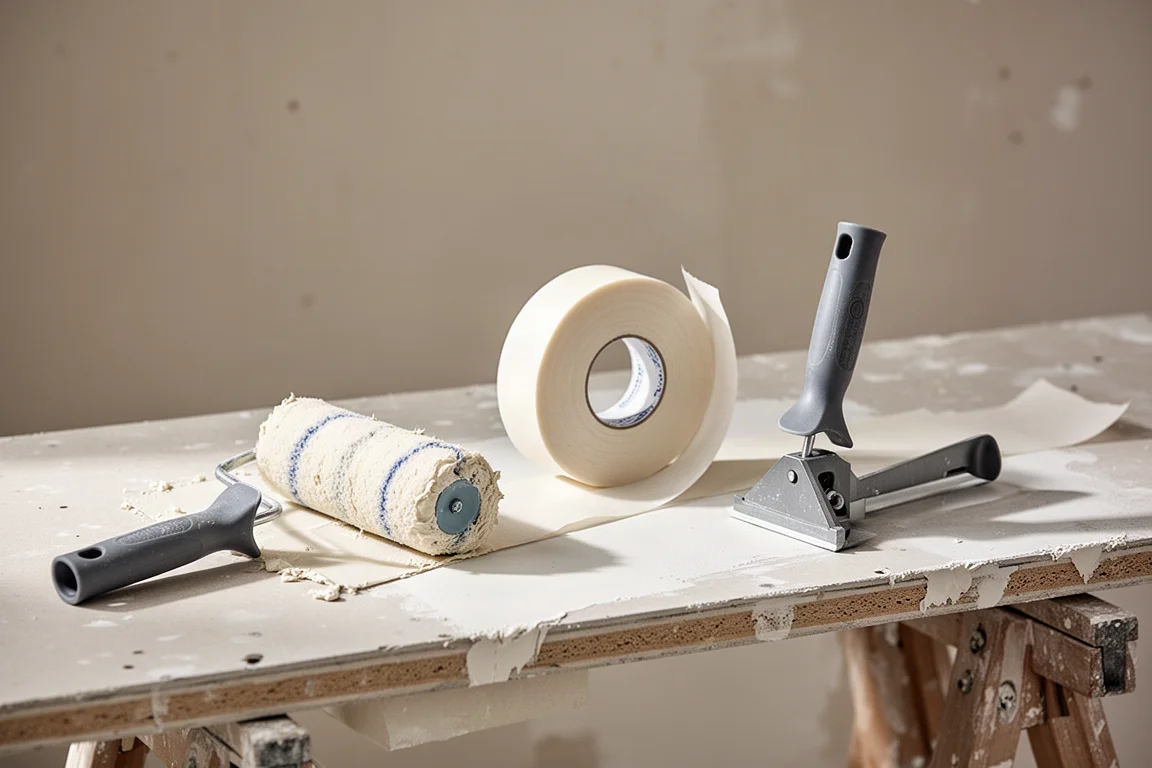
Introduction
Taping drywall is one of those jobs that looks simple until you try it. Applying joint compound in a uniform, even layer is often the hardest part for beginners. This guide walks through a roller-based method that removes much of the guesswork, plus a set of inexpensive corner tools that make inside corners far more manageable.
Why Rollers Make Drywall Taping Easier
The key idea behind this method is to take the art out of mud application. Instead of learning how to spread joint compound smoothly with a knife, a small roller about 3 inches wide applies an even amount of mud to a seam quickly and consistently.
Before starting, it helps to pre-fill the joints and thin the mud slightly with water. Thinner mud is easier to wipe out from under the tape, which makes the embedding step more forgiving. A mixing paddle helps get the consistency right.
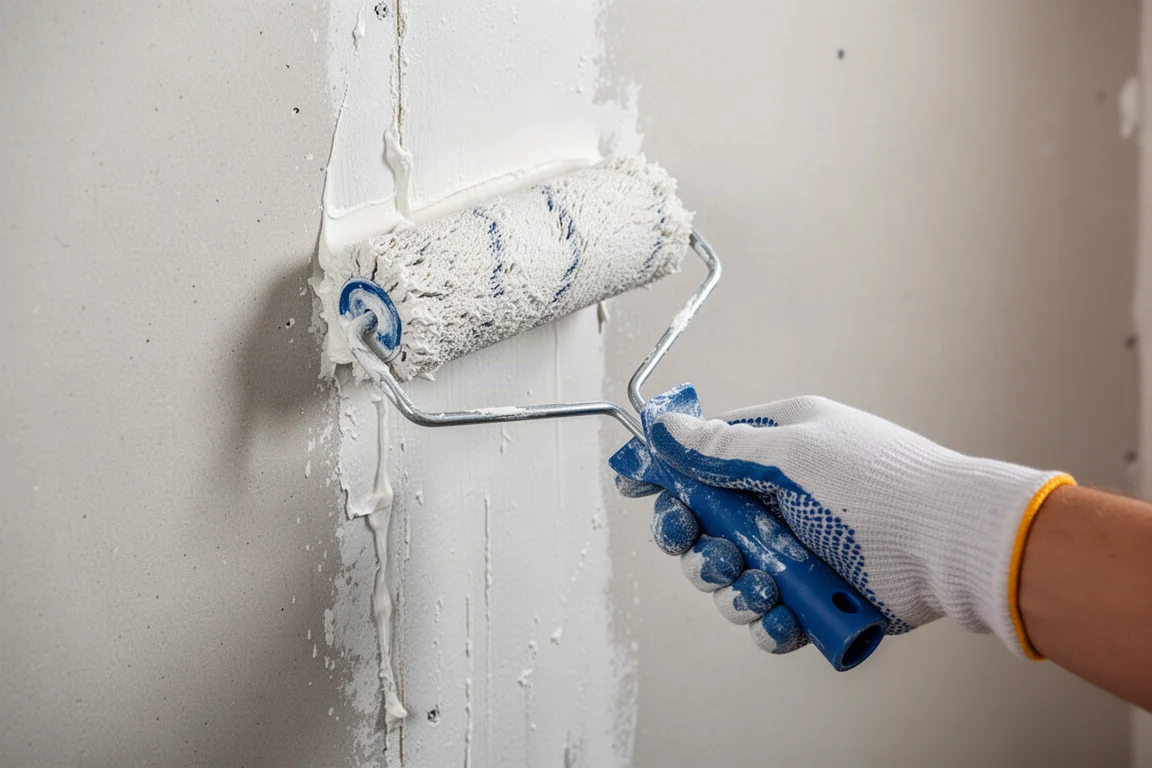
On the first dip, a roller may not cover a full seam, so it is worth checking that coverage is even across the joint. Getting right up to the corners with a little extra mud also prevents thin spots later.
Embedding the Tape
Once the mud is applied, paper tape goes on top, centered on the joint. The first pass is about getting the air out from underneath and letting the tape suction into place. After that, pressing more firmly from the middle of the tape embeds it without squeezing out all the mud, since the mud acts as the glue.
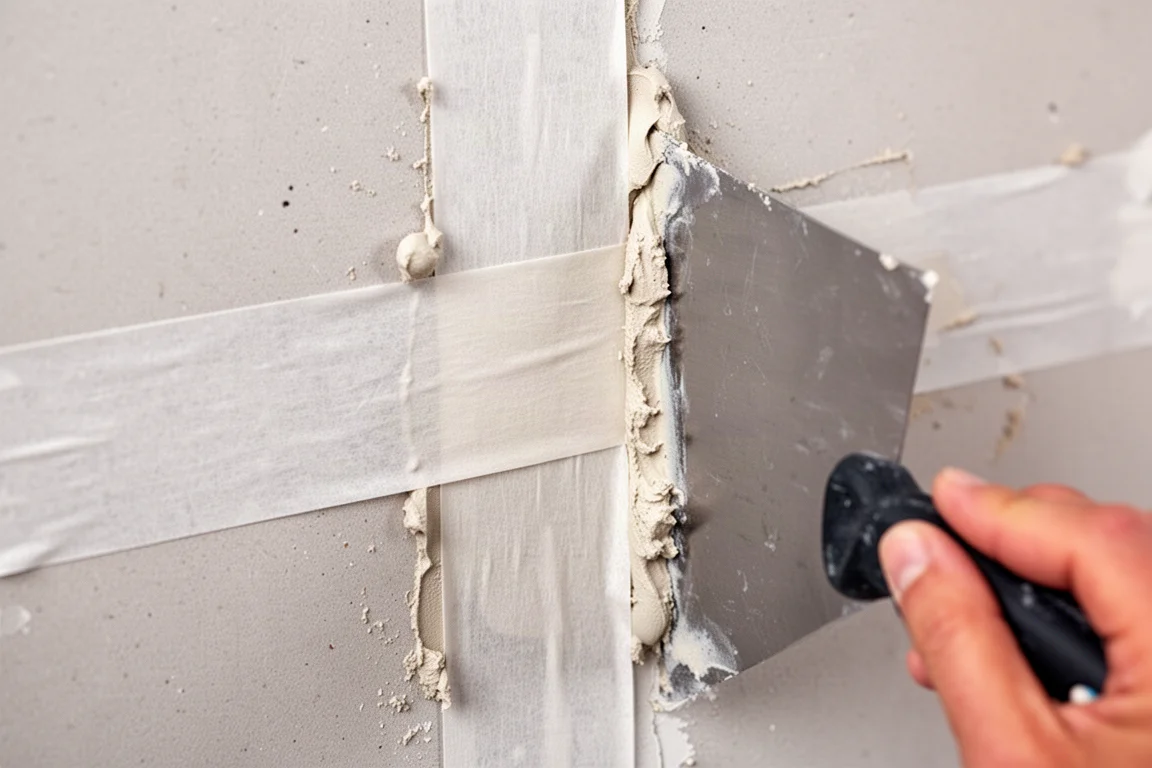
Top sections of a joint can be tricky, and a couple of sideways motions usually help. For butt joints, this method works particularly well. For longer flat joints where two tapered ends meet, the roller method can get messier, especially if the mud is too runny. Working in shorter stretches of about 5 or 6 feet at a time makes flat joints easier for beginners. Using a wider 8-inch knife for the final wipe also helps cover more distance between passes.
Inside Corners with a Corner Roller
Inside corners are where many DIYers struggle. A lamb’s wool roller makes this step much simpler. Dipping it into the mud and running it along the corner applies plenty of compound without needing to master knife technique.
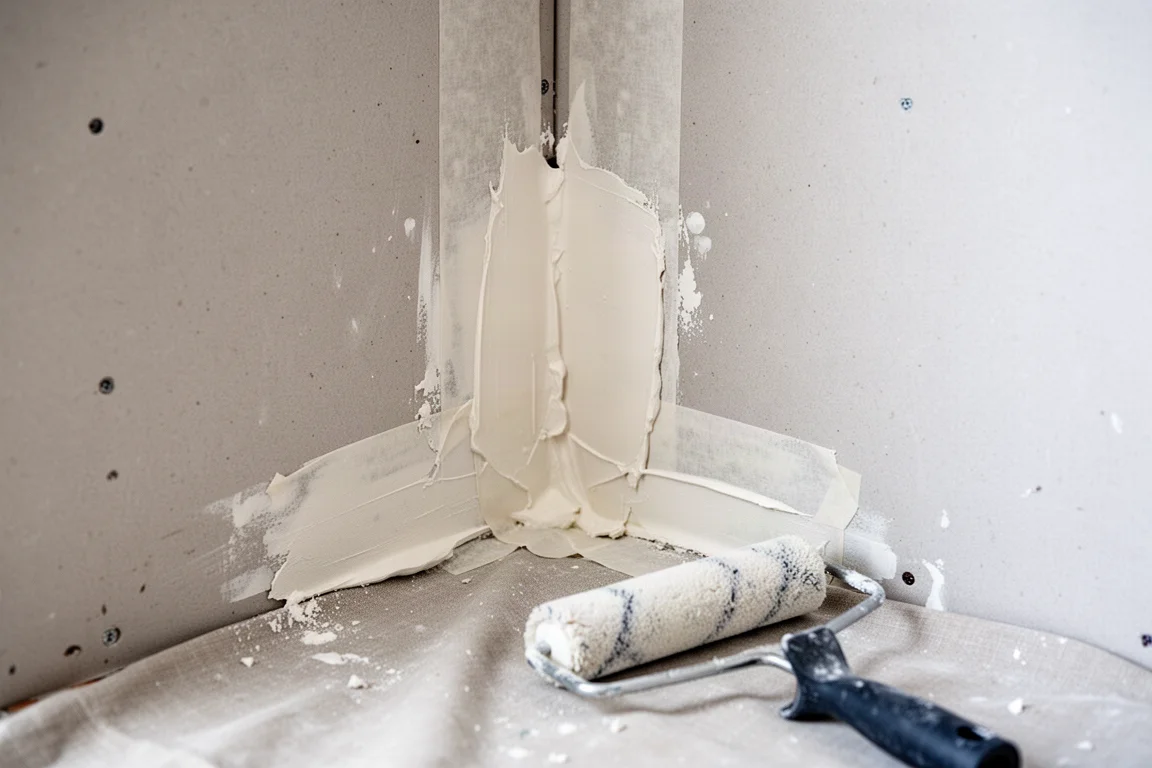
It is important to get enough mud right up into the corner. If a dark line is visible where the two sheets meet, more mud is needed, otherwise the joint will not be strong. After creasing the tape down the middle, a square end at the top helps seat it cleanly. A gentle wipe pushes mud up to the top and smooths the corner.
Using the Can-Am Nyore Flushers
For finishing corners, the Can-Am Nyore flushers offer a budget-friendly option compared to most drywall tools. These compact corner tools on a small handle are inexpensive enough that they make sense for a basement renovation or intermittent taping projects.
The process starts with applying mud using the corner roller, which does a good job once it becomes saturated. A little dab of mud at the very top of the corner helps where the roller cannot reach. After creasing the tape, it goes into the corner, and the flusher embeds it on the first pass with light pressure. A second pass with a little more pressure smooths things out.
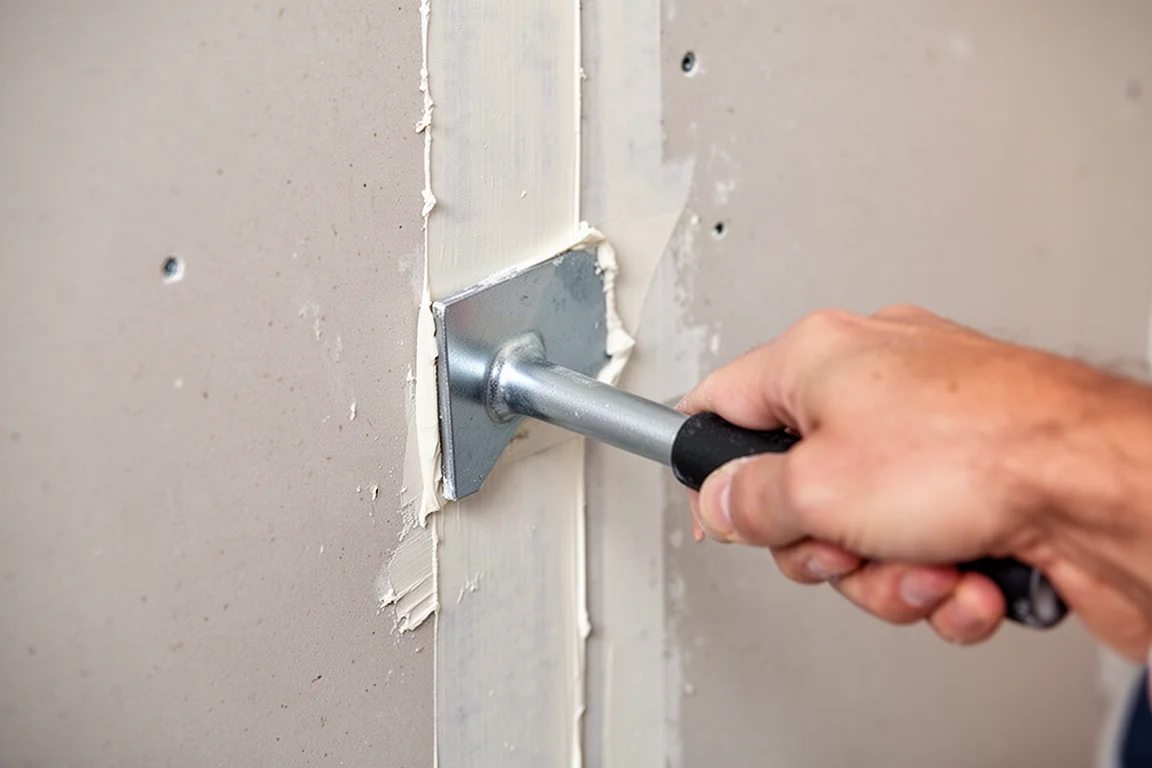
Starting in the middle of the corner prevents the tape from wrinkling. Even on a first attempt, the flusher produces decent results. For those who want to step up, a handle and a proper ball can be threaded onto the flusher, and an adapter allows it to attach to a standard paint pole with a twist-lock extension system.
Comparing a corner done with the roller plus flusher against one done with the flusher alone, the rolled half tends to look cleaner because the roller puts the mud where it belongs and squares the tape properly. The flusher-only half can drag some mud out, but that is easily fixable on the next coat.
The system works for finish coating too. After the first coat with the 2.5-inch flusher, moving up to the 3-inch and then the 3.5-inch sizes allows progressive coating of the corner. The 3.5-inch size is harder to use, and learning to coat with these tools takes some practice, but the low investment makes it worth trying.
Buying Advice
For a beginner tackling drywall for the first time, the roller method paired with the Can-Am Nyore flushers is a practical combination. The roller handles mud application and tape embedding, while the flushers finish the corners cleanly. Because the flushers are inexpensive, they can be cleaned up and resold after a project, or simply kept for future repairs.
Conclusion
Drywall taping does not have to be an art form. With a roller for even mud application and an affordable corner flusher for inside corners, a first-time DIYer can get decent results without investing in expensive professional tools. The method is faster than hand-applying mud, and while it takes some practice to coat corners smoothly, the low cost of entry makes it worth trying.
Product link
View more details for Can-Am Nyore Flushers
This product is mentioned in the review. Check the specifications, options, and compatibility before buying.
View more details for Can-Am Nyore FlushersFurther reading
Related Reviews
Automotive Tools
ALAIAL 1/2" Digital Torque Adapter Review: Turn Any Ratchet Into a Precision Tool
A practical look at the ALAIAL 1/2" digital torque adapter, an affordable way to add torque measurement to your existing ratchet.
FPV Drones
Complete 6S 5-Inch FPV Freestyle Build Guide: Parts, Assembly, and Setup
A step-by-step walkthrough of building a reliable 6S 5-inch FPV freestyle quadcopter with the DJI O3 system, from frame assembly through Betaflight configuration.
Drywall Tools & Materials
Corner Bead Types Explained: A Practical Guide to Choosing the Right Trim
A clear breakdown of the most common corner bead types, what each one is designed for, and how to pick the right trim for your drywall project.