Welding Safety
Handheld Laser Welding Safety: Managing the Real Hazards
A practical look at the hazards of handheld laser welding and the layered controls that keep the work safe.
Introduction
Metal joining has evolved dramatically over the past century. A hundred years ago, workers were still flinging hot rivets through the air to join beams on buildings, alongside early implementations of arc welding. That brought electricity, explosive gases, UV radiation, and fumes, all hazards that were new to most people. Over time, we learned how to work safely with those processes.
Laser welding presents a unique challenge because not all of the hazard is at the point of use. The beam can travel over 300 feet and still damage the eyes. A handheld laser welder is a class 4 fiber laser, the highest hazard category, because it is used in the same open environment as the operator. In industry, standards exist and a laser safety officer is appointed to ensure compliance. But the practical side matters just as much: understanding the hazards and putting layers of control in place to prevent accidents.
The Biggest Hazard: Unintended Beam Path
The most serious hazard with a handheld laser welder is an unintended beam path. The beam goes somewhere it should not, hits something it should not, or in the worst case hits a person, especially in the eyes. At around 20 feet, the beam can damage skin. At over 300 feet, it can still damage the eyes. This is not something to take lightly.
Because of this, safety relies on layers of control, not just personal protective equipment. PPE alone will not protect against a direct hit straight out of the gun.
The first layer is the work area, technically called a laser control area. The space where the laser is used must be controlled. For a solo operator in a small shop, the shop itself can serve as the laser control area. But there should be a designated space, controlled access, and signage. In industrial settings, a light outside the area can warn others. Booths are also available to ensure only those who need to be present are in the area, and everyone there understands the hazards and wears the right PPE.
Machine-Level Protections
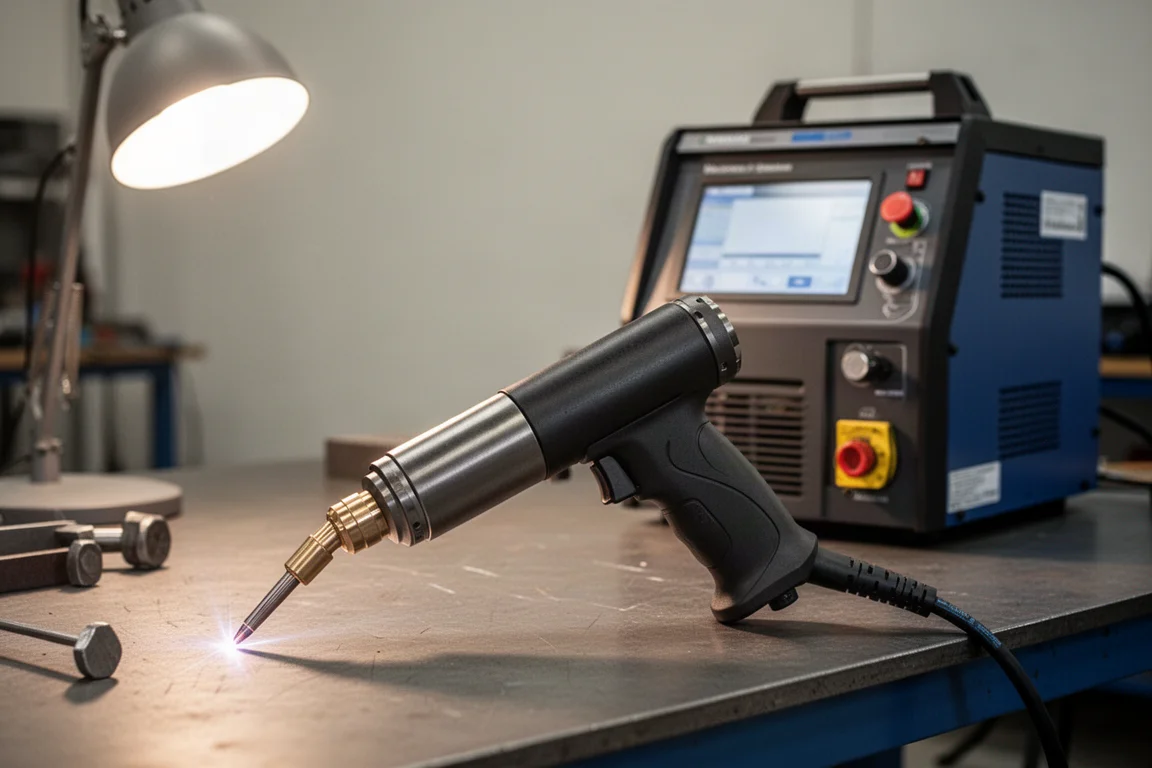
The next layer comes from the machine itself, designed to prevent the beam from firing when it should not. All lasers in this class are required to have certain protections. The Xtool Metal Fab adds a few more.
Every machine has an emergency stop to cut the beam immediately if something goes wrong. There is also a key, sometimes similar to a door key, and in this case a USB key, that can be removed to control usage. This prevents someone who is not qualified or trained from operating the equipment. A trigger enable button on the user interface must be pressed before the gun can fire, but even then it will not fire without a contact safety switch. That small wire that looks like a ground clamp checks electrically to ensure the gun is touching the workpiece before firing. Pulling the trigger in the air does nothing.
The Xtool Metal Fab goes further than other machines in terms of control. It requires watching a laser safety training and entering a special code from the website into the machine to enable it on first use. This ensures everyone has been through some training. It also has a double switch, where two buttons must be pressed to fire, making accidental trigger presses much harder. Both buttons require intentional action.
Handling the Gun Correctly
The next and arguably most important layer is handling of the gun. It seems like common sense: do not point it at yourself or anyone else. In practice, it is harder than it sounds during a real fabrication project.
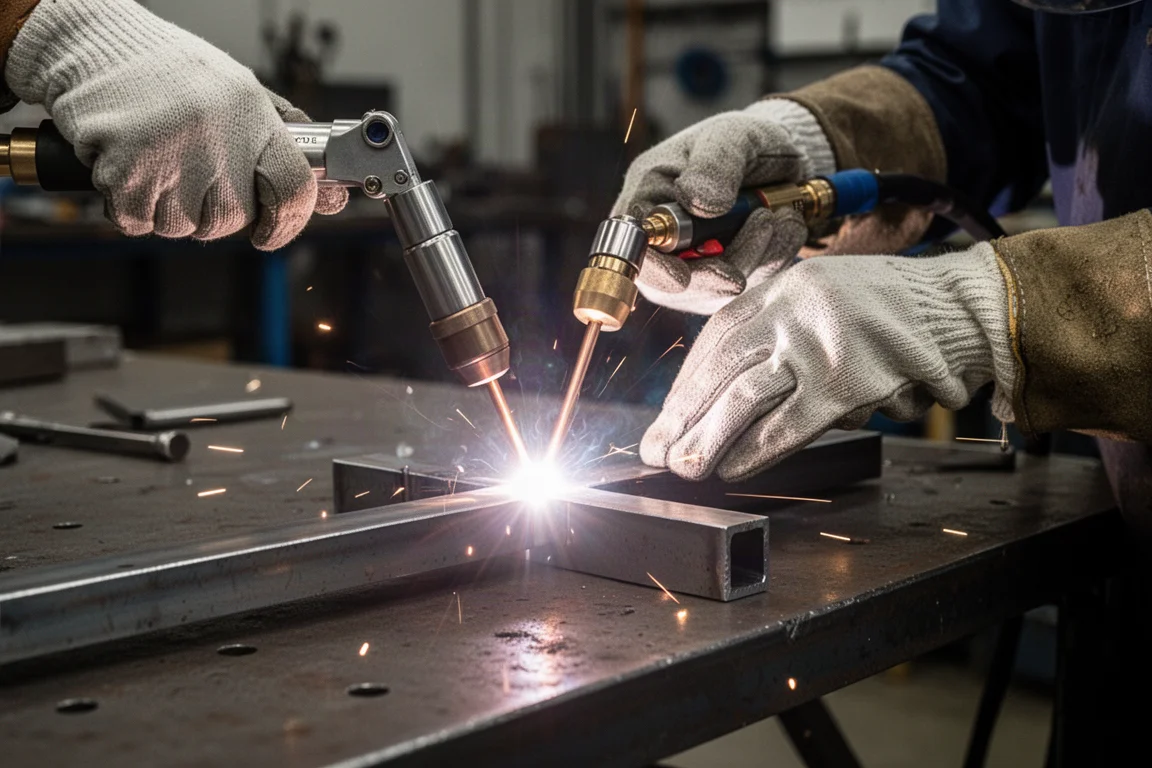
When welding a T-joint, the temptation is to hold the joint down while pointing the gun at it. But the beam can shoot through the material. The beam path must be considered not just up to the piece of metal, but through the back side of it. Holding the workpiece that way is not safe when tacking or welding. There is also the temptation to point the gun slightly toward yourself or to put your head over the top of the welding gun. All of these can create a path for the beam directly or for a reflection.
When cutting, this is especially important. Unlike a plasma cutter, which has hot sparks and material falling from the cut, a laser still has the beam continuing right through the cut. It is critical not to get in the way of that beam path.
Understanding Reflections
The beam can bounce off material and reflect into something else. It is necessary to consider not only the direct path out of the gun, but also where the beam could go if it bounces off the material or even bounces twice off a back wall.
There are two main types of reflections. A specular reflection is a mirror-like reflection where the beam continues on with essentially the full hazard as though it had just left the gun. This is most common on reflective materials like aluminum or polished surfaces. Reflections are more likely when the laser power is too low to weld the material. This sounds counterintuitive: the hazard is higher when the power is lower. But it comes down to how the laser interacts with the metal. When a laser first hits a material, its tendency is to reflect off, but some energy is absorbed, heating the material. The more the material heats, the more laser energy it absorbs, creating a runaway cycle until a keyhole forms where the light bounces around and is absorbed. If settings are incorrect or there is an issue with the optics, reflections are more likely. Extra caution is needed on reflective materials and when first trying new parameters.
The other major type is a diffuse reflection, where the laser energy is scattered. This is much less harmful because the energy is spread out, but it can still damage skin and eyes. This is where personal protective equipment plays its main role: protecting against diffuse reflections.
Personal Protective Equipment: The Final Layer
PPE is the final layer of protection, the last thing between the operator and the work. The most important piece is eye protection.
The Xtool Metal Fab comes with laser glasses, but they are not regular dark glasses. Standard shade five glasses used for oxy acetylene work look similar but will not protect against the laser beam or diffuse reflections. Laser-specific lenses are required.
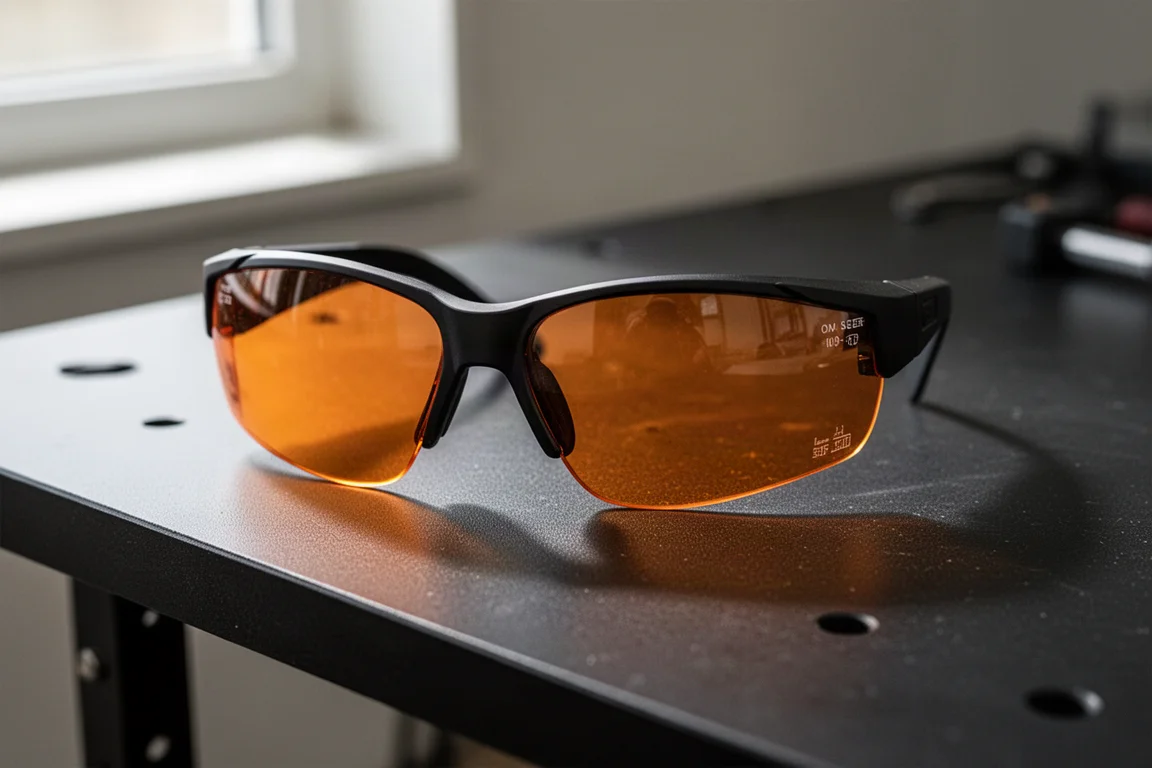
Any laser safety lens has two numbers that must match the specific machine. One is the wavelength of light it protects against, essentially the color of light. For the Metal Fab, the wavelength is 1080 nanometers. The other number is the optical density, often marked as OD, which indicates how dark the lens is and to what level it protects against that wavelength. For the Metal Fab, an OD above six is needed. Some machines require above eight, depending on power output and other factors. The lenses must match the laser welder being used.
Eye Protection That Matches the Machine
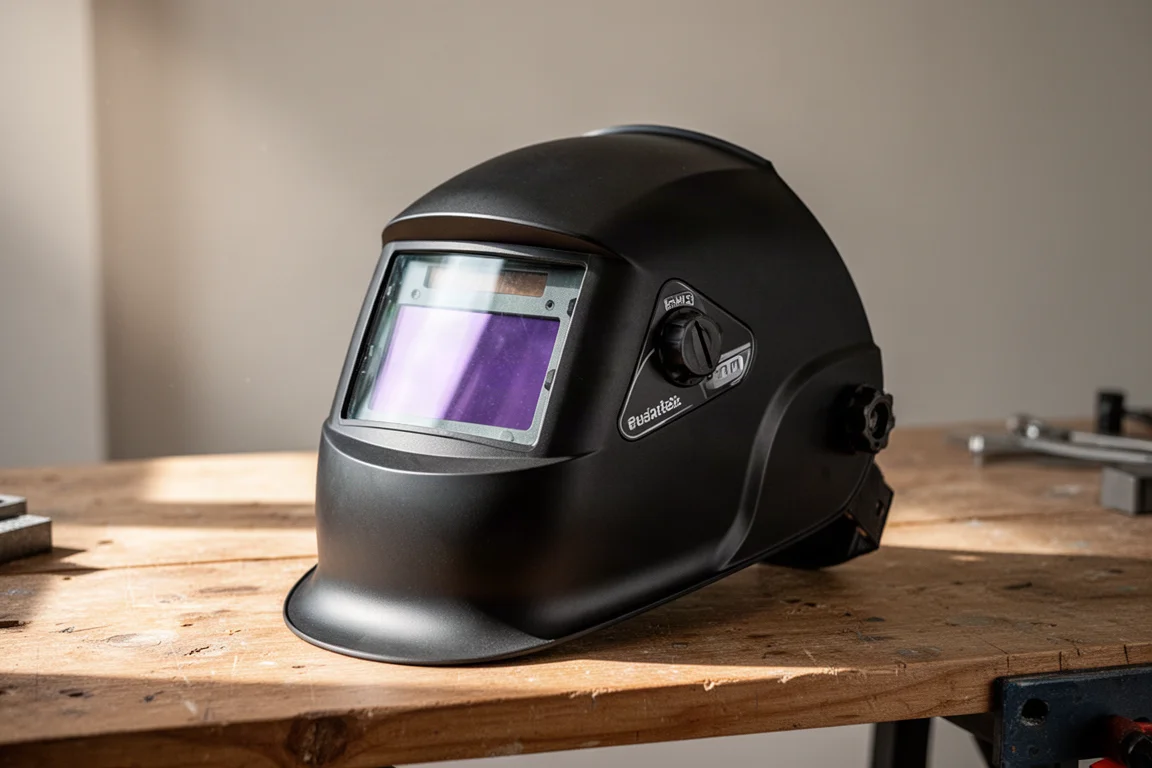
Regular welding helmets will not protect against laser light. However, the Xtool welding helmet includes both a laser lens inside and an auto-darkening lens at the front, similar to what is used with arc welding. This provides full face coverage and the darkening lens reduces the bright light emitted from the welding process, such as the plasma created. This gives a better view of the weld puddle. Whatever eye protection is used, it must have the correct wavelength and optical density numbers for the specific welder.
For clothing, gloves and sleeves are still worn, the same as with TIG welding. They will not protect against a direct hit from the laser, but they provide some protection from diffuse reflections. A respirator is also important. Disposable respirators work well, as do respirators with replaceable filters. Laser welding still creates fumes, so breathing protection is necessary.
Other Welding Safety Basics
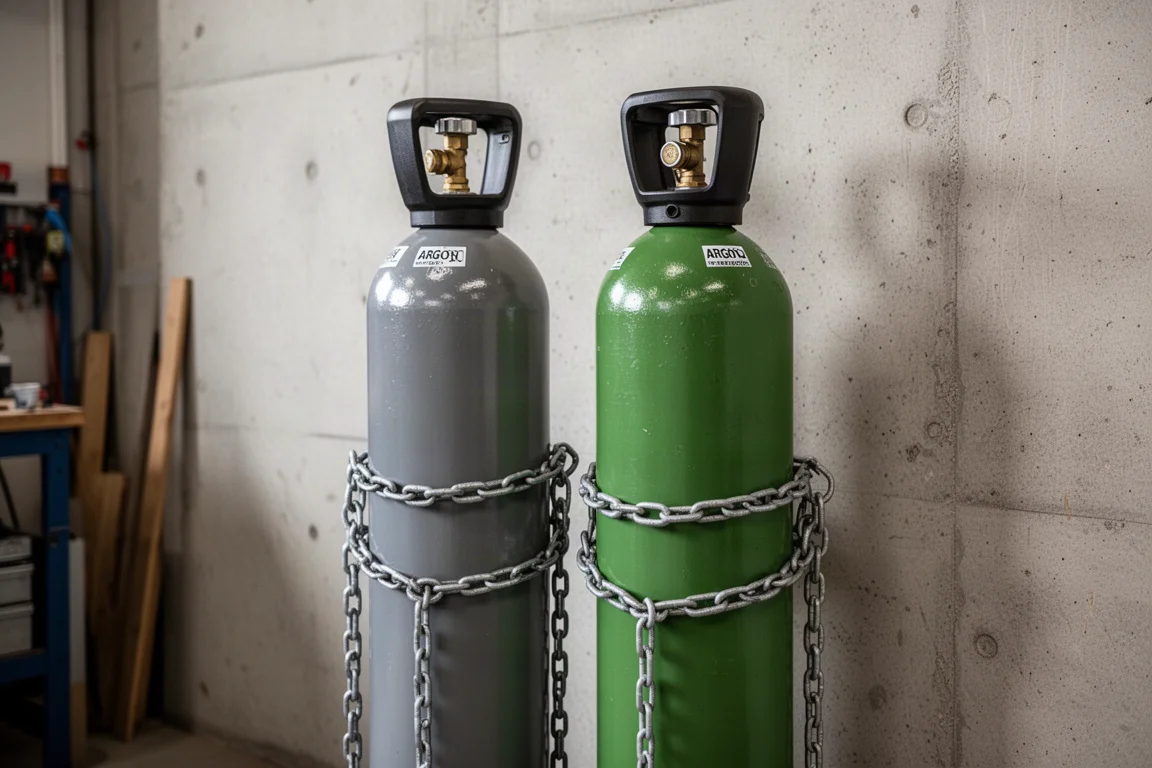
There are additional safety considerations similar to all welding processes. Hot material can burn when picked up, so care is needed. Compressed gas cylinders, such as argon cylinders, must be chained up so they cannot tip over and break the valve off the top. When transporting them, a safety cap should be on top. Hot work means being aware of flammable materials in the area. Welding fumes also require adequate ventilation so they do not build up and get breathed in.
Buying Advice
Handheld laser welding is a promising technology, and the hazards can be managed with the right approach. The Xtool Metal Fab stands out as the best handheld laser welder at this power level and price point. Its safety features, including the required training code, double switch, and contact safety switch, make it a strong choice for those serious about safe operation. It is worth checking current pricing and availability before making a decision.
Conclusion
Laser welding brings a new set of hazards that require a new level of mindfulness. The beam can travel far beyond the point of use, and reflections can redirect it in unexpected ways. Layered controls, from the work area to machine protections to careful gun handling to proper PPE, make the difference between a safe shop and an accident waiting to happen. With the right equipment and the right habits, handheld laser welding can be a valuable addition to any fabrication setup.
Product link
View more details for Xtool Metal Fab
This product is mentioned in the review. Check the specifications, options, and compatibility before buying.
View more details for Xtool Metal FabFurther reading
Related Reviews

Cycling Helmets
Best Road Cycling Helmets 2026: Four Premium Options Compared
A detailed comparison of four high-end road cycling helmets, from the aerodynamic Kask Protone Icon to the innovative Bolle Furo, with real strengths and trade-offs.
Plasma Cutters
BestArc BTC500DP Pro Review: A Budget 50-Amp Plasma Cutter That Surprised Us
We tested the BestArc BTC500DP Pro on steel, aluminum, stainless, and expanded metal. Here is our honest take on this compact, app-connected plasma cutter.
Welding
Budget Stick Welder vs Flux Core: What Beginners Should Know
A practical look at a sub-$60 drill-style stick welder and why a flux core machine may be the better starting point for home repairs.