Speakers
GR Research NX Bravo Review: A Two-Way Speaker That Rewards Careful Setup
A two-way speaker with wide dispersion, clean decay, and a treble lift that disappears once you toe it out. Here is how the GR Research NX Bravo behaves in a real room.
Introduction
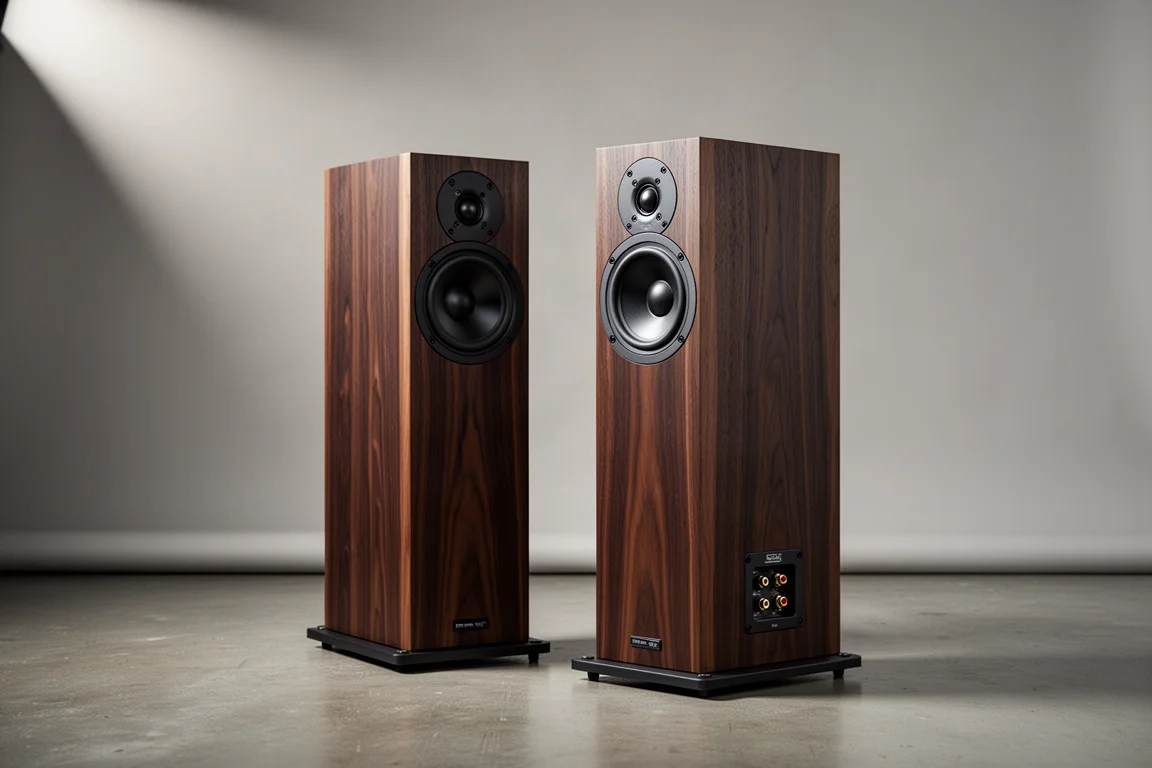
The GR Research NX Bravo is a two-way loudspeaker available in two very different forms: as a kit priced from roughly $700, and as a fully assembled, upgraded finished pair that runs closer to $2,500. Both versions share the same core design, which comes from Danny Richie, the owner of GR Research.
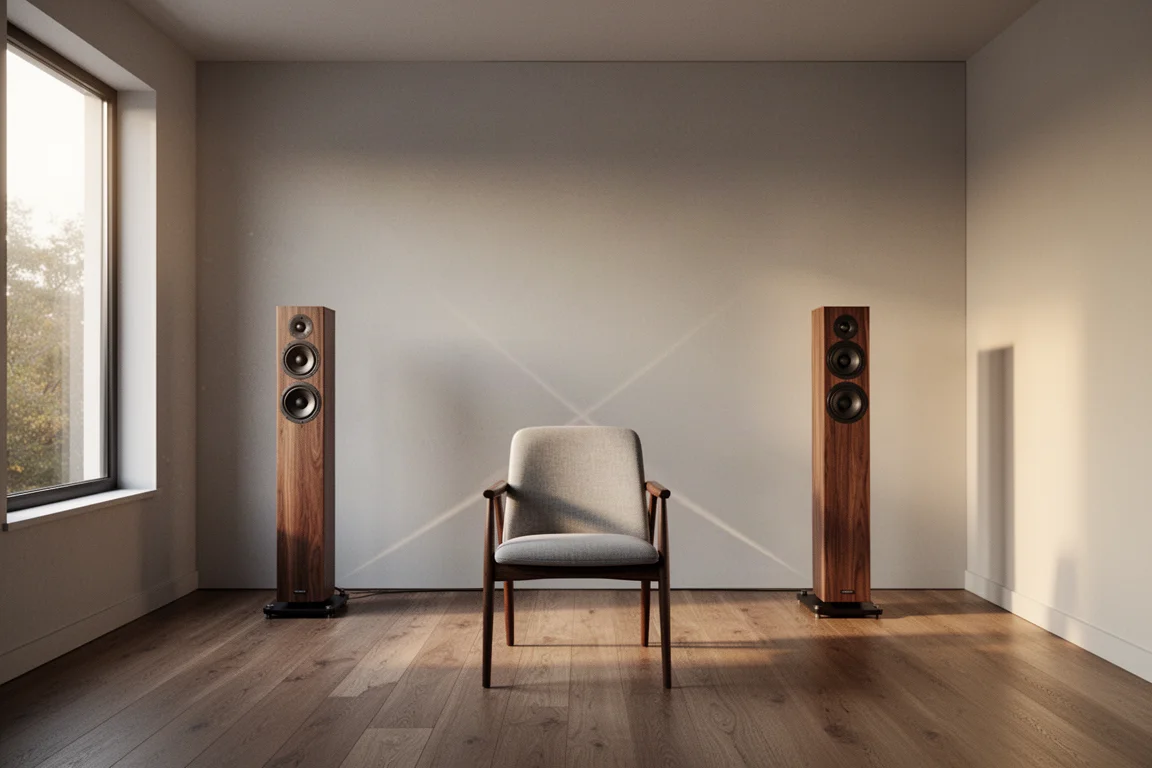
Setup guidance matters more than usual here. The design is intended to sit about three feet off the front wall, and it is meant to be toed out rather than aimed straight at the listening seat, so the speaker axes cross behind the listener. Get that part right and the NX Bravo settles into a balanced, easy-going presentation.
The version discussed here arrived fully assembled with the upgraded capacitors and the long-port configuration, which is intended for placement a little further out into the room. What follows covers how this speaker behaves, where it performs strongly, and the limits worth knowing before you buy.
Who This Product Is For
This speaker suits listeners who value tonal balance, a wide soundstage and flexible seating height more than sheer output. It works well for mid-field and far-field listening at reasonable volumes, and for anyone who wants a design that stays coherent well off the tweeter axis.
It is also a natural fit for DIY-oriented buyers. The kit version costs a fraction of the finished build, and the design rewards the effort of assembling it yourself. If your priority is high-volume playback, this is not the speaker to build a system around.
Main Strengths
Measurements and listening impressions line up closely on the NX Bravo, and the strongest qualities show up in the same three areas.
Tonality and Balance
Overall tonality is the standout. Measured response holds within roughly plus or minus 3 dB, with average output around 85 dB at 2.83 volts at one meter, and the upper midrange between about 1 and 4 kHz stays neutral. That combination keeps the speaker from sounding forward while preserving attack and dynamics.
Point the speaker directly at the listening seat and a high-frequency bump of roughly 5 dB appears. Toeing the speakers out about 15 degrees removes it. That lift is a deliberate design choice, included to offset the narrowing high-frequency dispersion as the speaker hands over to its tweeter, so the in-room balance ends up more even than the on-axis curve suggests. Listeners who enjoy extra top-end air can leave the speakers aimed forward; everyone else should toe them out.
There is also a dip around 7 kHz. It takes a little bite and air out of percussion, cymbals most noticeably, but it also relieves sibilance, which makes for an easy long-term listen. The estimated in-room response shows a mild scoop through the upper midrange that can read as slightly warm, though it is subtle enough that most listeners will not notice it without a direct comparison.
Directivity and Dispersion
Horizontal dispersion is wide, roughly plus or minus 70 degrees through the midrange, which produces a large and well-defined soundstage. Toeing the speakers out spreads the radiation further still and increases room interaction, and this is where the NX Bravo separates itself from typical two-way designs.
Vertical dispersion is the real highlight. Where most two-way speakers are usable within only about 10 to 15 degrees above or below the reference axis, the NX Bravo stays tonally consistent roughly 50 degrees above the tweeter and about 20 degrees below it. Standing up, sitting low, or listening from an off-axis seat all remain practical.
Decay behaviour is clean as well. Burst decay measurements show the driver output fading quickly, without the extended ringing that turns up in some considerably more expensive designs.
Sidewall absorption is not necessary here, given how well the speaker radiates off to the side. If you do add treatment, target the 50 to 60 degree region relative to the listening position, where it will soften extra high-frequency energy rather than dull the first reflection.
Bass and Dynamics
Bass performance is better than the compact midwoofer suggests. Anechoic response rolls off at about 77 Hz at the F3 point and sits 10 dB down at 45 Hz, which translates to usable in-room extension of roughly 50 to 60 Hz. There is not much slam or punch on offer, but the midbass is accurate and well controlled.
Electrically, the speaker is easy to drive. Minimum impedance is 5 ohms and minimum EPDR is 2.5 ohms, so most amplifiers should have no trouble with it. One measurement flagged a resonance in the enclosure, possibly from the port, but it does not appear in the burst decay data and shows only as a slight bump in the frequency response, so it is unlikely to be audible in practice.
Things to Consider Before Buying
The NX Bravo has real limits, and they are the kind that matter more to some listeners than others.
Power Handling and Output Limits
This is an SPL-limited design. GR Research notes that it is not built for very high playback levels and that it should be supplemented with a subwoofer, which is true of most two-way speakers in this size class.
High-frequency distortion runs higher than typical, and it becomes the practical ceiling on output. Multi-tone compression limits long-term maximum output to roughly 95 dB at one meter, while quick transient compression puts the ceiling at about 96 dB. Distortion thresholds land in the upper 80 dB range at one meter. Listening at around 80 to 85 dB at ten feet stays comfortably inside those limits. Push the speaker harder than that and the higher-order distortion becomes audible.
Adding a subwoofer helps in two ways. It reduces midrange distortion by removing low-frequency demands from the midwoofer, and it extends the low end well below what the cabinet delivers on its own. The high-frequency distortion remains, so a subwoofer does not turn this into a high-output speaker.
Setup and Positioning
Positioning has a larger effect here than on most speakers. Placing the NX Bravo about three feet off the front wall is the recommended starting point, and it is where the speaker sounds its best. Moving it closer to the wall trades some of that openness for boundary reinforcement, and the long-port version is configured for a little more distance from the wall than a standard build.
Aim the speakers so the axes cross behind the listening seat, roughly 15 degrees off axis. This is the setting that delivers the neutral in-room balance, and it is worth the small amount of effort to get right.
The cabinet uses flush-mounted tube connectors rather than recessed terminal cups. They look clean, and banana plugs slot straight in, which makes swapping cables simple. Whether they carry any sonic benefit is unverified, so treat them as a usability and appearance advantage rather than a performance claim.
Buying Advice
The value story depends on which version you choose. The kit at roughly $700 is the standout option for anyone comfortable with assembly, since the underlying design is strong and the savings are substantial. The fully assembled upgraded version at around $2,500 costs considerably more, and the question there is how much you value the finished cabinet work and the upgraded components.
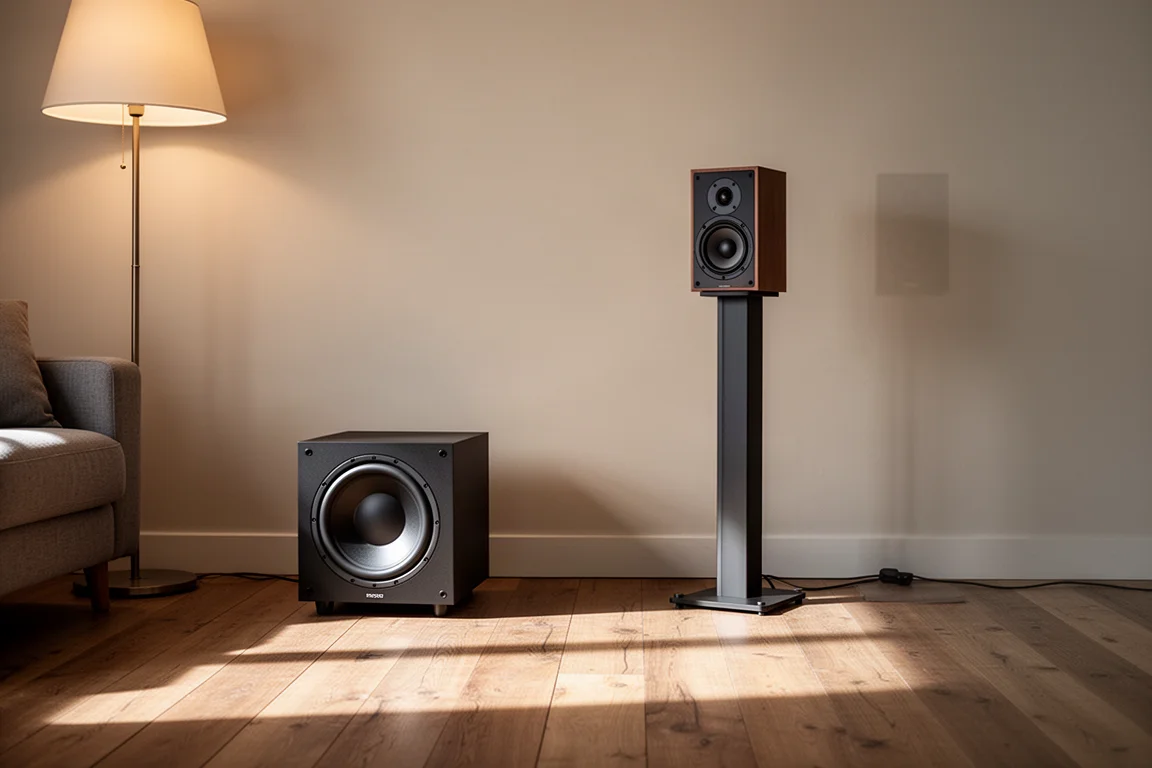
Either way, budget for a subwoofer and plan the room layout before you buy. Give the speakers three feet of space behind them, toe them out, and keep listening levels reasonable. Set up that way, the NX Bravo delivers balanced tonality, a wide and stable soundstage, and unusually flexible vertical placement.
Conclusion
The GR Research NX Bravo is a well-executed two-way speaker with genuinely strong directivity, clean decay and a tonal balance that holds up in real rooms once the toe-in is right. Its limits are clear and predictable: it does not play very loud, high-frequency distortion rises with volume, and a subwoofer is part of the intended setup.
For listeners who prioritise refinement, staging and seating flexibility over maximum output, and especially for those willing to build the kit, it is an easy recommendation.
Product link
View more details for GR Research NX Bravo
This product is mentioned in the review. Check the specifications, options, and compatibility before buying.
View more details for GR Research NX BravoFurther reading
Related Reviews
Speakers
13 Under-the-Radar Speakers Still Worth Buying
Thirteen speakers that quietly stayed in production while newer models took the spotlight, from budget bookshelf pairs to a full-size tower.
Speakers
Arendal 1528 Monitor 8 Review: A Three-Way Standmount With Serious Dynamic Headroom
A three-way standmount speaker with extremely low distortion, high output capability, and deep bass for its size, plus the setup details worth knowing before buying.
Speakers
Arendal 1723 Monitor S Review: A Compact Monitor With Serious Ambition
A close look at the Arendal 1723 Monitor S, a compact MTM monitor with a waveguide-loaded tweeter, an HDF cabinet, and flexible ported or sealed operation for music and home theater.