Action Cameras
GoPro Hero 12 vs DJI Osmo Action 4: Two Action Cameras for Real-World Riding
A practical comparison of the GoPro Hero 12 and DJI Osmo Action 4 for bike filming, covering stabilization, low light, audio, mounting, battery, and price.
Introduction
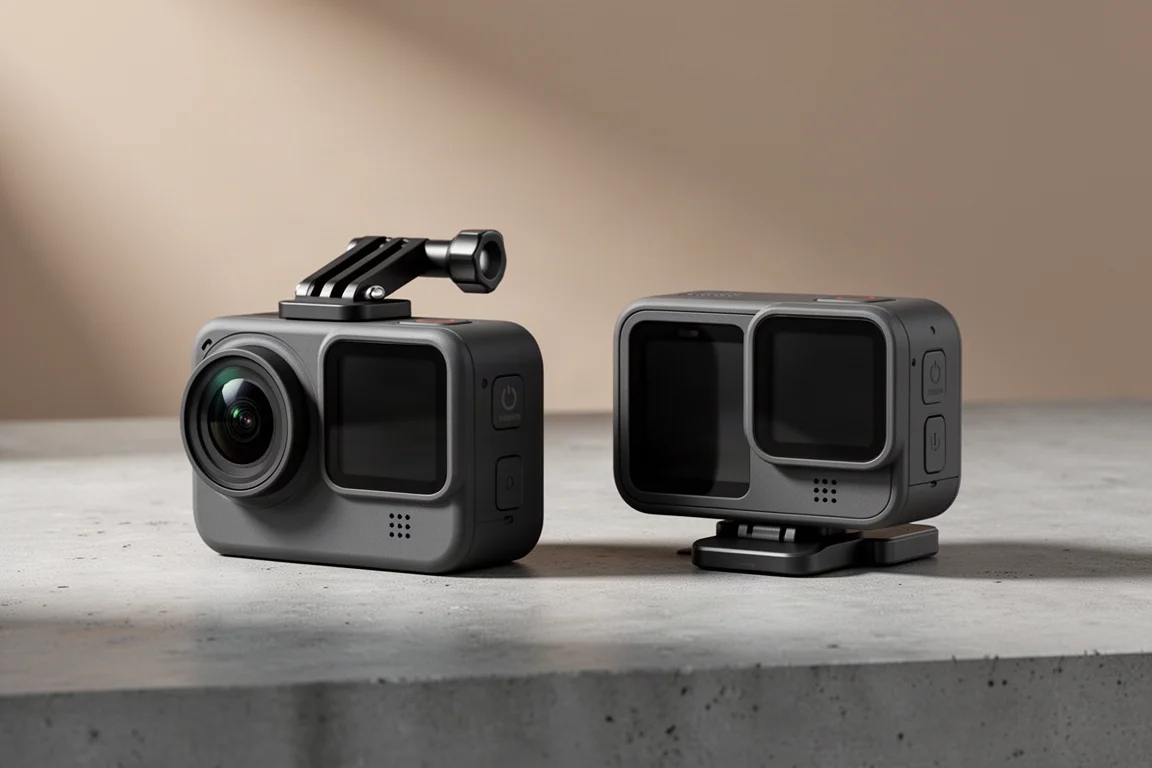
Action cameras have become essential for riders who want to film road rides, mountain bike trails, or trips without carrying a large camera. Two models stand out as the strongest current options: the GoPro Hero 12 and the DJI Osmo Action 4. This comparison looks at real-world performance on the bike, covering stabilization, low light, audio, mounting, battery, and price. Both cameras have advanced significantly in recent years, and either one can handle demanding conditions. The differences come down to specific priorities.
What Matters Most for Bike Filming
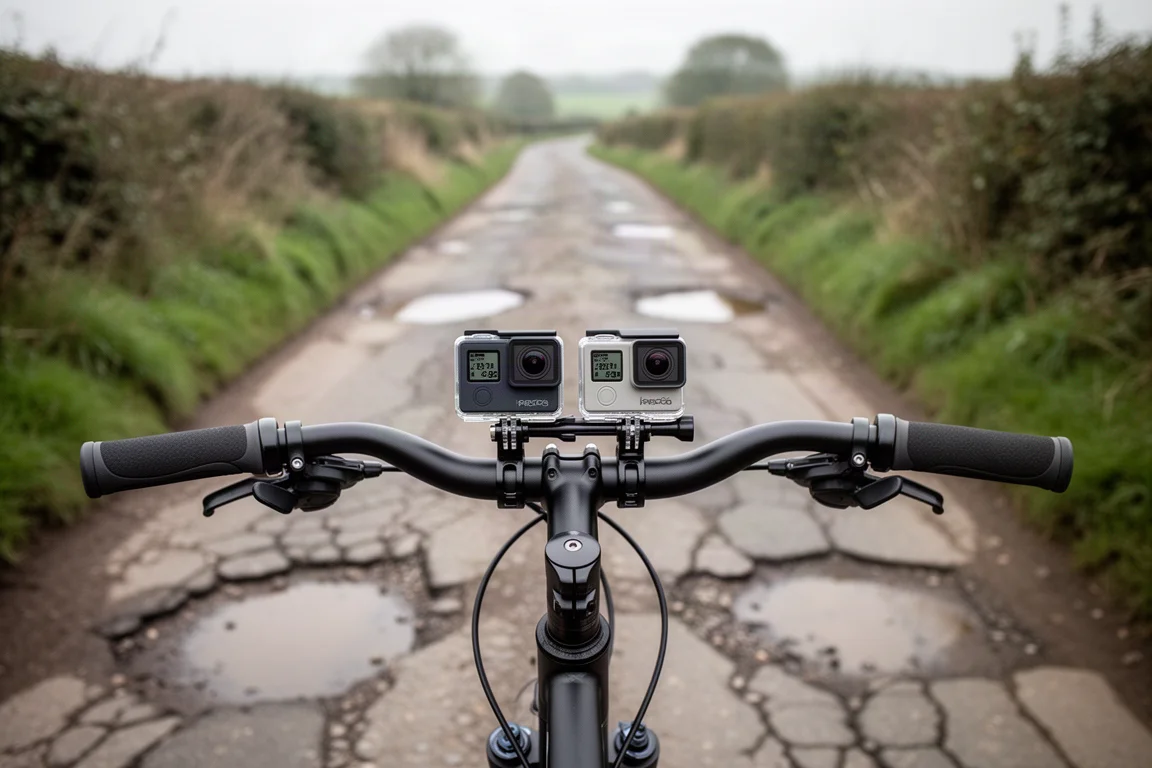
For bike filming, stabilization is the foundation. Road buzz, potholes, and trail vibrations can ruin otherwise good footage. Low light performance matters for cloudy days, shaded trails, and early morning or evening rides. Audio quality affects how usable the sound is when riding, especially with wind. Mounting and build determine how quickly the camera can be moved between bikes or mounts. Battery life and charging speed decide how long a session can last and how convenient the camera is to live with. Price and included accessories shape the overall value.
These are the areas where the GoPro Hero 12 and DJI Osmo Action 4 differ most. Understanding which factors matter for your riding style will make the choice clearer.
GoPro Hero 12: Strengths for Riders
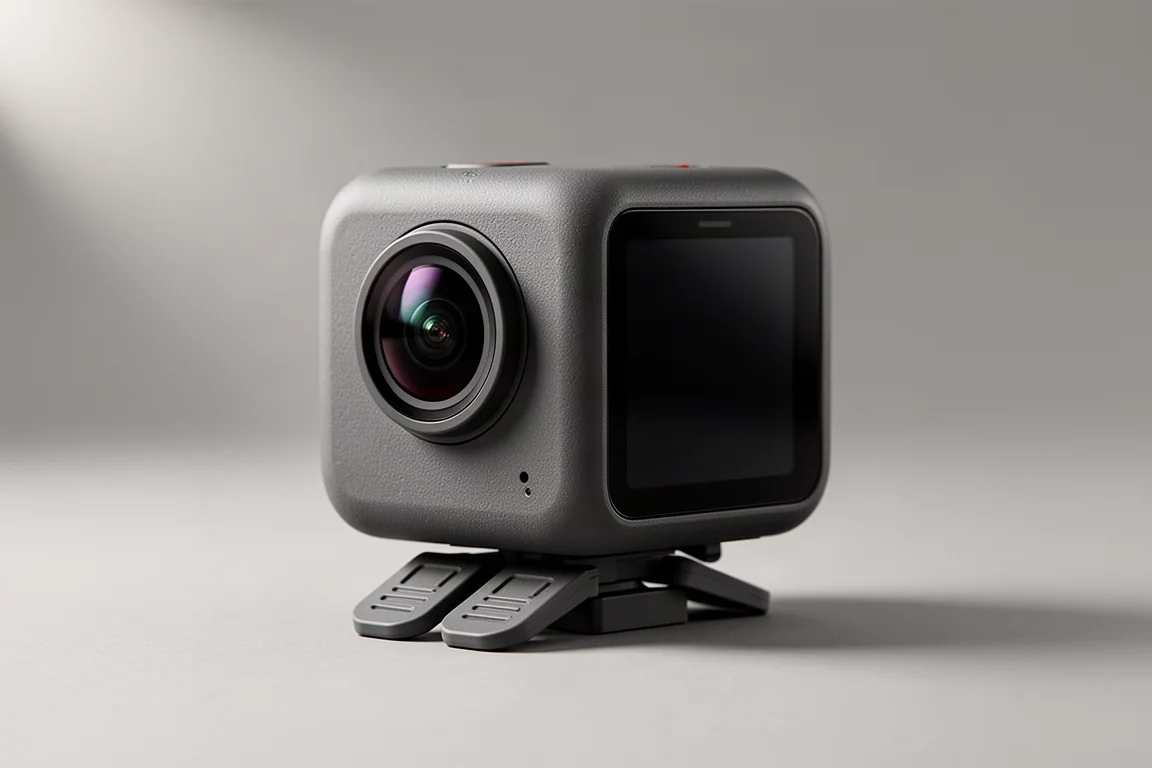
The GoPro Hero 12 relies on HyperSmooth stabilization, which remains a benchmark for action cameras. It handles rough road surfaces and vibrations very well, producing smooth footage without post-production work. The camera also offers a boost mode for extra stability, though this crops the image and reduces the wide field of view. Normal stabilization is sufficient for most bike filming. The Hero 12 can shoot up to 5.6K resolution, which provides room for close cropping, but some features are restricted at that setting and file sizes become very large. For most riders, 4K offers plenty of detail. The mounting system uses built-in fold-out prongs that feel plasticky and have not changed from recent iterations, but they hold securely when the screw is tightened firmly. The Hero 12 ships with a cold weather battery as standard, which helps in low temperatures.
DJI Osmo Action 4: Strengths for Riders
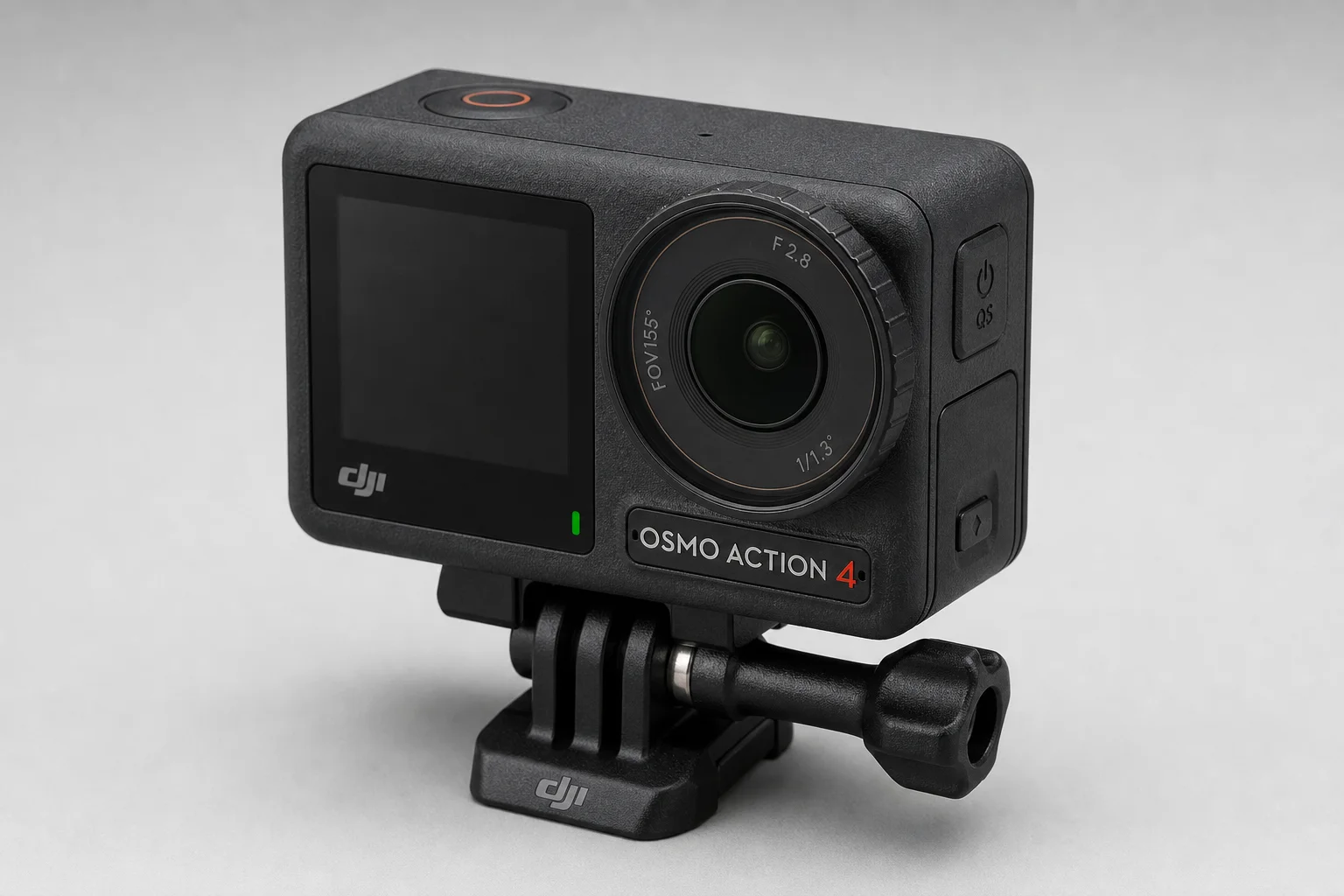
The DJI Osmo Action 4 uses RockSteady 3.0 stabilization, which matches the GoPro in real-world riding conditions. It deals with road buzz and vibrations just as effectively. The camera also has a boost mode that crops the image, and the standard stabilization is more than adequate for bike use. The Osmo Action 4 stands out in low light: it automatically switches to night mode, which makes a significant difference in dim conditions. This is a major advantage for riders who often face cloudy weather or shaded routes. The mounting system uses a magnetic clip that feels secure and confidence-inspiring, and extra mounts can be purchased to switch quickly between a chest mount and a bike mount. The accessories and battery compartment caps feel more premium than the GoPro’s. The camera also charges quickly, with a claimed 48 minutes from zero to full.
Stabilization: HyperSmooth vs RockSteady 3.0
Both cameras deliver excellent stabilization. HyperSmooth on the GoPro and RockSteady 3.0 on the DJI are on par, which is impressive given DJI’s shorter history in this category. On rough British roads full of potholes, both cameras handle road buzz and vibrations extremely well. Even when the camera is flipped around to film the rider, the footage remains smooth.
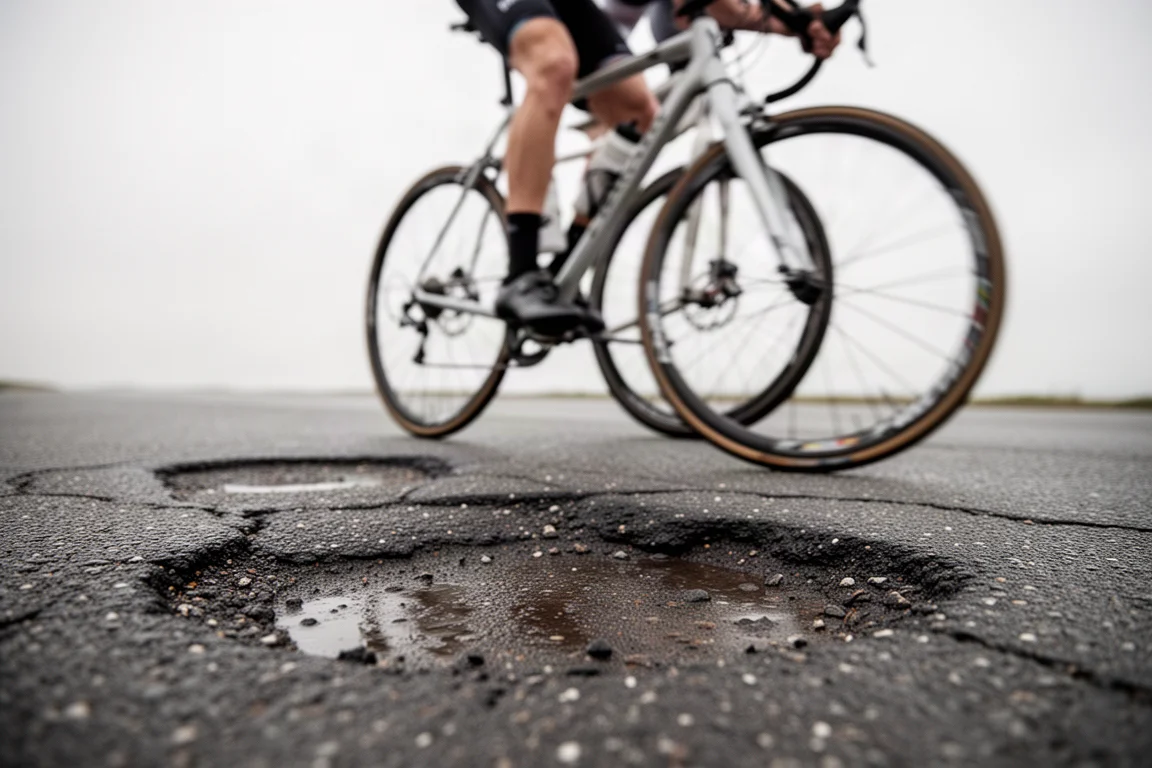
Both offer a boost mode for extra stability, but it crops the image and sacrifices the wide field of view. For most bike filming, the normal stabilization mode is enough. This is a category where neither camera has a clear disadvantage.
Audio and Wind Handling
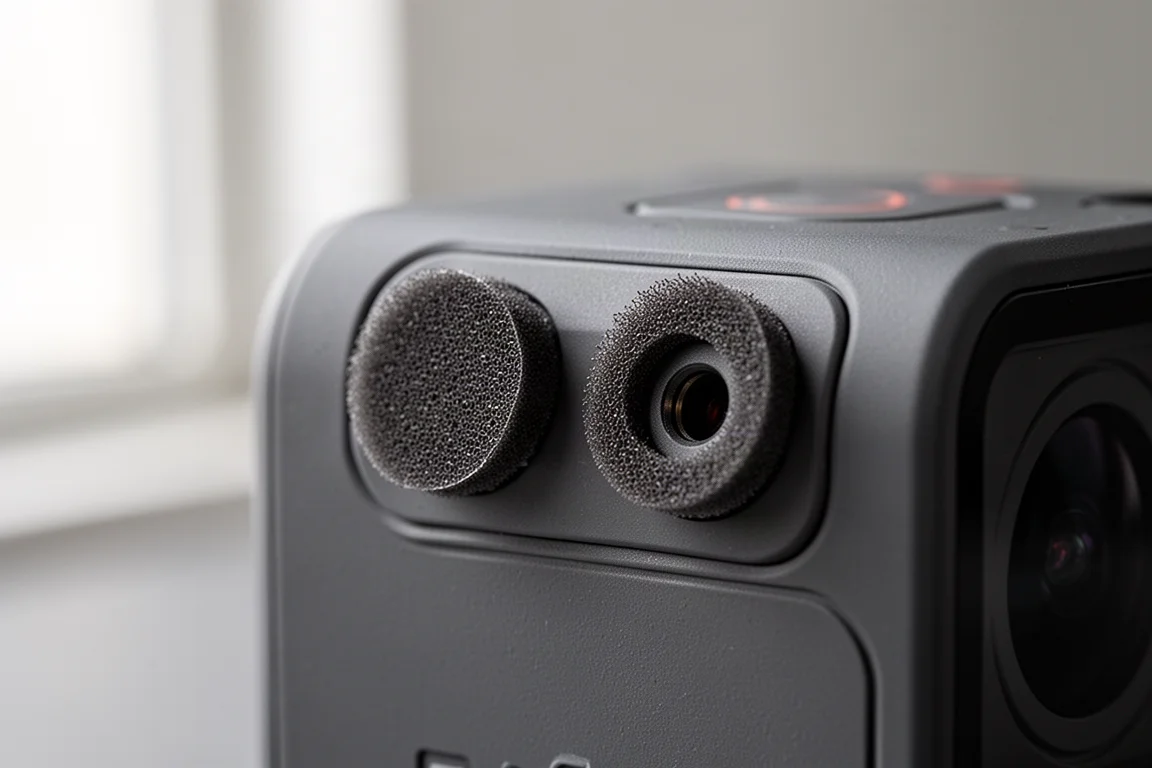
Both cameras have automatic audio settings and wind reduction set to auto by default. Indoor and riding audio tests show that the DJI tends to sound better, though this is subjective. For outdoor use, aftermarket wind fluffs make a significant difference. The GoPro has three microphone locations to cover, while the DJI has two or three. These small wind covers attach with tape and cost around £10, and they improve outdoor audio quality considerably. Without them, the raw audio from either camera is usable but more exposed to wind noise.
Low Light Performance and Night Modes
Low light is a challenge for all action cameras because their small sensors capture less light than larger cameras. Historically, action cameras have struggled in dim conditions. In a test walking from a brightly lit room into a much darker space, the DJI Osmo Action 4 performed better. The DJI automatically switches to night mode, which makes a massive difference in low light.
The GoPro Hero 12 only offers a similar night mode in one of its time-lapse modes, so it does not automatically adjust for video in the same way. Under trees or on cloudy days, the DJI footage looks better. For riders who often shoot in overcast or shaded conditions, the DJI has a clear edge.
Mounting, Build, and Menu Experience
The DJI’s magnetic mounting system feels more secure and premium than the GoPro’s built-in prongs. The GoPro’s fold-out tabs feel flimsy and have not changed in recent generations, though they work fine when tightened properly. The DJI’s battery caps and accessories also feel better made. Both cameras are responsive, with touch screens that work well even in wet weather. The menus on both are usable, but the DJI’s menu is easier to navigate and feels more responsive, making it quicker to change settings like slow motion or wide mode. The GoPro’s menu is perfectly fine and has improved with a faster processor in recent iterations. App connection is fast and responsive on both.
Battery, Charging, and Cold Weather Reliability
After a morning ride with both cameras starting at 100%, the GoPro Hero 12 finished at 64% and the DJI Osmo Action 4 at 68%. The difference is small, but the DJI has a slight edge. The DJI also charges much faster, with a claimed 48 minutes from zero to 100%, while the GoPro takes a couple of hours. If charging speed matters, the DJI is the better choice. Many riders charge batteries overnight, so this may not be a deciding factor. Both cameras now use cold weather batteries: GoPro supplies white batteries as standard with the Hero 12, and DJI claims its battery works at very low temperatures. In a week of testing, neither camera crashed, and both proved reliable. GoPro has historically had reliability concerns, but the Hero 12 showed no issues in this period.
Price and Value
In the UK, the GoPro Hero 12 costs £399.99 and the DJI Osmo Action 4 costs £379.99. Both prices are for the basic packages, which include a charging cable, a battery, and the mounting system. A range of bundles with extra accessories is available for both cameras. Spare batteries are worth considering, as it is easy to leave a camera recording in a pocket and drain the battery. The DJI is slightly cheaper and includes a more premium mounting system, while the GoPro offers higher resolution for specialized needs.
Buying Advice
Choose the GoPro Hero 12 if you need 5.6K resolution for close cropping or if you prefer the established HyperSmooth stabilization. Choose the DJI Osmo Action 4 if low light performance, faster charging, a more premium mounting system, and a slightly lower price matter more.
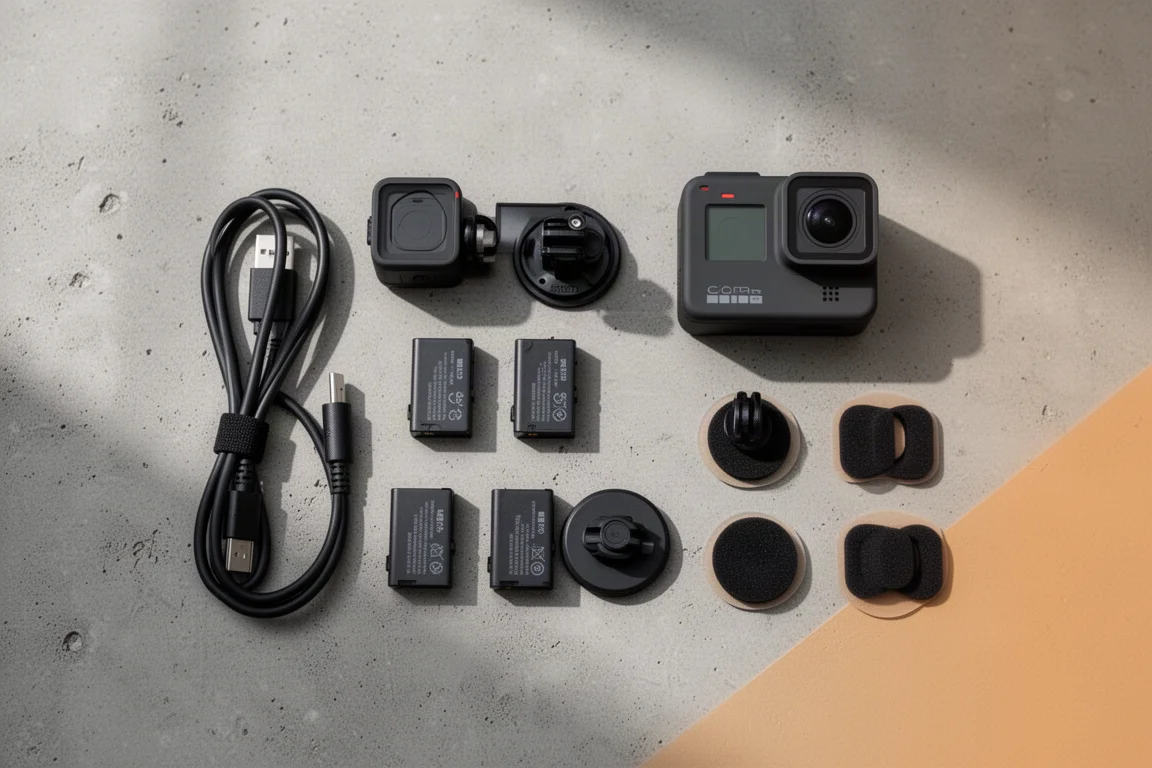
Both cameras are excellent for bike filming. They are waterproof, durable, and capable of handling bad weather. They include horizon lock and time-lapse features. Either camera will serve most riders well, and the best choice depends on which strengths align with your typical riding conditions.
Conclusion
The GoPro Hero 12 and DJI Osmo Action 4 are both fantastic action cameras for cycling. They have improved dramatically in recent years, and either one can capture smooth, reliable footage on road or trail. The DJI edges ahead in low light, charging speed, and mounting feel, while the GoPro offers higher resolution and a proven stabilization system. Riders who frequently shoot in dim or cloudy conditions will appreciate the DJI’s automatic night mode. Those who need maximum resolution for cropping will prefer the GoPro. Both are durable, waterproof, and ready for real-world riding.
Further reading
Related Reviews
Action Cameras
360 Cameras for Adventure Motorcycling: Insta360 X5 vs DJI Osmo 360
Two 360-degree action cameras designed for off-road and adventure riding. A detailed comparison of features, stabilization, and real-world performance for motorcycle touring.
Action Cameras
Akaso EK7000 vs GoPro Hero 8 Black: Budget Action Camera Tested
A $50 budget action camera faces off against the GoPro Hero 8 Black. Here's how the Akaso EK7000 really performs in video, audio, and photo quality.
Action Cameras
Best Action Cameras 2026: Five Top Picks Ranked
A comprehensive ranking of five action cameras from budget-friendly to premium, covering durability, video quality, stabilization, and low-light performance.