Action Cameras
GoPro Hero 11 Black vs iPhone 14 Pro: Which One Should Capture Your Action?
Apple's new Action Mode turns the iPhone 14 Pro into a pseudo action camera. We compare it with the GoPro Hero 11 Black across stabilization, water, low light, slow motion, and everyday use.
Introduction
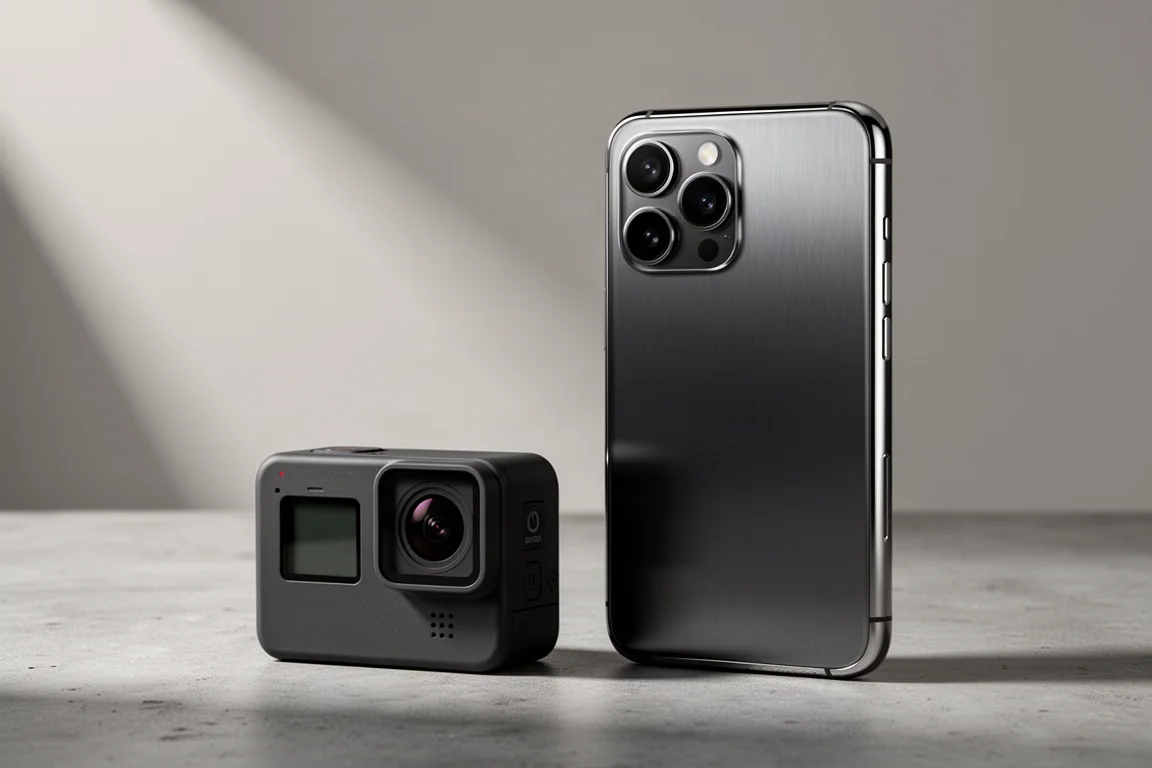
When Apple introduced Action Mode on the iPhone 14 Pro, the pitch was simple: your phone could now behave like an action camera. That raises an obvious question for anyone who films sports, water, or travel footage. Can a phone with clever software genuinely stand in for a dedicated device like the GoPro Hero 11 Black?
This comparison runs both cameras through the scenarios that matter: running and sprinting footage, water tests, slow motion, night scenes, in-car mounting, wind audio, and still photos. The short answer is that both are capable, but they win in very different places.
Action Mode and Stabilization
Action Mode is the headline feature here, and it genuinely works. Footage captured while jogging and even full-on sprinting came out remarkably stable, a clear step up from an older iPhone without the mode. The trade-off is resolution: enabling Action Mode drops the iPhone 14 Pro to 2.8K, down from 4K, while the GoPro records at 5.3K.
There are other caveats. Action Mode crops in noticeably, so you lose a chunk of your field of view, and it is not available on the front-facing selfie camera. It also works best on the main lens; switching to other lenses introduces some wobble that the GoPro’s Linear mode handles more confidently.
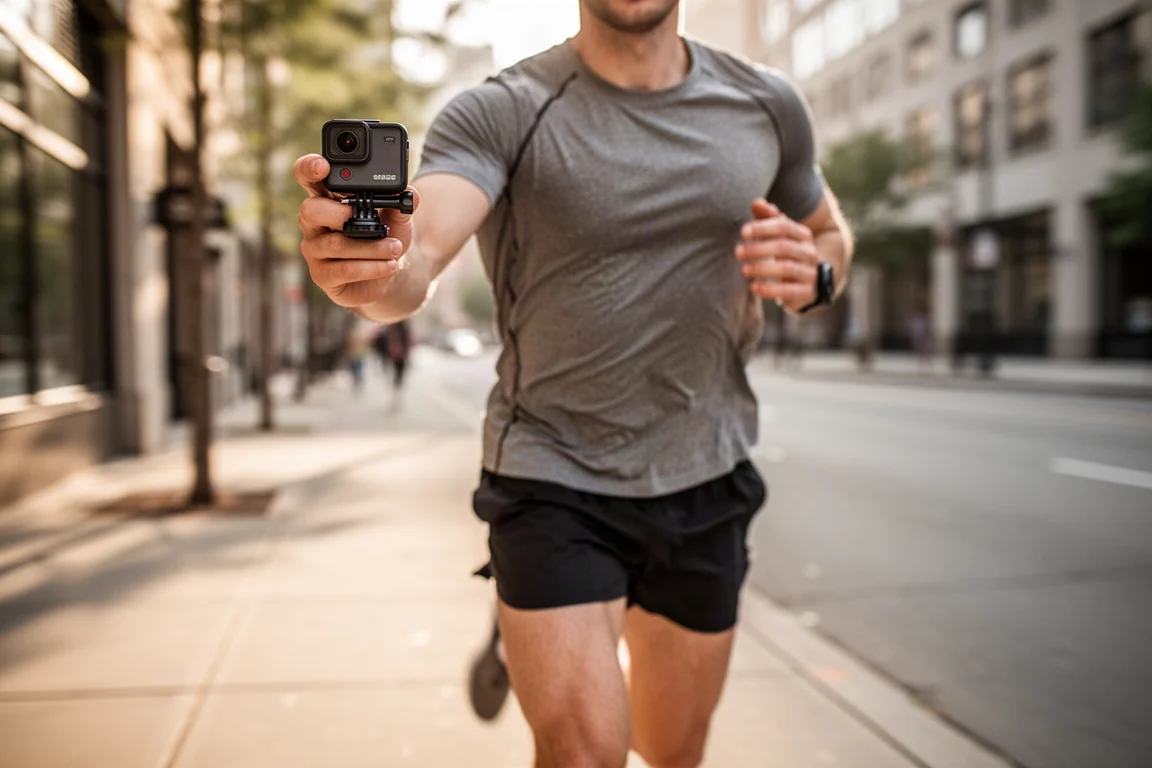
The GoPro counters with its wider field-of-view options. Beyond the standard Wide setting, it offers Superview and HyperView, which pull in far more of the scene. In direct side-by-side running footage, the iPhone crops a little more but still looks impressive, while the GoPro’s extra width gives action footage a more immersive feel.
Water and Underwater Performance
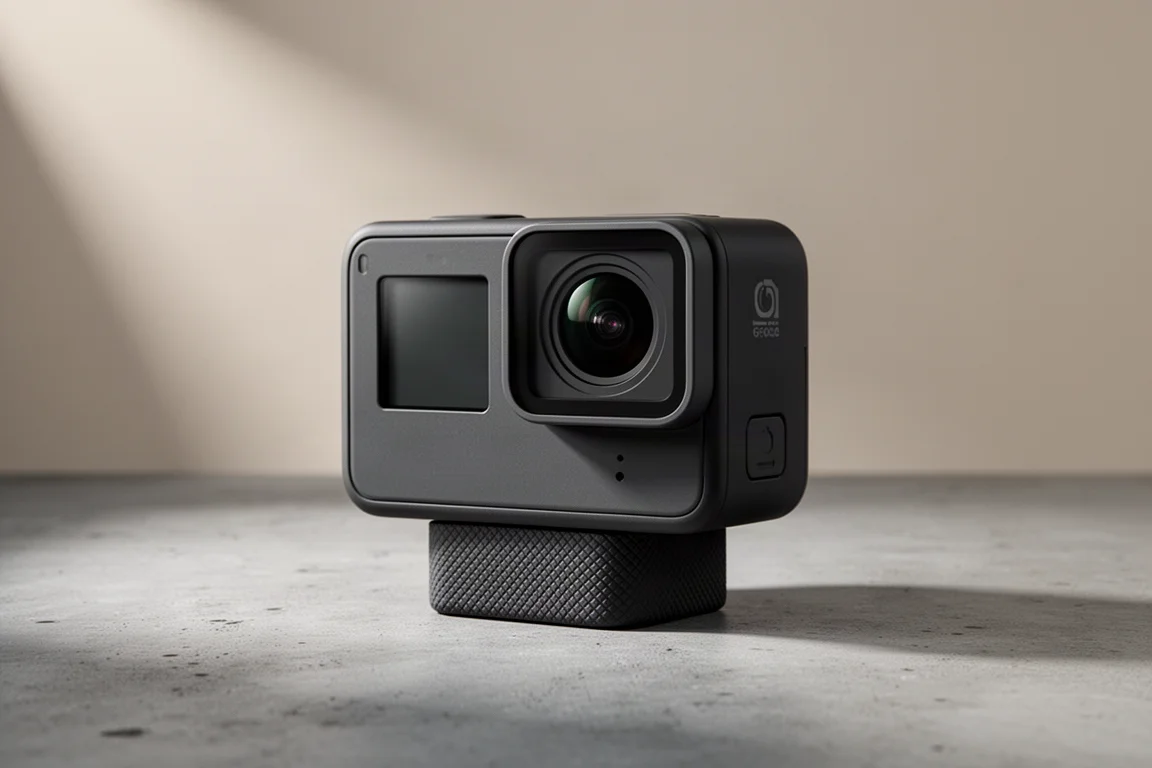
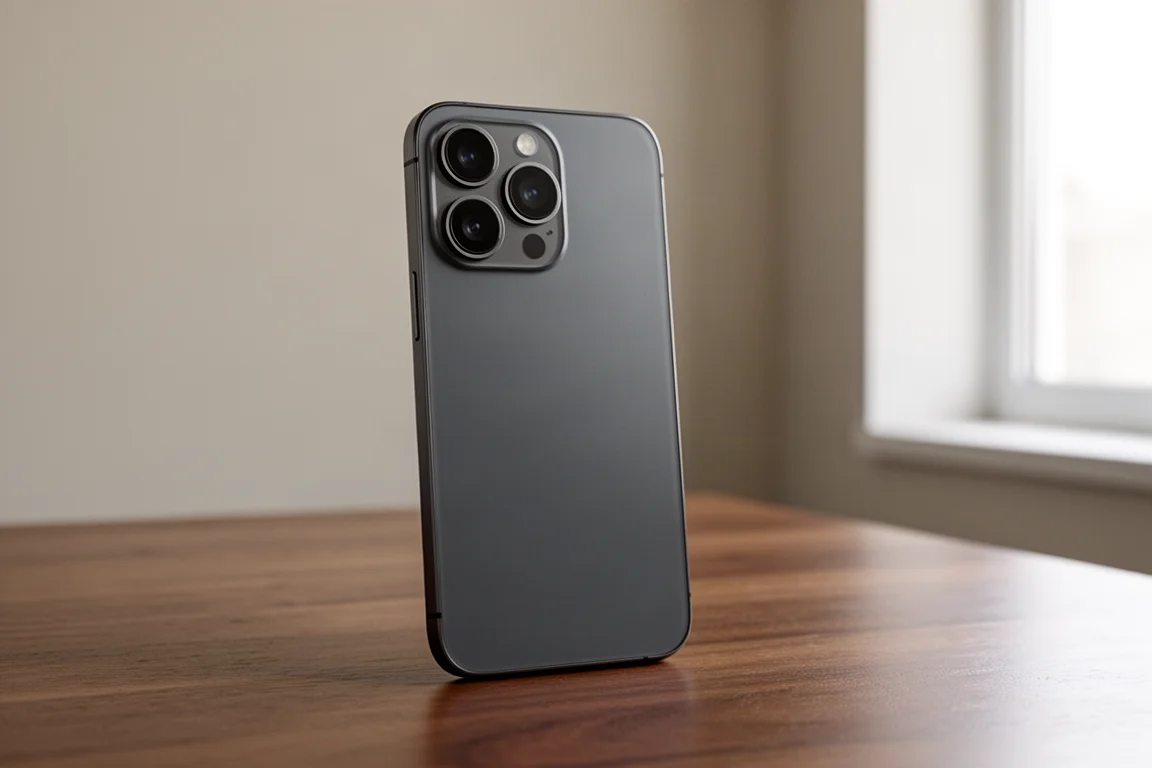
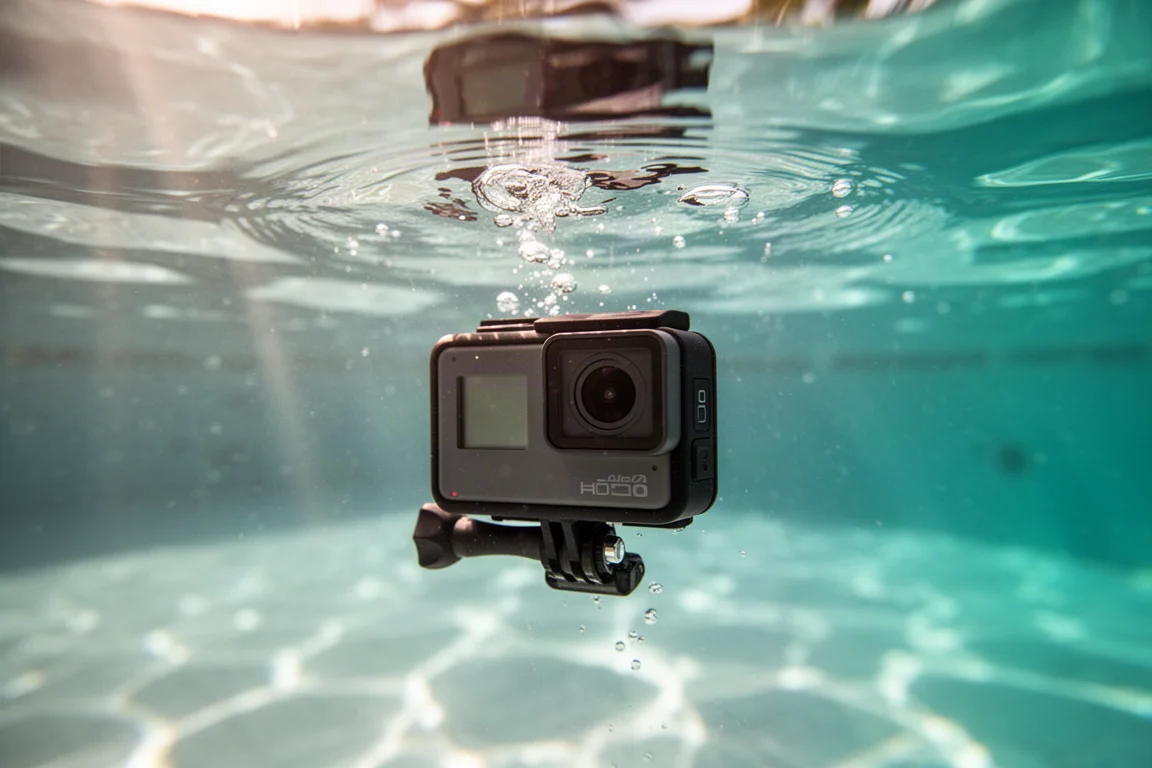
Both devices handled pool and open-water filming without issue, but they behave differently. Above water, the iPhone’s exposure looked slightly better in the soft early-morning light. Underwater, the GoPro’s colors came out more accurate, while the iPhone footage leaned slightly green.
Practicality matters here too. The iPhone is water resistant but not built for repeated dunking, and you cannot use the charging port for a few hours after it gets wet, plus a rinse in fresh water is recommended to prevent corrosion. The GoPro is simply built for this kind of treatment.
Slow Motion
At 240 frames per second, both cameras delivered genuinely beautiful footage. A jump into open water produced crisp droplets, rich colors, and pleasing light in clips from both devices. Slow motion is one area where neither camera disappoints, and the results are close enough that it will not decide your purchase on its own.
Low Light and Night Footage
Night footage by the pool told a clearer story. The iPhone 14 Pro produced a bright, impressive handheld image, noticeably lighter than the GoPro. The GoPro’s footage was much darker but more stable. Moving between pools of light and shadow, the iPhone held the scene better while lit, and the GoPro kept its subject visible in the dark stretches.
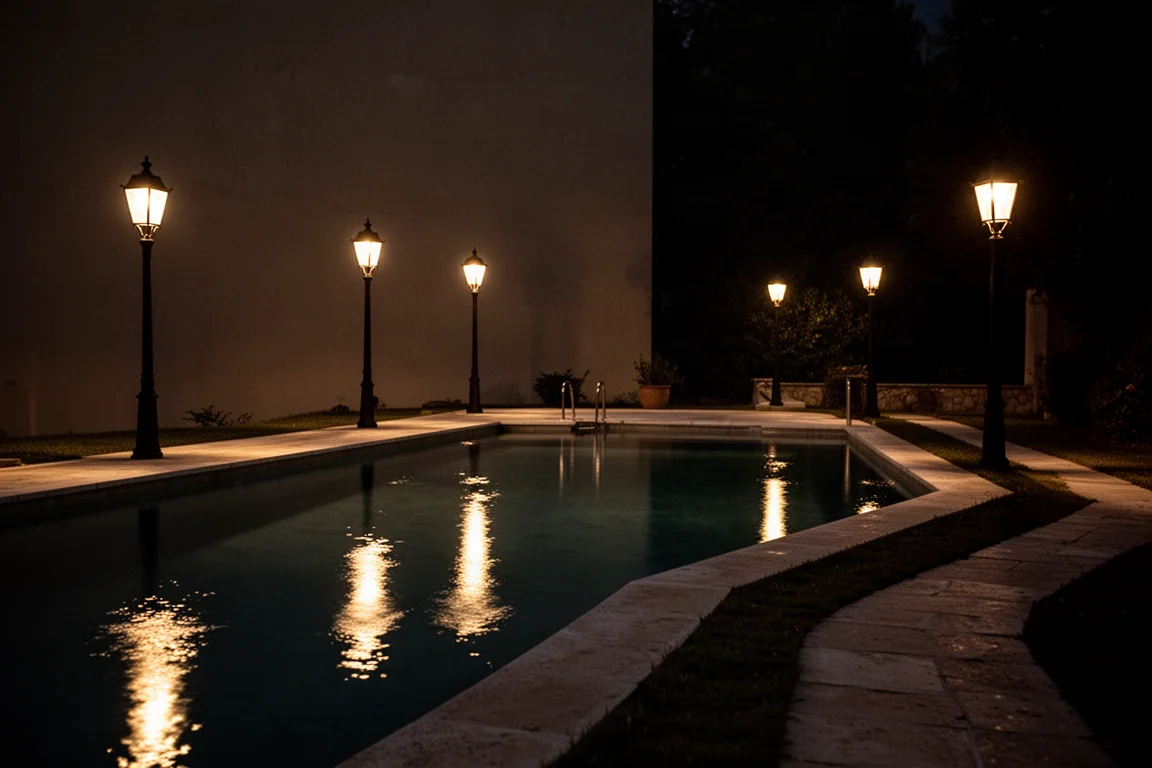
If image brightness in low light is your priority, the iPhone has the edge. If stabilization in the dark matters more, the GoPro holds its ground.
Mounting and Field of View
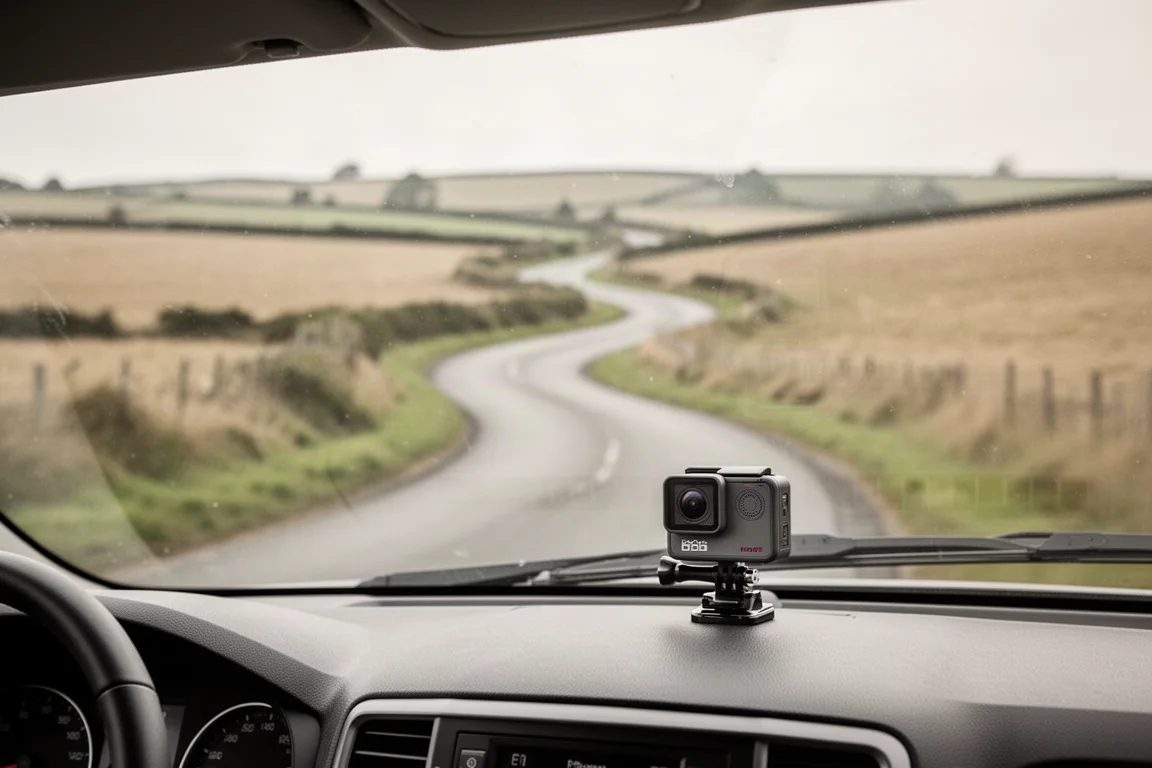
This is where form factor starts to matter. Action cameras are built for mounting, and the iPhone is not. Getting both cameras into a usable dual mount on a vehicle took experimentation, and even the best configuration was imperfect. The iPhone also crops in more, while the GoPro can go much wider with Superview or HyperView.
Once mounted on its own, the iPhone still produced solid footage on a smooth road, though neither camera needed electronic stabilization in a car that essentially gimbals itself. On genuinely rough terrain, the GoPro’s mounting ecosystem and HyperView mode are clearly better suited to the job.
Photos, Wind, and Everyday Use
For stills, the iPhone has a structural advantage. Its 3x telephoto lens has no GoPro equivalent; the GoPro can only digitally crop to approximate the same framing, which introduces visible pixelation. At wide and standard focal lengths, both produced good photos.
Wind and microphone tests showed both cameras can capture usable talking-to-camera audio while moving, with either device acceptable for casual everyday filming.
That leads to the practical conclusion: it often comes down to the right camera for the job. For mountain biking and mounted action footage, the GoPro is the natural pick. For general life recording, the phone wins simply because it is always in your pocket.
Conclusion
The iPhone 14 Pro’s Action Mode is genuinely impressive, and for casual clips it removes much of the reason to carry a second device. But the GoPro Hero 11 Black still earns its place with 5.3K recording, wider field-of-view modes, better underwater color, robust mounting options, and durability you do not have to think twice about. Choose the GoPro for serious action and water use, and the iPhone for everything else.
Further reading
Related Reviews
Action Cameras
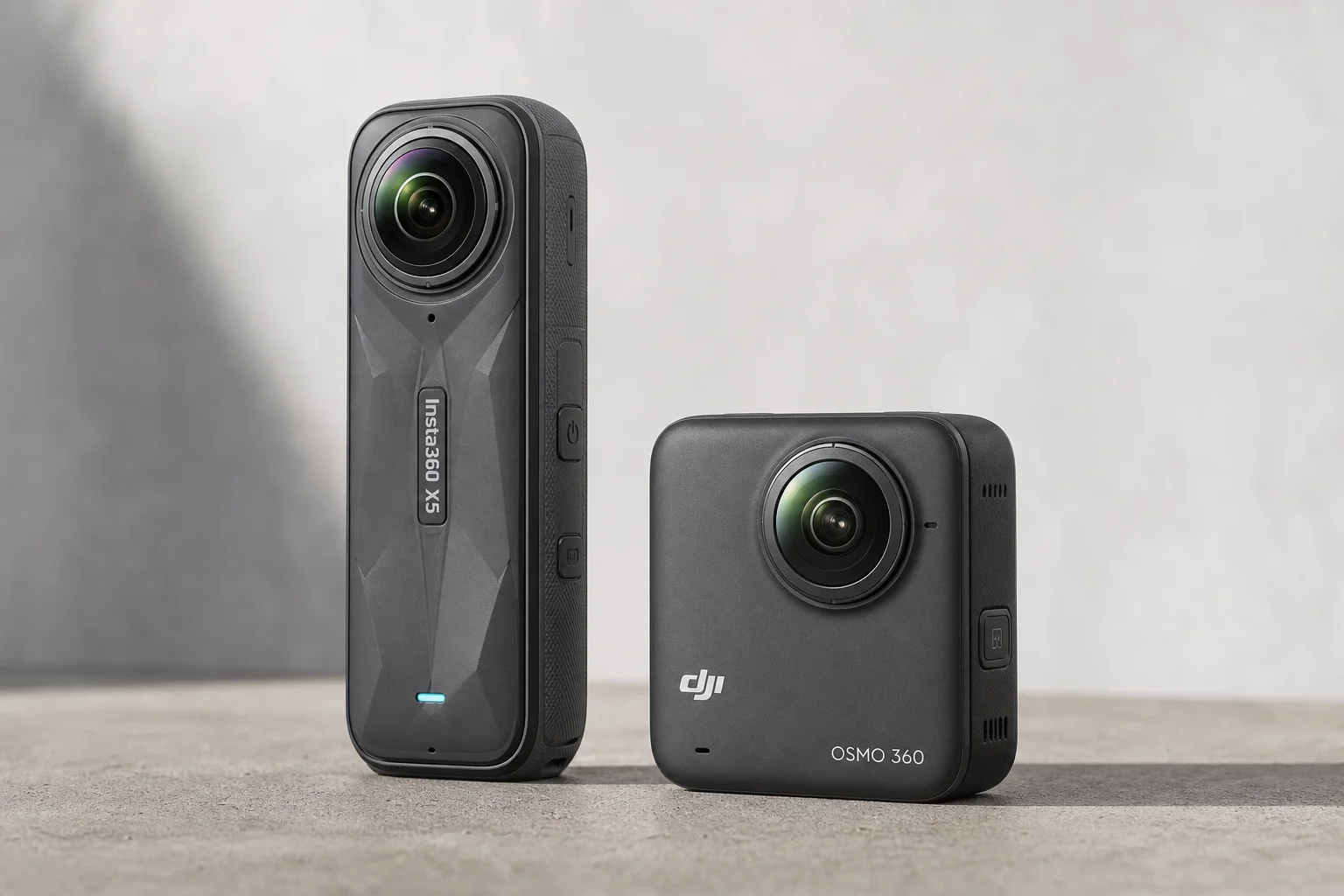
360 Cameras for Adventure Motorcycling: Insta360 X5 vs DJI Osmo 360
Two 360-degree action cameras designed for off-road and adventure riding. A detailed comparison of features, stabilization, and real-world performance for motorcycle touring.
Action Cameras
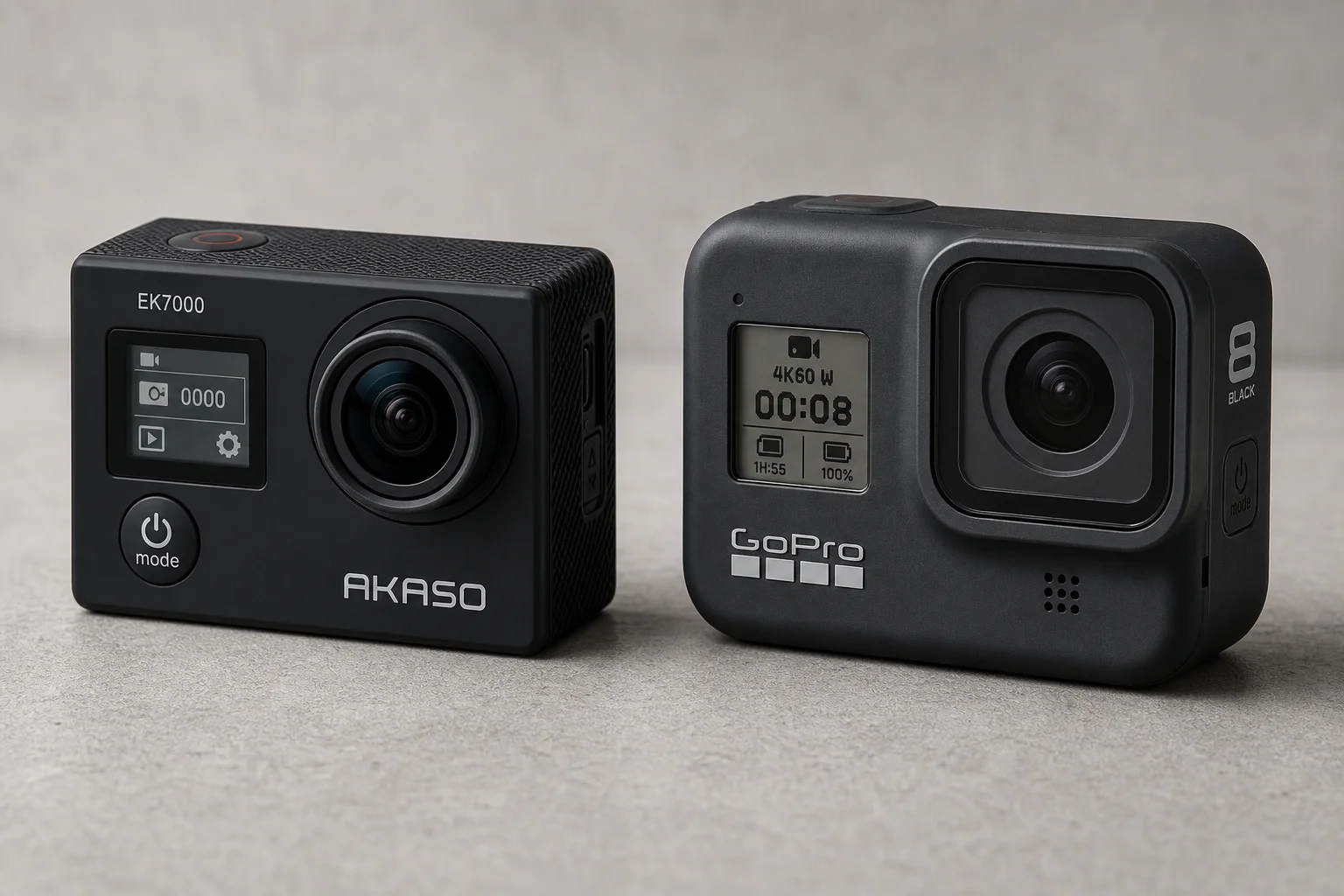
Akaso EK7000 vs GoPro Hero 8 Black: Budget Action Camera Tested
A $50 budget action camera faces off against the GoPro Hero 8 Black. Here's how the Akaso EK7000 really performs in video, audio, and photo quality.
Action Cameras
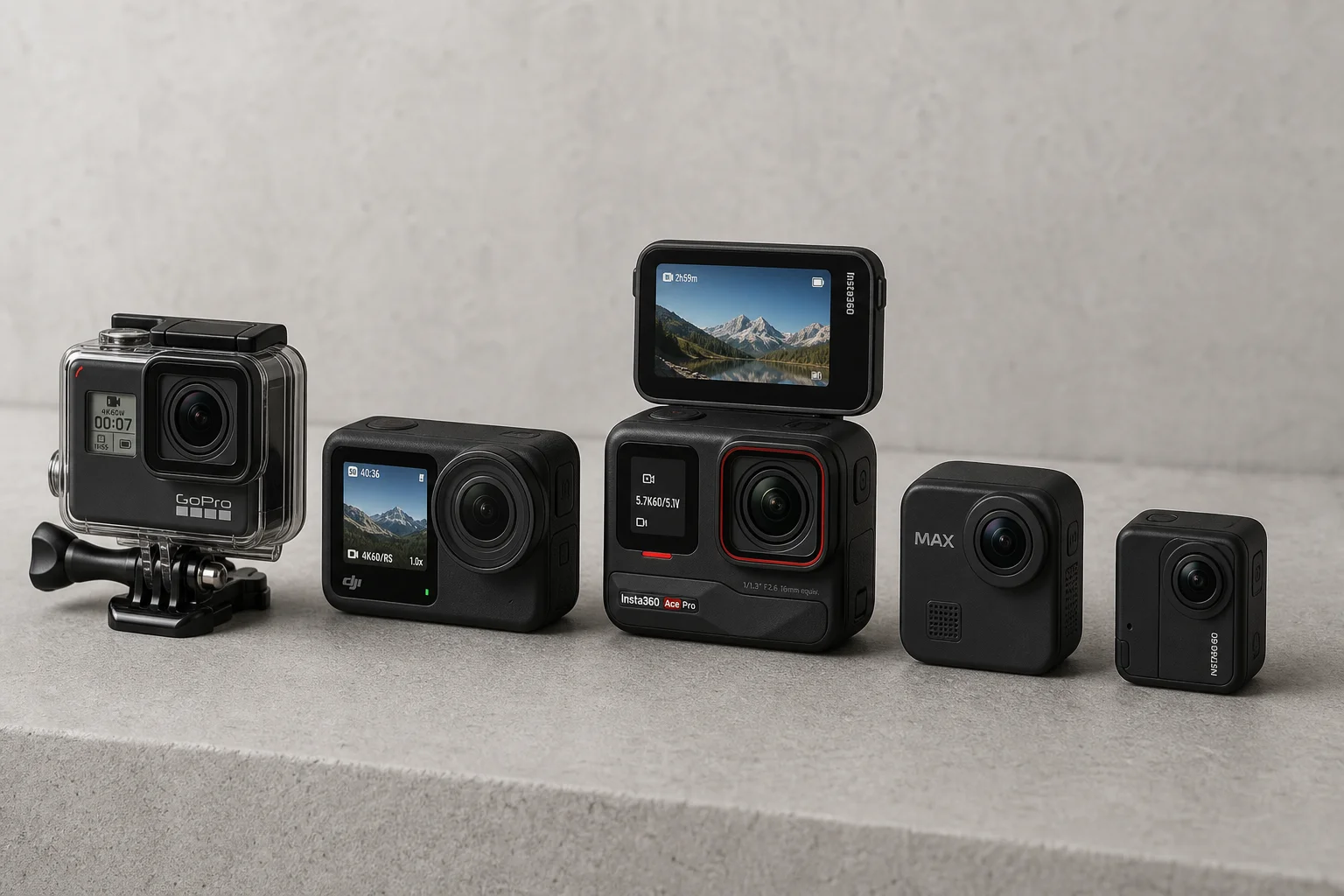
Best Action Cameras 2026: Five Top Picks Ranked
A comprehensive ranking of five action cameras from budget-friendly to premium, covering durability, video quality, stabilization, and low-light performance.