Action Cameras
GoPro Hero 11 Black Mini First Look: No Compromises, Just Smaller
The Hero 11 Black Mini packs the full Hero 11 Black imaging pipeline into a compact, Session-inspired body, trading photo mode and some features for size and simplicity.
Introduction
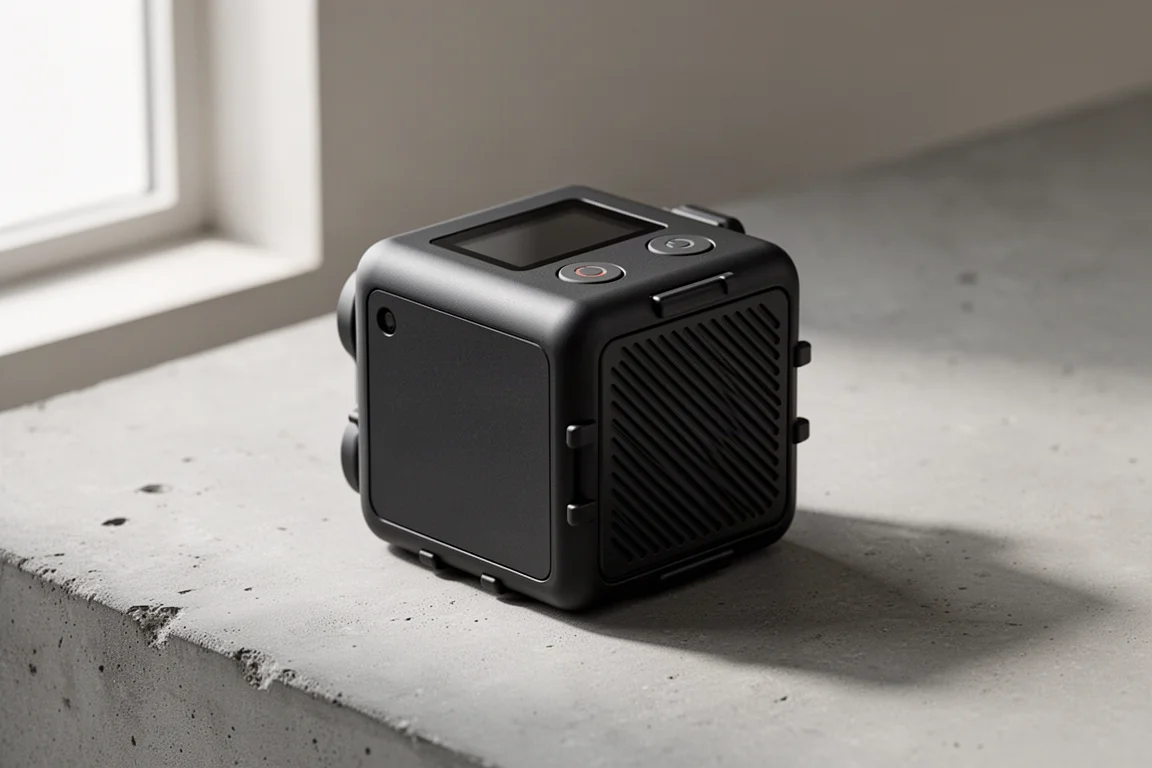
The GoPro Hero 11 Black Mini is essentially what you get when you take the Hero 11 Black and shrink it into something inspired by the old GoPro Session form factor. The idea is simple: keep everything that makes the Hero 11 Black a capable action camera, then remove the displays, the photo mode, and a few extra features to make the body smaller and lighter. This is an initial hands-on look; a full in-depth review with extensive comparison footage follows once the camera starts shipping.
Size, Weight, and Where It Fits
The Mini is clearly smaller than the Hero 11 Black, and lighter too: 133 grams versus 154 grams. It is not, however, trying to be the smallest camera on the market. Something like the Insta360 Go 2 or the DJI Action 2 main module is smaller still, but those cameras make real trade-offs to get there.
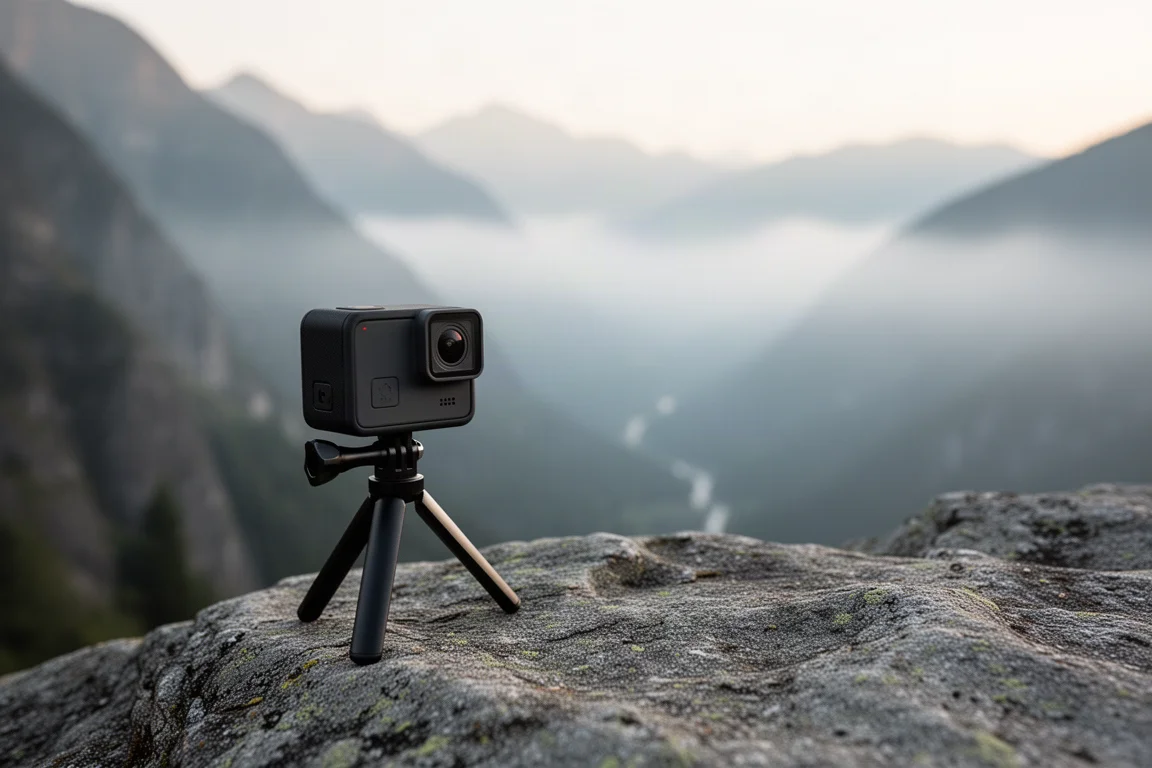
In a best-case scenario, the Insta360 Go 2 and the DJI Action 2 main module deliver less than 30 minutes of battery life, and their storage is severely limited. The Action 2 can pair with an attachable module for more battery or storage, but those modules are not waterproof in any way and leave the SD card fully exposed. The Mini, by contrast, is fully waterproof to the same rating as the Hero 11 Black, roughly 33 feet or 11 meters, and is designed for the same kind of durability as a standard GoPro. Compared with the old Hero Session, the Mini also has its mounting fingers built directly into the body, so there is no extra cage adding bulk.
Same Camera Inside
This is probably the most important part: inside, it is a Hero 11 Black. The same GP2 chipset, the same imaging pipeline, the same processing. Every video resolution on the spec sheet is supported, all the way up to 5.3K at 60fps in Hyperview and 240fps, identical to the Hero 11 Black. GoPro stressed repeatedly that they wanted a “no compromises” camera in terms of image quality, and that is likely why it is a bit chunkier than the truly tiny alternatives. TimeWarp, Time Lapse, and Night Lapse are all on board as well.
One Tiny LCD, Two Buttons
There is no front display and no rear display. Instead, a tiny LCD on the top of the camera, much like the old Session, shows which mode you are in, and two buttons let you cycle between them.
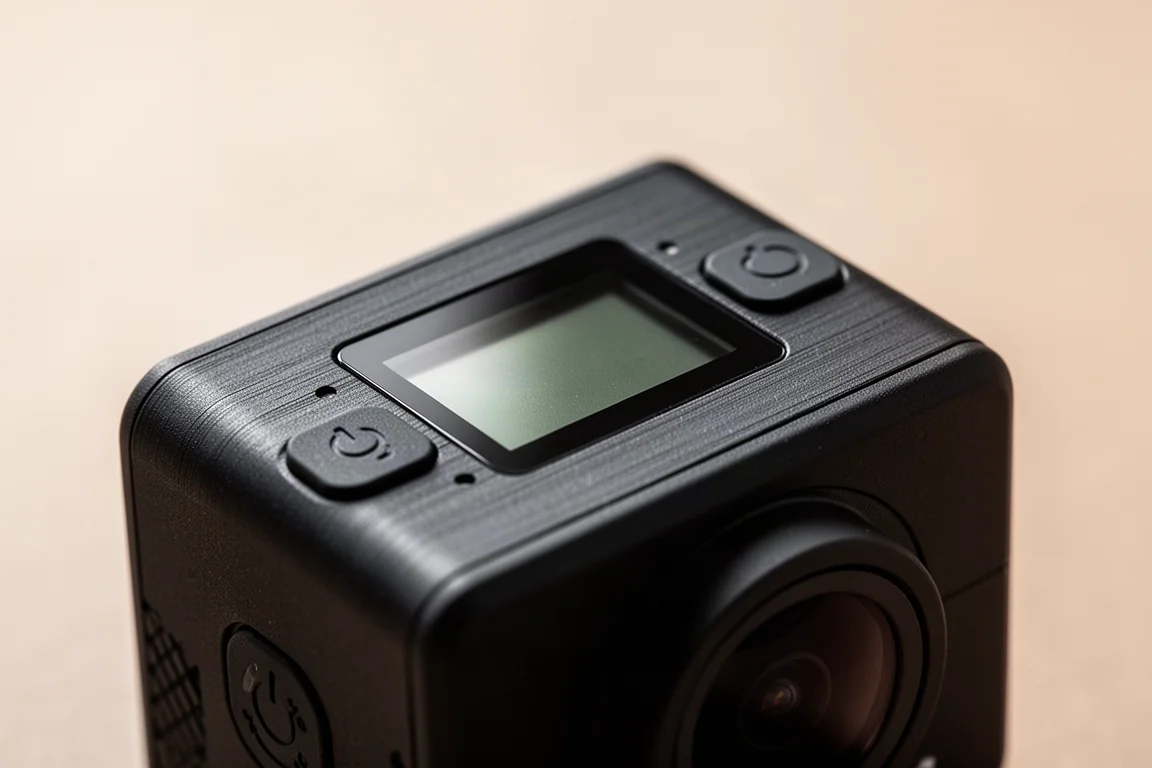
You set up custom modes ahead of time in the GoPro app, choosing your resolutions, frame rates, and digital lenses, then switch between them on the fly with the buttons. The rear of the camera is essentially a large heatsink designed to dissipate heat, and how well it does that is something to verify with proper testing once more time with the camera is possible.
Two Sets of Mounting Fingers
One easily overlooked detail: in addition to the standard mounting fingers on the bottom, the Mini has a second set on the back of the body.
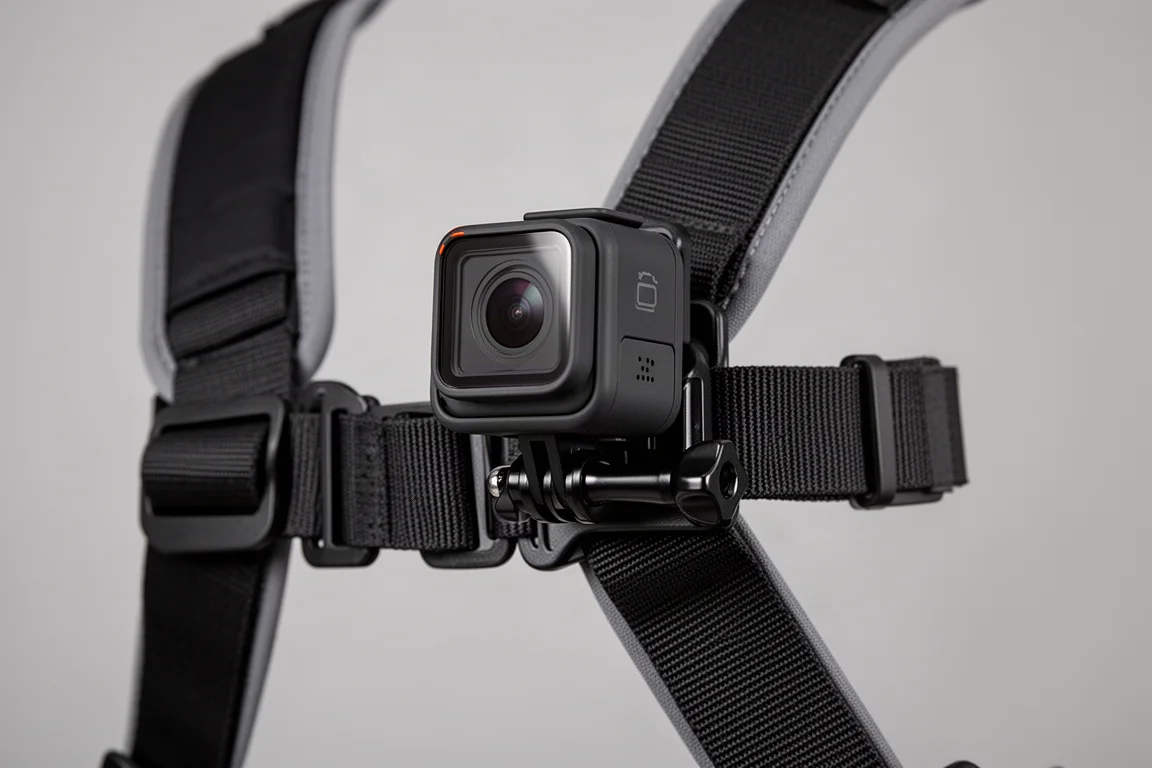
That matters for chest mounts. Normally you need an extra mount to push the camera out and up or down to get the framing you want, which is fiddly. With rear-mounted fingers you can attach it directly to a chest harness and get a better angle without adapters.
Battery: Internal, Enduro-Based, and “Perceived”
There is no removable battery. GoPro has stuffed its Enduro battery technology inside, the same tech found in the standard Enduro batteries for the Hero 9, 10, and 11, which brings better cold-weather performance. The cell itself is smaller, though: 1500mAh versus the 1720mAh of a standard Enduro. GoPro says you get roughly 10 to 15 percent less runtime than the Hero 11 Black.
The interesting counterpoint is what GoPro calls perceived battery time. Because there are no big displays burning power between recordings, only that tiny top LCD, the camera loses almost nothing when you are not rolling. On a Hero 11 Black, the dual displays stay on and drain the battery even when you are not recording. So while the number is smaller on paper, real-world usable time between charges may feel longer in practice.
What’s Missing
The trade-offs are real and worth knowing before you buy:
- No photo mode. There is no direct photo capture at all. GoPro’s bet is that most people now shoot video and pull stills from it, which at 5.3K and higher resolutions genuinely works well. But if you shoot stills directly, this is not your camera.
- No webcam mode. No tethering to a computer as a webcam.
- No Hindsight. The buffer-record feature that captures the 30 seconds before you press record is absent.
- No scheduled or duration capture, and no looping mode. Scheduled capture is arguably the strangest omission, since this compact, set-it-and-forget-it form factor seems perfect for it.
- No GPS. No speed or telemetry overlays later.
- Limited accessory support. It is fully compatible with the GoPro Max Lens Mod, and the lens shares the Hero 10’s cover, so your existing Hero 10 ND filters and removable lens setup carry over. But the Media Mod does not fit, and while the Light Mod can be used, it cannot be mounted on top directly.
Price and Availability
The Mini costs $299 with a GoPro subscription or $399 without, with the subscription baked into the cheaper price. That saves $100 compared with the Hero 11 Black. Shipping begins October 25th.
Buying Advice
That $100 gap is the crux of the decision. For many buyers, the full Hero 11 Black at only slightly more money will be the easier pick, since you keep the displays, photo mode, GPS, and the rest of the feature set. But there are plenty of scenarios where a camera that is just a bit smaller and lighter wins: tight mounting spots, chest-mounted setups, or anyone who just wants to press record and go without menus and displays.
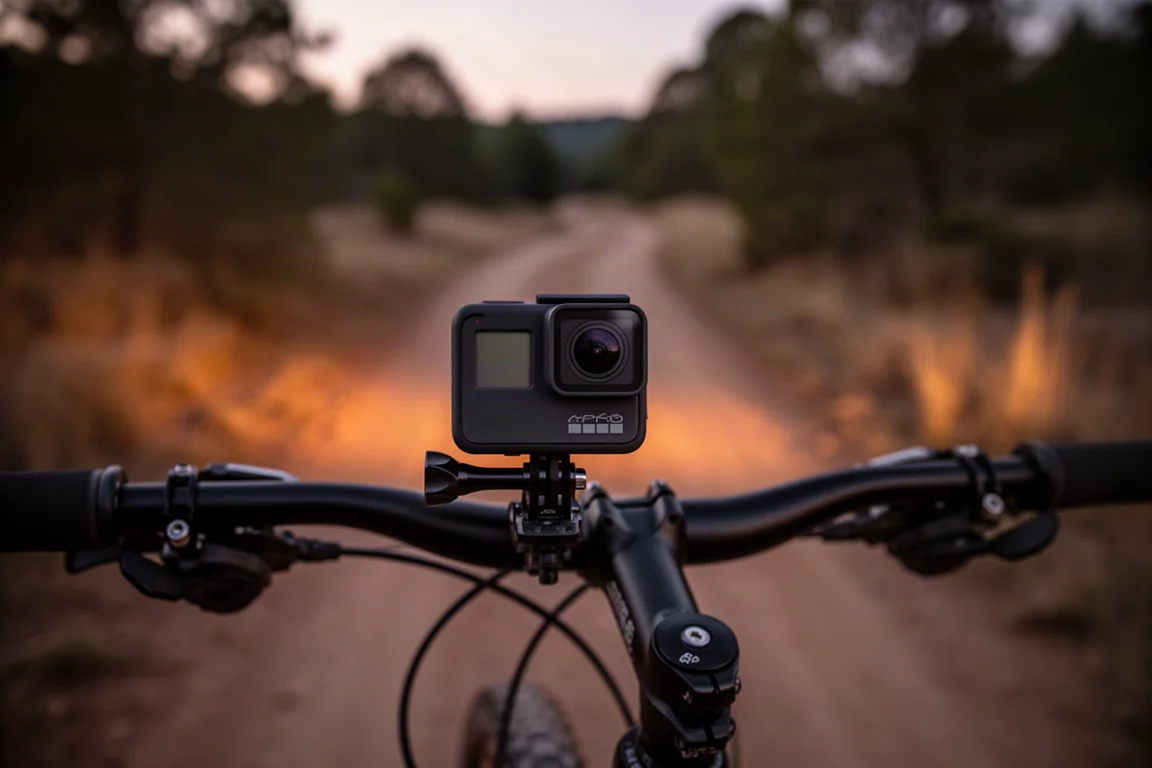
If you are considering it against the truly compact options, remember the DJI Action 2 and Insta360 Go 2 occupy a different niche. They are smaller and fun, but less full-featured, with far shorter battery life and limited storage on their main modules. The Mini sits in a useful middle ground: near-full-size capability in a noticeably smaller, fully waterproof body.
Conclusion
The Hero 11 Black Mini is a focused product: identical image quality and video modes to the Hero 11 Black, in a lighter, display-free, Session-style body. Give up photo mode, GPS, and a handful of secondary features, and you gain size, simplicity, waterproof durability, and built-in mounting flexibility. A deeper comparison review against the Hero 11 Black and other action cameras follows once the camera ships.
Product link
View more details for GoPro Hero 11 Black Mini
This product is mentioned in the review. Check the specifications, options, and compatibility before buying.
View more details for GoPro Hero 11 Black MiniFurther reading
Related Reviews
Action Cameras
360 Cameras for Adventure Motorcycling: Insta360 X5 vs DJI Osmo 360
Two 360-degree action cameras designed for off-road and adventure riding. A detailed comparison of features, stabilization, and real-world performance for motorcycle touring.
Action Cameras
Akaso EK7000 vs GoPro Hero 8 Black: Budget Action Camera Tested
A $50 budget action camera faces off against the GoPro Hero 8 Black. Here's how the Akaso EK7000 really performs in video, audio, and photo quality.
Action Cameras
Best Action Cameras 2026: Five Top Picks Ranked
A comprehensive ranking of five action cameras from budget-friendly to premium, covering durability, video quality, stabilization, and low-light performance.