Action Cameras
GoPro Hero 10 vs Hero 9: What Months of Overheating Testing Revealed
Roughly 40 stress tests across resolutions, temperatures, and airflow scenarios show exactly where the GoPro Hero 10 and Hero 9 shine and where they cut out.
Introduction
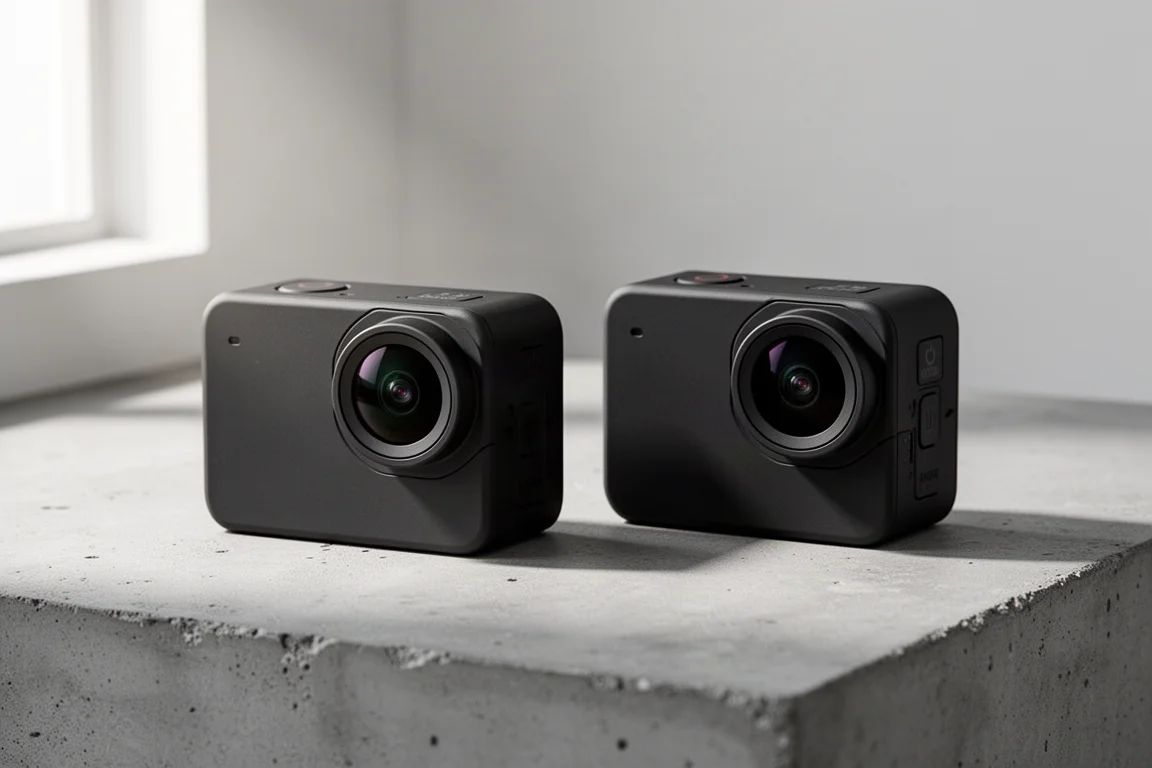
Can the GoPro Hero 10 overheat? Yes, in certain scenarios. The more useful question is how, why, when, and where it overheats, and the answer turns out to be surprisingly predictable. After roughly 40 stress tests spanning every resolution from 1080p to 5.3K, extreme heat, freezing cold, lake depths, and even a drone flight, a clear pattern emerged. And a month of everyday real-world use never triggered a single overheating shutdown.
This matters if you are choosing between the Hero 10 and the Hero 9, because the two share a battery but behave very differently depending on resolution, frame rate, and airflow.
How the Testing Was Done
The tests were split into two camps: going nowhere (no airflow) and going somewhere (airflow). Both cameras were tested indoors first; if a camera failed indoors, there was rarely a reason to test outdoors, since airflow is what changes everything. Two units of each camera were used, with batteries mixed between year-old packs and brand-new ones. Battery state was kept between roughly 94 and 100 percent, and the on-screen shutdown message made it easy to tell whether a camera died from heat or from a drained battery.
At 1080p 30 indoors, the battery lasted two hours and three minutes; at 1080p 60, one hour nine minutes. At 2.7K 60, the camera overheated after about 40 minutes of static recording. Time lapse modes showed zero overheating failures, and TimeWarp, filmed while riding in circles for an hour and ten minutes, ended with the camera cool to the touch and 31 percent battery remaining.
GoPro Hero 10: Where the Heat Line Falls
At 4K 30 in a 70-degree room, the Hero 10 overheated at almost exactly one hour. In a warmer 76-degree room, that dropped to 48 minutes. Bumping to 4K 120 in a 70-degree room cut recording to 19 minutes. But apply airflow, and overheating essentially stops: an outdoor 4K 120 test ran 29 minutes before the battery died, right around the official battery spec, and a test mounted on a drone kept recording through the entire flight.
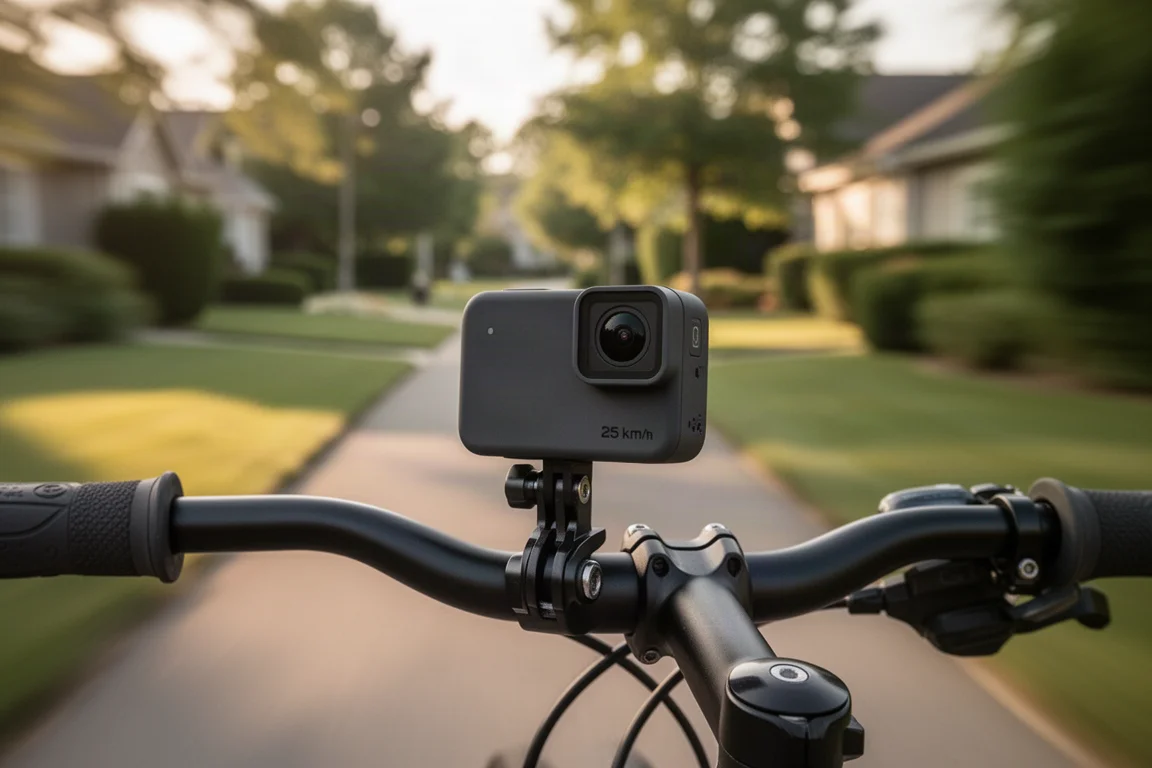
The 5.3K results follow the same logic. At 5.3K 60, the highest the camera can shoot, a static environment kills it in roughly 20 minutes, give or take a few depending on room temperature. At 5.3K 30, it reaches about an hour before overheating, not far from the battery’s roughly 70-minute duration. Outdoors on a bike at a modest 25 km/h, every 5.3K test died from battery, not heat, and the camera felt warm but never hot.

Underwater and Dive Case Testing
A common worry is that a dive housing traps heat and cooks the camera. In practice, the opposite happened. One Hero 10 in a dive housing and one without were dropped to the bottom of a lake on a rope, and both died from battery, not overheating. The cool lake water acts as a giant heatsink, pulling heat away from the housing the entire time. Go deeper, and the water gets even cooler, making the effect stronger.
GoPro Hero 9: The Baseline Comparison
The Hero 9 was included in the same battery of tests as a comparison point, running the identical static and moving scenarios at each resolution. While the full hour-by-hour breakdown leans on the Hero 10’s newer processor, the Hero 9 shares the same battery and the same fundamental physics: no airflow plus high resolution plus long recording is where trouble starts. For riders and creators shooting at more moderate settings, or using the camera in moving scenarios, the Hero 9 remains a dependable option at a lower entry price.
The 100-Degree Stress Test
To simulate desert-level heat, a bathroom was heated past 100 degrees Fahrenheit with a space heater, and two cameras were placed on either side of a glass partition, one with a small fan producing a light breeze, one with none. At 5.3K 60, the unit with airflow lasted about the usual 21 minutes. At 5.3K 30, the unit with airflow lasted 36 minutes before the battery shut off. The unit without airflow lasted 23 minutes and 31 seconds at that peak temperature, an impressively long stretch given that most phones would quit well before that on a hot beach.
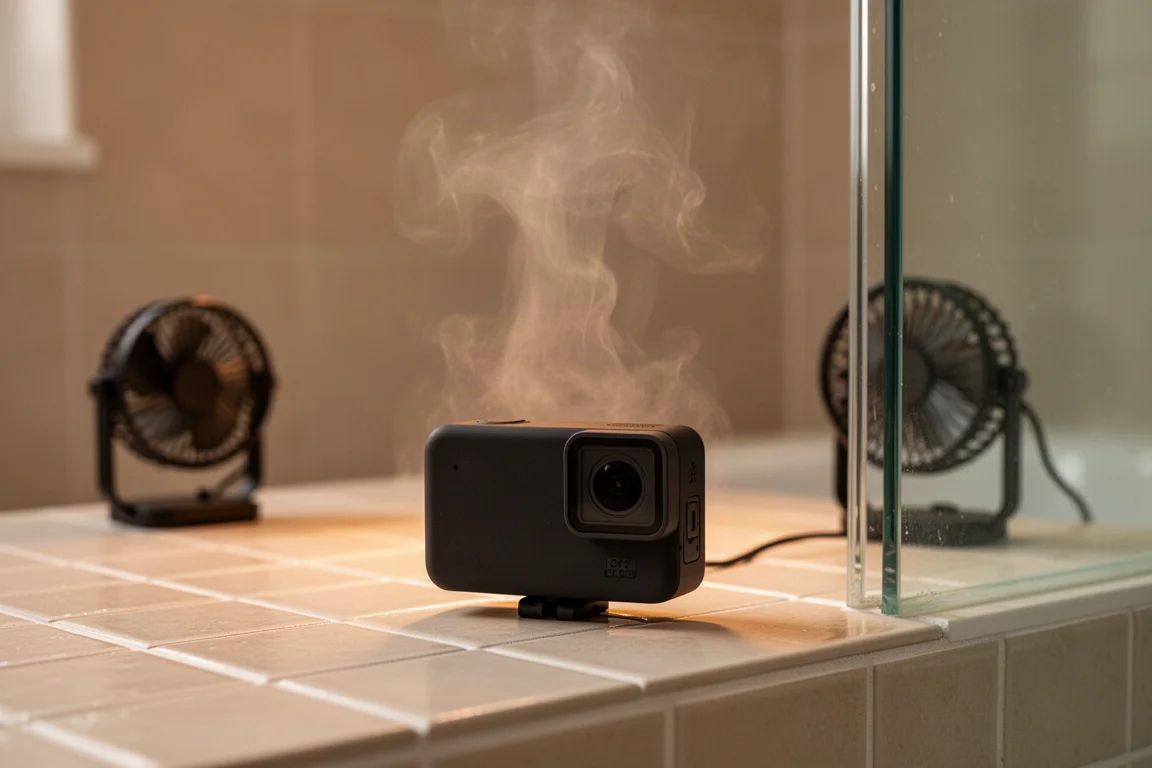
Two more interesting caveats: removing the battery door added only a couple of extra minutes at 5.3K 60, but removing the battery entirely and running from USB power pushed 5.3K 60 all the way to 55 minutes. In cold environments like a freezer, battery death came first at 44 minutes, with no overheating at all.
Buying Advice
The summary is simple. As long as the Hero 10 has some airflow, even hot moving air, it will mostly be fine. You probably cannot shoot 5.3K 60 forever in the desert sun, but you can shoot 5.3K 30 more or less indefinitely as long as you are moving. In a no-airflow environment, whether indoors or on a car dashboard, the highest resolutions and frame rates are simply not sustainable.
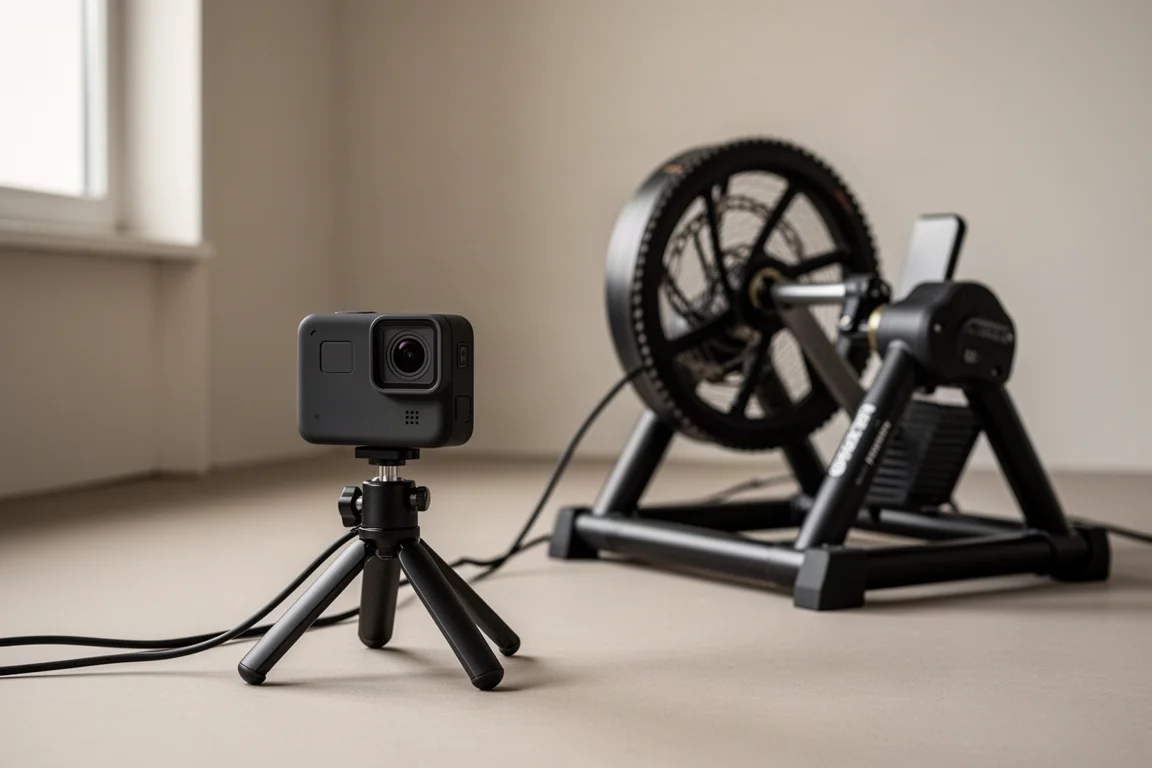
A practical rule for indoor shooting: stick to 30 fps, and if a single shot will run longer than 40 minutes, drop from 5.3K 30 to 4K 30. If your core use case is nonstop hour-long 5.3K 60 recording in a windless room, no current action camera handles that well, so it is worth balancing which settings you actually need against what the market offers. It is also worth knowing that GoPro is aware of the longer-recording overheating issue and is working on something it is not ready to detail yet, potentially including clearer user guidance or options that trade some features for longer recording times.
Conclusion
Neither camera is defined by overheating; both are defined by context. Move through the world with them and they keep rolling until the battery runs dry. Bolt them to a dashboard or leave them static at maximum resolution, and the limits show up fast. Match your settings to your scenario, and the GoPro Hero 10 is a genuinely capable flagship while the Hero 9 remains a solid value for less demanding shooting.
Product link
View more details for GoPro Hero 10
This product is mentioned in the review. Check the specifications, options, and compatibility before buying.
View more details for GoPro Hero 10Further reading
Related Reviews
Action Cameras
360 Cameras for Adventure Motorcycling: Insta360 X5 vs DJI Osmo 360
Two 360-degree action cameras designed for off-road and adventure riding. A detailed comparison of features, stabilization, and real-world performance for motorcycle touring.
Action Cameras
Akaso EK7000 vs GoPro Hero 8 Black: Budget Action Camera Tested
A $50 budget action camera faces off against the GoPro Hero 8 Black. Here's how the Akaso EK7000 really performs in video, audio, and photo quality.
Action Cameras
Best Action Cameras 2026: Five Top Picks Ranked
A comprehensive ranking of five action cameras from budget-friendly to premium, covering durability, video quality, stabilization, and low-light performance.