Camping Tarps
Gopher Tarp Review: Light, Compact, and Best Used on Its Own
A lightweight 9 ft 6 in by 6 ft 8 in tarp that packs down small and pitches fast, with strong guy lines and a weak set of stakes. Best treated as personal cover for one or two people rather than a roof over a tent.
Introduction
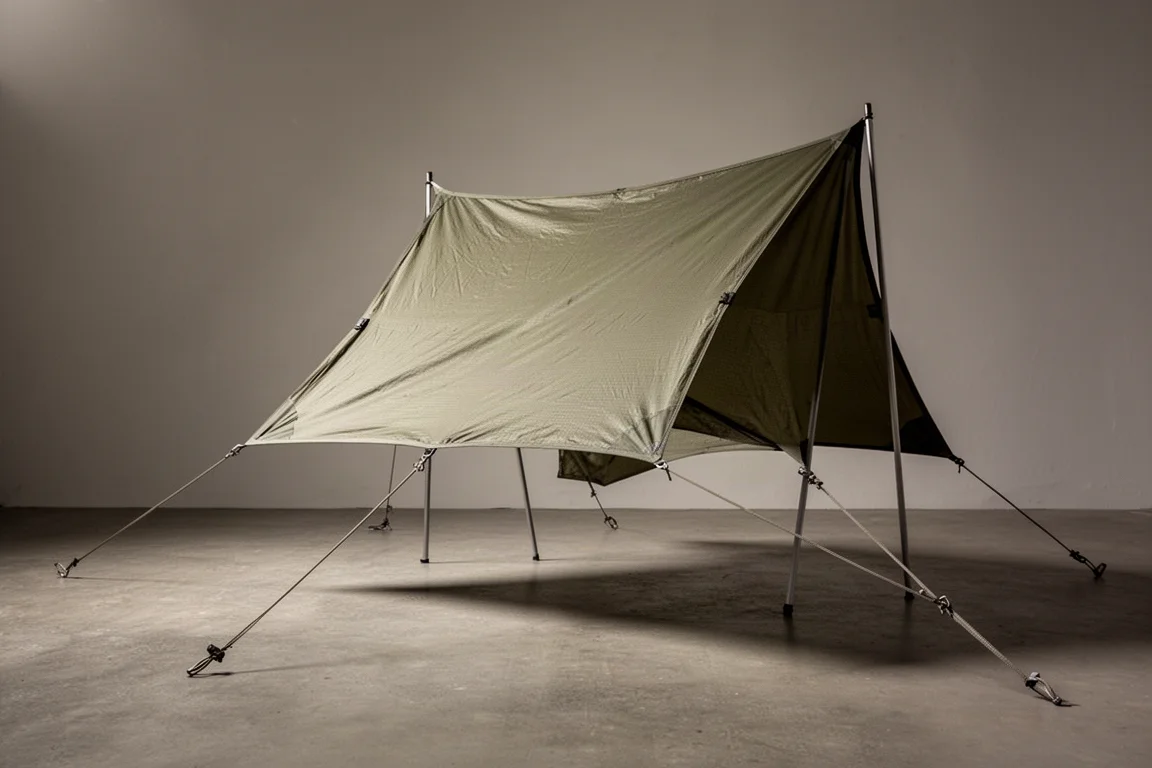
The Gopher tarp is a lightweight camping tarp built for fast, simple cover. Pitched, it measures 9 ft 6 in by 6 ft 8 in. Packed, it collapses into a 13 in by 5 in by 5 in bundle that weighs 1.6 lb including the guy lines, stakes, and storage bag. The manufacturer positions it as a companion to its own bug net shelter and as a general purpose tarp for vehicle based trips, and it is listed at around $74.
That combination of low weight and small packed size is the headline. A tarp this light is easy to justify carrying on day hikes and short trips, and the packed bundle is close in size to a one liter water bottle.

The question worth answering before buying is not whether the tarp is well made. It is whether this size suits the way you plan to use it, because a tarp of this footprint behaves very differently as standalone cover than it does as a roof over another shelter.
What Comes in the Package
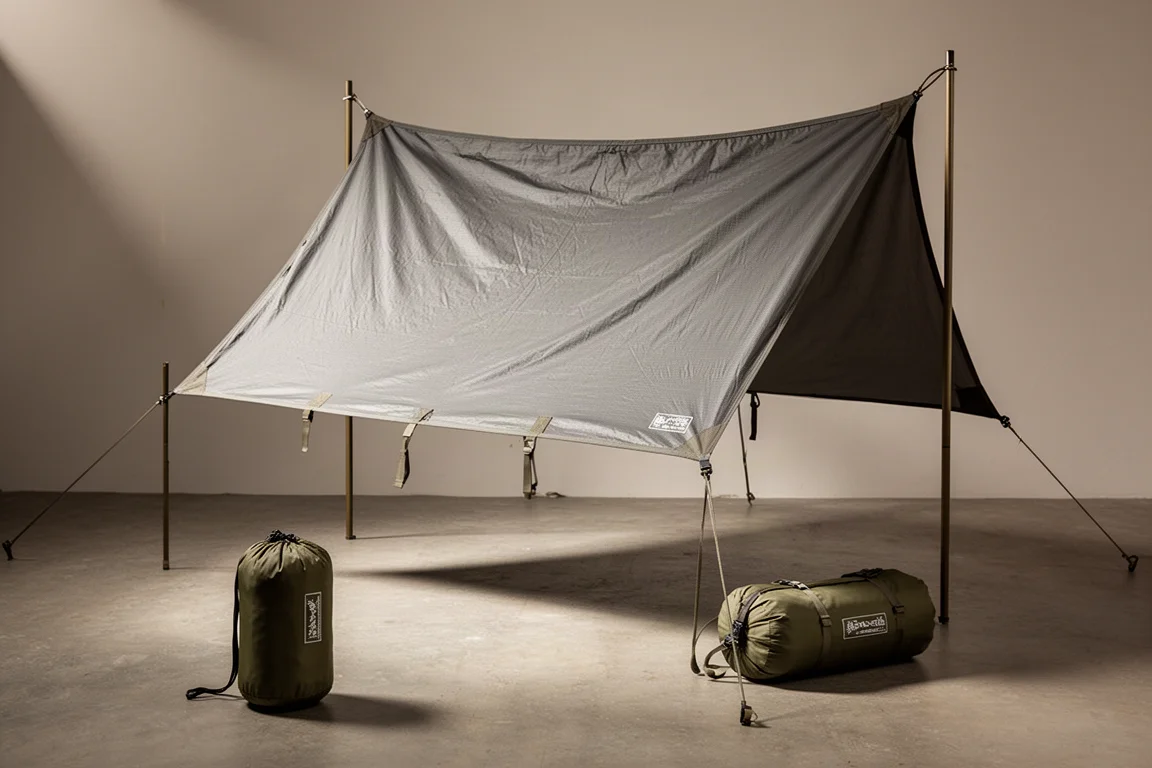
The tarp arrives in a storage bag with two compression straps and a drainage hole, a detail that makes it easy to cinch the bundle down and let trapped water escape.
Inside the bag you get the tarp itself, six guy lines, and eight tent stakes. The guy lines are a genuine highlight: the cord is good quality and the adjusters hold tension well. The stakes are the opposite. They are plastic screw in stakes that have to be twisted into the ground rather than pushed, and they hold poorly in hard or compacted soil. Replacing them is the first upgrade most buyers should make.
The seams are taped, and the panel layout is unusual for this size. Instead of a single seam running down the center, the seams sit to either side, so the canopy is assembled from several panels. It is a different approach, and the taped seams keep the finished build looking tidy.
Who This Tarp Is For
This tarp is at its best as direct cover for one or two people. A day hike, a lunch stop, an unexpected storm, or a stretch of strong sun are all situations where a tarp this light and this quick to pitch earns its place in a pack. It also suits overnight trips where you use the tarp to keep yourself and a companion dry while a tent is pitched separately nearby.
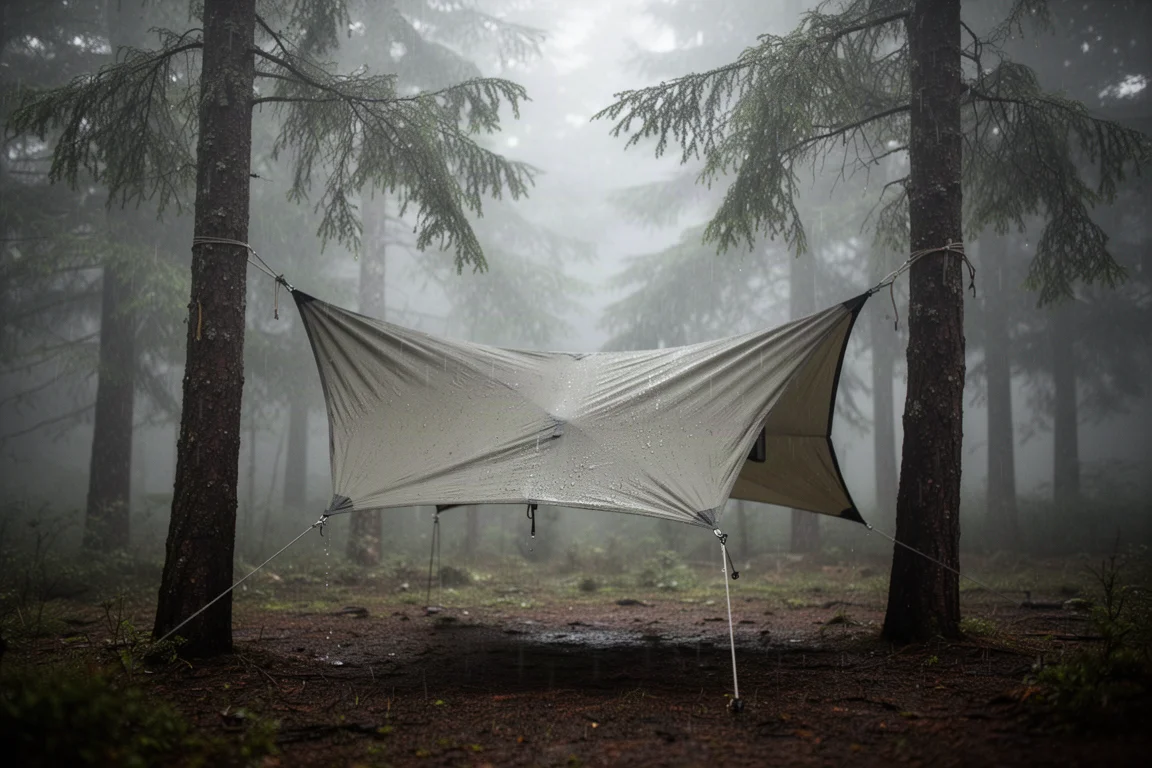
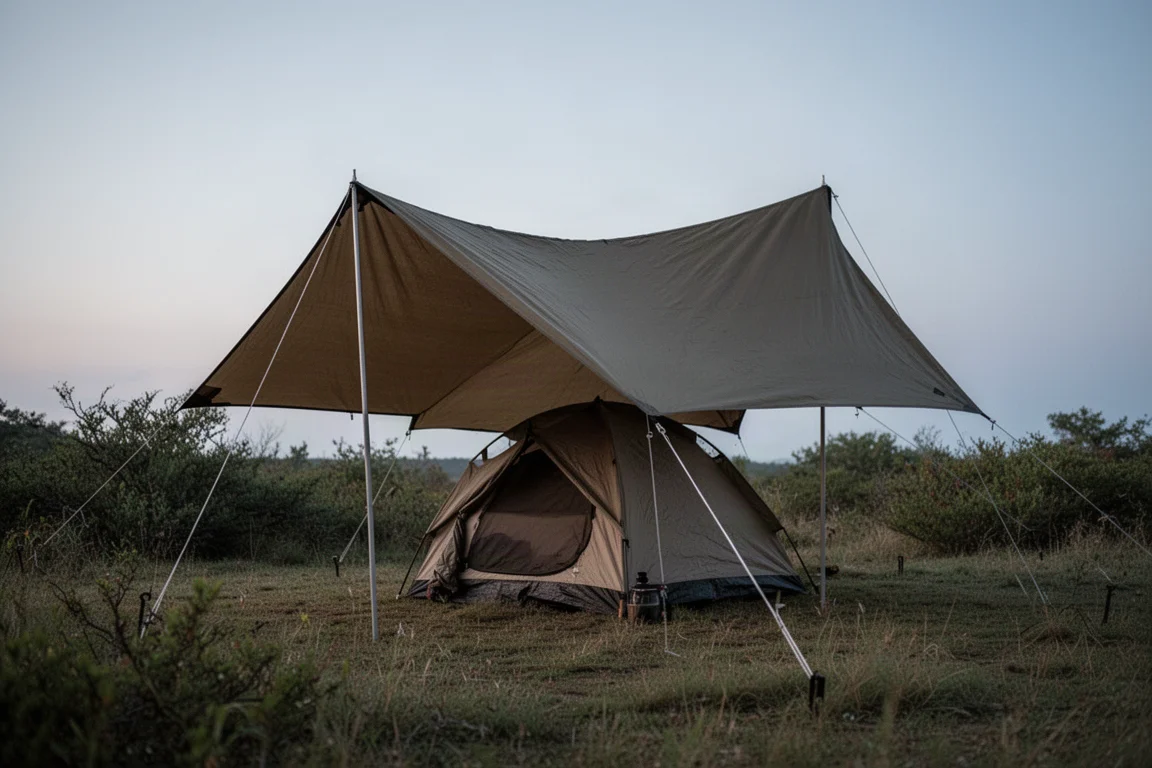
It is not the right choice for covering a shelter. The footprint is too small to act as a roof over a tent or a sleep system, and the suggestion that it pairs with the matching bug net shelter does not hold up in wet weather. That shelter barely fits underneath, which leaves no overhang. Rain running off the edges would land close to the walls, splash back under the canopy, and wind driven rain and mist would find their way in regardless.
Main Strengths
Weight and packed size are the strongest arguments. At 1.6 lb with all accessories and a 13 in by 5 in by 5 in bundle, the tarp is easy to justify carrying. The storage bag is thoughtfully made, with compression straps and a drainage opening that most bags at this price do not bother with.
The hardware that matters most is also good. Six guy lines with reliable adjusters give you enough anchor points to pitch the tarp taut, and the ten perimeter attachment points around the edge, including the corner points and two points along the center line on each side, open up several pitching options.
Construction quality looks solid and the seams are taped. The price is reasonable for what you get, and there is no obvious corner cutting in the fabric or the stitching.
Things to Consider Before Buying
The tent stakes are the clearest weak point. They are plastic, they screw into the ground instead of driving in, and they are difficult to set in hard soil. Working them in by hand is uncomfortable, and they do not hold well once they are seated.
The material specification is thin on detail. The manufacturer describes the fabric as a 70 denier hybrid ripstop, and the base fabric appears to be nylon, but the make up of the reinforcing grid is not stated. More importantly, no hydrostatic head rating is given, so there is no published figure for how much water pressure the fabric can resist.
Two design choices are worth noting. There is no attachment point at the top center of the tarp, which limits some pitching configurations. Inside, there are nine hanging points along each side seam for gear, but none along the center, so interior organization stays simple.
The size is the main limitation. Used over a shelter, the tarp has to sit low to the ground to offer any protection at all, which leaves almost no headroom and forces you to crouch underneath.

Buying Advice
Buy the Gopher tarp if you want a light, compact sheet of cover for one or two people: day hikes, storm shelter on a lunch break, sun protection, or a dry spot for you and a companion while a tent sits pitched elsewhere.
If your goal is to protect a shelter underneath, look at a larger tarp instead. A 13 ft by 10 ft tarp gives enough overhang to keep driving rain, splash back, and wind blown mist off the walls of a tent, which this footprint simply cannot do. Anyone planning to pair a tarp with a bug net shelter should budget for that larger size rather than this one.
For standalone use, the tarp does nothing obviously wrong. The weight, packed size, storage bag, and guy lines are all strong, and the stakes are an inexpensive fix.
Conclusion
The Gopher tarp is a well made, genuinely light tarp that is easy to carry and quick to pitch. Its limits are clear and predictable: the stakes should be replaced, the waterproof rating is not published, and the footprint is too small to shelter a tent. Treat it as personal cover for one or two people rather than a roof for a shelter, and it makes a sensible addition to a day pack or a short trip kit.
Product link
View more details for Gopher Tarp
This product is mentioned in the review. Check the specifications, options, and compatibility before buying.
View more details for Gopher TarpFurther reading
Related Reviews
Camping Tarps
Aqua Quest Defender vs Safari 20x13: Which Large Tarp Fits Your Setup?
A side-by-side look at Aqua Quest's two 20 ft by 13 ft tarps: the 9.2 lb, 20,000 mm Defender and the 4.5 lb, 5,000 mm Safari, plus sizing, setup, and warranty details worth knowing.
Camping Tarps
AquaQuest Guide Series Tarp 13 ft x 10 ft Review: Light, Waterproof, Storm Ready
A detailed look at the AquaQuest Guide Series 13 ft x 10 ft tarp, covering its 5,000 mm waterproof rating, 1 lb 6.3 oz weight, 17 tie-off points, and the trade-offs worth knowing before buying.
Camping Tarps
Fjällräven Abisko Tarp Review: Premium Ultralight Materials, Unreliable in Rain
The Fjällräven Abisko Tarp pairs a 1.1 lb packed weight with 40D silicone-treated nylon, but long-term testing found it leaks in steady rain and sags badly once wet.