Floorstanding Speakers
GoldenEar T66 Review: A Slim Floorstander With Serious Low-End Weight
The GoldenEar T66 pairs a folded ribbon tweeter with active subwoofers inside a 49-inch tower that is only 6 inches wide. Here is what it does well and what to weigh before buying.
Introduction
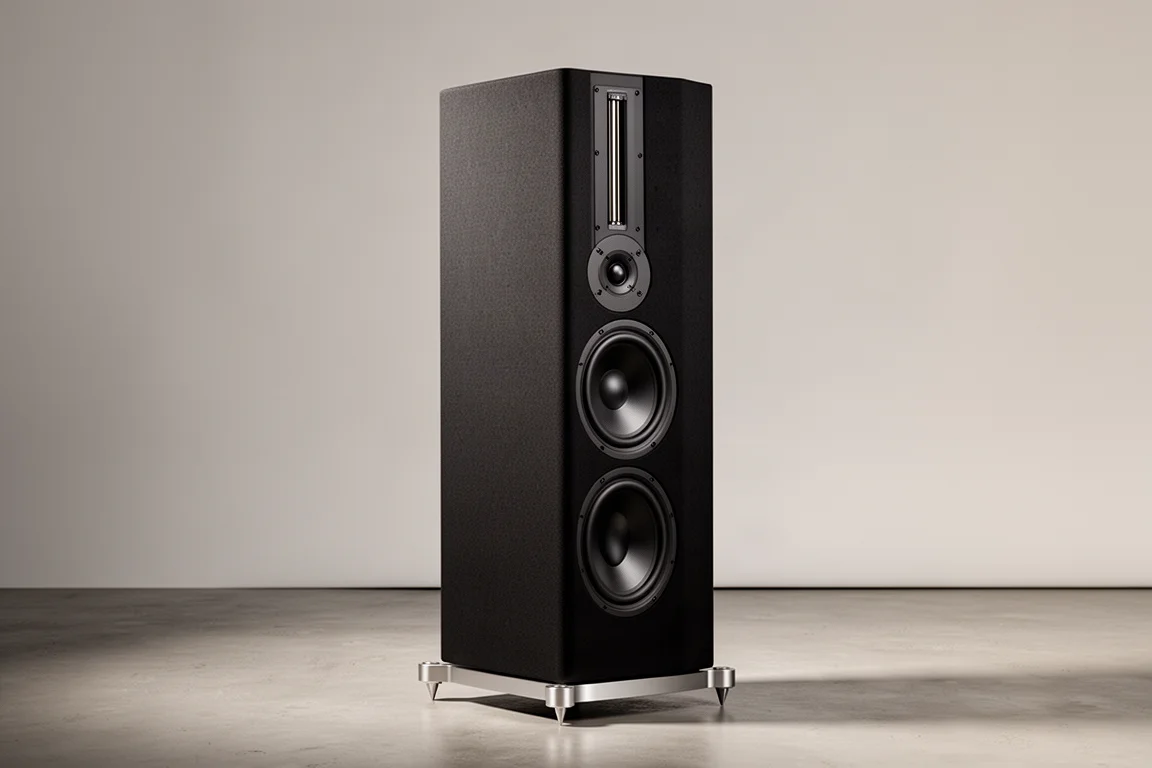
The GoldenEar T66 is the debut model in the company’s T-Series line, arriving while the existing Triton range continues alongside it. It is a three-way floorstander that stands 49 inches tall yet measures only 6 inches across the front, so it occupies far less floor space than its height suggests.
Its most distinctive feature is how it handles the low end. Instead of asking the midrange drivers to carry bass duties, the T66 fits a pair of active subwoofers onto the front baffle and drives them with a DSP-controlled 500-watt Class D amplifier. Passive planar drivers on both side panels augment those subwoofers. GoldenEar rates the speaker down to 30 Hz, and in use it produced clean, smooth output at that limit.
Setup was notably straightforward. Repositioning over roughly half an hour was enough to get the speakers locked into the room, which is quick work for a full-size tower.
Who This Speaker Is For
The T66 is aimed at listeners who want genuine full-range bass from a pair of towers without adding a separate subwoofer. Because the subwoofers are active and there is a dedicated 0.1 channel RCA input on the back, it also fits a home theater setup where the speaker can be fed a dedicated low-frequency channel.
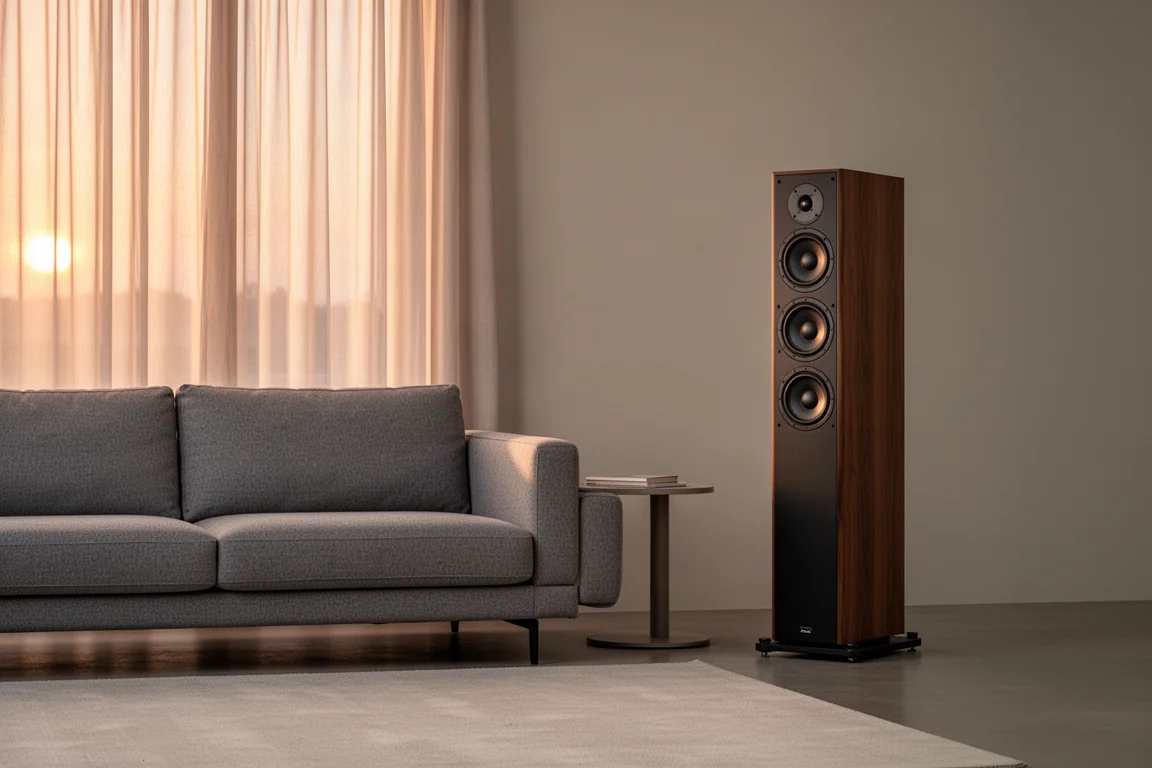
It suits people who listen at low volumes late in the evening. The T66 stays satisfying when the volume is turned well down, so there is no need to push the level up before the bass and body arrive. Its narrow front baffle also helps in rooms where a wide cabinet would take over the space.
Design, Setup, and Build Quality
Up top sits GoldenEar’s reference folded ribbon tweeter, the same style of tweeter used in the brand’s BRX stand-mount model. Below it are two 4.5-inch midwoofers with cast baskets, whose response reaches down to 128 Hz. Beneath them, on the front baffle, are the two 5 x 9 inch active subwoofers, and the 8 x 12 inch passive planar drivers on the side panels reinforce their output.
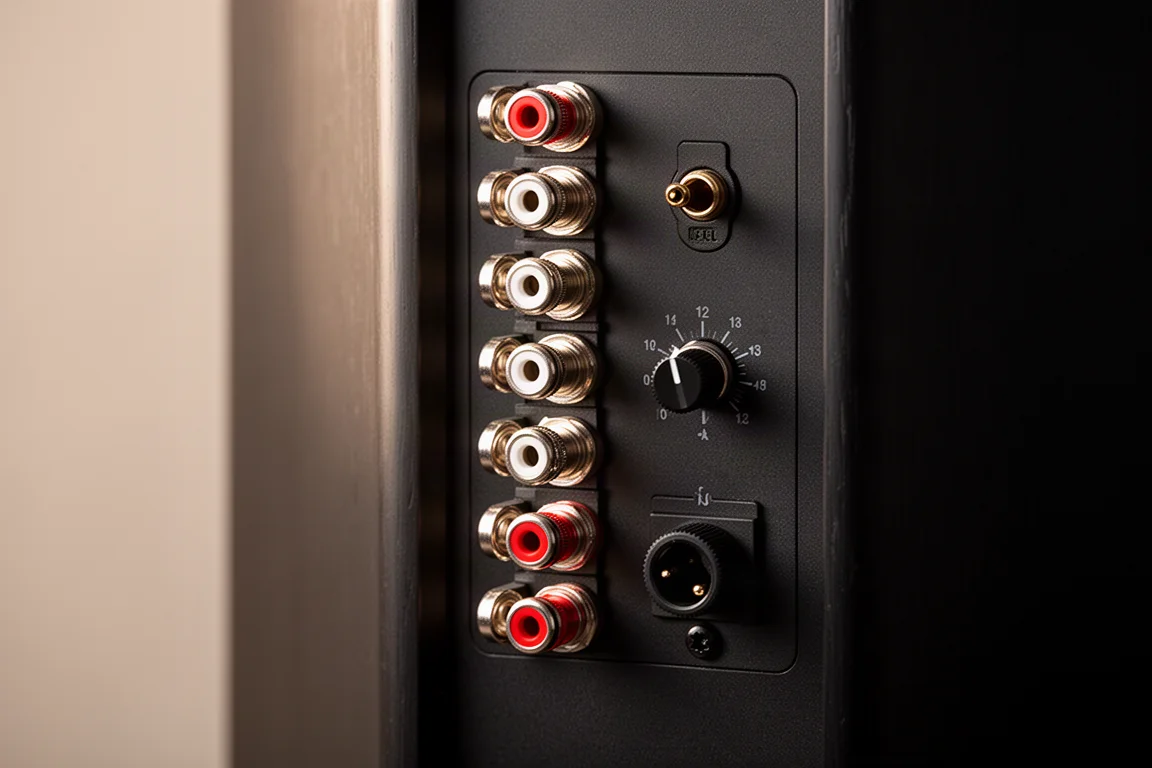
The rear panel carries a quality set of binding posts that support bi-wiring, along with the RCA input for a 0.1 channel and a knurled knob that sets subwoofer level across a wide range. The knob has a positive feel and a clear flat position at twelve o’clock. The cabinet sits on a cast aluminium frame and can be fitted with either spiked steel feet or rubber-tipped feet for hard floors. Warranty coverage runs to five years on the speakers and three years on the electronics inside them.
Two finishes are offered: standard black at $6,900 per pair, and an optional high gloss red at $7,200 per pair.
How the GoldenEar T66 Sounds
The first impression is of a big speaker. There is weight and solidity to the sound, and it stays dynamically alive without any sense of strain when the volume climbs. The soundstage is open and tall, with images that seem to float at listening height rather than rise up from the floor, and the cabinets themselves disappear from the picture.
Voices come through as full and real, with a physical presence rather than a thin, disembodied quality. On densely layered material the presentation stays layered and deep, and quieter passages remain easy to follow.
Sparsely arranged, vocal-led recordings are where the speaker makes its strongest case, and large orchestral material also holds together well. Sessions run long without fatigue, which is often the real test of a speaker at this level.
Bass Response and Amplifier Pairing
Bass has genuine physicality. The subwoofers are quick and accurate, and they blend cleanly with the 4.5-inch midwoofers rather than drawing attention to themselves as separate sources. The rear level control makes it easy to tune the low end to taste, although most listening was done with it left flat.
Amplifier matching changes the character more than the speaker’s own signature does. A solid-state amplifier kept the presentation neutral and controlled, while an output-transformerless tube amplifier added warmth and a more enveloping sense of space and depth. Both worked well, and the solid-state pairing was the more neutral reference.
How the GoldenEar T66 Compares With a Reference Speaker
Against a much larger open-baffle reference design with a 15-inch woofer and a full-range driver, the T66 came across as the faster and more articulate of the two. Transients had more bite, and brass sections in particular had more snap.
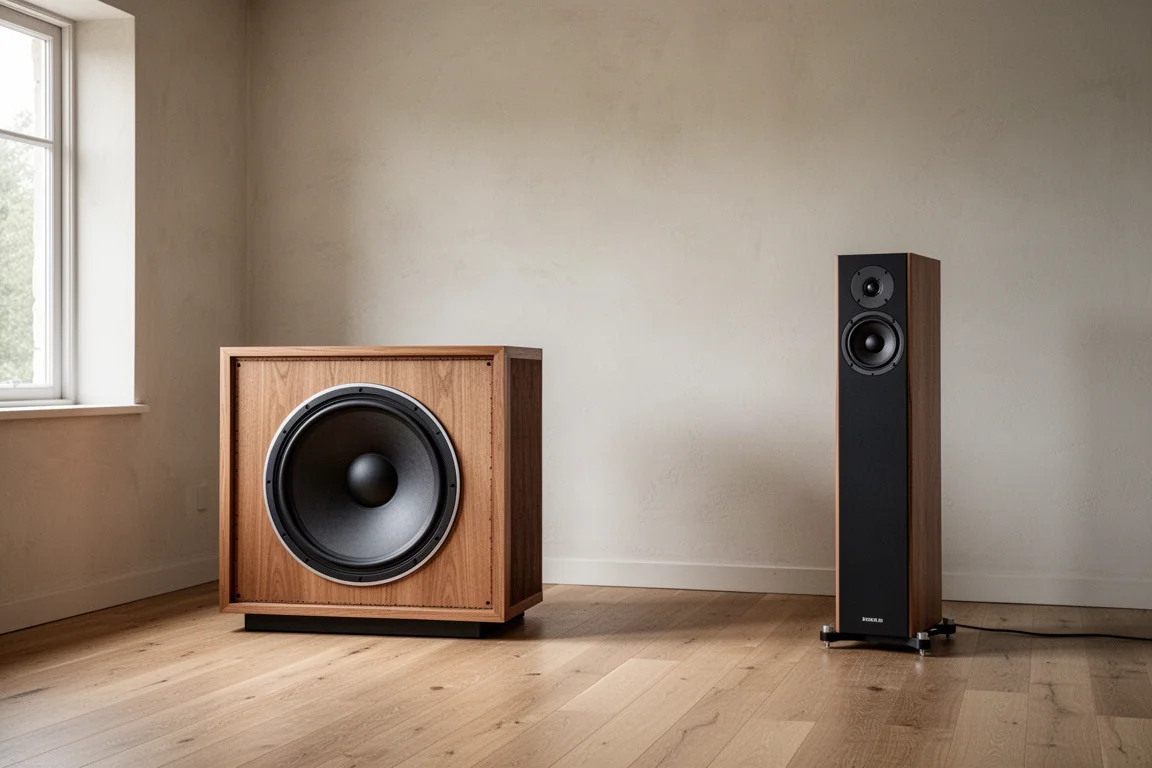
The reference speaker, being a dipole, pushes as much sound out of the back as the front, so it fills a room differently and can sound like the bigger speaker of the pair. Its bass is more sumptuous and solid, though less nimble than the T66’s. Both speakers are articulate, both keep good rhythm and pace, and both stay satisfying at low volume. The reference design has a slight edge when playing loudly, but its much wider cabinet takes over a room in a way that the 6-inch-wide T66 does not.
Things to Consider Before Buying
Subwoofer level is adjusted by hand, from a knob on the back of each speaker. There is no remote, so changes mean walking over to the speakers, and a remote would be a welcome addition.
The cabinet is narrow but 49 inches tall, so it still makes a strong visual statement in a room. The high gloss red finish adds a $300 premium over the standard black pair. The electronics inside the speaker are covered for three years, while the speakers themselves are covered for five.
Because the subwoofers are active, each speaker needs power at its position, which is worth planning for before the speakers are placed.
Buying Advice
The T66 is easiest to recommend to listeners who want one pair of towers to do everything, including the deepest bass, without a separate subwoofer and without a large footprint. Set the subwoofer level near flat and adjust from there once the speakers are positioned, since the wide range of the control means small changes go a long way.
On finishes, the standard black pair is the sensible choice unless the gloss red is worth the extra $300. Before committing, think about the amplifier you plan to use, because the difference between a neutral solid-state pairing and a warmer tube pairing was clearly audible. It is also worth deciding whether an open-baffle design’s room-filling presentation matters more to you than the T66’s speed and easy placement. If you have the space and prefer that broader, more sumptuous sound, the larger open-baffle route deserves a listen. If you want a slim tower that locks into a room quickly and stays articulate, the T66 is the stronger fit.
Conclusion
The GoldenEar T66 balances accuracy with musicality in a way that is hard to find at any size. It resolves detail and keeps a transparent, open window on recordings, and it also lets you simply enjoy the sound of the music. It is easy to place, tuneful at low volume, and capable of real low-frequency weight from a cabinet only 6 inches wide. Buyers who want that combination, and who can live without a remote for the bass level, will find a great deal to like.
Product link
View more details for GoldenEar T66
This product is mentioned in the review. Check the specifications, options, and compatibility before buying.
View more details for GoldenEar T66Further reading
Related Reviews
Floorstanding Speakers
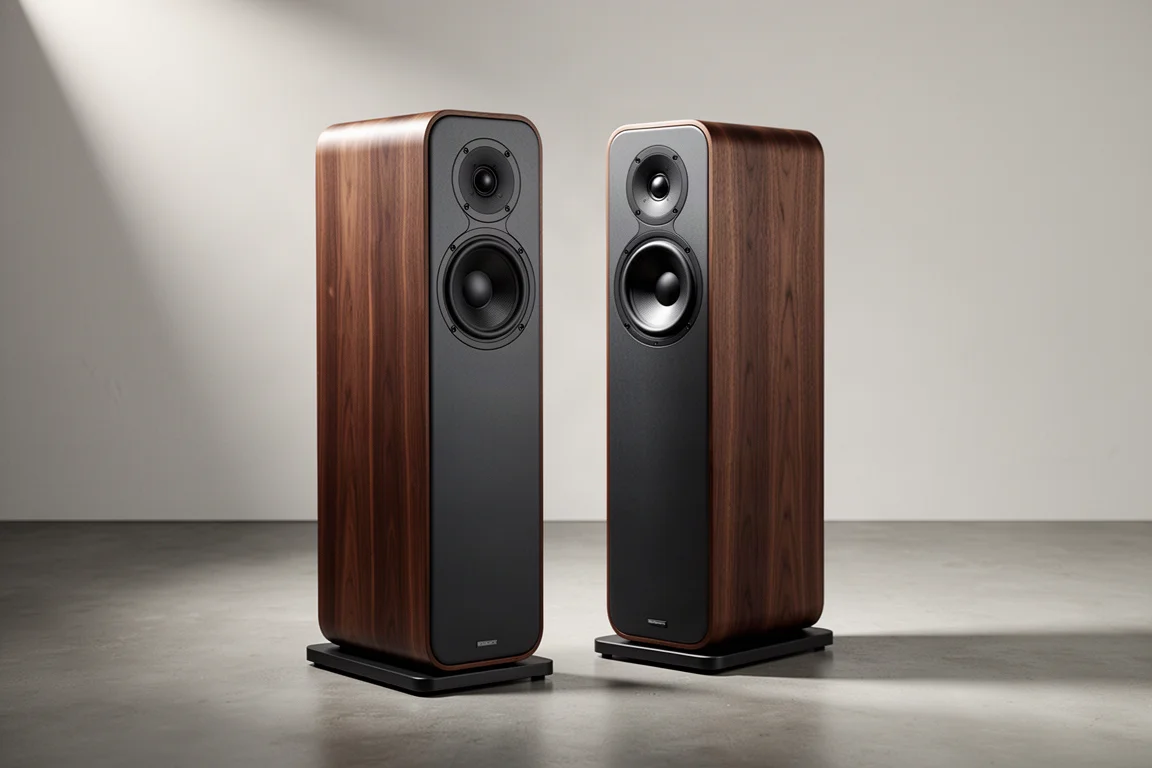
Acoustic Energy AE109 Mark II Review: A Refined Floorstander at £699
The Acoustic Energy AE109 Mark II is a slim, warm sounding floorstander that delivers clarity, midrange body and strong imaging in small to medium rooms.
Floorstanding Speakers
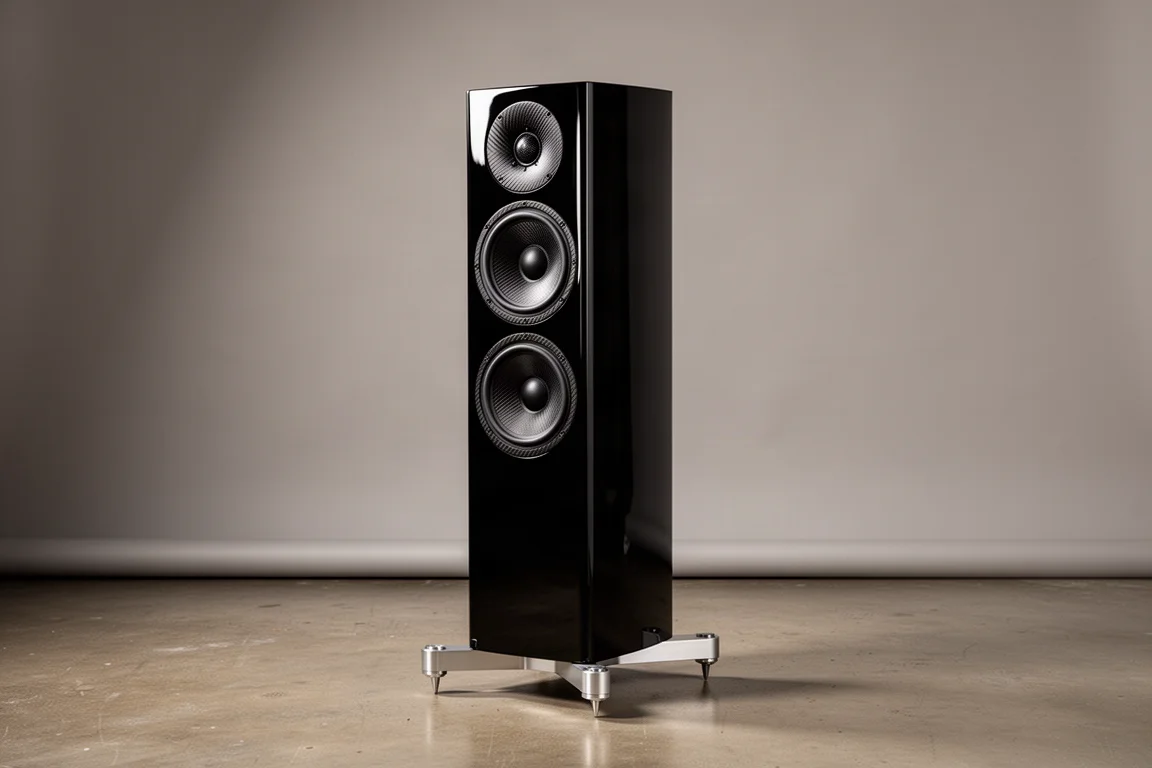
Acoustic Energy AE509 Review: A Slim Floorstander With Deep, Defined Bass
A practical look at the Acoustic Energy AE509, a slim floorstanding speaker with carbon fibre drivers, deep and well-defined bass, and an easy-going character that rewards careful system matching.
Floorstanding Speakers
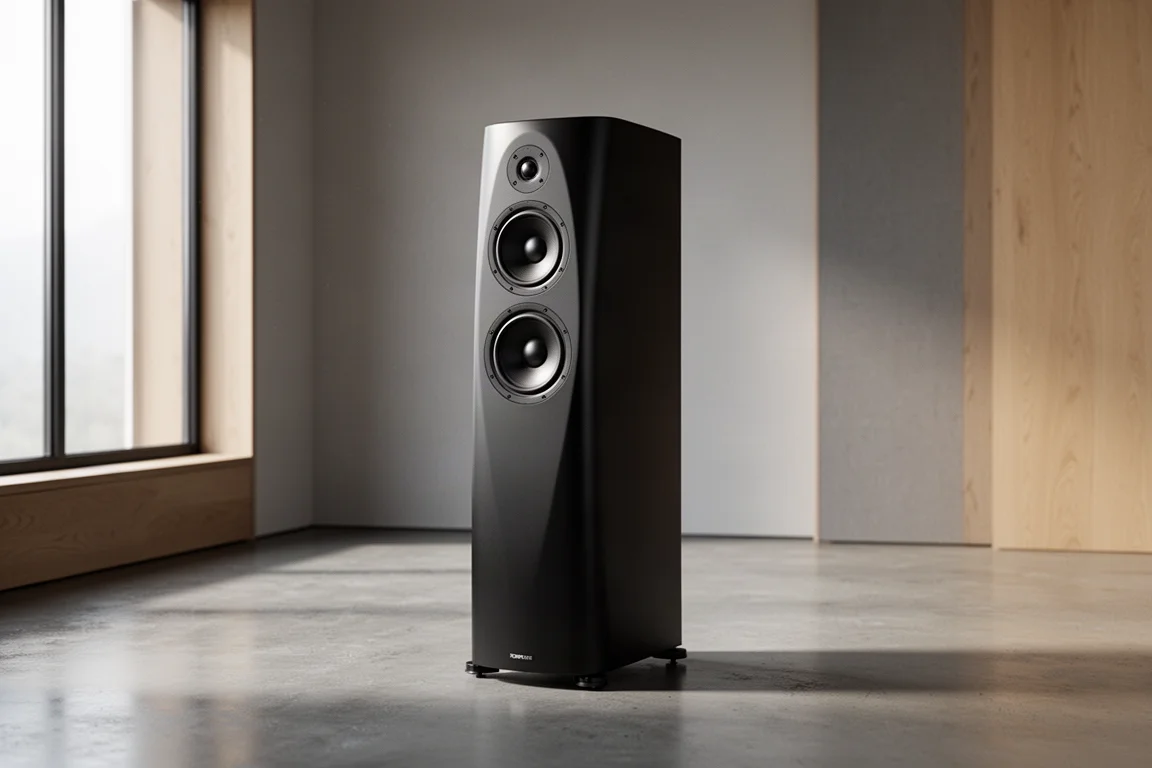
Arendal 1528 Tower 8 Review: Reference Neutrality With Real Demands
A close look at the Arendal 1528 Tower 8, a nearly five-foot, 200-pound floorstander that rewards generous space, serious power, and high listening levels with reference-grade neutrality.