Power Banks
Glide Charge Review: A Remote-Controlled Power Bank That Fits Under the TSA Limit
A 99.84Wh LiFePO4 power bank with remote-controlled outputs, 65W USB-C charging, and a price that undercuts most rivals in its class.
Introduction
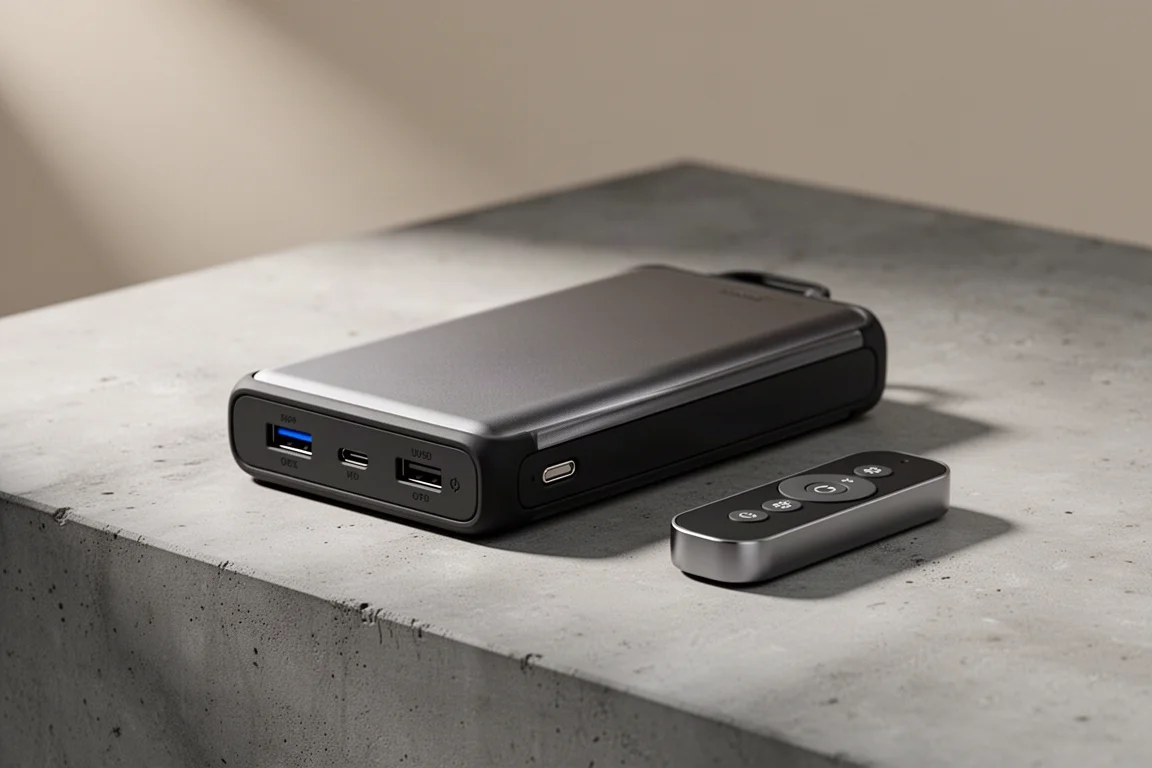
As more of daily life runs on battery-powered gear, from phones and tablets to GPS units, lighting, microphones, and cameras, portable power has become one of those categories worth paying attention to. The Glide Charge from Space Gravity stands out here for an unusual reason: it is described as the world’s first remote-controlled power bank and power station. That is a genuinely novel idea, and it comes packaged in a unit with a few other smart decisions that make it worth a closer look.
What Makes the Glide Charge Different
The headline feature is the included remote control, which can switch the unit’s two remote-controllable outputs on and off from a distance. The remote has three modes: a single press activates standby mode so plugged-in devices can be toggled remotely, a press-and-hold permanently activates the battery, and another press-and-hold shuts everything off. That means it is not just for turning things on from across a campsite; you can also kill the power instantly without walking over to the unit.
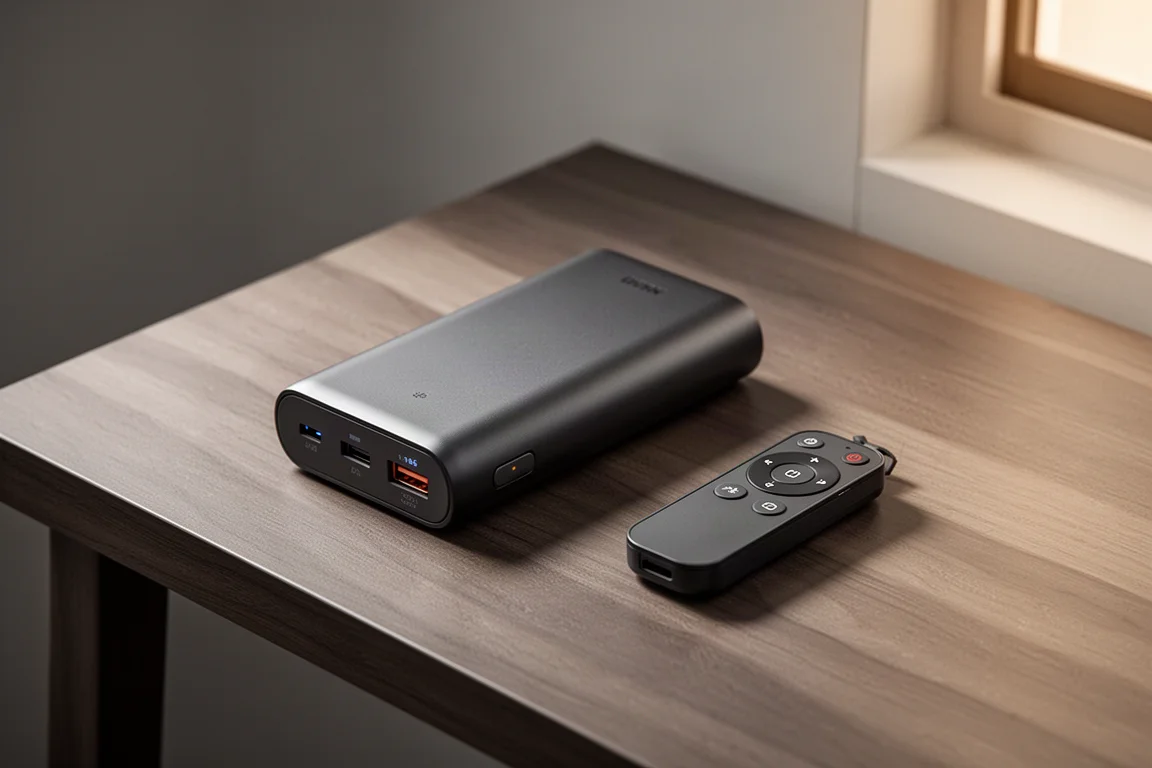
The remote range is unusually specific in the documentation: five meters when pointed from the front of the remote, three meters when pointed another way. It is a small detail, but it shows the company has thought carefully about how the feature actually gets used.
Battery Capacity and Travel Friendliness
One of the smartest design choices is the capacity: 99.84 watt hours. That is deliberately just under 100Wh, which is the cutoff the TSA uses for carrying batteries and power stations in carry-on luggage. Getting as close to the limit as possible without crossing it means you get maximum capacity while keeping the unit flight-legal. For anyone who travels with battery gear, this detail alone is a meaningful selling point.
The battery chemistry is lithium iron phosphate (LiFePO4), which offers better safety, more charge cycles, and faster charging than standard lithium batteries. Combined with high-speed charging for both the unit itself and the devices it powers, this is a pack designed to be filled up and used frequently.
Charging Options and Output Power
Output flexibility is solid for a unit this size. The USB-C port supports up to 65W, enough to power laptops that behave as if they are plugged into a standard wall adapter. The 12V DC out delivers a sustained 50W, and the USB-A port offers 50W with 68W max. You can also combine the 12V DC out with USB-C for 63W total.
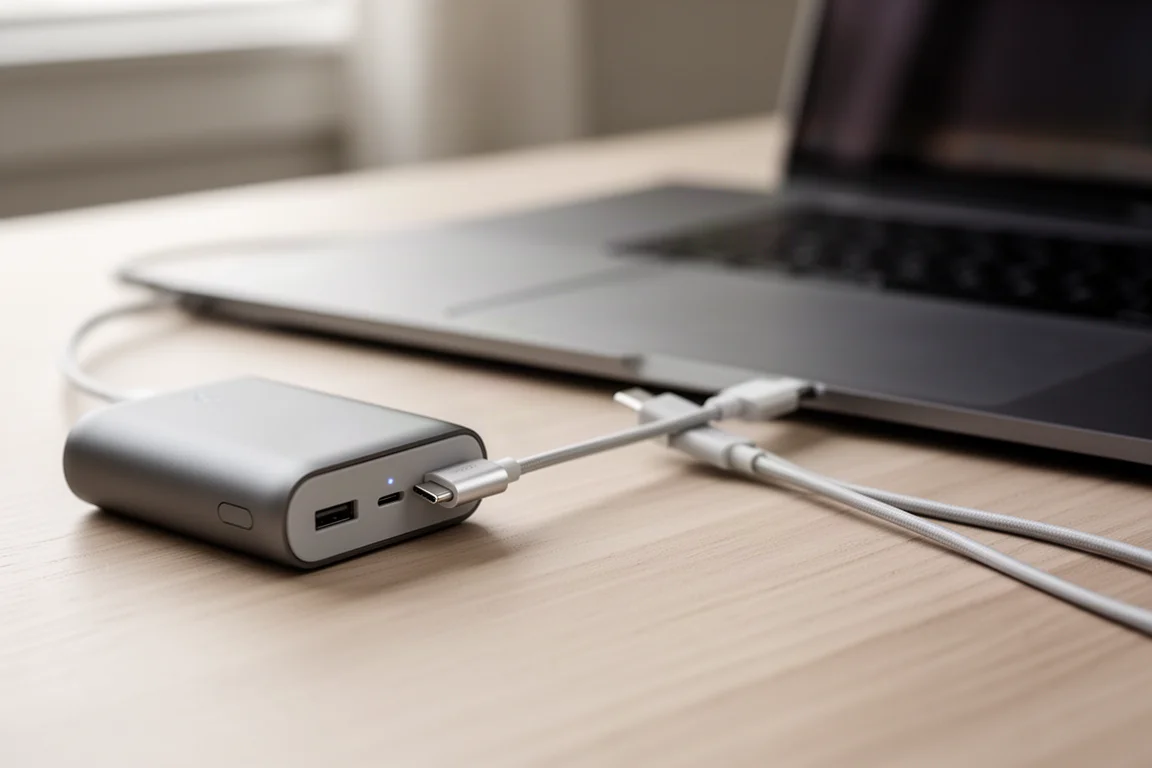
The unit ships with two cables, USB-C and a 12V output cable, so it is ready to use out of the box. Suggested uses for the 12V output include speakers and gaming devices, which makes sense given the sustained 50W delivery.
Portability and Case Compatibility
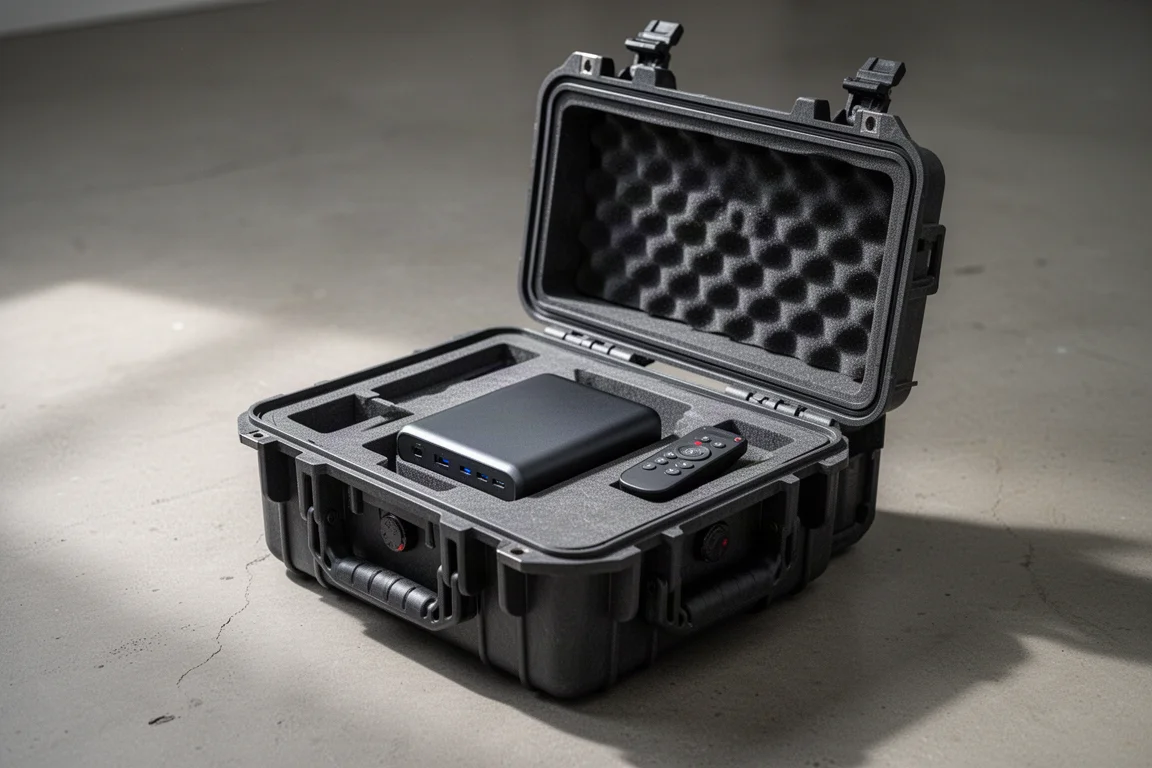
The Glide Charge has a compact, substantial form factor that happens to fit remarkably well into hard cases and expedition-style organizers. It slots neatly into a Klein hard case, and it also fits into a Max Expedition case if you prefer a more tactical look, with room for the remote alongside it. That flexibility in storage makes it easy to integrate into existing gear setups rather than forcing you to build around it.
Who This Product Is For
The remote control opens up some genuinely practical use cases. For overlanding and camping, you could hook up lighting, keep the unit stored away, and illuminate your camp or vehicle interior from a distance when you return after dark. A USB speaker connected to one of the remote outputs can be silenced instantly from across the room or the campsite.

It also suits travelers who want maximum carry-on-legal capacity, and anyone who keeps a rotating collection of battery-powered devices that need regular top-ups. Even if you are not immediately sure what you would use the remote for, it adds an option that conventional power banks simply do not offer.
Things to Consider Before Buying
The remote range is measured in meters, not across a large property, so it works best within a room, a vehicle, or a compact campsite. As with most battery products in this category, it is made in China, though the company’s US base is in Houston, Texas and units are serialized. If you have no realistic use for remote switching, you are paying for a feature you may rarely touch, though the rest of the package still stands on its own.
Buying Advice
The Glide Charge sells for about a hundred dollars, which is notably roughly half the price of other sub-100Wh designs with unique features in this space. For the combination of LiFePO4 chemistry, 65W USB-C output, TSA-friendly capacity, and genuinely novel remote control, that pricing makes it an easy recommendation for anyone even mildly curious about the concept.
The value proposition is strong enough that the remote control almost feels like a bonus on top of an already competent power bank.
Conclusion
The Glide Charge is an innovative, well-thought-out portable power solution. Its deliberately sub-100Wh capacity makes it travel-friendly, its LiFePO4 chemistry improves safety and longevity, and its remote-controlled outputs create use cases no ordinary power bank can match. At around a hundred dollars, it undercuts much of the competition while offering something genuinely new. If portable power is part of your gear kit, this one deserves a spot on your shortlist.
Product link
View more details for Glide Charge
This product is mentioned in the review. Check the specifications, options, and compatibility before buying.
View more details for Glide ChargeFurther reading
Related Reviews
Power Banks
Anker 737 PowerCore 24K Review: Fast Charging in a Simple Package
A 140W portable power bank with a 52-minute recharge time, a health-tracking display, and a three-port layout that skips the app entirely.
Power Banks
Best Anker Power Banks 2026: Six Models Tested and Ranked
A comprehensive guide to six Anker power banks, from compact 65W chargers to high-capacity 250W models. Find the right fit for your charging needs.
Power Banks
Flextail Zero Power Battery Bank Review: Ultralight 10,000 mAh Power for Backpacking
The Flextail Zero Power pairs a carbon fiber shell with a 5.1 oz body and 10,000 mAh of capacity. Here is what it does well, and what to weigh before you buy.