Power Banks
Flextail Zero Power Battery Bank Review: Ultralight 10,000 mAh Power for Backpacking
The Flextail Zero Power pairs a carbon fiber shell with a 5.1 oz body and 10,000 mAh of capacity. Here is what it does well, and what to weigh before you buy.
Introduction
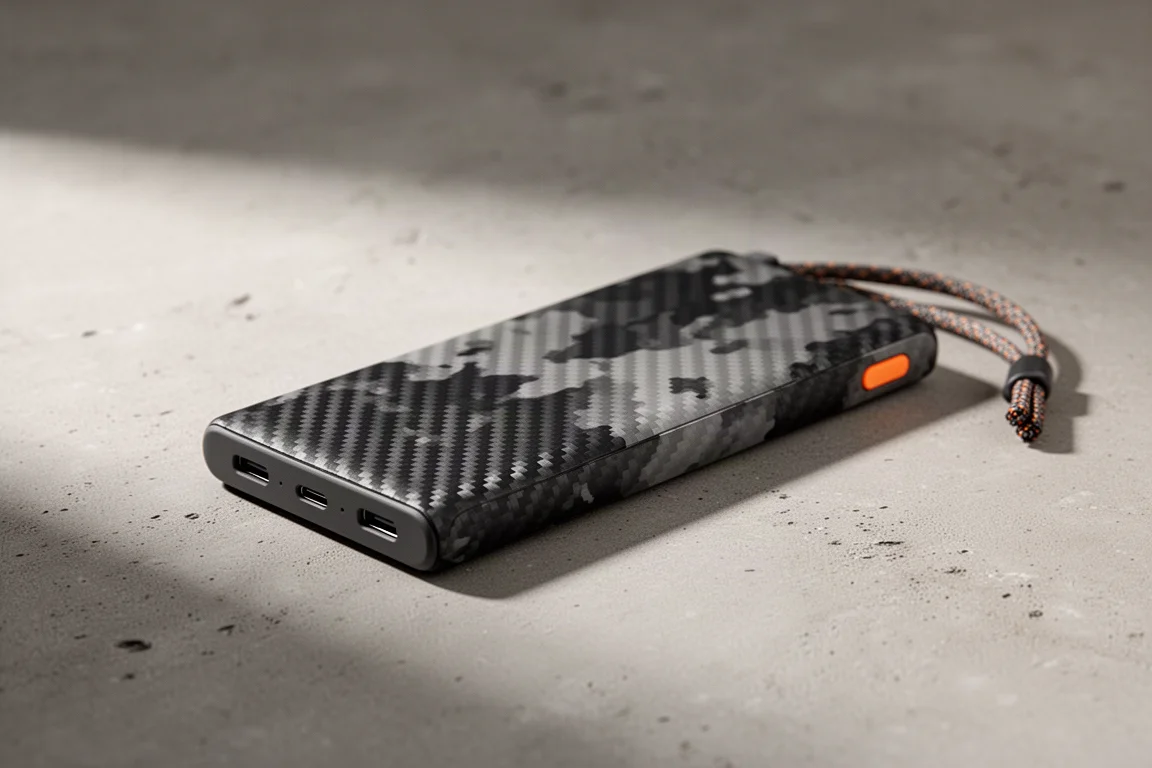
The Flextail Zero Power is a 10,000 mAh battery bank built around a carbon fiber shell, and its design brief appears to be a single word: less. It is ultralight and ultra-compact, thin enough to disappear into a pack pocket, and light enough that carrying several of them is barely noticeable. That combination is what makes it worth a closer look for backpacking, where a power bank is one of those items you want to forget you packed until the moment you need it.
Two things stand out immediately: the weight and the shape. At 5.1 oz and just 0.4 in thick, this is a power bank that slides into a hip belt pocket or chest pouch without making itself felt. The carbon fiber finish also moves it away from the usual matte black plastic slab, and it is offered in both a 5,000 mAh and a 10,000 mAh version. This is the larger of the two.
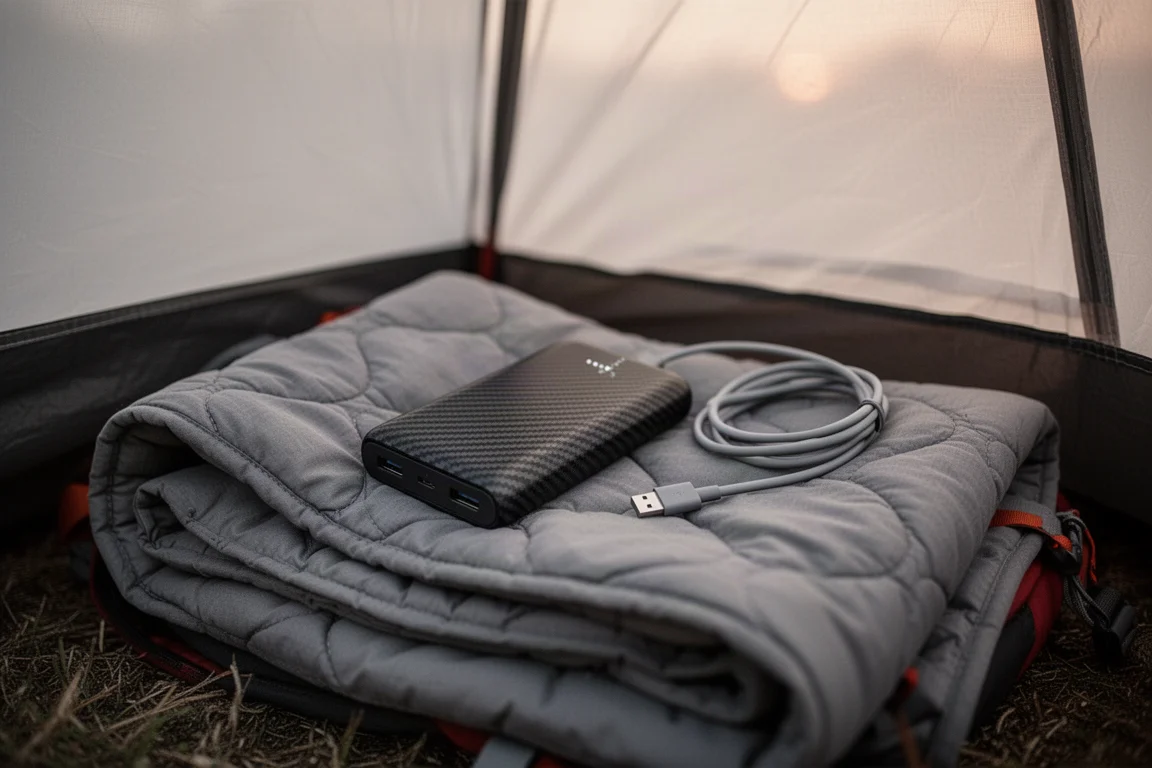
That thin profile is not just a cosmetic choice. Space inside a pack is often tighter than weight, and a power bank that lies flat against the back panel or slips into a lid pocket is far easier to live with over a multi-day trip than a chunky brick that forces you to reorganise everything else.
What Comes in the Box
The package is simple: the battery bank, an instruction manual, and a lanyard with a trick built into it. The lanyard is also a USB-C to USB-C cable, and the cable locks into the lanyard body so the two pieces stay together.
It is a genuinely clever piece of kit design, and the cable itself feels well made. The catch is length. Fully unfolded, the cable is roughly 6 in long, which is short enough that the power bank has to sit right next to whatever you are charging. For anyone who prefers to hang a power bank in a mesh pocket overhead, or leave it on the tent floor while using a phone in a sleeping bag, a longer cable is the more practical setup.
Design, Size, and Weight
The dimensions are the headline here: 4.8 in long, 2.3 in wide, and 0.4 in thick, at 5.1 oz. Those numbers put it in a class where weight and volume stop being a planning consideration. Carrying three of them, or a mix of this and other small packs, adds up to a power budget for a long trip without any meaningful penalty in the pack.
The carbon fiber shell has a subtle woven pattern that reads almost like camouflage, and it looks genuinely good in person. Fit and finish are excellent throughout, with no rattles, no flex, and no sharp moulding lines. The edges do come to more of a point than some rivals, but in practice it is not uncomfortable in a pocket.
Controls live in one corner: an on and off switch that doubles as a mode selector, and a small cutout that illuminates the battery indicator when you press the power button. That indicator glows orange, which turns out to be one of the most quietly useful details on the whole product.
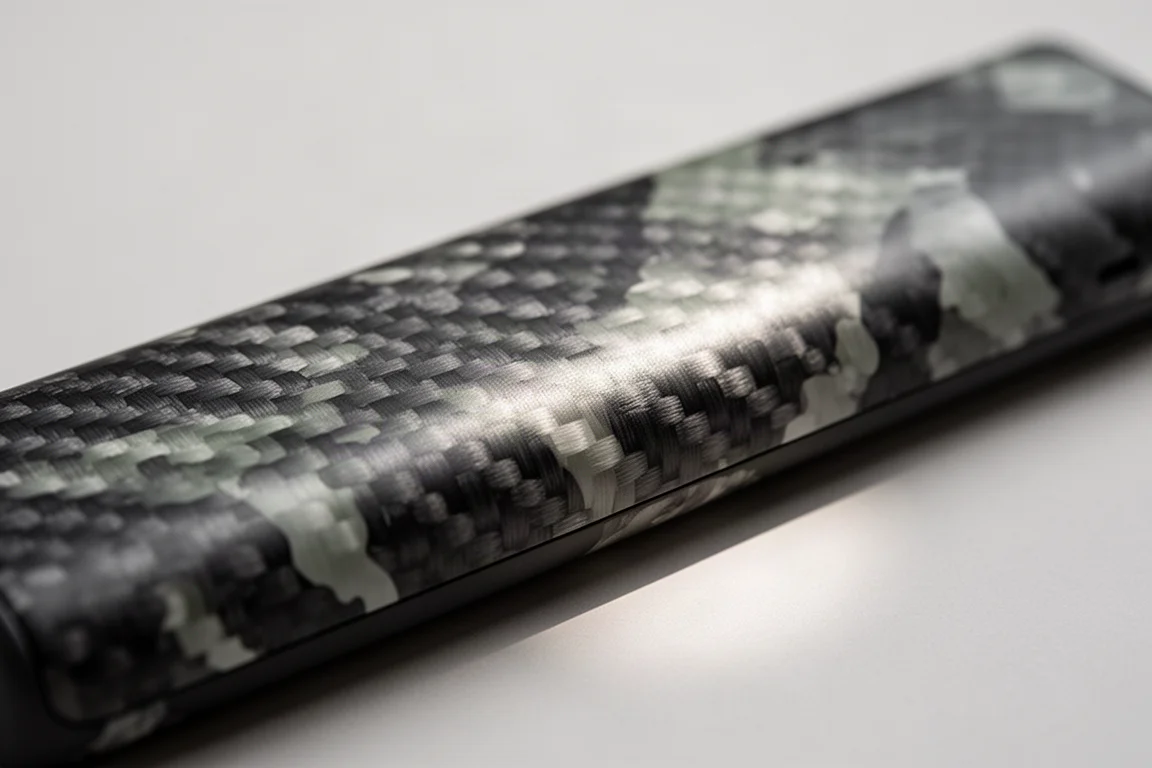
The camo-like carbon weave is the kind of finish that hides scuffs well, which matters for an item that gets tossed into a pack, dropped on granite, and shoved into a pocket alongside keys and stakes.
Ports, Charging, and Power Output
There are two USB-C ports on the body plus a lanyard hole at the corner. The orange port works in both directions, so it can charge the bank and discharge to your devices. The black port is output only.
Output is rated at 22.5 W, while input is 18 W, which means a full recharge takes roughly 3 hours and 20 minutes. That is a reasonable figure for a pack this size and fast enough to top up during a resupply stop or a meal in town.
On protection, the ports are water resistant rather than waterproof, rated to IPX4. That covers splashes and light rain, but it is not a licence to leave the bank exposed in a downpour. Treating it like any other piece of sensitive electronics, and keeping it inside a dry bag or a pack liner, is the sensible approach.
One omission is worth flagging: there is no USB-A port here. USB-A is being phased out in favour of USB-C across most gear, so this is not unusual, but if you still carry older accessories you will need a small USB-A to USB-C adapter to bridge the gap.
Efficiency Mode and Everyday Use
Double tapping the power button switches the bank into a high efficiency mode that outputs 5 V at 1 A. In plain terms, your device slow charges, the bank generates less heat, and the transfer is more efficient as a result.
That mode has a clear real-world use: an overnight charge inside a tent, where a slow, cool top-up is exactly what you want. It works as described, though it is the sort of feature most people will reach for occasionally rather than every trip. In normal mode the bank is quick enough that efficiency rarely becomes the deciding factor.
Capacity lands where you would expect for 10,000 mAh. It delivers close to two full phone charges, depending on how large your phone battery is, which covers an overnight trip comfortably. It also has more than enough capacity to run a small camping fan through an entire night.
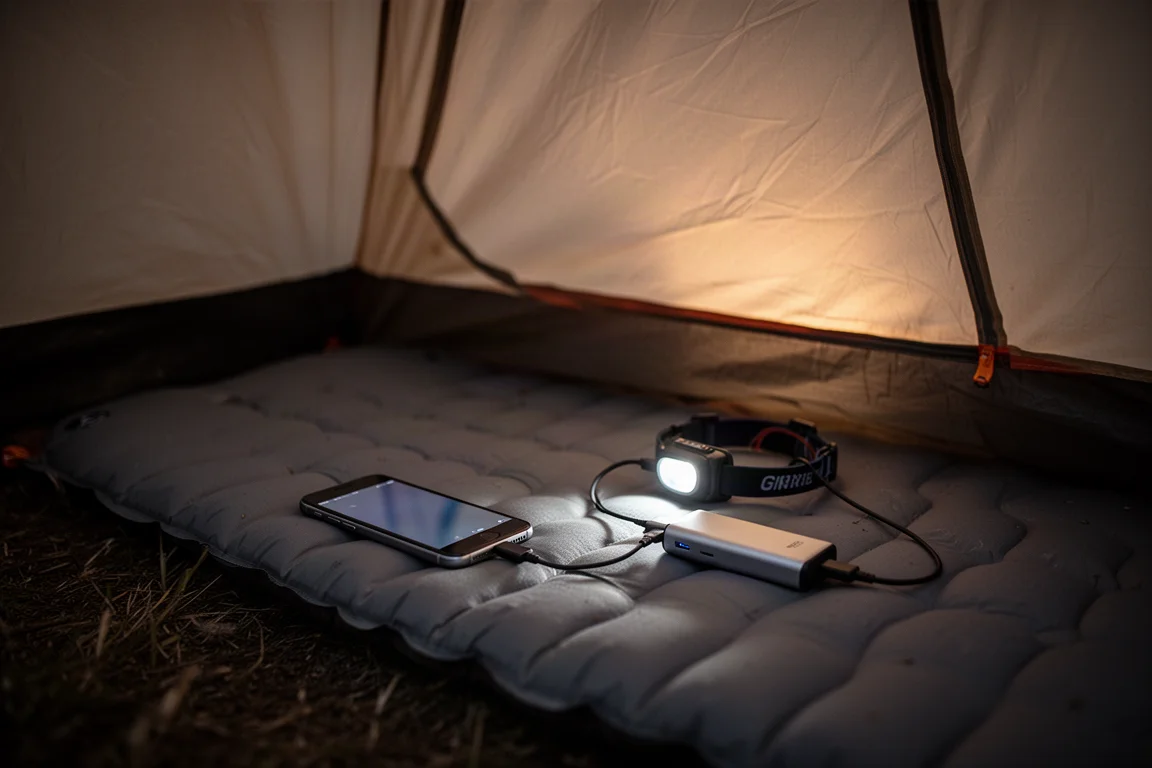
The orange battery indicator deserves more attention than it usually gets. Most power banks use blue LEDs for their charge level, and those lights can be startlingly bright in a dark tent, bright enough to light up the whole interior and force you to turn the unit face down before you can sleep. The soft orange glow here is far easier on the eyes and does not disturb you when you are trying to rest.
Things to Consider Before Buying
The trade-offs are small but real, and they are worth knowing before you commit.
The included USB-C cable is the main one. It is short at around 6 in, and while the lanyard design is smart, the length limits how you position the bank while charging. If you like to keep your phone in a sleeping bag and the power bank somewhere else, plan on bringing your own cable.
The second is visibility. The two ports are not colour coded on the outside with high visibility paint or plastic, so in dim conditions you may find yourself turning the bank toward a light source to work out which port is which. Some competing designs use bright materials around the port area precisely to solve this, and it is a small detail that makes a difference at night.
The edges taper to a point more than some alternatives, though not sharply enough to be a genuine problem. And as noted, the IPX4 rating covers splashes and light rain only, so it is not a waterproof unit.
Finally, the name is a curiosity. Calling a battery bank the Zero Power is an odd choice for a product whose entire purpose is delivering power, though it has no bearing on how the thing performs.
Buying Advice
At a full retail of around $60, and commonly found closer to $54, the pricing is fair. It sits in line with other carbon fiber power banks, and the value case is straightforward: you are paying for weight and volume savings in a package that performs at the level you would expect from the capacity rating.
This bank makes the most sense for backpackers, fastpackers, and anyone counting grams or pack space. It is a strong fit for overnight and weekend trips where roughly two phone charges is enough, and for longer trips where you would rather carry two or three small banks than one heavy one.
If your priority is maximum ports and flexibility, or you regularly charge older USB-A accessories, look carefully at the alternatives. If your priority is a power bank you can forget is in your pack until you need it, this is one of the better answers available.
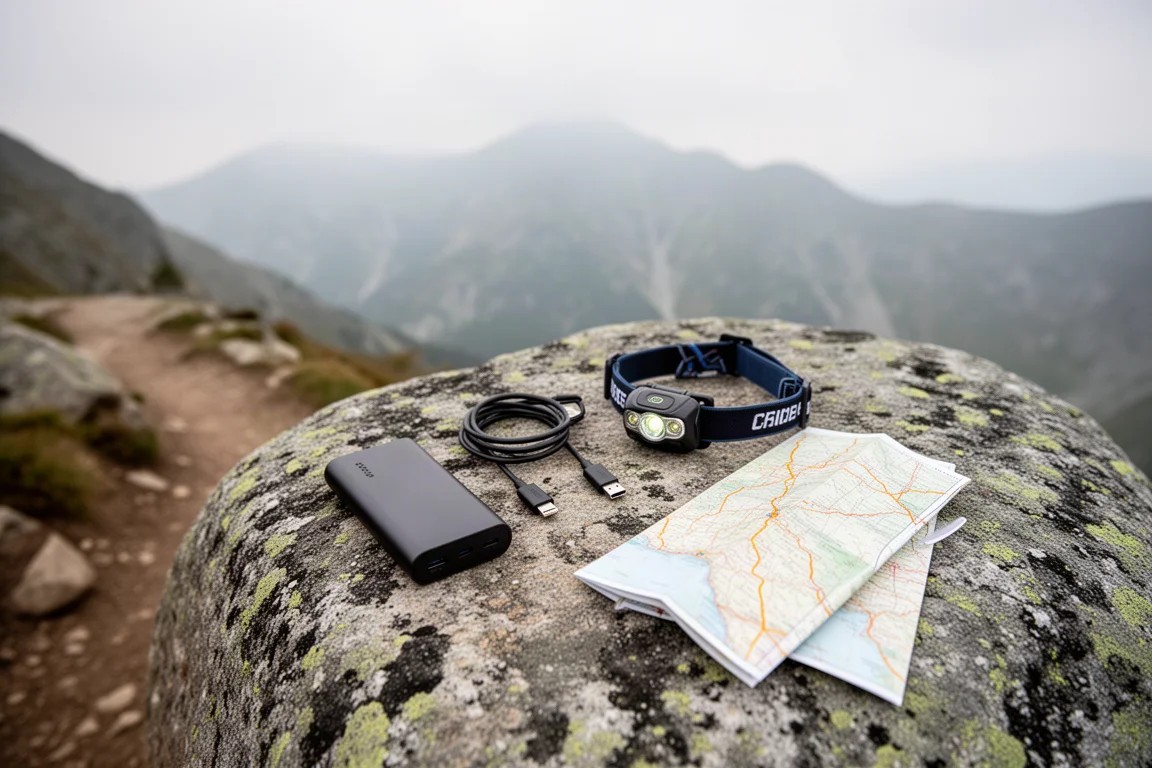
A practical way to think about it: weigh the cost per ounce saved. The savings here are meaningful enough that they justify the price for anyone who has already spent money trimming weight elsewhere in their kit, and the performance is close enough to established carbon fiber packs that you are not giving up capability to get there.
Conclusion
The Flextail Zero Power is a well-executed ultralight battery bank. It is extremely light, very thin, and small enough to vanish into a pocket or pack lid. Construction and finish are excellent, it has been consistently reliable in use, output is good, and the efficiency mode and orange indicator are details that show real thought about how the product is actually used in the field.
The compromises are minor and clearly defined: a short included cable, ports that are hard to identify in low light, no USB-A, and splash resistance rather than full waterproofing. None of them undermine the core proposition.
For backpackers who value size and weight above all else, this is an easy recommendation at its price point. It is one of the few ultralight power banks that genuinely competes with the established options in this category, and it does so while being lighter than most of them.
Product link
View more details for Flextail Zero Power Battery Bank
This product is mentioned in the review. Check the specifications, options, and compatibility before buying.
View more details for Flextail Zero Power Battery BankFurther reading
Related Reviews
Power Banks
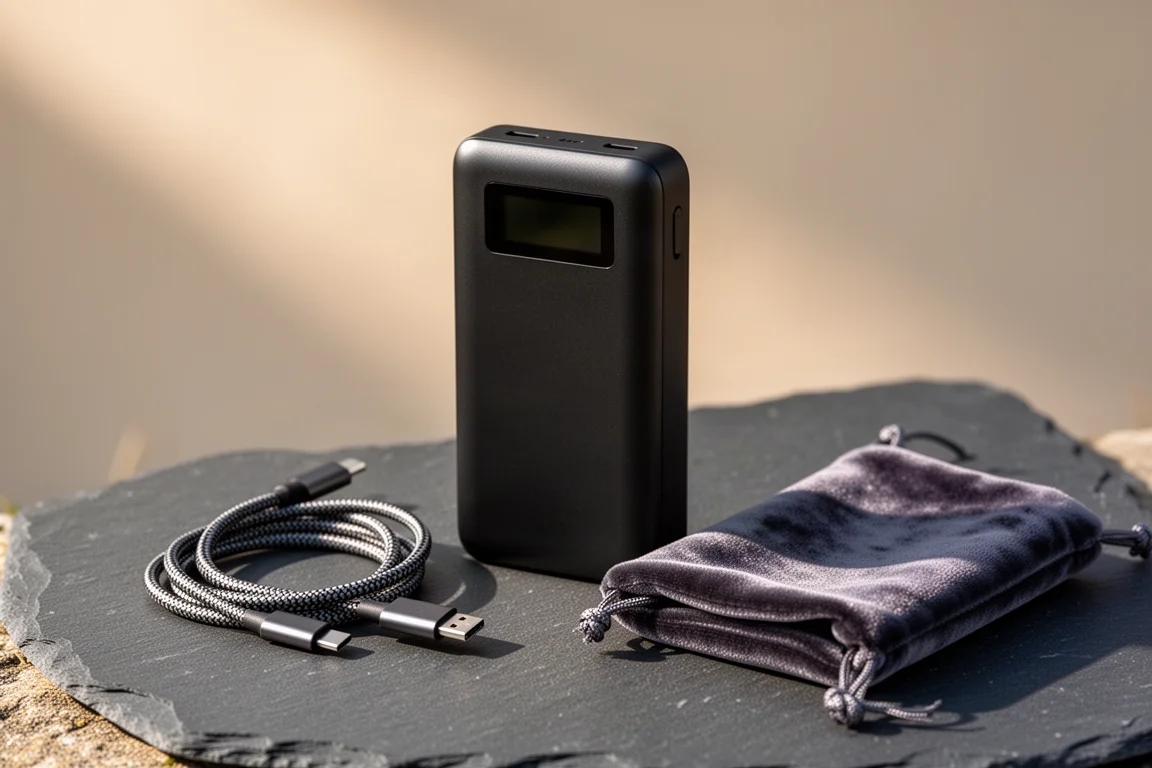
Anker 737 PowerCore 24K Review: Fast Charging in a Simple Package
A 140W portable power bank with a 52-minute recharge time, a health-tracking display, and a three-port layout that skips the app entirely.
Power Banks
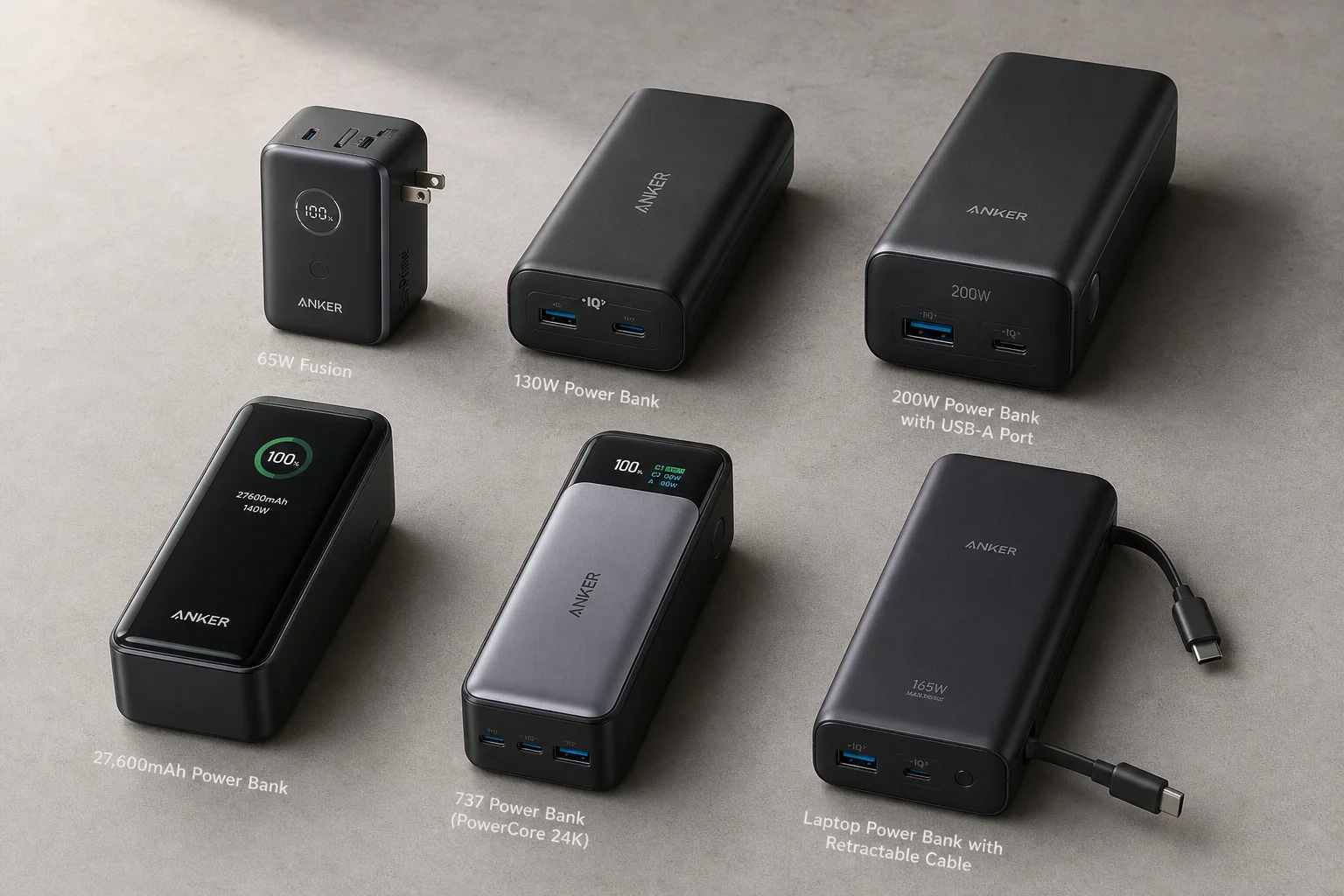
Best Anker Power Banks 2026: Six Models Tested and Ranked
A comprehensive guide to six Anker power banks, from compact 65W chargers to high-capacity 250W models. Find the right fit for your charging needs.
Power Banks
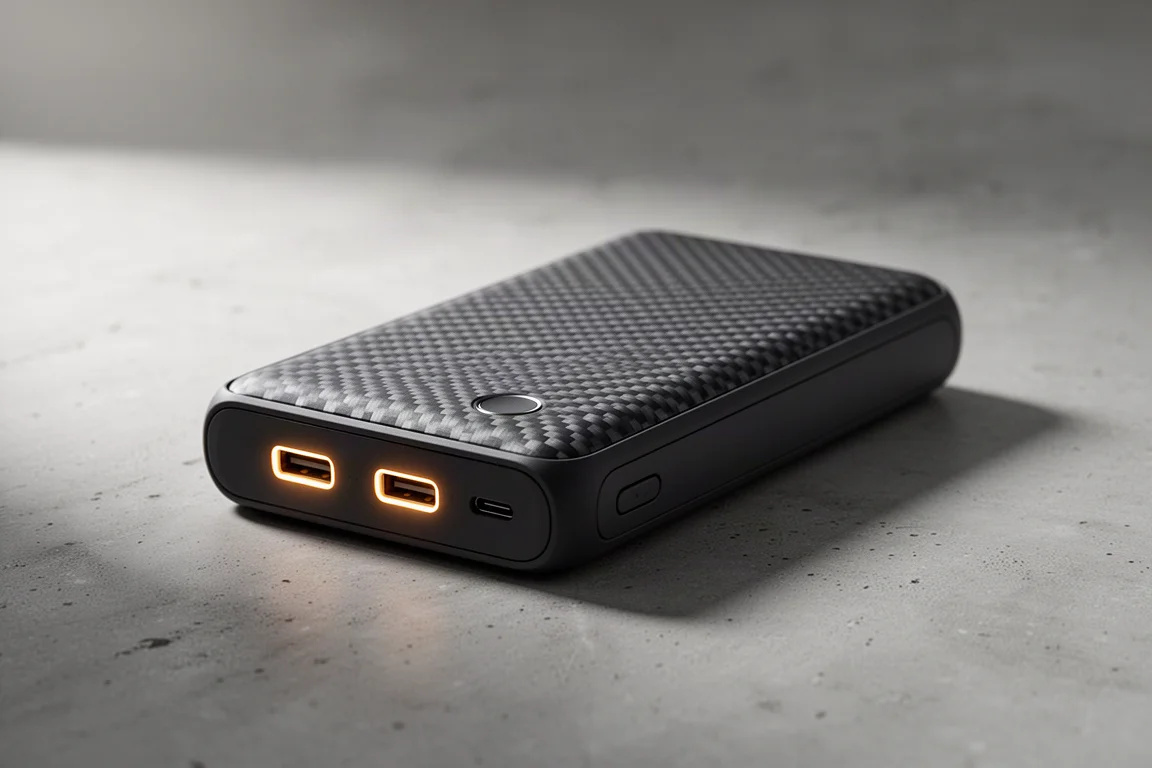
Nitecore NB10000 4th Generation Review: Ultralight Power at a Premium
The fourth generation Nitecore NB10000 keeps the carbon fiber shell and 10,000 mAh capacity, adds illuminated USB-C ports, and asks around $84 for the upgrade.