Smart Trainers
Garmin Tacx Neo 3M vs Wahoo KICKR Move: Which Premium Smart Trainer Wins?
A detailed comparison of the two flagship moving smart trainers, covering price, movement, road feel, accuracy, connectivity, and support to help you pick the right one.
Introduction
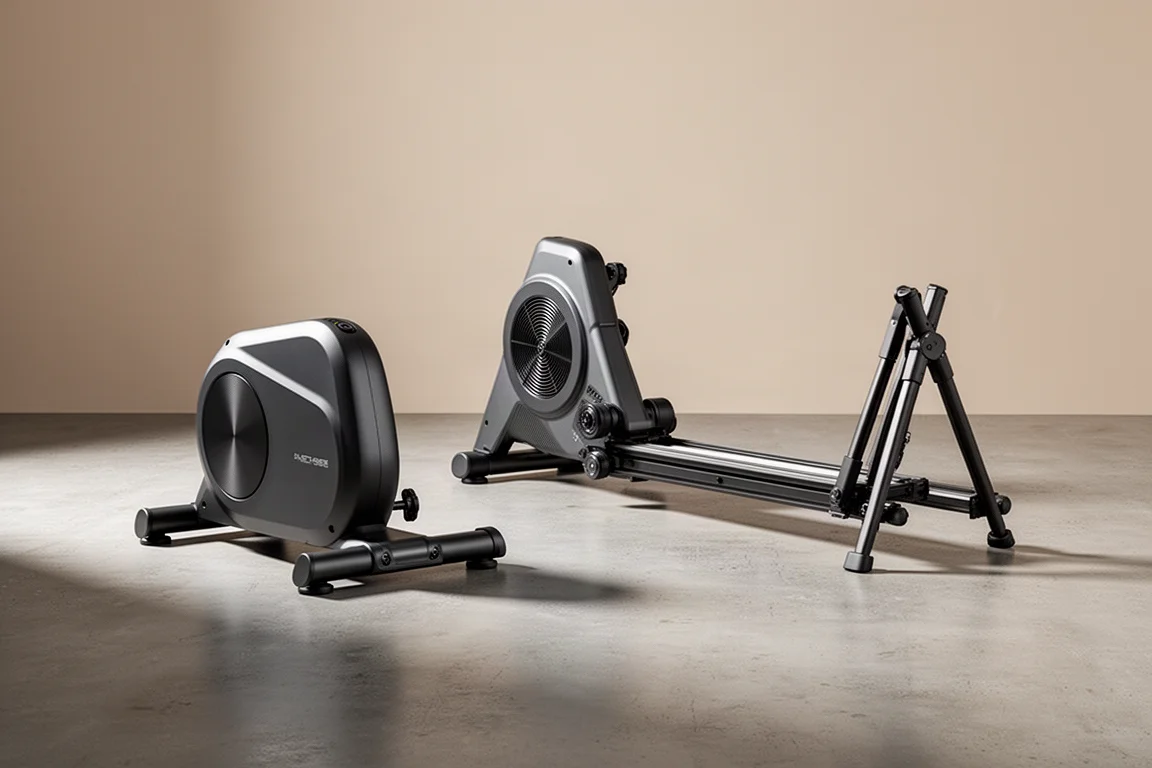
The Garmin Tacx Neo 3M and the Wahoo KICKR Move sit at the very top of their respective trainer lineups. Neither company sells anything above these models short of a full smart bike, which is a different category at roughly twice the price. The headline feature on both is movement: both trainers wiggle under you, fore and aft, to reduce fatigue on long indoor rides.
Importantly, both are additive products in their lineups. The Tacx Neo 2T and the Wahoo KICKR V6 remain on sale at lower prices, so these two flagships are not replacements for anything. Once you dig past the headline wiggle, though, the differences between them are surprisingly numerous, and some of them depend heavily on where in the world you live.
Price and What’s in the Box
In the US, the Tacx Neo 3M costs $1,999.99, while the KICKR Move comes in at $1,599.99 or so. That is roughly a $400 difference in Wahoo’s favor. In Europe the gap narrows: the Tacx sits at €2,000 while the KICKR Move is about €100 more than its US price, so the Wahoo remains meaningfully cheaper there too.
Both companies include a cassette in the purchase price, and notably neither offers a 12-speed cassette, which is a curious omission at this price point. On price alone, the Wahoo KICKR Move is the clear winner.
Unboxing and setup are a wash. Garmin went with an unusual zip-around box, while Wahoo uses a slide-out design; both companies clearly invested in packaging. Folding the legs for storage takes about the same time on either unit, roughly a 20-second operation with wheel locks and latches.
Bike Compatibility
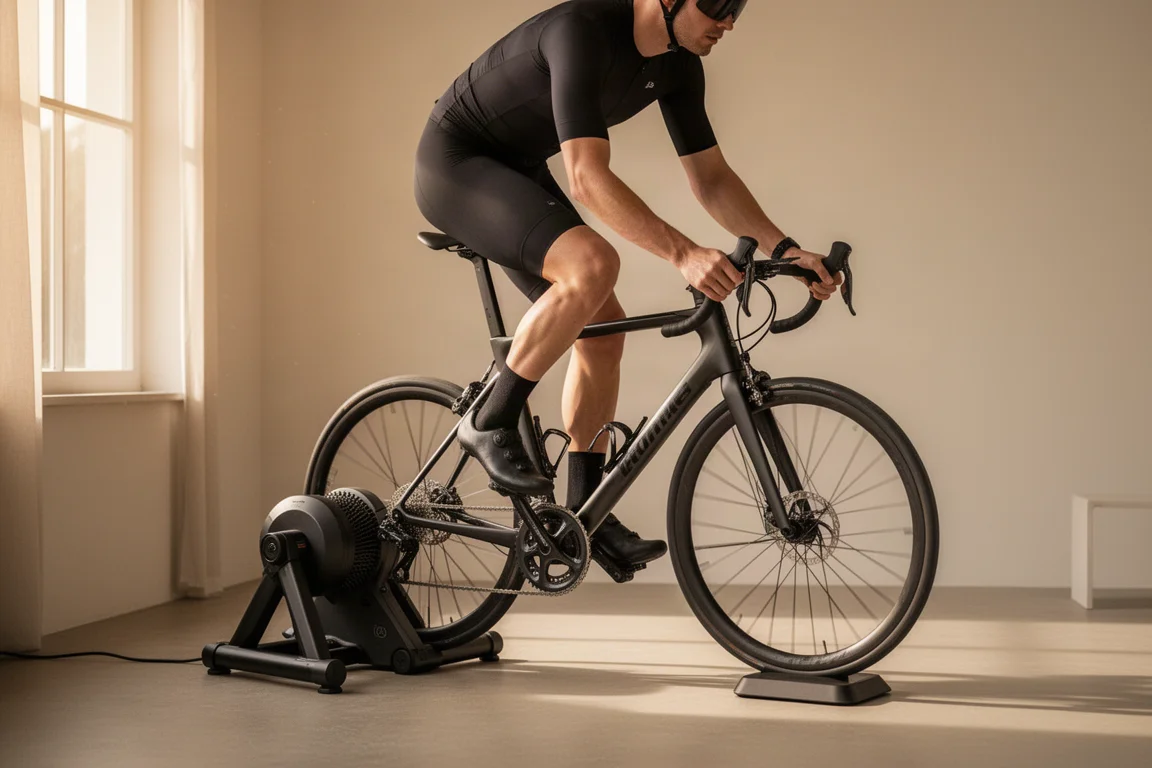
For most riders, most bikes will fit on either trainer. Both companies invested heavily in in-house testing and sent units to bike manufacturers for validation. The differences show up in edge cases.
On the Tacx, getting the bike on the trainer is more finicky. If you have not shifted to the outer cog, mounting the bike takes some gymnastics, whereas the KICKR Move accepts the bike regardless of gear. In the default configuration, a rear derailleur can also just kiss the bottom of a frame section on the Tacx; the included spacers solve it, but it is close. At the rear, Garmin added about 2 mm of clearance to address past Neo series issues, while Wahoo’s design simply leaves more space around the back end. Wahoo wins this category because clearance issues are effectively gone on their side.
App Compatibility and Connectivity
Both trainers work with every major training app today and support the same core standards: ANT+ FE-C, Bluetooth Smart, FTMS, and dual ANT+ and Bluetooth. The nuances sit at the edges.
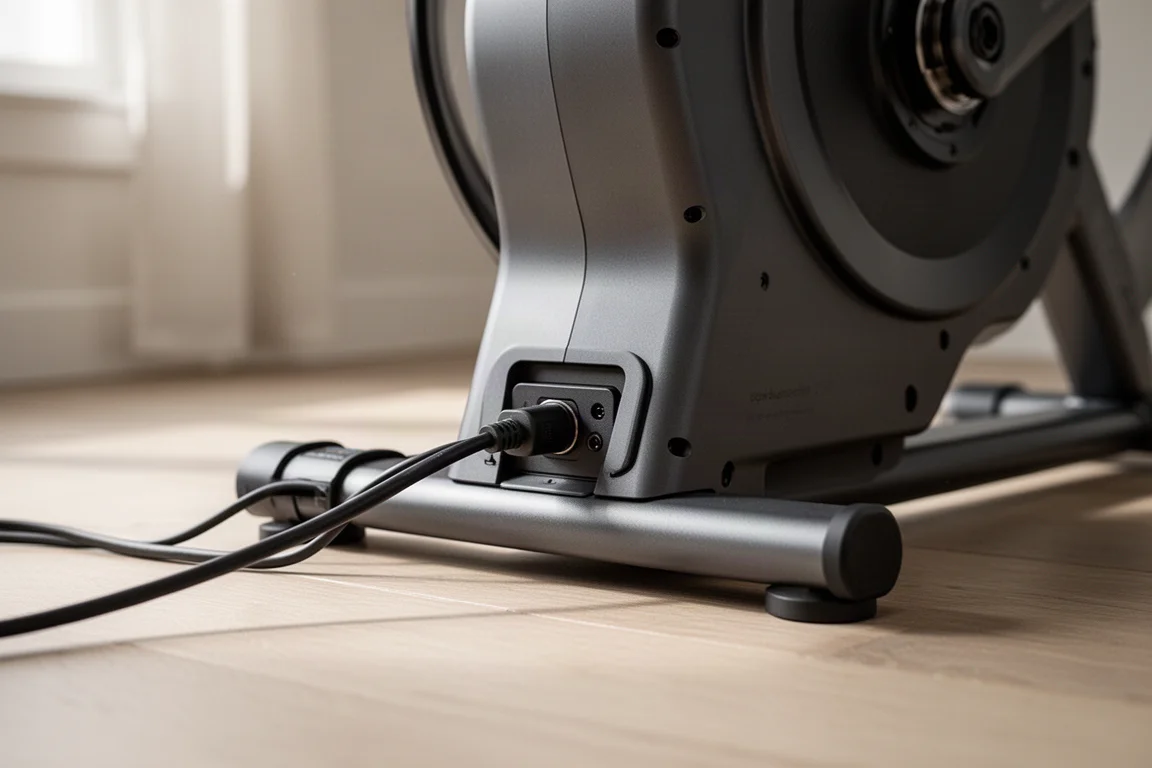
The Tacx supports two concurrent Bluetooth connections; the Wahoo supports three. The Tacx broadcasts left/right power balance, which the Wahoo does not. Inversely, the Wahoo offers a race mode broadcasting higher-speed data up to 10 times per second, adopted mainly by Zwift for racing. Garmin says it is looking to implement something similar but has no timeframe. The Neo 3M also lacks built-in Wi-Fi; you instead buy a $129 adapter that plugs into the back and hangs off the unit. Wahoo’s Wi-Fi is built in, and its optional ethernet adapter costs around $79 for a fully wired connection.
Wahoo takes this category on the strength of built-in Wi-Fi and race mode, even though the Tacx’s power balance and speed/cadence broadcast are nice extras.
Movement: The Headline Feature
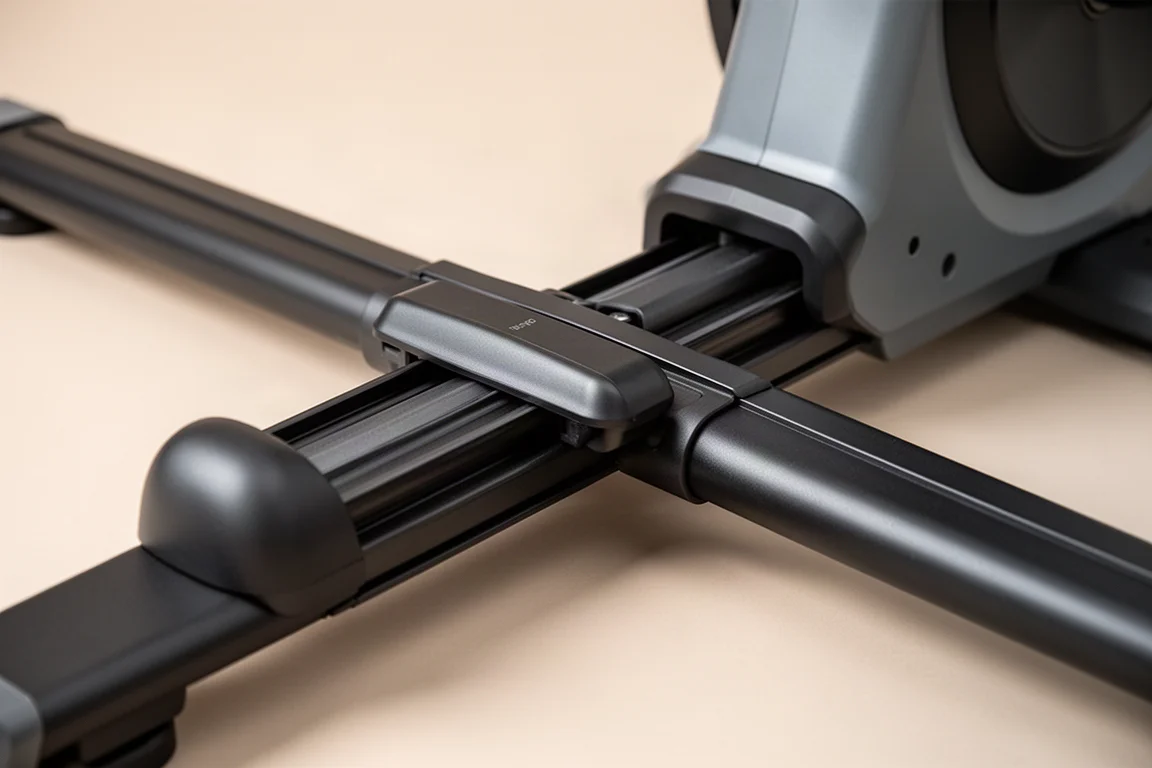
Movement matters because it reduces fatigue on long trainer rides, especially during structured workouts with long steady-state sections where you barely move on the saddle. Both trainers achieve this with a track that tips up at the ends, letting the unit rock forward and back.
The difference is range. The Tacx Neo 3M offers up to 5 cm of total movement, 2.5 cm in each direction. The KICKR Move offers 14 cm total, 7 cm each way, with a bigger track and more tip at the ends. Both feel fine for steady-state work, but the gap becomes obvious when you sprint: the Tacx hits the end of its track with a bang, while the Wahoo gives you more sway and swing before bottoming out.
Side-to-side tilting is minimal on both, neither is a rocker plate. Wahoo’s feet compress slightly, and the Tacx has had subtle lateral flex since the original Neo. From the back, there is no meaningful difference there. On overall movement, Wahoo wins simply because the range is larger, and here size genuinely matters.
Road Feel Realism
Inertia is a wash. Put knowledgeable riders on both blindfolded and most could not tell the difference; both are excellent at simulating acceleration and deceleration.
Beyond inertia, the gradients differ slightly: the KICKR simulates up to 20% incline versus 25% on the Neo 3M, though few riders genuinely want to grind 20% hills indoors. The downhill behavior is where things split. On the Wahoo, coasting down a virtual hill does nothing special; stop pedaling and the flywheel eventually stops. On the Tacx Neo series, the internal magnetic motor drives the unit forward, creating the sensation of genuinely accelerating downhill. It is a striking effect, and Wahoo implemented something similar on its own smart bikes.

The Tacx can also recreate road surface feel: cobblestones, cattle grids, paved roads, wooden bridges. The magnetic motor stutters to simulate each surface, and the first time you feel it, it is mind-boggling. The wow factor fades with familiarity, but the capability remains unique. For road feel realism as a whole, the Tacx Neo 3M clearly wins; it matches Wahoo on inertia and beats it on nearly everything else.
Gradient Simulation Accessories
Yes, the KICKR connects to the KICKR Climb, but it is not included. It costs another $700 to raise and lower the front of your bike through virtual climbs. People tend to either love it or shrug at it; it is cool when used but easy to forget to enable.
The Tacx cannot connect to the KICKR Climb since Wahoo does not allow it. It can, however, connect to the Elite Riser, because the Neo 3M’s axle rotates, though this combination is less proven. Garmin’s own party trick is an under-unit light that glows different colors, like purple and red, depending on how hard you are pedaling. On balance, Wahoo wins here: the KICKR Climb option exists, costs less than the Elite Riser, and the integration is cleaner.
Noise
Both trainers are very quiet. In practice, the main noise factor is how clean your drivetrain is and how well your rear derailleur is indexed. Maintain those and either unit is virtually silent. You may hear a very subtle motor hum on the Tacx during hard efforts, but it is quieter than your own breathing. Wahoo is a technicality quieter, but practically speaking both are excellent and this category is effectively a draw.
Accuracy and Erg-Mode Responsiveness
On power accuracy against established power meter baselines, both trainers are accurate with zero complaints about output numbers.
The real difference is erg-mode resistance accuracy during structured workouts. The Tacx Neo 3M takes the cake. In workouts with big power jumps, like 30x30 intervals swinging from 150 watts to 450 watts repeatedly, the Tacx does not overshoot, holding within one to three watts. The Wahoo overshoots by around 20 watts on average in the first second or two. Twenty watts used to be respectable, but the Tacx’s responsiveness is genuinely impressive. Garmin wins this category, largely on the erg side.
Built-In Apps
Both companies’ free apps are perfectly functional for settings and firmware. Beyond that they differ. The Tacx free app is mostly limited to core functionality like firmware updates; extra features and built-in rides require paid subscriptions, and Wahoo’s paid rides are similar through a separate app.
Wahoo’s free app, however, also offers basic workout recording, structured workouts, syncing to a wide range of training platforms, and multiple export options. For most people, Wahoo wins on the free app, though it matters little if you are on Zwift or TrainerRoad anyway.
Warranty, Support, and Where to Buy
Distribution is a Garmin win by pure scale: the Tacx Neo 3M is available through far more retailers, distributors, and shops worldwide. Support follows a similar pattern, with Garmin often providing support directly and generally earning fewer complaints, while Wahoo support quality varies by country and has drawn more criticism recently.
Warranty terms matter too. Everything in the Garmin Tacx and Rally camp gets a two-year warranty no matter where you are. Wahoo’s two-year warranty applies in Europe only; in the US it is one year. That is a meaningful consideration for US buyers, and it tips this category to Garmin.
Buying Advice
If you are spending around $1,500 on a trainer today, the Wahoo KICKR Move is the likely pick: cheaper, more movement, built-in Wi-Fi, race mode, and a cleaner bike fit. The exceptions are clear, though. If you want the best structured-workout erg-mode trainer, the Tacx Neo 3M is currently the new benchmark by a long shot. And if you want the best road realism, including downhill drive and surface simulation, the Tacx wins there too.
For Garmin to be more competitive, two changes would do it: bring the price down to roughly $1,599 to $1,799 and include the Wi-Fi adapter in the box. The Neo series has historically commanded about $200 or €200 more than the KICKR line, and given the downhill drive and surface simulation advantages, pricing parity plus an included adapter would make this a genuinely even contest. Technically there is nothing wrong with the Neo 3M; it is simply priced against the wrong market position today.
Conclusion
Both trainers are excellent flagships with movement as their shared calling card. The Wahoo KICKR Move wins on price, movement range, connectivity, and bike compatibility, making it the default choice for most buyers. The Garmin Tacx Neo 3M counters with superior erg-mode accuracy, unmatched road feel realism, downhill drive, surface simulation, and a two-year worldwide warranty. Choose based on which of those strengths matters more to your training.
Product link
View more details for Garmin Tacx Neo 3M
This product is mentioned in the review. Check the specifications, options, and compatibility before buying.
View more details for Garmin Tacx Neo 3MFurther reading
Related Reviews
Smart Trainers
Pinnacle HC Review: An Affordable Direct Drive Smart Trainer
A close look at the Pinnacle HC, a £500 direct drive smart trainer with a 2,200W ceiling, a 5.7kg flywheel, and a quiet, stable ride feel for indoor training.

Smart Trainers
Wahoo Kickr Core vs Zwift Hub: Which Budget Direct Drive Smart Trainer Should You Buy?
A practical head to head between the Wahoo Kickr Core and the Zwift Hub, covering price, flywheel weight, setup, noise, connectivity, and power accuracy.
Smart Trainers
Elite Avante Review: A Smart Trainer That Punches Above Its Hardware
The Elite Avante pairs mid-range trainer hardware with high-end software features like built-in Wi-Fi and heart rate bridging. Here is how it holds up after months of riding.