Indoor Cycling
Garmin Tacx Neo 3M Review: A Premium Direct Drive Trainer With Built-In Motion
Garmin's new flagship direct drive trainer integrates motion plates, improves accuracy at low power, and delivers excellent ERG mode responsiveness, with a few trade-offs to weigh at this price.
Introduction
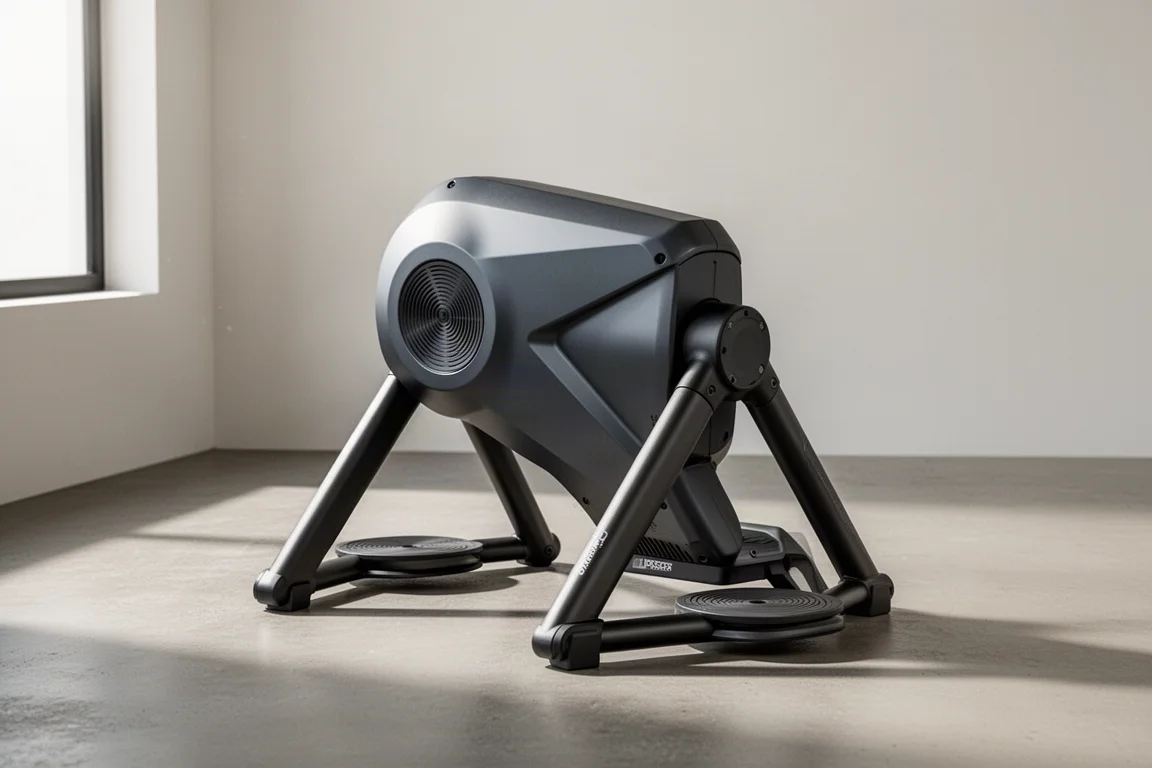
Garmin’s Tacx Neo 3M is the brand’s new high-end direct drive smart trainer, sitting above the still-available Neo 2T. Rather than simply bolting the Neo motion plates onto a Neo 2T, Garmin redesigned the 3M inside and out: new cooling and power components for better accuracy across a broader range of power zones, improved responsiveness in both SIM and ERG mode, integrated forward-and-back motion plates, refined side-to-side motion, and a carry handle.
After several weeks of riding it across simulation rides on the Tacx training app and Zwift, plus ERG mode workouts on TrainerRoad, the verdict is simple: this is one of the highest-performing direct drive trainers you can buy. It is not perfect, and there are some trade-offs worth understanding before you spend this much, but it delivers on almost everything Garmin promised.
Design and Build
The Neo 3M shares the familiar angular design theme of the Neo 2T, and it still looks striking. The foldable legs carry over, so it can be stashed away when not in use, but the big practical addition is a handle. That may sound minor, but carrying a trainer without one was genuinely awkward, and if you move your trainer around at all, the handle is seriously nice to have. If your trainer lives permanently in one spot, it matters less.
The 3M is a little bigger than the Neo 2T, partly because of the motion plates and partly because the upper housing now contains new internal components: a more powerful power supply, a new heat resistor for increased heat dissipation, and a larger cooling fan. Garmin has also swapped the external power brick for a simple power cord, tucking the electronics inside the unit itself.
Key Features and Specs
On the inside, the actual motor and magnet configuration remains the same as the Neo 2T, with 32 neodymium magnets acting as a virtual flywheel. The gains come from the additional cooling and power components. The accuracy claim stays at plus or minus 1%, but Garmin says it holds that accuracy across a broader range of power zones, especially at the low end. Max power output is unchanged at 2,200 watts, which is far more than most riders will ever need. Maximum simulated gradient remains 25%, with claimed improvements in how it simulates grades for taller and heavier riders, where more power is required to replicate steep climbing.
The most obvious change is on the bottom: the Neo motion plates are now integrated directly into the trainer rather than being an add-on accessory. That means the same 49mm of forward-and-backward movement, plus built-in lockout knobs on each side, so you can turn the motion off whenever you want.
Connectivity covers what you would expect: two Bluetooth connections, ANT+, and ANT+ FE-C. An optional smart network adapter adds a Wi-Fi or wired connection to your home network for a more stable link with compatible training apps. It plugs in next to the power cord and pairs through the Tacx training app. If you race virtually and worry about dropouts, it could be worth considering, though many riders will not experience connectivity issues over Bluetooth or ANT+. Note that the adapter is not available at launch and costs $129.
The 3M keeps the Neo family’s signature extras: LED lights under the trainer that shift color with your power output, downhill drive that pushes the flywheel forward on descents, and road surface simulation for gravel, cobbles, dirt, and wooden bridges in apps like Zwift, which you can disable if it is not for you. It even works unplugged: you can ride it without wall power and still get resistance and app connectivity, losing only downhill drive.
Bike compatibility is broad, spanning quick release and thru axle setups, and the 3M now includes an 11-speed cassette in the box, which the Neo 2T did not. SRAM XD/XDR, Shimano Micro Spline, Campagnolo N3W, and other freehub bodies are available aftermarket.
Ride Feel and Motion
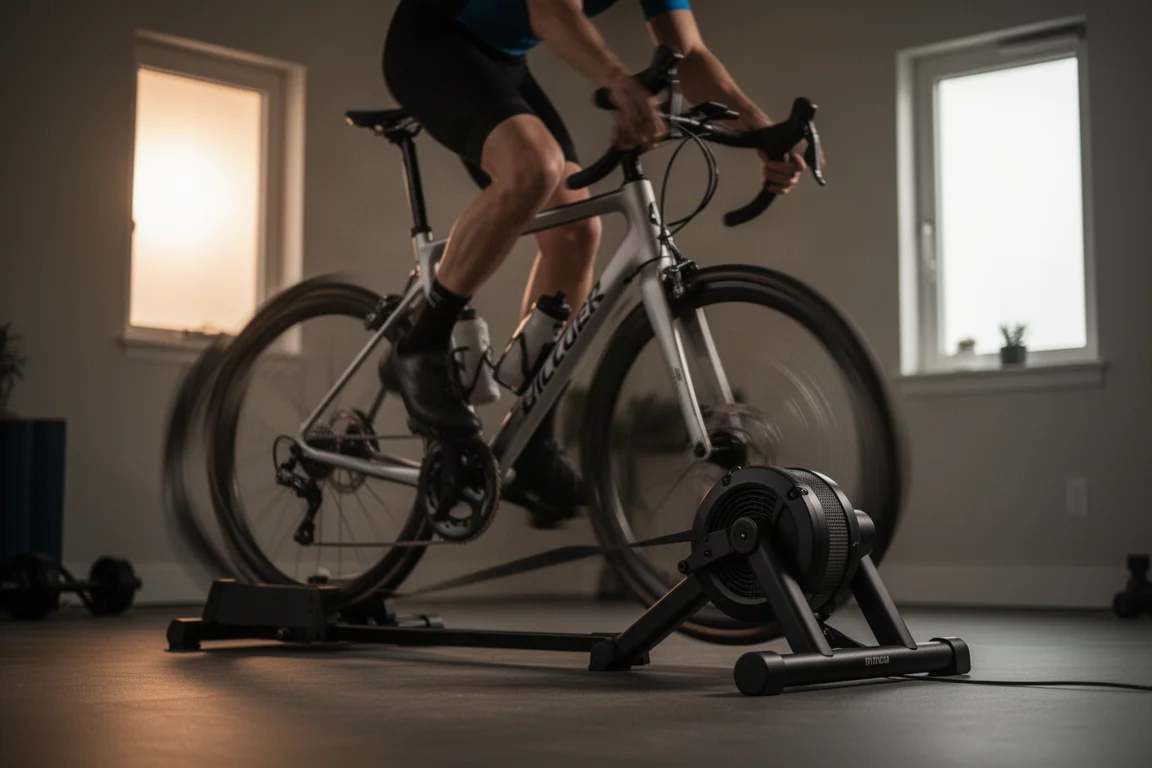
The virtual flywheel feel is essentially the same as the Neo 2T, which is high praise: it replicates outdoor inertia very well, maintains momentum convincingly, and the downhill drive feature adds even more realism on descents. Hard sprints are handled cleanly, with none of the dead spot that affected older Neo trainers, so the response to a sudden effort is instant.
The integrated motion is where the 3M differentiates itself. Side-to-side motion exists on all Neo trainers, but it was never perfectly symmetrical; Garmin has now balanced it at roughly five degrees each way. The forward-and-backward motion is more of an acquired taste. It takes some getting used to, but for many riders it meaningfully reduces fatigue on longer rides, making the whole experience feel less rigidly static.
How well the motion works depends on the riding style. It is excellent for simulation rides and sustained hard efforts, including VO2 max intervals. On standing climbs there can be a brief rock as you shift your body weight, but a rhythm settles in quickly. Standing sprints are the least natural fit, mostly during the initial weight shift when you get out of the saddle; once you are in the sprint, the movement is surprisingly restrained. If it is not for you, the two lockout knobs disable it entirely, though unlike some competitors you do have to get off the bike to engage or disengage them.
Setup Experience
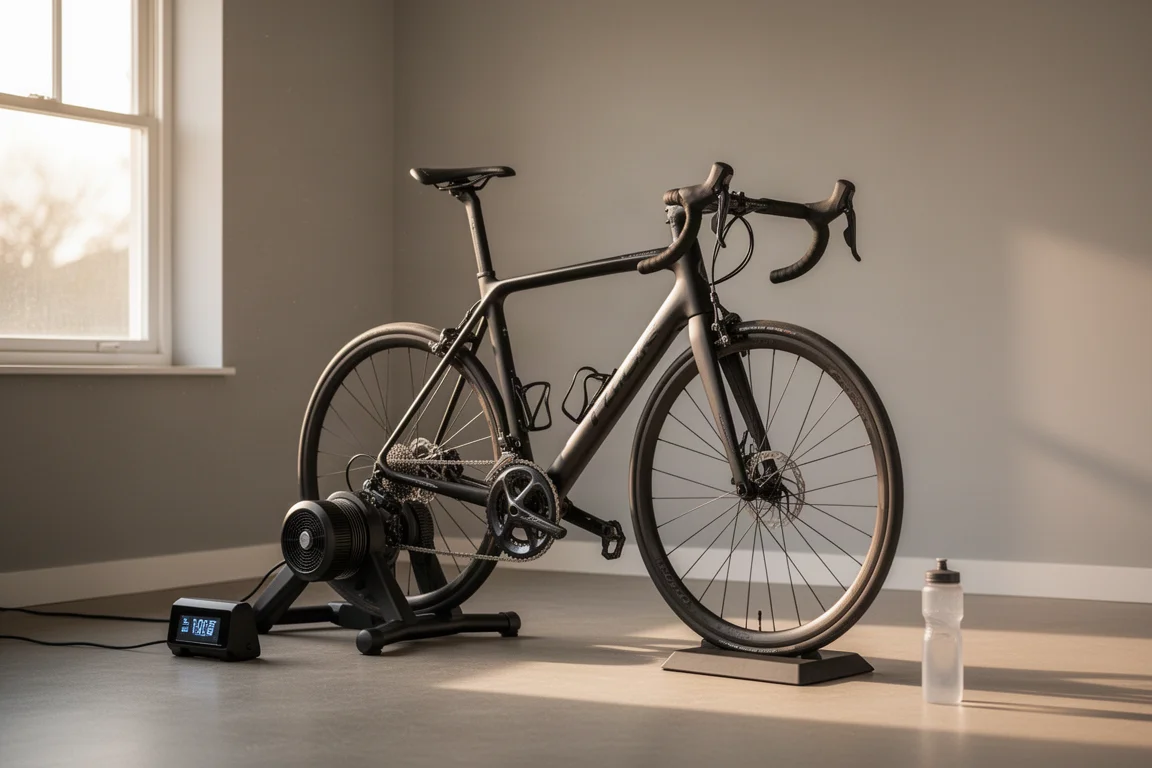
Setup is well thought out. The shipping box has a zipper-style cardboard feature so you do not have to lift the trainer box out of the outer packaging, and a QR code on top opens the setup instructions on your phone. Unfolding the legs locks them into place automatically, the axle adapters are labeled and come with a small plastic installation tool, and a quick release is included for quick release bikes.
The front riser block is dual-sided to accommodate different tire widths and, notably, allows the front wheel to move forward and backward in sync with the trainer’s motion. Once the bike is mounted and the wheel block aligned, pairing with the Tacx training app is done via a button on the side, where you can also adjust settings, check for firmware updates, and enter your rider weight, which factors into grade simulation. For other software, the 3M simply appears as a standard Bluetooth or ANT+ trainer.
Noise Levels
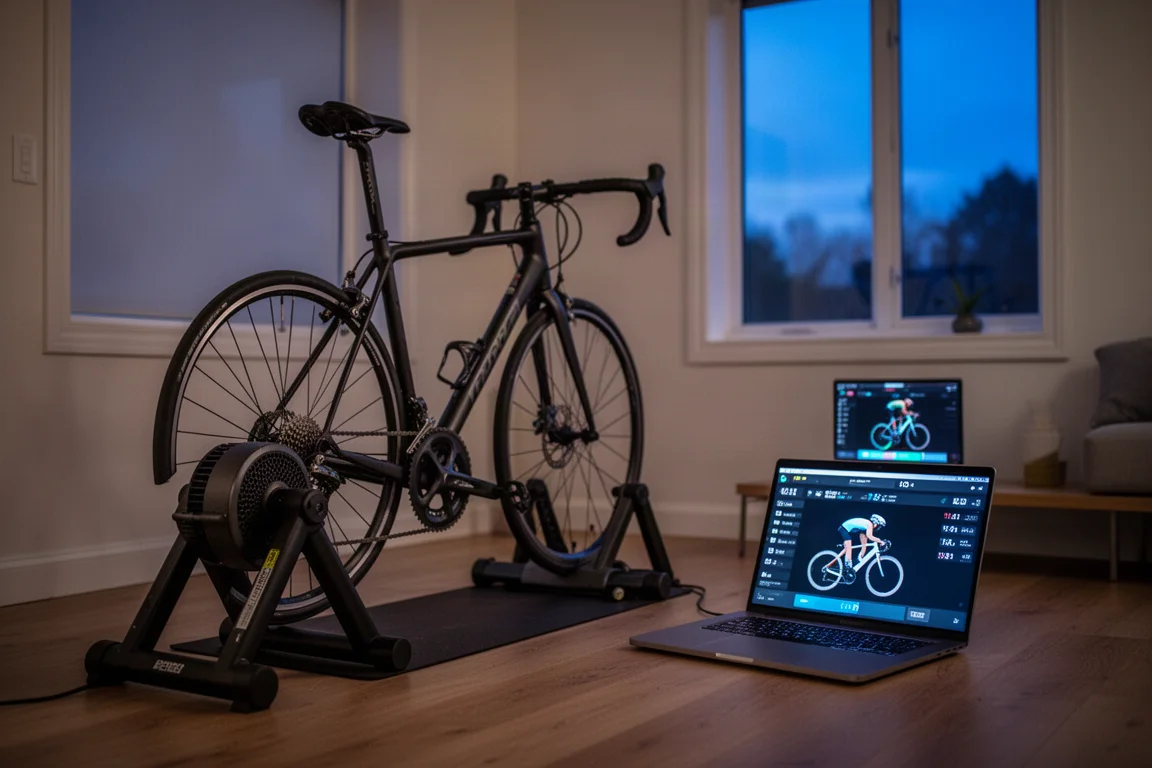
Noise is impressively low. At a normal riding volume there is just a light whirring hum from the virtual flywheel, and even during hard sprints the trainer stays quiet. Anything you hear from the extremes of your gear range is your drivetrain, not the trainer. For apartment dwellers or early morning riders, this is about as discreet as direct drive trainers get.
Power Accuracy
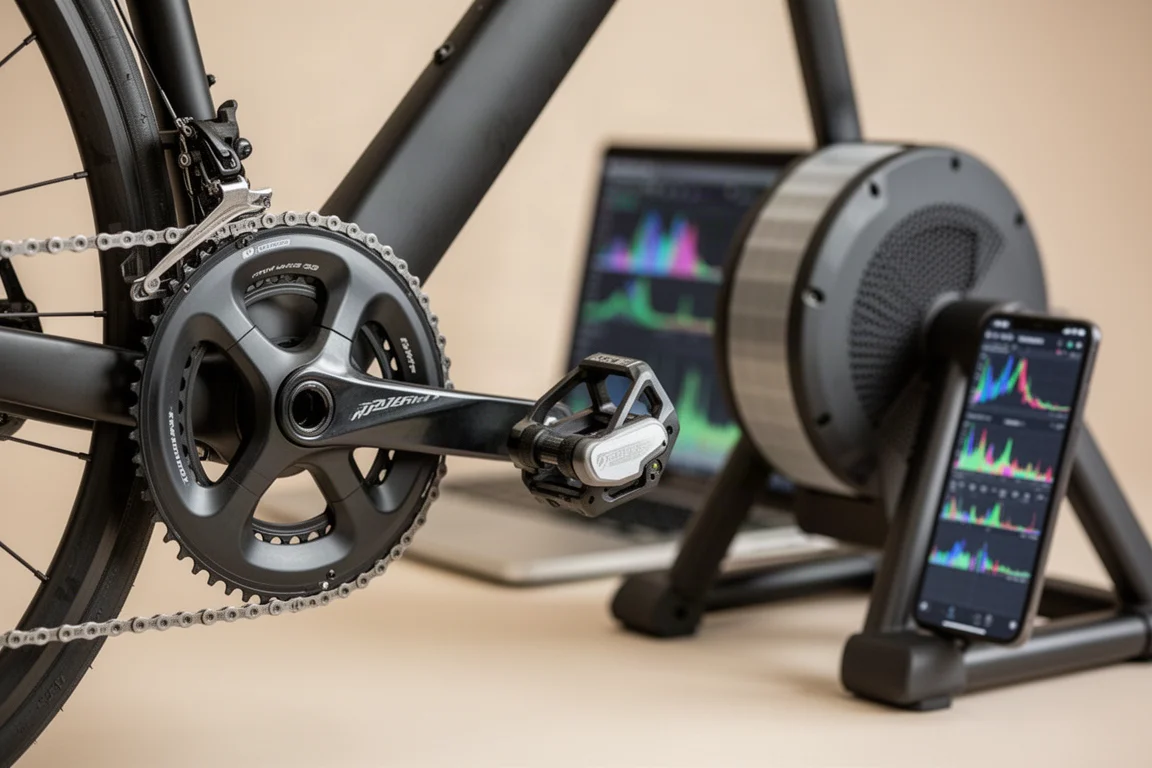
The plus or minus 1% claim holds up in testing. Compared against well-regarded power meter pedals, simulation rides on Zwift lined up almost perfectly, with some full-ride averages within a watt or two of the pedals, which is well within expectations once drivetrain loss is accounted for. Sprint peaks and ramps tracked closely, and the moments right after a sprint, where some trainers get funky, stayed spot on.
ERG mode rides showed similar results, with differences of only a few watts against pedal-based power. Testing across cadences from around 45 RPM up to faster spinning showed no concerns either. Calibration requires nothing from you; the trainer self-calibrates in the background.
ERG Mode Responsiveness
This is one of the areas Garmin specifically highlighted, and the 3M nails it. Resistance changes apply quickly and smoothly, landing in roughly a four-to-five second range depending on how large the change is, which strikes a good balance between feeling like a brick wall and lagging behind your power target. One edge case: if you overshoot or undershoot your target by 10-15%, the correction takes around three to four seconds, which is slightly slower than ideal but rarely matters in practice.
Things to Consider Before Buying
The Neo 3M is not flawless. The motion lockouts require dismounting to engage or disengage, which is less convenient than some rivals. There is no race mode or faster 10Hz transmission mode for virtual racing yet; Garmin says it is evaluating demand, so it may arrive later. Built-in Wi-Fi is missing, requiring the $129 network adapter instead. And the price is $2,000, which is $400 more than the Wahoo KICKR Move, a competitor that offers a saddle-mounted lockout, built-in Wi-Fi, and a race mode.
That said, the 3M counters with road surface simulation, downhill drive, the ability to ride unplugged, and outstanding ERG mode performance.
Buying Advice
If you want the best ride feel, low-end accuracy, and integrated motion in one package and the price does not scare you off, the Neo 3M is Garmin’s best trainer yet and an easy recommendation. If budget matters more, or you specifically value a convenient on-the-bike lockout, built-in Wi-Fi, or race mode, it is worth comparing it directly against the competition before committing. Riders who keep a trainer permanently set up may find the motion plates and handle less transformative, but the accuracy and responsiveness gains benefit everyone.
Conclusion
The Tacx Neo 3M delivers on its promises: excellent ride feel, verified power accuracy across a broad range, strong ERG mode behavior, and genuinely useful integrated motion that reduces fatigue on long rides. The premium price, lockout design, and missing built-in Wi-Fi are the main caveats, but as a complete high-end indoor training package, it is hard to beat.
Product link
View more details for Garmin Tacx Neo 3M
This product is mentioned in the review. Check the specifications, options, and compatibility before buying.
View more details for Garmin Tacx Neo 3MFurther reading
Related Reviews
Indoor Cycling
Best Budget Smart Indoor Trainer Setups: Six Options Worth Considering
Smart indoor trainers keep getting better while prices come down. Six setups and components worth considering, from the cheapest Zwift-ready option upward.
Indoor Cycling
Best Budget Smart Indoor Trainers for Immersive Cycling in 2026
A practical guide to affordable smart indoor trainer setups, including budget and mid-range options with virtual shifting.
Indoor Cycling
Best Indoor Cycling Apps and Smart Trainers: A Winter Buying Guide
A practical look at the indoor training platforms and smart trainers that matter this season, from a new challenger to Zwift to the entry-level trainer that stands out on value.