Cycling Accessories
Garmin Rally X10 Power Meter Pedals Review: Precision Balanced with Premium Features
After weeks of rigorous real-world testing, the Garmin Rally X10 power meter pedals deliver flawless accuracy and a stellar 90-hour battery life. However, their high entry cost and ecosystem limitations are worth noting.

Introduction
The Garmin Rally X10 marks Garmin’s fifth generation of power meter pedals, undergoing a complete mechanical and electronic overhaul. Following weeks of real-world testing, these pedals have proved to be standout performers in terms of accuracy and battery longevity. However, their substantial price premium and certain ecosystem limitations warrant careful consideration before buying.
Who These Pedals Are For
The Rally X10 pedals are best suited for:
- Dedicated cyclists seeking the most precise power data available on the market.
- Endurance riders who require class-leading battery life for multi-day events.
- Multi-bike owners looking to quickly swap their power meter setup between road and off-road rigs.
- Users who are already heavily invested in the latest Garmin Edge ecosystem.
Main Strengths
Exceptional Accuracy The Rally X10 performed flawlessly across all of our test protocols. Whether riding indoors or out on the road, its overall accuracy easily matched the claimed ±1% standard. During high-wattage sprint tests (spanning 1,100 to 1,300 watts), the pedals showed no signs of spiking or data dropouts. Even in high-cadence tests spinning up to 199 RPM, the data remained rock-solid.
Class-Leading Battery Life The new integrated rechargeable battery delivers an impressive 90 hours of riding time—triple the capacity of the SRM X-Power pedals. For the average rider, this means you will likely only need to plug them in once a month.
Modular Spindle System The road bodies (compatible with SPD-SL and Look Keo cleats) and off-road bodies (compatible with Shimano SPD cleats) share the exact same spindle core. Swapping between the bodies takes only a few minutes, making it incredibly convenient for multi-discipline riders.
Robust and Reliable Build The physical build quality is exceptionally robust. Through weeks of intense testing across road, gravel, and indoor training sessions, the hardware proved itself to be completely reliable and free of mechanical play.
What to Consider Before Buying
High Purchase Price and Maintenance Cost Retailing at $1,200 for the road version (Rally RS) and $1,300 for the off-road version (Rally XC), they command a $400 to $500 premium over the Favero Assioma Pro dual-sided power pedals. Replacement pedal bodies are also notably expensive ($300 for XC bodies, $200 for RS/RK bodies) compared to Favero’s replacement bodies, which retail for around $57.
Stiff Out-of-the-Box Bearing Rotation When brand new, the pedal bearings spin with a noticeable amount of resistance. While the rotation feels smooth, they do not spin freely. Although prior generations of Garmin pedals have loosened up and improved after a few hundred miles of break-in, it remains an annoying initial experience.
Ecosystem-Locked Features Advanced metrics like Pedaling Force analysis and Pedal IQ auto-calibration are locked behind Garmin’s secure Bluetooth protocol. This means these features are only accessible if you own a current-generation Garmin Edge head unit (such as the x40 or x50 series, or the Edge Explore 2). Users of Wahoo, Hammerhead, or other third-party computers will be locked out of these metrics.
Secure Bluetooth “Sticky Watts” Glitch When connected via secure Bluetooth, the pedals occasionally exhibit a “sticky watts” behavior, holding onto the last recorded wattage value for a brief period when you stop pedaling and coast. This can artificially inflate average power, Normalized Power, and TSS, particularly on routes with frequent stops. Garmin has acknowledged this firmware bug and is working on a fix.
Weight Premium At 438 grams for the dual-sided XC210 and 312 grams for the RS210, they are heavier than the Favero Assioma Pro equivalents, which weigh 384 grams and 247 grams, respectively.
Buying Advice
If you have already invested heavily in the latest Garmin Edge ecosystem and raw accuracy is your number one priority, the Rally X10 is arguably the finest power meter pedal on the market. The 90-hour battery life and modular spindle core system are genuine, practical advantages.
However, if you ride with a different brand of head unit or want to maximize value, the Favero Assioma Pro series delivers virtually identical accuracy while being lighter, cheaper, and having far more affordable replacement parts.
For the vast majority of cyclists, the core job of a power meter—accurately measuring your wattage and cadence—is handled equally well by any reputable system. The Rally X10’s premium features (like Pedaling Force analysis and Pedal IQ) currently offer limited practical utility and remain locked to specific head units.
Conclusion
The Garmin Rally X10 is the most polished power meter pedal Garmin has ever built. The tracking accuracy is flawless, the battery life is industry-leading, and the physical craftsmanship is top-tier. Even so, the premium price tag, heavier weight, and locked software features mean many riders will be better served by more cost-effective alternatives.
Ultimately, these pedals are designed for riders who are fully committed to the Garmin ecosystem and are willing to pay a premium for premium hardware. For everyone else, there are equally accurate and more affordable options available.
Product link
View more details for Garmin Rally X10
This product is mentioned in the review. Check the specifications, options, and compatibility before buying.
View more details for Garmin Rally X10Further reading
Related Reviews

Cycling Accessories
7 Inexpensive Everyday Products That Are Brilliant for Cyclists
Seven cheap household products that solve real problems for cyclists, from portable bike washing and dry shoes to clean bottles and protected paintwork.

Cycling Accessories
Amazon Cycling Accessories Worth Buying: Five Practical Picks
A basket of low-cost cycling accessories judged on real-world use, from a dash cam style camera and light combo to bone conduction headphones and one tool best left on the shelf.
Cycling Accessories
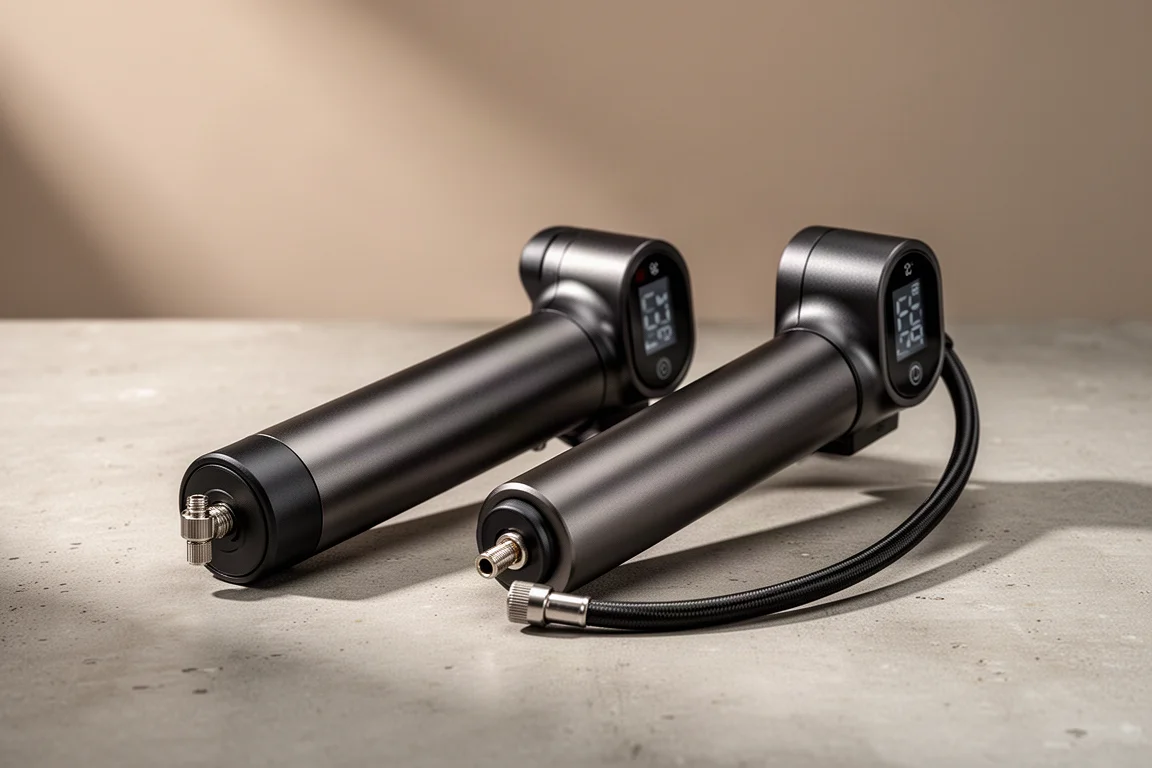
Electric Bike Pumps Compared: AS2 Pro Tiny Pump vs AS2 Pro Max
A practical look at two battery-powered bike pumps: what they do well, where they fall short, and which one suits which kind of rider.