Sports Watches
Garmin Marq Gen 2 Jet Lag Advisor Review: Does It Actually Help?
A long-haul, multi-stop trip from Colorado to Malaysia put the Garmin Marq Gen 2's Jet Lag Advisor to the test across a 15-hour time difference.

Introduction
Jet lag is one of those problems every frequent long-haul traveler knows by heart: your internal clock ends up stranded in another time zone while your body is somewhere else entirely. Garmin’s Jet Lag Advisor, introduced alongside the Marq Gen 2 line of luxury sports watches, is designed to help with exactly that, offering customized guidance on when to sleep, when to seek light, when to avoid light, and even when a nap or caffeine might help.
To see whether the feature lives up to the promise, it was put to the test on a genuinely demanding itinerary: a trip from Colorado to Malaysia, roughly the opposite side of the world, with a multi-day stop in Amsterdam. That route stacks a massive 15-hour time difference between Malaysia and Colorado on top of two separate flights, making it about as thorough a stress test as the feature is likely to get.
What the Jet Lag Advisor Does
The feature provides personalized reminders to ease the transition across time zones. It is not a magic pill, and seasoned travelers will recognize much of the advice, such as gradually shifting your sleep times before departure to soften the change. What it does well is turn broadly known tactics into timely, specific nudges so you are less likely to slip into full-on zombie mode.
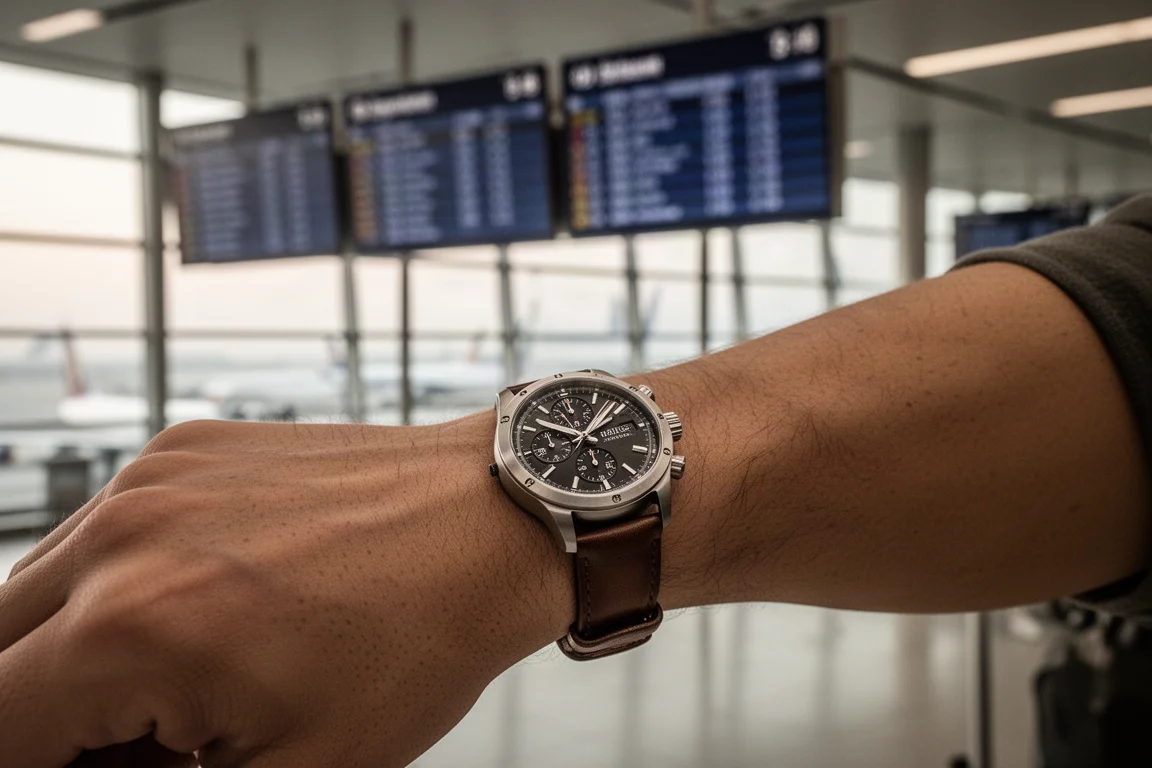
A useful detail is that the guidance is not limited to the days spent traveling. It also covers the period leading up to your trip and the days after you return, both of which matter for a smooth re-adjustment.
One current limitation worth knowing: the guidance is tailored using your sleep history only. It does not yet account for your typical workout schedule, though Garmin has indicated it is looking at additional factors for the future.
Setup and Trip Planning in Garmin Connect
Everything starts in the Garmin Connect smartphone app, under the Training and Planning section in the More tab. Because the advisor provides pre-trip guidance, the recommendation is to set up your trip at least three days before departure.
Setup is straightforward. You enter your departure city (or use your current location), departure date and time, then your first destination with its arrival date and time. For short layovers of a few hours, you are told not to enter connecting flights and to simply use your final destination. Longer stops can be added properly: with an Amsterdam stay of a few days, adding a next destination worked well, and the multi-stop flow repeats for each additional city. The return trip is entered the same way before finishing.
Once the trip is in place, the Jet Lag Advisor widget on the watch shows your local time versus your destination time, the time difference you need to overcome, an estimate of how serious the jet lag will likely be, and suggestions such as avoiding bright light before bedtime or going to bed earlier to start shifting your clock.
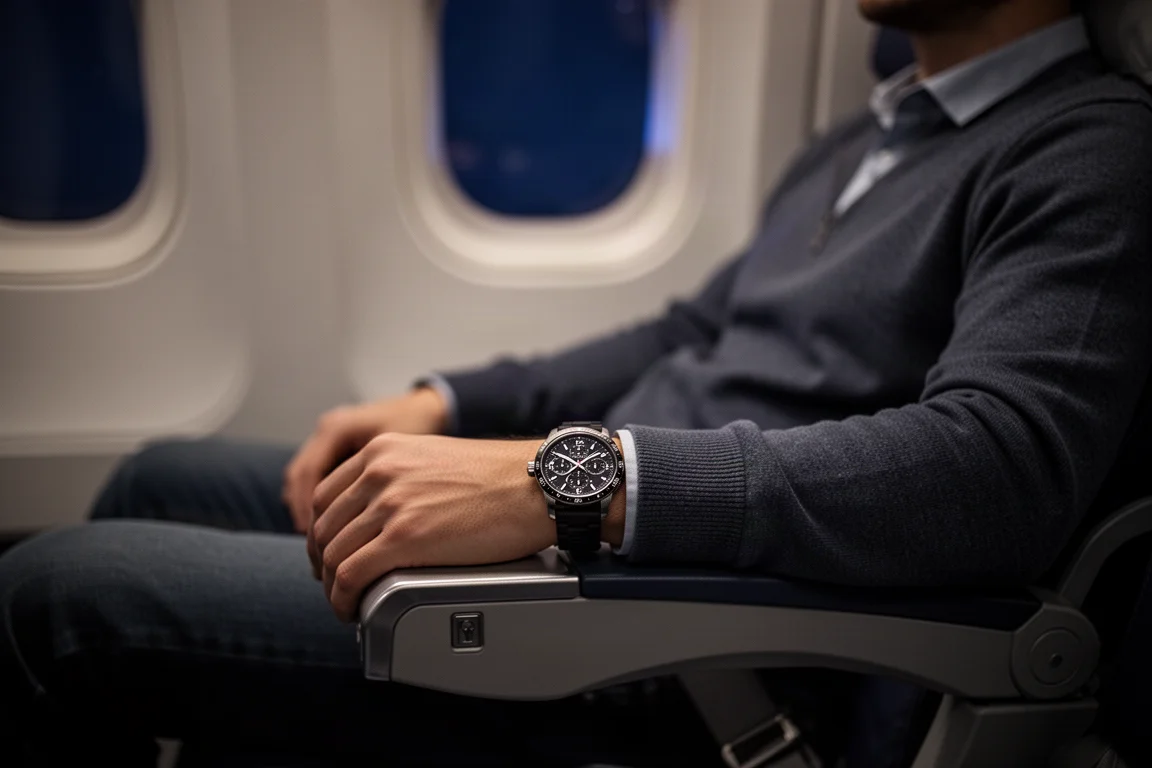
During the pre-trip phase, the alerts were sensible: a morning prompt to be active to jump-start the day, and an evening bedtime reminder around 8 p.m. to avoid light and get to bed earlier. With a usual 10 p.m. to 6 a.m. sleep schedule, that was only about an hour of shift, which felt a touch conservative for a seasoned traveler who would have preferred an even earlier head start. That is the one area where a more proactive approach would have been welcome.
In-Flight and On-the-Ground Guidance
On departure day, the app advised seeking light around 4 a.m. local time (noon Amsterdam time) and being active between 5:30 and 8 a.m. to wake the body up before the flight. It then suggested avoiding light from noon local time and attempting sleep around 3 p.m., timed to the flight itself. About ten minutes after takeoff, an alert to avoid light appeared, which was exactly the kind of reminder that helps you get ahead of the new time zone.
The timeline for the rest of the flight suggested seeking light around noon Amsterdam time, being active immediately after landing, avoiding light from around 8 p.m., and sleeping around 10 p.m. destination time. The be-active-after-landing advice lines up with a tactic many frequent travelers already use, such as hopping on a workout shortly after arrival to get the body moving.

The first morning in Amsterdam told a good story. At 10:54 a.m. local time, the watch estimated the body would feel like it was 4:54 a.m. back in Colorado, meaning the time difference had already been offset by about two hours. By the second morning, it estimated only about a five-hour difference remained, roughly three hours of adjustment in two days. For someone used to these trips who normally adapts to an eight-hour shift within about three days, that estimate feels on the conservative side, but for less seasoned travelers it may be about right.
The Tougher Test: A Second Time Zone Shift
The real challenge came the day after arrival, with a flight to Malaysia, another seven time zones ahead of Amsterdam. The night before, the timeline showed the feature adjusting forward sensibly: being active from about 8 to 10 p.m., seeking light from 9 to 11 p.m., then bed at 11 p.m. for a 7 a.m. wake-up.
A couple of quirks surfaced on this leg. About four hours before the evening flight, the only guidance was to avoid light during the flight, with no suggestion to sleep leading up to or during the 12-hour trip, which would have been expected for a 9 p.m. departure. Similarly, on approach to Malaysia around 3 p.m. local time, there was no advice to seek light in the hours just after landing, though it did advise avoiding light from around 8 p.m. and getting to bed then, with a bedtime alert arriving around 7 p.m.
Even so, the practical outcome was impressive. Despite the enormous combined time shift, sleep that night was close to normal and surprisingly good. The next morning at 7:40 a.m. Malaysian time, the advisor estimated the body would feel like 4:40 p.m. in Colorado, yet the feeling was surprisingly climatized. A 9 a.m. prompt to be active and delay the body clock followed, along with one of the feature’s nicest touches: a midday reminder that, if feeling groggy, there was roughly a two-hour window to take a nap or consume some caffeine to stay functional without crashing at 5 p.m.
Getting Back Home
The return leg showed the feature thinking clearly about recovery. Before takeoff from Amsterdam to Colorado, it advised avoiding light for the first three hours of the flight, then seeking light for the remainder, effectively advising against sleeping for the entire trip home. The logic holds: sleeping on the plane would delay the body clock and risk arriving too rested to sleep that night.
Landing in Denver at 5 p.m. local time, the watch displayed the full 15-hour difference from Malaysia and estimated the body clock felt like 7 a.m. The post-trip timeline suggested bed at 8 p.m. and wake-up at 6 a.m., a modest shift from a normal schedule, but a hefty ten hours of recommended sleep given the instruction not to sleep during the flight.

In practice, execution was imperfect: nearly ten hours in bed yielded a little over five hours of actual sleep, and the body clock was, frankly, all over the place. Throughout the following week, though, a steady stream of useful alerts arrived: morning prompts to get active, bedtime reminders to get to bed at a decent hour, and generally sound advice to get back on local time.
Buying Advice
For frequent international travelers, much of what the Jet Lag Advisor suggests will already be familiar, and the feature acknowledged as much in its own guidance. The value comes from the reminders themselves, particularly around seeking and avoiding light at the right moments, which are easy to miss when juggling flights and connections. For less experienced travelers, the structured guidance is arguably even more useful, since it packages well-established adjustment tactics into a clear, personalized schedule.
If you want the feature, the Marq Gen 2 is where it launched, but it is not locked to that line. Garmin has said the Jet Lag Advisor will roll out officially to other devices, including the Fenix 7 and Epix Gen 2, during 2023 via software update.
Conclusion
Across a 15-hour swing, multiple stops, and nearly 50 hours in the air over two weeks, the Jet Lag Advisor proved genuinely useful. The suggestions during the trip were consistently sensible, and the after-trip guidance helped steer things back toward local time. Two shortcomings stood out: the pre-trip phase could be more proactive with a better head start on big shifts, and the feature fumbled slightly on the second leg to Malaysia, where sleeping for part of the flight seemed like an obvious omission. Even with those quirks, for anyone who crosses time zones regularly, having these alerts on the wrist is a welcome addition to the travel toolkit.
Product link
View more details for Garmin Marq Gen 2
This product is mentioned in the review. Check the specifications, options, and compatibility before buying.
View more details for Garmin Marq Gen 2Further reading
Related Reviews

Sports Watches
Garmin Sports Watch Guide: Finding the Right Model for Your Fitness Level
A comprehensive overview of Garmin's sports watch lineup, from casual fitness trackers to advanced multisport devices, helping you choose the right model for your needs and budget.
Sports Watches
Coros Pace Pro Review: A Complete Overhaul That Finally Feels Premium
Coros rebuilt the Pace Pro from the ground up with an AMOLED display, onboard maps, and a new heart rate sensor. Here is how it all holds up in real use.
Sports Watches
Polar Vantage M3 Review: The Sweet Spot in Polar's New Watch Lineup
A closer look at the Polar Vantage M3, which brings an AMOLED display, dual-frequency GPS, offline maps and the same software platform as Polar's flagship watches at a friendlier price.