GPS Sports Watches
Garmin Instinct 3 Tactical vs Standard Instinct 3: Is the Tactical Premium Worth It?
The Instinct 3 Tactical adds night vision compatibility, stealth mode, a kill switch, and extra sport profiles on top of the standard Instinct 3. Here is how the two differ and which one makes sense.
Introduction
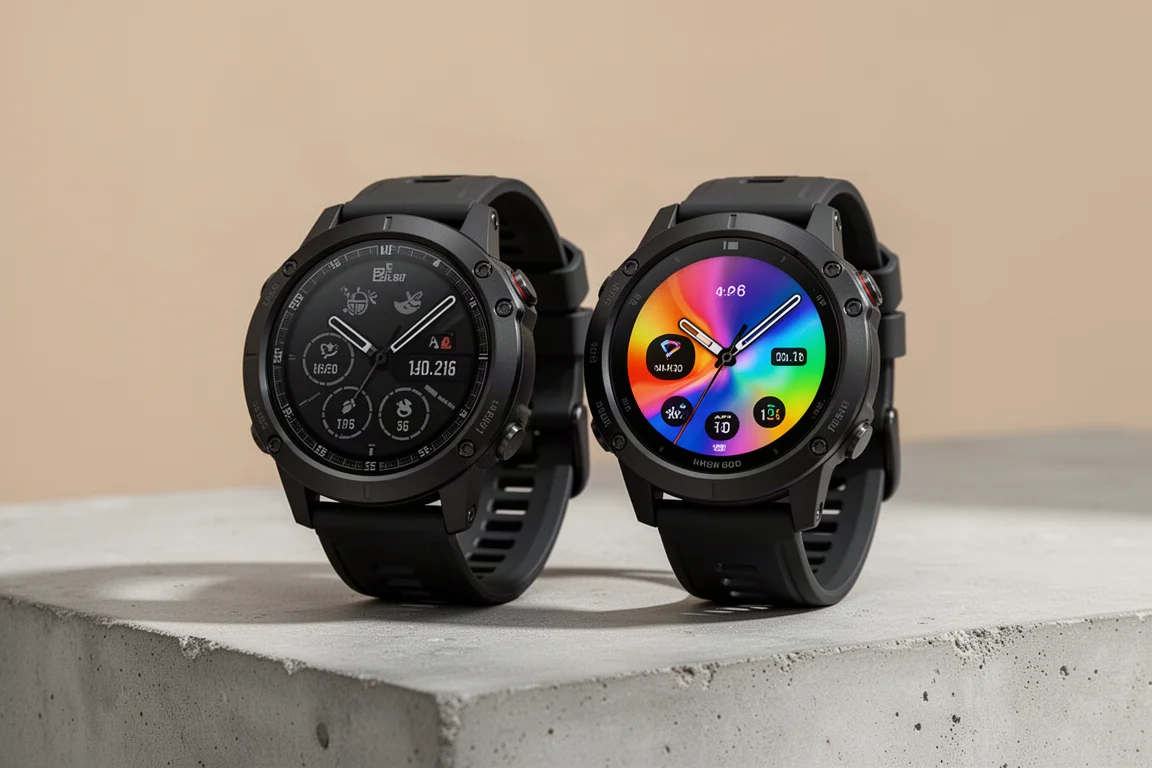
Garmin’s Instinct 3 Tactical takes the recently released standard Instinct 3 and layers on dedicated tactical features: additional sport profiles, specialized settings for use with night vision goggles, and a few security-related tools. Underneath, it is the same full-featured sports watch, so the real question is whether those extras justify the premium for how you actually train and travel.
Both watches are available in Solar and AMOLED versions, track running, cycling, swimming, gym sessions, and a long list of outdoor activities, and include 24/7 heart rate, sleep tracking, HRV, and Garmin’s training readiness features. This comparison focuses on what the Tactical edition changes, so you can decide whether to pay for the tactical package or stick with the standard model.
Design and Construction
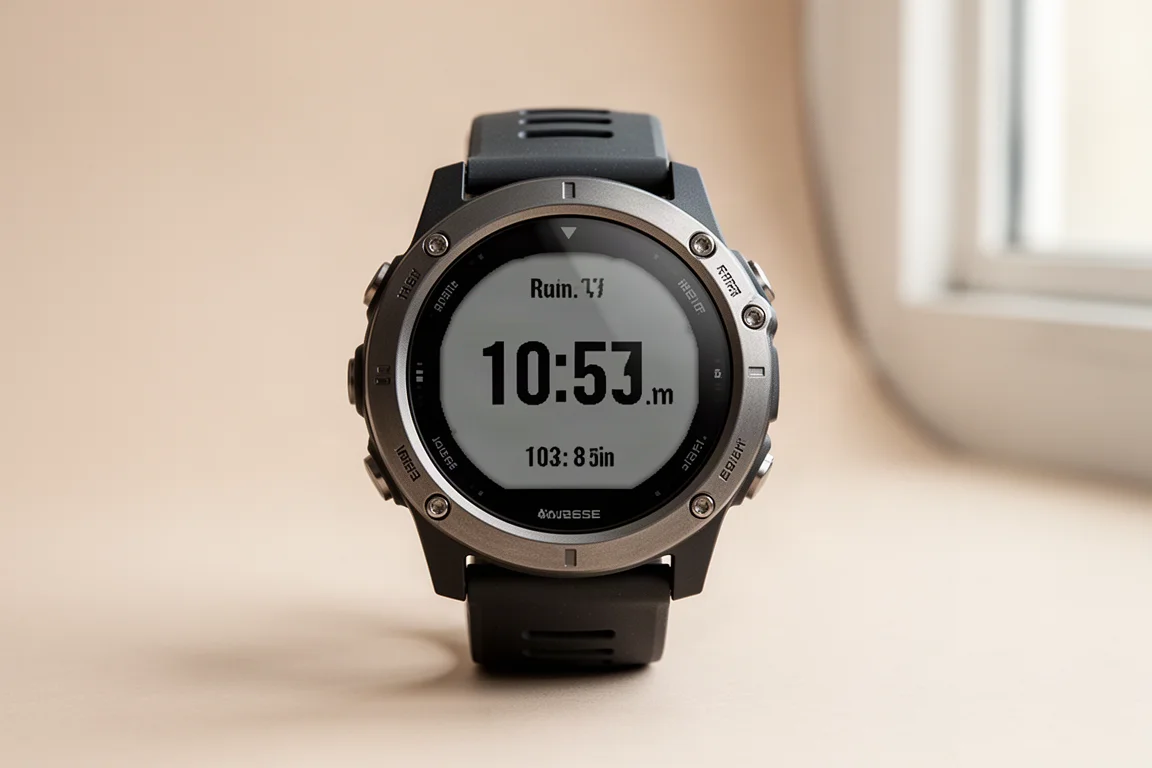
Construction is identical across both versions: a plastic body, a metal accent ring, and a plastic bezel on top. Materials and durability carry over unchanged. The differences are purely cosmetic. The Tactical edition’s bezel has a completely smooth inner diameter where the standard model has cutouts, and it exposes more of the metal accent ring at the top and bottom of the bezel, almost like an inverted take on the standard design.
Color is where the Tactical editions stand out most. Every Tactical model ships in black, and the Tactical Solar versions are genuinely all black, dropping the orange accent on the stainless steel ring found on the standard Solar model. On the AMOLED side, the Tactical’s metal ring is a darker shade than the standard model’s gunmetal finish, and the buttons are a truer black. The standard editions also carry more etching on the glass, with silvery-white lines on AMOLED and orange and white lines on Solar, which are absent here.
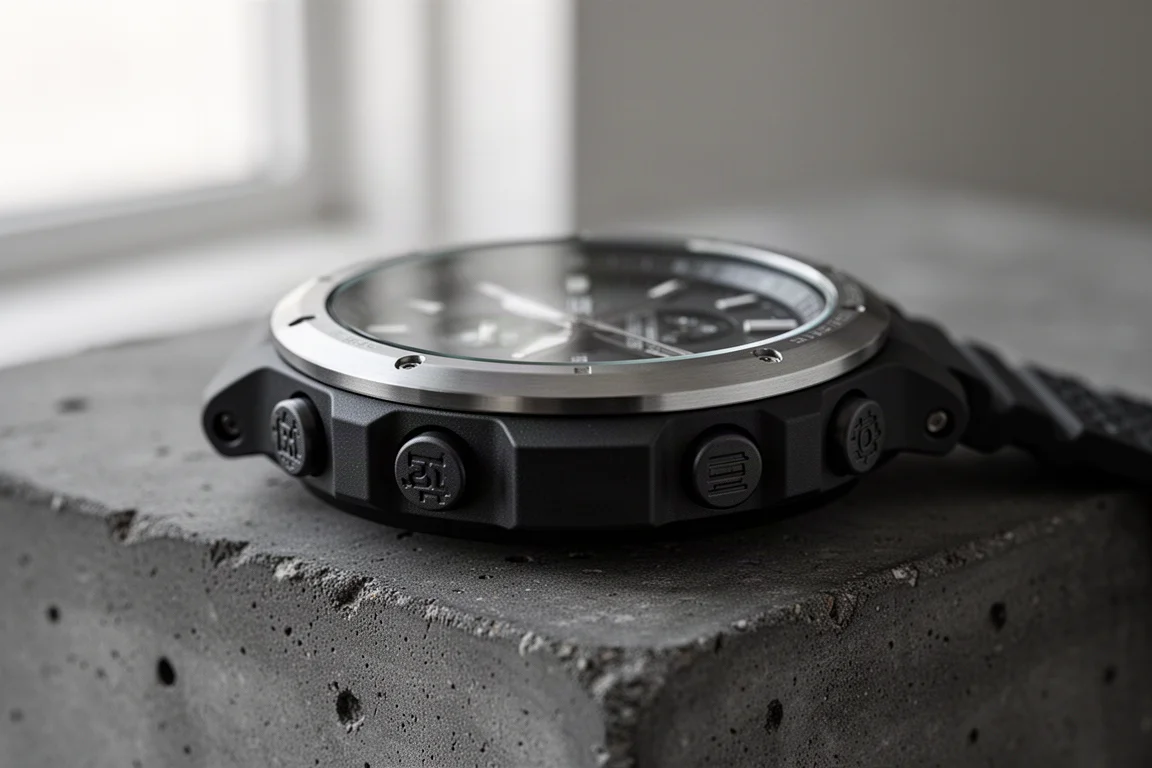
If you want an all-black Solar Instinct 3, the Tactical edition is currently the only way to get one. That alone may sway some buyers who have no interest in tactical features at all.
Display Options: Solar vs AMOLED
Both display types carry over from the standard Instinct 3, and each has clear trade-offs. The Solar model’s memory pixel display is excellent in direct sunlight, actually getting brighter and more visible as the sun gets stronger, with impressive contrast and the potential for nearly unlimited battery life given enough solar exposure. Compared with the previous generation, the Solar Instinct 3 displays are significantly clearer, thanks to more efficient solar panels around the display edge that are now basically all black rather than sporting a reddish-purple hue. Garmin also removed the translucent solar panel that used to sit on top of the display, which helped readability, while still improving battery life claims.
The downsides: less resolution than AMOLED, and the screen is harder to read at a glance without direct sun or the backlight, for example at night. That subtlety can be a feature in itself, though, since the display emits no light unless you ask for it.
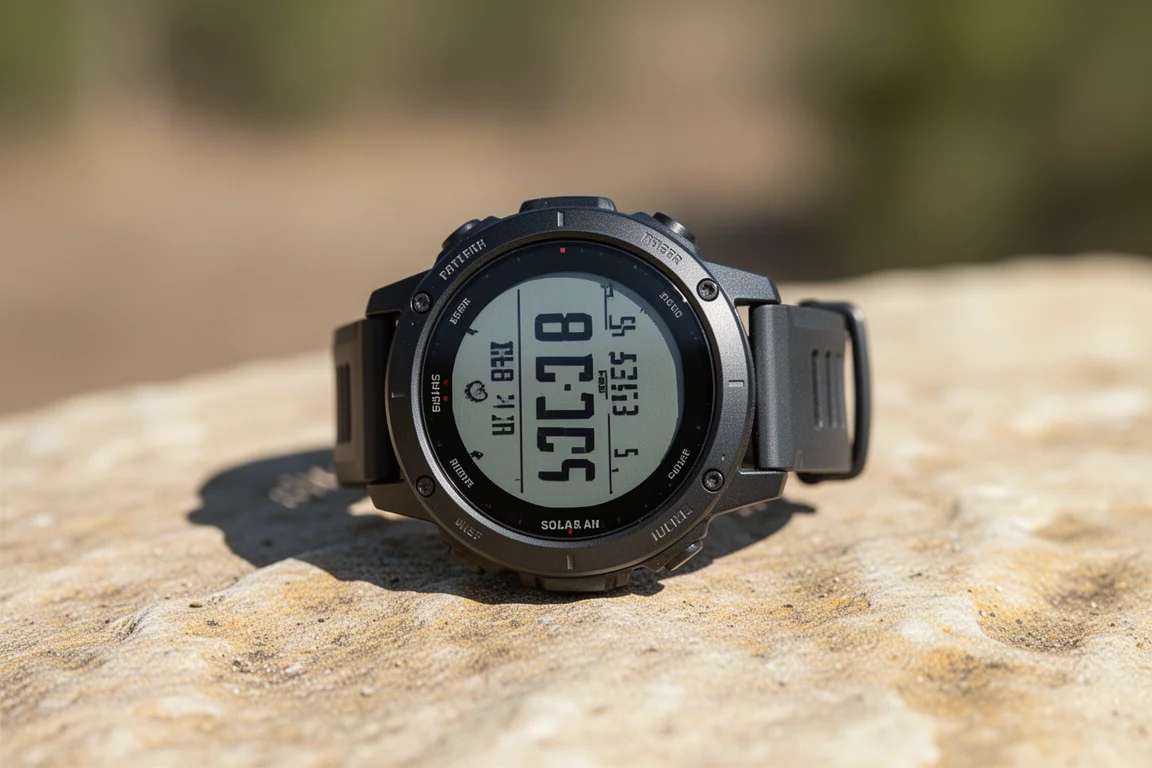
The AMOLED model works like a smartphone screen: bright, colorful, high resolution, capable of richer charts and more information on screen. Its main cost is battery life, ranging from roughly 8 to 9 days up to about 3 weeks depending on whether you use the always-on display mode. Outdoor visibility is no longer a real problem with current AMOLED technology. The AMOLED Tactical has a 1.3-inch display, while the Solar models use a 0.9-inch square display on the 45mm case and a 1.1-inch display on the 50mm case, the smaller sizes a consequence of the solar panels surrounding the screen. There is no solar AMOLED option because current solar panels cannot meaningfully offset an AMOLED display’s power draw.
On sizing, the Solar Tactical comes in 45mm and 50mm, but the AMOLED Tactical is only offered in 50mm, even though the standard Instinct 3 offers both display types in both sizes. Neither watch has a touchscreen; both use the traditional five-button layout, which remains a slightly odd choice on an AMOLED model.
Tactical Features: Night Vision, Stealth Mode, and Kill Switch
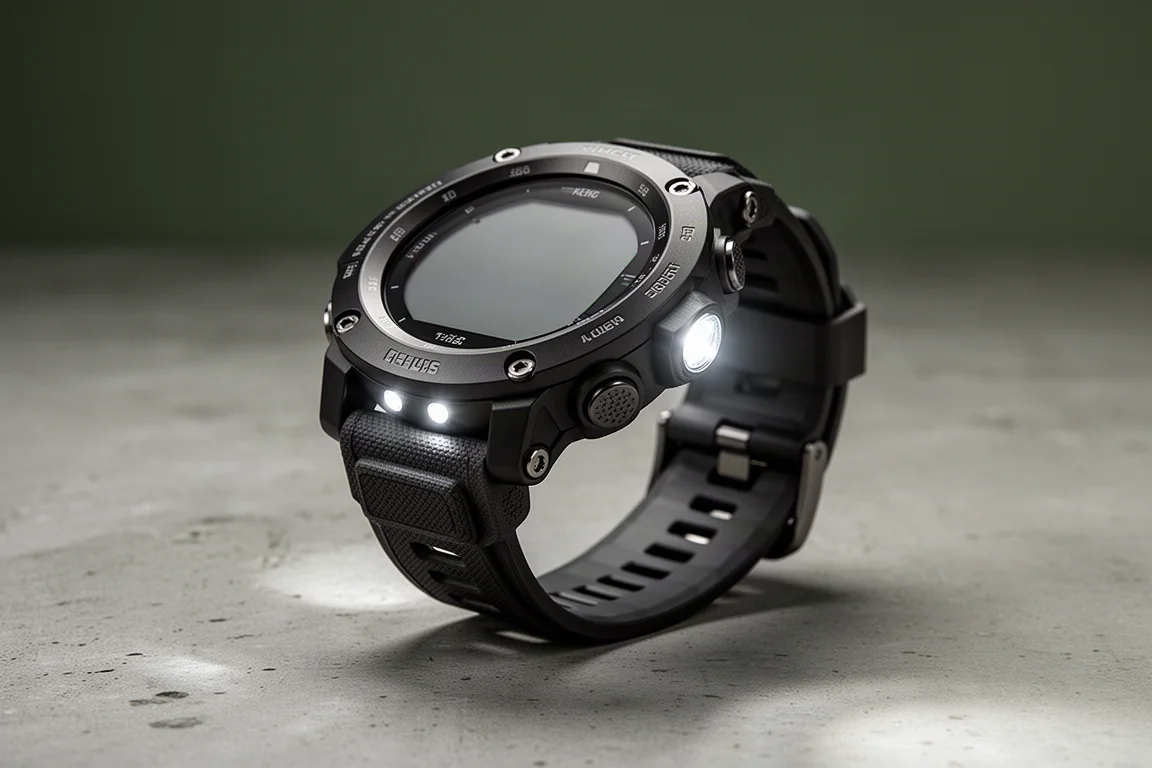
This is where the Tactical editions earn their name. The Tactical AMOLED has a minor internal component change that enables a night vision mode designed for use with night vision goggles. It dims the display below the standard model’s minimum brightness, disables the optical heart rate sensor on the back, and swaps the flashlight’s white LED for shades of green. That flashlight change extends to the whole Tactical line: standard Instinct 3 models offer white and red LEDs, while Tactical models use white and green. The Tactical AMOLED also keeps red shift mode, letting you tint the entire interface red, green, or orange for evening use. The Solar models skip red shift mode entirely, since their display emits no light unless the backlight is on. Night vision mode on the Solar variants disables the heart rate sensor as well and kills the backlight completely to avoid blowing out night vision goggles.
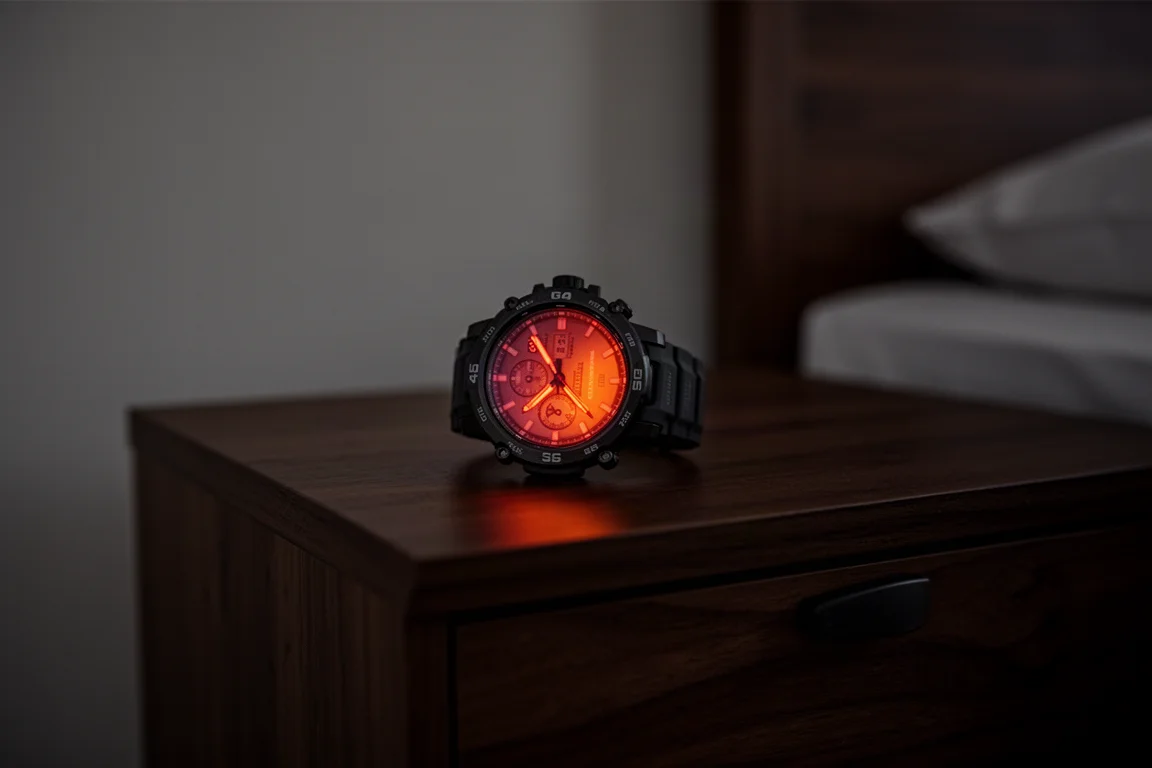
Stealth mode disables all wireless communications, including Bluetooth, the phone connection, music controls, and contactless payments, and stops recording location data. You can still track an outdoor activity and see distance and physiological metrics; the watch simply never logs coordinates, so the map page shows no breadcrumb trail. A kill switch feature lets you wipe all data and factory reset the watch with a hotkey combination, such as the start and down keys together, after a 10-second countdown. Notably, there is currently no menu-based way to trigger this on the Instinct 3 Tactical, which differs from Garmin’s higher-end tactical watch, though the hotkey approach is arguably quicker and more discreet anyway.
Sport Profiles and Tracking
As full-featured sports watches, both models cover running, cycling, swimming, triathlon, a wide range of gym profiles, skiing, snowboarding, paddle boarding, and team and racket sports. The Tactical editions add tactical-specific profiles: a jump master profile for parachute operations and applied ballistics support for long-range shooting aiming solutions. The ballistics feature requires a separate payment to access, unlike Garmin’s higher-end tactical watch, which includes the light tier and offers an elite upgrade. The Tactical models can also pair with additional sensors for applied ballistics and with spectronic sensors, on top of the standard sensor support for external heart rate, speed and cadence, temperature, and dog tracking devices.
The Tactical editions also introduce a rucking activity profile where you can enter a pack weight up to around 200 pounds. It is worth understanding what this actually does: it tracks the weight you are carrying, but it does not change physiological metrics like calories, which are calculated from heart rate regardless. Side-by-side testing of a standard hike profile against a rucking profile with pack weight entered produced calorie totals within about one calorie of each other. You can enter a pack weight for running, walking, trail running, and hiking too.

One important note for existing owners: the rucking profile, though marketed as a Tactical feature, is coming to the standard Instinct 3 via a software update around the summer 2025 quarterly release, and current owners can access it early through Garmin’s beta program. Do not buy the Tactical edition just for this profile. Similarly, some features highlighted as tactical, such as projected waypoints, dual grid coordinates, and the tactical profile that uses dual grid coordinates as a data field, are also available on the standard Instinct 3.
Pricing and Buying Advice
The Tactical AMOLED runs $599 versus $499 for the standard AMOLED, and the Solar Tactical models carry the same $100 premium over their standard counterparts. For buyers who genuinely need night vision goggle compatibility, stealth mode, the kill switch, or the jump master and ballistics capabilities, the premium is straightforward to justify.
For everyone else, the math is less compelling. If the rucking profile or the general tactical profile is what attracted you, the standard Instinct 3 delivers those, and the projected waypoints and dual grid coordinates features come along as well. The one scenario that keeps the Tactical edition relevant for non-tactical buyers is aesthetics: it is currently the only all-black Solar option.
If you simply want a rugged, feature-packed sports watch without the tactical package, the standard Instinct 3 in Solar or AMOLED form covers everything else at a lower price.
Conclusion
The Instinct 3 Tactical is the standard Instinct 3 with a focused set of additions: night vision compatibility, stealth mode, a data wipe hotkey, extra sport profiles, and an all-black finish. If those features map to real requirements in your work or training, the $100 premium buys exactly what you need. If not, the standard Instinct 3 remains the smarter buy, especially since its most talked-about Tactical feature, the rucking profile, is arriving on the standard model through software.
Further reading
Related Reviews
GPS Sports Watches
Polar Grit X2 Pro vs Vantage V3 vs COROS Vertix 2S: Which Flagship Adventure Watch Makes Sense
Polar's new flagship shares its internals with the Vantage V3 and goes up against the COROS Vertix 2S. Here is what two months of testing revealed about GPS, heart rate, navigation, and value.
GPS Sports Watches
Coros Apex 2 vs Garmin: Six GPS Sports Watches Worth Comparing
A practical look at the Coros Apex 2, Apex 2 Pro, Vertex 2, and three Garmin rivals, with what each does well and where the trade-offs sit.
GPS Sports Watches
Coros Apex 4 Hands-On: Titanium Build, Faster Mapping, and a Battery Built for the Mountains
A first look at the new Coros Apex 4 GPS sports watch, including its titanium construction, improved mapping, built-in speaker, and standout battery life.