Satellite Communicators
Garmin inReach Subscription Alternatives: TrackMe NZ and ProteGear Compared
A practical look at two approved third-party Garmin inReach subscription providers and how their plans compare with Garmin's own options.
Introduction
If you own a Garmin inReach, you are not locked into buying your subscription from Garmin. Approved third-party providers resell inReach airtime under their own plan structures, and they work with Garmin to transfer service across. Nothing about that arrangement breaks the rules, and for some users it opens up billing models Garmin does not currently offer.
The two providers worth knowing about are TrackMe NZ and ProteGear. Each takes a different approach. TrackMe leans on message and data based billing with unusually hands-on support, while ProteGear focuses on short, flexible periods that scale automatically as a trip runs long.
This guide walks through how third-party inReach plans work, what each provider does well, and when Garmin’s own consumer plans remain the simplest answer.
How Third-Party inReach Plans Work
The mechanics are straightforward. These companies buy satellite data from Garmin, either directly or through another party, repackage it into plan structures they think suit their customers, and resell it. It is the same model that mobile virtual network operators use when they buy network capacity from a major carrier and build their own plans on top of it.
Both providers here are approved by Garmin, and service transfers run through Garmin rather than around it. In practice the device keeps working exactly as it did before, with a different billing structure behind it.

The practical differences show up in the details: how messages are counted, whether tracking is unlimited, which weather service is used, and how much human support is available when something goes wrong.
Garmin inReach: The Standard Reference Point
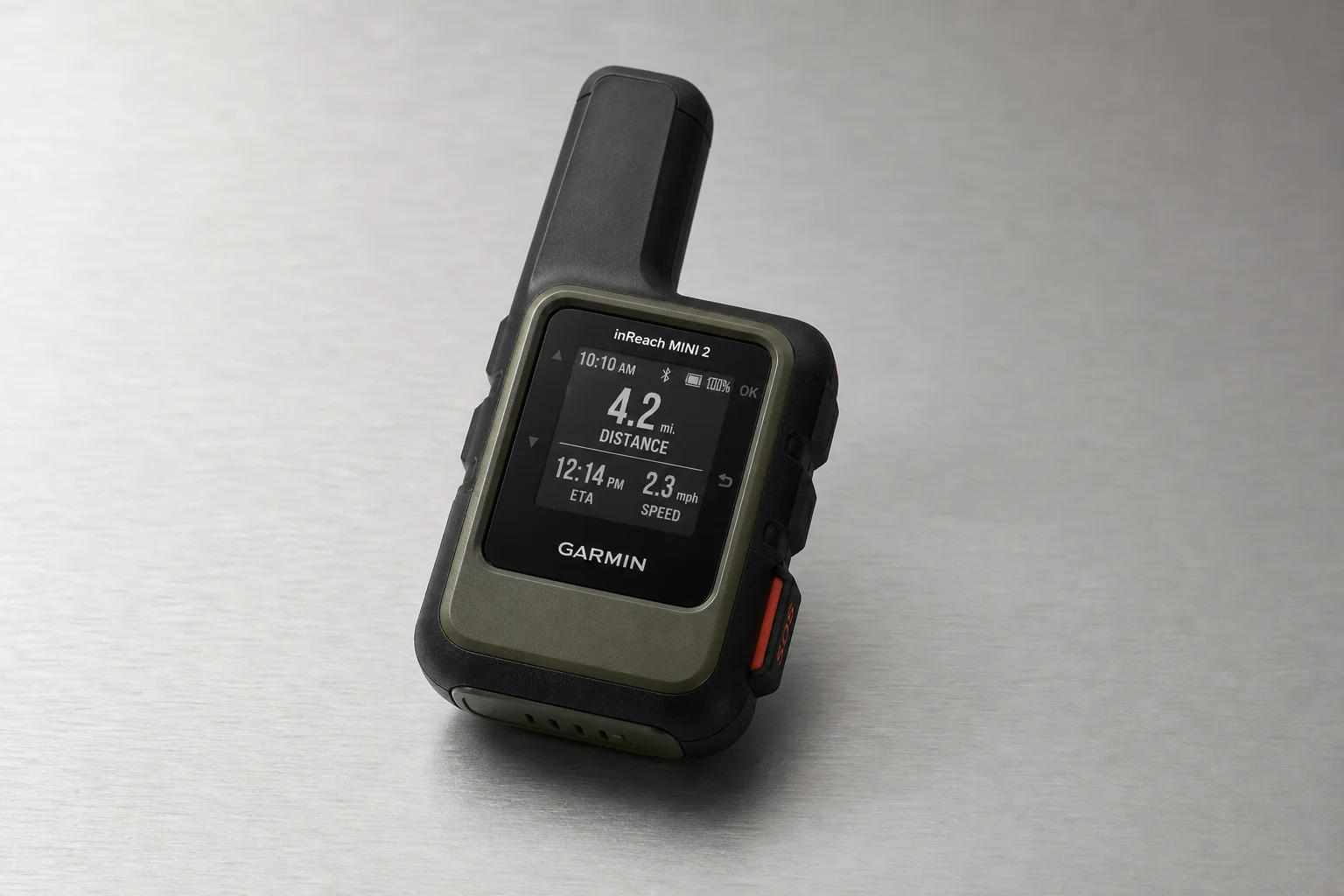
For most people, a standard Garmin subscription remains the easiest choice, and it is the baseline the third-party plans are measured against. Garmin’s consumer tiers cover the core functions of the device, and Garmin also publishes a system status page where service degradation can be checked.
The plan worth highlighting is the annual Recreation plan at around $25 per month in the US. The reason is tracking. When tracking is switched on, the device leaves a breadcrumb trail, and if something goes badly wrong, that trail gives search and rescue a last known position to work from. Unlimited tracking points make it practical to leave tracking running for the whole trip rather than rationing it.
The annual Safety plan is a lower-cost entry at around $11.95 per month in the US. Tracking is available on that plan too, billed at $0.10 per point, which works out to roughly $0.60 per hour at a ten-minute tracking interval. For occasional trips that can be a very small additional cost.
Garmin also offers professional plans for teams that need multiple inReach devices on one account.
TrackMe NZ: Message and Data Plans with Hands-On Support
TrackMe is based in New Zealand and splits its offering into two families. Recreation plans are billed by message, which suits individual users who know roughly how much they will communicate. Team plans are billed by data, letting multiple users draw from a shared pool of bytes that can be applied to any inReach function. TrackMe publishes a chart showing how much data each function consumes, which makes it possible to estimate usage before committing.
Several features stand out. Every plan includes unlimited tracking, though intervals differ between tiers. A basic weather report is included without using a message credit, where Garmin’s service treats a weather request as a message. Check-in and preset messages can be customised here, which is not possible on newer inReach accounts under Garmin’s own configuration.
SOS calls can optionally be handled by Focus Point, an emergency response centre that works as an alternative to Garmin Response. Focus Point requires its own subscription and is staffed by people with emergency services backgrounds.
There are other practical touches. TrackMe issues a dedicated SMS number so contacts can message the device directly without an app, though that number will be a New Zealand or Australian one. A dashboard lets you audit messages and data, view positions on a map, and confirm whether track points are actually going through. Third-party services such as Follow My Challenge can be connected from the same dashboard. For an additional cost, automated monitoring can be added, so a missed check-in at an expected time can trigger an SOS.
Support is the strongest argument here. On sign-up, TrackMe sends a spreadsheet covering check-in messages, contacts and quick texts. You fill it in, return it, and receive a configuration file that loads the whole setup onto the device. Email replies are fast, and the team also sends out notices when the inReach service is degraded, something Garmin’s status page requires you to go and check yourself. TrackMe also resells third-party plans for SPOT and Zoleo devices, and multiple device types can sit on a single account, which is useful for events and group trips.
Pricing is quoted in New Zealand and Australian dollars, and plans are offered to users in other countries. If you are outside those markets, contact TrackMe directly to confirm availability.
That configuration service is the part that saves the most time, particularly for anyone who has wrestled with preset messages on the device itself.
ProteGear: Pay-as-You-Go Flexibility from Germany
ProteGear is based in Germany and approaches billing from the other direction. Instead of a monthly commitment, you pay per day, per week or per month, and a dashboard lets you switch a plan on and off around each trip.
The rollover behaviour is the neat part. If you choose a daily plan and forget to turn it off, a longer trip rolls automatically into the weekly plan and then into the monthly plan, each of which costs less per day the longer it runs. That acts as an automatic cost limiter rather than an unpleasant surprise.
Choosing a plan is helped by a data advisor on the website, which asks a short set of questions and points to the tier that matches your usage. Presets are customisable, and the dashboard covers contact management and a broad set of configuration options.
Messaging works differently too. ProteGear provides a dedicated email address that can be used from any email account at any time, not only for inReach-to-inReach messages. Weather comes from MetGIS, and any tracking interval can be used with their plans.
For safety automation, ProteGear offers a Smart Safety Switch. It behaves like a dead-man switch: if you deviate from a planned course, a nominated party can be notified first, and a second attempt escalates the alert to an SOS service. The company also works with the maritime community, which says something about how the plans are used in practice.
The dashboard is on the technical side, but support is responsive. Email queries are typically answered within a day and often much faster, and the team has been willing to help with dashboard setup rather than leaving users to work it out alone.
Matching a Plan to Your Usage
The right choice comes down to how you actually use the device.
If you carry an inReach as a standard safety net and take a handful of trips a year, Garmin’s annual Safety plan is hard to argue with, and paying per tracking point keeps the cost low when you are not moving often. If you want tracking left on for entire trips and the reassurance of a breadcrumb trail, the annual Recreation plan at around $25 per month is the straightforward upgrade.
If your usage is uneven, per-message or per-byte billing from TrackMe can be a better fit, particularly for teams or events where several devices need to sit on one account. If you prefer to pay only for the days you are out and want the plan to scale itself when a trip runs long, ProteGear’s day, week and month structure is the closest match.
Automated monitoring is the one capability that is genuinely hard to replicate on Garmin’s own consumer plans. TrackMe offers it as an add-on, and ProteGear builds something similar into the dashboard through the Smart Safety Switch. If a missed check-in triggering an alert matters to you, that is where the third-party providers pull ahead.
What to Check Before You Switch
A few details are worth confirming before you move a subscription across.
Currency and region come first. TrackMe quotes in New Zealand and Australian dollars and serves users in other countries, so availability outside those markets should be confirmed directly. The dedicated SMS number is also tied to New Zealand or Australia, which is fine for most contacts but worth knowing in advance.
Optional services carry their own cost. Focus Point SOS handling requires a separate subscription on top of the TrackMe plan, and automated monitoring plans are priced as add-ons. On ProteGear, the value depends on how often you remember to switch plans off, though the automatic rollover softens that considerably.
Finally, estimate your usage before choosing a data-based tier. TrackMe’s per-function data chart and ProteGear’s data advisor both exist for that reason, and a realistic estimate is what keeps a flexible plan cheaper than a fixed one.
Conclusion
Third-party inReach subscriptions are a legitimate and useful option, not a workaround. Garmin’s own plans remain the simplest choice for most users, with the annual Recreation plan at around $25 per month suiting anyone who wants tracking running continuously, and the annual Safety plan at around $11.95 per month covering occasional use.
TrackMe NZ is the stronger pick when support, customisation and multi-device accounts matter, and ProteGear is the more attractive option when you want to pay only for the days you are out, with automatic rollover protecting you from an open-ended charge. Both are approved by Garmin and both transfer service cleanly, so the decision comes down to billing style rather than risk.
Further reading
Related Reviews
Satellite Communicators
Garmin inReach Messenger vs inReach Mini 2: Which Satellite Communicator Belongs in Your Pack
A practical comparison of two compact Garmin satellite communicators, covering navigation, screen size, battery life, reverse charging and price.
Satellite Communicators
Garmin inReach Messenger vs Zoleo: Which Satellite Communicator Is Right for You?
A practical comparison of two satellite communicators, covering price, battery life, messaging, apps, satellite coverage, and standalone SOS use.
Satellite Communicators
Garmin inReach Mini 2 vs inReach Mini: Is the Newer Satellite Communicator Worth It?
A practical comparison of the Garmin inReach Mini 2 and the original inReach Mini, covering battery life, USB-C charging, navigation, app support, and upgrade advice.