GPS Sports Watches
Garmin Forerunner 70 vs Garmin Forerunner 170: Which Budget GPS Watch Makes More Sense?
Two nearly identical Garmin running watches that diverge in music, payments, sensors, and sport modes. Here is how to pick between them.
Introduction
Garmin’s budget Forerunner lineup has become genuinely competitive, and two models sit right at the center of that conversation: the Forerunner 70 and the Forerunner 170. At a glance they are almost indistinguishable, but the differences between them are enough to swing a purchase decision one way or the other. This comparison walks through pricing, hardware, software, and sport modes so you can decide which one fits your training.
Pricing and Color Options
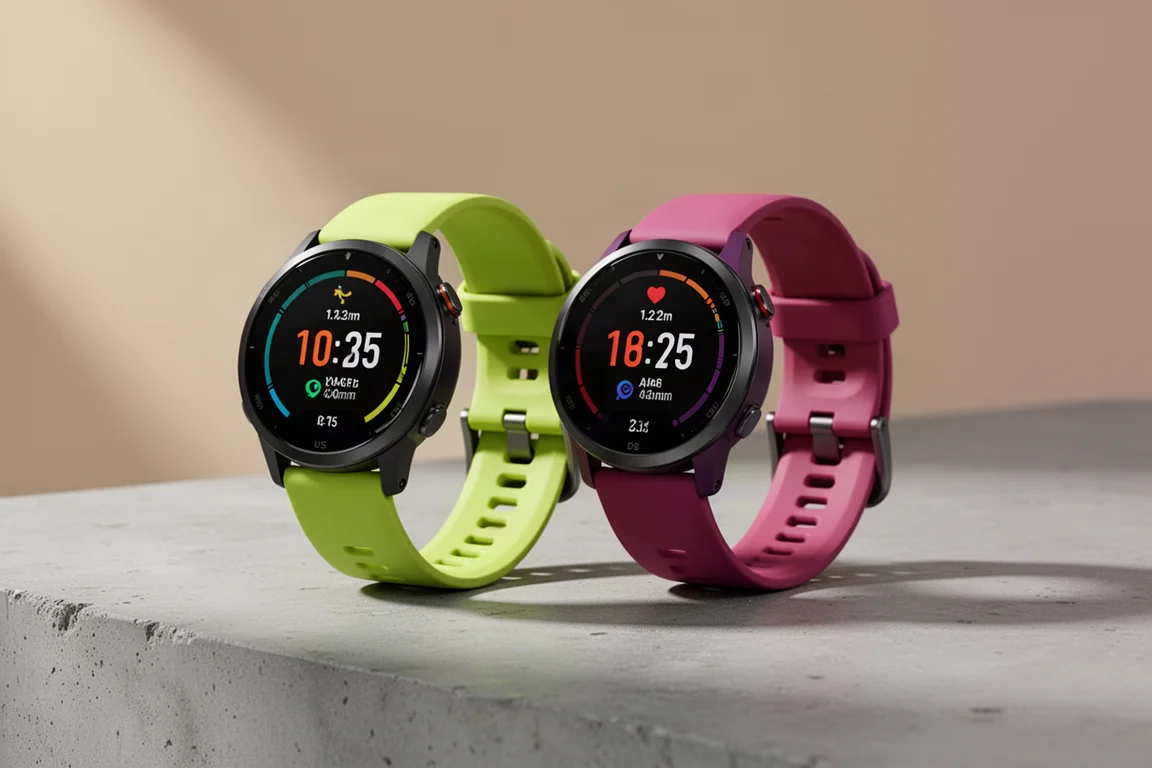
The Forerunner 70 starts at $249. The Forerunner 170 base edition is $299, and the 170 Music edition is $349. Each model has its own set of colorways: the Forerunner 70 includes a lime option that reads well in person, while the Forerunner 170 comes in a reddish pink purple finish that stands out as one of Garmin’s more attractive recent color schemes.
If you want to keep costs low and the extra features of the 170 do not appeal, the 70 is the cheaper entry point into this series.
Hardware: Same Case, Different Internals
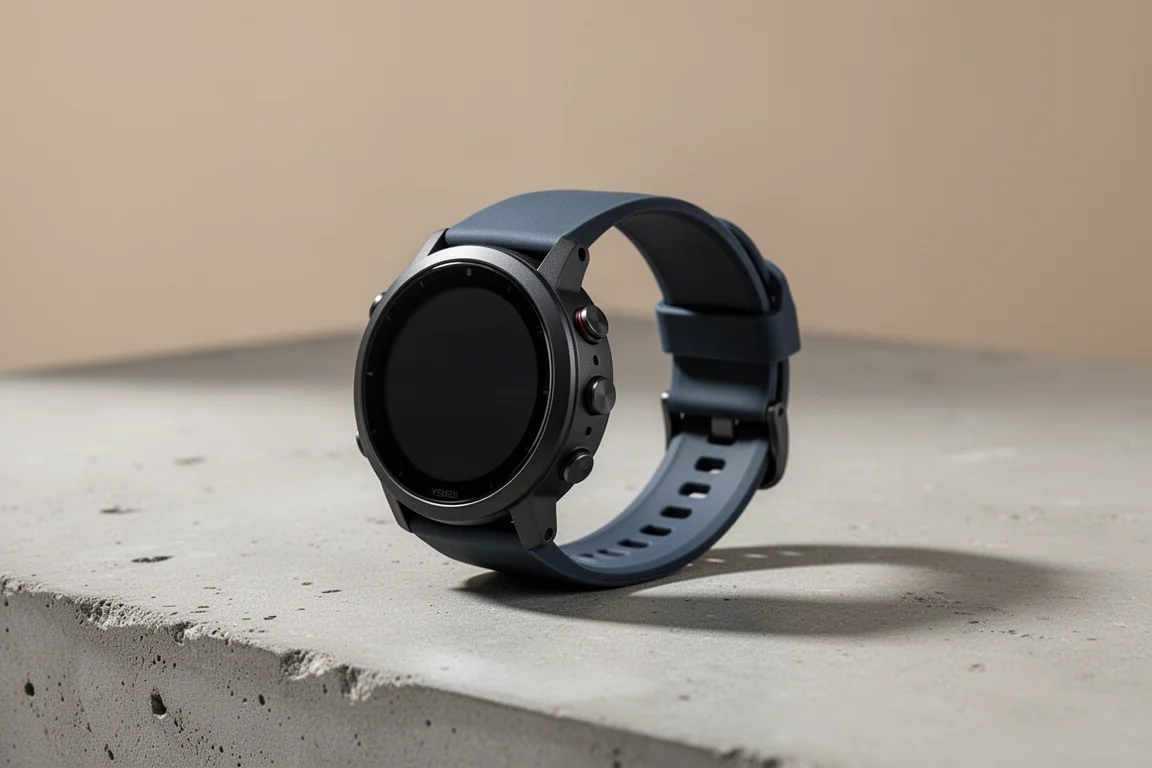
From a distance these watches look identical, and that is not far from the truth. Both use the same 43mm case size, the same band size, the same five-button layout, and the same 1.2 inch touchscreen AMOLED display. Both carry the Garmin Elevate Gen 4 optical heart rate sensor, both offer pulse ox, and neither includes ECG, AFib detection, or multiband dual-frequency GPS. In testing, GPS accuracy tracks closely with multiband units, even under a swimming pool and around downtown buildings, so that omission is not a practical concern.
The real hardware differences sit inside. The 170 has a barometric altimeter for accurate real-time elevation data, plus a temperature sensor exposed during activities. It adds a magnetic compass, a gyroscope for more accurate strength training rep detection, more memory, and Wi-Fi on the Music edition for syncing playlists. Both watches burn through the battery a bit differently as a result: identical battery hardware, but the 170’s extra sensors drain it slightly faster. Neither watch is affected here.
Music, Payments, and Connectivity
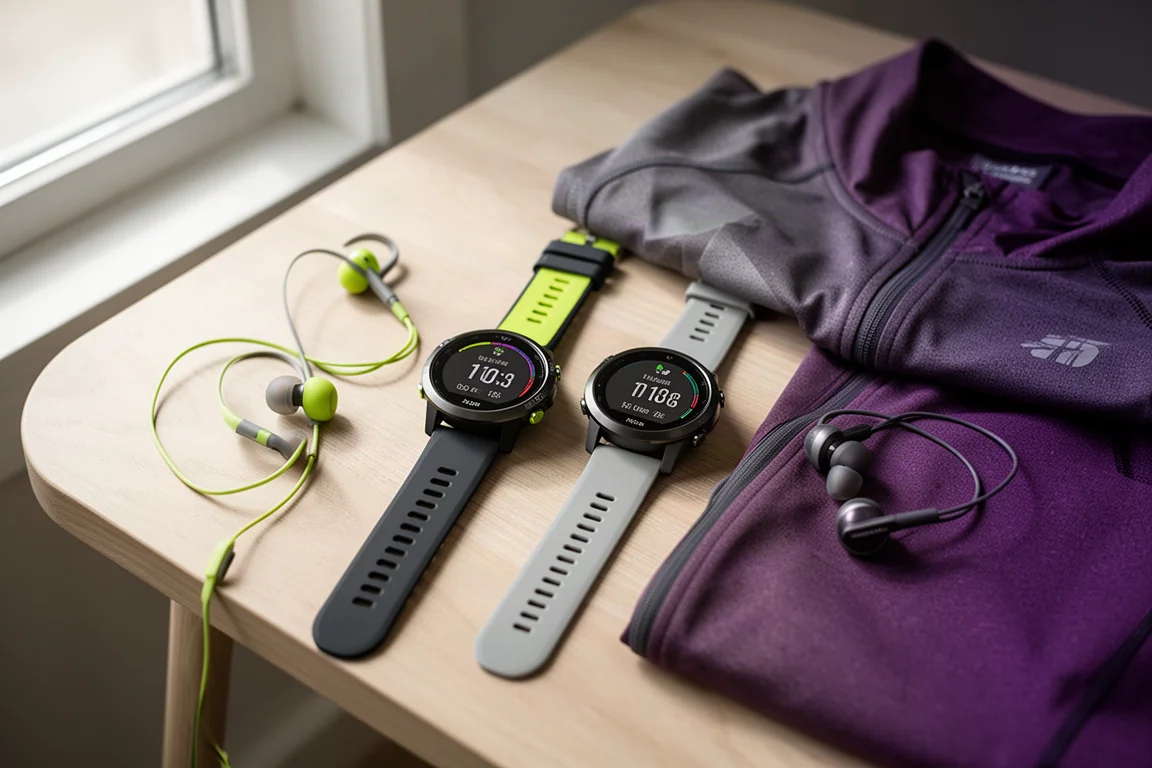
This is one of the clearest dividing lines. Only the Forerunner 170 Music supports offline music, pulling playlists from Spotify, Amazon Music, YouTube Music, or your own MP3s and pairing directly with headphones so you can leave the phone at home. Playlists refresh automatically over Wi-Fi when the watch syncs. Voice alerts through headphones, like audible lap splits during workouts, are also limited to the Music edition.
All editions of the 170 include Garmin Pay contactless payments, which no edition of the 70 offers. If tap-to-pay on the wrist matters to you, the 170 is the only choice here.
Training and Sport Mode Differences
The core feature set is shared: activity tracking, sleep tracking, HRV, nap tracking, health status, training status, training readiness, and running performance all appear on both watches. The sport list is nearly identical too, with both supporting pool swimming and the full range of common run and ride profiles.

Three sport profiles separate the watches. The 170 adds open water swimming, which the 70 cannot do, though pool swimming works on both. The 170 also gains a floor climb mode thanks to its barometric altimeter, and the Music edition uniquely adds guided meditation, driven by audio cues through paired headphones.
One thing neither watch offers is a triathlon or multisport mode. You can start, stop, and save activities one after another, but combining swim, bike, and run into one cohesive activity requires stepping up to models higher in the Forerunner range or a Fenix.
Cycling Sensors and Smart Trainer Control
This is a bigger deal for riders than the spec sheets suggest. The Forerunner 170 pairs with cycling power meters and smart trainers, which the 70 cannot do. With a smart trainer connected, the 170 can control resistance for structured workouts from a training plan or manual targets, and it supports power-based structured workouts through Garmin Cycle Coach. Power meter data also unlocks the cycling performance widget.
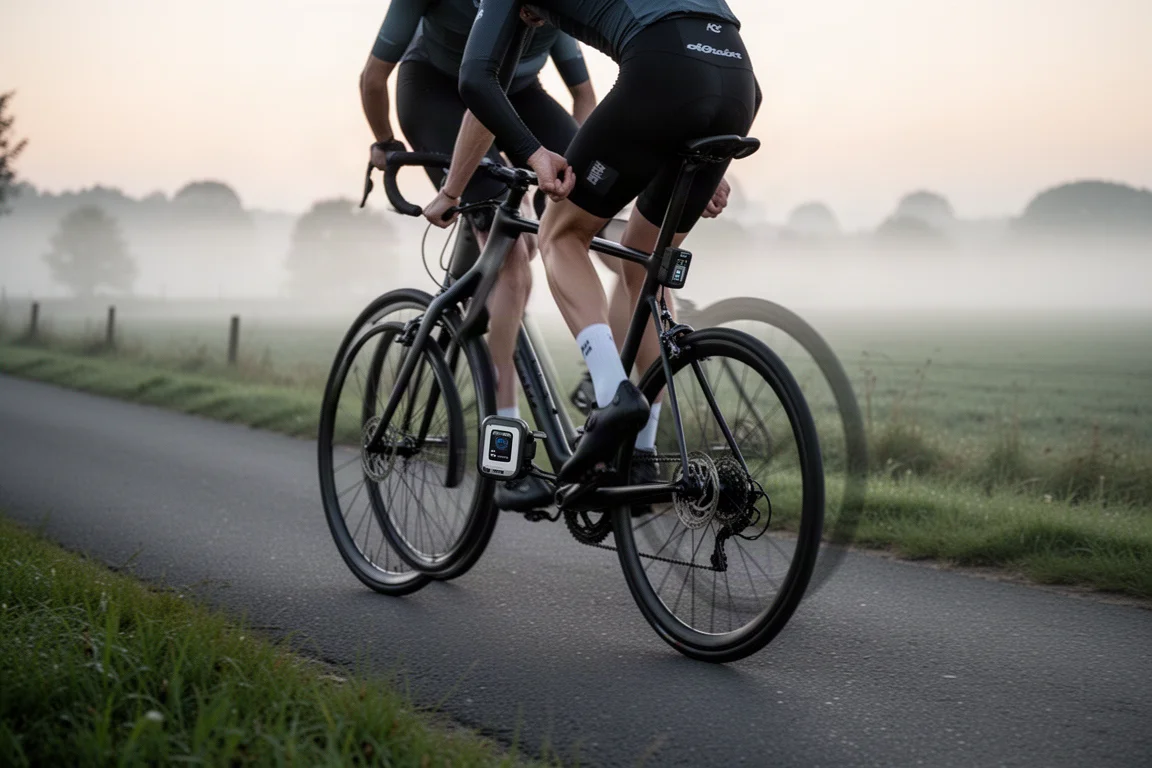
Both watches otherwise pair with the common range of cycling and running sensors, including cycling radar and cycling lights. The 170 additionally offers the ABC widget (altimeter, barometer, compass) and an ascent and descent data field that the 70 lacks. On the 70, you can still add an elevation data page to a route, which shows ascent and descent over the course of a route, and the data stays correct even off course. An elevation plot appears at the end of every activity on either watch, and the 70’s version, while slightly different from barometer-based data, is close.
Accuracy: GPS and Heart Rate
Side by side, GPS and heart rate accuracy are effectively identical between the two models. Interval sessions, open-road runs, and even routes that pass under a swimming pool and through a downtown area track the same as a multiband unit. If accuracy alone is your deciding factor, it will not decide this comparison for you.
Battery and Everyday Use
Battery capacity is the same in both watches, but the 170’s barometer, gyroscope, and extra memory burn charge a little faster. Real-world drain depends heavily on how many GPS activities you log per week and what type they are. For day-to-day tracking, sleep, and a few runs weekly, both are comfortable, with the 70 holding a modest edge in endurance.
Which Should You Buy?
It really comes down to three questions. Do you want to pair a cycling power meter or smart trainer? Do you want open water swimming? Do you want contactless payments or offline music? If any of those is a yes, the Forerunner 170, including the Music edition at $349, is an excellent deal. Otherwise, pick the Forerunner 70, save the difference, and enjoy a watch that performs essentially identically in day-to-day use.
Conclusion
The Garmin Forerunner 70 and Forerunner 170 share nearly everything: the same case, display, heart rate sensor, GPS accuracy, and core training features. The 170 justifies its higher price with music, Garmin Pay, a barometric altimeter, cycling power and trainer support, and open water swimming. Choose based on which of those extras you will actually use, and you will be happy with either one.
Further reading
Related Reviews
GPS Sports Watches
Polar Grit X2 Pro vs Vantage V3 vs COROS Vertix 2S: Which Flagship Adventure Watch Makes Sense
Polar's new flagship shares its internals with the Vantage V3 and goes up against the COROS Vertix 2S. Here is what two months of testing revealed about GPS, heart rate, navigation, and value.
GPS Sports Watches
Coros Apex 2 vs Garmin: Six GPS Sports Watches Worth Comparing
A practical look at the Coros Apex 2, Apex 2 Pro, Vertex 2, and three Garmin rivals, with what each does well and where the trade-offs sit.
GPS Sports Watches
Coros Apex 4 Hands-On: Titanium Build, Faster Mapping, and a Battery Built for the Mountains
A first look at the new Coros Apex 4 GPS sports watch, including its titanium construction, improved mapping, built-in speaker, and standout battery life.